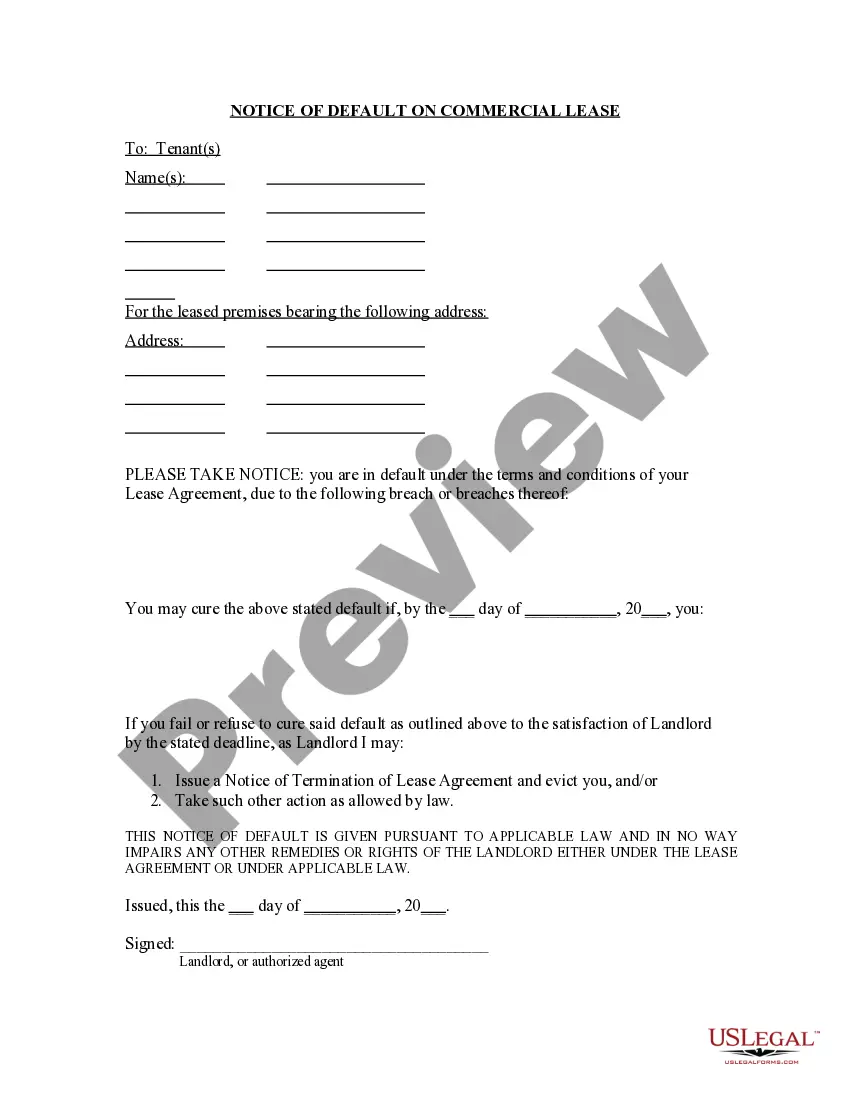
Delaware Letter from Landlord to Tenant as Notice of Default on Commercial Lease
What this document covers
The Letter from Landlord to Tenant as Notice of Default on Commercial Lease is a formal document used by landlords to notify tenants of breaches in their lease agreement. This notice specifically outlines the defaults and provides a deadline for the tenant to remedy these breaches. If the tenant does not comply, the landlord may pursue legal action, including eviction. This form serves as an important step in the landlord-tenant relationship, highlighting rights and responsibilities in the commercial leasing process.
Key parts of this document
- Identification of the landlord and tenant.
- Details of the specific breaches of the lease agreement.
- A deadline for the tenant to resolve the issues.
- Statement of potential actions the landlord may take if breaches are not cured.
- Signature line for the landlord or authorized agent.


When to use this document
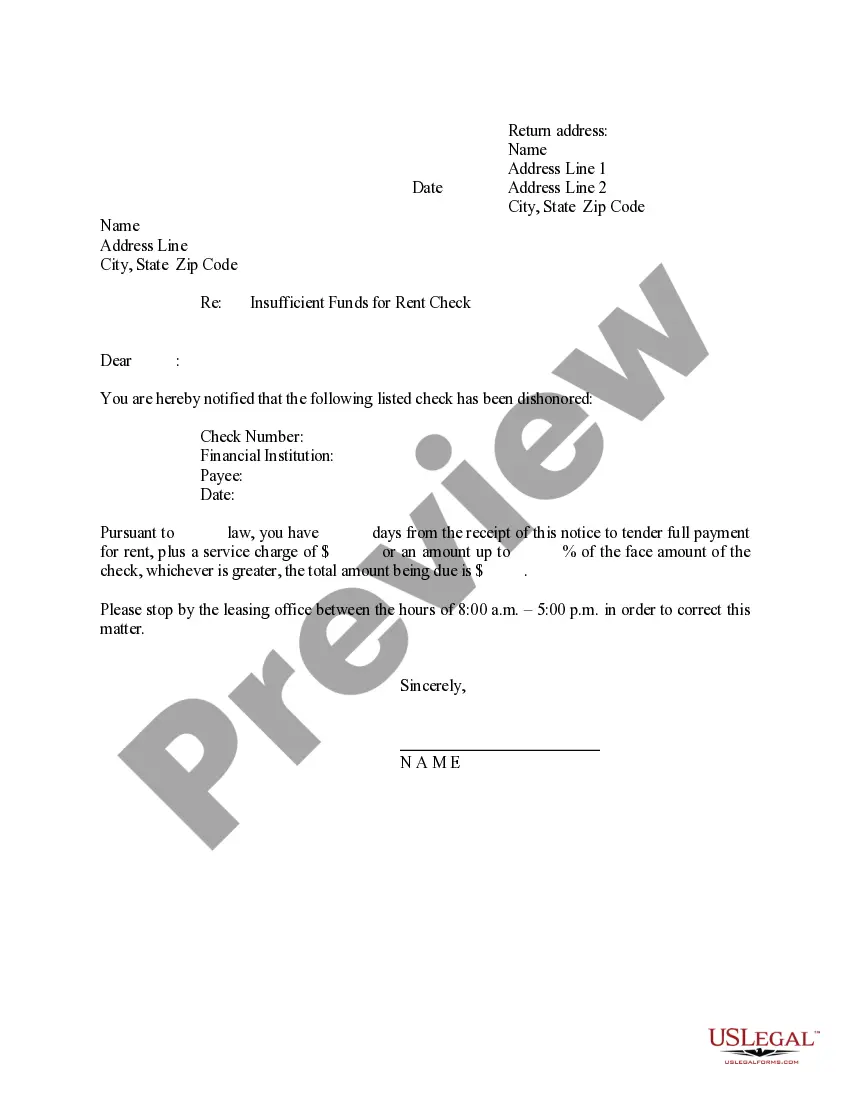
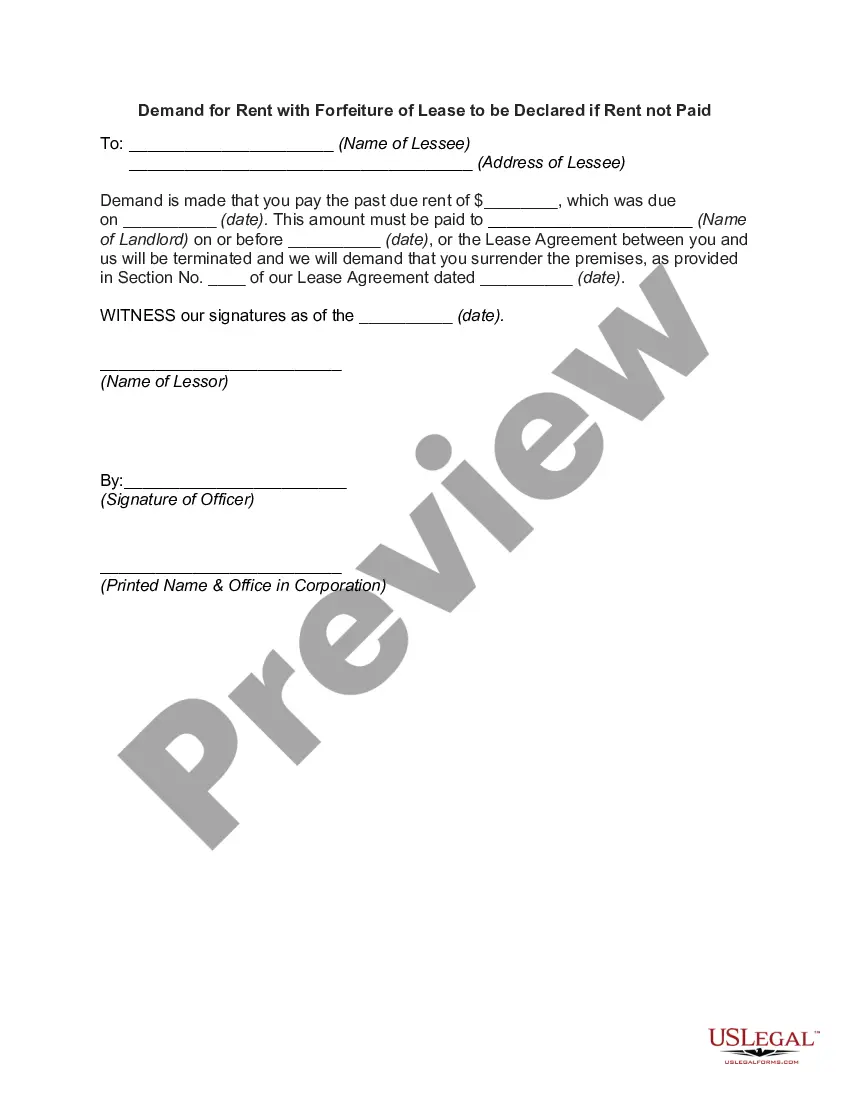
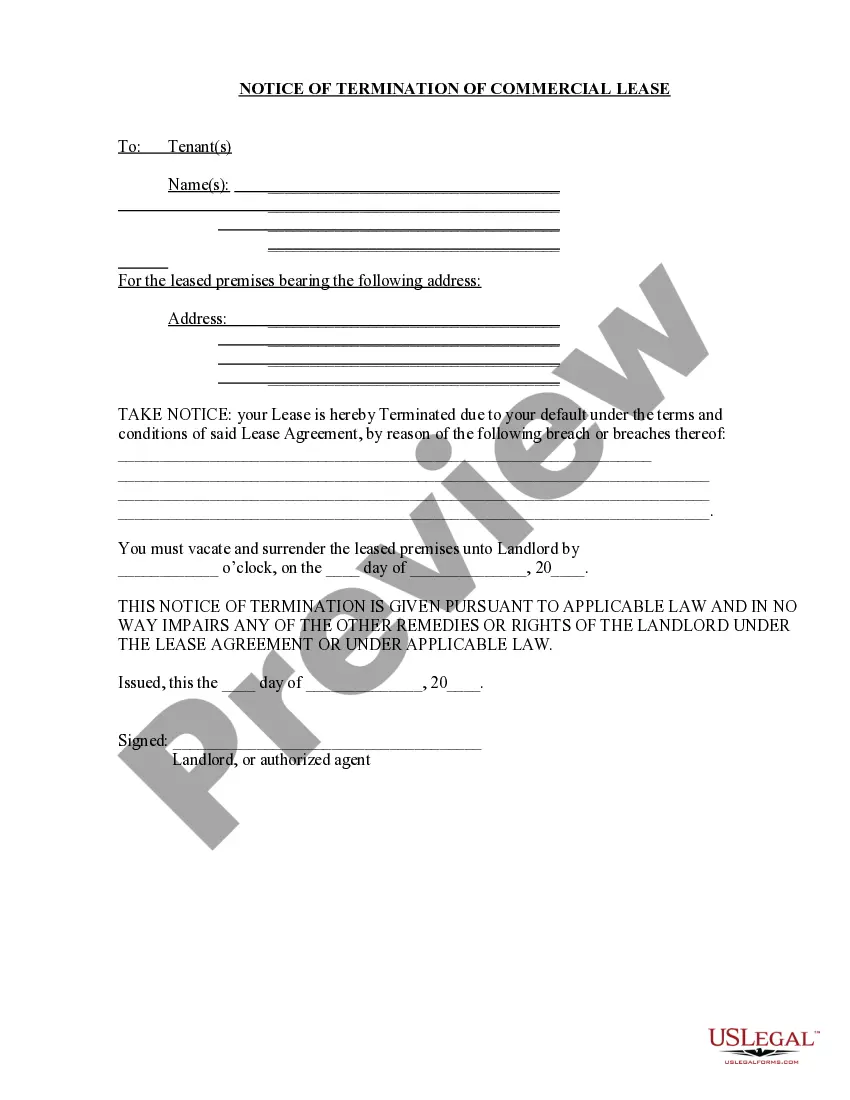
This form should be used when a tenant fails to comply with the terms of a commercial lease, such as not paying rent or violating lease provisions. It is a necessary step before proceeding with further actions like eviction or claiming the security deposit to address the defaults. Utilizing this notice ensures that the tenant is formally informed of the issues and given an opportunity to remedy the situation.
Who can use this document
- Commercial landlords managing leased property.
- Property managers acting on behalf of landlords.
- Tenants receiving notice of lease violations.
Instructions for completing this form
- Identify and enter the names of the landlord and tenant in the appropriate fields.
- Clearly describe the specific breaches or defaults in the lease agreement.
- Set a reasonable deadline for the tenant to cure the breaches.
- Indicate the potential actions the landlord may take if the tenant does not comply.
- Sign and date the notice to finalize it.
Notarization requirements for this form
In most cases, this form does not require notarization. However, some jurisdictions or signing circumstances might. US Legal Forms offers online notarization powered by Notarize, accessible 24/7 for a quick, remote process.
Get your form ready online
Our built-in tools help you complete, sign, share, and store your documents in one place.
Make edits, fill in missing information, and update formatting in US Legal Forms—just like you would in MS Word.
Download a copy, print it, send it by email, or mail it via USPS—whatever works best for your next step.
Sign and collect signatures with our SignNow integration. Send to multiple recipients, set reminders, and more. Go Premium to unlock E-Sign.
If this form requires notarization, complete it online through a secure video call—no need to meet a notary in person or wait for an appointment.
We protect your documents and personal data by following strict security and privacy standards.
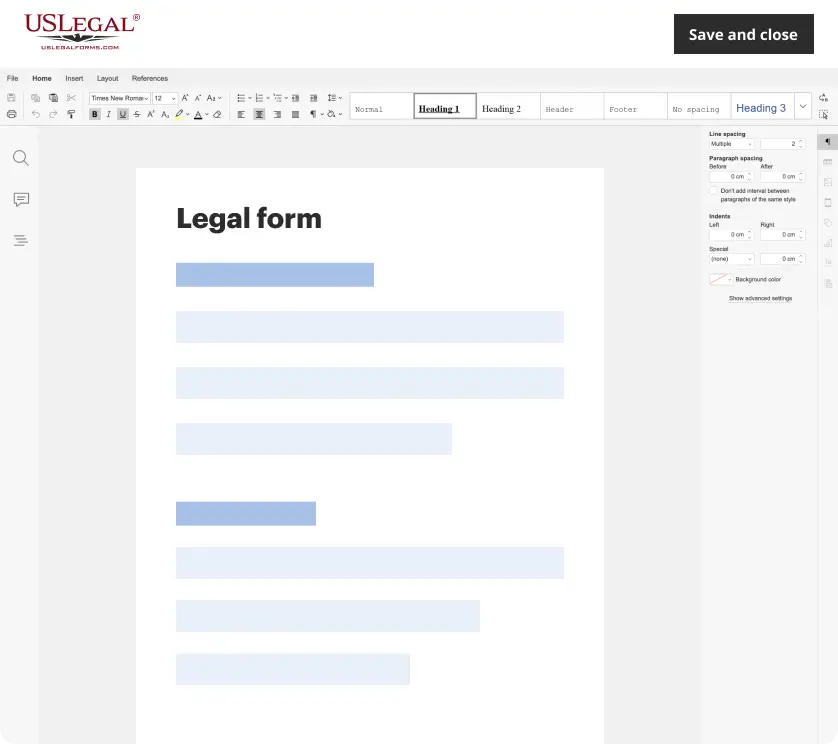
Make edits, fill in missing information, and update formatting in US Legal Forms—just like you would in MS Word.
Download a copy, print it, send it by email, or mail it via USPS—whatever works best for your next step.
Sign and collect signatures with our SignNow integration. Send to multiple recipients, set reminders, and more. Go Premium to unlock E-Sign.
If this form requires notarization, complete it online through a secure video call—no need to meet a notary in person or wait for an appointment.
We protect your documents and personal data by following strict security and privacy standards.
Avoid these common issues
- Failing to specify the breaches clearly.
- Not providing a reasonable deadline for the tenant to respond.
- Omitting the signature of the landlord or authorized agent.
Advantages of online completion
- Convenient access to legal templates from anywhere.
- Easy to edit and customize for specific situations.
- Reliable documents, drafted by licensed attorneys.
Looking for another form?
Form popularity
FAQ
A default on a commercial lease agreement occurs when a tenant fails to fulfill their contractual obligations, such as not paying rent or violating lease terms. This situation can lead to serious consequences, including eviction or legal action. It is crucial to respond properly when you receive a Delaware Letter from Landlord to Tenant as Notice of Default on Commercial Lease to protect your rights. You might consider using the US Legal Forms platform to obtain guidance and templates for handling these situations effectively.
Defaulting on a lease refers to failing to meet the terms of the agreement, such as missed rent payments. On the other hand, breaking a lease typically means you choose to end the lease early. While both actions can lead to penalties, they are not the same. If you receive a Delaware Letter from Landlord to Tenant as Notice of Default on Commercial Lease, it indicates a breach in the lease terms that may require your immediate attention.
Backing out of a commercial lease involves understanding the terms laid out in your lease agreement. Look for any clauses that allow for early termination, and prepare the necessary documentation. If you need assistance, a Delaware Letter from Landlord to Tenant as Notice of Default on Commercial Lease can guide you through the process. Consulting with a legal expert can further ensure that you navigate any potential consequences effectively.
When writing a lease termination letter, clearly state your intention to terminate the lease and provide the necessary details, such as the lease address and termination date. Include any reasons for cancellation if required by the lease. More importantly, reference a Delaware Letter from Landlord to Tenant as Notice of Default on Commercial Lease to help structure your letter appropriately. Keep the tone professional and ensure you send it as per the lease agreement requirements.
A letter to a landlord for termination of a commercial lease is a formal document that notifies the landlord of your intent to end the lease agreement. This letter should include the lease details, your reasons for termination, and any relevant timeline for ending the lease. Utilizing a Delaware Letter from Landlord to Tenant as Notice of Default on Commercial Lease can clarify your situation and stipulations regarding termination. Ensure your letter follows any guidelines outlined in the lease.
To cancel a commercial lease, you must first review the lease agreement for any cancellation clauses. Generally, you will need to provide written notice to your landlord, often following specific timelines. Consider using a Delaware Letter from Landlord to Tenant as Notice of Default on Commercial Lease if you face lease violations. It’s advisable to seek legal advice to ensure compliance with all requirements.
A default letter for a commercial lease is a written notification sent by a landlord to a tenant when there is a breach of the lease terms. This letter usually details the specific default and provides a period for the tenant to respond or correct the issue. Sending a Delaware Letter from Landlord to Tenant as Notice of Default on Commercial Lease can be a pivotal moment in a tenancy. It can help both parties understand their rights and responsibilities.
A notice of default letter to a tenant is a formal document that communicates a breach of lease terms. This letter will clearly outline the nature of the default and typically includes a timeframe for the tenant to rectify the situation. The Delaware Letter from Landlord to Tenant as Notice of Default on Commercial Lease serves as a crucial step in the eviction or legal process if the issues remain unresolved. Understanding this letter can help tenants respond appropriately.
Default in a lease agreement refers to a failure to fulfill the terms outlined in the contract. This could mean missing rent payments or violating other conditions of the lease. Recognizing what constitutes a default is essential for maintaining a positive landlord-tenant relationship. If a default arises, the landlord may initiate a process, often starting with a Delaware Letter from Landlord to Tenant as Notice of Default on Commercial Lease.
Section 5513 of the Delaware Landlord Tenant Code deals with the handling of default and remedies for landlords. This section outlines the legal procedures landlords must follow when tenants fail to meet their obligations. Knowledge of this section is vital for landlords, as it ensures compliance when sending a Delaware Letter from Landlord to Tenant as Notice of Default on Commercial Lease. Proper adherence to these rules can prevent costly legal mistakes.