Delaware Assignment of Lease from Lessor with Notice of Assignment
What this document covers
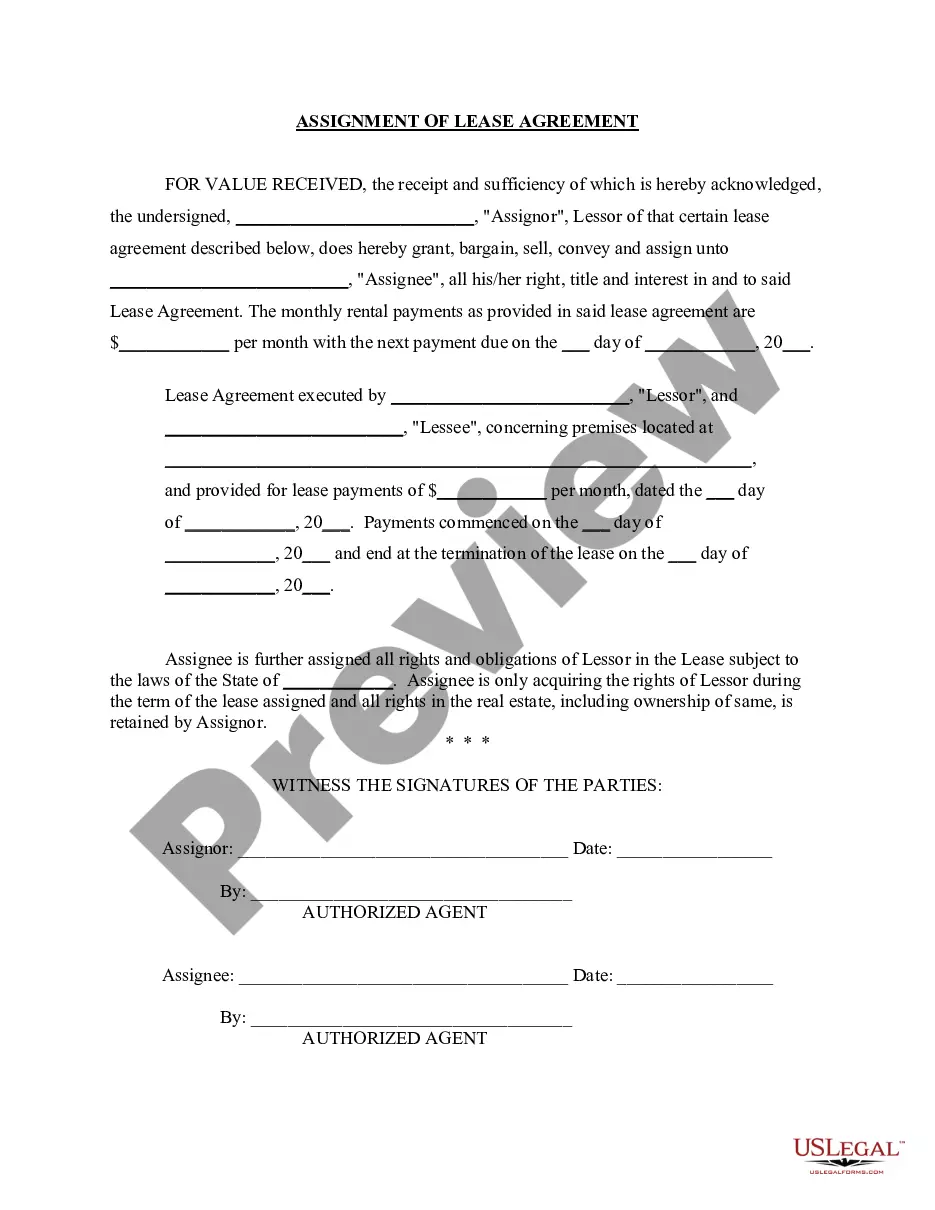
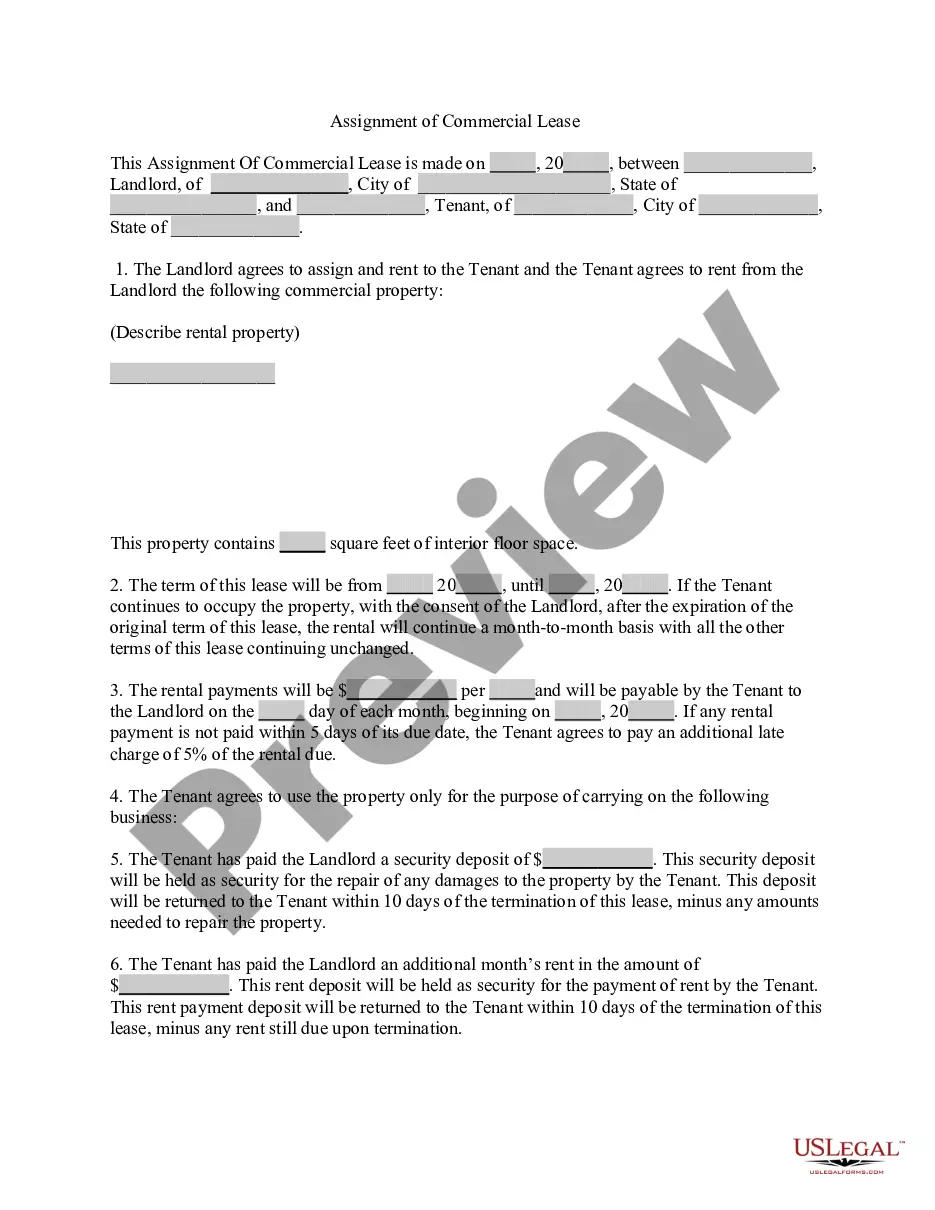
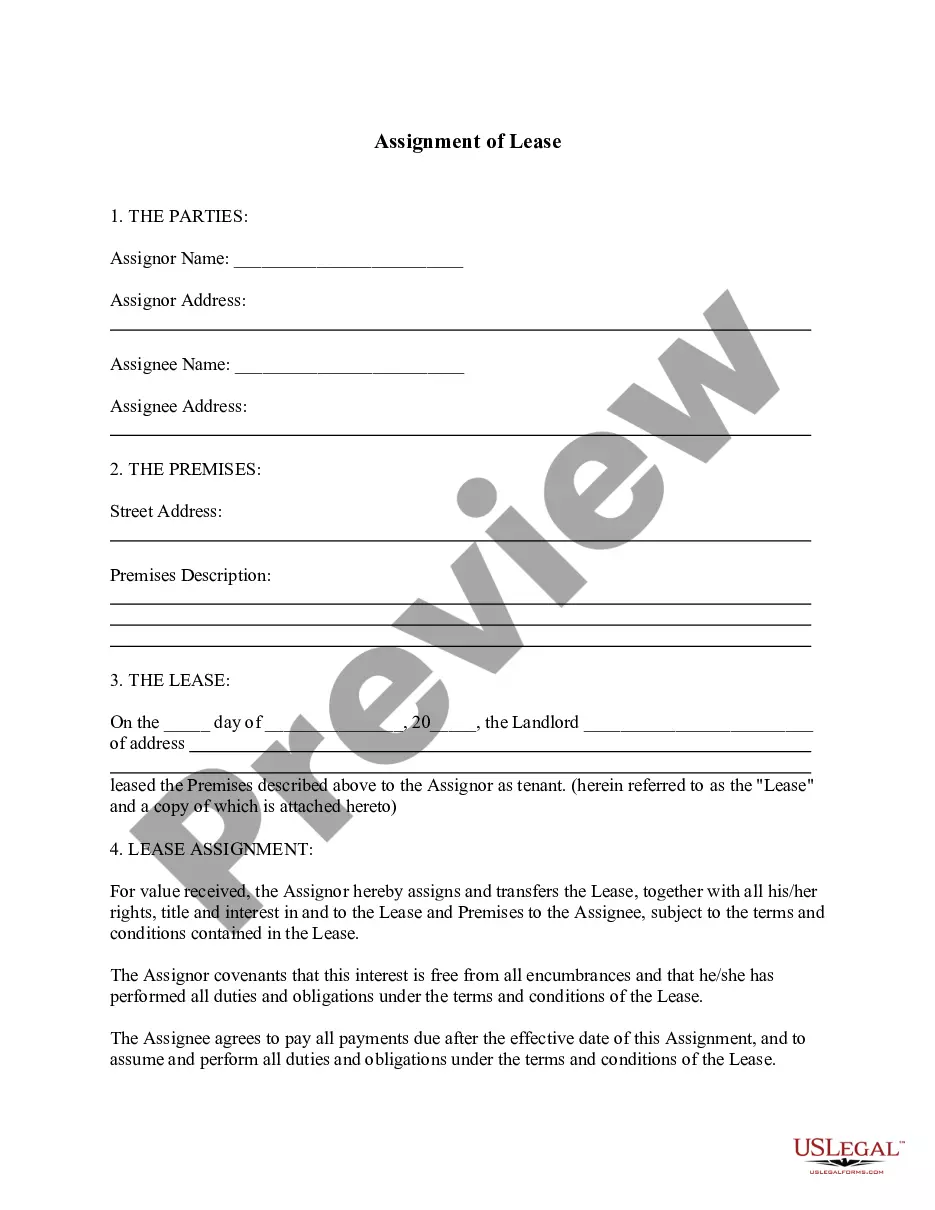
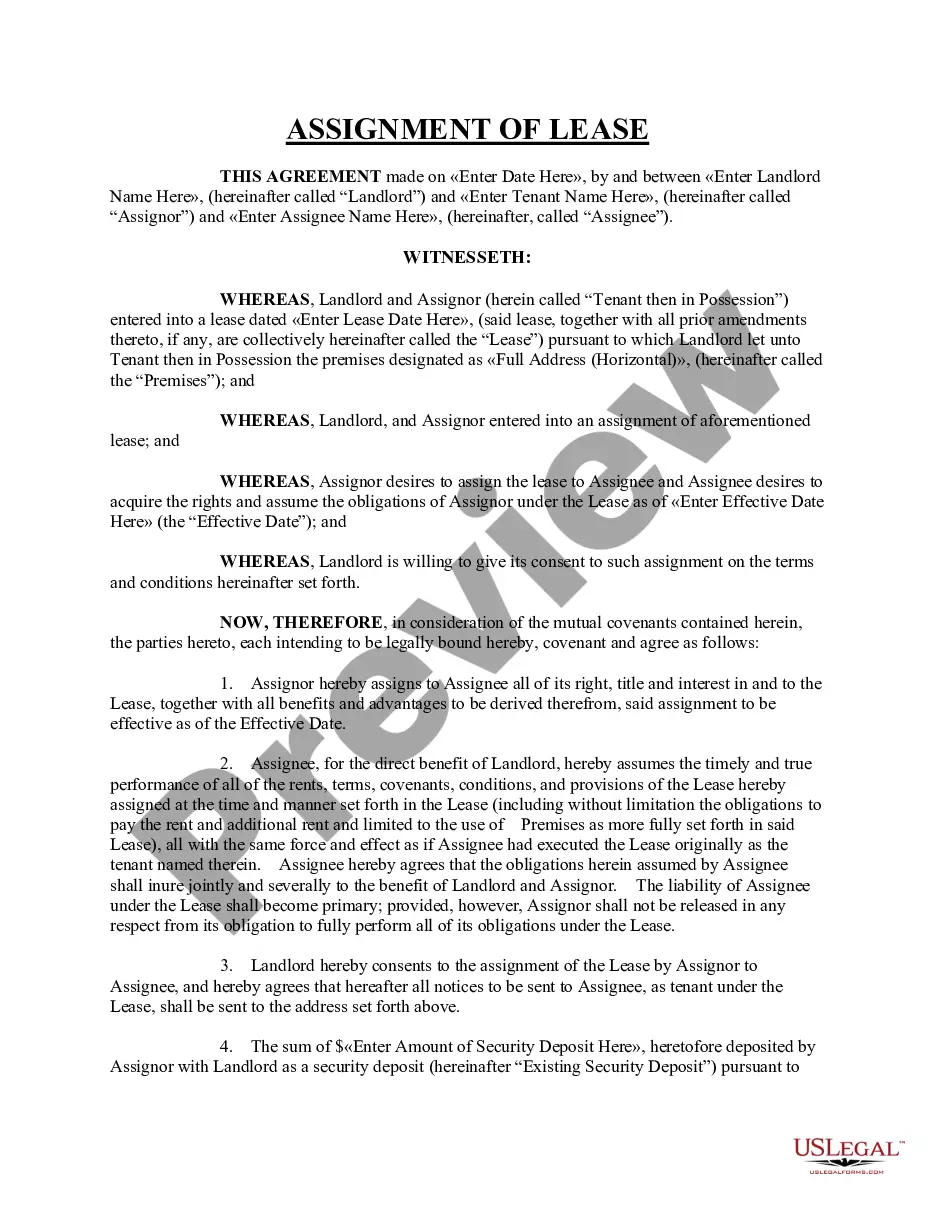
The Assignment of Lease from Lessor with Notice of Assignment is a legal document that transfers a lessor's rights under a lease agreement to a new lessor, while notifying the tenant of this change. Unlike a full transfer of property ownership, this assignment allows the assignee to inherit only the rights of the original lessor for the duration of the lease, with all ownership rights remaining with the assignor. This form is essential for ensuring that payment arrangements and lease obligations are clearly communicated and understood by all parties involved.
Key components of this form
- Names and addresses of the assignor (original lessor) and assignee (new lessor).
- Details of the original lease agreement, including rental amounts and payment schedule.
- A declaration that the assignee acquires only the rights of the lessor for the lease term.
- Signature lines for both the assignor and assignee, along with dates of signing.
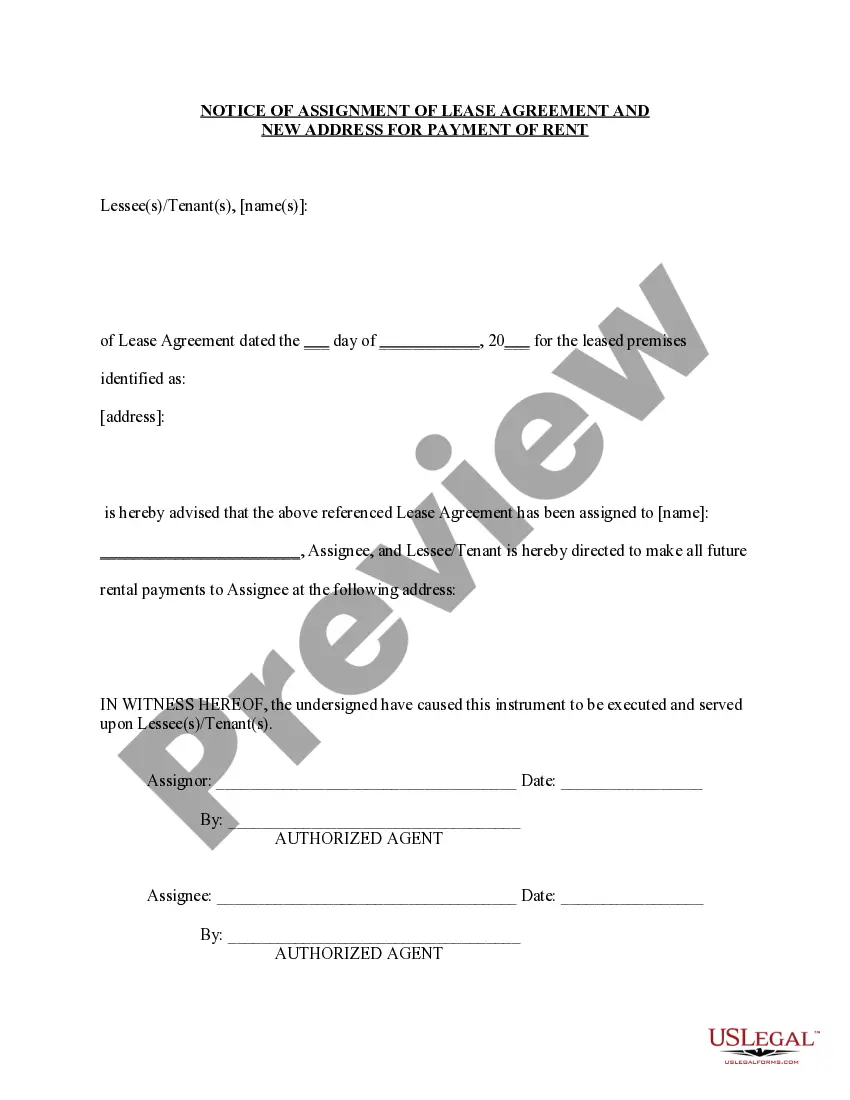
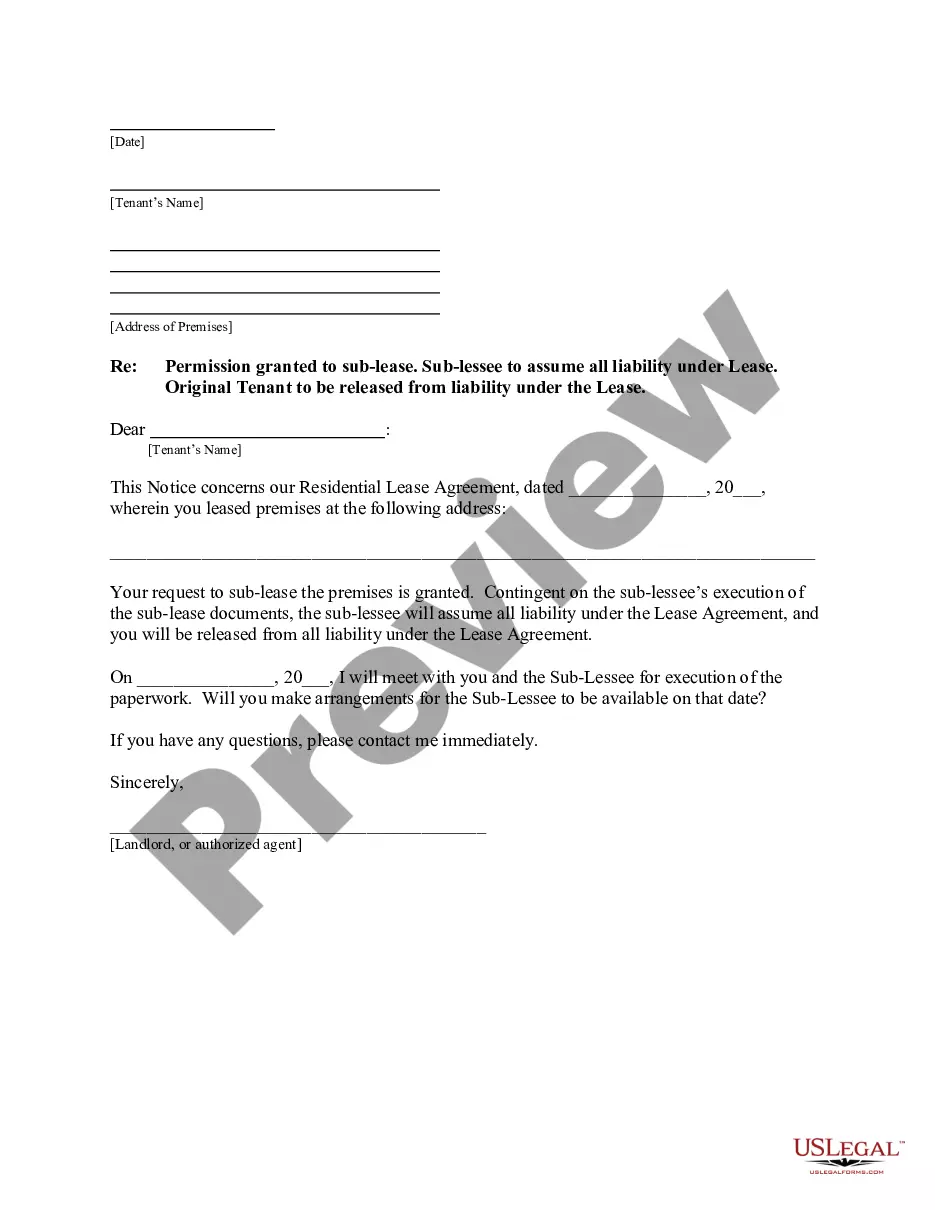
- A notice section for the tenant regarding payment address and any changes.
When to use this document
This form should be used when a lessor decides to assign their interest in a lease to another party, typically due to a sale of the property, a change in management, or the lessor's decision to delegate lease responsibilities. It is important to ensure that all parties, including the tenant, are properly informed of the change in the lessor so that there are no disruptions in rent payments or lease obligations.
Who should use this form
- Property owners (lessors) who wish to transfer their lease rights to another party.
- Real estate investors acquiring properties with existing leases.
- Business owners leasing premises who are selling, transferring, or changing management of the property.
- Tenants needing to be informed of changes in their lease agreement.
How to prepare this document
- Identify and enter the names and contact information of the assignor and assignee.
- Fill in the details of the lease agreement, including monthly rental payments and relevant dates.
- Clearly state that the assignee is acquiring the rights to the lease for the specified term.
- Sign and date the form in the presence of any required witnesses or notaries.
- Notify the tenant of the assignment and provide any address changes for rent payments.
Does this document require notarization?
This form does not typically require notarization to be legally valid. However, some jurisdictions or document types may still require it. US Legal Forms provides secure online notarization powered by Notarize, available 24/7 for added convenience.
Get your form ready online
Our built-in tools help you complete, sign, share, and store your documents in one place.
Make edits, fill in missing information, and update formatting in US Legal Forms—just like you would in MS Word.
Download a copy, print it, send it by email, or mail it via USPS—whatever works best for your next step.
Sign and collect signatures with our SignNow integration. Send to multiple recipients, set reminders, and more. Go Premium to unlock E-Sign.
If this form requires notarization, complete it online through a secure video call—no need to meet a notary in person or wait for an appointment.
We protect your documents and personal data by following strict security and privacy standards.

Make edits, fill in missing information, and update formatting in US Legal Forms—just like you would in MS Word.

Download a copy, print it, send it by email, or mail it via USPS—whatever works best for your next step.

Sign and collect signatures with our SignNow integration. Send to multiple recipients, set reminders, and more. Go Premium to unlock E-Sign.

If this form requires notarization, complete it online through a secure video call—no need to meet a notary in person or wait for an appointment.

We protect your documents and personal data by following strict security and privacy standards.
Common mistakes
- Failing to notify the tenant of the assignment, which can lead to confusion regarding rent payments.
- Not verifying whether the original lease allows for assignment, possibly breaching the lease terms.
- Overlooking to include all necessary signatures, which can invalidate the assignment.
- Ignoring local laws that could impose additional requirements for lease assignments.
Benefits of completing this form online
- Convenient access to a legally compliant document that can be downloaded and completed at your pace.
- Editability allows for customization to fit specific lease agreements and parties involved.
- Reliability, knowing the document is drafted by licensed attorneys to meet legal standards.
Legal use & context
- This form allows the assignee to take over the lease rights while the original lessor retains ownership of the property.
- Proper use of this form can help prevent disputes regarding lease obligations and payments.
- Ensure that all terms adhere to both federal and state laws regarding lease assignments.
What to keep in mind
- The assignment of lease form is essential for transferring lease rights legally and clearly.
- Always notify tenants of any changes in leasing arrangements to maintain compliance and trust.
- Complete the form carefully to ensure that all necessary details and signatures are included.
Looking for another form?
Form popularity
FAQ
In Delaware, there is no law that limits how much a landlord can raise rent. However, landlords must provide proper notice, typically 60 days, for any rent increase. If you are facing a rental increase, understanding the Delaware Assignment of Lease from Lessor with Notice of Assignment can help you address your lease terms effectively. UsLegalForms offers resources to ensure you are well-informed about your rights and options.
Breaking a lease in Delaware without penalty can be complex. You may need a legal reason, such as the property being uninhabitable or the landlord’s failure to provide basic services. However, if you are considering a Delaware Assignment of Lease from Lessor with Notice of Assignment, it may be beneficial to consult a legal professional to navigate the process. UsLegalForms can provide necessary documents and guidance to facilitate a smooth transition.
Yes, a landlord can refuse a lease assignment if the lease agreement contains specific clauses that restrict transfer or if the new tenant does not meet certain qualifications. It is crucial for tenants to understand these conditions before attempting an assignment. For clarity on this process, exploring the Delaware Assignment of Lease from Lessor with Notice of Assignment can be beneficial.
The assignment of lease by the landlord occurs when a landlord transfers their rights and obligations under the lease to another lessor. This transition allows the new lessor to assume control of the lease agreement. Understanding this concept is vital for anyone dealing with lease assignments, especially under the framework of the Delaware Assignment of Lease from Lessor with Notice of Assignment.
To assign a lease agreement, the current tenant must obtain permission from the landlord and prepare a written document outlining the terms of the assignment. This document should include a formal notice of assignment. For assistance in drafting this document, the Delaware Assignment of Lease from Lessor with Notice of Assignment can be a helpful resource.
Whether an assignment of lease needs to be notarized can depend on state laws and specific lease clauses. In many cases, a notarization isn't mandatory, but it adds an extra layer of authenticity and formality to the document. If you're considering a Delaware Assignment of Lease from Lessor with Notice of Assignment, consult legal guidance to determine the best course of action.
An assignment to lease refers to the process where a tenant relinquishes their rights and obligations to a third party, transferring the lease agreement to that party. This transaction must be agreed upon by the landlord to ensure compliance with lease conditions. To facilitate this process effectively, understanding the Delaware Assignment of Lease from Lessor with Notice of Assignment is advised.
The assignment of lessor's interest in a lease involves a lessor transferring their rights and responsibilities under the lease agreement to another entity. This often requires written notification to all relevant parties, ensuring everyone is informed of the change. For accurate guidance, the Delaware Assignment of Lease from Lessor with Notice of Assignment is essential.
The lessor's interest represents the rights a landlord maintains over a property while it is leased. This includes collecting rent, enforcing lease terms, and managing property conditions. For those who need to understand this interest further, exploring the Delaware Assignment of Lease from Lessor with Notice of Assignment can provide additional clarity.
A landlord's consent to lease assignment is the landlord's formal approval allowing a tenant to transfer their lease obligations to another party. This consent is typically documented to ensure that the new tenant is fully aware of their responsibilities. In Delaware, obtaining this consent is a significant step in the Delaware Assignment of Lease from Lessor with Notice of Assignment process.