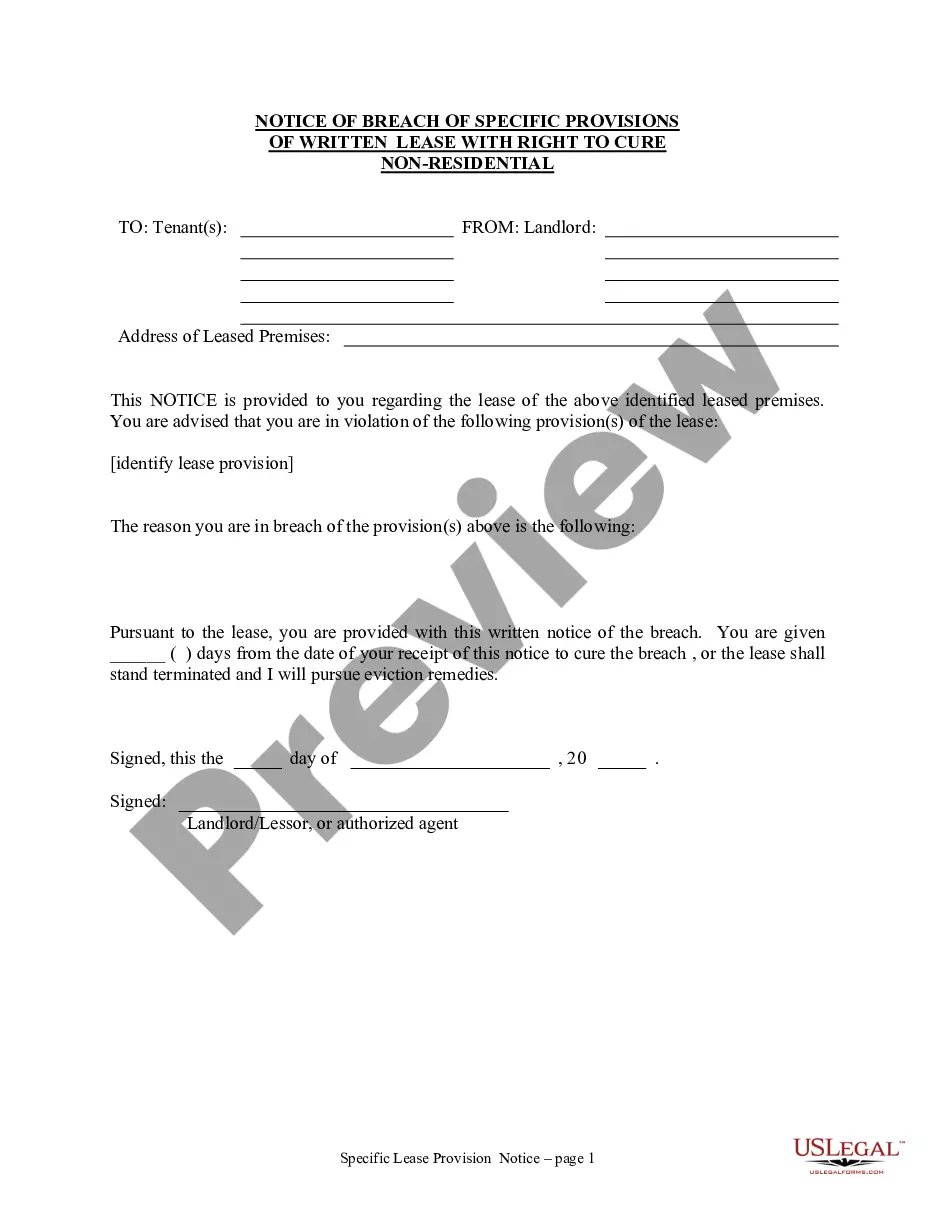
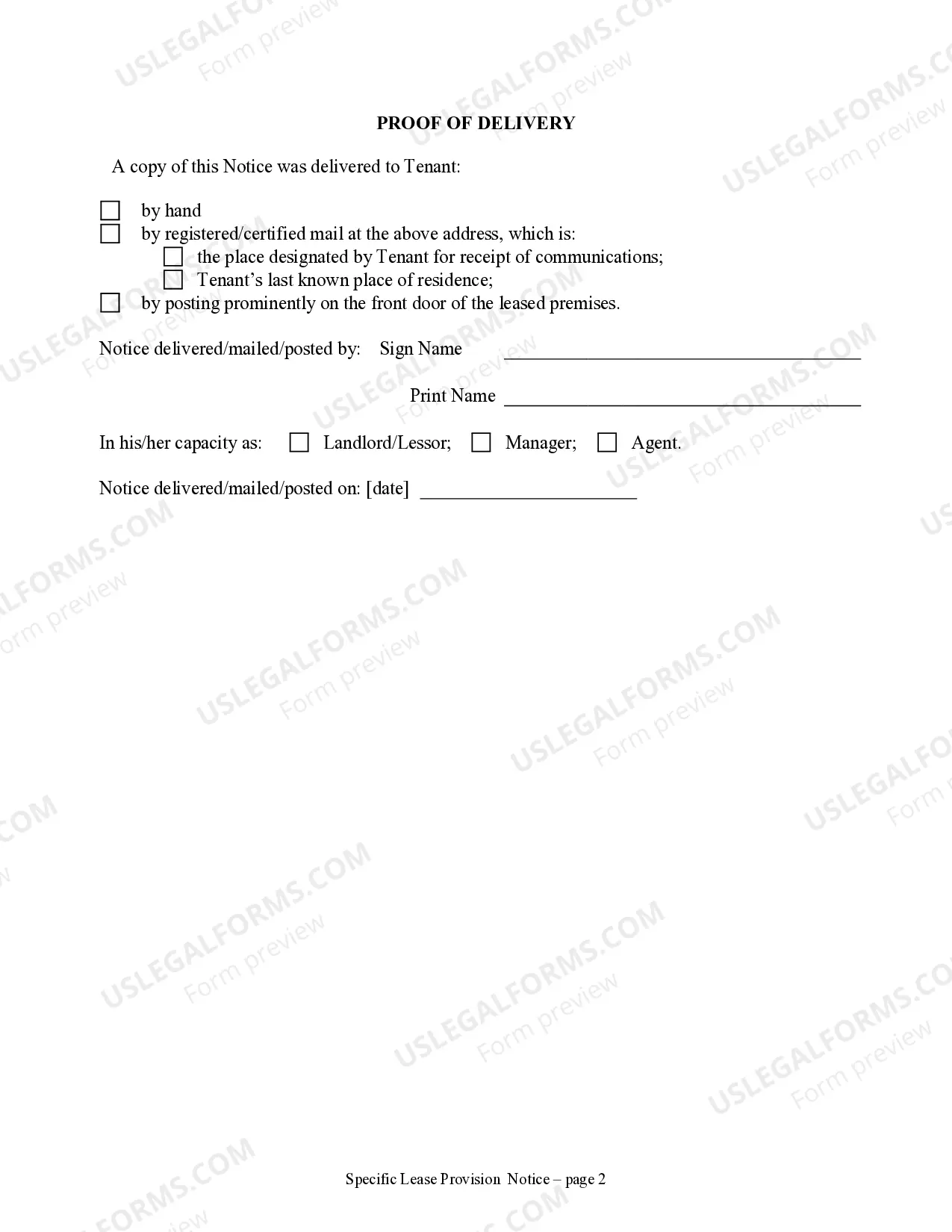
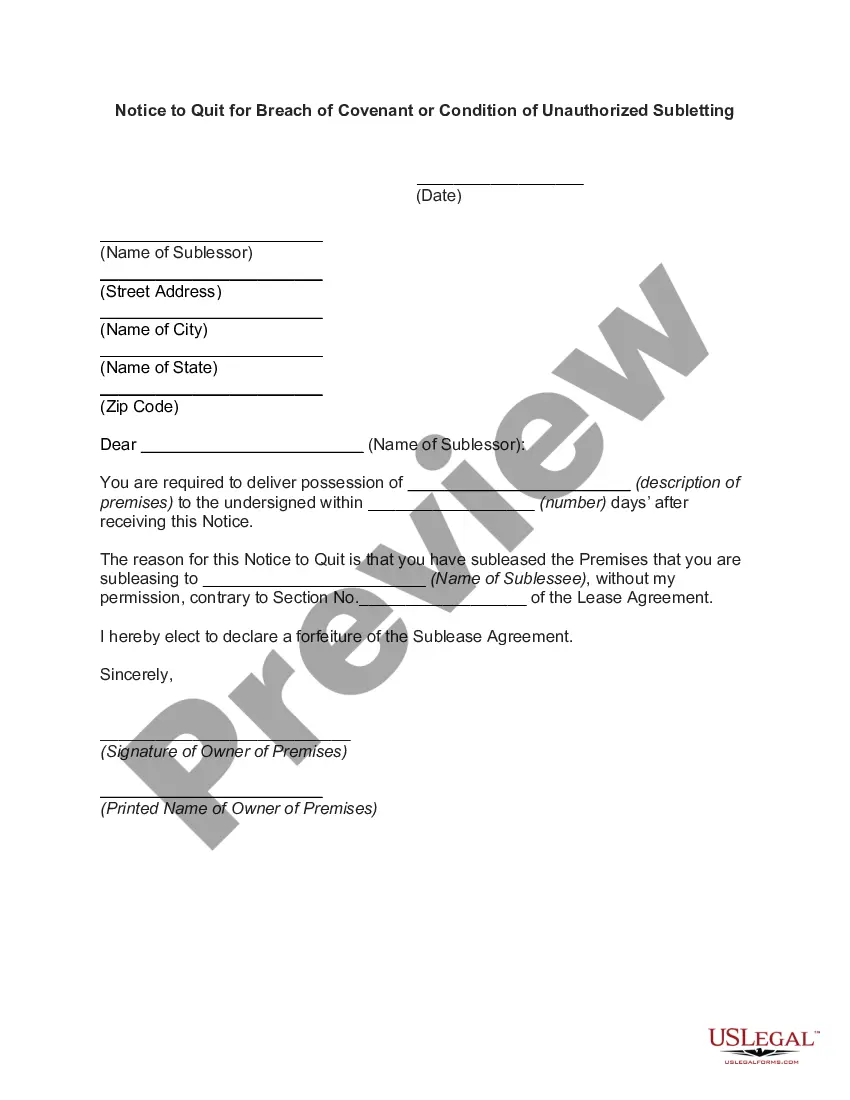
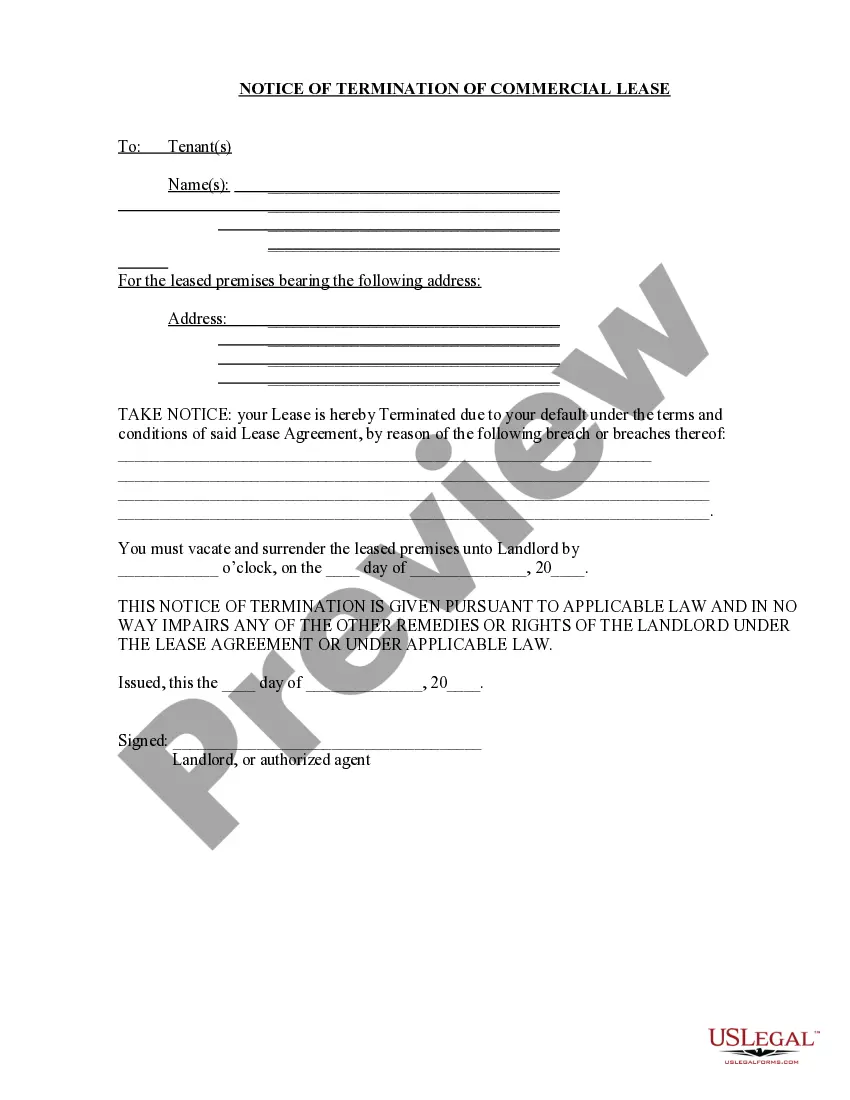
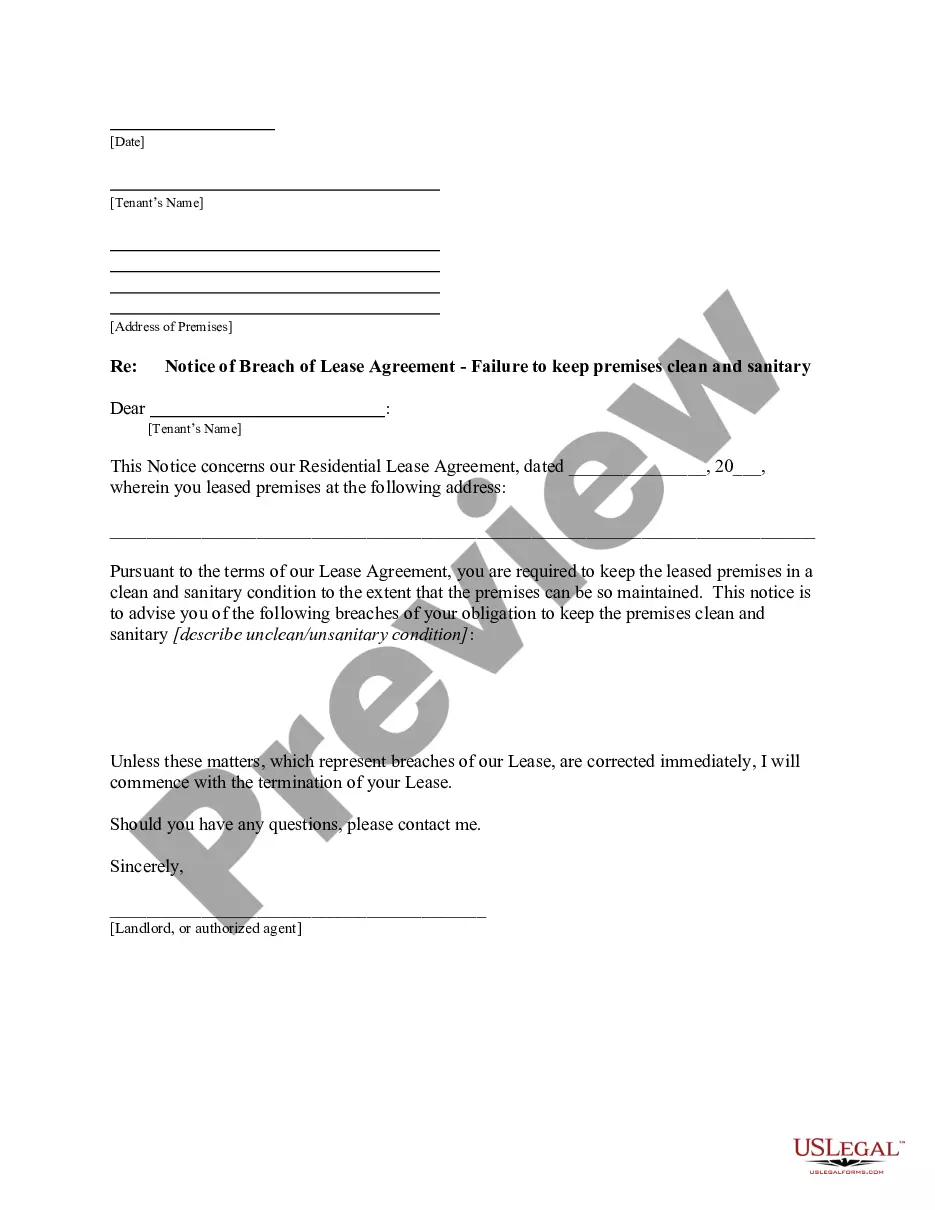
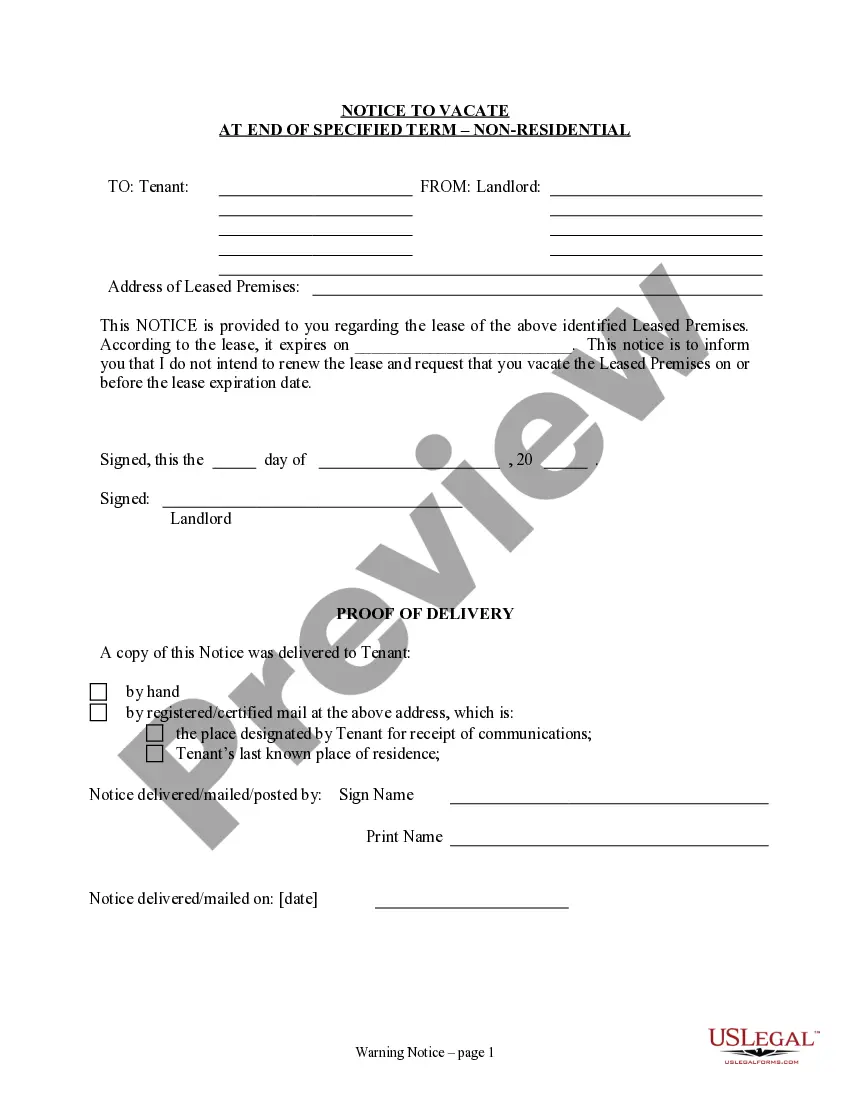
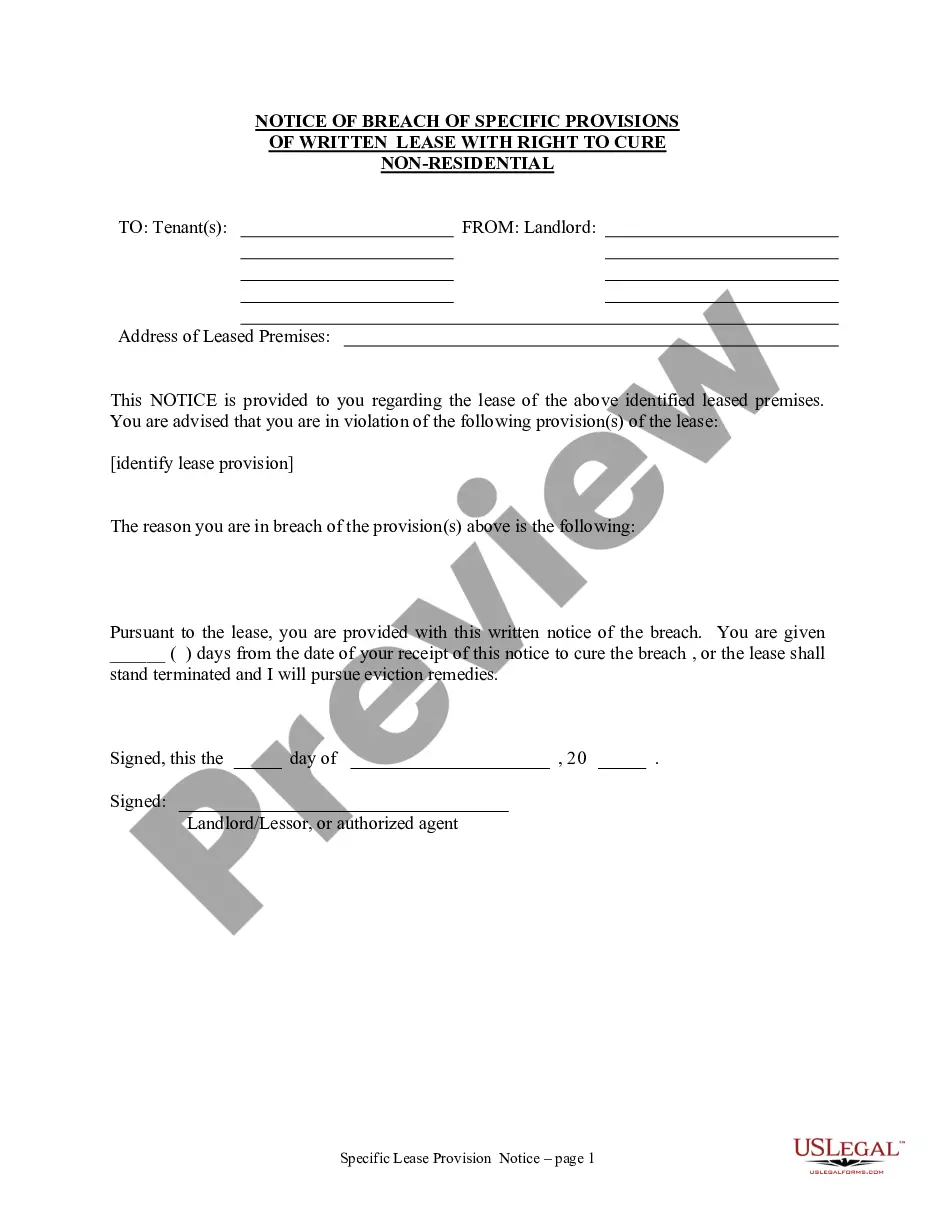
This Notice of Breach of Written Lease for Violating Specific Provisions of Lease with Right to Cure for Non-Residential Property from Landlord to Tenant form is for a Landlord to provide notice of breach of a written lease for violating a specific provision of lease with the right to cure. It is for a Non-Residential lease. You insert the specific breach in the form. The lease should contain the specific provision which has been violated and provide the deadline to cure the breach. This form is for use when a form for your specific situation is not available.
Delaware Notice of Breach of Written Lease for Violating Specific Provisions of Lease with Right to Cure for Nonresidential Property from Landlord to Tenant
State:
Delaware
Control #:
DE-1501LT
Format:
Word;
Rich Text
Instant download
Description
Free preview


How to fill out Delaware Notice Of Breach Of Written Lease For Violating Specific Provisions Of Lease With Right To Cure For Nonresidential Property From Landlord To Tenant?
The larger the quantity of documents you need to produce - the more nervous you feel.
You can discover a vast selection of Delaware Notice of Breach of Written Lease for Breaching Specific Lease Terms with Right to Remedy for Nonresidential Property from Landlord to Tenant templates online, yet you remain uncertain about which ones to trust.
Eliminate the stress and simplify the process of locating samples by using US Legal Forms.
Proceed with Buy Now to initiate the registration procedure and select a payment plan that fits your needs. Provide the required details to create your profile and settle your order with PayPal or credit card. Choose a suitable file format and obtain your template. Access each document you download in the My documents section. Simply navigate there to create a new version of your Delaware Notice of Breach of Written Lease for Breaching Specific Lease Terms with Right to Remedy for Nonresidential Property from Landlord to Tenant. Even with professionally crafted templates, it's still advisable to consult your local attorney to verify that your document is completed accurately. Achieve more while spending less with US Legal Forms!
- Receive meticulously prepared documents that are tailored to meet state specifications.
- If you already have a subscription to US Legal Forms, Log In to your account, and you’ll find the Download button on the Delaware Notice of Breach of Written Lease for Breaching Specific Lease Terms with Right to Remedy for Nonresidential Property from Landlord to Tenant’s page.
- If you’re new to our service, follow the sign-up steps using these instructions.
- Confirm the Delaware Notice of Breach of Written Lease for Breaching Specific Lease Terms with Right to Remedy for Nonresidential Property from Landlord to Tenant is applicable in your region.
- Verify your choice by reviewing the description or utilizing the Preview option if available for the chosen document.
Form popularity
FAQ
When writing a violation notice, begin with a clear heading indicating it is a violation notice. Identify the tenant and property address, and outline the specific lease provisions being violated. Mention the date by which the issues need to be resolved and refer to the Delaware Notice of Breach of Written Lease for Violating Specific Provisions of Lease with Right to Cure for Nonresidential Property from Landlord to Tenant for guidance. This structured approach helps in addressing issues effectively and facilitates a proper response from the tenant.
To write a formal letter to break a lease, start by addressing your landlord clearly. Include the date of the letter and your rental property address. State your intention to terminate the lease, citing any specific provisions you are invoking. Finally, mention the Delaware Notice of Breach of Written Lease for Violating Specific Provisions of Lease with Right to Cure for Nonresidential Property from Landlord to Tenant, if applicable, and include your contact information for follow-up.
Writing a letter of violation for a lease involves clearly stating the lease terms that have been violated and providing evidence for the claim. Include details such as the date, nature of the violation, and any actions taken to resolve the issue. If needed, reference the Delaware Notice of Breach of Written Lease for Violating Specific Provisions of Lease with Right to Cure for Nonresidential Property from Landlord to Tenant as part of the process. A well-structured letter can facilitate effective communication and resolution.
In Delaware, there are no statewide limits on how much a landlord can increase rent after a lease ends, but they must provide proper notice. Typically, a landlord must provide at least a 60-day notice for increases. When faced with a significant hike, it's advisable to review your lease terms and consult resources like the Delaware Notice of Breach of Written Lease for Violating Specific Provisions of Lease with Right to Cure for Nonresidential Property from Landlord to Tenant. Staying informed helps you prepare for any changes.
Section 5106 of the Delaware landlord-tenant code outlines the legal responsibilities and protections for tenants and landlords. This section typically covers the conditions and processes related to lease agreements and breaches. Understanding this section is essential when dealing with lease issues, especially if you receive a Delaware Notice of Breach of Written Lease for Violating Specific Provisions of Lease with Right to Cure for Nonresidential Property from Landlord to Tenant. Familiarizing yourself with the code empowers you with knowledge regarding your rights and obligations.
A breach of contract occurs when one party fails to fulfill their obligations as outlined in the agreement. In the context of a lease, this might involve not paying rent, violating specific terms, or damaging property. Understanding your landlord's rights, including issuing a Delaware Notice of Breach of Written Lease for Violating Specific Provisions of Lease with Right to Cure for Nonresidential Property from Landlord to Tenant, is crucial. Having clarity on the breach can protect your interests.
Breaking a lease in Delaware without penalty requires following specific legal guidelines. You can often include provisions that allow you to terminate the lease under certain conditions. Consulting the Delaware Notice of Breach of Written Lease for Violating Specific Provisions of Lease with Right to Cure for Nonresidential Property from Landlord to Tenant can help clarify your rights. Exploring options such as subletting or mutual agreement with your landlord may also provide pathways to avoid penalties.
There is no specific law in Delaware that mandates how often a landlord must replace carpet; however, landlords are responsible for maintaining a safe and habitable environment. If a carpet becomes damaged or worn down, it is the landlord's obligation to address the issue. Open communication and understanding the terms of the lease can help prevent disputes regarding maintenance responsibilities.
Delaware does not have a state-imposed limit on how much rent can be increased; however, landlords must provide reasonable notice to tenants before implementing any increases. Understanding the terms outlined in the lease agreement is crucial for both parties. A well-structured lease should specify the procedures for rent increases, promoting transparency in the landlord-tenant relationship.
In Delaware, landlords must provide a minimum of 60 days' notice to tenants in most cases if they wish to terminate a lease. However, specific circumstances or lease agreements may alter this requirement. Using the Delaware Notice of Breach of Written Lease for Violating Specific Provisions of Lease with Right to Cure for Nonresidential Property from Landlord to Tenant can clarify the situation and ensure compliance with legal requirements.