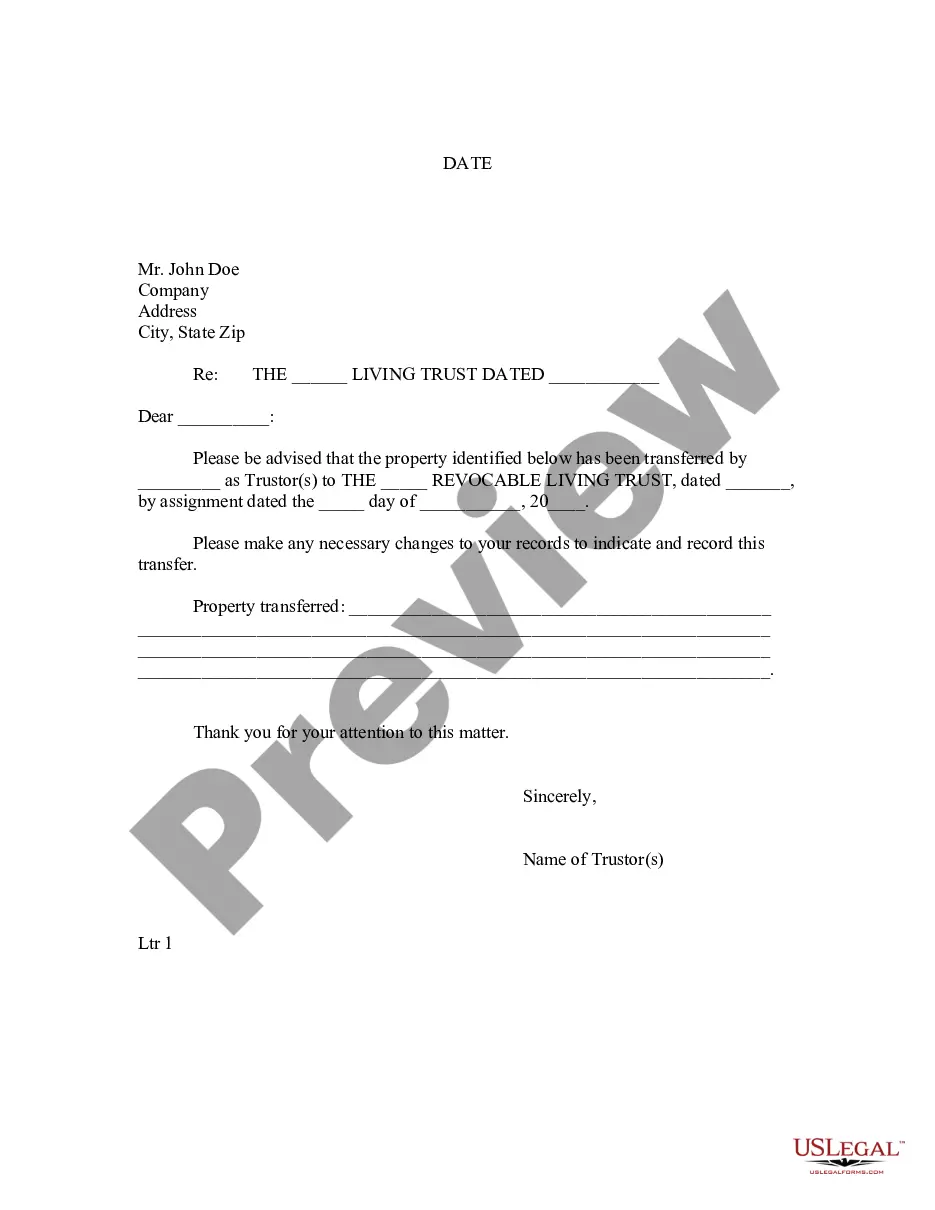
Delaware Letter from Tenant to Landlord about Inadequacy of heating resources insufficient heat
What this document covers
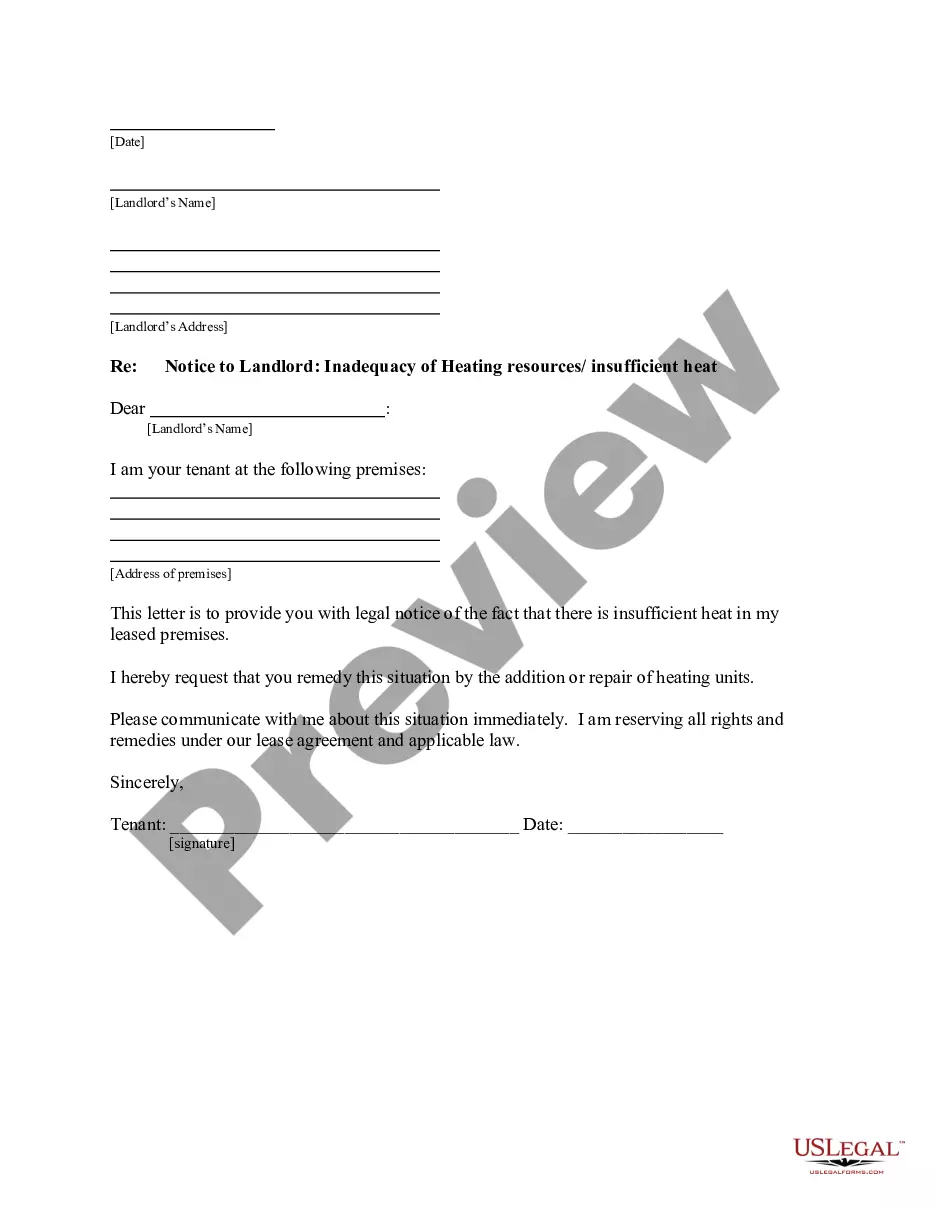
This form is a letter designed to notify the landlord of inadequate heating resources in the leased premises. The Letter from Tenant to Landlord about Inadequacy of Heating Resources is specifically crafted to request that the landlord address the situation by adding or repairing heating units. This form serves to communicate a legal concern related to tenant rights, emphasizing the importance of adequate heating in rental properties, which distinguishes it from other forms of tenant-landlord communications.
Form components explained
- Tenant's request for repair or addition of heating units.
- Communication request for immediate response from the landlord.
- Reservation of rights under the lease agreement and applicable law.
- Signature and date fields for tenant identification.
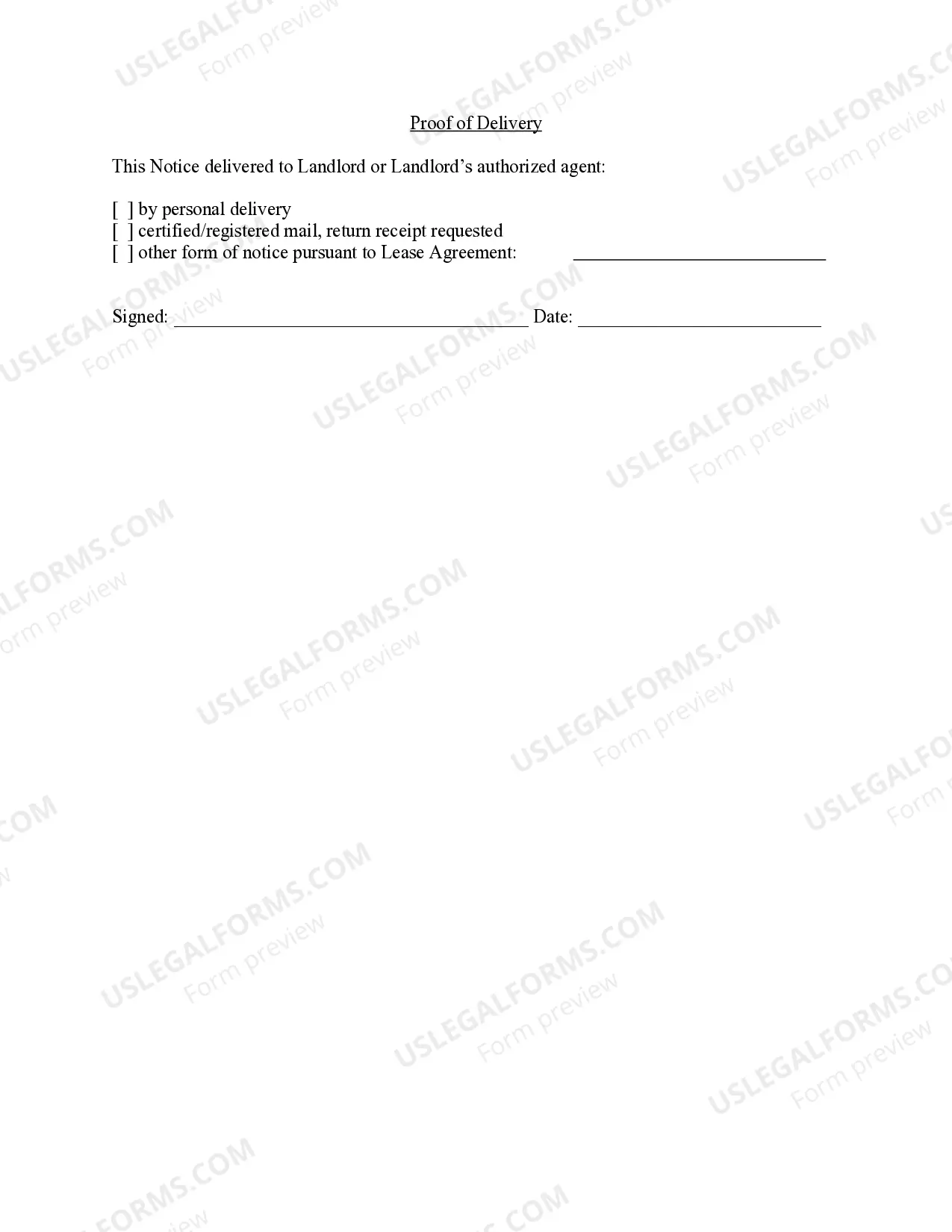
- Proof of delivery section to confirm notice has been delivered.


When to use this document
Who should use this form
- Any tenant experiencing insufficient heating in their rental property.
- Tenants who want to formally document their heating issues and request repairs.
- Renters who wish to ensure they retain their legal rights regarding maintenance and tenant obligations.
How to prepare this document
- Clearly state your request for the landlord to address the inadequate heating issue.
- Include a request for prompt communication regarding your notice.
- Sign and date the letter to affirm your identity and intent.
- Deliver the letter to the landlord or their authorized agent, using the proof of delivery section for verification.
Notarization requirements for this form
This form usually doesn’t need to be notarized. However, local laws or specific transactions may require it. Our online notarization service, powered by Notarize, lets you complete it remotely through a secure video session, available 24/7.
Get your form ready online
Our built-in tools help you complete, sign, share, and store your documents in one place.
Make edits, fill in missing information, and update formatting in US Legal Forms—just like you would in MS Word.
Download a copy, print it, send it by email, or mail it via USPS—whatever works best for your next step.
Sign and collect signatures with our SignNow integration. Send to multiple recipients, set reminders, and more. Go Premium to unlock E-Sign.
If this form requires notarization, complete it online through a secure video call—no need to meet a notary in person or wait for an appointment.
We protect your documents and personal data by following strict security and privacy standards.

Make edits, fill in missing information, and update formatting in US Legal Forms—just like you would in MS Word.

Download a copy, print it, send it by email, or mail it via USPS—whatever works best for your next step.

Sign and collect signatures with our SignNow integration. Send to multiple recipients, set reminders, and more. Go Premium to unlock E-Sign.

If this form requires notarization, complete it online through a secure video call—no need to meet a notary in person or wait for an appointment.

We protect your documents and personal data by following strict security and privacy standards.
Common mistakes to avoid
- Failing to clearly specify the inadequacy of heat or the need for repairs.
- Not including a request for the landlord to respond promptly.
- Neglecting to sign and date the letter, which could undermine its validity.
- Not keeping a copy of the letter for your personal records.
Benefits of using this form online
- Convenient access to legal templates anytime and anywhere.
- Editability allows for quick updates to address specific concerns or details.
- Reliability, as these forms are drafted by licensed attorneys to assure legal compliance.
Looking for another form?
Form popularity
FAQ
Delaware law does not specify a strict timeline for replacing carpets, but landlords are expected to maintain habitable living conditions. If the carpets become excessively worn or damaged, landlords should replace them to ensure tenant comfort and safety. If you find yourself in a situation where inadequate carpets affect your living conditions, consider drafting a Delaware Letter from Tenant to Landlord about Inadequacy of heating resources insufficient heat as a formal request for resolution. Regular maintenance contributes to a healthier living environment for all tenants.
In Delaware, a landlord must provide adequate heat throughout the winter months. If your landlord fails to address heating issues, you should consider sending a Delaware Letter from Tenant to Landlord about Inadequacy of heating resources insufficient heat. Typically, landlords should repair heating problems within a reasonable timeframe, often defined as 24 to 48 hours, especially during extreme cold. Prolonged heating outages may offer grounds for tenants to seek legal remedies.
Yes, you can sue your landlord for no heating if they fail to maintain adequate heating resources in your rental unit. Before taking legal action, it's important to notify your landlord about the insufficiency of heat, ideally through a Delaware Letter from Tenant to Landlord about Inadequacy of heating resources insufficient heat. This documentation can support your case, demonstrating your efforts to resolve the issue before resorting to litigation.
Section 23 of the Landlord and Tenant Act outlines the responsibilities of landlords regarding heating and other essential services. It states that landlords must provide adequate heating resources to ensure a safe and livable environment. If you experience insufficient heat, it's crucial to document these issues and consider writing a Delaware Letter from Tenant to Landlord about Inadequacy of heating resources insufficient heat to formally address the problem.
Breaking a lease without penalty in Delaware is possible under certain conditions, like the landlord's failure to ensure a habitable living space, including adequate heating. If your landlord does not address inadequate heating after several requests, this may provide grounds for lease termination. You might want to prepare a Delaware Letter from Tenant to Landlord about Inadequacy of heating resources insufficient heat to document your concerns before considering lease termination.
Section 5514 specifies procedural guidelines for landlords regarding rental property disputes, emphasizing tenants' rights. This includes addressing complaints such as lack of heating in your unit. If your landlord has not responded to your heating issues, a Delaware Letter from Tenant to Landlord about Inadequacy of heating resources insufficient heat can serve as an important tool to advocate for your rights.
Section 5106 outlines the responsibilities of landlords regarding the maintenance of heating, plumbing, and other essential services. Landlords are required to ensure that these services are adequately provided. When there's an issue with insufficient heat, tenants can use a Delaware Letter from Tenant to Landlord about Inadequacy of heating resources insufficient heat to formally request necessary repairs.
Section 5314 of the Delaware Residential Landlord Tenant Code addresses the right of tenants to a safe and habitable living environment. This includes provisions regarding heating and other essential services. If you experience inadequate heat, it is advisable to document your situation and consider using a Delaware Letter from Tenant to Landlord about Inadequacy of heating resources insufficient heat for effective communication.
Yes, you can sue your landlord for failing to provide adequate heating in your rental unit. Under the Delaware Landlord-Tenant Code, tenants have the right to a habitable living environment, which includes sufficient heat. If your landlord neglects this responsibility, a Delaware Letter from Tenant to Landlord about Inadequacy of heating resources insufficient heat can be a formal way to address the issue before seeking legal action.
In Delaware, no law currently governs the maximum rent increase that can be applied. However, it is important to check your lease agreement for any specific details regarding rent adjustments. If you believe your rent increase is unreasonable, you might consider drafting a Delaware Letter from Tenant to Landlord about Inadequacy of heating resources insufficient heat, as inadequate heating can impact your living conditions and rent terms.