Delaware Letter from Tenant to Landlord containing Notice to landlord to withdraw retaliatory rent increase
About this form
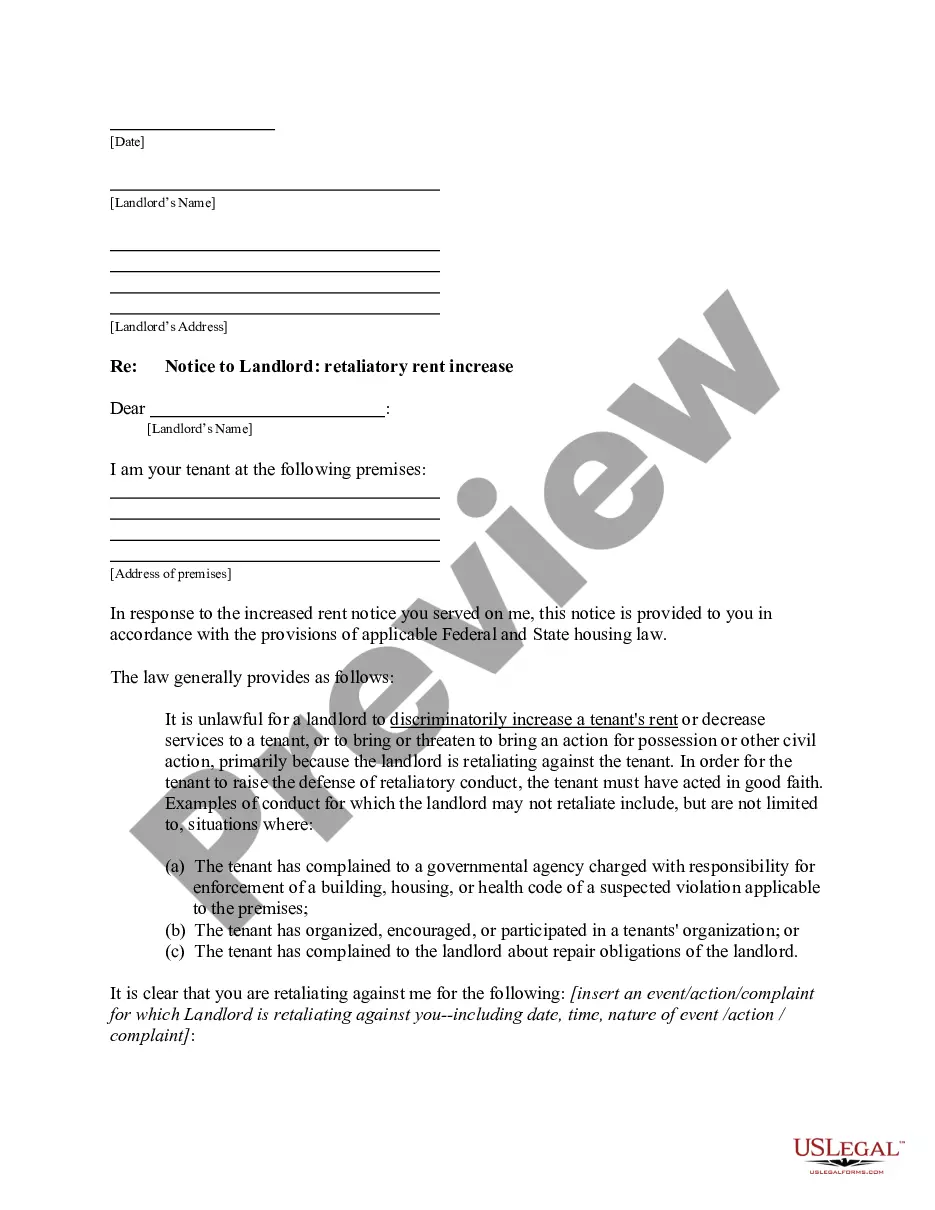
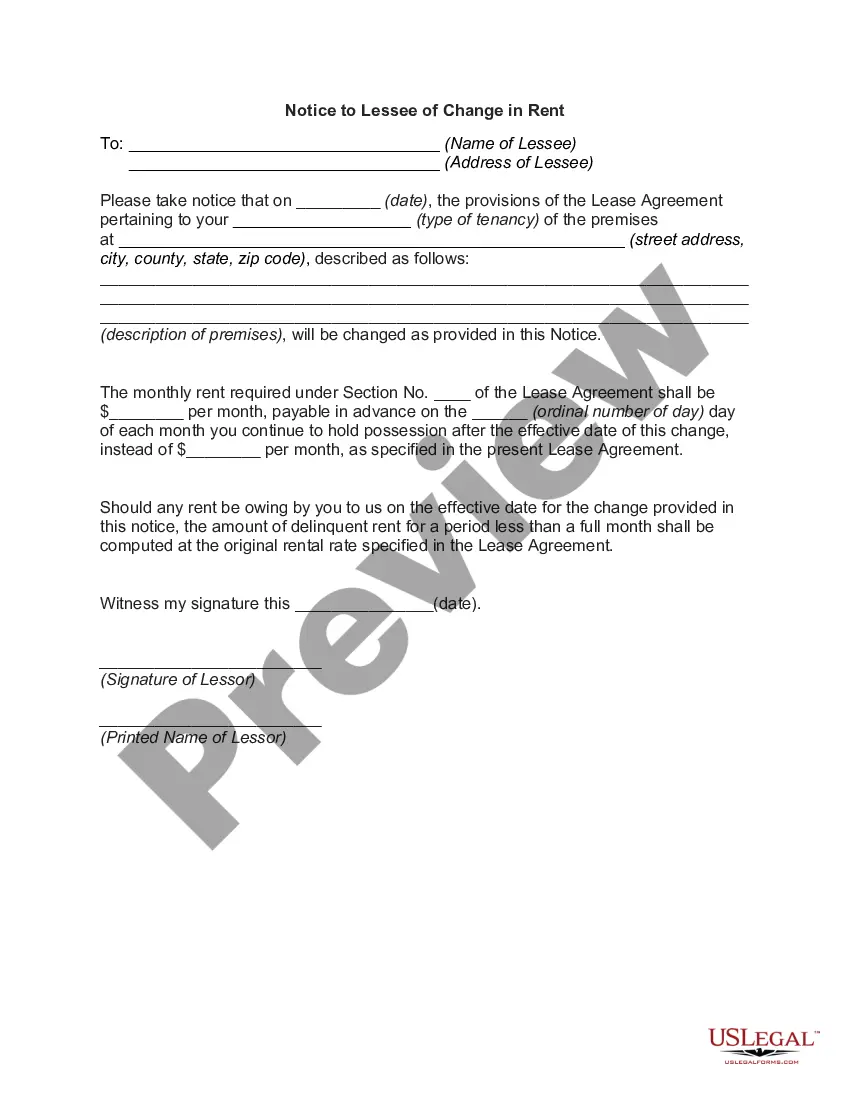
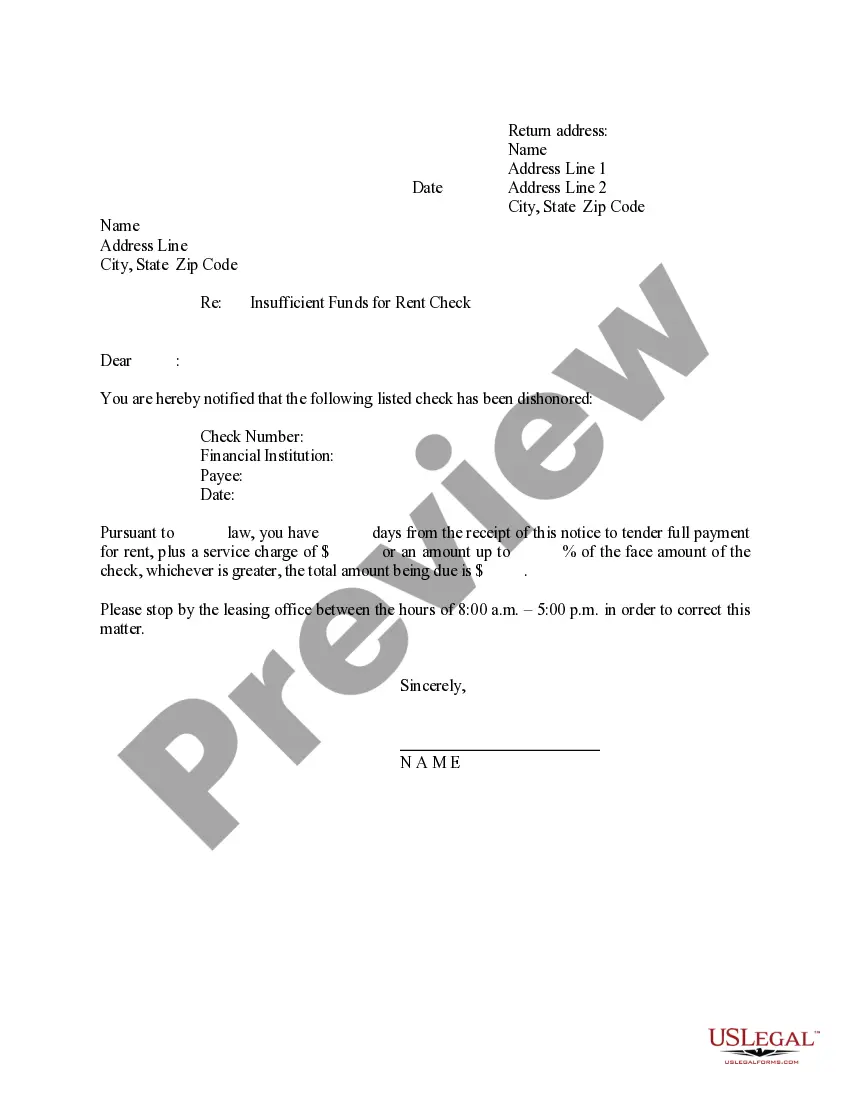
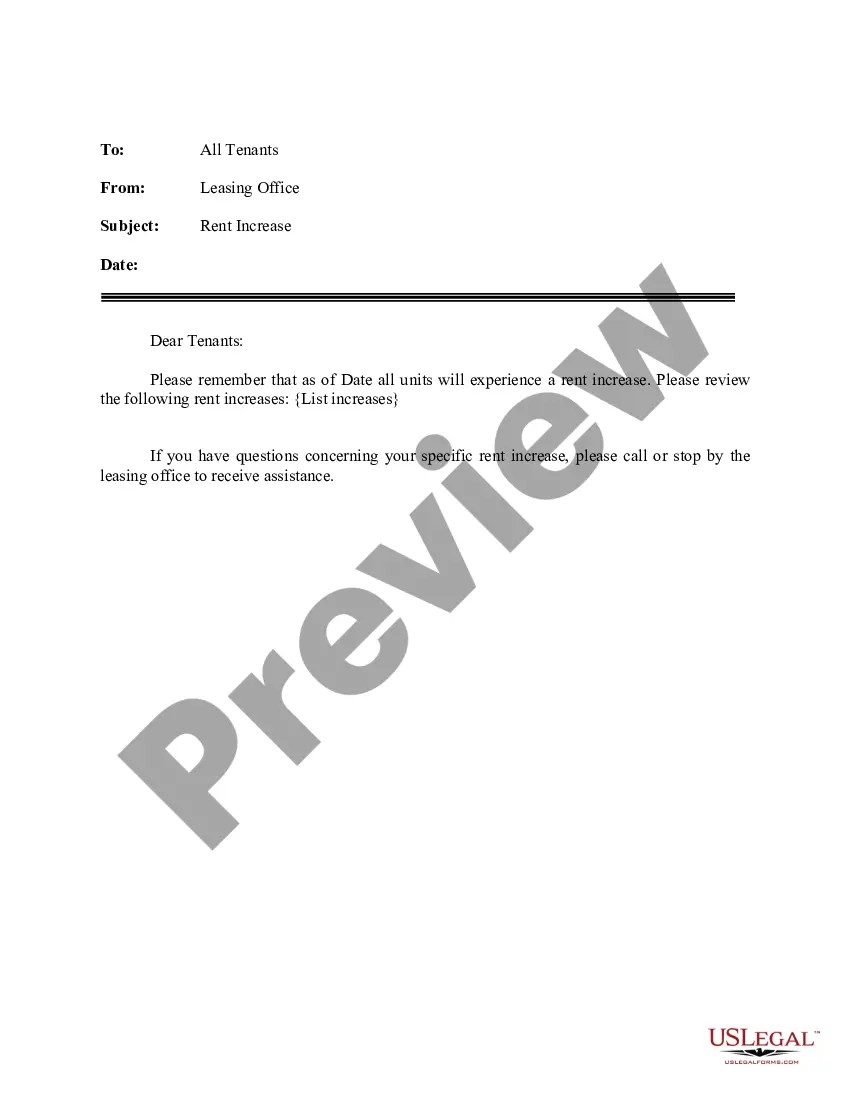
This Letter from Tenant to Landlord containing Notice to landlord to withdraw retaliatory rent increase is a legal document that informs a landlord about unlawful retaliatory actions, such as increasing rent in response to a tenant's complaints or lawful actions. This form serves to formally address the issue, ensuring that the tenant's rights are protected under state housing laws, setting it apart from other tenant-landlord communication forms.
Main sections of this form
- Identification of the tenant and landlord
- Description of the retaliatory rent increase
- Statement of the tenant's rights under state law
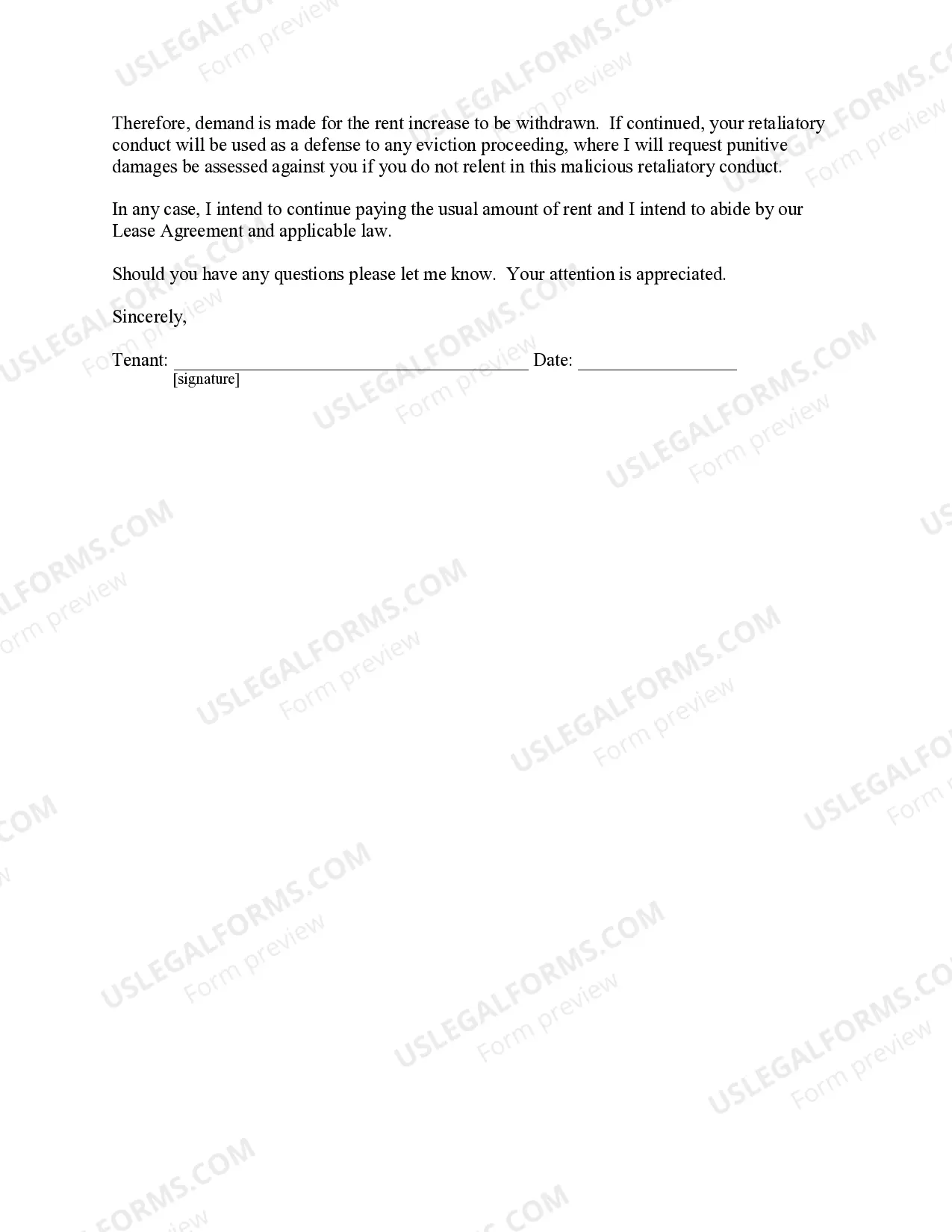
- Intent to continue paying rent and abide by the lease agreement
- Space for signatures and dates


When this form is needed
This form should be used when a tenant believes that their landlord has increased their rent in retaliation for exercising legal rights, such as reporting health code violations or participating in tenant organization activities. It serves as an official notice to the landlord, demonstrating the tenant's awareness of their rights and the landlord's obligations.
Who can use this document
- Tenants who are subject to a retaliatory rent increase
- Individuals who have lodged complaints against their landlord
- Members of tenants' organizations facing discrimination in rental terms
Instructions for completing this form
- Identify and enter the names and addresses of both the tenant and landlord.
- Clearly describe the retaliatory rent increase, including the amount and date.
- Cite specific complaints or actions taken by the tenant that may have triggered the retaliation.
- Indicate the tenant's intention to continue paying rent and abiding by the lease agreement.
- Sign and date the form to finalize the notice.
Notarization guidance
This form does not typically require notarization unless specified by local law. Always check state regulations to confirm if notarization is necessary in your jurisdiction.
Get your form ready online
Our built-in tools help you complete, sign, share, and store your documents in one place.
Make edits, fill in missing information, and update formatting in US Legal Forms—just like you would in MS Word.
Download a copy, print it, send it by email, or mail it via USPS—whatever works best for your next step.
Sign and collect signatures with our SignNow integration. Send to multiple recipients, set reminders, and more. Go Premium to unlock E-Sign.
If this form requires notarization, complete it online through a secure video call—no need to meet a notary in person or wait for an appointment.
We protect your documents and personal data by following strict security and privacy standards.

Make edits, fill in missing information, and update formatting in US Legal Forms—just like you would in MS Word.

Download a copy, print it, send it by email, or mail it via USPS—whatever works best for your next step.

Sign and collect signatures with our SignNow integration. Send to multiple recipients, set reminders, and more. Go Premium to unlock E-Sign.

If this form requires notarization, complete it online through a secure video call—no need to meet a notary in person or wait for an appointment.

We protect your documents and personal data by following strict security and privacy standards.
Common mistakes
- Failing to include specific details about the retaliatory action.
- Not signing or dating the form before sending it to the landlord.
- Overlooking state-specific legal language or requirements.
Why complete this form online
- Instant access and download for immediate use.
- Editability to tailor the form to your specific situation.
- Created and reviewed by licensed attorneys to ensure legal accuracy.
Key takeaways
- This form protects tenants from retaliatory rent increases.
- It is crucial to provide a clear rationale for asserting that a rent increase is retaliatory.
- Proper completion and submission of the form can help enforce tenant rights under housing laws.
Looking for another form?


Form popularity
FAQ
Section 5514 of the Delaware landlord-tenant code deals with the prohibition of retaliation against tenants. It highlights the protections afforded to tenants who assert their rights against unfair treatment by landlords. With this understanding, tenants can confidently leverage documents like a Delaware Letter from Tenant to Landlord containing Notice to landlord to withdraw retaliatory rent increase to assert their rights and demand fair treatment.
A retaliatory eviction occurs when a landlord seeks to evict a tenant in response to the tenant exercising their legal rights, such as requesting repairs or joining a tenants' group. These evictions are considered illegal under the Delaware landlord-tenant Code. If you find yourself in this situation, issuing a Delaware Letter from Tenant to Landlord containing Notice to landlord to withdraw retaliatory rent increase can be a critical step in protecting your rights.
Section 5314 of the Delaware Residential landlord-tenant Code addresses retaliatory actions taken by landlords against tenants. This section provides essential protections for tenants who have exercised their rights, helping to prevent unfair treatment. If you believe you have experienced retaliation, a Delaware Letter from Tenant to Landlord containing Notice to landlord to withdraw retaliatory rent increase can serve as a formal notice to your landlord.
Section 5106 of the Delaware landlord-tenant Code outlines the lawful reasons for a landlord's eviction of a tenant. It defines the grounds for eviction and sets the process landlords must follow. Tenants can protect themselves from retaliatory evictions by being aware of their rights and tools like a Delaware Letter from Tenant to Landlord containing Notice to landlord to withdraw retaliatory rent increase.
In Delaware, landlords must provide tenants with a written notice of at least 60 days for most lease agreements before they can ask them to move out. This notice gives tenants sufficient time to prepare and find new accommodation. If a tenant believes that a notice period does not comply with the Delaware landlord-tenant Code, they can utilize a Delaware Letter from Tenant to Landlord containing Notice to landlord to withdraw retaliatory rent increase to address concerns.
Section 23 of the Landlord and Tenant Act focuses on the obligations of landlords regarding rental agreements. This section ensures landlords adhere to safety and maintenance standards. Understanding Section 23 can help tenants respond effectively if they encounter retaliatory actions or unfair rent increases, potentially using a Delaware Letter from Tenant to Landlord containing Notice to landlord to withdraw retaliatory rent increase.
Tenant code 5502 in Delaware safeguards tenants against unfair practices by landlords. This code outlines tenants' rights in residential lease agreements and covers various aspects of the landlord-tenant relationship. By understanding this code, you can better navigate issues, including unfair rent increases, with tools like a Delaware Letter from Tenant to Landlord containing Notice to landlord to withdraw retaliatory rent increase.
Delaware does not have a state-wide limit on rent increases, allowing landlords to set their own rates. However, landlords must follow the guidelines laid out in the landlord-tenant code. If you feel a rent increase is retaliatory, consider using a Delaware Letter from Tenant to Landlord containing Notice to landlord to withdraw retaliatory rent increase to communicate your concerns and protect your rights.
Section 5513 of the Delaware landlord-tenant Code addresses the conditions under which a landlord can increase rent. This section specifically outlines the legality of rent increases and includes important tenant protections. If you receive a rent increase that feels retaliatory, a Delaware Letter from Tenant to Landlord containing Notice to landlord to withdraw retaliatory rent increase can be an essential tool.
When writing a rent increase letter to your tenant, begin by stating the current rent amount and the new rent you propose. Include a clear explanation for the increase, such as market trends or property upgrades. It's essential to follow Delaware's laws regarding notice periods and procedures. Utilizing a Delaware Letter from Tenant to Landlord containing Notice to landlord to withdraw retaliatory rent increase can also be insightful to help you navigate any potential disputes effectively.