District of Columbia Marital Legal Separation and Property Settlement Agreement no Children parties may have Joint Property or Debts where Divorce Action Filed
What this document covers
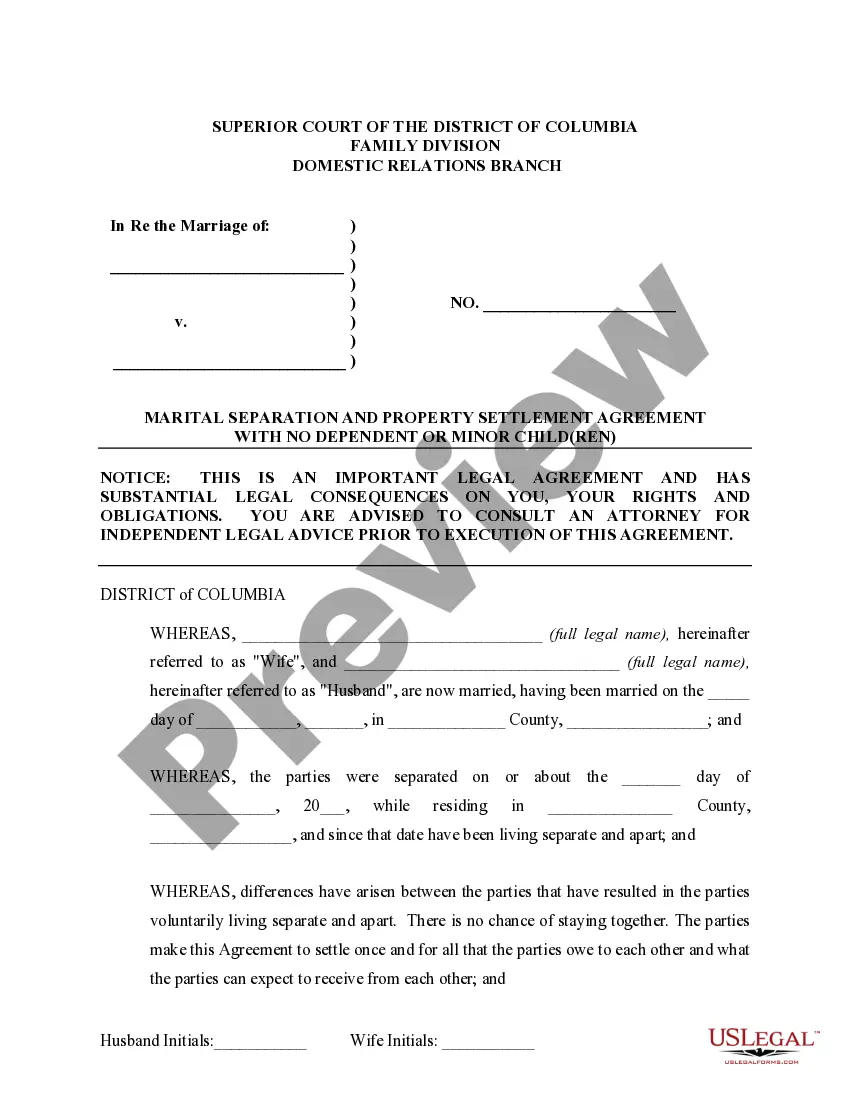
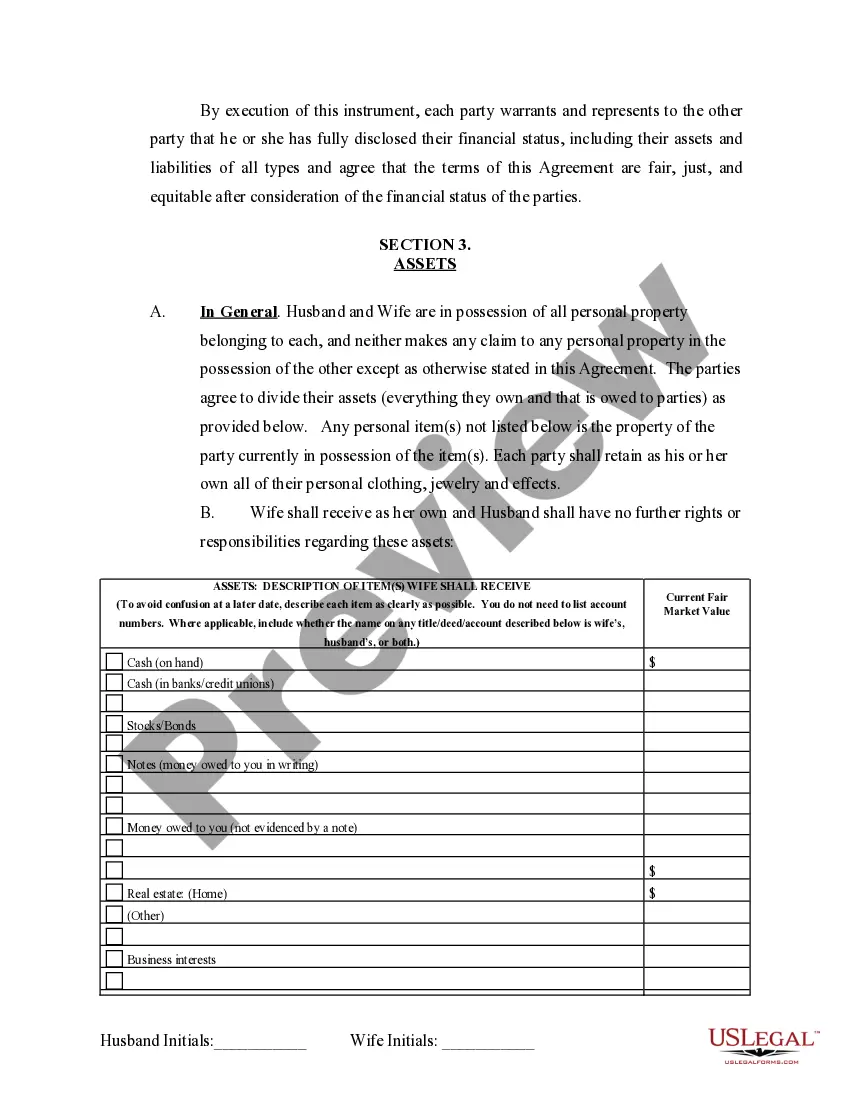
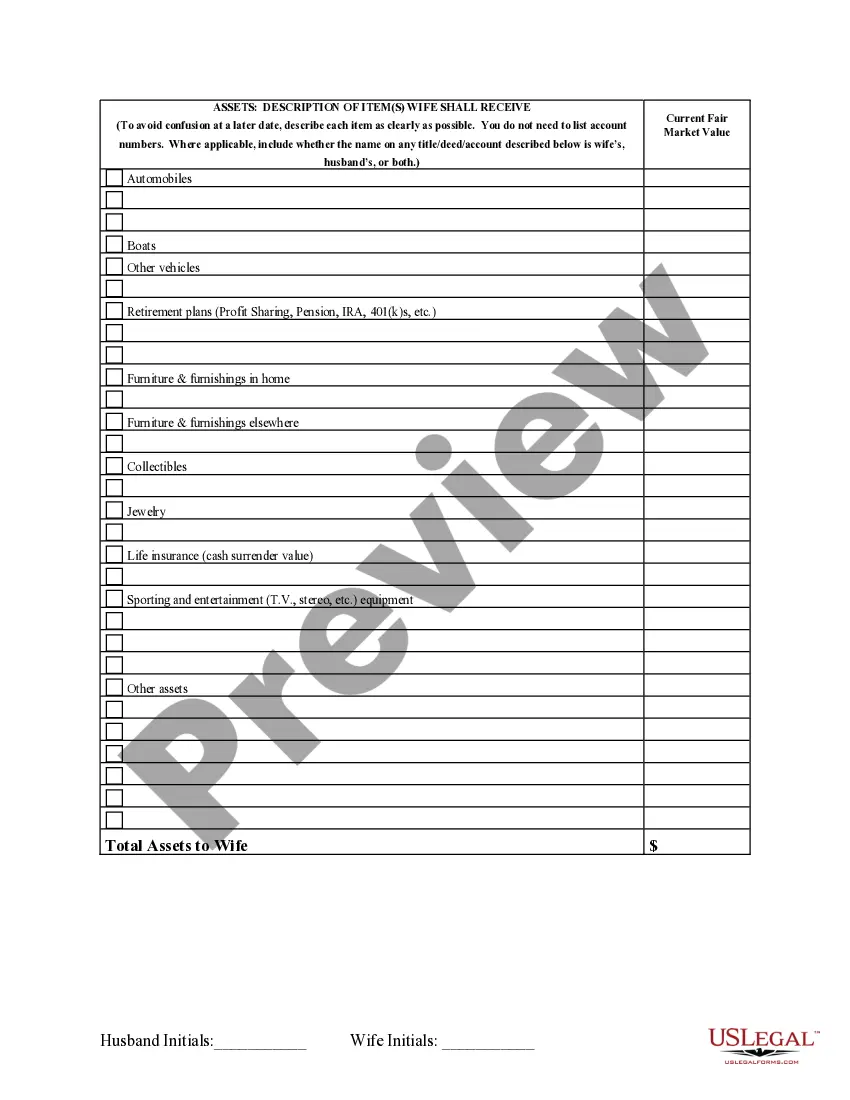
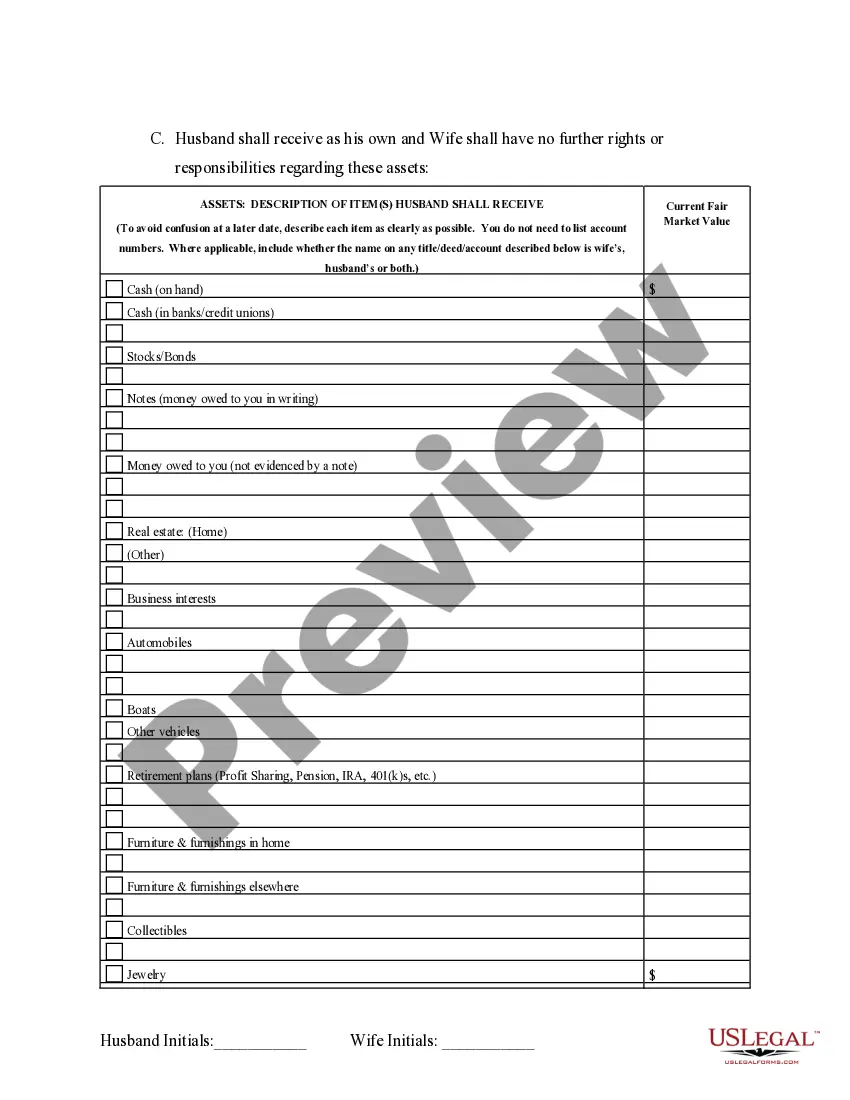
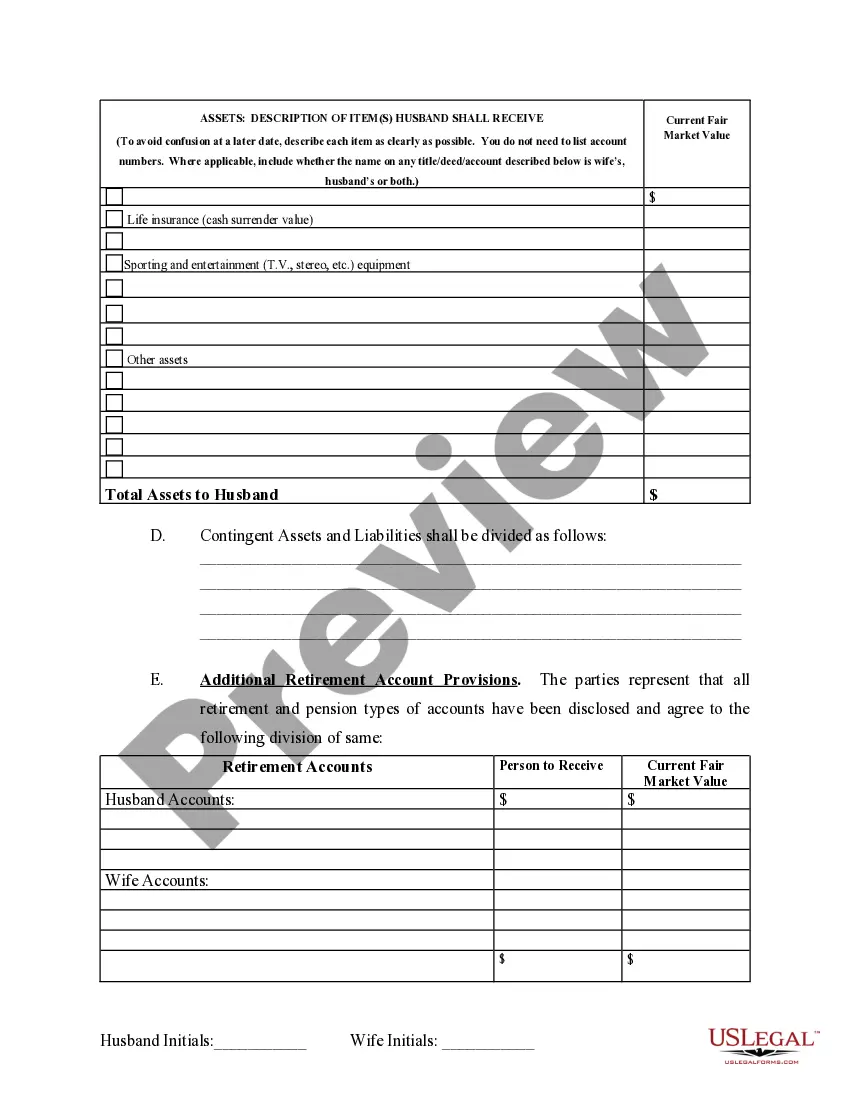
The Marital Legal Separation and Property Settlement Agreement for couples with no children outlines the terms concerning the separation of spouses who have joint property or debts. This form facilitates a comprehensive division of assets and liabilities while ensuring both parties agree to the terms ahead of a pending divorce action. Unlike custody or visitation agreements that address child-related issues, this document focuses solely on the financial and property aspects of the separation.
Key components of this form
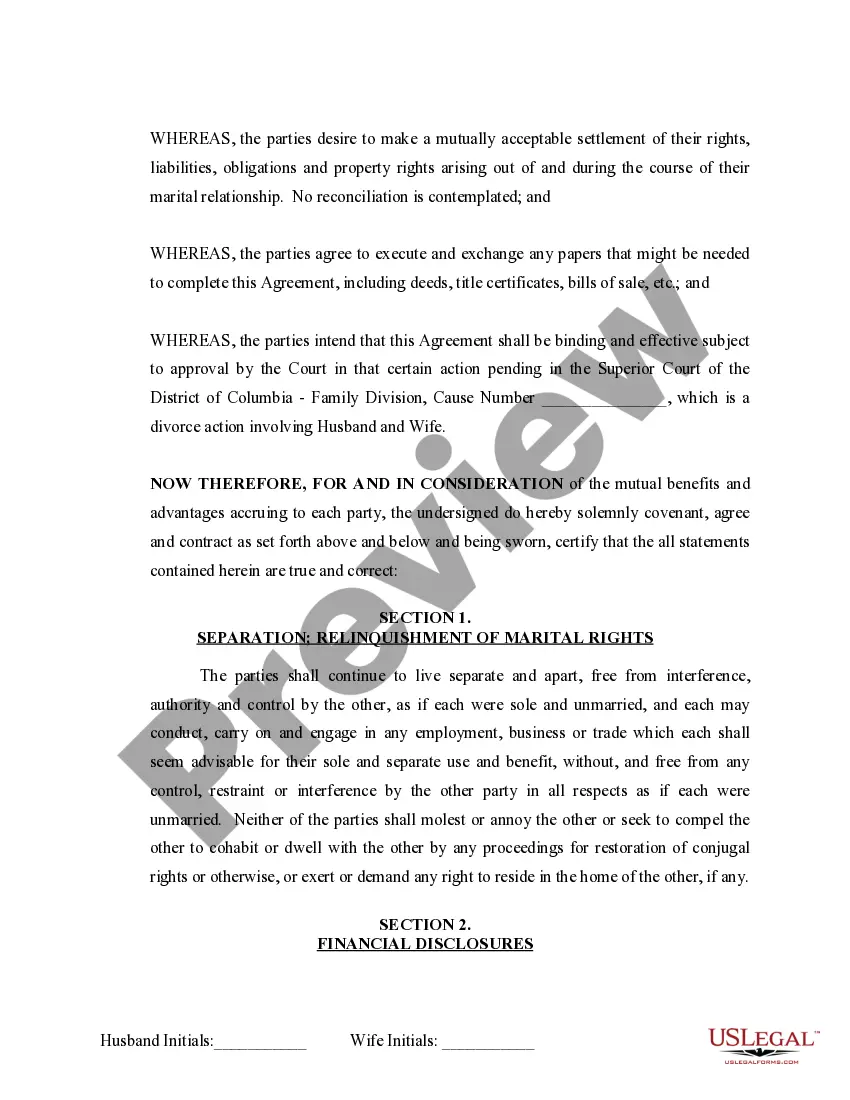
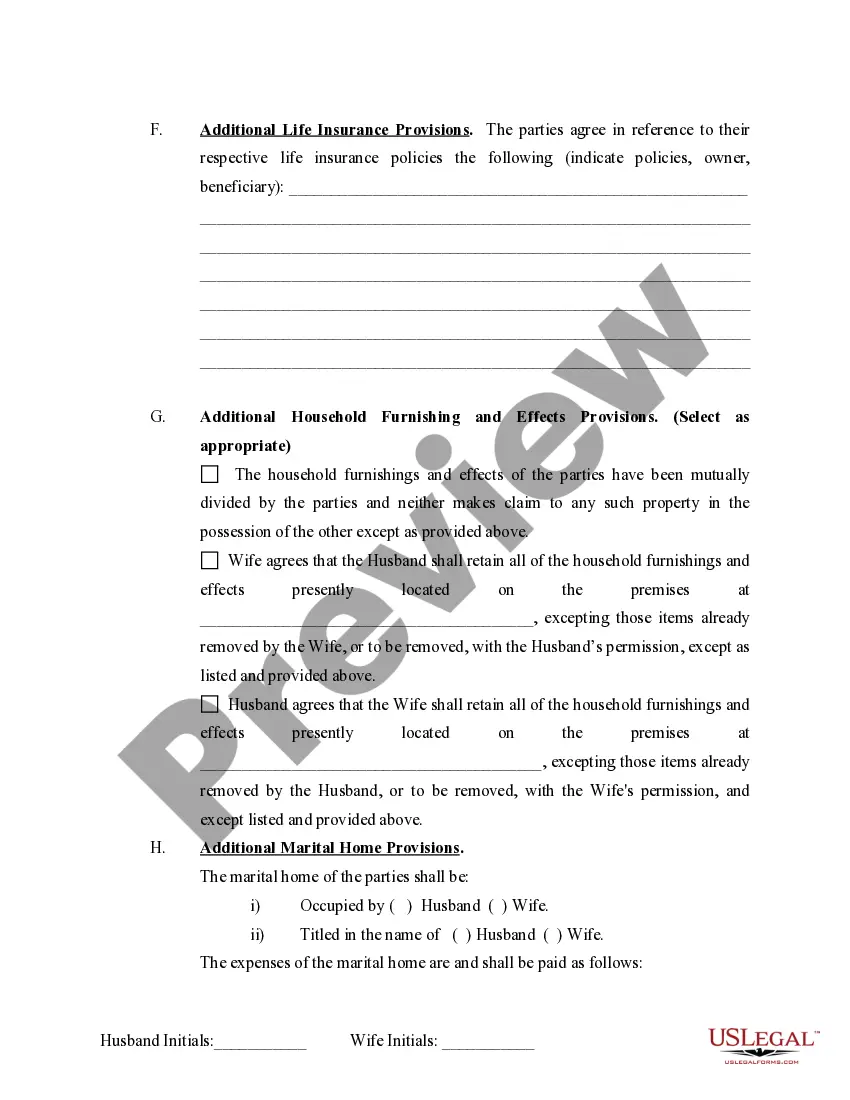
- Detailed sections for asset division, including cash, real estate, and retirement accounts.
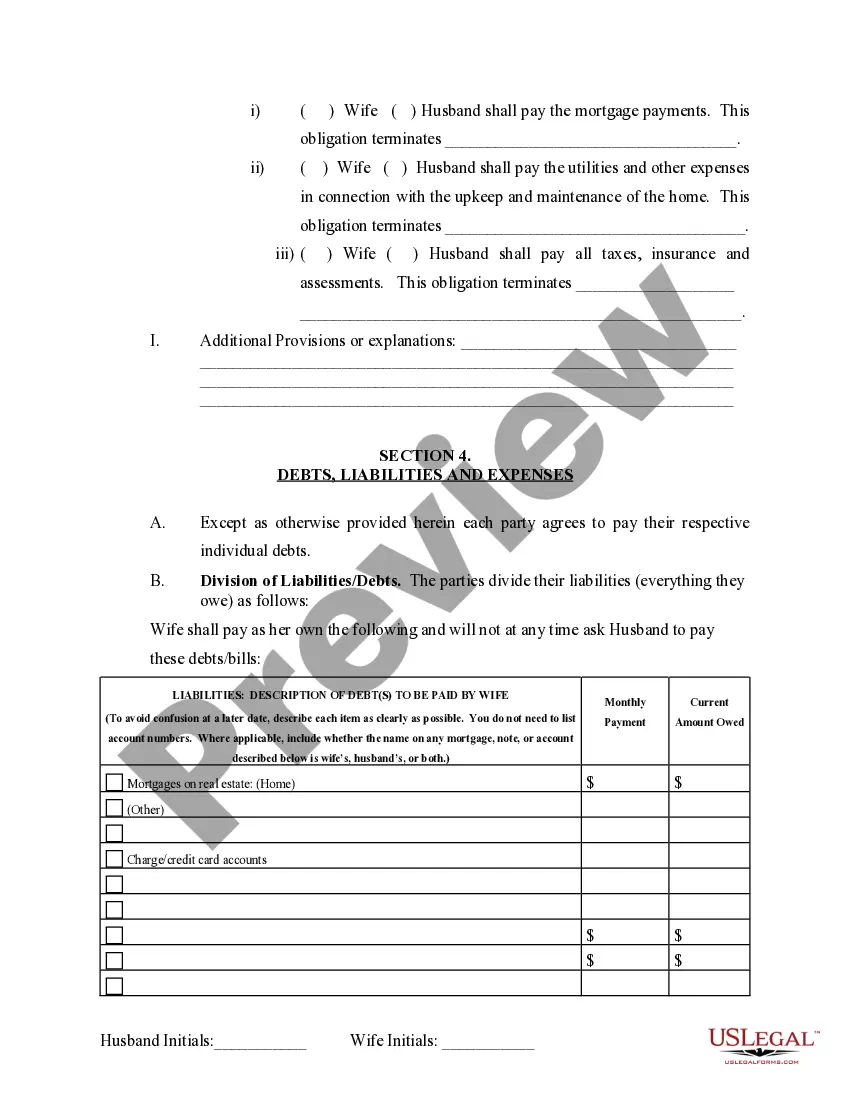
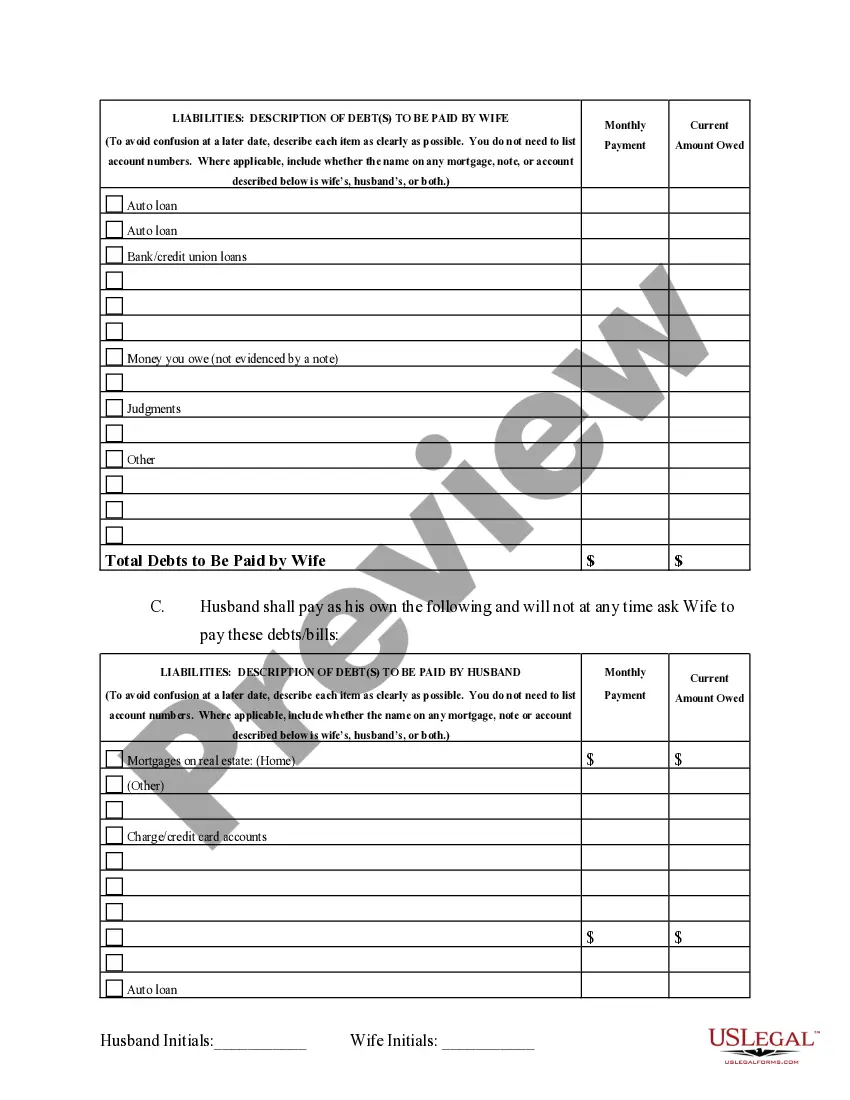
- Clear outlines of individual debts each party agrees to pay.
- Provisions for spousal support or alimony if applicable.
- Mutual indemnity clauses to protect against future claims related to debts.
- Signature and notarization requirements for legal validity.


When to use this document
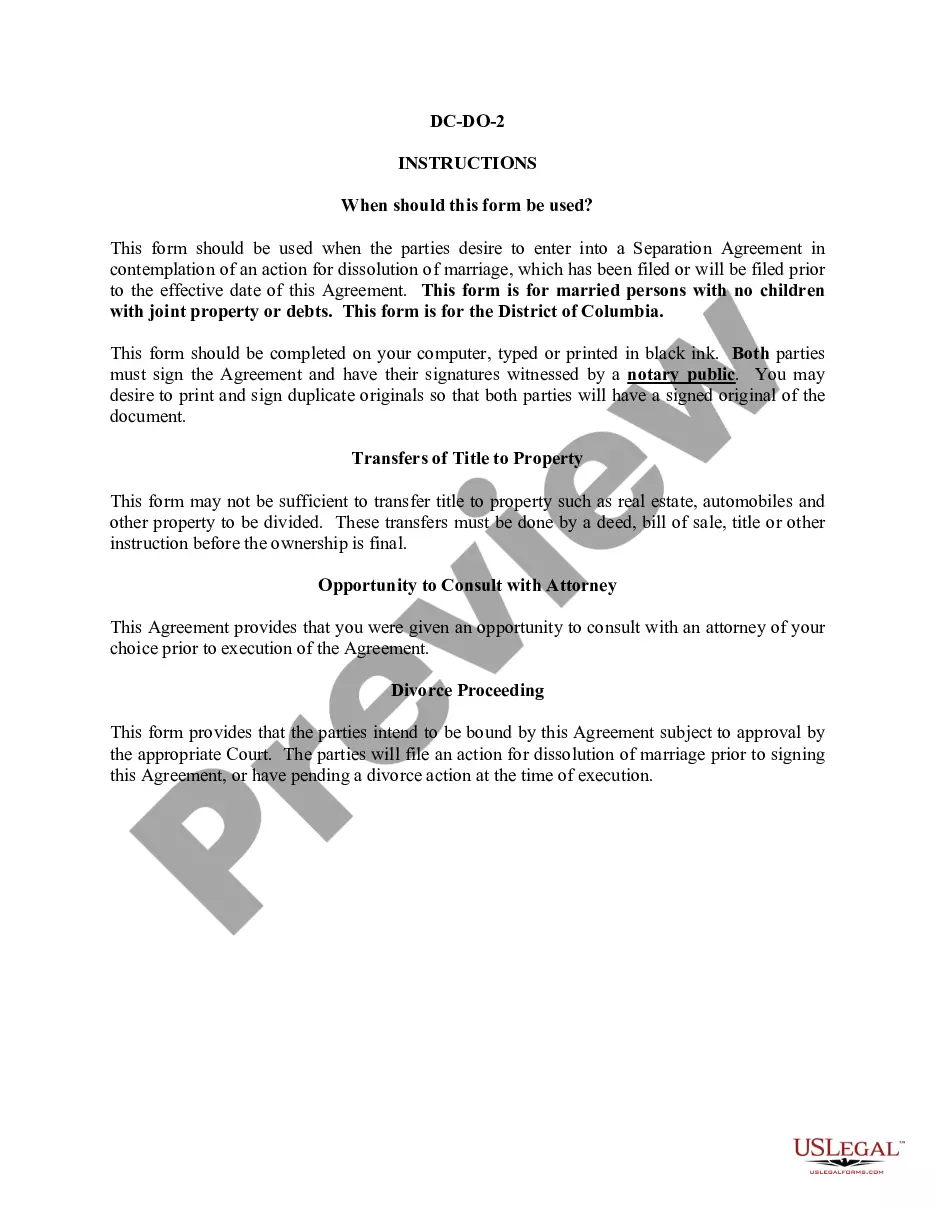
This form should be used when a couple, without children, is seeking to formalize their separation and resolve financial matters as part of a divorce action filed or to be filed. It is particularly relevant when both parties have joint property or debts that need to be divided and agree to a comprehensive settlement to avoid future disputes.
Who should use this form
- Married couples residing in the District of Columbia
- Couples with no dependent or minor children
- Individuals who have joint property or debts they need to address in a divorce
- Parties intending to resolve all discrepancies before finalizing divorce proceedings
How to prepare this document
- Identify and list all joint property and debts, clearly specifying how they will be divided.
- Fill in the personal information of both spouses, including names and addresses.
- Determine and agree upon any spousal support arrangements, if applicable.
- Ensure both parties sign the agreement and have it witnessed by a notary public.
- File the signed agreement with the Court as part of the divorce action.
Does this form need to be notarized?
Notarization is required for this form to take effect. Our online notarization service, powered by Notarize, lets you verify and sign documents remotely through an encrypted video session, available 24/7.
Get your form ready online
Our built-in tools help you complete, sign, share, and store your documents in one place.
Make edits, fill in missing information, and update formatting in US Legal Forms—just like you would in MS Word.
Download a copy, print it, send it by email, or mail it via USPS—whatever works best for your next step.
Sign and collect signatures with our SignNow integration. Send to multiple recipients, set reminders, and more. Go Premium to unlock E-Sign.
If this form requires notarization, complete it online through a secure video call—no need to meet a notary in person or wait for an appointment.
We protect your documents and personal data by following strict security and privacy standards.

Make edits, fill in missing information, and update formatting in US Legal Forms—just like you would in MS Word.

Download a copy, print it, send it by email, or mail it via USPS—whatever works best for your next step.

Sign and collect signatures with our SignNow integration. Send to multiple recipients, set reminders, and more. Go Premium to unlock E-Sign.

If this form requires notarization, complete it online through a secure video call—no need to meet a notary in person or wait for an appointment.

We protect your documents and personal data by following strict security and privacy standards.
Common mistakes
- Failing to list all joint debts, which may lead to future financial disputes.
- Not consulting with an attorney for legal advice before signing the agreement.
- Omitting necessary notarization, which is crucial for the document's validity.
- Using vague descriptions of assets or liabilities, which can create confusion later.
Why complete this form online
- Convenience of downloading and completing the form at your own pace.
- Editability allows customization to fit individual circumstances accurately.
- Reliability as the forms are drafted by licensed attorneys to ensure legal soundness.
Looking for another form?
Form popularity
FAQ
Another name for a divorce decree is a divorce judgment. This is the legal document issued by the court that finalizes the divorce and outlines the terms agreed upon by both parties or dictated by the court. It is vital to understand the significance of a divorce decree in the District of Columbia Marital Legal Separation and Property Settlement Agreement no Children parties may have Joint Property or Debts where Divorce Action Filed, as it holds legal authority regarding the dissolution of marriage and related matters.
Filling out a separation agreement requires careful consideration of your individual circumstances and needs. Begin by reviewing the relevant laws in your jurisdiction and include all pertinent information, such as property holdings and debts. The US Legal Forms platform offers user-friendly templates for the District of Columbia Marital Legal Separation and Property Settlement Agreement no Children parties may have Joint Property or Debts where Divorce Action Filed to aid you in this process. A comprehensive and thoughtfully completed agreement can greatly benefit both parties.
Writing a settlement offer for divorce involves clearly stating your proposed terms for property division, debt responsibilities, and any other agreements you wish to include. Start by outlining your goals and be prepared to negotiate. Utilizing resources like the US Legal Forms platform can simplify this process, providing templates and guidelines tailored to the District of Columbia Marital Legal Separation and Property Settlement Agreement no Children parties may have Joint Property or Debts where Divorce Action Filed. This approach can lead to a more constructive conversation.
A property settlement is not considered alimony; rather, it involves the division of assets and debts between the parties. Alimony, or spousal support, refers specifically to payments made by one spouse to another for financial support post-separation. In the context of the District of Columbia Marital Legal Separation and Property Settlement Agreement no Children parties may have Joint Property or Debts where Divorce Action Filed, property settlements focus on equitable distribution rather than ongoing support. Clarity in these terms is vital for all parties involved.
A settlement agreement for divorce outlines the terms that both parties agree upon before finalizing their divorce. This document typically covers issues such as division of property, debt responsibility, and any other relevant agreements. It's an essential part of navigating the District of Columbia Marital Legal Separation and Property Settlement Agreement no Children parties may have Joint Property or Debts where Divorce Action Filed. By creating a clear agreement, you can prevent future conflicts and save time in the divorce process.
A settlement agreement is a mutual understanding between parties regarding the terms of their separation, including asset division and debt responsibilities. In contrast, a divorce decree is the formal document issued by a court that legally ends a marriage. It often incorporates the settlement agreement but carries more legal weight, enforcing compliance from both parties. Understanding this distinction is crucial when considering the District of Columbia Marital Legal Separation and Property Settlement Agreement no Children parties may have Joint Property or Debts where Divorce Action Filed.
Yes, you can draw up your own separation agreement, provided you ensure it meets all legal requirements. It is important to be clear and thorough in your documentation to avoid future disputes. Using resources like the District of Columbia Marital Legal Separation and Property Settlement Agreement no Children parties may have Joint Property or Debts where Divorce Action Filed can facilitate this process and provide necessary templates.
A separation agreement is a document detailing the terms under which a couple separates, while legal separation is a formal court process. A separation agreement can apply during a legal separation but is not synonymous with it. Understanding the nuances of these terms is crucial, especially in relation to the District of Columbia Marital Legal Separation and Property Settlement Agreement no Children parties may have Joint Property or Debts where Divorce Action Filed.
Creating a separation plan involves outlining the terms regarding finances, living arrangements, and other responsibilities. Start by discussing these topics thoroughly with the other party to reach mutual agreements. When drafting this plan, remember to consider the District of Columbia Marital Legal Separation and Property Settlement Agreement no Children parties may have Joint Property or Debts where Divorce Action Filed for proper guidance.
Yes, you can legally separate without a lawyer. Many people choose to handle their separation independently by drafting their agreements. Nevertheless, consulting a professional can help ensure the District of Columbia Marital Legal Separation and Property Settlement Agreement no Children parties may have Joint Property or Debts where Divorce Action Filed is accurately addressed and protects your interests.