District of Columbia Commercial Sublease
Overview of this form
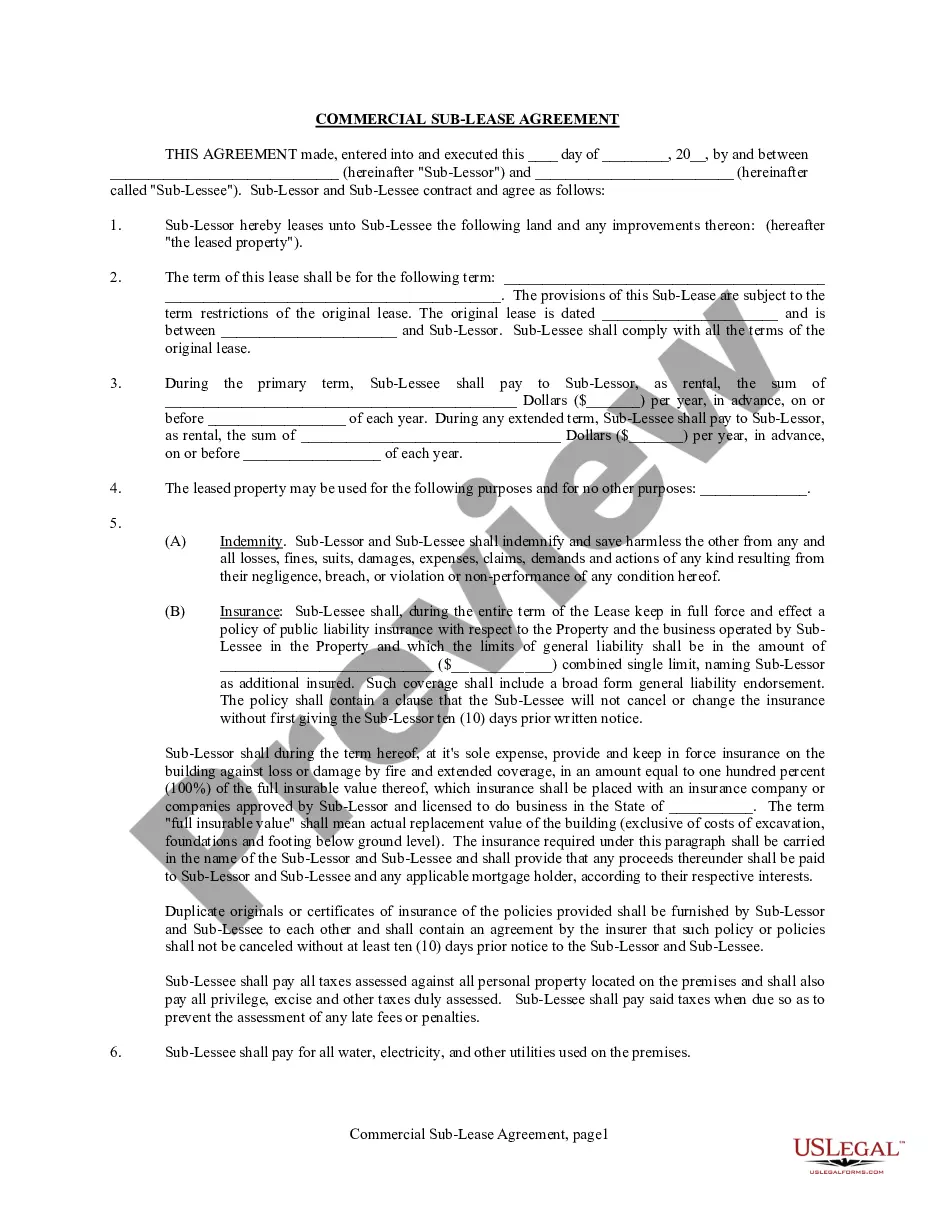
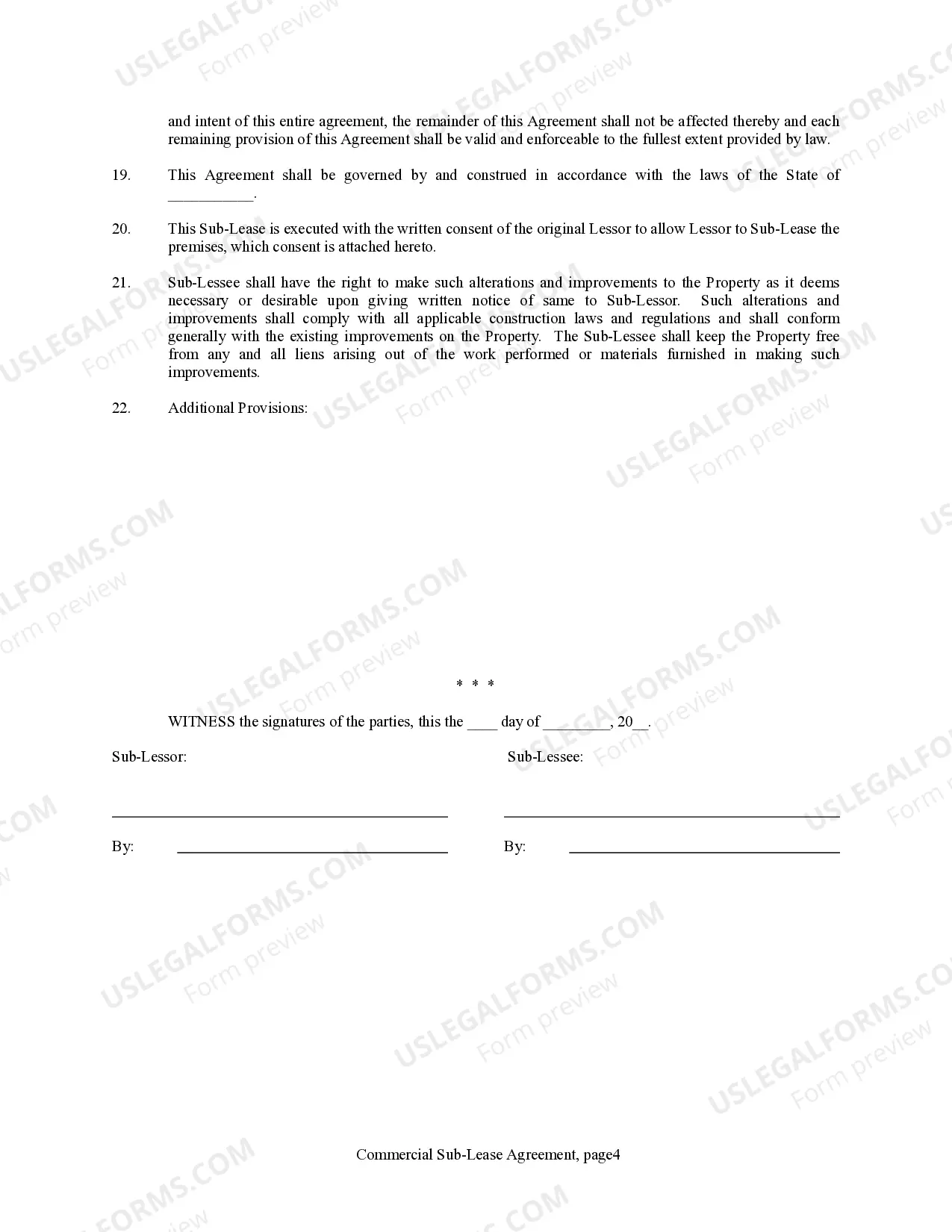
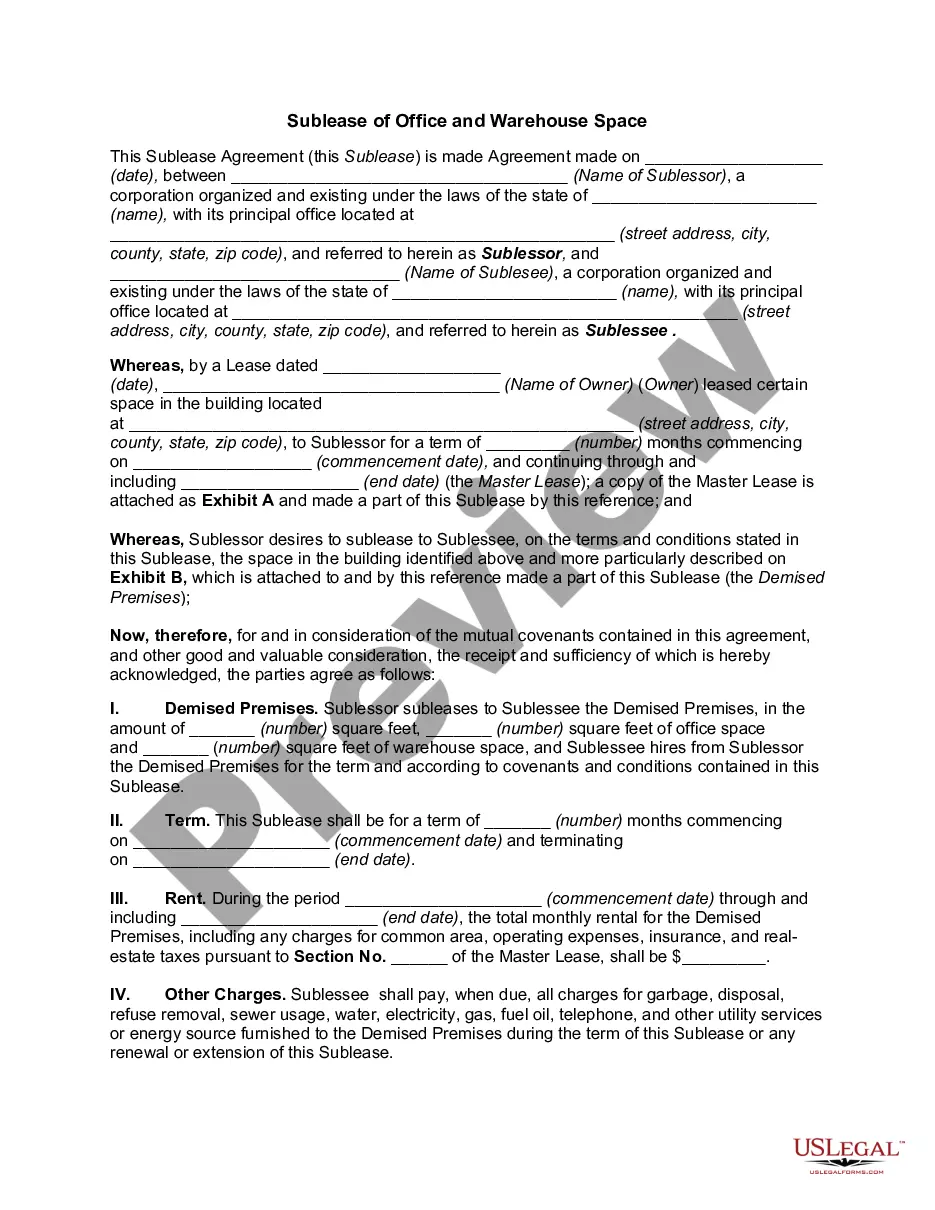
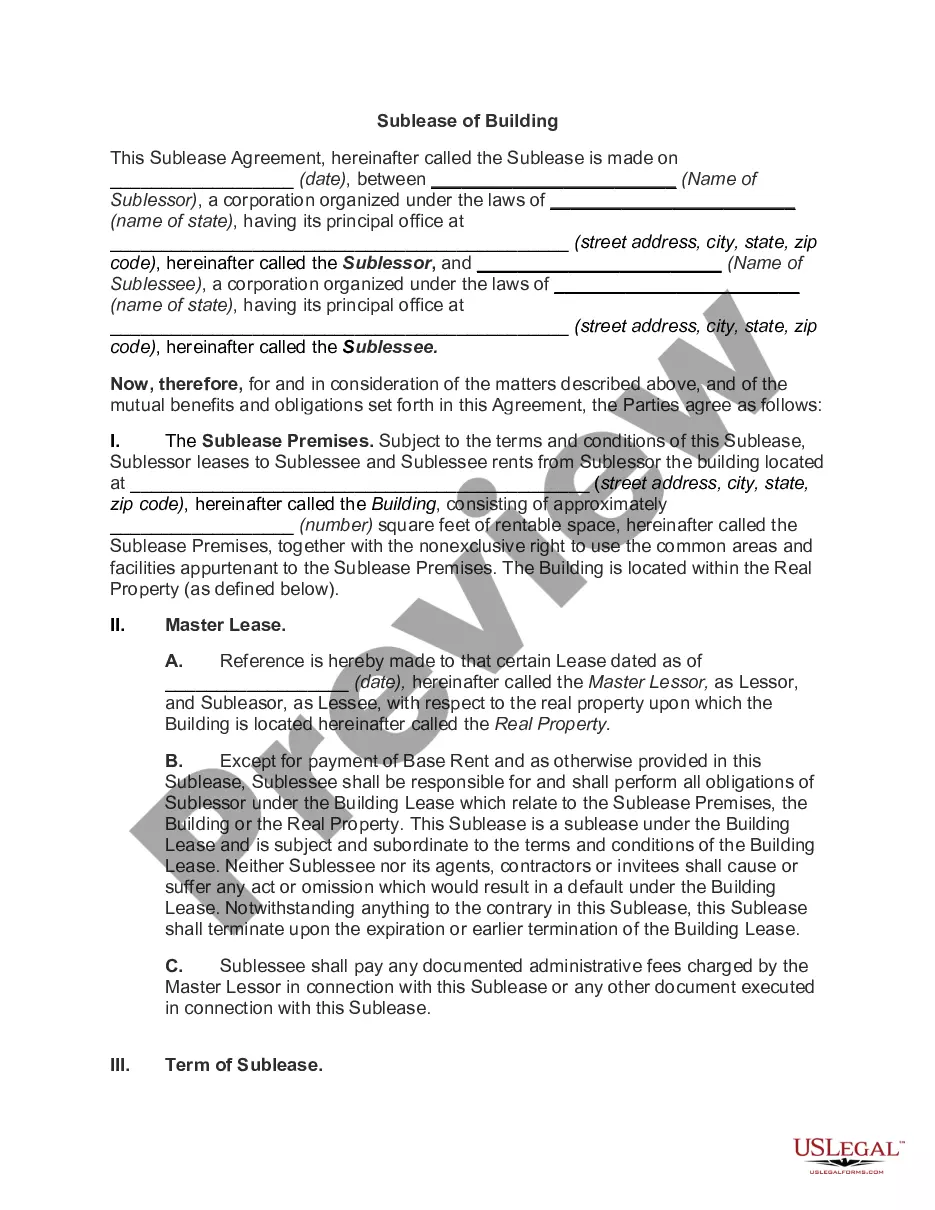
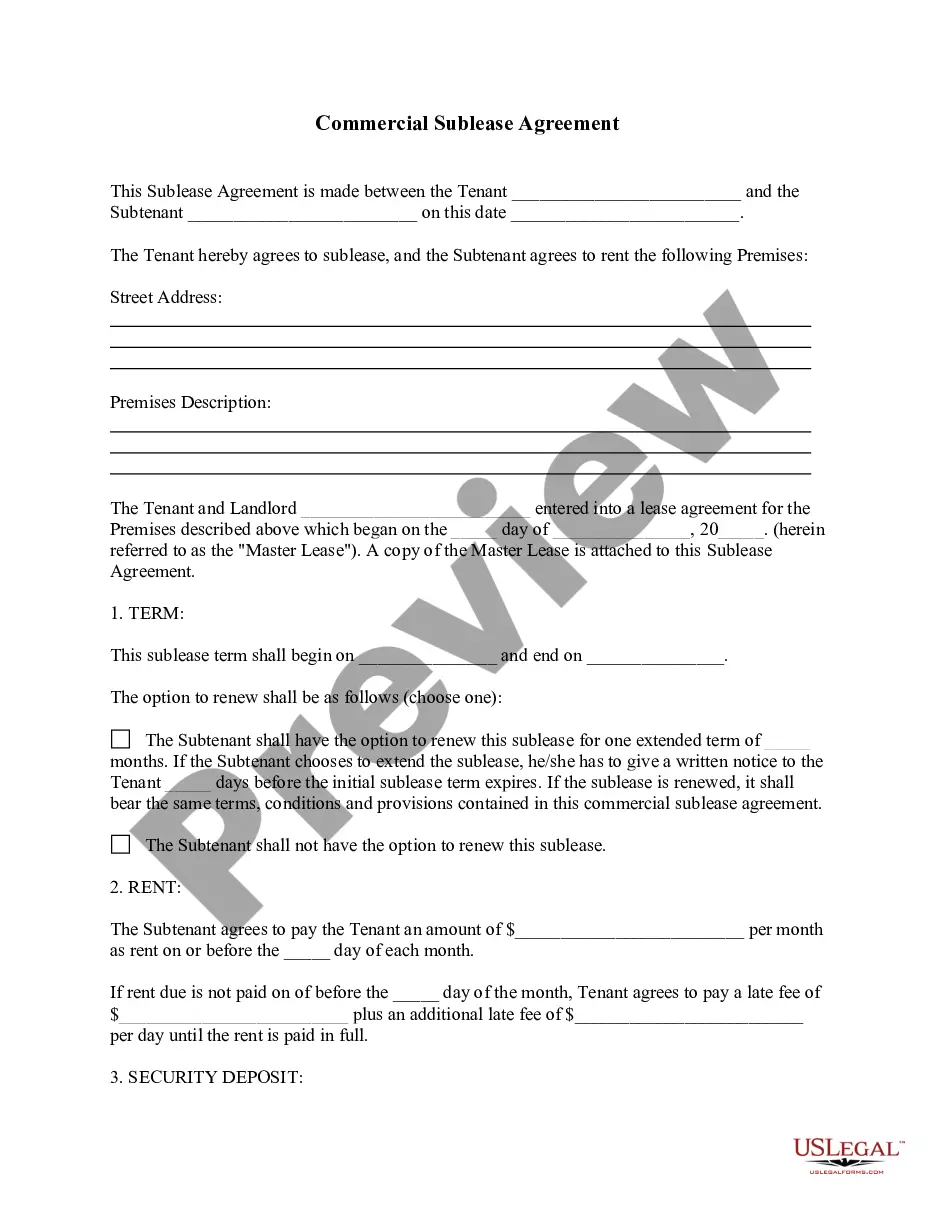
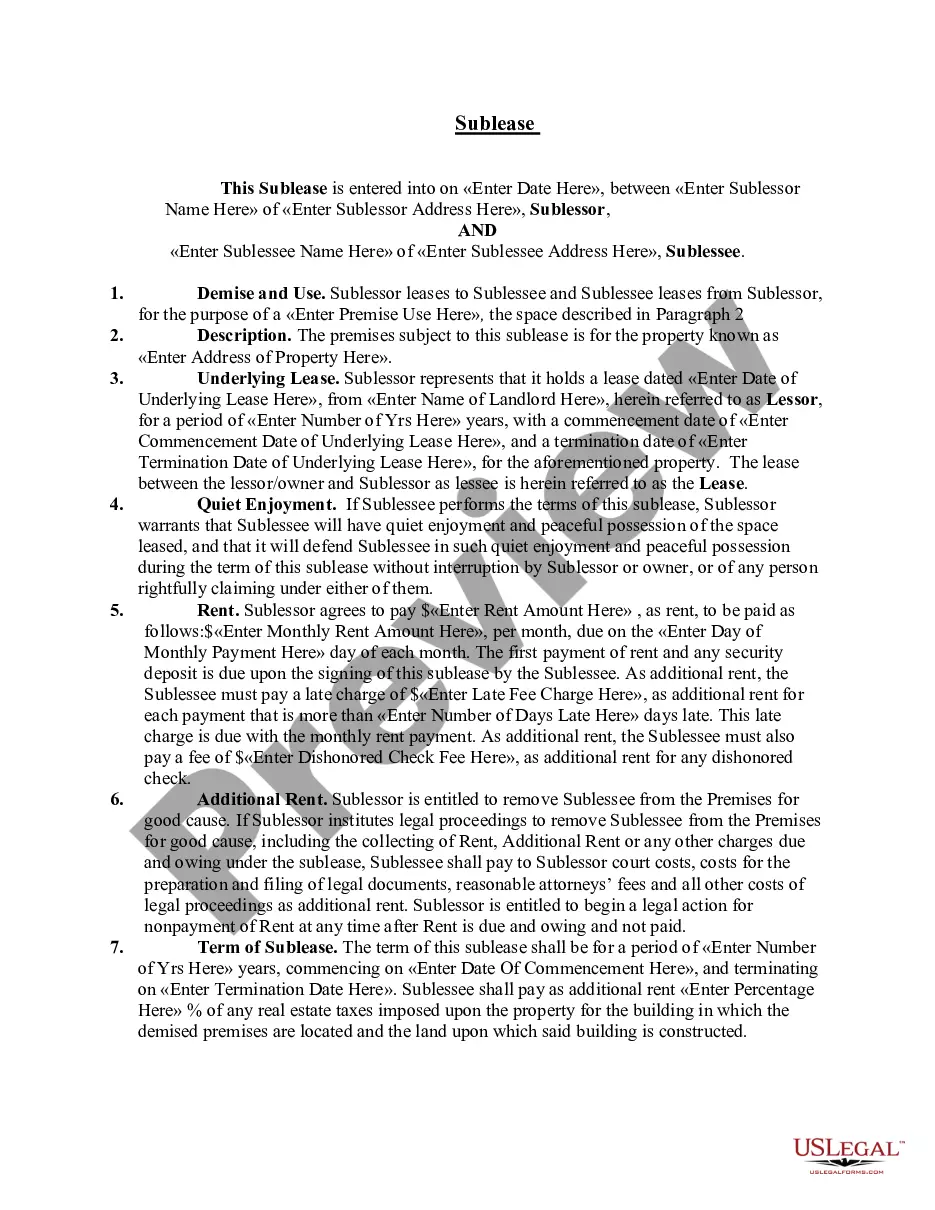
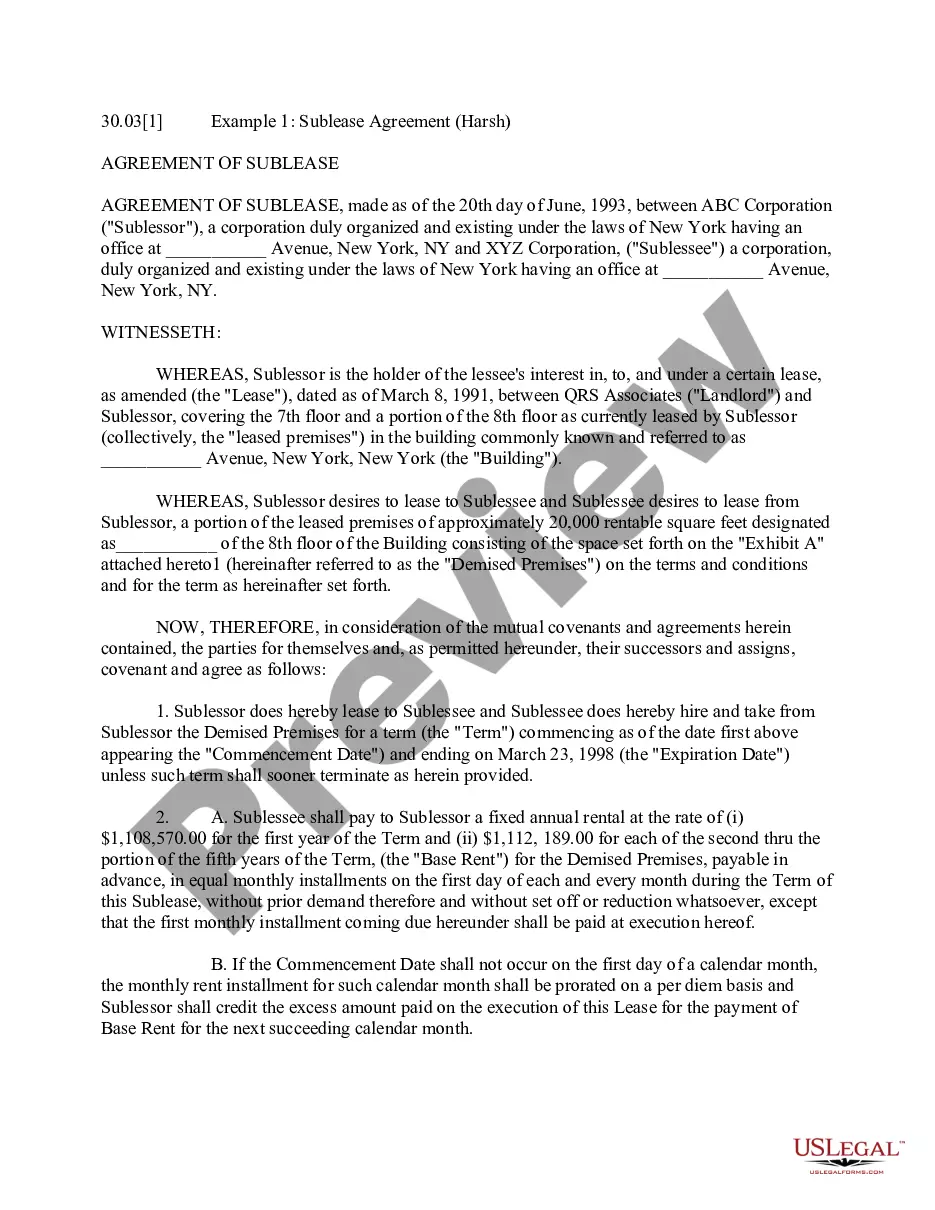
The Commercial Sublease form is a legal agreement that allows a tenant (the Sub-Lessor) to lease a commercial property to a new tenant (the Sub-Lessee). This form outlines the terms of the sublease, including rental payments and compliance with conditions from the original lease. It is distinct from a standard lease as it involves a tenant leasing a property they do not fully own, subject to the terms of the original lease agreement.
What’s included in this form
- Identification of the parties involved: Sub-Lessor and Sub-Lessee
- Description of the leased property and its intended use
- Terms of the lease, including duration and rental payment amounts
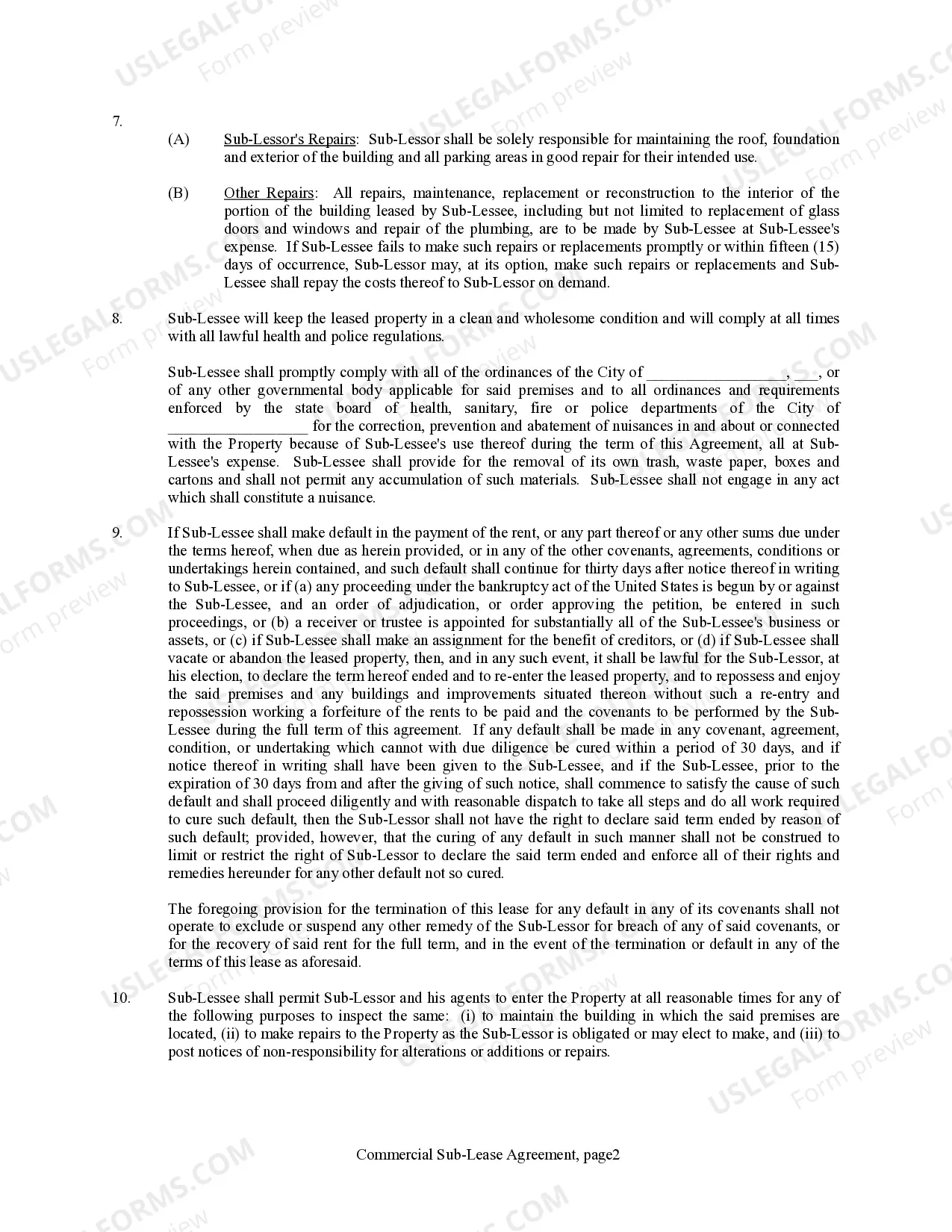
- Indemnity and insurance requirements for both parties
- Responsibilities for repairs and maintenance of the property
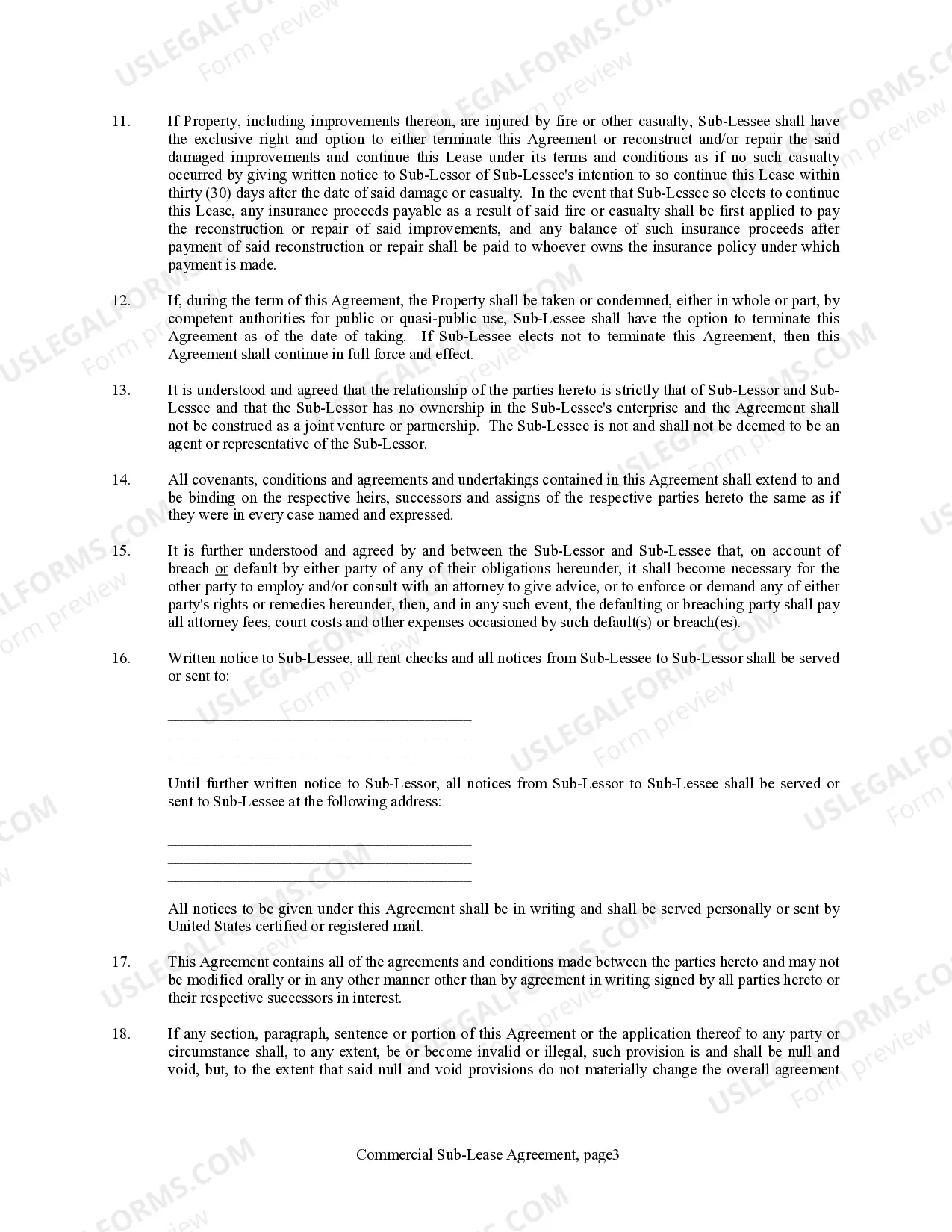
- Conditions for termination and default of the lease
When this form is needed
This form is typically used when a commercial tenant wishes to rent out their leased space to another party. Scenarios include: - When a tenant needs to relocate but wishes to retain their original lease. - When a business has excess space and wants to generate income by subletting. - When a tenant wants to share the premises with another business without surrendering their lease. Using this sublease form ensures that both parties understand their rights, responsibilities, and obligations under the agreement.
Who should use this form
This form is suitable for:
- Commercial property tenants looking to sublet their space
- New tenants seeking to occupy a commercial property as a sub-Lessee
- Landlords or property managers overseeing sub-leases
- Businesses aiming to formalize a joint occupancy arrangement
How to prepare this document
- Identify the parties by entering the names and addresses of both the Sub-Lessor and Sub-Lessee.
- Specify the leased property by detailing the address and description of the space being sublet.
- Enter the term of the lease, including the start and end dates as well as rental amounts.
- Include the intended use of the property to avoid restrictive clauses.
- Ensure both parties sign and date the agreement to validate the contract.
Is notarization required?
Notarization is not commonly needed for this form. However, certain documents or local rules may make it necessary. Our notarization service, powered by Notarize, allows you to finalize it securely online anytime, day or night.
Get your form ready online
Our built-in tools help you complete, sign, share, and store your documents in one place.
Make edits, fill in missing information, and update formatting in US Legal Forms—just like you would in MS Word.
Download a copy, print it, send it by email, or mail it via USPS—whatever works best for your next step.
Sign and collect signatures with our SignNow integration. Send to multiple recipients, set reminders, and more. Go Premium to unlock E-Sign.
If this form requires notarization, complete it online through a secure video call—no need to meet a notary in person or wait for an appointment.
We protect your documents and personal data by following strict security and privacy standards.

Make edits, fill in missing information, and update formatting in US Legal Forms—just like you would in MS Word.

Download a copy, print it, send it by email, or mail it via USPS—whatever works best for your next step.

Sign and collect signatures with our SignNow integration. Send to multiple recipients, set reminders, and more. Go Premium to unlock E-Sign.

If this form requires notarization, complete it online through a secure video call—no need to meet a notary in person or wait for an appointment.

We protect your documents and personal data by following strict security and privacy standards.
Common mistakes
- Failing to include the original lease details, which can lead to disputes.
- Not specifying the permitted use of the property, risking unauthorized activities.
- Neglecting to ensure all parties sign the document, making it unenforceable.
- Overlooking insurance requirements and indemnity clauses, which could expose either party to liability.
Advantages of online completion
- Convenience of accessing and completing the form from anywhere, anytime.
- Editability allows customization to fit your specific situation.
- Legal reliability as templates are drafted by licensed attorneys.
- Quick downloadable format to avoid delays in your rental agreements.
Legal use & context
- The Commercial Sublease is enforceable under state laws governing leases
- It should align with the terms of the original lease to prevent conflicts
- Both parties should maintain copies of the agreement for legal reference
What to keep in mind
- The Commercial Sublease form allows existing tenants to rent out their commercial space to new tenants.
- It is essential to comply with the terms of the original lease when creating a sublease.
- Clear identification of the parties involved and the property details is crucial for enforceability.
- Understanding responsibilities and liabilities can help prevent misunderstandings and disputes.
Looking for another form?
Form popularity
FAQ
Yes, subletting is legal in the District of Columbia under certain conditions. The original tenant must obtain permission from the landlord and ensure that the sublease adheres to any specific rules outlined in the primary lease agreement. Understanding the legal framework surrounding a District of Columbia Commercial Sublease is crucial to avoid disputes. Tools like USLegalForms can provide valuable guidance on the legal requirements for subletting in D.C.
Commercial subleasing refers to the practice where a tenant leases out their rented commercial space to another party. In the context of a District of Columbia Commercial Sublease, this allows the original tenant to generate income while still maintaining their rental agreement with the landlord. It's important for both parties to understand their rights and obligations under the sublease. Using resources like USLegalForms can help clarify the legal nuances of subleasing in Washington, D.C.
Subletting is generally allowed in Washington, DC, but it is crucial to adhere to the terms of the original lease and obtain the landlord's permission. Each lease may have specific restrictions or processes for subleasing. If you're considering a District of Columbia Commercial Sublease, reviewing your lease agreement with care will ensure you follow the correct procedures.
A sublease refers to an arrangement in which a tenant rents out all or part of their leased property to another individual for a specified term. This allows the original tenant to maintain their lease while also generating income. Many businesses engage in a District of Columbia Commercial Sublease to adapt to changing needs without terminating their original lease.
The sublease clause in a lease agreement details the terms under which the tenant can sublease the property to another party, including any obligations to inform the landlord. It often outlines approval processes and the responsibilities of all parties involved. Understanding this clause is essential for anyone exploring a District of Columbia Commercial Sublease.
Subleasing a commercial property is not inherently illegal, but it is subject to the terms outlined in the original lease agreement. Most leases permit subleasing only with the landlord's consent. Before engaging in a District of Columbia Commercial Sublease, it's essential to review your lease to ensure compliance and avoid legal issues.
Rules around subletting often include obtaining landlord approval, adhering to lease terms, and ensuring the subtenant meets specific qualifications. Additionally, the original tenant typically remains financially responsible for the lease. Familiarizing yourself with these rules is crucial when considering a District of Columbia Commercial Sublease, as it ensures compliance with legal requirements.
People sub-lease to manage financial burdens, accommodate business changes, or adapt to temporary relocations. A District of Columbia Commercial Sublease can provide a way to share costs and responsibilities without breaking the lease. This arrangement can be beneficial in times of uncertainty, allowing businesses to remain agile in their operations.
Subleasing refers to the process where a tenant leases out their rented property to another individual while retaining their responsibilities under the original lease with the landlord. This arrangement allows the original tenant to transfer part of their lease rights to the subtenant. Many tenants explore a District of Columbia Commercial Sublease for financial relief or flexibility during changing business circumstances.
The disadvantages of subleasing include potential legal complications and the risk of losing the original lease if the subtenant defaults. Additionally, if the subtenant damages the property, the original tenant could be held liable for repairs. Understanding the risks associated with a District of Columbia Commercial Sublease is vital for making informed decisions.