District of Columbia Letter from Tenant to Landlord containing Notice to landlord to cease retaliatory decrease in services
About this form
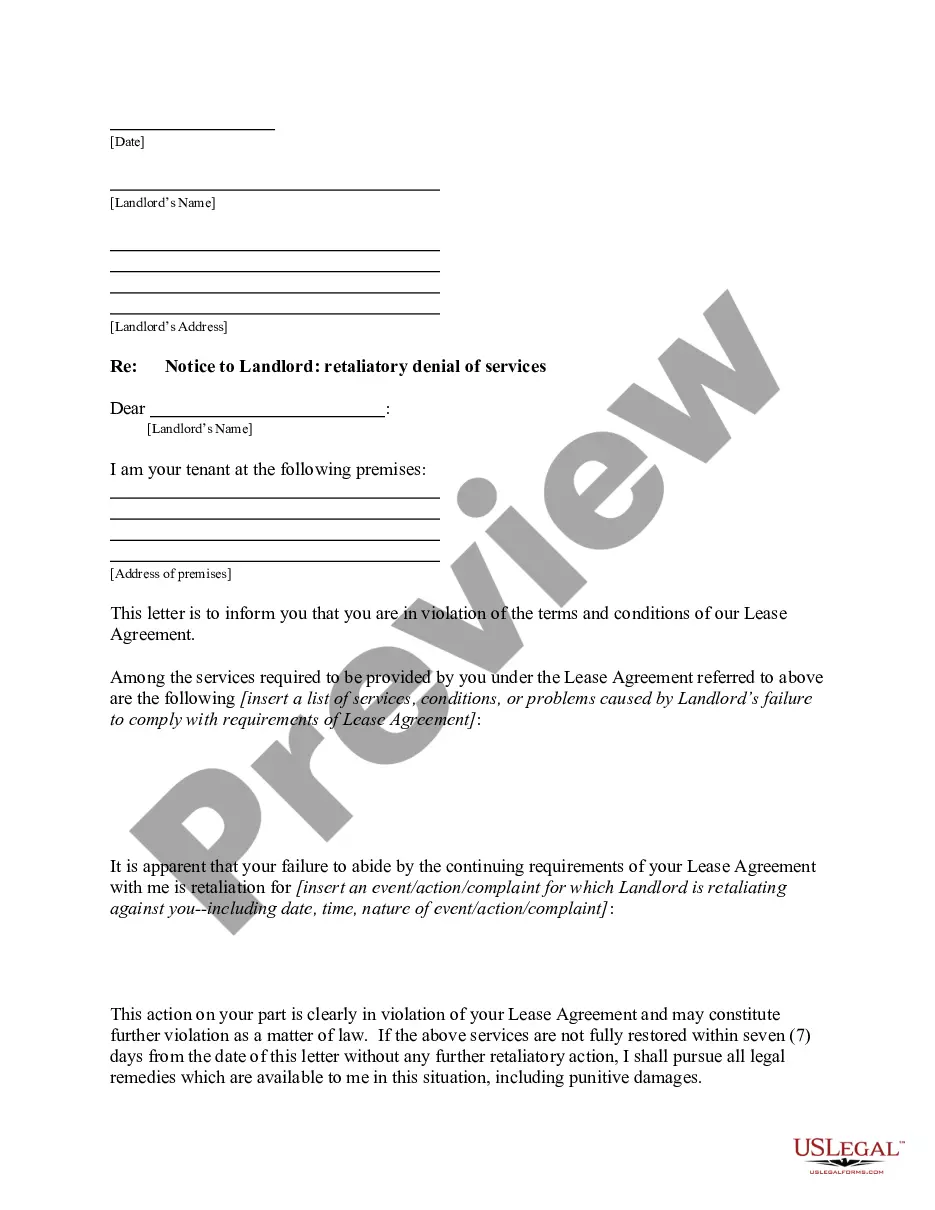
This form is a letter from a tenant to a landlord notifying them to cease retaliatory actions that result in a decrease in services outlined in the lease agreement. The letter asserts that the landlord's failure to provide required services constitutes retaliation for actions taken by the tenant. This form serves as an official notice and indicates that the landlord's actions may be in breach of the lease agreement and could violate state laws regarding tenant rights and landlord responsibilities.
Key components of this form
- Identification of the tenant and landlord involved.
- List of specific services that the landlord is required to provide.
- Explanation of the retaliatory actions taken by the landlord.
- Notice that the landlord's actions may breach the lease agreement.
- A request to cease the retaliatory actions and restore services.
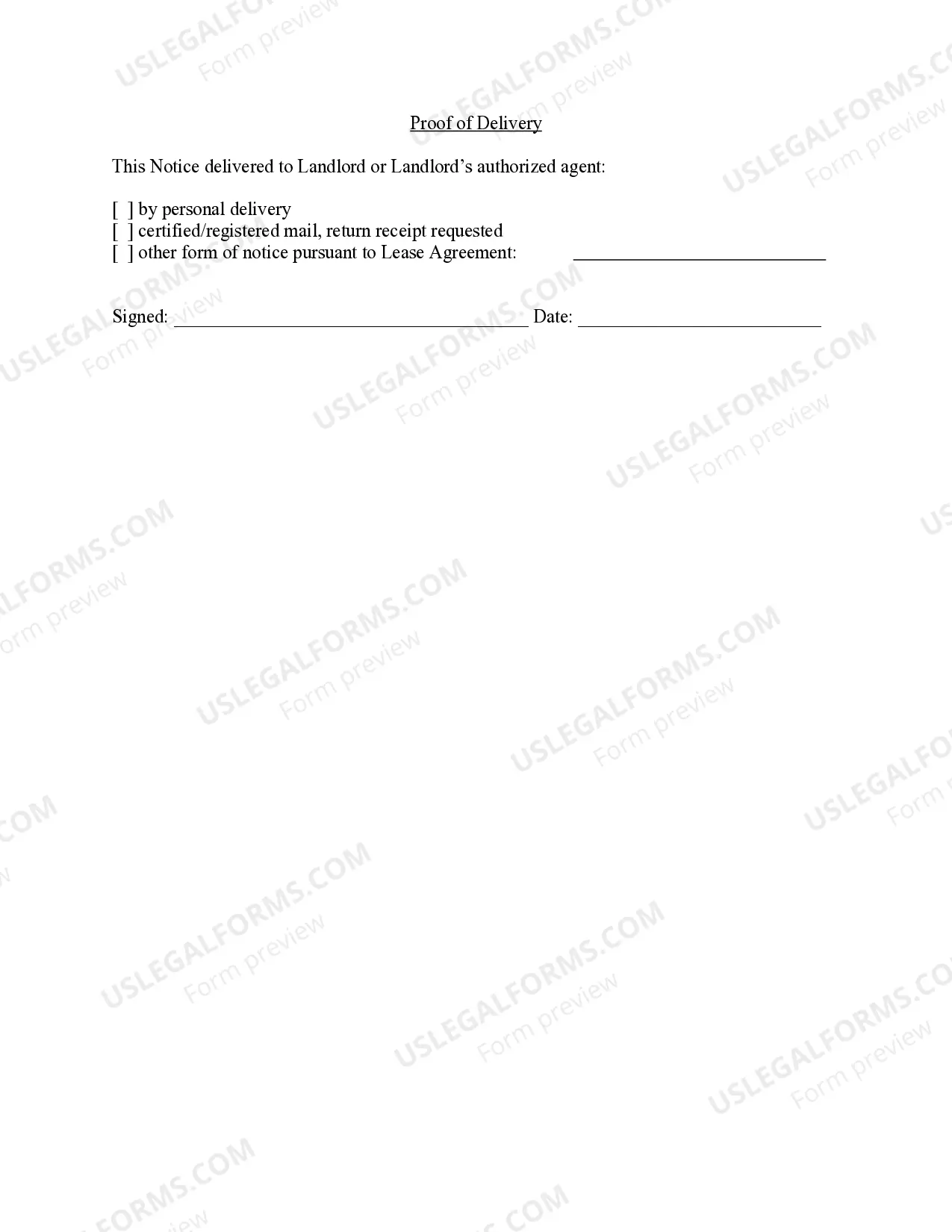
- Proof of delivery options for notifying the landlord.


When this form is needed
This letter should be used when a tenant believes that their landlord is retaliating against them by reducing or withholding essential services as a response to the tenant exercising their rights, such as reporting health violations or participating in tenant advocacy. It is crucial to document the issue formally to protect the tenant's rights and to seek resolution before considering further legal action.
Intended users of this form
- Tenants who believe they are facing retaliation from their landlord.
- Individuals who have experienced a decrease in essential services defined in their lease agreement.
- Renters looking to formally address grievances related to retaliatory landlord actions.
Steps to complete this form
- Identify the tenant and landlord's information, including names and addresses.
- Insert the list of required services that the landlord has failed to provide.
- Clearly state the actions taken by the landlord that are perceived as retaliation.
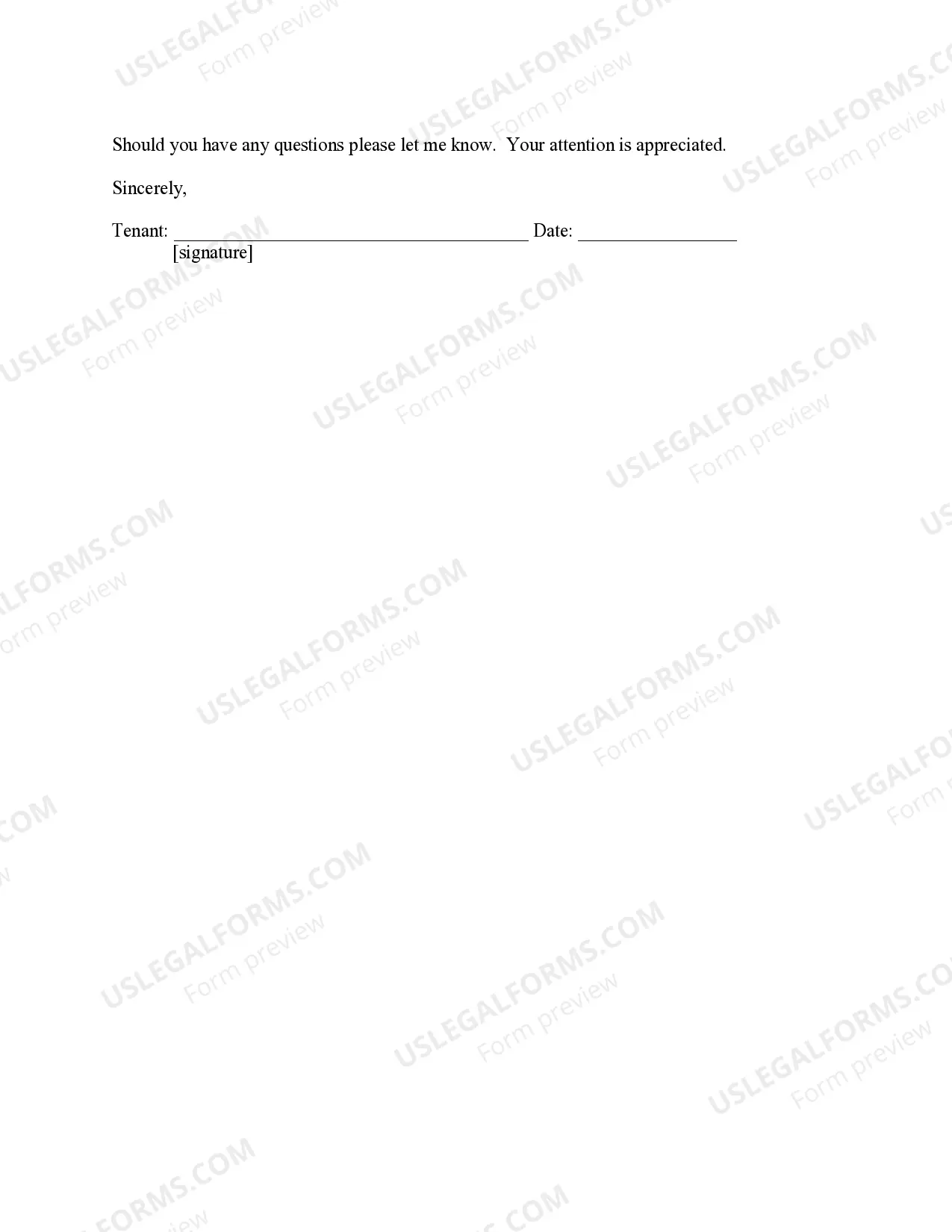
- Provide the date of the letter and sign in the space provided.
- Select the method of delivery to ensure the landlord receives the notice.
Notarization requirements for this form
This form does not typically require notarization unless specified by local law. However, it is advisable to check local regulations to ensure compliance.
Get your form ready online
Our built-in tools help you complete, sign, share, and store your documents in one place.
Make edits, fill in missing information, and update formatting in US Legal Forms—just like you would in MS Word.
Download a copy, print it, send it by email, or mail it via USPS—whatever works best for your next step.
Sign and collect signatures with our SignNow integration. Send to multiple recipients, set reminders, and more. Go Premium to unlock E-Sign.
If this form requires notarization, complete it online through a secure video call—no need to meet a notary in person or wait for an appointment.
We protect your documents and personal data by following strict security and privacy standards.

Make edits, fill in missing information, and update formatting in US Legal Forms—just like you would in MS Word.

Download a copy, print it, send it by email, or mail it via USPS—whatever works best for your next step.

Sign and collect signatures with our SignNow integration. Send to multiple recipients, set reminders, and more. Go Premium to unlock E-Sign.

If this form requires notarization, complete it online through a secure video call—no need to meet a notary in person or wait for an appointment.

We protect your documents and personal data by following strict security and privacy standards.
Common mistakes to avoid
- Failing to clearly outline the services that are not being provided.
- Not keeping a copy of the letter for personal records.
- Neglecting to notify the landlord through an appropriate delivery method.
Benefits of completing this form online
- Convenience of accessing and downloading the letter from anywhere.
- Editability allows customization to match specific circumstances.
- Confidence in using a legally vetted template drafted by licensed attorneys.
Looking for another form?
Form popularity
FAQ
To write a powerful complaint letter, start with a strong opening that clearly states your issue. Structure your letter logically, providing details and supporting evidence where applicable. If necessary, reference procedures that can support your case, like a District of Columbia Letter from Tenant to Landlord containing Notice to landlord to cease retaliatory decrease in services. Ensure your closing is assertive yet professional.
A notice to vacate may be invalid if it does not provide the required notice period or lacks specific details about the tenancy. Other reasons include not being delivered properly or violating tenant protection laws, such as those outlined in DC Code. Understanding what constitutes a valid notice can help in crafting responses, such as a District of Columbia Letter from Tenant to Landlord containing Notice to landlord to cease retaliatory decrease in services.
Writing a strongly worded letter starts with a clear and direct introduction of the issue at hand. Use concise, powerful language without unnecessary embellishments to convey your message. If you are addressing landlord issues, you might format your letter as a District of Columbia Letter from Tenant to Landlord containing Notice to landlord to cease retaliatory decrease in services to add weight to your concerns.
To file a complaint against a landlord in DC, first document all incidents and communication regarding the issue. Next, reach out to the Department of Consumer and Regulatory Affairs (DCRA) to file your complaint or learn about the specific processes involved. Additionally, consider drafting a District of Columbia Letter from Tenant to Landlord containing Notice to landlord to cease retaliatory decrease in services as part of your complaint strategy.
When writing a complaint letter for unprofessional behavior, maintain a calm and respectful tone. Open with a clear statement of the incident or behavior that concerns you, followed by the impact it has had on your living situation. If applicable, mention a District of Columbia Letter from Tenant to Landlord containing Notice to landlord to cease retaliatory decrease in services to reinforce the seriousness of your issue.
DC Code 45 2551 is a law that outlines the rights and responsibilities of tenants and landlords in the District of Columbia. It specifically addresses retaliatory actions by landlords in response to tenants exercising their rights, such as filing complaints or requesting repairs. Understanding this code can help tenants write effective letters, including a District of Columbia Letter from Tenant to Landlord containing Notice to landlord to cease retaliatory decrease in services.
Begin your strongly worded letter of complaint by clearly identifying yourself and the property you rent. Use direct language to express your dissatisfaction, and provide specific examples of the issues, such as delays in repairs. In this case, you might reference a District of Columbia Letter from Tenant to Landlord containing Notice to landlord to cease retaliatory decrease in services. Be firm but professional in your request for action.
To write a formal complaint letter to your landlord, start with your name and address at the top, followed by the landlord's name and address. Clearly state the issue you are facing, such as a decrease in services, and request a resolution. End with a polite closing and your signature. Remember to retain a copy for your records, especially when addressing issues like a District of Columbia Letter from Tenant to Landlord containing Notice to landlord to cease retaliatory decrease in services.
An effective example of a letter to stop harassment would include a clear statement of the issue, such as, 'I have felt uncomfortable due to repeated unsolicited visits.' Specify how this behavior affects your well-being and request that it ceases immediately. Ending with a request for a written response can open lines of communication. Using a template like the District of Columbia Letter from Tenant to Landlord containing Notice to landlord to cease retaliatory decrease in services can provide the right format.
To write a letter requesting your landlord to stop harassment, start by stating your concerns in a calm and clear manner. Specify the actions you find harassing, and explain how they impact your living situation. Offer a reasonable resolution and include a timeline for when you wish to see changes. Consider using a District of Columbia Letter from Tenant to Landlord containing Notice to landlord to cease retaliatory decrease in services for a professional approach.