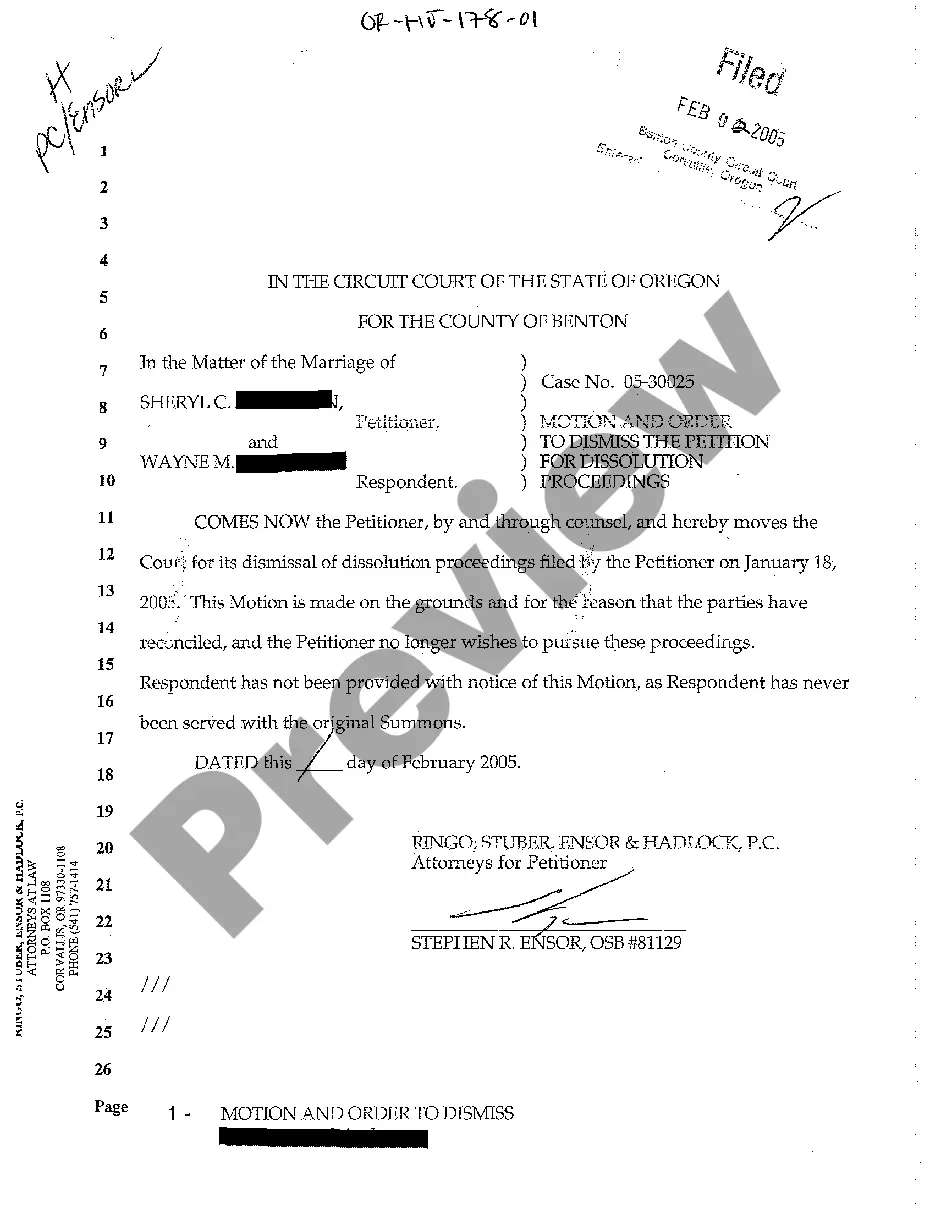
District of Columbia Letter from Landlord to Tenant as Notice to Tenant of Tenant's Disturbance of Neighbors' Peaceful Enjoyment to Remedy or Lease Terminates
What is this form?
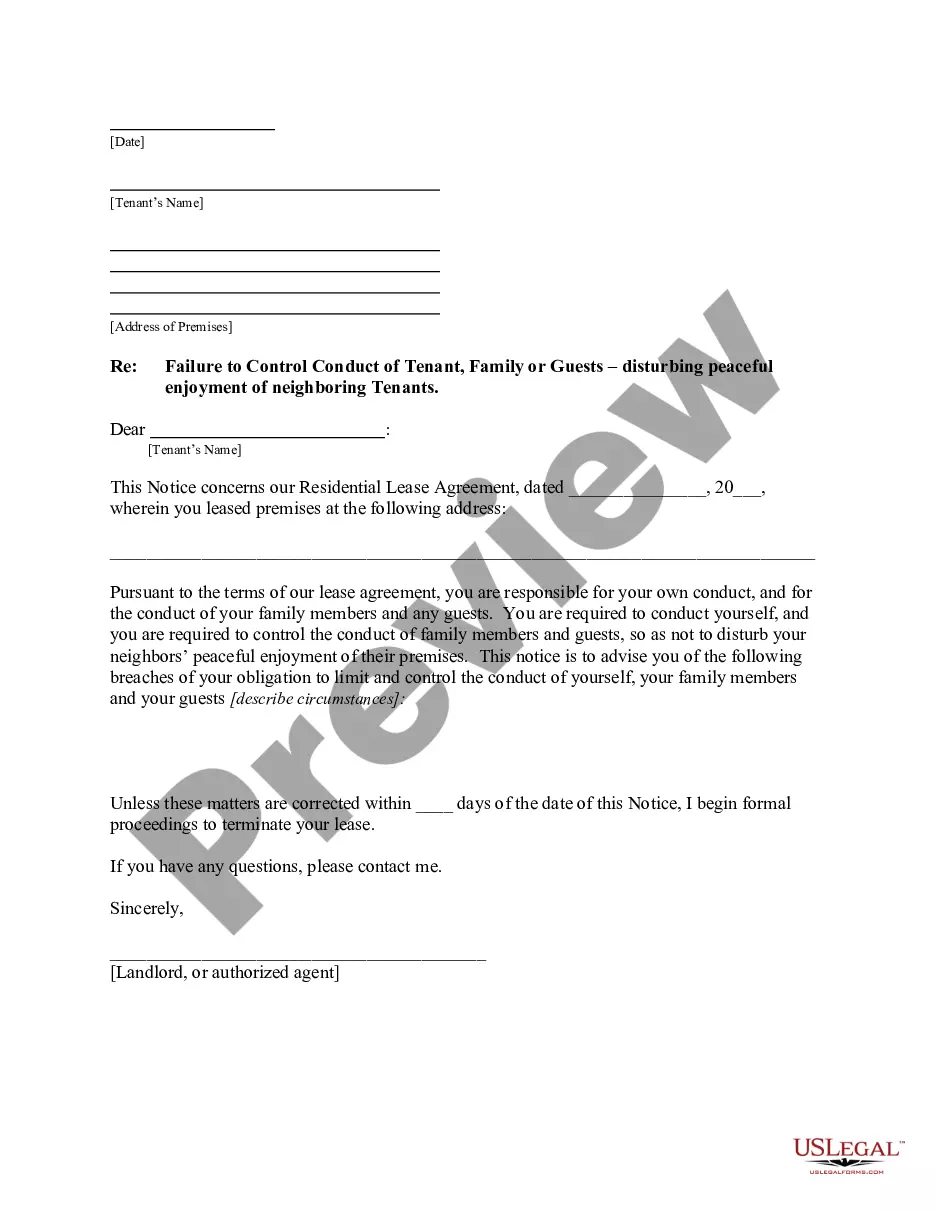
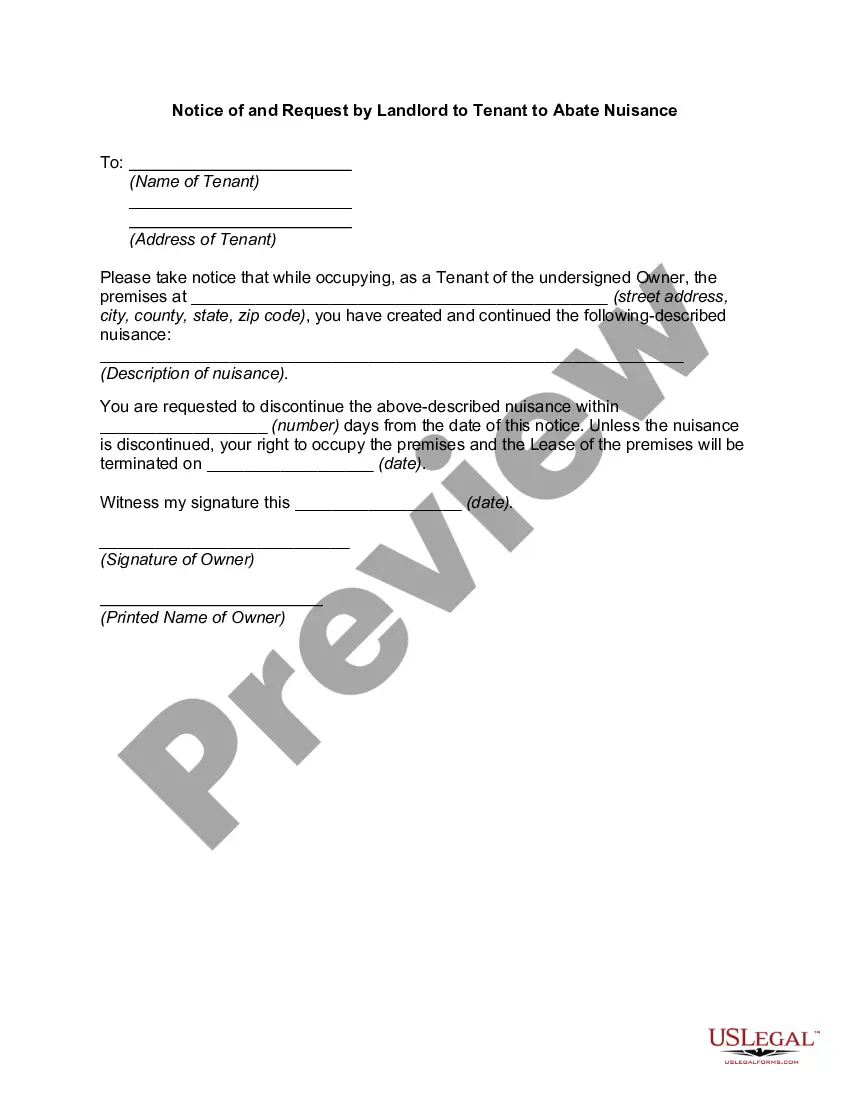
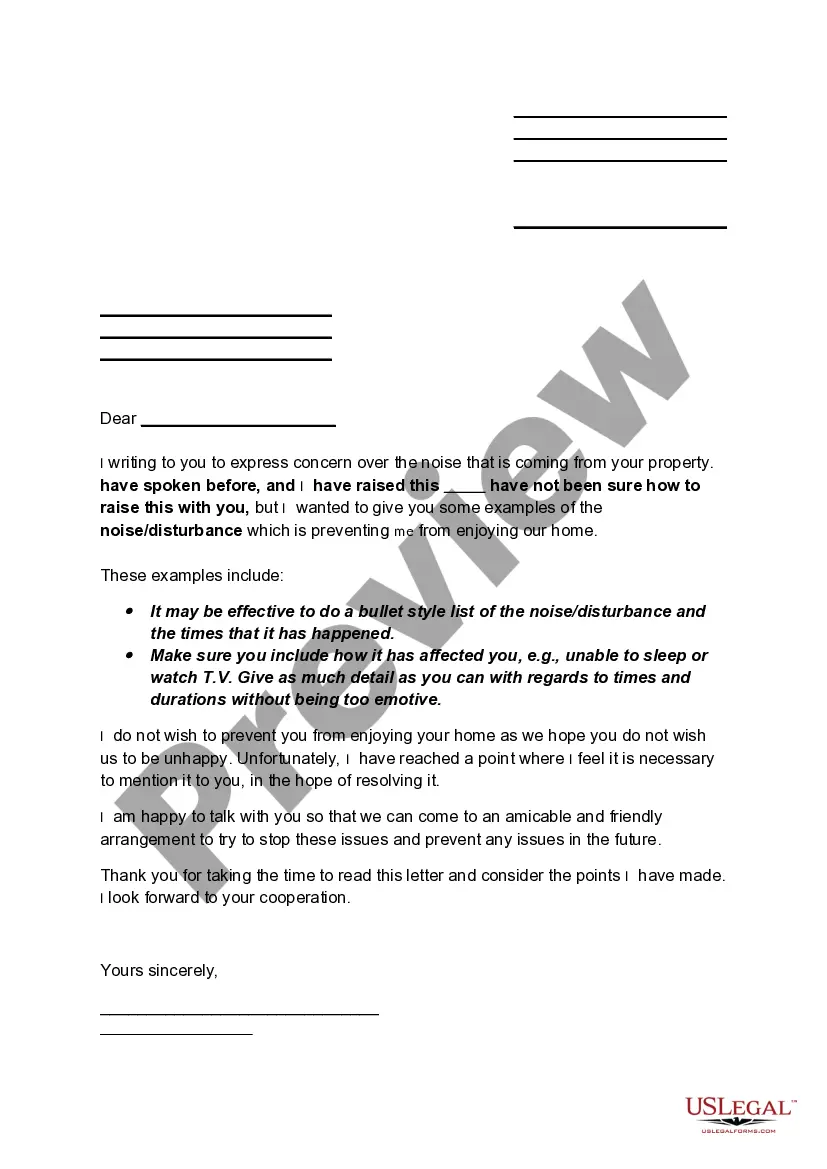
This Letter from Landlord to Tenant serves as a formal notice to inform tenants about disturbances they or their guests may be causing to their neighbors' peaceful enjoyment of the premises. It outlines the landlord's concerns regarding breaches of the tenantâs obligations under the lease agreement related to quiet enjoyment. This form is crucial in addressing tenant behavior that disrupts neighbors, distinguishing it from other notices that might deal with payment issues or lease violations more generally.
Key components of this form
- Identification of the landlord and tenant
- Description of the disturbances affecting neighbors
- Reference to the tenant's responsibility for their conduct and that of guests
- Instructions on how the tenant should remedy the situation
- Consequences if the disturbances are not addressed, including potential lease termination


When to use this document
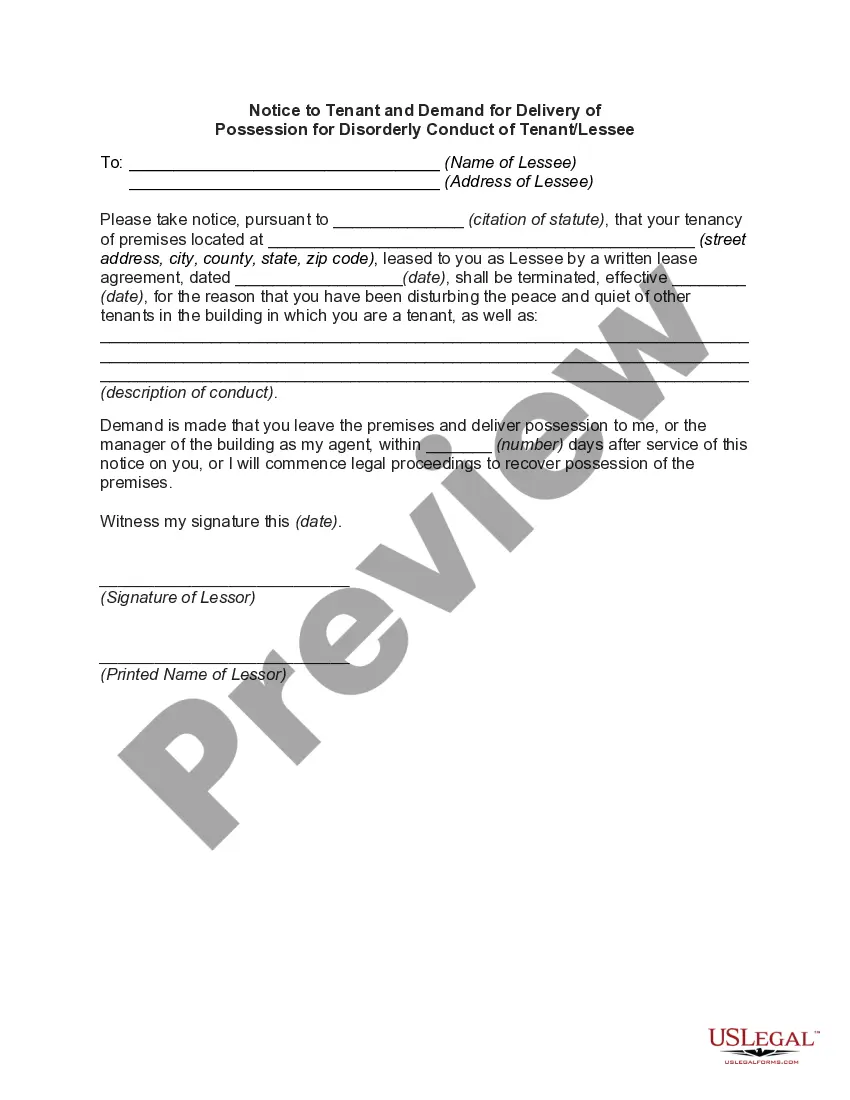
This form is used when a landlord observes that a tenant's actions or those of their guests are disturbing the peace of other residents. Common scenarios include excessive noise, disruptive behavior at inappropriate hours, or any actions impacting the quiet enjoyment expected by neighbors. Using this notice prompts tenants to be aware of their responsibilities and provides them with an opportunity to remedy the situation before further action is necessary.
Who this form is for
- Landlords managing residential properties
- Property management companies representing landlords
- Tenants who wish to formally notify landlords of disturbances caused by neighbors
- Real estate attorneys assisting landlords with tenant issues
Completing this form step by step
- Identify both the landlord and tenant by providing their full names and addresses.
- Clearly describe the nature of the disturbance affecting neighbors, citing specific examples.
- State the tenantâs obligations under the lease agreement regarding quiet enjoyment.
- Provide a deadline for the tenant to address the issues mentioned.
- Sign the notice with your name and title, or that of your authorized agent.
Does this document require notarization?
This form does not typically require notarization unless specified by local law. However, for legal assurance, consider consulting with a local attorney regarding your specific requirements.
Get your form ready online
Our built-in tools help you complete, sign, share, and store your documents in one place.
Make edits, fill in missing information, and update formatting in US Legal Forms—just like you would in MS Word.
Download a copy, print it, send it by email, or mail it via USPS—whatever works best for your next step.
Sign and collect signatures with our SignNow integration. Send to multiple recipients, set reminders, and more. Go Premium to unlock E-Sign.
If this form requires notarization, complete it online through a secure video call—no need to meet a notary in person or wait for an appointment.
We protect your documents and personal data by following strict security and privacy standards.

Make edits, fill in missing information, and update formatting in US Legal Forms—just like you would in MS Word.

Download a copy, print it, send it by email, or mail it via USPS—whatever works best for your next step.

Sign and collect signatures with our SignNow integration. Send to multiple recipients, set reminders, and more. Go Premium to unlock E-Sign.

If this form requires notarization, complete it online through a secure video call—no need to meet a notary in person or wait for an appointment.

We protect your documents and personal data by following strict security and privacy standards.
Typical mistakes to avoid
- Failing to provide specific details about the disturbances.
- Not including a deadline for the tenant to remedy the situation.
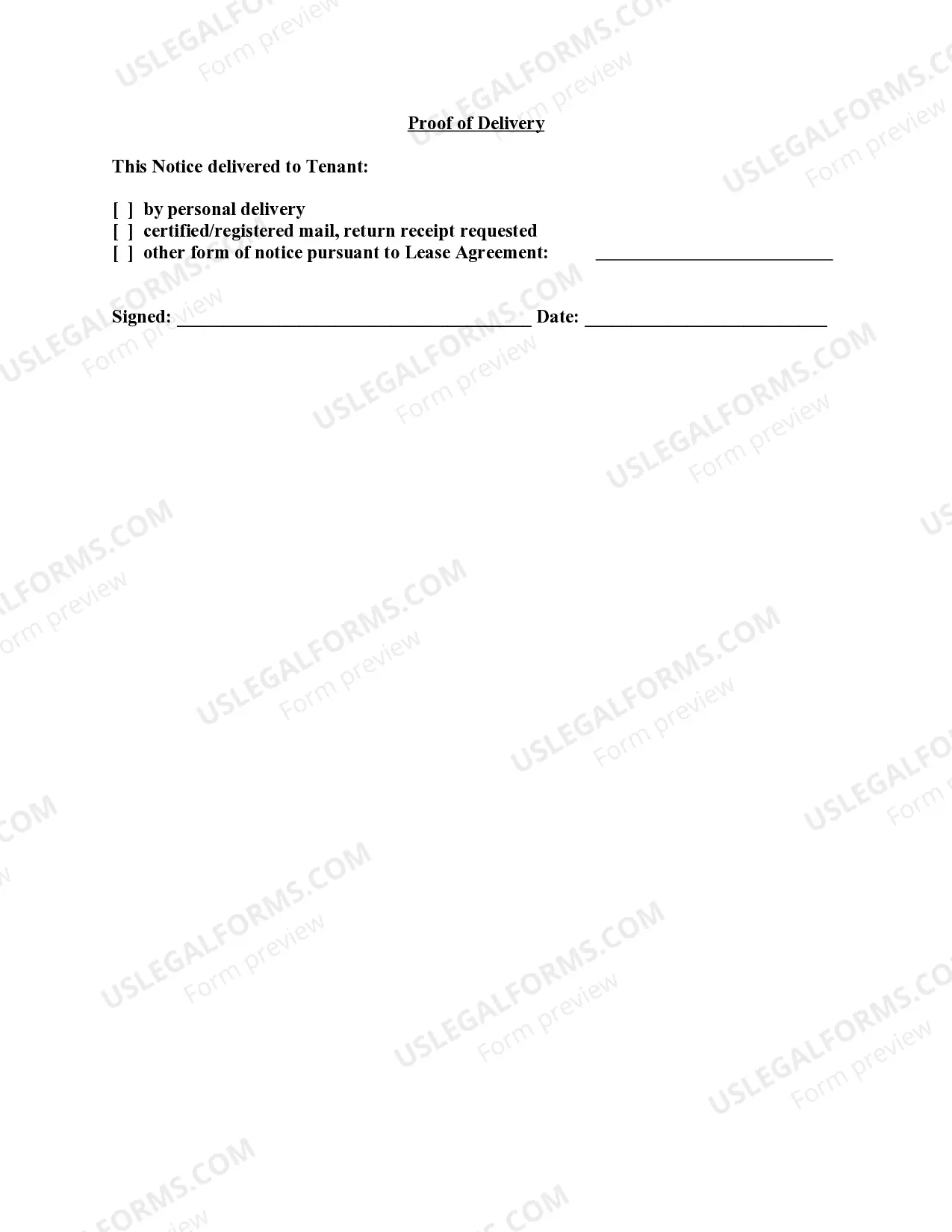
- Neglecting to send the notice through a verifiable delivery method.
Benefits of completing this form online
- Convenience of immediate download and editing for personalization.
- Access to templates drafted by licensed attorneys for reliability.
- Easy compliance with legal requirements in your jurisdiction.
Legal use & context
Notice of disturbance is an important legal document that helps maintain the rights of all tenants under a lease. It serves as a clear communication tool to address grievances and protect the landlord's interests while providing the tenant an opportunity to rectify their behavior.
Main things to remember
- This notice formalizes complaints about tenant disturbances interfering with neighborsâ peaceful enjoyment.
- Completing the form carefully is critical to ensure its legality and efficacy.
- Understanding state laws pertaining to notices helps in properly using this form.
Looking for another form?
Form popularity
FAQ
A covenant of quiet enjoyment insures an owner or tenant against a disturbance of his or her right to possess or use property. For example, a covenant of quiet enjoyment could prevent a tenant from being evicted by a person with superior title. Also called covenant for quiet enjoyment.
Typical quiet hours are 11 p.m. to 7 or 8 a.m. on weekdays and 11 p.m. or midnight to 8, 9, or 10 a.m. on weekends and holidays. The quiet enjoyment clause for your apartment community may have tighter hours than your city ordinances to maintain a pleasant atmosphere for all residents.
According to Nolo, quiet enjoyment is The right of a property owner or tenant to enjoy his or her property without interference. Disruption of quiet enjoyment may constitute a legal nuisance.
If you're seeking damages for emotional distress caused by a landlord's discrimination, or punitive damages for especially blatant and intentional discrimination, a lawsuit may well be your best bet. Understand what's involved in suing your landlord. You may file a lawsuit in either federal or state court.
A Covenant that promises that the grantee or tenant of an estate in real property will be able to possess the premises in peace, without disturbance by hostile claimants. Quiet enjoyment is a right to the undisturbed use and enjoyment of real property by a tenant or landowner.
It means with no interference from another party. Each sale carries the implication that it can be owned without any interference.
The covenant of quiet enjoyment states that a tenant has the right to enjoy his or her rental unit without substantial interference from the landlord. It ensures that tenants benefit from the full use and enjoyment of their rental unit.
If you think your landlord is violating the Fair Housing Act, you can get that landlord in trouble by filing a complaint at HUD.gov. Your remedy for breach of quiet enjoyment is to terminate the lease and move or sue in small claims court.
Under common law tenants have a right to 'quiet enjoyment' of the property. This is an implied term, or covenant, which has been expressed or implied in conveyances and leases of English land for centuries.'Quiet enjoyment' is a term so often misunderstood.