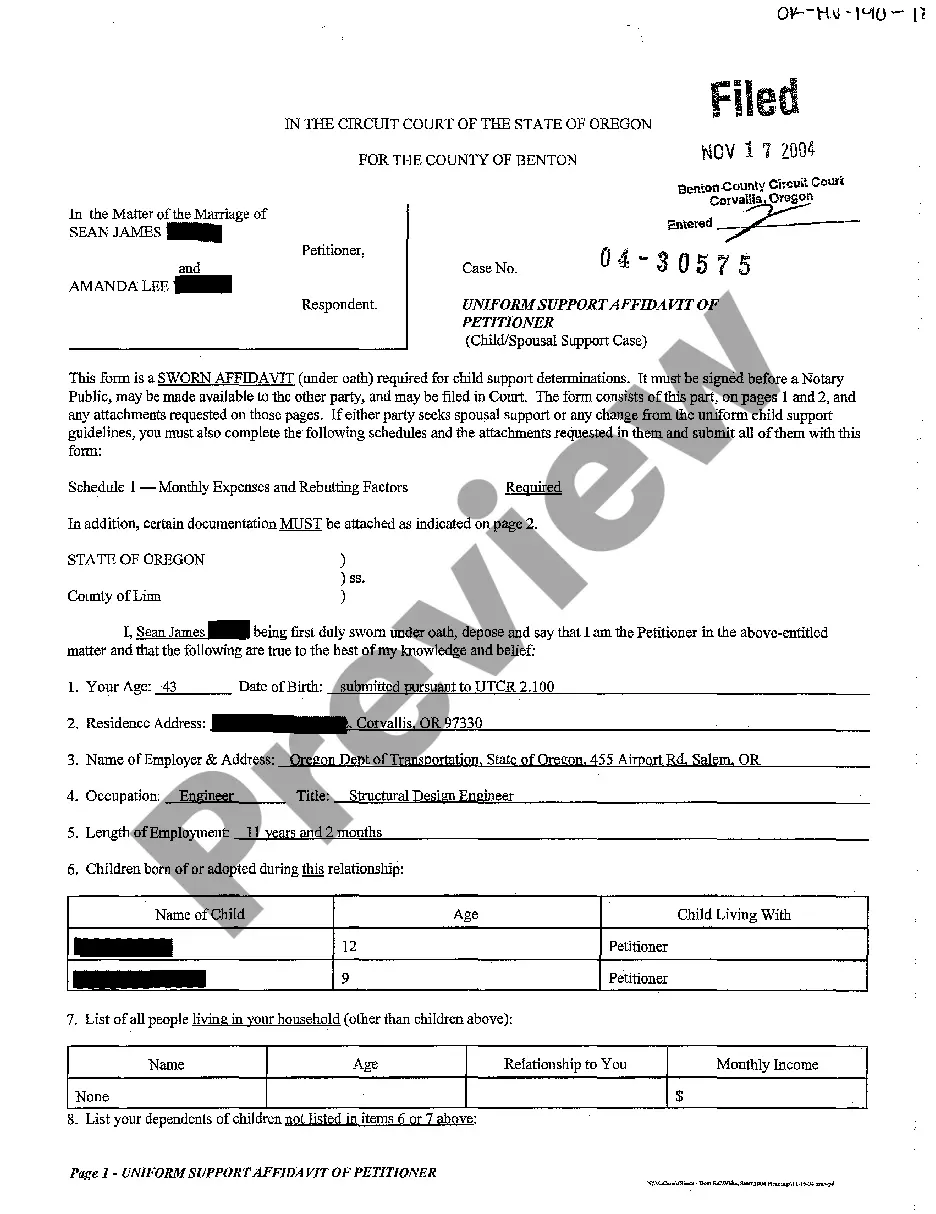
District of Columbia Letter from Tenant to Landlord containing Notice to Cease Unjustified Nonacceptance of Rent
About this form
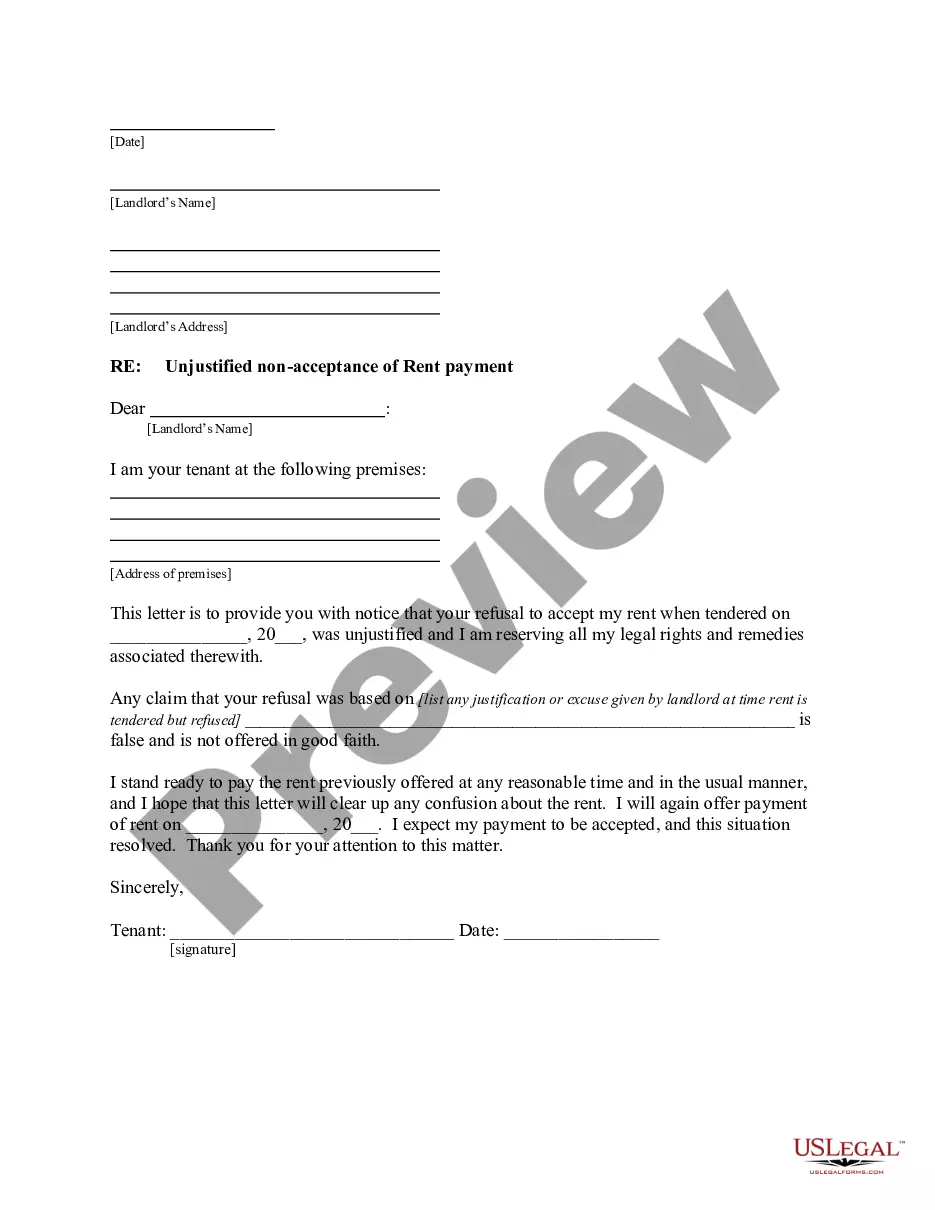
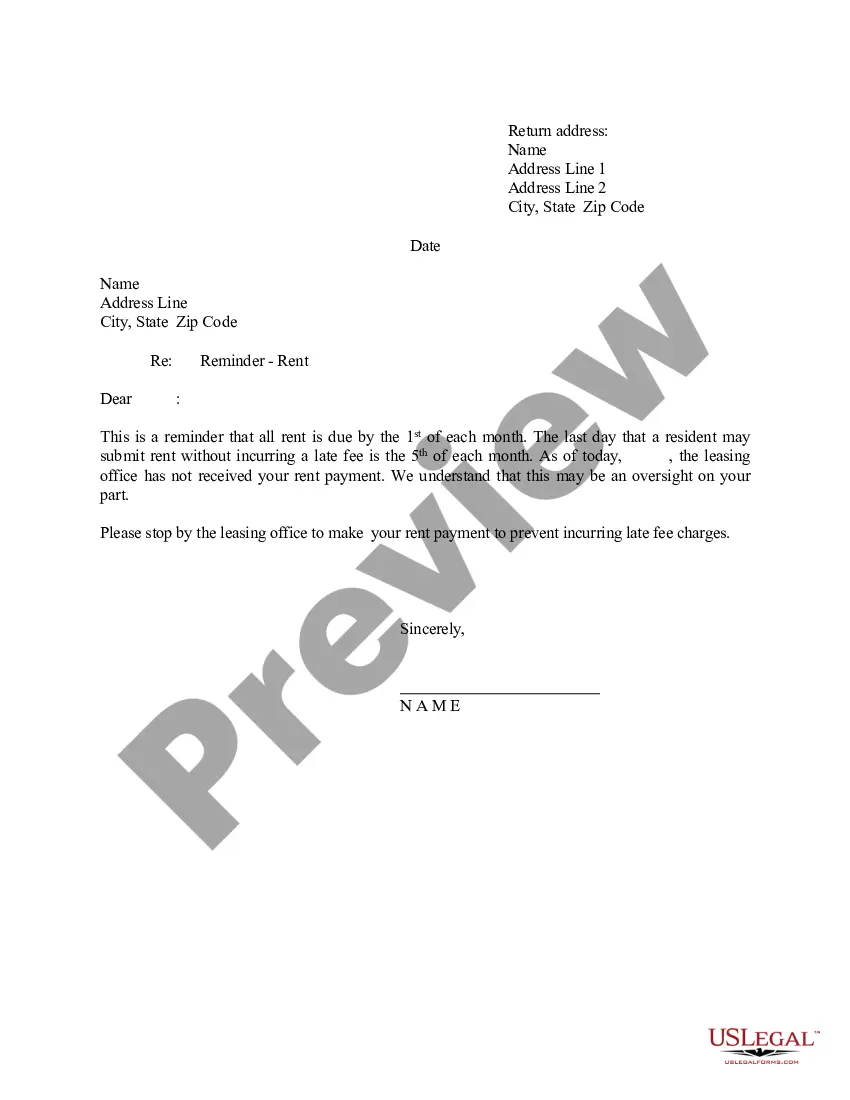
This Letter from Tenant to Landlord containing Notice to Cease Unjustified Nonacceptance of Rent is a formal communication from a tenant to their landlord. This form is used to address and challenge a landlord's refusal to accept rent payments. Unlike other rental forms, this letter emphasizes the tenant's intent to pay and preserves their legal rights in response to what they perceive as an unjustified action by the landlord.
Form components explained
- Identification of the tenant and landlord, including contact information.
- Statement clarifying the tenantâs claim that the refusal to accept rent was unjustified.
- A clear articulation of the tenantâs readiness to pay rent at a specified time.
- A polite request for acceptance of the rent payment in the future.
- Signature of the tenant along with the date of the letter.
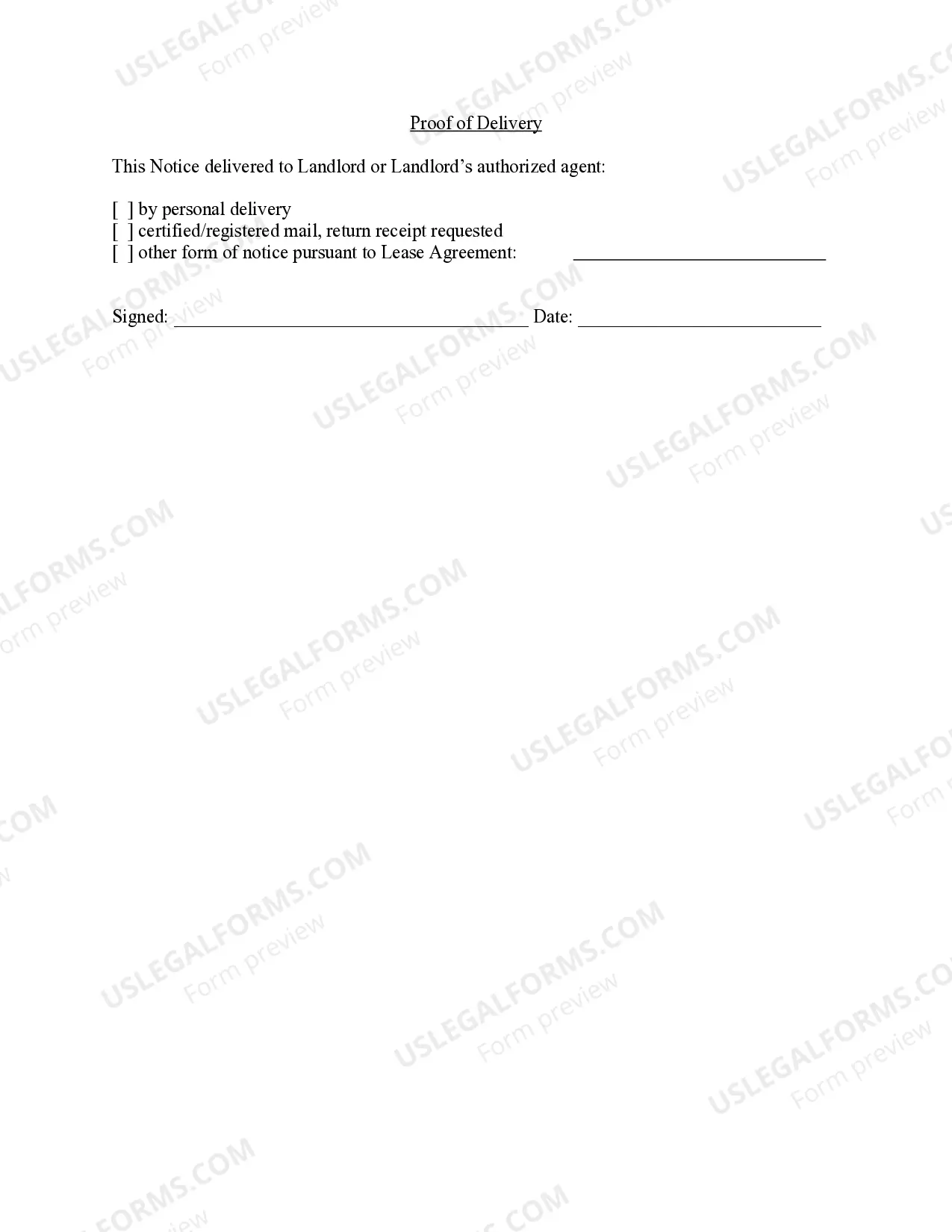
- Proof of delivery details, confirming the method used to deliver the notice.

When to use this document
This form should be used when a tenant has tendered rent but the landlord has unjustifiably refused to accept it. Common situations include when a landlord is withholding acceptance due to disputes over lease terms, maintenance issues, or personal grievances unrelated to rent payment. Using this form helps protect the tenant's rights and clarify their position concerning their financial responsibilities.
Intended users of this form
This form is intended for tenants who are experiencing difficulties with their landlords related to the nonacceptance of rent payments. It is suitable for individuals who want to formally communicate their intent to pay rent and address any misunderstandings with their landlord.
How to prepare this document
Follow these steps to complete the form:
- Identify the parties involved by filling in the names and addresses of both the tenant and landlord.
- Clearly state the landlord's refusal to accept rent and any reasons given.
- Confirm your readiness to pay rent by entering the date you will offer payment again.
- Sign and date the letter, leaving space for your signature.
- Document how you will deliver the notice to the landlord or their authorized agent.
Notarization guidance
Notarization is not commonly needed for this form. However, certain documents or local rules may make it necessary. Our notarization service, powered by Notarize, allows you to finalize it securely online anytime, day or night.
Get your form ready online
Our built-in tools help you complete, sign, share, and store your documents in one place.
Make edits, fill in missing information, and update formatting in US Legal Forms—just like you would in MS Word.
Download a copy, print it, send it by email, or mail it via USPS—whatever works best for your next step.
Sign and collect signatures with our SignNow integration. Send to multiple recipients, set reminders, and more. Go Premium to unlock E-Sign.
If this form requires notarization, complete it online through a secure video call—no need to meet a notary in person or wait for an appointment.
We protect your documents and personal data by following strict security and privacy standards.

Make edits, fill in missing information, and update formatting in US Legal Forms—just like you would in MS Word.

Download a copy, print it, send it by email, or mail it via USPS—whatever works best for your next step.

Sign and collect signatures with our SignNow integration. Send to multiple recipients, set reminders, and more. Go Premium to unlock E-Sign.

If this form requires notarization, complete it online through a secure video call—no need to meet a notary in person or wait for an appointment.

We protect your documents and personal data by following strict security and privacy standards.
Mistakes to watch out for
- Failing to clearly articulate the reasons for the landlord's unjustified refusal.
- Not including specific dates for future rent payments.
- Omitting the tenant's signature or date from the letter.
- Not sending the notice through a method that provides proof of delivery.
- Using unclear language that may confuse the landlord regarding your intentions.
Benefits of completing this form online
- Convenience of filling out a standardized form that saves time.
- Editability allows tenants to customize the letter to fit their specific situation.
- Reliability of having a legal document drafted with considerations for tenantsâ rights.
- Possibility of quick access to legal forms without the need for a lawyer.
- This letter serves to formally document that rent was offered and refused, which may be important for future legal disputes.
- It establishes a record that the tenant intends to fulfill their rental obligations, preserving their rights.
- The form may not suffice alone in legal proceedings, and tenants should retain a copy for their records.
Main things to remember
- This letter is essential for tenants facing a landlord's unjust refusal to accept rent.
- Completing the form correctly ensures that legal rights are maintained.
- Understanding local laws regarding tenant and landlord interactions is crucial.
Looking for another form?
Form popularity
FAQ
To request a rent abatement letter, you should write a formal letter to your landlord outlining the reasons for your request. Common reasons may include maintenance issues or other situations affecting your ability to use the rental property fully. Using a District of Columbia Letter from Tenant to Landlord containing Notice to Cease Unjustified Nonacceptance of Rent can help you structure your request effectively and assertively. Make sure to keep a copy for your records.
While the rules for eviction vary by state, in Vermont, landlords must provide specific legal reasons for eviction and follow the proper legal procedures. Tenants have rights to contest an eviction and may be entitled to notice periods before any legal action can occur. If you find yourself in a situation involving unjustified nonacceptance of rent, consider drafting a District of Columbia Letter from Tenant to Landlord containing Notice to Cease Unjustified Nonacceptance of Rent to address any issues surrounding the eviction process.
Yes, you can dispute a notice to vacate if you believe it is unjustified. Gather evidence such as your lease agreement and communication with your landlord to support your case. Additionally, you might want to utilize a District of Columbia Letter from Tenant to Landlord containing Notice to Cease Unjustified Nonacceptance of Rent to formally express your disagreement and outline your reasons for disputing the notice. Taking these steps can help protect your rights as a tenant.
A notice to vacate is typically a request for a tenant to leave the rental property, usually given for a specific reason such as lease termination or breach of lease terms. In contrast, an eviction notice is a legal document that initiates the formal eviction process if the tenant does not comply with the notice to vacate. Understanding these distinctions can be vital, especially when drafting a District of Columbia Letter from Tenant to Landlord containing Notice to Cease Unjustified Nonacceptance of Rent, which may affect these situations.
If the amount on the eviction notice is incorrect, you have the right to dispute it. You should gather any relevant documentation that supports your case, such as rent receipts and payment records. You may also want to consider using a District of Columbia Letter from Tenant to Landlord containing Notice to Cease Unjustified Nonacceptance of Rent to formally address this issue. It is crucial to resolve discrepancies promptly to avoid further complications.
To create a letter from landlord to tenant notice to vacate in Word, open a new document and use a standard business letter format. Include the date, your address, and the tenant's address at the top. Clearly state the notice to vacate, specify the necessary details, and ensure your message is professional. You can enhance your message with clear headings and bullet points for readability.
To write a notice letter for moving out, start by including your name, address, and date on the letter. Next, clearly communicate your intention to vacate the premises and mention your planned move-out date. It’s also helpful to express gratitude for the tenant's time in your property, which adds a positive note. If applicable, remind them about the return of the security deposit.
When writing a notice letter to your tenant, begin by addressing the tenant by name and clearly stating that this is a formal notice. Specify the date the notice is issued and provide details of the issue at hand, whether it is a rent increase or a request to cease certain behaviors. It's essential to include references to any relevant lease clauses while remaining concise and straightforward.
To write a letter from landlord to tenant to vacate, start by clearly stating your intention to have the tenant leave the property. Include the specific date by which the tenant must vacate. You should also mention any reasons for the request, such as lease violations or nonpayment of rent. Always maintain a respectful and professional tone throughout the letter.
To write a dispute letter to a landlord, clearly state the issue at hand, including specific dates and events. Be concise, yet thorough, and include any supporting documents that demonstrate the dispute. A well-crafted District of Columbia Letter from Tenant to Landlord containing Notice to Cease Unjustified Nonacceptance of Rent can serve as an excellent template for addressing refusal of rent payments. Always keep a copy for your records and consider sending it via certified mail.