Connecticut Drainage Easement For Landowner Grantor and Town Grantee
What this document covers
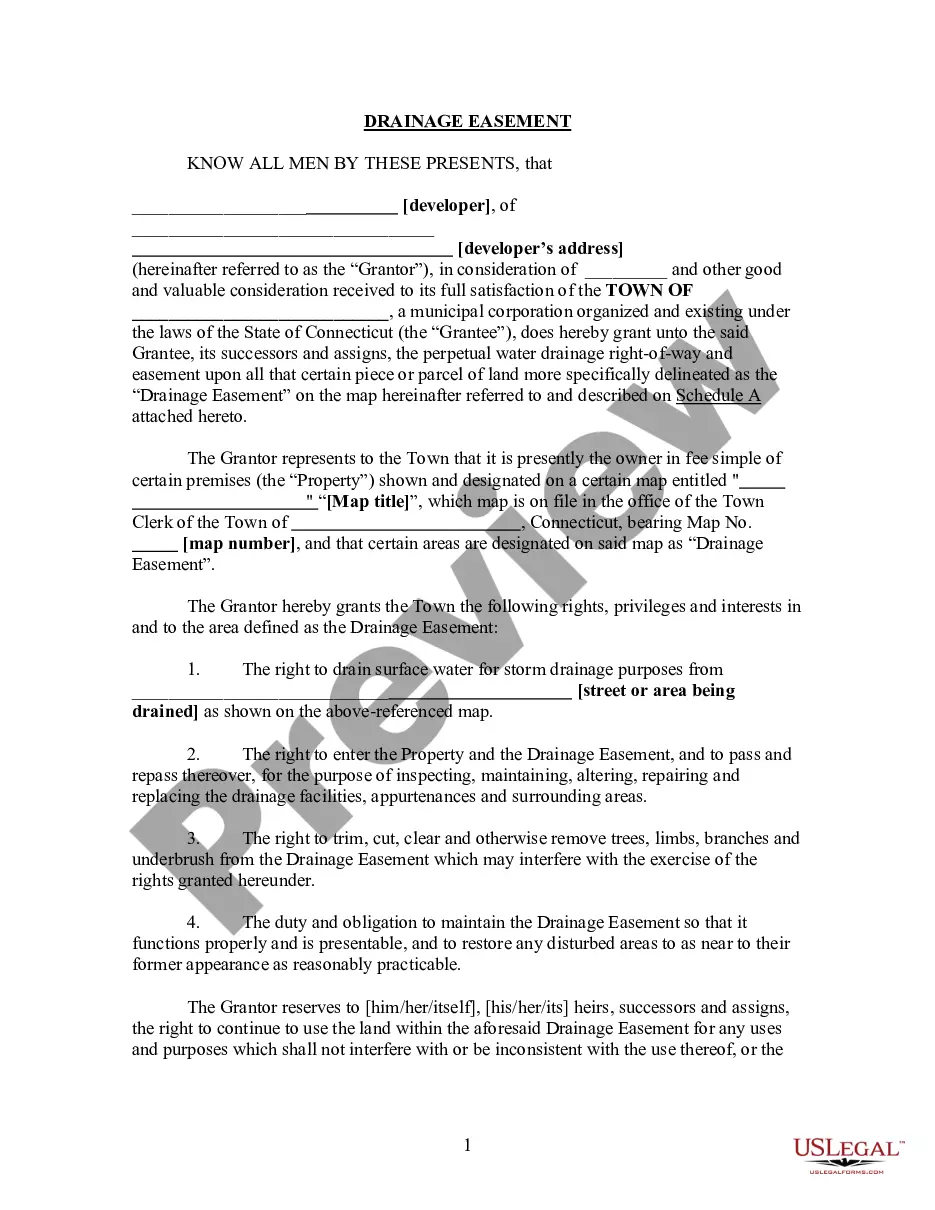
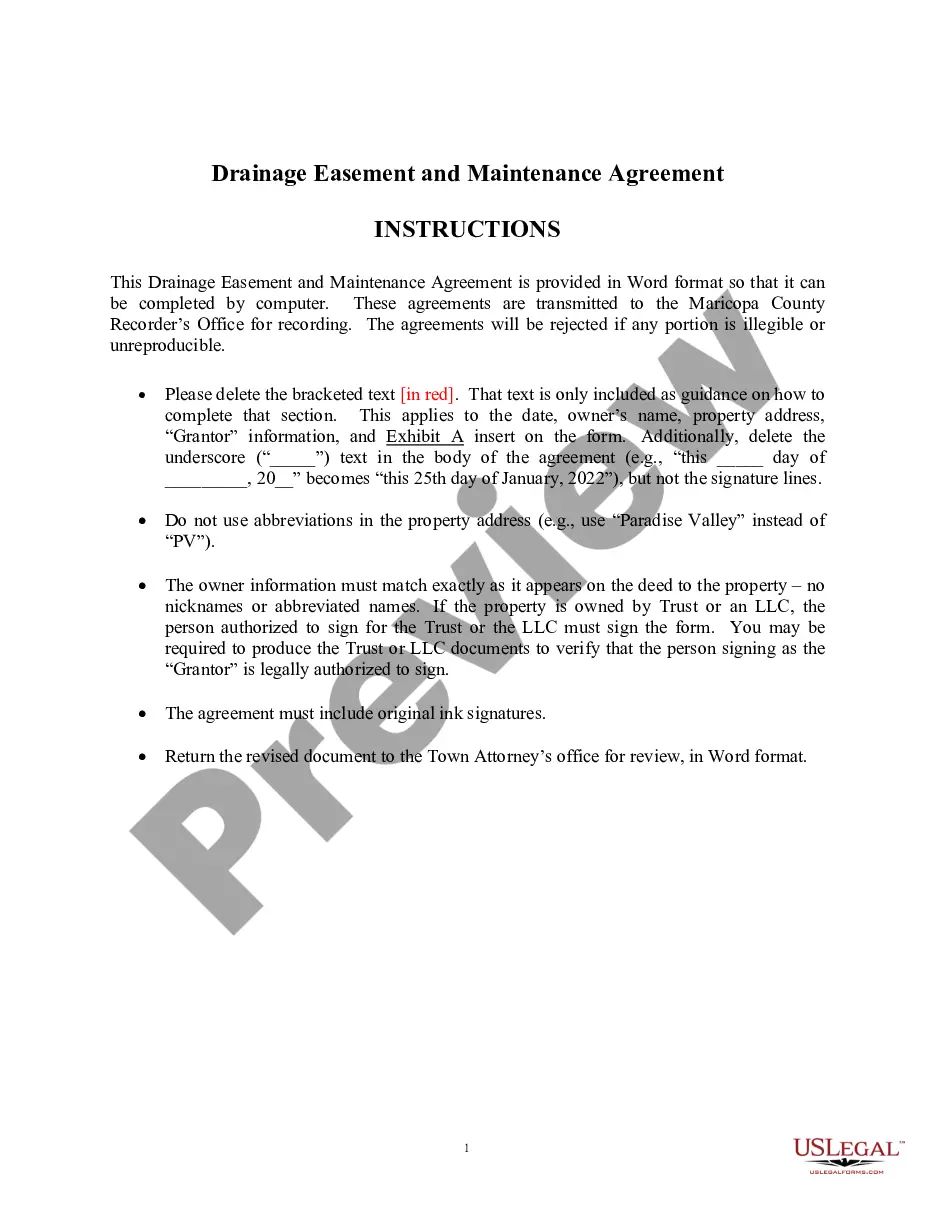
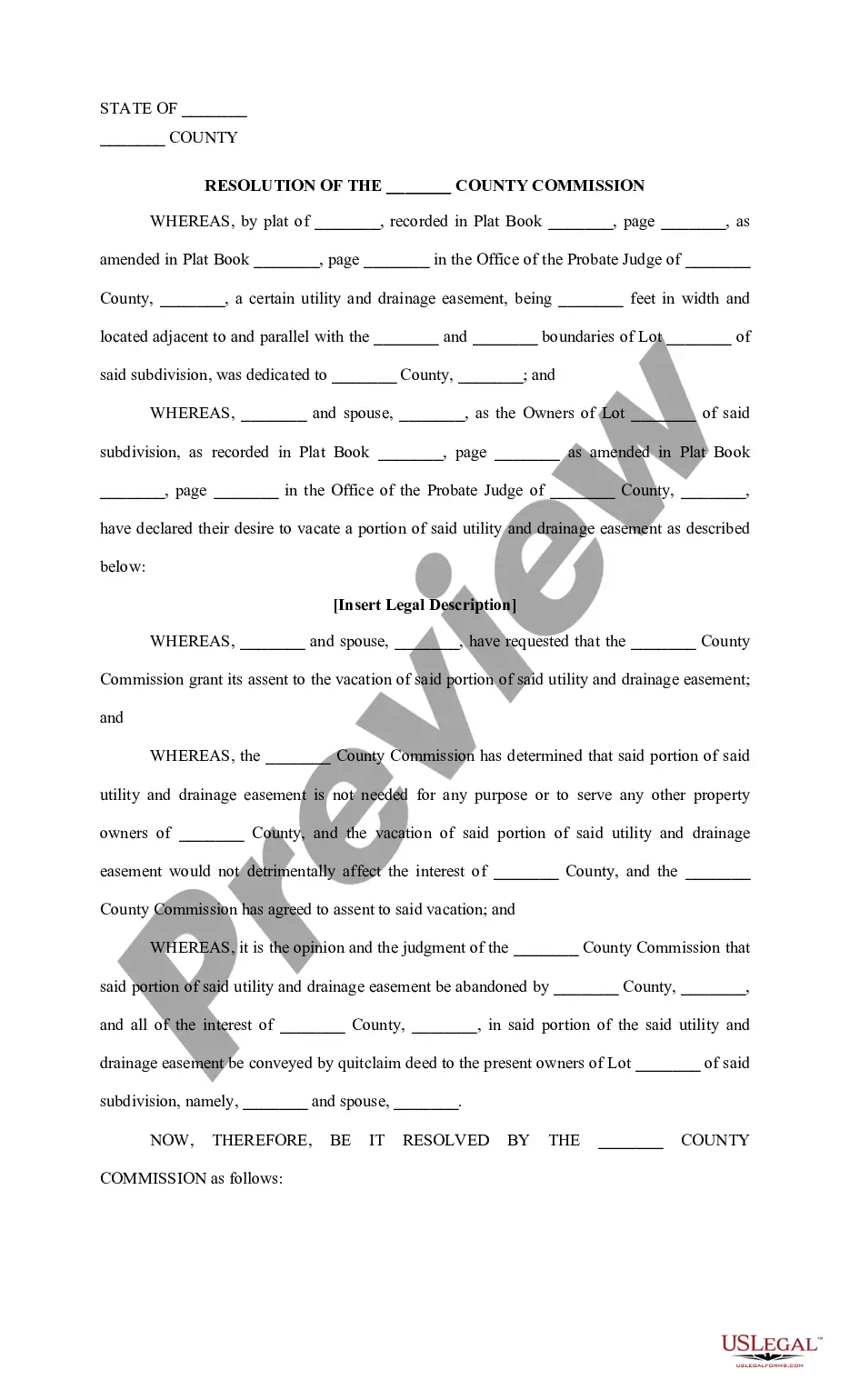
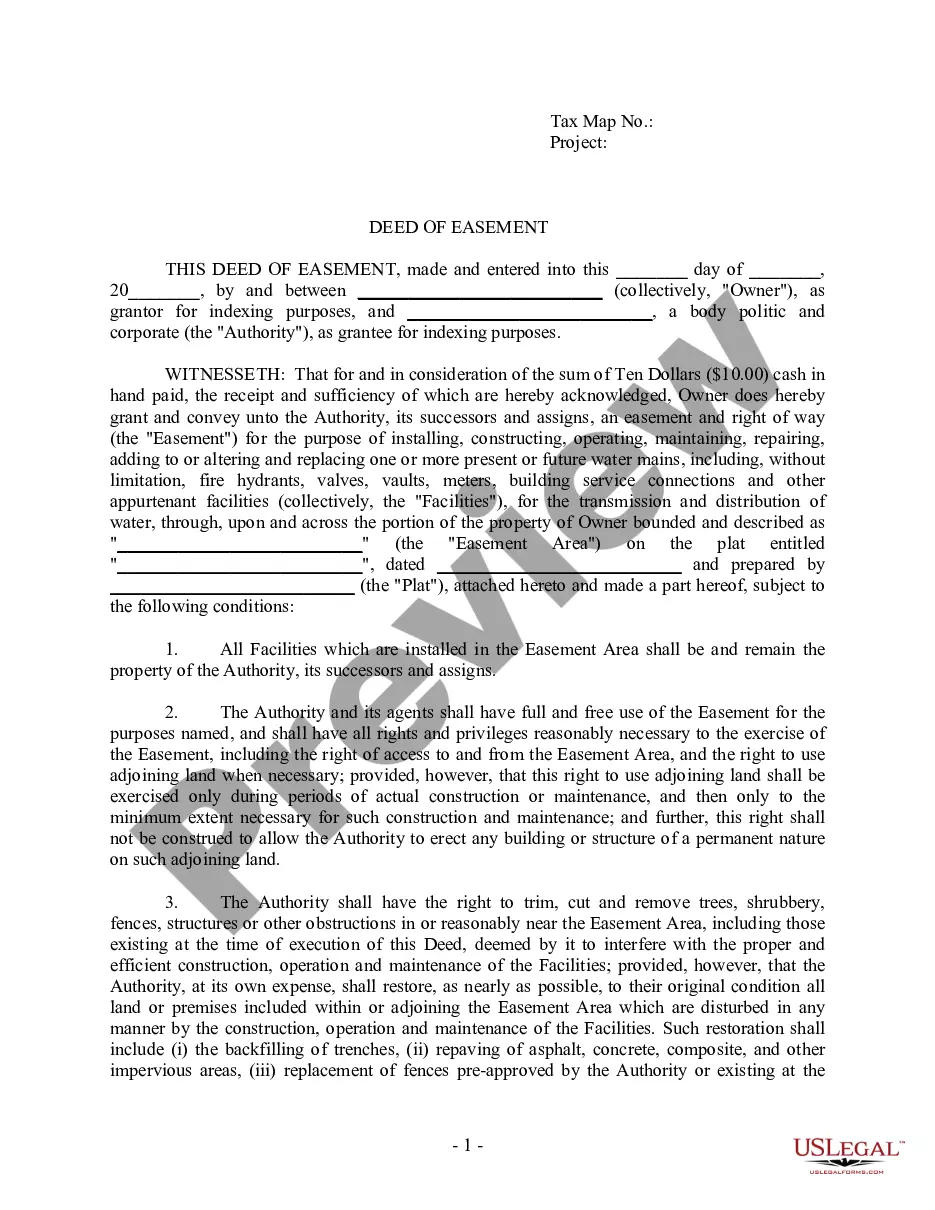
The Drainage Easement For Landowner Grantor and Town Grantee is a legal document that grants a town the right to maintain storm drainage on a specified piece of land. This form establishes a perpetual right-of-way for water drainage, allowing the town access to manage and maintain drainage easements effectively. It differs from other easements by focusing specifically on storm drainage needs, ensuring that the property can handle surface water without obstruction or interference.
Main sections of this form
- Grant of drainage easement rights to the town for storm water management.
- Rights to trim or remove vegetation obstructing the easement.
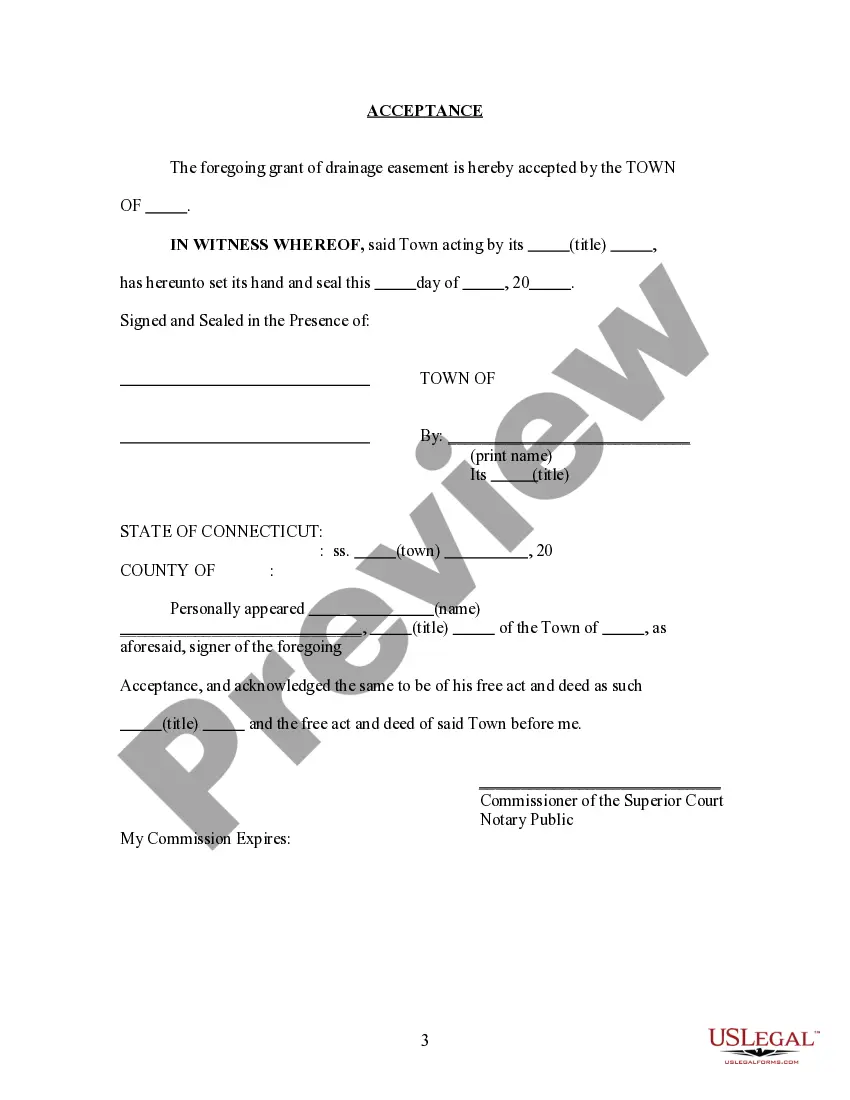
- Obligation for the town to maintain the easement area in a presentable condition.
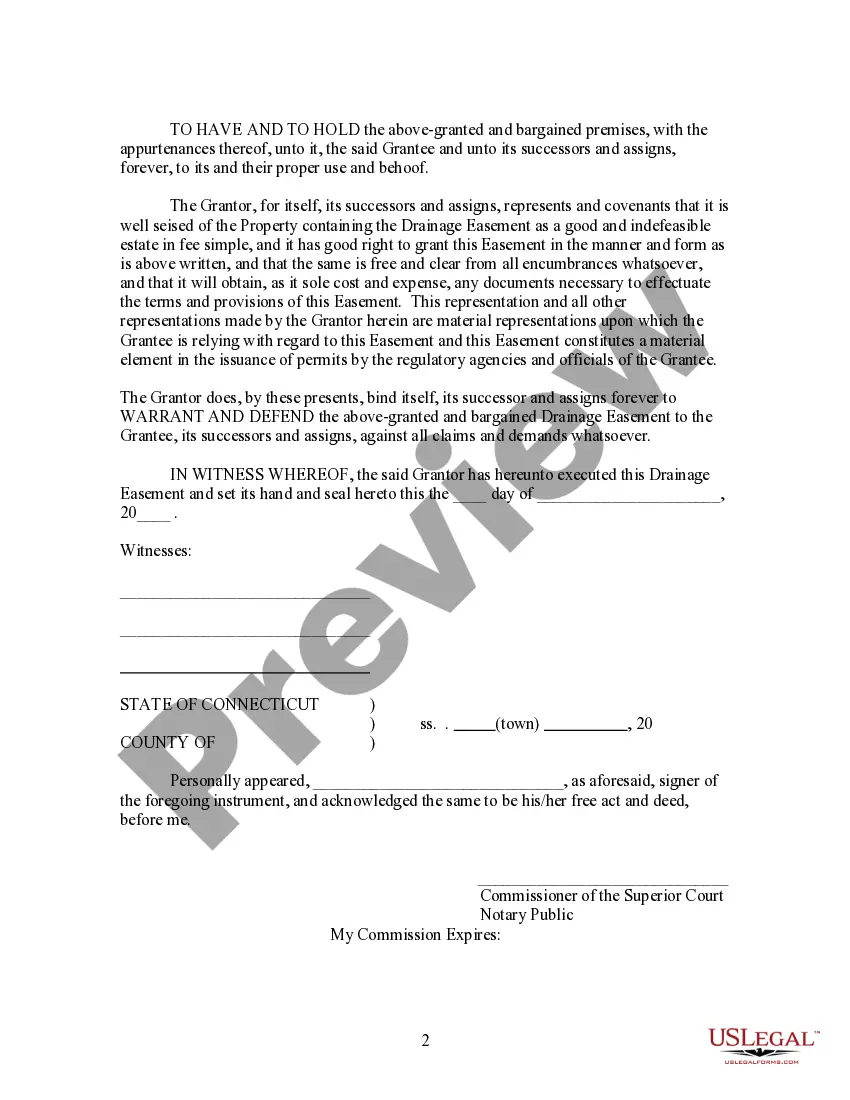
- Reservation of rights for the grantor to use the land within the easement without interference.
- Representations made by the grantor regarding ownership and encumbrances.
Situations where this form applies
This Drainage Easement form is necessary when a landowner (grantor) allows a municipality (grantee) access to their property for maintaining storm drainage. It is commonly used in residential or commercial areas where proper water drainage is critical to prevent flooding or water damage. If the town has requested permission to manage stormwater runoff in a specific area, this form should be completed.
Intended users of this form
This form is intended for:
- Property owners who seek to grant drainage easement rights to their local town or municipality.
- Town officials responsible for storm drainage management and maintenance.
- Real estate professionals handling properties affected by water drainage issues.
How to prepare this document
- Identify the parties involved: the grantor (property owner) and the grantee (town).
- Clearly describe the area that the drainage easement covers.
- Outline the rights being granted to the town regarding maintenance and management of the drainage system.
- Include any conditions or reservations for the property owner regarding the use of the easement area.
- Sign and date the document in the presence of witnesses and a notary, if required.
Notarization guidance
Notarization is required for this form to take effect. Our online notarization service, powered by Notarize, lets you verify and sign documents remotely through an encrypted video session, available 24/7.
Get your form ready online
Our built-in tools help you complete, sign, share, and store your documents in one place.
Make edits, fill in missing information, and update formatting in US Legal Forms—just like you would in MS Word.
Download a copy, print it, send it by email, or mail it via USPS—whatever works best for your next step.
Sign and collect signatures with our SignNow integration. Send to multiple recipients, set reminders, and more. Go Premium to unlock E-Sign.
If this form requires notarization, complete it online through a secure video call—no need to meet a notary in person or wait for an appointment.
We protect your documents and personal data by following strict security and privacy standards.

Make edits, fill in missing information, and update formatting in US Legal Forms—just like you would in MS Word.

Download a copy, print it, send it by email, or mail it via USPS—whatever works best for your next step.

Sign and collect signatures with our SignNow integration. Send to multiple recipients, set reminders, and more. Go Premium to unlock E-Sign.

If this form requires notarization, complete it online through a secure video call—no need to meet a notary in person or wait for an appointment.

We protect your documents and personal data by following strict security and privacy standards.
Avoid these common issues
- Failing to accurately describe the easement area, leading to disputes over boundaries.
- Not including necessary terms regarding the maintenance obligations of the town.
- Omitting signatures or dates, which can render the easement invalid.
- Neglecting to review local laws that may affect the easement's enforceability.
Benefits of completing this form online
- Convenience of downloading and filling out the form from home.
- Editability allows you to make changes before finalizing the document.
- Access to professionally drafted templates ensures legal compliance.
- Quick access to forms saves time and simplifies the process.
Looking for another form?


Form popularity
FAQ
You should file your Connecticut Drainage Easement For Landowner Grantor and Town Grantee with the local town or city clerk's office. This step is crucial, as it ensures that the easement is officially recorded and legally recognized. After filing, it’s important to verify that all relevant parties have access to the recorded document. For ease and guidance, consider using the US Legal Forms platform to streamline the filing process with accurate documentation.
A drainage easement is not public property in the traditional sense but grants certain rights to a public entity, such as a town. The landowner retains ownership, while the town grantee has the legal right to manage water drainage on that land. This arrangement can help landowners better understand their property rights and the responsibilities that come with granting such easements.
Yes, a drainage easement can affect property value in Connecticut, often positively. While some buyers may view easements as limitations, they can also add value by ensuring proper water management, reducing the risk of flooding. Understanding the implications of a drainage easement is vital for both landowners and potential buyers when assessing property value.
An example of a drainage easement might involve a landowner granting a town the right to channel stormwater runoff through their property via designated drainage ditches. This arrangement allows water to be redirected safely, preventing flooding and property damage. Such agreements become essential in managing natural water flow in a community effectively.
To maintain a drainage easement effectively, property owners should regularly inspect the area for obstructions and ensure that water flows unhindered. It may involve clearing debris, managing vegetation, and appropriate maintenance of drainage structures. Following these steps helps uphold the integrity of the easement, benefiting both the landowner and the town grantee.
In Pennsylvania, the responsibility for maintaining a drainage easement usually falls on the beneficiary of the easement, which could be the property owner or the municipal grantee. Maintenance is essential for ensuring that the drainage system functions properly and protects the property from water damage. Understanding this aspect is also important for property owners considering their own drainage easement agreements.
Generally, a property owner cannot block a legally established drainage easement in Connecticut. Doing so may result in legal ramifications, as the easement exists to benefit the town and the surrounding community. It is crucial for grantor landowners to understand their rights and responsibilities regarding easements to avoid conflicts.
A drainage easement in Connecticut allows a landowner grantor to grant specific rights to a town grantee, enabling the town to manage water drainage on the grantor's property. This legal arrangement ensures that stormwater and runoff can flow safely, protecting both the property and neighboring areas. Understanding this concept is vital for property owners to maintain compliance with local regulations and manage water effectively.
Typically, the town or municipality owns the rights to the drainage easement on your property, while you retain ownership of the land itself. This arrangement allows the grantee to perform necessary drainage functions without hindering the overall use of your property. If you have questions about the specifics of your easement, consulting a legal professional can provide clarity.
Easement laws in Connecticut emphasize the importance of documentation and clarity in agreements between landowners and municipalities. The laws delineate what activities are permitted and what obligations each party must fulfill. For thorough understanding and guidance in navigating these laws, consider utilizing resources from UsLegalForms to access tailored legal documents.