- US Legal Forms
- Forms Catalog
- Landlord Tenant
-
Connecticut Residential Rental Lease Agreement
Connecticut Residential Rental Lease Agreement
This form is part of a form package!
Get all related documents in one bundle, so you don’t have to search separately.
About this form
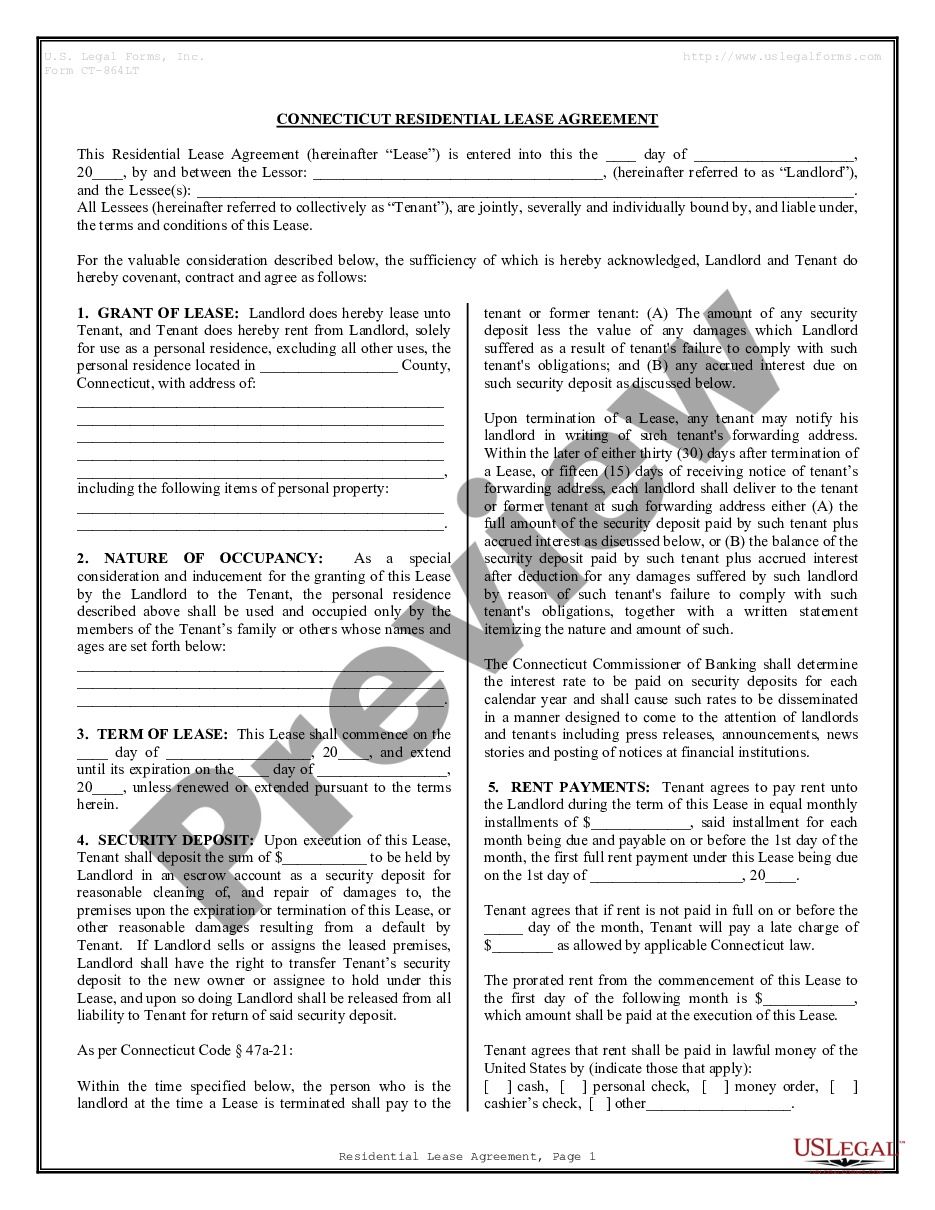
The Residential Rental Lease Agreement is a legally binding document between a landlord and a tenant. This form outlines the terms and conditions for renting a residential property for a specific period, typically from six months to several years. It differs from similar forms by including specific provisions that can be adjusted according to the unique agreement between the landlord and tenant, ensuring clarity on rights and responsibilities for both parties.
Form components explained
- Identification of landlord and tenant with their respective contact information.
- Description of the property being rented, including address and included furnishings.
- Details regarding the lease term, including start and end dates.
- Security deposit requirements, including conditions for its return.
- Rent payment terms, including due dates and acceptable payment methods.
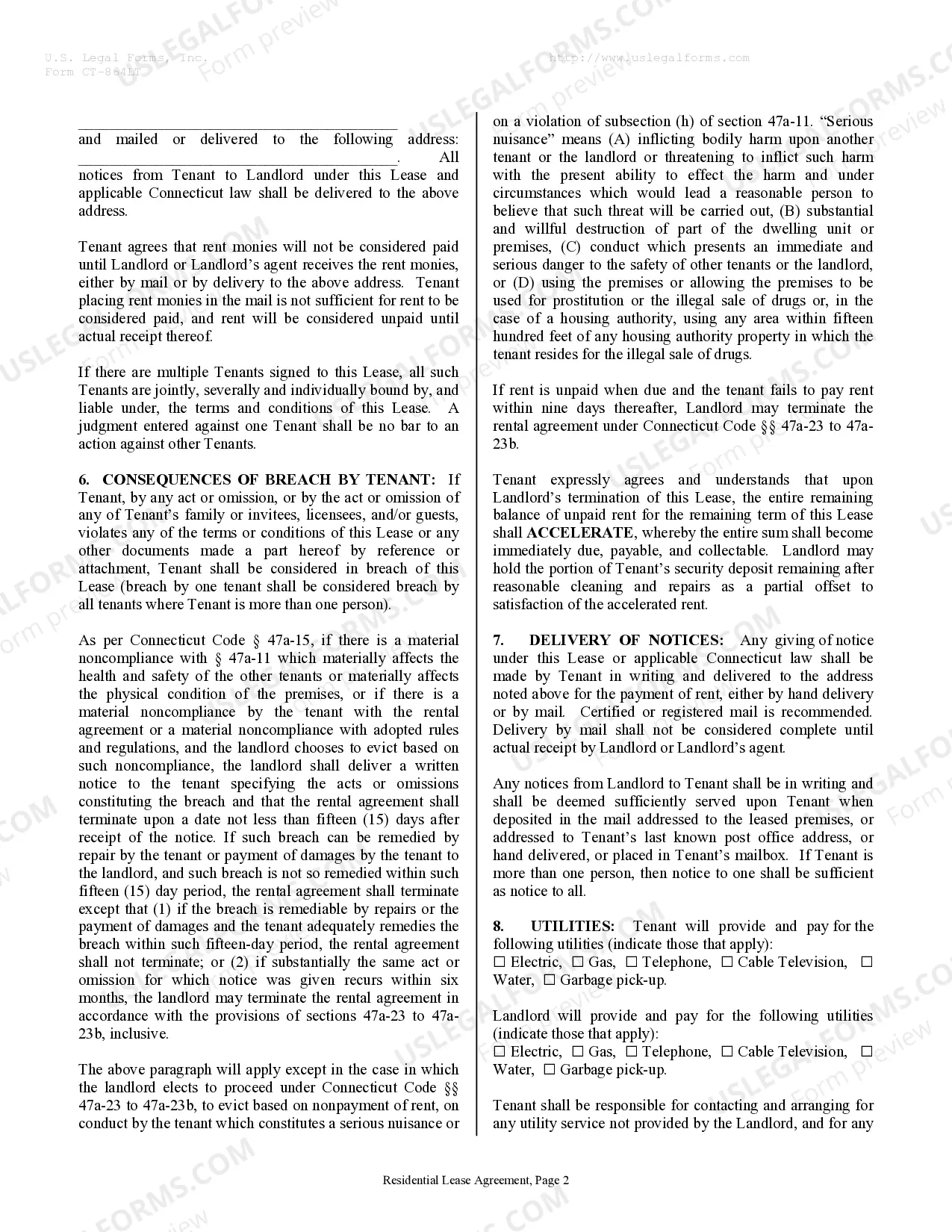
- Obligations and responsibilities of both the tenant and the landlord.


Related forms
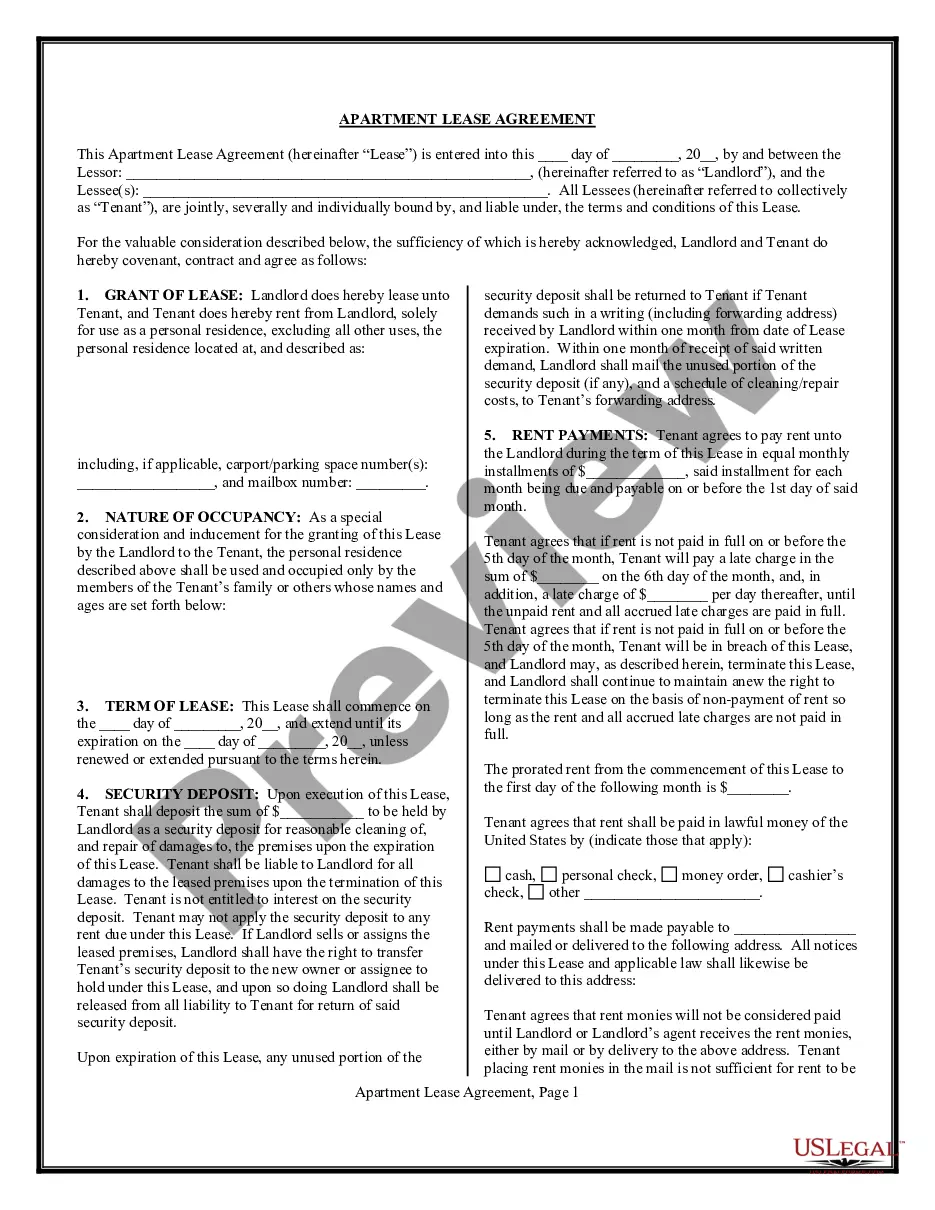
Apartment Lease Agreement
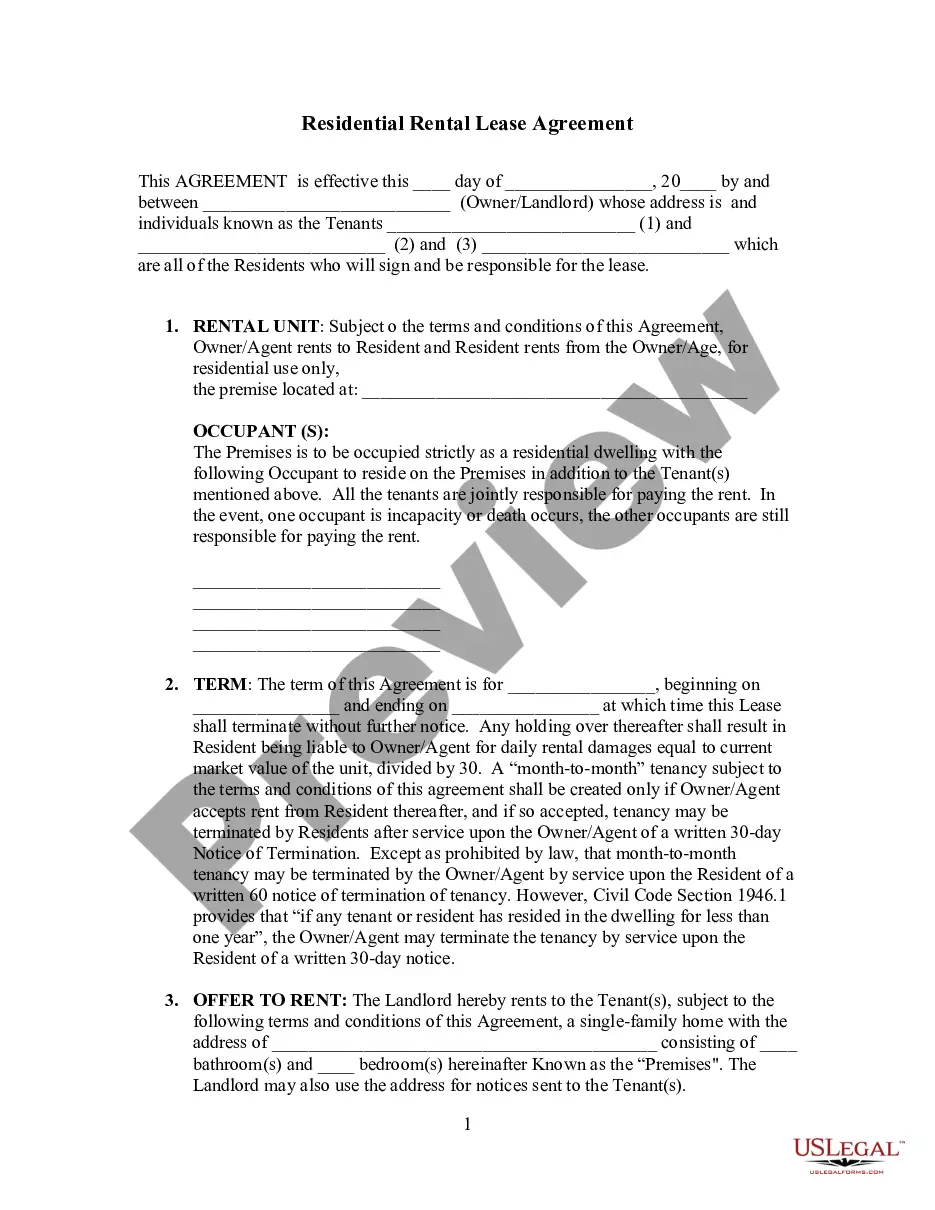
Residential Lease Agreement
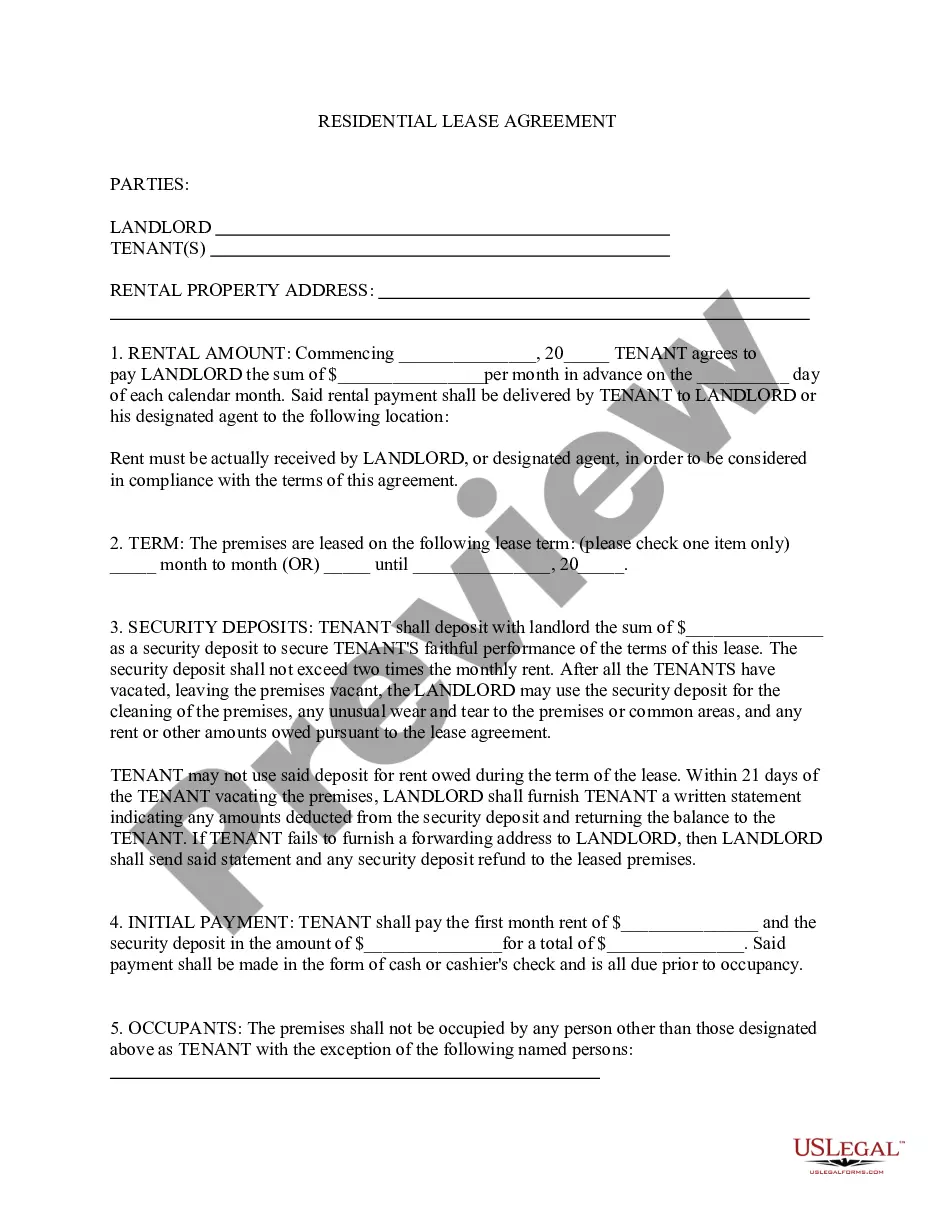
Residential Lease Agreement
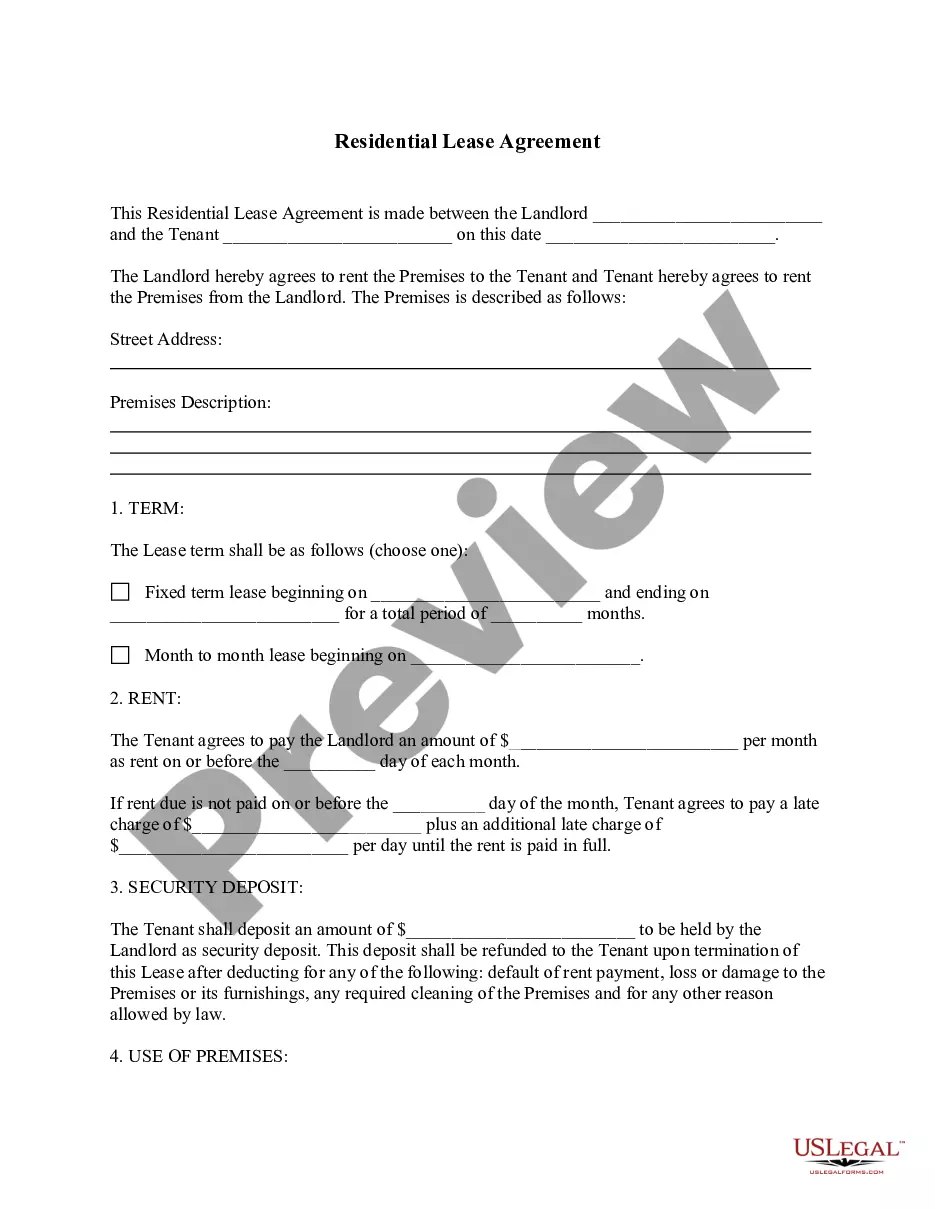
Basic Residential Lease Agreement
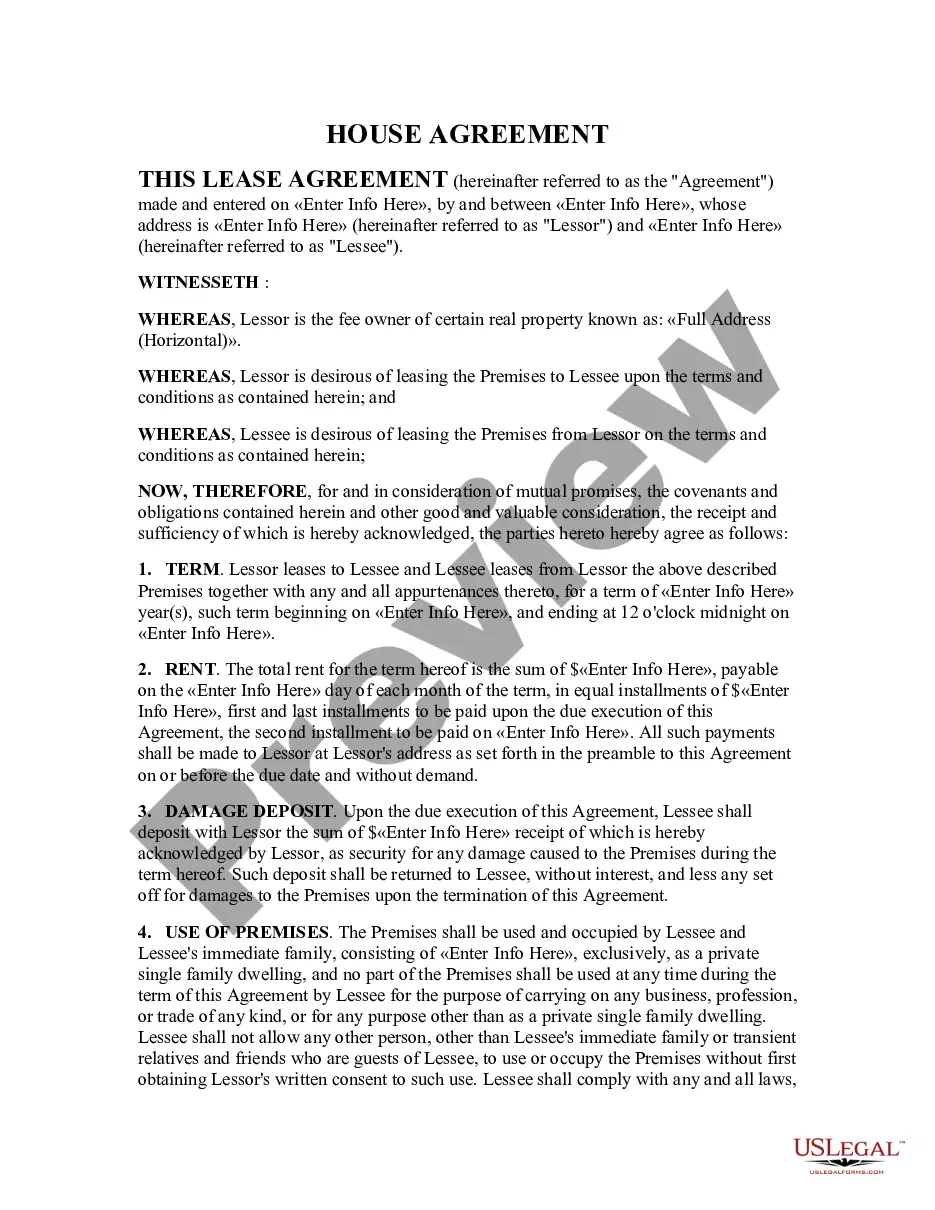
House Lease Agreement
Common use cases
This form should be used when a landlord and tenant wish to formalize a rental arrangement for a residential property. It is necessary when establishing clear expectations regarding rent payment, security deposits, property maintenance, and legal rights. It is especially useful for landlords wanting to ensure compliance with local rental laws and for tenants seeking clarity on their responsibilities and rights during their tenancy.
Who can use this document
This agreement is intended for:
- Landlords renting out residential properties.
- Tenants seeking to lease residential units.
- Property management companies acting on behalf of landlords.
- Individuals looking to clarify rental agreements to prevent future disputes.
Completing this form step by step
- Identify the parties involved by entering the full names and contact information of the landlord and tenant.
- Specify the property by providing the complete address and any included personal property or furnishings.
- Fill in the lease term by indicating the start and end dates.
- Detail the security deposit amount and the conditions for its return after the lease ends.
- Enter the monthly rent amount, payment due date, and the method of payment accepted.
Notarization requirements for this form
This form does not typically require notarization unless specified by local law. It is advisable to check with a legal professional if additional notarization is needed based on individual circumstances.
Get your form ready online
Our built-in tools help you complete, sign, share, and store your documents in one place.
Make edits, fill in missing information, and update formatting in US Legal Forms—just like you would in MS Word.
Download a copy, print it, send it by email, or mail it via USPS—whatever works best for your next step.
Sign and collect signatures with our SignNow integration. Send to multiple recipients, set reminders, and more. Go Premium to unlock E-Sign.
If this form requires notarization, complete it online through a secure video call—no need to meet a notary in person or wait for an appointment.
We protect your documents and personal data by following strict security and privacy standards.

Make edits, fill in missing information, and update formatting in US Legal Forms—just like you would in MS Word.

Download a copy, print it, send it by email, or mail it via USPS—whatever works best for your next step.

Sign and collect signatures with our SignNow integration. Send to multiple recipients, set reminders, and more. Go Premium to unlock E-Sign.

If this form requires notarization, complete it online through a secure video call—no need to meet a notary in person or wait for an appointment.

We protect your documents and personal data by following strict security and privacy standards.
Typical mistakes to avoid
- Failing to specify the correct rental amount or payment due dates.
- Not providing clear guidelines for security deposit handling.
- Neglecting to outline the obligations of both parties which can lead to disputes.
- Forgetting to include all necessary tenant names, which might affect liability.
Benefits of using this form online
- Convenience of downloading and completing the form from anywhere.
- Editability to tailor the lease according to specific terms and conditions.
- Reliability of having a legal document reviewed by licensed attorneys.
- Access to updates and changes in legal requirements seamlessly.
Legal use & context
- This agreement serves as the legal basis for the landlord-tenant relationship.
- It establishes the rights and obligations of each party, providing protection in case of disputes.
- Compliance with local laws enhances the enforceability of the lease agreement.
- Both parties should keep a signed copy for their records for reference and legal purposes.
What to keep in mind
- The Residential Rental Lease Agreement clarifies the rental terms between landlord and tenant.
- Understanding state-specific laws is crucial for both parties.
- Complete the agreement accurately to avoid misunderstandings and legal issues.
- This form provides a framework to protect the interests of both landlords and tenants.
Looking for another form?
-
Alabama
-
Alaska
-
Arizona
-
Arkansas
-
California
-
Colorado
-
Connecticut
-
Delaware
-
District of Columbia
-
Florida
-
Georgia
-
Guam
-
Hawaii
-
Idaho
-
Illinois
-
Indiana
-
Iowa
-
Kansas
-
Kentucky
-
Louisiana
-
Maine
-
Maryland
-
Massachusetts
-
Michigan
-
Minnesota
-
Mississippi
-
Missouri
-
Montana
-
Nebraska
-
Nevada
-
New Hampshire
-
New Jersey
-
New Mexico
-
New York
-
North Carolina
-
North Dakota
-
Ohio
-
Oklahoma
-
Oregon
-
Pennsylvania
-
Puerto Rico
-
Rhode Island
-
South Carolina
-
South Dakota
-
Tennessee
-
Texas
-
Utah
-
Vermont
-
Virgin Islands
-
Virginia
-
Washington
-
West Virginia
-
Wisconsin
-
Wyoming
Viewed forms
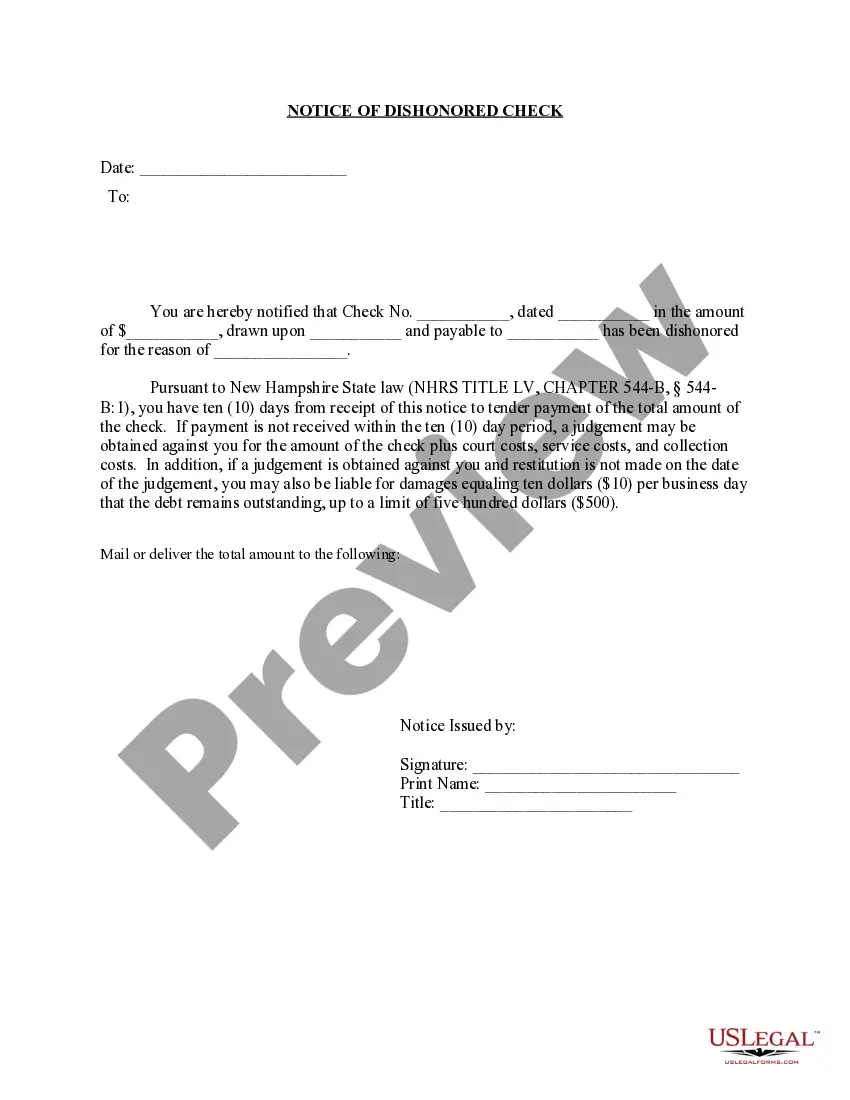
Notice of Dishonored Check - Civil - Keywords: bad check, bounced check
Annual Minutes

Name Change Notification Package for Brides, Court Ordered Name Change, Divorced, Marriage
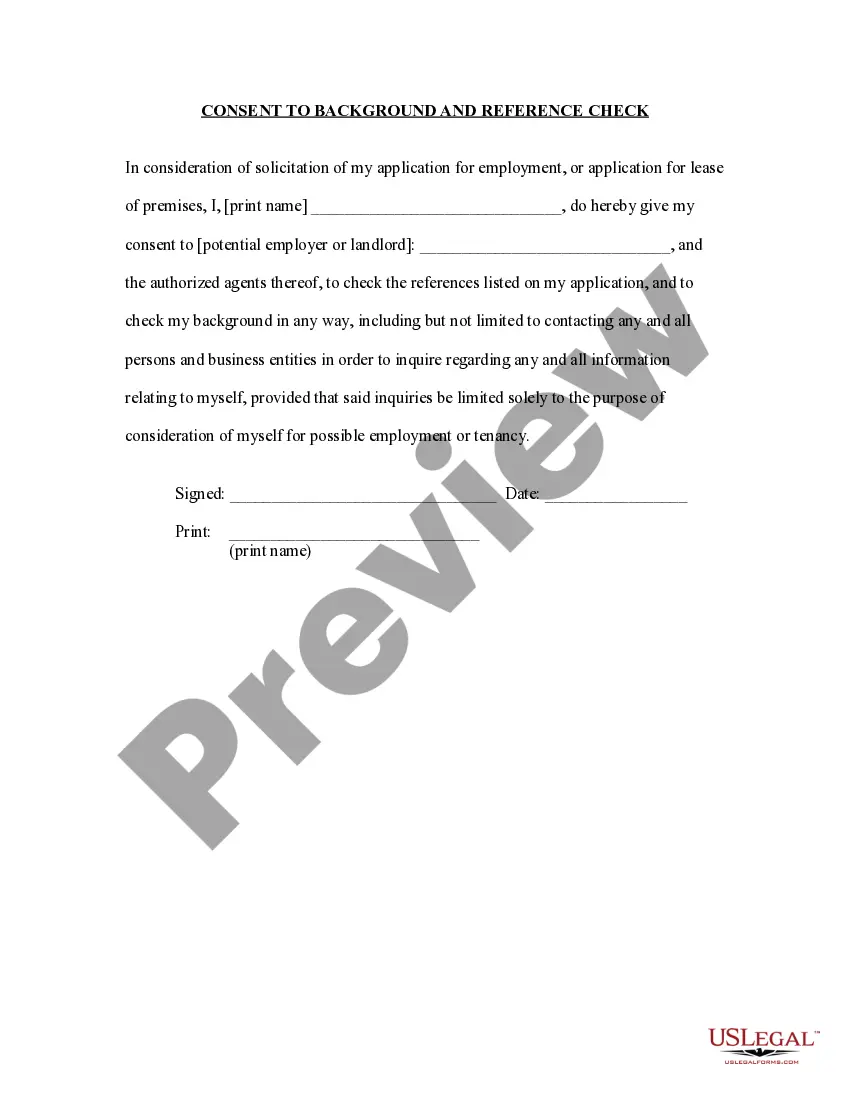
Tenant Consent to Background and Reference Check
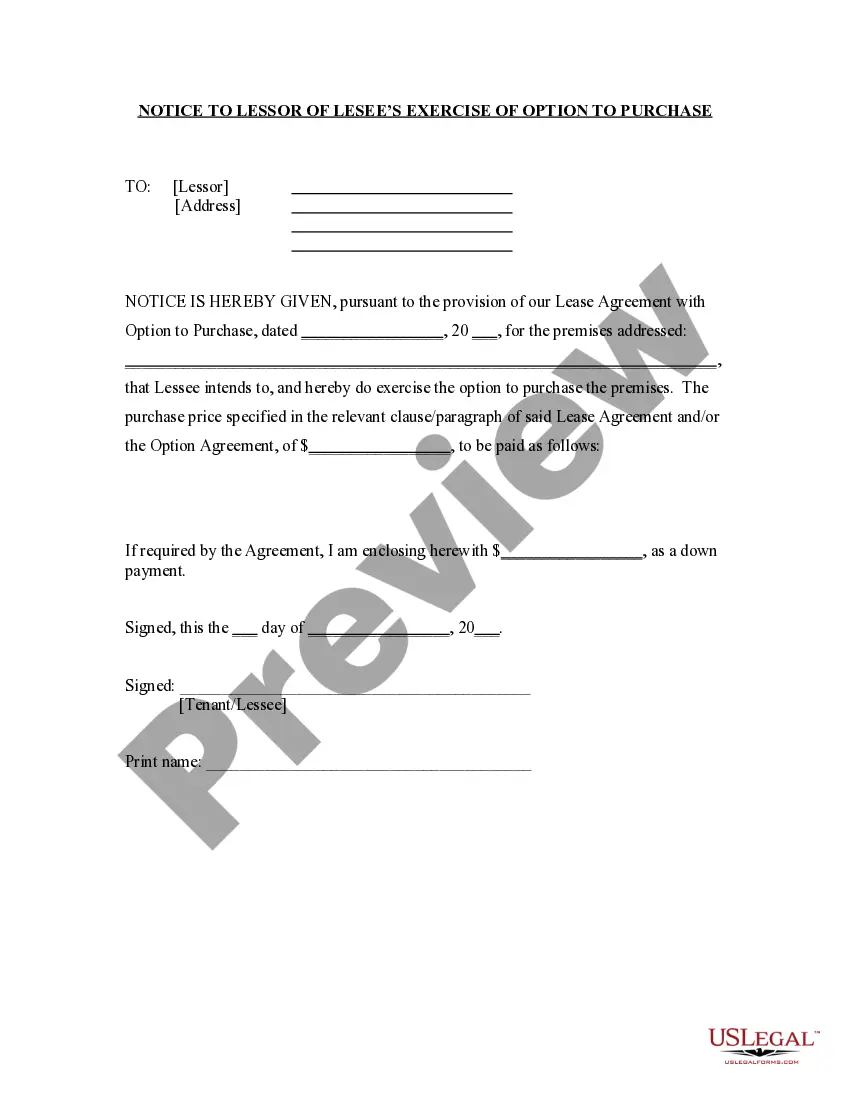
Notice to Lessor Exercising Option to Purchase
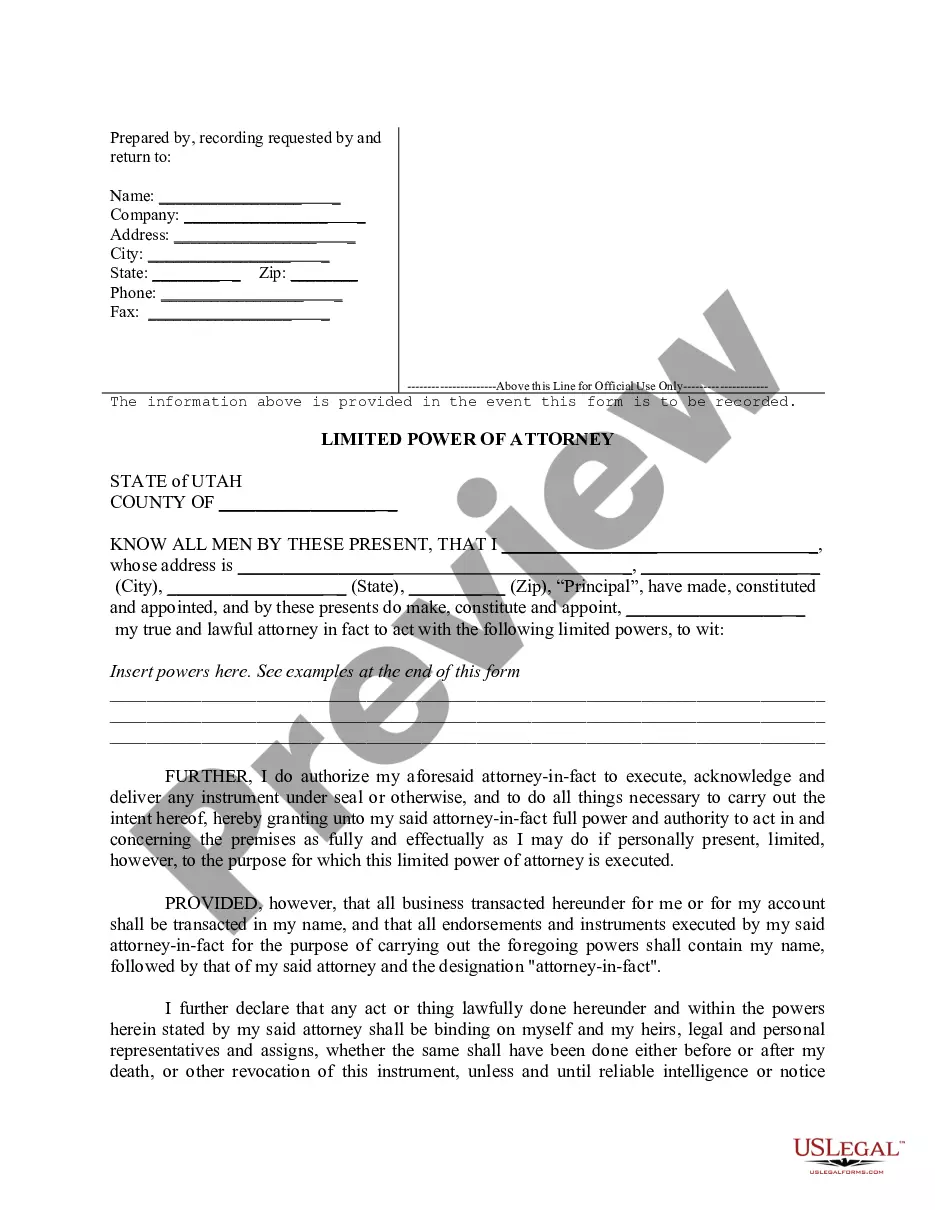
Limited Power of Attorney where you Specify Powers with Sample Powers Included
Annual Minutes
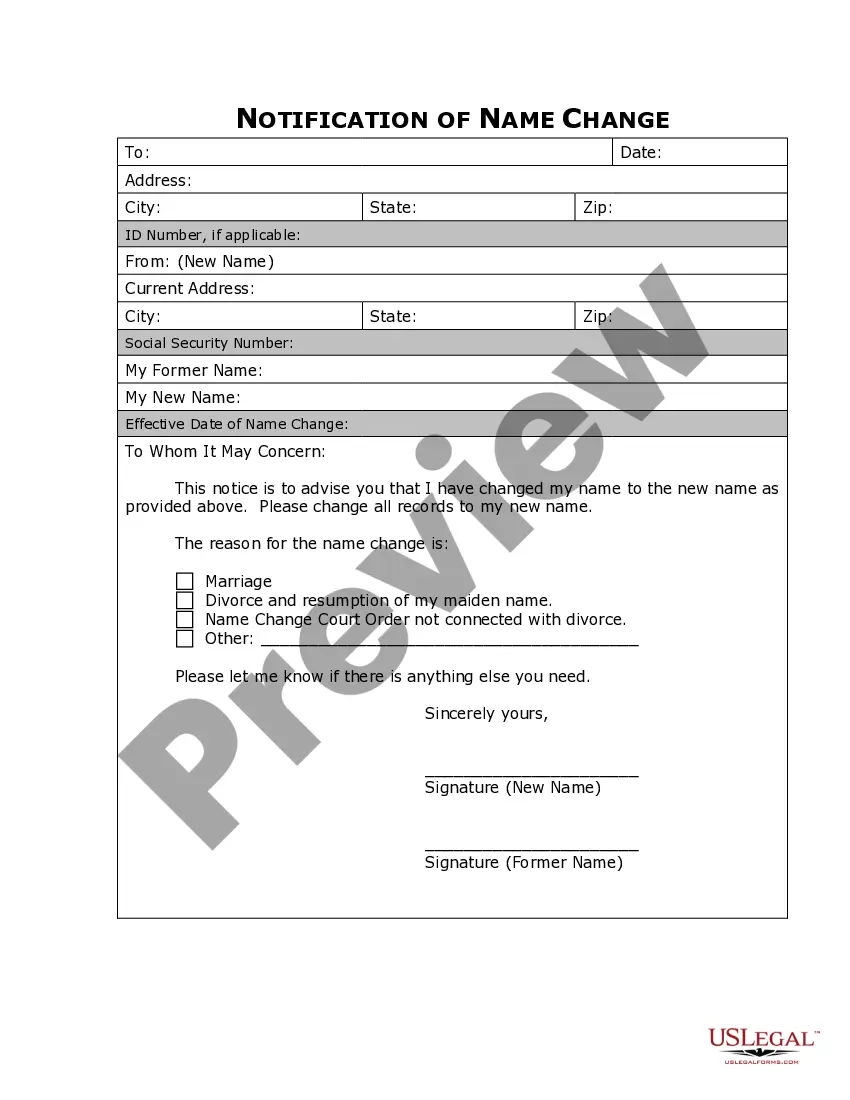
Name Change Notification Form
Notice of Default on Residential Lease
Complex Will with Credit Shelter Marital Trust for Large Estates
Form popularity
FAQ
To rent an apartment in Connecticut, you must meet certain criteria. Typically, landlords require a completed application, proof of income, and a credit check. Additionally, many landlords expect you to provide references or a co-signer, particularly if your credit history is limited. Understanding the Connecticut Residential Rental Lease Agreement is crucial, as it outlines your rights and responsibilities in the rental process.
Yes, you can create your own lease agreement; however, it is important that it complies with Connecticut state laws. Ensure that your residential lease contains all necessary terms regarding rent, duration, and responsibilities. Platforms like UsLegalForms can provide templates for a Connecticut Residential Rental Lease Agreement, helping you create a legally sound document.
The terms 'lease' and 'lease agreement' are often used interchangeably; however, a lease typically refers to the actual document, while a lease agreement emphasizes the terms outlined within that document. Both serve the same purpose, which is to define the rights and responsibilities of parties involved in a rental situation. Understanding these definitions can enhance your preparation for drafting a Connecticut Residential Rental Lease Agreement.
When asking your landlord about a rent-to-own option, present your proposal clearly and confidently. Explain the benefits of such an arrangement and how it can be mutually advantageous. Consider proposing a discussion about adding this option to your Connecticut Residential Rental Lease Agreement to formalize the terms.
In Connecticut, lease agreements do not typically need to be notarized to be valid. However, having a notarized document can provide added legal assurance for both parties. If you are creating a Connecticut Residential Rental Lease Agreement, consider having a notary public witness the signing for extra protection.
A state of Connecticut standard lease agreement outlines the rental terms between a landlord and tenant. It typically includes details such as the rental amount, lease duration, and responsibilities of both parties. This type of agreement is important for ensuring clarity and protecting the rights of everyone involved in the Connecticut Residential Rental Lease Agreement.
While it's not mandatory to have a lawyer for a rent-to-own contract, it can be beneficial. A legal expert can help you understand the specific terms of your Connecticut Residential Rental Lease Agreement and ensure that your interests are protected. Their guidance can also clarify any complex legal jargon and prevent future disputes.
The most popular type of lease is the Connecticut Residential Rental Lease Agreement, widely favored for its comprehensive structure. This lease not only covers standard rental terms but also incorporates provisions tailored to the property and tenant’s needs. Adopting this lease type helps foster a strong rental relationship built on trust and clarity.
The most typical lease used in residential rentals is the written Connecticut Residential Rental Lease Agreement. A written lease minimizes misunderstandings and disputes by clearly outlining the terms and conditions expected from each party. This written document serves as a legal tool to protect both the landlord and the tenant.
The most common residential lease in Connecticut is a fixed-term lease, which is often based on a one-year duration. This type of lease provides clarity and security for tenants, while allowing landlords to maintain a consistent occupancy level. By using a Connecticut Residential Rental Lease Agreement, both parties can benefit from a well-defined contractual relationship.
Connecticut Residential Rental Lease Agreement Related Searches
-
Connecticut residential rental lease agreement template word
-
Connecticut residential rental lease agreement template
-
Connecticut residential rental lease agreement pdf
-
Connecticut residential rental lease agreement template free
-
CT residential lease agreement pdf
-
Connecticut residential rental lease agreement sample
-
Connecticut residential rental lease agreement free
-
Free CT residential lease agreement
Explore more forms
Designation of Record To Be Transmitted To Superior Court
Accounting of Guardian
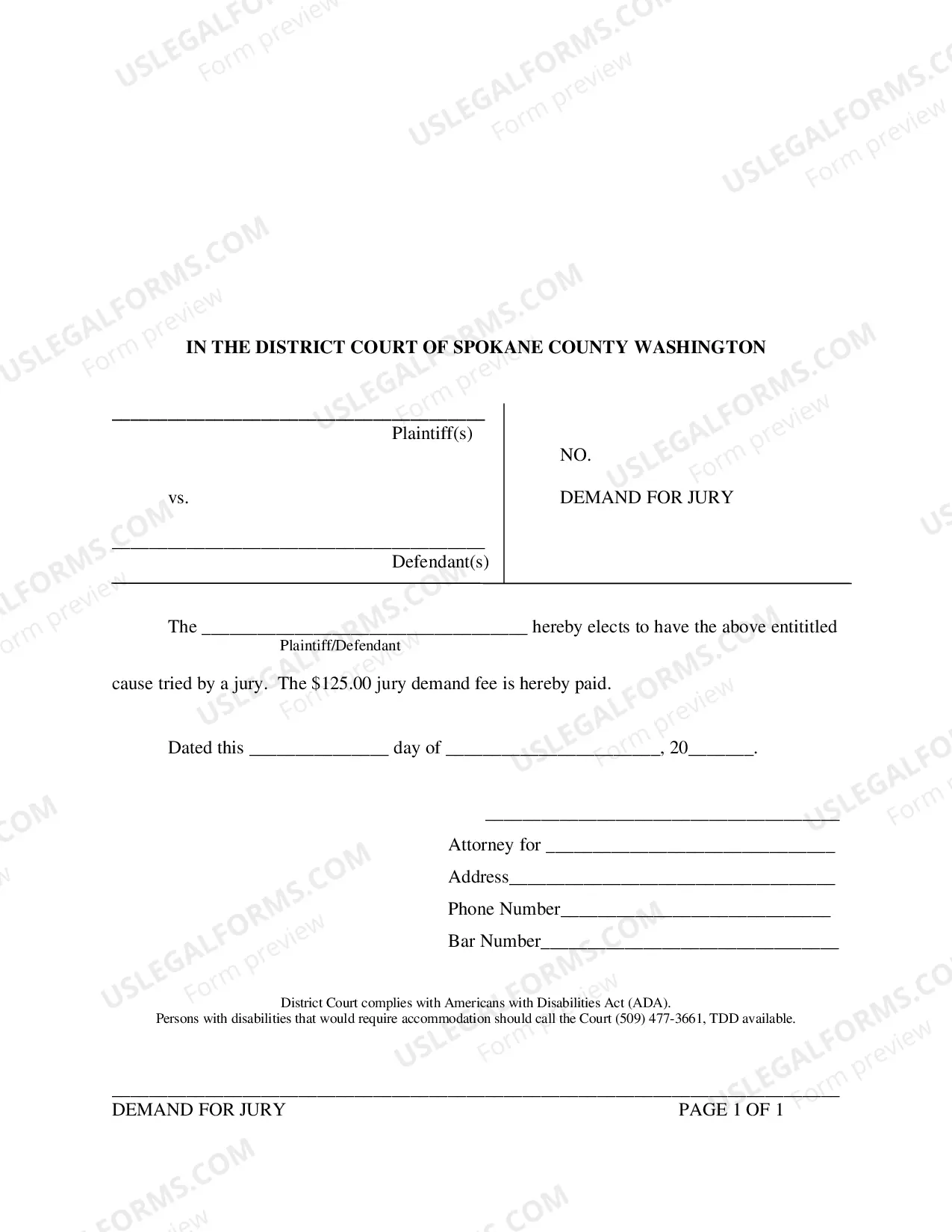
Demand For Jury
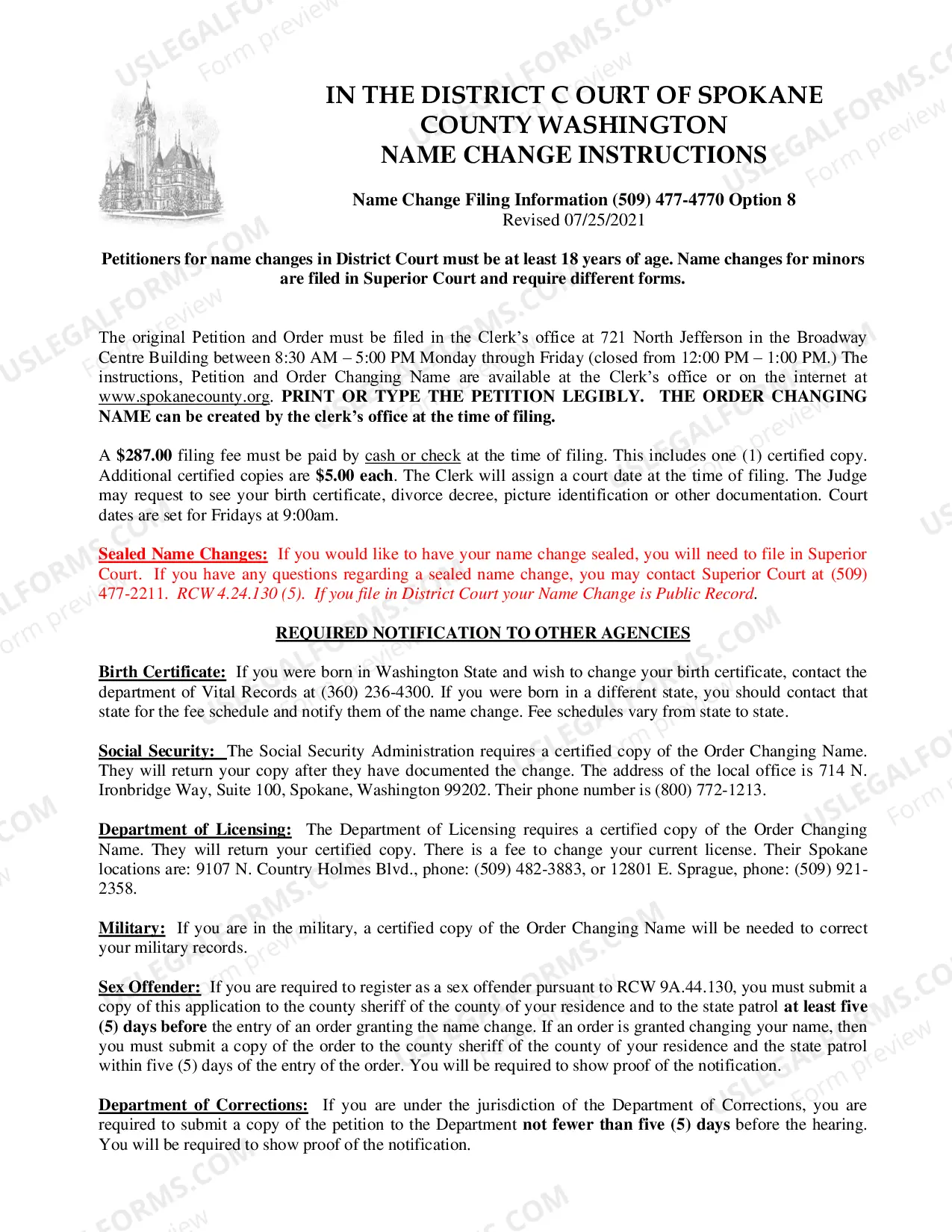
Name Change Instructions (PDF)
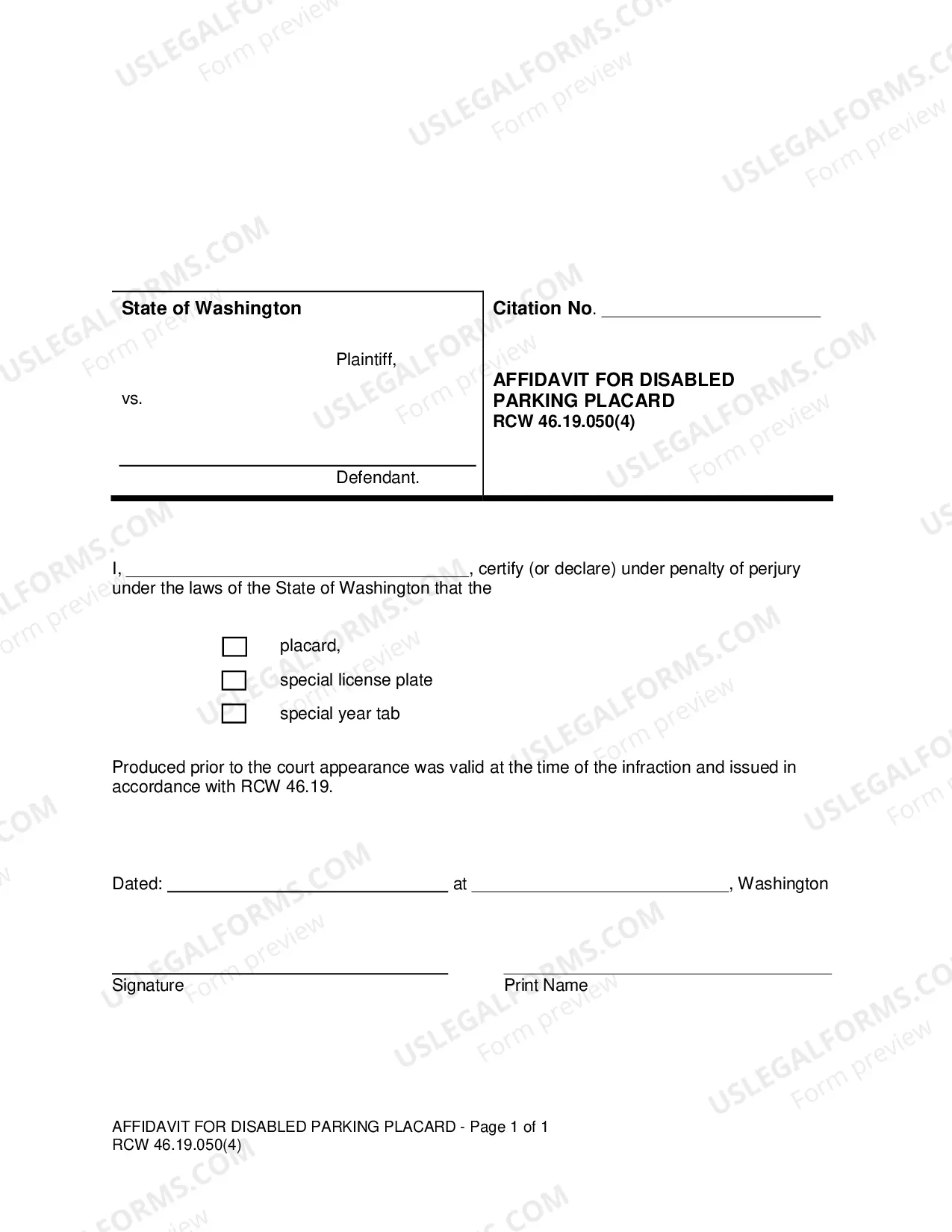
Affidavit disabled parking placard
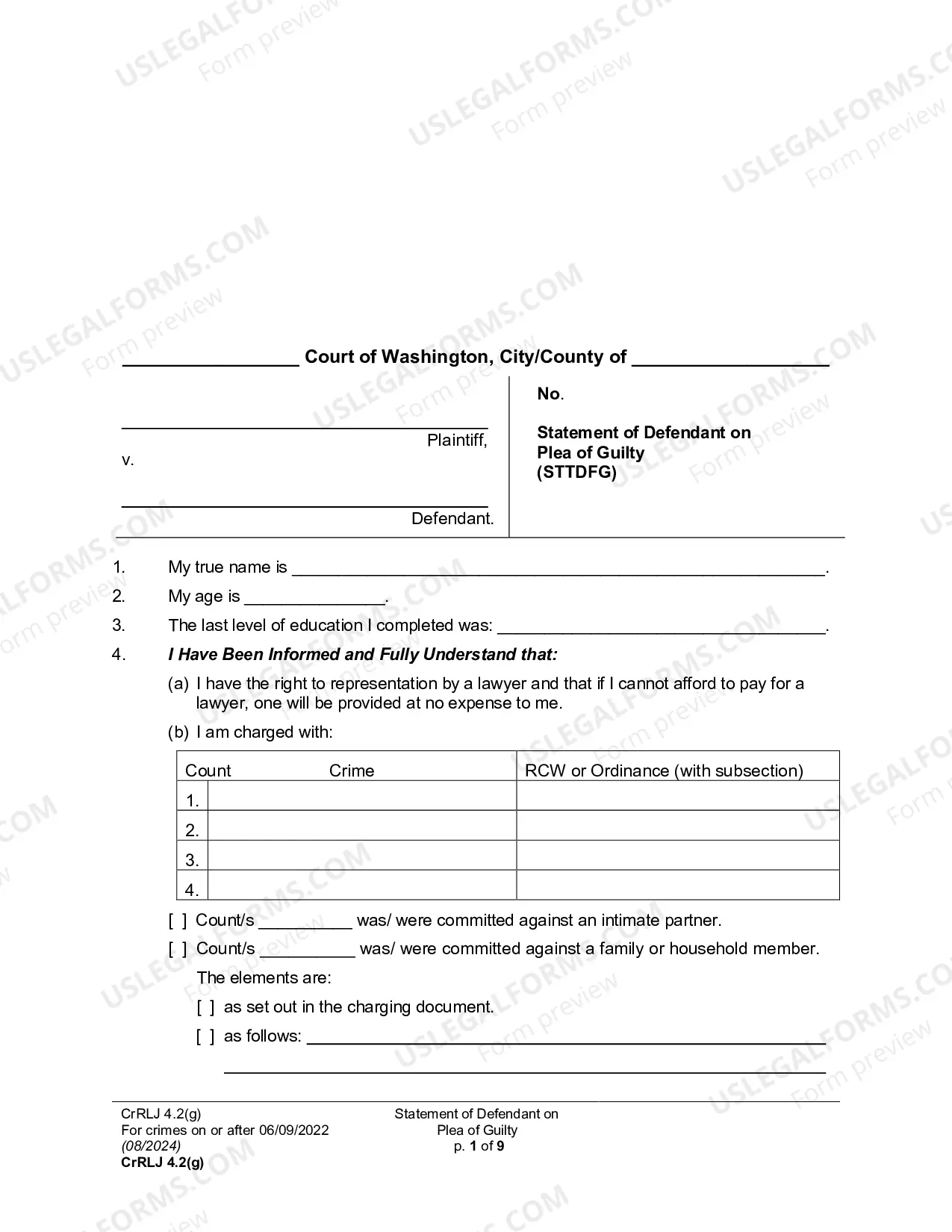
Statement of Defendant On Plea of Guilty
Trusted and secure by over 3 million people of the world’s leading companies
-
No results found.
-
Connecticut
-
Alabama
-
Alaska
-
Arizona
-
Arkansas
-
California
-
Colorado
-
Delaware
-
District of Columbia
-
Florida
-
Georgia
-
Hawaii
-
Idaho
-
Illinois
-
Indiana
-
Iowa
-
Kansas
-
Kentucky
-
Louisiana
-
Maine
-
Maryland
-
Massachusetts
-
Michigan
-
Minnesota
-
Mississippi
-
Missouri
-
Montana
-
Multi-State
-
Nebraska
-
Nevada
-
New Hampshire
-
New Jersey
-
New Mexico
-
New York
-
North Carolina
-
North Dakota
-
Ohio
-
Oklahoma
-
Oregon
-
Pennsylvania
-
Rhode Island
-
South Carolina
-
South Dakota
-
Tennessee
-
Texas
-
Utah
-
Vermont
-
Virginia
-
Washington
-
West Virginia
-
Wisconsin
-
Wyoming
Connecticut General Statutes 1995 Title-47a
Chapter-830 - Rights and Responsibilities of Landlord and Tenant
Definitions.
As used in this chapter and sections 47a-21, 47a-23 to 47a-23c, inclusive, 47a-26a to 47a-26g, inclusive, 47a-35 to 47a-35b, inclusive, 47a-41a, 47a-43 and 47a-46:
(a) "Action" includes recoupment, counterclaim, set-off, cause of action and any other proceeding in which rights are determined, including an action for possession.
(b) "Building and housing codes" include any law, ordinance or governmental regulation concerning fitness for habitation or the construction, maintenance, operation, occupancy, use or appearance of any premises or dwelling unit.
(c) "Dwelling unit" means any house or building, or portion thereof, which is occupied, is designed to be occupied, or is rented, leased or hired out to be occupied, as a home or residence of one or more persons.
(d) "Landlord" means the owner, lessor or sublessor of the dwelling unit, the building of which it is a part or the premises.
(e) "Owner" means one or more persons, jointly or severally, in whom is vested (1) all or part of the legal title to property or (2) all or part of the beneficial ownership and a right to present use and enjoyment of the premises and includes a mortgagee in possession.
(f) "Person" means an individual, corporation, the state or any political subdivision thereof, or agency, business trust, estate, trust, partnership or association, two or more persons having a joint or common interest, and any other legal or commercial entity.
(g) "Premises" means a dwelling unit and the structure of which it is a part and facilities and appurtenances therein and grounds, areas and facilities held out for the use of tenants generally or whose use is promised to the tenant.
(h) "Rent" means all periodic payments to be made to the landlord under the rental agreement.
(i) "Rental agreement" means all agreements, written or oral, and valid rules and regulations adopted under section 47a-9 or subsection (d) of section 21-70 embodying the terms and conditions concerning the use and occupancy of a dwelling unit or premises.
(j) "Roomer" means a person occupying a dwelling unit, which unit does not include a refrigerator, stove, kitchen sink, toilet and shower or bathtub and one or more of these facilities are used in common by other occupants in the structure.
(k) "Single-family residence" means a structure maintained and used as a single dwelling unit. Notwithstanding that a dwelling unit shares one or more walls with another dwelling unit or has a common parking facility, it is a single-family residence if it has direct access to a street or thoroughfare and does not share heating facilities, hot water equipment or any other essential facility or service with any other dwelling unit.
(l) "Tenant" means the lessee, sublessee or person entitled under a rental agreement to occupy a dwelling unit or premises to the exclusion of others or as is otherwise defined by law.
(m) "Tenement house" means any house or building, or portion thereof, which is rented, leased or hired out to be occupied, or is arranged or designed to be occupied, or is occupied, as the home or residence of three or more families, living independently of each other, and doing their cooking upon the premises, and having a common right in the halls, stairways or yards. Title 47-A, Chap. 830, Sec. 47a-1.
Arrangements exempted from application of title.
Applicability of title to mobile manufactured homes and home parks.
(a) Unless created to avoid the application of this chapter and sections 47a-21, 47a-23 to 47a-23b, inclusive, 47a-26 to 47a-26g, inclusive, 47a-35 to 47a-35b, inclusive, 47a-41a, 47a-43 and 47a-46, the following arrangements are not governed by this chapter and sections 47a-21, 47a-23 to 47a-23b, inclusive, 47a-26 to 47a-26g, inclusive, 47a-35 to 47a-35b, inclusive, 47a-41a, 47a-43 and 47a-46:
(1) Residence at an institution, public or private, if incidental to detention or the provision of medical, geriatric, educational, counseling, religious service or any similar service;
(2) occupancy under a contract of sale of a dwelling unit or the property of which such unit is a part, if the occupant is the purchaser or a person who succeeds to his interest;
(3) occupancy by a member of a fraternal or social organization in the portion of a structure operated for the benefit of such organization;
(4) transient occupancy in a hotel or motel or similar lodging;
and
(5) occupancy by an owner of a condominium unit.
(b) Except as otherwise provided in chapter 412 or in this chapter, this chapter shall not apply to the rental of a space or lot in a mobile manufactured home park by a resident of a mobile manufactured home in such park who is also the owner of such mobile manufactured home. This chapter shall apply to the rental of a mobile manufactured home and premises in a mobile manufactured home park by a person other than the owner of such mobile manufactured home. Title 47-A, Chap. 830, Sec. 47a-2.Chapter 833a, except sections 47a-52, 47a-55, 47a-56i, 47a-56k and 47a-58 to 47a-61, inclusive, shall not apply to mobile manufactured home parks. Chapters 831, 832, 833 and 834, and the applicable parts of chapter 833a, shall apply to all residents of a mobile manufactured home park, including owners of mobile manufactured homes, except as otherwise provided in chapter 412.
47a-2a. Transferred to Chapter 814c, Sec.
Rental agreement: Permissible terms.
A landlord and a tenant may include in a rental agreement terms and conditions not prohibited by law, including rent, term of the agreement and other provisions governing the rights and obligations of the parties. Title 47-A, Chap. 830, 47a-3.
Rental agreement: Payment of rent.
Written receipt for cash payment.
(a) Rent is payable without demand or notice at the time and place agreed upon by the parties.
(b) Unless otherwise agreed:
(1) Rent is payable at the dwelling unit;
(2) periodic rent is payable at the beginning of any term of one month or less and for terms of more than one month in equal monthly instalments at the beginning of each month.
(c) Upon receipt of a payment in cash from or on behalf of an occupant, a landlord shall, if requested by the person making the payment, provide such person with a receipt stating the date of the payment, the amount received and the purpose for which the payment was made. Title 47-A, Chap. 830, 47a-3a.
Rental agreement: Term of tenancy in absence of agreement.
Unless the rental agreement fixes a definite term, the tenancy is month to month, except in the case of a tenant who pays weekly rent, then the tenancy is week to week. Title 47-A, Chap. 830, Sec. 47a-3b.
Payment in absence of rental agreement.
In the absence of agreement, the tenant shall pay the fair rental value for the use and occupancy of the dwelling unit. Title 47-A, Chap. 830, Sec. 47a-3c.
Holding over not evidence of new lease.
Determination of monthly lease. Holding over by any lessee, after the expiration of the term of his lease, shall not be evidence of any agreement for a further lease. Parol leases of lands or tenements reserving a monthly rent and in which the time of their termination is not agreed upon shall be construed to be leases for one month only. Title 47-A, Chap. 830, Sec. 47a-3d. (Formerly Sec. 47-22).
Notice to potential tenant when dwelling unit located in common interest community.
Whenever a dwelling unit in a common interest community is rented from a declarant, successor declarant or person acting on the declarant's or successor declarant's behalf, such declarant, successor declarant or person shall, prior to entering into a rental agreement, provide the tenant with a written notice that the dwelling unit is located in a common interest. Title 47-A, Chap. 830, Sec. 47a-3e.
Terms prohibited in rental agreement.
(a) A rental agreement shall not provide that the tenant:
(1) Agrees to waive or forfeit rights or remedies under this chapter and sections 47a-21, 47a-23 to 47a-23b, inclusive, 47a-26 to 47a-26g, inclusive, 47a-35 to 47a-35b, inclusive, 47a-41a, 47a-43 and 47a-46, or under any section of the general statutes or any municipal ordinance unless such section or ordinance expressly states that such rights may be waived;
(2) authorizes the landlord to confess judgment on a claim arising out of the rental agreement;
(3) agrees to the exculpation or limitation of any liability of the landlord arising under law or to indemnify the landlord for that liability or the costs connected therewith;
(4) agrees to waive his right to the interest on the security deposit pursuant to section 47a-21;
(5) agrees to permit the landlord to dispossess him without resort to court order;
(6) consents to the distraint of his property for rent;
(7) agrees to pay the landlord's attorney's fees in excess of fifteen per cent of any judgment against the tenant in any action in which money damages are awarded; or
(8) agrees to pay a late charge prior to the expiration of the grace period set forth in section 47a-15a or to pay rent in a reduced amount if such rent is paid prior to the expiration of such grace period.
(b) A provision prohibited by subsection (a) of this section included in a rental agreement is unenforceable. Title 47-A, Chap. 830, Sec. 47a-4.(P.A. 76-95, S. 4, 27; 76-435, S. 75, 82; P.A. 77-451, S. 1; P.A. 79-571, S. 9; P.A. 82-274, S. 3; P.A. 87-154, S. 2; May Sp. Sess. P.A. 92-11, S. 37, 70.)
Effect of failure to comply with section
A rental agreement shall not permit the receipt of rent for any period during which the landlord has failed to comply with subsection (a) of section 47a-7. Title 47-A, Chap. 830, Sec. 47a-4a.
Failure to install smoke detectors constitutes a material safety hazard and tenants are relieved of obligation to pay rent during period detectors not installed. 38 CS 6769.
No rent recoverable for period of unlawful occupation.
In any borough, city or town which requires a certificate of occupancy prior to human habitation of any building located therein, if any building is occupied in whole or in part without such occupancy permit, rent shall not be recoverable by the owner or lessor of the premises for such period of unlawful occupation. Title 47-A, Chap. 830, Sec. 47a-5. (Formerly Sec. 47-24a).
Identification of landlord.
(a) It is the duty of the landlord or an agent authorized by him, or any successor landlord or such successor's agent to notify the tenant in writing, on or before the commencement of the tenancy, or in the case of a successor at the time of such succession, of the name and address of
(1) the person authorized to manage the premises and
(2) the person who is authorized to receive all notices, demands and service of process. Such name and address shall be kept current.
(b) If the landlord fails to comply with subsection (a) of this section, the person authorized by the landlord to enter into the rental agreement with the tenant shall be deemed the agent of the landlord for
(1) service of process and receipt of any such notices or demands, and
(2) for performing the obligations of the landlord under sections 47a-7 and 47a-13 and the rental agreement, and
(3) expending funds from the rent collected from the premises to perform such obligations. Title 47-A, Chap. 830, Sec. 47a-6.
Landlord's responsibilities.
(a) A landlord shall:
(1) Comply with the requirements of chapter 368o and all applicable building and housing codes materially affecting health and safety of both the state or any political subdivision thereof;
(2) make all repairs and do whatever is necessary to put and keep the premises in a fit and habitable condition, except where the premises are intentionally rendered unfit or uninhabitable by the tenant, a member of his family or other person on the premises with his consent, in which case such duty shall be the responsibility of the tenant;
(3) keep all common areas of the premises in a clean and safe condition;
(4) maintain in good and safe working order and condition all electrical, plumbing, sanitary, heating, ventilating and other facilities and appliances and elevators, supplied or required to be supplied by him;
(5) provide and maintain appropriate receptacles for the removal of ashes, garbage, rubbish and other waste incidental to the occupancy of the dwelling unit and arrange for their removal; and
(6) supply running water and reasonable amounts of hot water at all times and reasonable heat except if the building which includes the dwelling unit is not required by law to be equipped for that purpose or if the dwelling unit is so constructed that heat or hot water is generated by an installation within the exclusive control of the tenant or supplied by a direct public utility connection.
(b) If any provision of any municipal ordinance, building code or fire code requires a greater duty of the landlord than is imposed under subsection (a) of this section, then such provision of such ordinance or code shall take precedence over the provision requiring such lesser duty in said subsection.
(c) The landlord and tenant of a single-family residence may agree in writing that the tenant perform the landlord's duties specified in subdivisions (5) and (6) of subsection (a) and also specified repairs, maintenance tasks, alterations, or remodeling, provided the transaction is entered into in good faith and not for the purpose of evading the obligations of the landlord.
(d) The landlord and tenant of a dwelling unit other than a single-family residence may agree that the tenant is to perform specified repairs, maintenance tasks, alterations or remodeling if
(1) the agreement of the parties is entered into in good faith;
(2) the agreement is in writing;
(3) the work is not necessary to cure noncompliance with subdivisions
(1) and (2) of subsection (a) of this section; and
(4) the agreement does not diminish or affect the obligation of the landlord to other tenants in the premises. Title 47-A, Chap. 830, §Sec. 47a-7.
Paint not conforming to standards renders property unfit.
Section 47a-8 is repealed, effective July 1, 1994. Title 47-A, Chap. 830, Sec. 47a-8. (Formerly Sec. 47-24c).
Landlord rules and regulations.
(a) A landlord, from time to time, may adopt a rule or regulation, however described, concerning the tenant's use and occupancy of the premises. Such rule or regulation is enforceable against the tenant only if
(1) the purpose of the rule or regulation is to promote the convenience, safety or welfare of the tenants in the premises, preserve the landlord's property from abusive use or make a fair distribution of services and facilities held out for all the tenants generally;
(2) the rule or regulation is reasonably related to the purpose for which it is adopted;
(3) the rule or regulation applies to all tenants in the premises in a fair manner;
(4) the rule or regulation is sufficiently explicit in its prohibition, direction or limitation of the tenant's conduct to fairly inform him of what he shall or shall not do to comply; and
(5) the tenant has notice of the rule or regulation at the time he enters into the rental agreement or when the rule or regulation is adopted.
(b) If a rule or regulation that would result in a substantial modification of the terms of the rental agreement is adopted after the tenant enters into the rental agreement, such rule or regulation is not valid unless the tenant consents to such rule or regulation in writing. Title 47-A, Chap. 830, Sec. 47a-9.
Termination of responsibility.
(a) Unless otherwise agreed, a landlord who conveys premises, which include a dwelling unit subject to a rental agreement, to a bona fide purchaser, is relieved of liability under the rental agreement and the provisions of this chapter and sections 47a-21, 47a-23 to 47a-23b, inclusive, 47a-26 to 47a-26g, inclusive, 47a-35 to 47a-35b, inclusive, 47a-41a, 47a-43 and 47a-46, with respect to any events occurring after written notice to the tenant of the conveyance.
(b) Unless otherwise agreed, a manager of premises which include a dwelling unit is relieved of liability under the rental agreement and this chapter and section 47a-21 as to events occurring after termination of his management. Title 47-A, Chap. 830, Sec. 47a-10.
Tenant's responsibilities.
A tenant shall:
(a) Comply with all obligations primarily imposed upon tenants by applicable provisions of any building, housing or fire code materially affecting health and safety;
(b) keep such part of the premises that he occupies and uses as clean and safe as the condition of the premises permit;
(c) remove from his dwelling unit all ashes, garbage, rubbish and other waste in a clean and safe manner to the place provided by the landlord pursuant to subdivision (5) of subsection (a) of section 47a-7;
(d) keep all plumbing fixtures and appliances in the dwelling unit or used by the tenant as clean as the condition of each such fixture or appliance permits;
(e) use all electrical, plumbing, sanitary, heating, ventilating, air conditioning and other facilities and appliances, including elevators, in the premises in a reasonable manner;
(f) not wilfully or negligently destroy, deface, damage, impair or remove any part of the premises or permit any other person to do so;
(g) conduct himself and require other persons on the premises with his consent to conduct themselves in a manner that will not disturb his neighbors' peaceful enjoyment of the premises or constitute a nuisance, as defined in section 47a-32, or a serious nuisance, as defined in section 47a-15; and
(h) if judgment has entered against a member of the tenant's household pursuant to subsection (c) of section 47a-26h for serious nuisance by using the premises for the illegal sale of drugs, not permit such person to resume occupancy of the dwelling unit, except with the consent of the landlord. Title 47-A, Chap. 830, Sec. 47a-11.
Abandonment of unit by tenant.
(a) If the tenant abandons the dwelling unit, the landlord shall make reasonable efforts to rent it at a fair rental in mitigation of damages.
(b) If the landlord fails to use reasonable efforts to rent the dwelling unit at a fair rental, the rental agreement is deemed to be terminated by the landlord as of the date the landlord has notice of the abandonment. Title 47-A, Chap. 830, Sec. 47a-11a.
Abandonment of unit by occupants.
Landlord's remedies.
(a) For the purposes of this section, "abandonment" means the occupants have vacated the premises without notice to the landlord and do not intend to return, which intention may be evidenced by the removal by the occupants or their agent of substantially all of their possessions and personal effects from the premises and either
(1) nonpayment of rent for more than two months or
(2) an express statement by the occupants that they do not intend to occupy the premises after a specified date.
(b) If all the occupants abandon the dwelling unit, the landlord may send notice to each occupant at his last-known address both by regular mail, postage prepaid, and by certified mail, return receipt requested, stating that
(1) he has reason to believe that the occupant has abandoned the dwelling unit,
(2) he intends to reenter and take possession of the dwelling unit unless the occupant contacts him within ten days of receipt of the notice,
(3) if the occupant does not contact him, he intends to remove any possessions and personal effects remaining in the premises and to rerent the premises, and
(4) if the occupant does not reclaim such possessions and personal effects within thirty days after the notice, they will be disposed of as permitted by this section. The notice shall be in clear and simple language and shall include a telephone number and a mailing address at which the landlord can be contacted. If the notices are returned as undeliverable, or the occupant fails to contact the landlord within ten days of the receipt of the notice, the landlord may reenter and take possession of the dwelling unit, at which time any rental agreement or lease still in effect shall be deemed to be terminated.
(c) The landlord shall not be required to serve a notice to quit as provided in section 47a-23 and bring a summary process action as provided in section 47a-23a to obtain possession or occupancy of a dwelling unit which has been abandoned. Nothing in this section shall relieve a landlord from complying with the provisions of sections 47a-1 to 47a-20a, inclusive, and sections 47a-23 to 47a-42, inclusive, if the landlord knows, or reasonably should know, that the occupant has not abandoned the dwelling unit.
(d) The landlord shall inventory any possessions and personal effects of the occupant in the premises and shall remove and keep them for not less than thirty days. The occupant may reclaim such possessions and personal effects from the landlord within said thirty-day period. If the occupant does not reclaim such possessions and personal effects by the end of said thirty-day period, the landlord may dispose of them as he deems appropriate.
(e) No action shall be brought under section 47a-43 against a landlord who takes action in compliance with the provisions of this section. Title 47-A, Chap. 830, Sec. 47a-11b.
Breach of agreement by landlord.
Tenant's remedies.
(a) If there is a material noncompliance by the landlord with the rental agreement or a noncompliance with section 47a-7 which materially affects health and safety, the tenant may deliver a written notice to the landlord specifying the acts and omissions constituting the breach. If the breach is not remedied in twenty-one days, the rental agreement shall terminate nine days thereafter. If substantially the same act or omission which constituted a prior noncompliance of which notice was given, recurs within six months of the first act of noncompliance, the tenant may terminate the rental agreement upon at least fourteen days written notice specifying
(1) the date the breach complained of occurred and
(2) the date the tenant intends to terminate the rental agreement by vacating the premises, which date shall be within thirty days of such breach.
(b) The tenant may not terminate the rental agreement under subsection (a) of this section for a condition caused by the wilful or negligent act or omission of such tenant, a member of his family, or other person on the premises with his consent.
(c) This section shall apply only to leases in which the term of the tenancy is more than one month.
(d) Nothing in this section shall in any way restrict the tenant's use of other remedies available to him. Title 47-A, Chap. 830, Sec. 47a-12.
Failure of landlord to supply essential services.
Tenant's remedies.
(a) If the landlord is required to supply heat, running water, hot water, electricity, gas or other essential service, and if the landlord fails to supply such essential service and the failure is not caused by conditions beyond the landlord's control, the tenant may give notice to the landlord specifying the breach and may elect to
(1) procure reasonable amounts of heat, hot water, running water, electric, gas or other essential service during the period of the landlord's noncompliance and deduct the actual and reasonable cost of such service from the rent; or
(2) procure reasonable substitute housing during the period of the landlord's noncompliance if the landlord fails to supply such service within two business days of such breach, except if the breach is the failure to provide the same service and such breach recurs within six months, the tenant may secure substitute housing immediately; or
(3) if the failure to supply such service is wilful, the tenant may terminate the rental agreement and recover an amount not more than two months' periodic rent or double the actual damages sustained by him, whichever is greater. If the rental agreement is terminated, the landlord shall return all security and prepaid rent and interest required pursuant to section 47a-22, recoverable under section 47a-21.
(b) If the tenant elects to procure substitute housing as provided in subdivision (2) of subsection (a) of this section, rent otherwise owed to the landlord shall abate for the period of the landlord's noncompliance. In addition, the tenant may recover the actual costs of such substitute housing, but in no event shall the tenant recover more than an amount equal to the amount of rent abated under this subsection. In any cause of action or defense to any action arising under subsection (a) of this section, the tenant may recover reasonable attorney's fees.
(c) Rights of the tenant under this section do not arise
(1) until the tenant has given reasonable written or oral notice to the landlord or
(2) if the condition was caused by the wilful or negligent act or omission of the tenant, a member of his family or other person on the premises with his consent.
(d) For the purposes of this section, "tenant" includes each resident of a mobile manufactured home park, as defined in section 21-64, including a resident who owns his own home, and "landlord" includes a "licensee" and an "owner" of a mobile manufactured home park, as defined in section 21-64. Title 47-A, Chap. 830, Sec. 47a-13.
Implementation of energy conservation measures by tenant.
(a) A tenant of any dwelling unit may, in accordance with subsection
(b) of this section, at no cost to the landlord, implement or authorize the implementation of energy conservation measures in his dwelling unit or in any other part of the building which affects the tenant's level of energy consumption, which would otherwise require the consent of the landlord.
(b) In order to implement energy conservation measures under this section, the tenant or entity administering any energy conservation or weatherization program shall give written notice of the intent to implement such measures to the landlord by certified mail, return receipt requested. Unless the landlord gives written notice of his disapproval of such implementation by certified mail, return receipt requested, within twenty days of the giving of notice to him, such energy conservation measures may be implemented, provided that, to the extent his consent would otherwise be necessary, no such disapproval shall be effective as to the installation of removable weatherstripping around doors and windows, removable interior storm windows and insulation wrap around hot water heating tanks.
(c) Nothing in this section shall
(1) authorize the tenant to make structural changes to the building;
(2) relieve the tenant or the landlord of their responsibilities and liabilities under sections 47a-7 and 47a-11; or
(3) restrict the availability to the tenant of any other remedies which exist under any other law. Title 47-A, Chap. 830, Sec. 47a-13a.
Damage or destruction of unit. Tenant's remedies.
(a) If the dwelling unit or premises are damaged or destroyed by fire or other casualty to an extent that enjoyment of the dwelling unit is substantially impaired, the tenant, unless such damage or destruction is caused by the tenant's negligence or wilful act, shall not be liable to pay rent for such period of time as such impairment continues. In such case, the tenant may:
(1) immediately vacate the premises and notify the landlord in writing within fourteen days thereafter of his intention to terminate the rental agreement, in which case the rental agreement shall terminate as of the date of vacating; or
(2) if continued occupancy is lawful, vacate any part of the dwelling unit rendered unusable by the fire or other casualty, in which case the tenant's liability for use and occupancy shall be reduced in proportion to the diminution in the fair rental value of the dwelling unit.
(b) If the rental agreement is terminated, the landlord shall return all security and prepaid rent recoverable under section 47a-21. Accounting for rent, in the event of termination or apportionment, shall be made as of the date of the fire or other casualty. Title 47-A, Chap. 830, Sec. 47a-14.
Action for private receivership of tenement house.
Complaint. Notice of action.
(a) A majority or more of the tenants occupying a tenement house, as defined in sections 19a-355 and 47a-1, may bring an action on behalf of all the tenants occupying such tenement house, alleging under oath the existence of one or more of the following conditions: Housing code violations, notice of termination of fuel oil or bottled gas delivery, lack of heat, running water, electricity, light or adequate sewage disposal facilities, other conditions dangerous to life, health or safety and infestation of rodents, vermin or other pests. The complaint shall set forth the address of the property and a description of the conditions alleged to be hazardous to life, health and safety.
(b) Such action shall be brought in the superior court for the judicial district in which the premises are located in the same manner as in civil process naming all owners and mortgagees of record as defendants. There shall be no entry fee in such action.
(c) The plaintiffs shall cause a notice of the pendency of such action to be filed in the land records of the town in which such premises are located. Title 47-A, Chap. 830, Sec. 47a-14a. (Formerly Sec. 19-347k).
Tenement receivership: Hearing by referee; judgment; no right to jury trial.
(a) The superior court may refer the complaint to a referee who shall hold a hearing thereon, except that if the complaint alleges that there is an imminent danger to the life, health and safety of the tenants, the court may issue an immediate ex parte order granting such relief as it deems appropriate, pending a full hearing to be held not later than three days after such order is issued. Any retired judge of the circuit court, court of common pleas or superior court shall be eligible to act as a referee. The chief court administrator or his designee may appoint as many referees as are necessary to carry out the intent of sections 47a-14a to 47a-14g, inclusive.
(b) The referee shall take such testimony as he deems material, shall view the premises and shall, after the hearing, report forthwith his findings and recommendations to the court.
(c) The court shall review such report and enter judgment in accordance with said sections. Such report may be rejected for irregular or improper conduct in the performance of the duties of such referee in which event the court shall appoint another referee to make a report.
(d) There shall be no right to a jury trial in any of the proceedings. Title 47-A, Chap. 830, Sec. 47a-14b. (Formerly Sec. 19-347l).
Tenement receivership: Defense.
It shall be sufficient defense to a proceeding under sections 47a-14a to 47a-14g, inclusive, for the owner or any mortgagee or lienor of record to establish that:
(1) The condition or conditions alleged in the petition did not in fact exist or that such condition or conditions have been removed or remedied; or
(2) such condition or conditions have been caused by a petitioning tenant or tenants. Title 47-A, Chap. 830, Sec. 47a-14c. (Formerly Sec. 19-347m).
Tenement receivership: Judgment.
(a) If the court finds that the plaintiffs have failed to establish the allegations of the complaint or that the owner or a mortgagee or lienor of record affirmatively established a defense or defenses specified in section 47a-14c, the court shall render a judgment dismissing the complaint.
(b) If the court finds that the plaintiffs have proved the allegations of the complaint and that no defense as specified in section 47a-14c has been affirmatively established by the owner or a mortgagee or a lienor of record, the court shall render a judgment directing that
(1) the rents due on the date of entry of such judgment and rents to become due subsequent thereto from all occupying such property be deposited with a receiver appointed by the court;
(2) that the receiver apply such rents to the extent necessary to remedy the condition or conditions alleged in the petition;
(3) when such condition or conditions have been remedied in accordance with the judgment, any remaining surplus be turned over to the owner, together with a complete accounting of the rents deposited and the costs incurred and
(4) granting such other and further relief as the court may deem just and proper.
(c) A certified copy of the judgment shall be served upon each tenant occupying such property by registered mail or personally. Title 47-A, Chap. 830, Sec. 47a-14d. (Formerly Sec. 19-347n).
Tenement receivership: Owner's right to collect rent moneys.
The right of the owner of such property to collect such rent moneys from any tenant on or after the date of entry of a judgment as provided in section 47a-14d shall be void and unenforceable to the extent that the tenant has deposited such moneys with a receiver in accordance with the terms of the judgment rendered under said section, regardless of whether such right of the owner arises from a lease, deed, contract, agreement or understanding or otherwise. It shall be a valid defense in any action or proceeding against such tenant to recover possession of real property for nonpayment of rent or for use or occupation to prove that the rent alleged to be unpaid was deposited with a receiver in accordance with the terms of a judgment entered under section 47a-14d. Title 47-A, Chap. 830, Sec. 47a-14e. (Formerly Sec. 19-347o).
Tenement receivership: Order to remove or remedy conditions in lieu of judgment; application for hearing for judgment.
(a) If the court finds that the facts alleged in the complaint have been affirmatively established, that no defense thereto specified in section 47a-14c has been affirmatively established by the owner or a mortgagee or lienor of record and that the facts alleged in the complaint warrant the granting of the relief sought, the court, in lieu of rendering judgment, may issue an order permitting the owner, mortgagee or lienor of record to remove or remedy the conditions in the complaint found to exist if such owner, mortgagee or lienor
(1) demonstrates the ability promptly to undertake the work required and
(2) posts security for the performance of the work required within the time and in the manner deemed necessary by the court.
(b) If, after the issuance of such an order, it appears to the plaintiffs that the person permitted to do the work is not proceeding with due diligence, the plaintiffs shall apply to the court with notice to those persons who have appeared in the proceeding for a hearing to determine whether judgment should be rendered immediately as provided in section 47a-14g. Title 47-A, Chap. 830, Sec. 47a-14f. (Formerly Sec. 19-347p).
Tenement receivership: Judgment and appointment of receiver after failure to comply with order.
If, upon a hearing authorized under section 47a-14f, the court determines that the person permitted to do such work is not proceeding with due diligence, the court shall render a judgment appointing a receiver as authorized in section 47a-14d. The judgment shall direct the receiver to apply the security posted by such person to remove or remedy the condition or conditions specified in the petition. If the amount of such security is insufficient for such purpose, the judgment shall direct the deposit of rents with the receiver as authorized in section 47a-14d to the extent of such deficiency. If such security exceeds the amount required to remove or remedy such condition or conditions, the judgment shall direct the receiver to file with the court, upon completion of the work prescribed therein, a full accounting of the amount of such security and the expenditures made pursuant to such judgment, and to turn over such surplus to the person who posted security, together with a copy of such accounting. Title 47-A, Chap. 830, Sec. 47a-14g. (Formerly Sec. 19-347q).
Action by individual tenant to enforce landlord's responsibilities.
Payment of rent into court.
(a) Any tenant who claims that his landlord has failed to perform his legal duties, as required by section 47a-7 or subdivisions (1) to (13), inclusive, of subsection (a) of section 21-82, may institute an action in the superior court having jurisdiction over housing matters in the judicial district in which he resides to obtain the relief authorized by this section and sections 47a-20 and 47a-68. No tenant may institute an action under this section if a valid notice to quit possession or occupancy based upon nonpayment of rent has been served on him prior to his institution of an action under this section or if a valid notice to quit possession or occupancy based on any other ground has been served on him prior to his making the complaint to the agency referred to in subsection (b) of this section, provided any such notice to quit is still effective.
(b) The action shall be instituted by filing a complaint, under oath, with the clerk of the court. The complaint shall allege
(1) the name of the tenant;
(2) the name of the landlord;
(3) the address of the premises;
(4) the nature of the alleged violation of section 47a-7; and
(5) the dates when rent is due under the rental agreement and the amount due on such dates. The complaint shall also allege that at least twenty-one days prior to the date on which the complaint is filed, the tenant made a complaint concerning the premises to the municipal agency, in the municipality where the premises are located, responsible for enforcement of the housing code or, if no housing code exists, of the public health code, or to the agency responsible for enforcement of the code or ordinance alleged to have been violated, or to another municipal agency which referred such complaint to the municipal agency responsible for enforcement of such code or ordinance. In the case of a mobile manufactured home located in a mobile manufactured home park, such complaint may be made to the commissioner of consumer protection. The entry fee shall be twenty-five dollars, which may be waived in accordance with section 52-259b. Such entry fee shall be a taxable cost of the action. If, on the same day, more than one tenant from the same building or complex institutes an action under this section and pays the entry fee for such action, unless such fee is waived, the actions shall be treated as a single action. No recognizance or bond shall be required.
(c) Upon receipt of the complaint, the clerk shall promptly set the matter down for hearing to be held not more than fourteen days after the filing of the complaint or the return of service, whichever is later, and shall cause a copy of the complaint and the notice of the action to be sent separately by certified mail, return receipt requested, to
(1) each landlord named in the complaint and
(2) the director of the municipal or state agency to which the tenant has alleged, pursuant to subsection (b) of this section, that a complaint concerning the premises has been made. At such hearing, the agency notified pursuant to subdivision (2) of this subsection shall submit to the court the inspection report prepared as a result of the complaint made by the tenant.
(d) If proof of service is not returned to the clerk, the complaint shall be served by the plaintiff in accordance with section 52-57.
(e) The complainant may seek and the court may order interim or final relief including, but not limited to, the following:
(1) An order compelling the landlord to comply with his duties under local, state or federal law;
(2) an order appointing a receiver to collect rent or to correct conditions in the property which violate local, state or federal law;
(3) an order staying other proceedings concerning the same property;
(4) an award of money damages, which may include a retroactive abatement of rent paid pursuant to subsection (h) of this section; and
(5) such other relief in law or equity as the court may deem proper. If the court orders a retroactive abatement of rent pursuant to subdivision (4) of this subsection and all or a portion of the tenant's rent was deposited with the court pursuant to subsection (h) by a housing authority, municipality, state agency or similar entity, any rent ordered to be returned shall be returned to the tenant and such entity in proportion to the amount of rent each deposited with the court pursuant to subsection (h).
(f) The landlord, by counterclaim, may request and the court may issue an order compelling the tenant to comply with his duties under section 47a-11.
(g) The court, in ordering interim or final relief, may order that accrued payments of rent or use and occupancy held by the clerk be used for the repair of the building or be distributed in accordance with the rights of the parties.
(h) On each rent due date on or after the date when the complaint is filed with the clerk of the court, or within ten days thereof, the tenant shall deposit with the clerk of the court an amount equal to the last agreed-upon rent. If all or a portion of the tenant's rent is being paid to the landlord by a housing authority, municipality, state agency or similar entity, this requirement shall be satisfied if the tenant deposits an amount equal to his portion of the last agreed-upon rent with the clerk. The court may make such entity a party to the action. The clerk shall accept such payment of rent and shall provide the tenant with a receipt. Payment to the clerk shall, for all purposes, be the equivalent of having made payment to the landlord himself. No landlord may maintain an action against a tenant to recover possession for nonpayment of rent if an amount equal to the rent due has been received by the clerk. When the complaint and notice of the action are served pursuant to subsection (c) or (d) of this section, the clerk shall promptly notify the landlord of the receipt of any such payment and of the prohibition against maintaining an action to recover possession for nonpayment of rent. If the complainant fails to make such payment of rent, the court may, after proper notice, upon its own motion or upon motion by the landlord, dismiss the complaint.
(i) The landlord may, at any time, move for the termination of payment into court and the clerk shall promptly schedule a hearing on such motion. If the court finds that the violations of section 47a-7 have been corrected, it shall enter a judgment with respect to the rights and obligations of the parties in the action and with respect to the distribution of any money held by the clerk.
(j) Nothing in this section and sections 47a-20 and 47a-68 shall be construed to limit or restrict in any way any rights or remedies which may be available to a tenant, to the state or to a municipality under any other law.
(k) The judges of the superior court may, in accordance with the provisions of section 51-14, adopt rules for actions brought under this section and sections 47a-20 and 47a-68, including the promulgation of a simplified form for the bringing of such actions.
(l) For the purposes of this section, "tenant" includes each resident of a mobile manufactured home park, as defined in section 21-64, including a resident who owns his own home, and "landlord" includes a "licensee" and an "owner" of a mobile manufactured home park, as defined in section 21-64. Title 47-A, Chap. 830, Sec. 47a-14h.
Noncompliance by tenant. Remedy of breach by tenant. Landlord's remedies.
Prior to the commencement of a summary process action, except in the case in which the landlord elects to proceed under sections 47a-23 to 47a-23b, inclusive, to evict based on nonpayment of rent, on conduct by the tenant which constitutes a serious nuisance or on a violation of subsection (h) of section 47a-11, if there is a material noncompliance with section 47a-11 which materially affects the health and safety of the other tenants or materially affects the physical condition of the premises, or if there is a material noncompliance by the tenant with the rental agreement or a material noncompliance with the rules and regulations adopted in accordance with section 47a-9, and the landlord chooses to evict based on such noncompliance, the landlord shall deliver a written notice to the tenant specifying the acts or omissions constituting the breach and that the rental agreement shall terminate upon a date not less than thirty days after receipt of the notice. If such breach can be remedied by repair by the tenant or payment of damages by the tenant to the landlord, and such breach is not so remedied within twenty-one days the rental agreement shall terminate except that(1) if the breach is remediable by repairs or the payment of damages and the tenant adequately remedies the breach within such twenty-one-day period, the rental agreement shall not terminate; or
(2) if substantially the same act or omission for which notice was given recurs within six months, the landlord may terminate the rental agreement in accordance with the provisions of sections 47a-23 to 47a-23b, inclusive. For the purposes of this section, "serious nuisance" means
(A) inflicting bodily harm upon another tenant or the landlord or threatening to inflict such harm with the present ability to effect the harm and under circumstances which would lead a reasonable person to believe that such threat will be carried out,
(B) substantial and wilful destruction of part of the dwelling unit or premises,
(C) conduct which presents an immediate and serious danger to the safety of other tenants or the landlord, or
(D) using the premises for prostitution or the illegal sale of drugs. If the landlord elects to evict based upon an allegation, pursuant to subsection (g) of section 47a-11, that the tenant failed to require other persons on the premises with his consent to conduct themselves in a manner that will not constitute a serious nuisance, and the tenant claims to have had no knowledge of such conduct, then, if the landlord establishes that the premises have been used for the illegal sale of drugs, the burden shall be on the tenant to show that he had no knowledge of the creation of the serious nuisance. Title 47-A, Chap. 830, Sec. 47a-15.
Nonpayment of rent by tenant: Landlord's remedy.
If rent is unpaid when due and the tenant fails to pay rent within nine days thereafter or, in the case of a one-week tenancy, within four days thereafter, the landlord may terminate the rental agreement in accordance with the provisions of sections 47a-23 to 47a-23b, inclusive. Title 47-A, Chap. 830, Sec. 47a-15a.
When landlord may enter rented unit.
(a) A tenant shall not unreasonably withhold consent to the landlord to enter into the dwelling unit in order to inspect the premises, make necessary or agreed to repairs, alterations or improvements, supply necessary or agreed to services or exhibit the dwelling unit to prospective or actual purchasers, mortgagees, tenants, workmen or contractors.
(b) A landlord may enter the dwelling unit without consent of the tenant in case of emergency.
(c) A landlord shall not abuse the right of entry or use such right of entry to harass the tenant. The landlord shall give the tenant reasonable written or oral notice of his intent to enter and may enter only at reasonable times, except in case of emergency.
(d) A landlord may not enter the dwelling unit without the consent of the tenant except
(1) in case of emergency,
(2) as permitted by section 47a-16a,
(3) pursuant to a court order, or
(4) if the tenant has abandoned or surrendered the premises. Title 47-A, Chap. 830, Sec. 47a-16.
Notification by tenant of extended absence.
When landlord may enter. Unless otherwise agreed, the tenant shall be required to notify the landlord of any anticipated extended absence from the premises and the landlord thereupon may enter the dwelling unit at reasonable times during such prolonged absence to inspect the premises, make necessary or agreed to repairs, alterations or improvements, supply necessary or agreed to services or exhibit the dwelling unit to prospective or actual purchasers, mortgagees, tenants, workmen or contractors. Title 47-A, Chap. 830, Sec. 47a-16a.
Tenant to occupy only as dwelling unit.
Unless otherwise agreed, a tenant shall occupy his dwelling unit only as a dwelling unit. Title 47-A, Chap. 830, Sec. 47a-17.
Judicial relief if tenant refuses entry.
If the tenant refuses to allow entry pursuant to section 47a-16 or section 47a-16a, the landlord may obtain a declaratory judgment or injunctive relief to compel access or terminate the rental agreement. In either case the landlord may recover actual damages and reasonable attorney's fees. Title 47-A, Chap. 830, Sec. 47a-18.
Judicial relief if landlord unlawfully enters.
If the landlord makes an entry prohibited by section 47a-16 or 47a-16a, or makes repeated demands for entry otherwise lawful but which have the effect of unreasonably harassing the tenant, the tenant may recover actual damages not less than an amount equal to one month's rent and reasonable attorney's fees. The tenant may also obtain injunctive relief to prevent the recurrence of the conduct or terminate the rental agreement. Title 47-A, Chap. 830, Sec. 47a-18a.
Rental agreement: Acceptance of rent when overdue.
Acceptance of rent with the knowledge that such rent is overdue constitutes a waiver of the landlord's right to terminate the rental agreement for the tenant's failure to pay such rent when it was due. Title 47-A, Chap. 830, Sec. 47a-19.
Retaliatory action by landlord prohibited.
A landlord shall not maintain an action or proceeding against a tenant to recover possession of a dwelling unit, demand an increase in rent from the tenant, or decrease the services to which the tenant has been entitled within six months after:
(1) The tenant has in good faith attempted to remedy by any lawful means, including contacting officials of the state or of any town, city or borough or public agency or filing a complaint with a fair rent commission, any condition constituting a violation of any provisions of chapter 368o, or of chapter 412, or of any other state statute or regulation, or of the housing and health ordinances of the municipality wherein the premises which are the subject of the complaint lie;
(2) any municipal agency or official has filed a notice, complaint or order regarding such a violation;
(3) the tenant has in good faith requested the landlord to make repairs;
(4) the tenant has in good faith instituted an action under subsections (a) to (i), inclusive, of section 47a-14h; or
(5) the tenant has organized or become a member of a tenants' union. Title 47-A, Chap. 830, Sec. 47a-20. (Formerly Sec. 19-375a).
Actions deemed not retaliatory.
(a) Notwithstanding the provisions of section 47a-20, the landlord may maintain an action to recover possession of the dwelling unit if:
(1) The tenant is using the dwelling unit for an illegal purpose or for a purpose which is in violation of the rental agreement or for nonpayment of rent;
(2) the landlord seeks in good faith to recover possession of the dwelling unit for immediate use as his own abode;
(3) the condition complained of was caused by the wilful actions of the tenant or another person in his household or a person on the premises with his consent; or
(4) the landlord seeks to recover possession on the basis of a notice to terminate a periodic tenancy, which notice was given to the tenant before the tenant's complaint.
(b) Notwithstanding the provisions of section 47a-20, a landlord may increase the rent of a tenant if:
(1) The condition complained of was caused by the lack of due care by the tenant or another person of his household or a person on the premises with his consent or
(2) the landlord has become liable for a substantial increase in property taxes, or a substantial increase in other maintenance or operating costs not associated with his complying with the complaint, not less than four months before the demand for an increase in rent, and the increase in rent does not exceed the prorated portion of the net increase in taxes or costs.
(c) Nothing in this section or section 47a-20 shall be construed to in any way limit the defense provided in section 47a-33. Title 47-A, Chap. 830, Sec. 47a-20a.
Connecticut General Statutes 1995 Title-47a
Chapter-831
CHAPTER 831* ADVANCE RENTAL PAYMENT. SECURITY DEPOSITS
Security deposits.
(a) Definitions. As used in this chapter:
(1) "Commissioner" means the commissioner of banking.
(2) "Escrow account" means any account at a financial institution which is not subject to execution by the creditors of the person in whose name such account is maintained and includes a clients' funds account.
(3) "Escrow agent" means the person in whose name an escrow account, including a clients' funds account, is maintained.
(4) "Financial institution" means any state bank and trust company, national bank, savings bank, federal savings bank, savings and loan association, and federal savings and loan association that is located in this state.
(5) "Forwarding address" means the address to which a security deposit may be mailed for delivery to a former tenant.
(6) "Landlord" means any landlord of residential real property, and includes
(A) any receiver;
(B) any person who is a successor to a landlord or to a landlord's interest; and
(C) any tenant who sublets his premises.
(7) "Receiver" means any person who is appointed or authorized by any state, federal or probate court to receive rents from tenants, and includes trustees, executors, administrators, guardians, conservators, receivers, and receivers of rent.
(8) "Rent receiver" means a receiver who lacks court authorization to return security deposits and to inspect the premises of tenants and former tenants.
(9) "Residential real property" means real property containing one or more residential units, including residential units not owned by the landlord, and containing one or more tenants who paid a security deposit.
(10) "Security deposit" means any advance rental payment other than an advance payment for the first month's rent and a deposit for a key or any special equipment.
(11) "Successor" to a landlord or to a landlord's interest means any person who succeeds to a landlord's interest whether by purchase, foreclosure or otherwise and includes a receiver.
(12) "Tenant" means a tenant, as defined in section 47a-1, or a resident, as defined in section 21-64.
(13) "Tenant's obligations" means
(A) the amount of any rental or utility payment due the landlord from a tenant; and
(B) a tenant's obligations under the provisions of section 47a-11.
(b) Amount of security deposit.
(1) In the case of a tenant under sixty-two years of age, a landlord shall not demand a security deposit in an amount or value in excess of two months' periodic rent which may be in addition to the current month's rent.
(2) In the case of a tenant sixty-two years of age or older, a landlord shall not demand a security deposit in an amount or value in excess of one month's periodic rent, which may be in addition to the current month's rent. Upon the request of a tenant sixty-two years of age or older, any landlord who has received from such tenant a security deposit in an amount or value in excess of one month's periodic rent shall refund to such tenant the portion of such security deposit that exceeds one month's periodic rent.
(c) Exemption from attachment and execution. Assignment to successor. Any security deposit paid by a tenant shall remain the property of such tenant in which the landlord and his successor shall have a security interest, as defined in subsection (37) of section 42a-1-201, to secure such tenant's obligations. A security deposit shall be exempt from attachment and execution by the creditors of the landlord or his successor and shall not be considered part of the estate of the landlord or his successor in any legal proceeding. Any voluntary or involuntary transfer of a landlord's interest in residential real estate to a successor shall constitute an assignment to such successor of such landlord's security interest in all security deposits paid by tenants of such transferred residential real estate.
(d) Payment of security deposit and interest at termination of tenancy.
(1) Within the time specified in subdivisions (2) and (4) of this subsection, the person who is the landlord at the time a tenancy is terminated, other than a rent receiver, shall pay to the tenant or former tenant:
(A) The amount of any security deposit that was deposited by the tenant with the person who was landlord at the time such security deposit was deposited less the value of any damages which any person who was a landlord of such premises at any time during the tenancy of such tenant has suffered as a result of such tenant's failure to comply with such tenant's obligations; and
(B) any accrued interest due on such security deposit as required by subsection (i) of this section. If the landlord at the time of termination of a tenancy is a rent receiver, such rent receiver shall return security deposits in accordance with the provisions of subdivision (3) of this subsection.
(2) Upon termination of a tenancy, any tenant may notify his landlord in writing of such tenant's forwarding address. Within thirty days after termination of a tenancy, each landlord other than a rent receiver shall deliver to the tenant or former tenant at such forwarding address either
(A) the full amount of the security deposit paid by such tenant plus accrued interest as provided in subsection (i) of this section, or
(B) the balance of the security deposit paid by such tenant plus accrued interest as provided in subsection (i) of this section after deduction for any damages suffered by such landlord by reason of such tenant's failure to comply with such tenant's obligations, together with a written statement itemizing the nature and amount of such damages. Any such landlord who violates any provision of this subsection shall be liable for twice the value of any security deposit paid by such tenant.
(3)
(A) Any receiver who is authorized by the court appointing him receiver to return security deposits and to inspect the premises of any tenant shall pay security deposits and interest in accordance with the provisions of subdivisions (1) and (2) of this subsection from the operating income of such receivership to the extent that any such payments exceed the amount in any escrow accounts for such tenants.
(B) Any rent receiver shall present any claim by any tenant for return of a security deposit to the court which authorized him to be a rent receiver. Such court shall determine the validity of any such claim and shall direct such rent receiver to pay from the escrow account or from the operating income of such property the amount due such tenant as determined by such court.
(4) Any landlord who does not have written notice of his tenant's or former tenant's forwarding address shall deliver any written statement and security deposit due to the tenant, as required by subdivision (2) of this subsection, within the time required by subdivision (2) of this subsection or within fifteen days after receiving written notice of such tenant's forwarding address, whichever is later.
Connecticut General Statutes 1995 Title-47a
Chapter-830 - Rights and Responsibilities of Landlord and Tenant
Definitions.
As used in this chapter and sections 47a-21, 47a-23 to 47a-23c, inclusive, 47a-26a to 47a-26g, inclusive, 47a-35 to 47a-35b, inclusive, 47a-41a, 47a-43 and 47a-46:
(a) "Action" includes recoupment, counterclaim, set-off, cause of action and any other proceeding in which rights are determined, including an action for possession.
(b) "Building and housing codes" include any law, ordinance or governmental regulation concerning fitness for habitation or the construction, maintenance, operation, occupancy, use or appearance of any premises or dwelling unit.
(c) "Dwelling unit" means any house or building, or portion thereof, which is occupied, is designed to be occupied, or is rented, leased or hired out to be occupied, as a home or residence of one or more persons.
(d) "Landlord" means the owner, lessor or sublessor of the dwelling unit, the building of which it is a part or the premises.
(e) "Owner" means one or more persons, jointly or severally, in whom is vested (1) all or part of the legal title to property or (2) all or part of the beneficial ownership and a right to present use and enjoyment of the premises and includes a mortgagee in possession.
(f) "Person" means an individual, corporation, the state or any political subdivision thereof, or agency, business trust, estate, trust, partnership or association, two or more persons having a joint or common interest, and any other legal or commercial entity.
(g) "Premises" means a dwelling unit and the structure of which it is a part and facilities and appurtenances therein and grounds, areas and facilities held out for the use of tenants generally or whose use is promised to the tenant.
(h) "Rent" means all periodic payments to be made to the landlord under the rental agreement.
(i) "Rental agreement" means all agreements, written or oral, and valid rules and regulations adopted under section 47a-9 or subsection (d) of section 21-70 embodying the terms and conditions concerning the use and occupancy of a dwelling unit or premises.
(j) "Roomer" means a person occupying a dwelling unit, which unit does not include a refrigerator, stove, kitchen sink, toilet and shower or bathtub and one or more of these facilities are used in common by other occupants in the structure.
(k) "Single-family residence" means a structure maintained and used as a single dwelling unit. Notwithstanding that a dwelling unit shares one or more walls with another dwelling unit or has a common parking facility, it is a single-family residence if it has direct access to a street or thoroughfare and does not share heating facilities, hot water equipment or any other essential facility or service with any other dwelling unit.
(l) "Tenant" means the lessee, sublessee or person entitled under a rental agreement to occupy a dwelling unit or premises to the exclusion of others or as is otherwise defined by law.
(m) "Tenement house" means any house or building, or portion thereof, which is rented, leased or hired out to be occupied, or is arranged or designed to be occupied, or is occupied, as the home or residence of three or more families, living independently of each other, and doing their cooking upon the premises, and having a common right in the halls, stairways or yards. Title 47-A, Chap. 830, Sec. 47a-1.
Arrangements exempted from application of title.
Applicability of title to mobile manufactured homes and home parks.
(a) Unless created to avoid the application of this chapter and sections 47a-21, 47a-23 to 47a-23b, inclusive, 47a-26 to 47a-26g, inclusive, 47a-35 to 47a-35b, inclusive, 47a-41a, 47a-43 and 47a-46, the following arrangements are not governed by this chapter and sections 47a-21, 47a-23 to 47a-23b, inclusive, 47a-26 to 47a-26g, inclusive, 47a-35 to 47a-35b, inclusive, 47a-41a, 47a-43 and 47a-46:
(1) Residence at an institution, public or private, if incidental to detention or the provision of medical, geriatric, educational, counseling, religious service or any similar service;
(2) occupancy under a contract of sale of a dwelling unit or the property of which such unit is a part, if the occupant is the purchaser or a person who succeeds to his interest;
(3) occupancy by a member of a fraternal or social organization in the portion of a structure operated for the benefit of such organization;
(4) transient occupancy in a hotel or motel or similar lodging;
and
(5) occupancy by an owner of a condominium unit.
(b) Except as otherwise provided in chapter 412 or in this chapter, this chapter shall not apply to the rental of a space or lot in a mobile manufactured home park by a resident of a mobile manufactured home in such park who is also the owner of such mobile manufactured home. This chapter shall apply to the rental of a mobile manufactured home and premises in a mobile manufactured home park by a person other than the owner of such mobile manufactured home. Title 47-A, Chap. 830, Sec. 47a-2.Chapter 833a, except sections 47a-52, 47a-55, 47a-56i, 47a-56k and 47a-58 to 47a-61, inclusive, shall not apply to mobile manufactured home parks. Chapters 831, 832, 833 and 834, and the applicable parts of chapter 833a, shall apply to all residents of a mobile manufactured home park, including owners of mobile manufactured homes, except as otherwise provided in chapter 412.
47a-2a. Transferred to Chapter 814c, Sec.
Rental agreement: Permissible terms.
A landlord and a tenant may include in a rental agreement terms and conditions not prohibited by law, including rent, term of the agreement and other provisions governing the rights and obligations of the parties. Title 47-A, Chap. 830, 47a-3.
Rental agreement: Payment of rent.
Written receipt for cash payment.
(a) Rent is payable without demand or notice at the time and place agreed upon by the parties.
(b) Unless otherwise agreed:
(1) Rent is payable at the dwelling unit;
(2) periodic rent is payable at the beginning of any term of one month or less and for terms of more than one month in equal monthly instalments at the beginning of each month.
(c) Upon receipt of a payment in cash from or on behalf of an occupant, a landlord shall, if requested by the person making the payment, provide such person with a receipt stating the date of the payment, the amount received and the purpose for which the payment was made. Title 47-A, Chap. 830, 47a-3a.
Rental agreement: Term of tenancy in absence of agreement.
Unless the rental agreement fixes a definite term, the tenancy is month to month, except in the case of a tenant who pays weekly rent, then the tenancy is week to week. Title 47-A, Chap. 830, Sec. 47a-3b.
Payment in absence of rental agreement.
In the absence of agreement, the tenant shall pay the fair rental value for the use and occupancy of the dwelling unit. Title 47-A, Chap. 830, Sec. 47a-3c.
Holding over not evidence of new lease.
Determination of monthly lease. Holding over by any lessee, after the expiration of the term of his lease, shall not be evidence of any agreement for a further lease. Parol leases of lands or tenements reserving a monthly rent and in which the time of their termination is not agreed upon shall be construed to be leases for one month only. Title 47-A, Chap. 830, Sec. 47a-3d. (Formerly Sec. 47-22).
Notice to potential tenant when dwelling unit located in common interest community.
Whenever a dwelling unit in a common interest community is rented from a declarant, successor declarant or person acting on the declarant's or successor declarant's behalf, such declarant, successor declarant or person shall, prior to entering into a rental agreement, provide the tenant with a written notice that the dwelling unit is located in a common interest. Title 47-A, Chap. 830, Sec. 47a-3e.
Terms prohibited in rental agreement.
(a) A rental agreement shall not provide that the tenant:
(1) Agrees to waive or forfeit rights or remedies under this chapter and sections 47a-21, 47a-23 to 47a-23b, inclusive, 47a-26 to 47a-26g, inclusive, 47a-35 to 47a-35b, inclusive, 47a-41a, 47a-43 and 47a-46, or under any section of the general statutes or any municipal ordinance unless such section or ordinance expressly states that such rights may be waived;
(2) authorizes the landlord to confess judgment on a claim arising out of the rental agreement;
(3) agrees to the exculpation or limitation of any liability of the landlord arising under law or to indemnify the landlord for that liability or the costs connected therewith;
(4) agrees to waive his right to the interest on the security deposit pursuant to section 47a-21;
(5) agrees to permit the landlord to dispossess him without resort to court order;
(6) consents to the distraint of his property for rent;
(7) agrees to pay the landlord's attorney's fees in excess of fifteen per cent of any judgment against the tenant in any action in which money damages are awarded; or
(8) agrees to pay a late charge prior to the expiration of the grace period set forth in section 47a-15a or to pay rent in a reduced amount if such rent is paid prior to the expiration of such grace period.
(b) A provision prohibited by subsection (a) of this section included in a rental agreement is unenforceable. Title 47-A, Chap. 830, Sec. 47a-4.(P.A. 76-95, S. 4, 27; 76-435, S. 75, 82; P.A. 77-451, S. 1; P.A. 79-571, S. 9; P.A. 82-274, S. 3; P.A. 87-154, S. 2; May Sp. Sess. P.A. 92-11, S. 37, 70.)
Effect of failure to comply with section
A rental agreement shall not permit the receipt of rent for any period during which the landlord has failed to comply with subsection (a) of section 47a-7. Title 47-A, Chap. 830, Sec. 47a-4a.
Failure to install smoke detectors constitutes a material safety hazard and tenants are relieved of obligation to pay rent during period detectors not installed. 38 CS 6769.
No rent recoverable for period of unlawful occupation.
In any borough, city or town which requires a certificate of occupancy prior to human habitation of any building located therein, if any building is occupied in whole or in part without such occupancy permit, rent shall not be recoverable by the owner or lessor of the premises for such period of unlawful occupation. Title 47-A, Chap. 830, Sec. 47a-5. (Formerly Sec. 47-24a).
Identification of landlord.
(a) It is the duty of the landlord or an agent authorized by him, or any successor landlord or such successor's agent to notify the tenant in writing, on or before the commencement of the tenancy, or in the case of a successor at the time of such succession, of the name and address of
(1) the person authorized to manage the premises and
(2) the person who is authorized to receive all notices, demands and service of process. Such name and address shall be kept current.
(b) If the landlord fails to comply with subsection (a) of this section, the person authorized by the landlord to enter into the rental agreement with the tenant shall be deemed the agent of the landlord for
(1) service of process and receipt of any such notices or demands, and
(2) for performing the obligations of the landlord under sections 47a-7 and 47a-13 and the rental agreement, and
(3) expending funds from the rent collected from the premises to perform such obligations. Title 47-A, Chap. 830, Sec. 47a-6.
Landlord's responsibilities.
(a) A landlord shall:
(1) Comply with the requirements of chapter 368o and all applicable building and housing codes materially affecting health and safety of both the state or any political subdivision thereof;
(2) make all repairs and do whatever is necessary to put and keep the premises in a fit and habitable condition, except where the premises are intentionally rendered unfit or uninhabitable by the tenant, a member of his family or other person on the premises with his consent, in which case such duty shall be the responsibility of the tenant;
(3) keep all common areas of the premises in a clean and safe condition;
(4) maintain in good and safe working order and condition all electrical, plumbing, sanitary, heating, ventilating and other facilities and appliances and elevators, supplied or required to be supplied by him;
(5) provide and maintain appropriate receptacles for the removal of ashes, garbage, rubbish and other waste incidental to the occupancy of the dwelling unit and arrange for their removal; and
(6) supply running water and reasonable amounts of hot water at all times and reasonable heat except if the building which includes the dwelling unit is not required by law to be equipped for that purpose or if the dwelling unit is so constructed that heat or hot water is generated by an installation within the exclusive control of the tenant or supplied by a direct public utility connection.
(b) If any provision of any municipal ordinance, building code or fire code requires a greater duty of the landlord than is imposed under subsection (a) of this section, then such provision of such ordinance or code shall take precedence over the provision requiring such lesser duty in said subsection.
(c) The landlord and tenant of a single-family residence may agree in writing that the tenant perform the landlord's duties specified in subdivisions (5) and (6) of subsection (a) and also specified repairs, maintenance tasks, alterations, or remodeling, provided the transaction is entered into in good faith and not for the purpose of evading the obligations of the landlord.
(d) The landlord and tenant of a dwelling unit other than a single-family residence may agree that the tenant is to perform specified repairs, maintenance tasks, alterations or remodeling if
(1) the agreement of the parties is entered into in good faith;
(2) the agreement is in writing;
(3) the work is not necessary to cure noncompliance with subdivisions
(1) and (2) of subsection (a) of this section; and
(4) the agreement does not diminish or affect the obligation of the landlord to other tenants in the premises. Title 47-A, Chap. 830, §Sec. 47a-7.
Paint not conforming to standards renders property unfit.
Section 47a-8 is repealed, effective July 1, 1994. Title 47-A, Chap. 830, Sec. 47a-8. (Formerly Sec. 47-24c).
Landlord rules and regulations.
(a) A landlord, from time to time, may adopt a rule or regulation, however described, concerning the tenant's use and occupancy of the premises. Such rule or regulation is enforceable against the tenant only if
(1) the purpose of the rule or regulation is to promote the convenience, safety or welfare of the tenants in the premises, preserve the landlord's property from abusive use or make a fair distribution of services and facilities held out for all the tenants generally;
(2) the rule or regulation is reasonably related to the purpose for which it is adopted;
(3) the rule or regulation applies to all tenants in the premises in a fair manner;
(4) the rule or regulation is sufficiently explicit in its prohibition, direction or limitation of the tenant's conduct to fairly inform him of what he shall or shall not do to comply; and
(5) the tenant has notice of the rule or regulation at the time he enters into the rental agreement or when the rule or regulation is adopted.
(b) If a rule or regulation that would result in a substantial modification of the terms of the rental agreement is adopted after the tenant enters into the rental agreement, such rule or regulation is not valid unless the tenant consents to such rule or regulation in writing. Title 47-A, Chap. 830, Sec. 47a-9.
Termination of responsibility.
(a) Unless otherwise agreed, a landlord who conveys premises, which include a dwelling unit subject to a rental agreement, to a bona fide purchaser, is relieved of liability under the rental agreement and the provisions of this chapter and sections 47a-21, 47a-23 to 47a-23b, inclusive, 47a-26 to 47a-26g, inclusive, 47a-35 to 47a-35b, inclusive, 47a-41a, 47a-43 and 47a-46, with respect to any events occurring after written notice to the tenant of the conveyance.
(b) Unless otherwise agreed, a manager of premises which include a dwelling unit is relieved of liability under the rental agreement and this chapter and section 47a-21 as to events occurring after termination of his management. Title 47-A, Chap. 830, Sec. 47a-10.
Tenant's responsibilities.
A tenant shall:
(a) Comply with all obligations primarily imposed upon tenants by applicable provisions of any building, housing or fire code materially affecting health and safety;
(b) keep such part of the premises that he occupies and uses as clean and safe as the condition of the premises permit;
(c) remove from his dwelling unit all ashes, garbage, rubbish and other waste in a clean and safe manner to the place provided by the landlord pursuant to subdivision (5) of subsection (a) of section 47a-7;
(d) keep all plumbing fixtures and appliances in the dwelling unit or used by the tenant as clean as the condition of each such fixture or appliance permits;
(e) use all electrical, plumbing, sanitary, heating, ventilating, air conditioning and other facilities and appliances, including elevators, in the premises in a reasonable manner;
(f) not wilfully or negligently destroy, deface, damage, impair or remove any part of the premises or permit any other person to do so;
(g) conduct himself and require other persons on the premises with his consent to conduct themselves in a manner that will not disturb his neighbors' peaceful enjoyment of the premises or constitute a nuisance, as defined in section 47a-32, or a serious nuisance, as defined in section 47a-15; and
(h) if judgment has entered against a member of the tenant's household pursuant to subsection (c) of section 47a-26h for serious nuisance by using the premises for the illegal sale of drugs, not permit such person to resume occupancy of the dwelling unit, except with the consent of the landlord. Title 47-A, Chap. 830, Sec. 47a-11.
Abandonment of unit by tenant.
(a) If the tenant abandons the dwelling unit, the landlord shall make reasonable efforts to rent it at a fair rental in mitigation of damages.
(b) If the landlord fails to use reasonable efforts to rent the dwelling unit at a fair rental, the rental agreement is deemed to be terminated by the landlord as of the date the landlord has notice of the abandonment. Title 47-A, Chap. 830, Sec. 47a-11a.
Abandonment of unit by occupants.
Landlord's remedies.
(a) For the purposes of this section, "abandonment" means the occupants have vacated the premises without notice to the landlord and do not intend to return, which intention may be evidenced by the removal by the occupants or their agent of substantially all of their possessions and personal effects from the premises and either
(1) nonpayment of rent for more than two months or
(2) an express statement by the occupants that they do not intend to occupy the premises after a specified date.
(b) If all the occupants abandon the dwelling unit, the landlord may send notice to each occupant at his last-known address both by regular mail, postage prepaid, and by certified mail, return receipt requested, stating that
(1) he has reason to believe that the occupant has abandoned the dwelling unit,
(2) he intends to reenter and take possession of the dwelling unit unless the occupant contacts him within ten days of receipt of the notice,
(3) if the occupant does not contact him, he intends to remove any possessions and personal effects remaining in the premises and to rerent the premises, and
(4) if the occupant does not reclaim such possessions and personal effects within thirty days after the notice, they will be disposed of as permitted by this section. The notice shall be in clear and simple language and shall include a telephone number and a mailing address at which the landlord can be contacted. If the notices are returned as undeliverable, or the occupant fails to contact the landlord within ten days of the receipt of the notice, the landlord may reenter and take possession of the dwelling unit, at which time any rental agreement or lease still in effect shall be deemed to be terminated.
(c) The landlord shall not be required to serve a notice to quit as provided in section 47a-23 and bring a summary process action as provided in section 47a-23a to obtain possession or occupancy of a dwelling unit which has been abandoned. Nothing in this section shall relieve a landlord from complying with the provisions of sections 47a-1 to 47a-20a, inclusive, and sections 47a-23 to 47a-42, inclusive, if the landlord knows, or reasonably should know, that the occupant has not abandoned the dwelling unit.
(d) The landlord shall inventory any possessions and personal effects of the occupant in the premises and shall remove and keep them for not less than thirty days. The occupant may reclaim such possessions and personal effects from the landlord within said thirty-day period. If the occupant does not reclaim such possessions and personal effects by the end of said thirty-day period, the landlord may dispose of them as he deems appropriate.
(e) No action shall be brought under section 47a-43 against a landlord who takes action in compliance with the provisions of this section. Title 47-A, Chap. 830, Sec. 47a-11b.
Breach of agreement by landlord.
Tenant's remedies.
(a) If there is a material noncompliance by the landlord with the rental agreement or a noncompliance with section 47a-7 which materially affects health and safety, the tenant may deliver a written notice to the landlord specifying the acts and omissions constituting the breach. If the breach is not remedied in twenty-one days, the rental agreement shall terminate nine days thereafter. If substantially the same act or omission which constituted a prior noncompliance of which notice was given, recurs within six months of the first act of noncompliance, the tenant may terminate the rental agreement upon at least fourteen days written notice specifying
(1) the date the breach complained of occurred and
(2) the date the tenant intends to terminate the rental agreement by vacating the premises, which date shall be within thirty days of such breach.
(b) The tenant may not terminate the rental agreement under subsection (a) of this section for a condition caused by the wilful or negligent act or omission of such tenant, a member of his family, or other person on the premises with his consent.
(c) This section shall apply only to leases in which the term of the tenancy is more than one month.
(d) Nothing in this section shall in any way restrict the tenant's use of other remedies available to him. Title 47-A, Chap. 830, Sec. 47a-12.
Failure of landlord to supply essential services.
Tenant's remedies.
(a) If the landlord is required to supply heat, running water, hot water, electricity, gas or other essential service, and if the landlord fails to supply such essential service and the failure is not caused by conditions beyond the landlord's control, the tenant may give notice to the landlord specifying the breach and may elect to
(1) procure reasonable amounts of heat, hot water, running water, electric, gas or other essential service during the period of the landlord's noncompliance and deduct the actual and reasonable cost of such service from the rent; or
(2) procure reasonable substitute housing during the period of the landlord's noncompliance if the landlord fails to supply such service within two business days of such breach, except if the breach is the failure to provide the same service and such breach recurs within six months, the tenant may secure substitute housing immediately; or
(3) if the failure to supply such service is wilful, the tenant may terminate the rental agreement and recover an amount not more than two months' periodic rent or double the actual damages sustained by him, whichever is greater. If the rental agreement is terminated, the landlord shall return all security and prepaid rent and interest required pursuant to section 47a-22, recoverable under section 47a-21.
(b) If the tenant elects to procure substitute housing as provided in subdivision (2) of subsection (a) of this section, rent otherwise owed to the landlord shall abate for the period of the landlord's noncompliance. In addition, the tenant may recover the actual costs of such substitute housing, but in no event shall the tenant recover more than an amount equal to the amount of rent abated under this subsection. In any cause of action or defense to any action arising under subsection (a) of this section, the tenant may recover reasonable attorney's fees.
(c) Rights of the tenant under this section do not arise
(1) until the tenant has given reasonable written or oral notice to the landlord or
(2) if the condition was caused by the wilful or negligent act or omission of the tenant, a member of his family or other person on the premises with his consent.
(d) For the purposes of this section, "tenant" includes each resident of a mobile manufactured home park, as defined in section 21-64, including a resident who owns his own home, and "landlord" includes a "licensee" and an "owner" of a mobile manufactured home park, as defined in section 21-64. Title 47-A, Chap. 830, Sec. 47a-13.
Implementation of energy conservation measures by tenant.
(a) A tenant of any dwelling unit may, in accordance with subsection
(b) of this section, at no cost to the landlord, implement or authorize the implementation of energy conservation measures in his dwelling unit or in any other part of the building which affects the tenant's level of energy consumption, which would otherwise require the consent of the landlord.
(b) In order to implement energy conservation measures under this section, the tenant or entity administering any energy conservation or weatherization program shall give written notice of the intent to implement such measures to the landlord by certified mail, return receipt requested. Unless the landlord gives written notice of his disapproval of such implementation by certified mail, return receipt requested, within twenty days of the giving of notice to him, such energy conservation measures may be implemented, provided that, to the extent his consent would otherwise be necessary, no such disapproval shall be effective as to the installation of removable weatherstripping around doors and windows, removable interior storm windows and insulation wrap around hot water heating tanks.
(c) Nothing in this section shall
(1) authorize the tenant to make structural changes to the building;
(2) relieve the tenant or the landlord of their responsibilities and liabilities under sections 47a-7 and 47a-11; or
(3) restrict the availability to the tenant of any other remedies which exist under any other law. Title 47-A, Chap. 830, Sec. 47a-13a.
Damage or destruction of unit. Tenant's remedies.
(a) If the dwelling unit or premises are damaged or destroyed by fire or other casualty to an extent that enjoyment of the dwelling unit is substantially impaired, the tenant, unless such damage or destruction is caused by the tenant's negligence or wilful act, shall not be liable to pay rent for such period of time as such impairment continues. In such case, the tenant may:
(1) immediately vacate the premises and notify the landlord in writing within fourteen days thereafter of his intention to terminate the rental agreement, in which case the rental agreement shall terminate as of the date of vacating; or
(2) if continued occupancy is lawful, vacate any part of the dwelling unit rendered unusable by the fire or other casualty, in which case the tenant's liability for use and occupancy shall be reduced in proportion to the diminution in the fair rental value of the dwelling unit.
(b) If the rental agreement is terminated, the landlord shall return all security and prepaid rent recoverable under section 47a-21. Accounting for rent, in the event of termination or apportionment, shall be made as of the date of the fire or other casualty. Title 47-A, Chap. 830, Sec. 47a-14.
Action for private receivership of tenement house.
Complaint. Notice of action.
(a) A majority or more of the tenants occupying a tenement house, as defined in sections 19a-355 and 47a-1, may bring an action on behalf of all the tenants occupying such tenement house, alleging under oath the existence of one or more of the following conditions: Housing code violations, notice of termination of fuel oil or bottled gas delivery, lack of heat, running water, electricity, light or adequate sewage disposal facilities, other conditions dangerous to life, health or safety and infestation of rodents, vermin or other pests. The complaint shall set forth the address of the property and a description of the conditions alleged to be hazardous to life, health and safety.
(b) Such action shall be brought in the superior court for the judicial district in which the premises are located in the same manner as in civil process naming all owners and mortgagees of record as defendants. There shall be no entry fee in such action.
(c) The plaintiffs shall cause a notice of the pendency of such action to be filed in the land records of the town in which such premises are located. Title 47-A, Chap. 830, Sec. 47a-14a. (Formerly Sec. 19-347k).
Tenement receivership: Hearing by referee; judgment; no right to jury trial.
(a) The superior court may refer the complaint to a referee who shall hold a hearing thereon, except that if the complaint alleges that there is an imminent danger to the life, health and safety of the tenants, the court may issue an immediate ex parte order granting such relief as it deems appropriate, pending a full hearing to be held not later than three days after such order is issued. Any retired judge of the circuit court, court of common pleas or superior court shall be eligible to act as a referee. The chief court administrator or his designee may appoint as many referees as are necessary to carry out the intent of sections 47a-14a to 47a-14g, inclusive.
(b) The referee shall take such testimony as he deems material, shall view the premises and shall, after the hearing, report forthwith his findings and recommendations to the court.
(c) The court shall review such report and enter judgment in accordance with said sections. Such report may be rejected for irregular or improper conduct in the performance of the duties of such referee in which event the court shall appoint another referee to make a report.
(d) There shall be no right to a jury trial in any of the proceedings. Title 47-A, Chap. 830, Sec. 47a-14b. (Formerly Sec. 19-347l).
Tenement receivership: Defense.
It shall be sufficient defense to a proceeding under sections 47a-14a to 47a-14g, inclusive, for the owner or any mortgagee or lienor of record to establish that:
(1) The condition or conditions alleged in the petition did not in fact exist or that such condition or conditions have been removed or remedied; or
(2) such condition or conditions have been caused by a petitioning tenant or tenants. Title 47-A, Chap. 830, Sec. 47a-14c. (Formerly Sec. 19-347m).
Tenement receivership: Judgment.
(a) If the court finds that the plaintiffs have failed to establish the allegations of the complaint or that the owner or a mortgagee or lienor of record affirmatively established a defense or defenses specified in section 47a-14c, the court shall render a judgment dismissing the complaint.
(b) If the court finds that the plaintiffs have proved the allegations of the complaint and that no defense as specified in section 47a-14c has been affirmatively established by the owner or a mortgagee or a lienor of record, the court shall render a judgment directing that
(1) the rents due on the date of entry of such judgment and rents to become due subsequent thereto from all occupying such property be deposited with a receiver appointed by the court;
(2) that the receiver apply such rents to the extent necessary to remedy the condition or conditions alleged in the petition;
(3) when such condition or conditions have been remedied in accordance with the judgment, any remaining surplus be turned over to the owner, together with a complete accounting of the rents deposited and the costs incurred and
(4) granting such other and further relief as the court may deem just and proper.
(c) A certified copy of the judgment shall be served upon each tenant occupying such property by registered mail or personally. Title 47-A, Chap. 830, Sec. 47a-14d. (Formerly Sec. 19-347n).
Tenement receivership: Owner's right to collect rent moneys.
The right of the owner of such property to collect such rent moneys from any tenant on or after the date of entry of a judgment as provided in section 47a-14d shall be void and unenforceable to the extent that the tenant has deposited such moneys with a receiver in accordance with the terms of the judgment rendered under said section, regardless of whether such right of the owner arises from a lease, deed, contract, agreement or understanding or otherwise. It shall be a valid defense in any action or proceeding against such tenant to recover possession of real property for nonpayment of rent or for use or occupation to prove that the rent alleged to be unpaid was deposited with a receiver in accordance with the terms of a judgment entered under section 47a-14d. Title 47-A, Chap. 830, Sec. 47a-14e. (Formerly Sec. 19-347o).
Tenement receivership: Order to remove or remedy conditions in lieu of judgment; application for hearing for judgment.
(a) If the court finds that the facts alleged in the complaint have been affirmatively established, that no defense thereto specified in section 47a-14c has been affirmatively established by the owner or a mortgagee or lienor of record and that the facts alleged in the complaint warrant the granting of the relief sought, the court, in lieu of rendering judgment, may issue an order permitting the owner, mortgagee or lienor of record to remove or remedy the conditions in the complaint found to exist if such owner, mortgagee or lienor
(1) demonstrates the ability promptly to undertake the work required and
(2) posts security for the performance of the work required within the time and in the manner deemed necessary by the court.
(b) If, after the issuance of such an order, it appears to the plaintiffs that the person permitted to do the work is not proceeding with due diligence, the plaintiffs shall apply to the court with notice to those persons who have appeared in the proceeding for a hearing to determine whether judgment should be rendered immediately as provided in section 47a-14g. Title 47-A, Chap. 830, Sec. 47a-14f. (Formerly Sec. 19-347p).
Tenement receivership: Judgment and appointment of receiver after failure to comply with order.
If, upon a hearing authorized under section 47a-14f, the court determines that the person permitted to do such work is not proceeding with due diligence, the court shall render a judgment appointing a receiver as authorized in section 47a-14d. The judgment shall direct the receiver to apply the security posted by such person to remove or remedy the condition or conditions specified in the petition. If the amount of such security is insufficient for such purpose, the judgment shall direct the deposit of rents with the receiver as authorized in section 47a-14d to the extent of such deficiency. If such security exceeds the amount required to remove or remedy such condition or conditions, the judgment shall direct the receiver to file with the court, upon completion of the work prescribed therein, a full accounting of the amount of such security and the expenditures made pursuant to such judgment, and to turn over such surplus to the person who posted security, together with a copy of such accounting. Title 47-A, Chap. 830, Sec. 47a-14g. (Formerly Sec. 19-347q).
Action by individual tenant to enforce landlord's responsibilities.
Payment of rent into court.
(a) Any tenant who claims that his landlord has failed to perform his legal duties, as required by section 47a-7 or subdivisions (1) to (13), inclusive, of subsection (a) of section 21-82, may institute an action in the superior court having jurisdiction over housing matters in the judicial district in which he resides to obtain the relief authorized by this section and sections 47a-20 and 47a-68. No tenant may institute an action under this section if a valid notice to quit possession or occupancy based upon nonpayment of rent has been served on him prior to his institution of an action under this section or if a valid notice to quit possession or occupancy based on any other ground has been served on him prior to his making the complaint to the agency referred to in subsection (b) of this section, provided any such notice to quit is still effective.
(b) The action shall be instituted by filing a complaint, under oath, with the clerk of the court. The complaint shall allege
(1) the name of the tenant;
(2) the name of the landlord;
(3) the address of the premises;
(4) the nature of the alleged violation of section 47a-7; and
(5) the dates when rent is due under the rental agreement and the amount due on such dates. The complaint shall also allege that at least twenty-one days prior to the date on which the complaint is filed, the tenant made a complaint concerning the premises to the municipal agency, in the municipality where the premises are located, responsible for enforcement of the housing code or, if no housing code exists, of the public health code, or to the agency responsible for enforcement of the code or ordinance alleged to have been violated, or to another municipal agency which referred such complaint to the municipal agency responsible for enforcement of such code or ordinance. In the case of a mobile manufactured home located in a mobile manufactured home park, such complaint may be made to the commissioner of consumer protection. The entry fee shall be twenty-five dollars, which may be waived in accordance with section 52-259b. Such entry fee shall be a taxable cost of the action. If, on the same day, more than one tenant from the same building or complex institutes an action under this section and pays the entry fee for such action, unless such fee is waived, the actions shall be treated as a single action. No recognizance or bond shall be required.
(c) Upon receipt of the complaint, the clerk shall promptly set the matter down for hearing to be held not more than fourteen days after the filing of the complaint or the return of service, whichever is later, and shall cause a copy of the complaint and the notice of the action to be sent separately by certified mail, return receipt requested, to
(1) each landlord named in the complaint and
(2) the director of the municipal or state agency to which the tenant has alleged, pursuant to subsection (b) of this section, that a complaint concerning the premises has been made. At such hearing, the agency notified pursuant to subdivision (2) of this subsection shall submit to the court the inspection report prepared as a result of the complaint made by the tenant.
(d) If proof of service is not returned to the clerk, the complaint shall be served by the plaintiff in accordance with section 52-57.
(e) The complainant may seek and the court may order interim or final relief including, but not limited to, the following:
(1) An order compelling the landlord to comply with his duties under local, state or federal law;
(2) an order appointing a receiver to collect rent or to correct conditions in the property which violate local, state or federal law;
(3) an order staying other proceedings concerning the same property;
(4) an award of money damages, which may include a retroactive abatement of rent paid pursuant to subsection (h) of this section; and
(5) such other relief in law or equity as the court may deem proper. If the court orders a retroactive abatement of rent pursuant to subdivision (4) of this subsection and all or a portion of the tenant's rent was deposited with the court pursuant to subsection (h) by a housing authority, municipality, state agency or similar entity, any rent ordered to be returned shall be returned to the tenant and such entity in proportion to the amount of rent each deposited with the court pursuant to subsection (h).
(f) The landlord, by counterclaim, may request and the court may issue an order compelling the tenant to comply with his duties under section 47a-11.
(g) The court, in ordering interim or final relief, may order that accrued payments of rent or use and occupancy held by the clerk be used for the repair of the building or be distributed in accordance with the rights of the parties.
(h) On each rent due date on or after the date when the complaint is filed with the clerk of the court, or within ten days thereof, the tenant shall deposit with the clerk of the court an amount equal to the last agreed-upon rent. If all or a portion of the tenant's rent is being paid to the landlord by a housing authority, municipality, state agency or similar entity, this requirement shall be satisfied if the tenant deposits an amount equal to his portion of the last agreed-upon rent with the clerk. The court may make such entity a party to the action. The clerk shall accept such payment of rent and shall provide the tenant with a receipt. Payment to the clerk shall, for all purposes, be the equivalent of having made payment to the landlord himself. No landlord may maintain an action against a tenant to recover possession for nonpayment of rent if an amount equal to the rent due has been received by the clerk. When the complaint and notice of the action are served pursuant to subsection (c) or (d) of this section, the clerk shall promptly notify the landlord of the receipt of any such payment and of the prohibition against maintaining an action to recover possession for nonpayment of rent. If the complainant fails to make such payment of rent, the court may, after proper notice, upon its own motion or upon motion by the landlord, dismiss the complaint.
(i) The landlord may, at any time, move for the termination of payment into court and the clerk shall promptly schedule a hearing on such motion. If the court finds that the violations of section 47a-7 have been corrected, it shall enter a judgment with respect to the rights and obligations of the parties in the action and with respect to the distribution of any money held by the clerk.
(j) Nothing in this section and sections 47a-20 and 47a-68 shall be construed to limit or restrict in any way any rights or remedies which may be available to a tenant, to the state or to a municipality under any other law.
(k) The judges of the superior court may, in accordance with the provisions of section 51-14, adopt rules for actions brought under this section and sections 47a-20 and 47a-68, including the promulgation of a simplified form for the bringing of such actions.
(l) For the purposes of this section, "tenant" includes each resident of a mobile manufactured home park, as defined in section 21-64, including a resident who owns his own home, and "landlord" includes a "licensee" and an "owner" of a mobile manufactured home park, as defined in section 21-64. Title 47-A, Chap. 830, Sec. 47a-14h.
Noncompliance by tenant. Remedy of breach by tenant. Landlord's remedies.
Prior to the commencement of a summary process action, except in the case in which the landlord elects to proceed under sections 47a-23 to 47a-23b, inclusive, to evict based on nonpayment of rent, on conduct by the tenant which constitutes a serious nuisance or on a violation of subsection (h) of section 47a-11, if there is a material noncompliance with section 47a-11 which materially affects the health and safety of the other tenants or materially affects the physical condition of the premises, or if there is a material noncompliance by the tenant with the rental agreement or a material noncompliance with the rules and regulations adopted in accordance with section 47a-9, and the landlord chooses to evict based on such noncompliance, the landlord shall deliver a written notice to the tenant specifying the acts or omissions constituting the breach and that the rental agreement shall terminate upon a date not less than thirty days after receipt of the notice. If such breach can be remedied by repair by the tenant or payment of damages by the tenant to the landlord, and such breach is not so remedied within twenty-one days the rental agreement shall terminate except that(1) if the breach is remediable by repairs or the payment of damages and the tenant adequately remedies the breach within such twenty-one-day period, the rental agreement shall not terminate; or
(2) if substantially the same act or omission for which notice was given recurs within six months, the landlord may terminate the rental agreement in accordance with the provisions of sections 47a-23 to 47a-23b, inclusive. For the purposes of this section, "serious nuisance" means
(A) inflicting bodily harm upon another tenant or the landlord or threatening to inflict such harm with the present ability to effect the harm and under circumstances which would lead a reasonable person to believe that such threat will be carried out,
(B) substantial and wilful destruction of part of the dwelling unit or premises,
(C) conduct which presents an immediate and serious danger to the safety of other tenants or the landlord, or
(D) using the premises for prostitution or the illegal sale of drugs. If the landlord elects to evict based upon an allegation, pursuant to subsection (g) of section 47a-11, that the tenant failed to require other persons on the premises with his consent to conduct themselves in a manner that will not constitute a serious nuisance, and the tenant claims to have had no knowledge of such conduct, then, if the landlord establishes that the premises have been used for the illegal sale of drugs, the burden shall be on the tenant to show that he had no knowledge of the creation of the serious nuisance. Title 47-A, Chap. 830, Sec. 47a-15.
Nonpayment of rent by tenant: Landlord's remedy.
If rent is unpaid when due and the tenant fails to pay rent within nine days thereafter or, in the case of a one-week tenancy, within four days thereafter, the landlord may terminate the rental agreement in accordance with the provisions of sections 47a-23 to 47a-23b, inclusive. Title 47-A, Chap. 830, Sec. 47a-15a.
When landlord may enter rented unit.
(a) A tenant shall not unreasonably withhold consent to the landlord to enter into the dwelling unit in order to inspect the premises, make necessary or agreed to repairs, alterations or improvements, supply necessary or agreed to services or exhibit the dwelling unit to prospective or actual purchasers, mortgagees, tenants, workmen or contractors.
(b) A landlord may enter the dwelling unit without consent of the tenant in case of emergency.
(c) A landlord shall not abuse the right of entry or use such right of entry to harass the tenant. The landlord shall give the tenant reasonable written or oral notice of his intent to enter and may enter only at reasonable times, except in case of emergency.
(d) A landlord may not enter the dwelling unit without the consent of the tenant except
(1) in case of emergency,
(2) as permitted by section 47a-16a,
(3) pursuant to a court order, or
(4) if the tenant has abandoned or surrendered the premises. Title 47-A, Chap. 830, Sec. 47a-16.
Notification by tenant of extended absence.
When landlord may enter. Unless otherwise agreed, the tenant shall be required to notify the landlord of any anticipated extended absence from the premises and the landlord thereupon may enter the dwelling unit at reasonable times during such prolonged absence to inspect the premises, make necessary or agreed to repairs, alterations or improvements, supply necessary or agreed to services or exhibit the dwelling unit to prospective or actual purchasers, mortgagees, tenants, workmen or contractors. Title 47-A, Chap. 830, Sec. 47a-16a.
Tenant to occupy only as dwelling unit.
Unless otherwise agreed, a tenant shall occupy his dwelling unit only as a dwelling unit. Title 47-A, Chap. 830, Sec. 47a-17.
Judicial relief if tenant refuses entry.
If the tenant refuses to allow entry pursuant to section 47a-16 or section 47a-16a, the landlord may obtain a declaratory judgment or injunctive relief to compel access or terminate the rental agreement. In either case the landlord may recover actual damages and reasonable attorney's fees. Title 47-A, Chap. 830, Sec. 47a-18.
Judicial relief if landlord unlawfully enters.
If the landlord makes an entry prohibited by section 47a-16 or 47a-16a, or makes repeated demands for entry otherwise lawful but which have the effect of unreasonably harassing the tenant, the tenant may recover actual damages not less than an amount equal to one month's rent and reasonable attorney's fees. The tenant may also obtain injunctive relief to prevent the recurrence of the conduct or terminate the rental agreement. Title 47-A, Chap. 830, Sec. 47a-18a.
Rental agreement: Acceptance of rent when overdue.
Acceptance of rent with the knowledge that such rent is overdue constitutes a waiver of the landlord's right to terminate the rental agreement for the tenant's failure to pay such rent when it was due. Title 47-A, Chap. 830, Sec. 47a-19.
Retaliatory action by landlord prohibited.
A landlord shall not maintain an action or proceeding against a tenant to recover possession of a dwelling unit, demand an increase in rent from the tenant, or decrease the services to which the tenant has been entitled within six months after:
(1) The tenant has in good faith attempted to remedy by any lawful means, including contacting officials of the state or of any town, city or borough or public agency or filing a complaint with a fair rent commission, any condition constituting a violation of any provisions of chapter 368o, or of chapter 412, or of any other state statute or regulation, or of the housing and health ordinances of the municipality wherein the premises which are the subject of the complaint lie;
(2) any municipal agency or official has filed a notice, complaint or order regarding such a violation;
(3) the tenant has in good faith requested the landlord to make repairs;
(4) the tenant has in good faith instituted an action under subsections (a) to (i), inclusive, of section 47a-14h; or
(5) the tenant has organized or become a member of a tenants' union. Title 47-A, Chap. 830, Sec. 47a-20. (Formerly Sec. 19-375a).
Actions deemed not retaliatory.
(a) Notwithstanding the provisions of section 47a-20, the landlord may maintain an action to recover possession of the dwelling unit if:
(1) The tenant is using the dwelling unit for an illegal purpose or for a purpose which is in violation of the rental agreement or for nonpayment of rent;
(2) the landlord seeks in good faith to recover possession of the dwelling unit for immediate use as his own abode;
(3) the condition complained of was caused by the wilful actions of the tenant or another person in his household or a person on the premises with his consent; or
(4) the landlord seeks to recover possession on the basis of a notice to terminate a periodic tenancy, which notice was given to the tenant before the tenant's complaint.
(b) Notwithstanding the provisions of section 47a-20, a landlord may increase the rent of a tenant if:
(1) The condition complained of was caused by the lack of due care by the tenant or another person of his household or a person on the premises with his consent or
(2) the landlord has become liable for a substantial increase in property taxes, or a substantial increase in other maintenance or operating costs not associated with his complying with the complaint, not less than four months before the demand for an increase in rent, and the increase in rent does not exceed the prorated portion of the net increase in taxes or costs.
(c) Nothing in this section or section 47a-20 shall be construed to in any way limit the defense provided in section 47a-33. Title 47-A, Chap. 830, Sec. 47a-20a.
Connecticut General Statutes 1995 Title-47a
Chapter-831
CHAPTER 831* ADVANCE RENTAL PAYMENT. SECURITY DEPOSITS
Security deposits.
(a) Definitions. As used in this chapter:
(1) "Commissioner" means the commissioner of banking.
(2) "Escrow account" means any account at a financial institution which is not subject to execution by the creditors of the person in whose name such account is maintained and includes a clients' funds account.
(3) "Escrow agent" means the person in whose name an escrow account, including a clients' funds account, is maintained.
(4) "Financial institution" means any state bank and trust company, national bank, savings bank, federal savings bank, savings and loan association, and federal savings and loan association that is located in this state.
(5) "Forwarding address" means the address to which a security deposit may be mailed for delivery to a former tenant.
(6) "Landlord" means any landlord of residential real property, and includes
(A) any receiver;
(B) any person who is a successor to a landlord or to a landlord's interest; and
(C) any tenant who sublets his premises.
(7) "Receiver" means any person who is appointed or authorized by any state, federal or probate court to receive rents from tenants, and includes trustees, executors, administrators, guardians, conservators, receivers, and receivers of rent.
(8) "Rent receiver" means a receiver who lacks court authorization to return security deposits and to inspect the premises of tenants and former tenants.
(9) "Residential real property" means real property containing one or more residential units, including residential units not owned by the landlord, and containing one or more tenants who paid a security deposit.
(10) "Security deposit" means any advance rental payment other than an advance payment for the first month's rent and a deposit for a key or any special equipment.
(11) "Successor" to a landlord or to a landlord's interest means any person who succeeds to a landlord's interest whether by purchase, foreclosure or otherwise and includes a receiver.
(12) "Tenant" means a tenant, as defined in section 47a-1, or a resident, as defined in section 21-64.
(13) "Tenant's obligations" means
(A) the amount of any rental or utility payment due the landlord from a tenant; and
(B) a tenant's obligations under the provisions of section 47a-11.
(b) Amount of security deposit.
(1) In the case of a tenant under sixty-two years of age, a landlord shall not demand a security deposit in an amount or value in excess of two months' periodic rent which may be in addition to the current month's rent.
(2) In the case of a tenant sixty-two years of age or older, a landlord shall not demand a security deposit in an amount or value in excess of one month's periodic rent, which may be in addition to the current month's rent. Upon the request of a tenant sixty-two years of age or older, any landlord who has received from such tenant a security deposit in an amount or value in excess of one month's periodic rent shall refund to such tenant the portion of such security deposit that exceeds one month's periodic rent.
(c) Exemption from attachment and execution. Assignment to successor. Any security deposit paid by a tenant shall remain the property of such tenant in which the landlord and his successor shall have a security interest, as defined in subsection (37) of section 42a-1-201, to secure such tenant's obligations. A security deposit shall be exempt from attachment and execution by the creditors of the landlord or his successor and shall not be considered part of the estate of the landlord or his successor in any legal proceeding. Any voluntary or involuntary transfer of a landlord's interest in residential real estate to a successor shall constitute an assignment to such successor of such landlord's security interest in all security deposits paid by tenants of such transferred residential real estate.
(d) Payment of security deposit and interest at termination of tenancy.
(1) Within the time specified in subdivisions (2) and (4) of this subsection, the person who is the landlord at the time a tenancy is terminated, other than a rent receiver, shall pay to the tenant or former tenant:
(A) The amount of any security deposit that was deposited by the tenant with the person who was landlord at the time such security deposit was deposited less the value of any damages which any person who was a landlord of such premises at any time during the tenancy of such tenant has suffered as a result of such tenant's failure to comply with such tenant's obligations; and
(B) any accrued interest due on such security deposit as required by subsection (i) of this section. If the landlord at the time of termination of a tenancy is a rent receiver, such rent receiver shall return security deposits in accordance with the provisions of subdivision (3) of this subsection.
(2) Upon termination of a tenancy, any tenant may notify his landlord in writing of such tenant's forwarding address. Within thirty days after termination of a tenancy, each landlord other than a rent receiver shall deliver to the tenant or former tenant at such forwarding address either
(A) the full amount of the security deposit paid by such tenant plus accrued interest as provided in subsection (i) of this section, or
(B) the balance of the security deposit paid by such tenant plus accrued interest as provided in subsection (i) of this section after deduction for any damages suffered by such landlord by reason of such tenant's failure to comply with such tenant's obligations, together with a written statement itemizing the nature and amount of such damages. Any such landlord who violates any provision of this subsection shall be liable for twice the value of any security deposit paid by such tenant.
(3)
(A) Any receiver who is authorized by the court appointing him receiver to return security deposits and to inspect the premises of any tenant shall pay security deposits and interest in accordance with the provisions of subdivisions (1) and (2) of this subsection from the operating income of such receivership to the extent that any such payments exceed the amount in any escrow accounts for such tenants.
(B) Any rent receiver shall present any claim by any tenant for return of a security deposit to the court which authorized him to be a rent receiver. Such court shall determine the validity of any such claim and shall direct such rent receiver to pay from the escrow account or from the operating income of such property the amount due such tenant as determined by such court.
(4) Any landlord who does not have written notice of his tenant's or former tenant's forwarding address shall deliver any written statement and security deposit due to the tenant, as required by subdivision (2) of this subsection, within the time required by subdivision (2) of this subsection or within fifteen days after receiving written notice of such tenant's forwarding address, whichever is later.