Connecticut Non-Marital Cohabitation Living Together Agreement
About this form
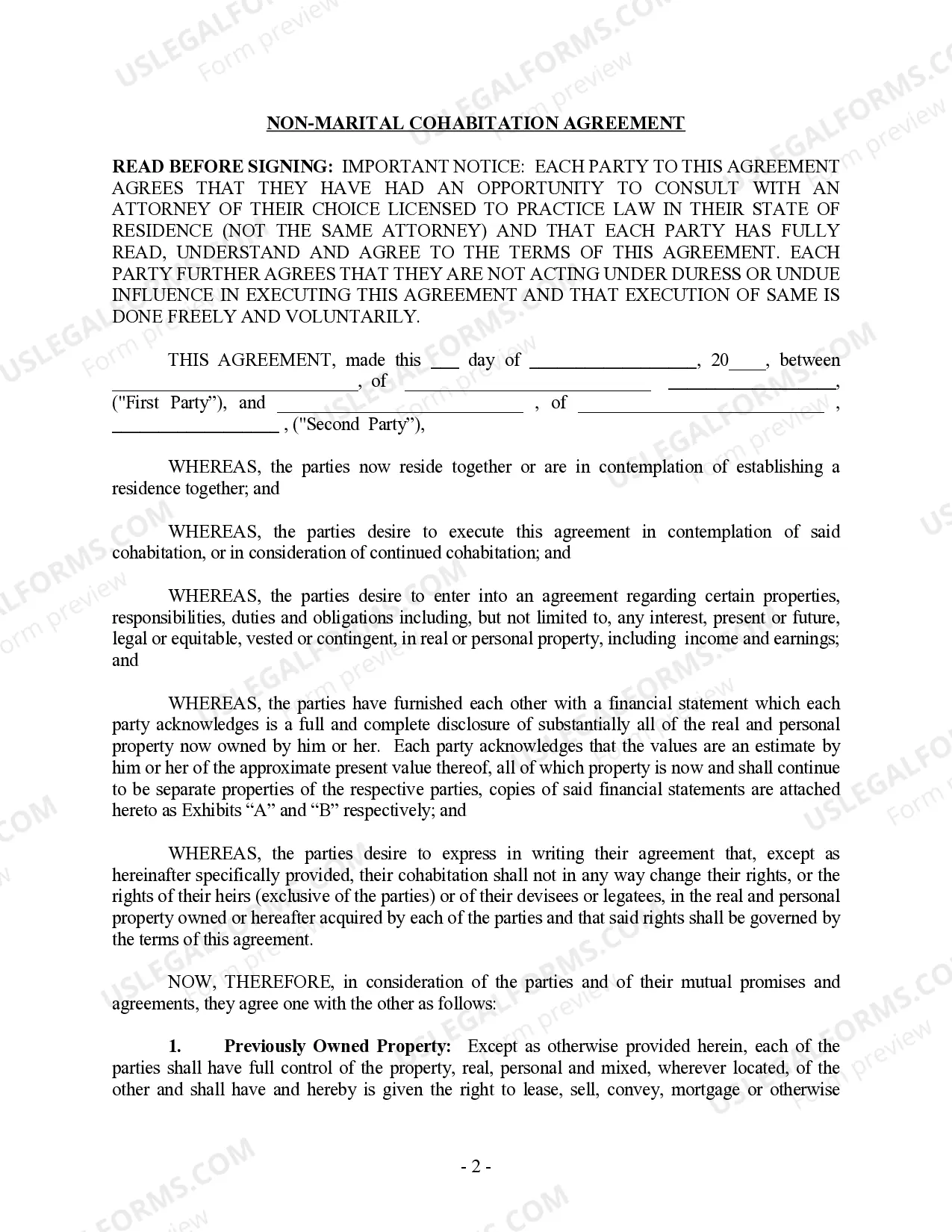
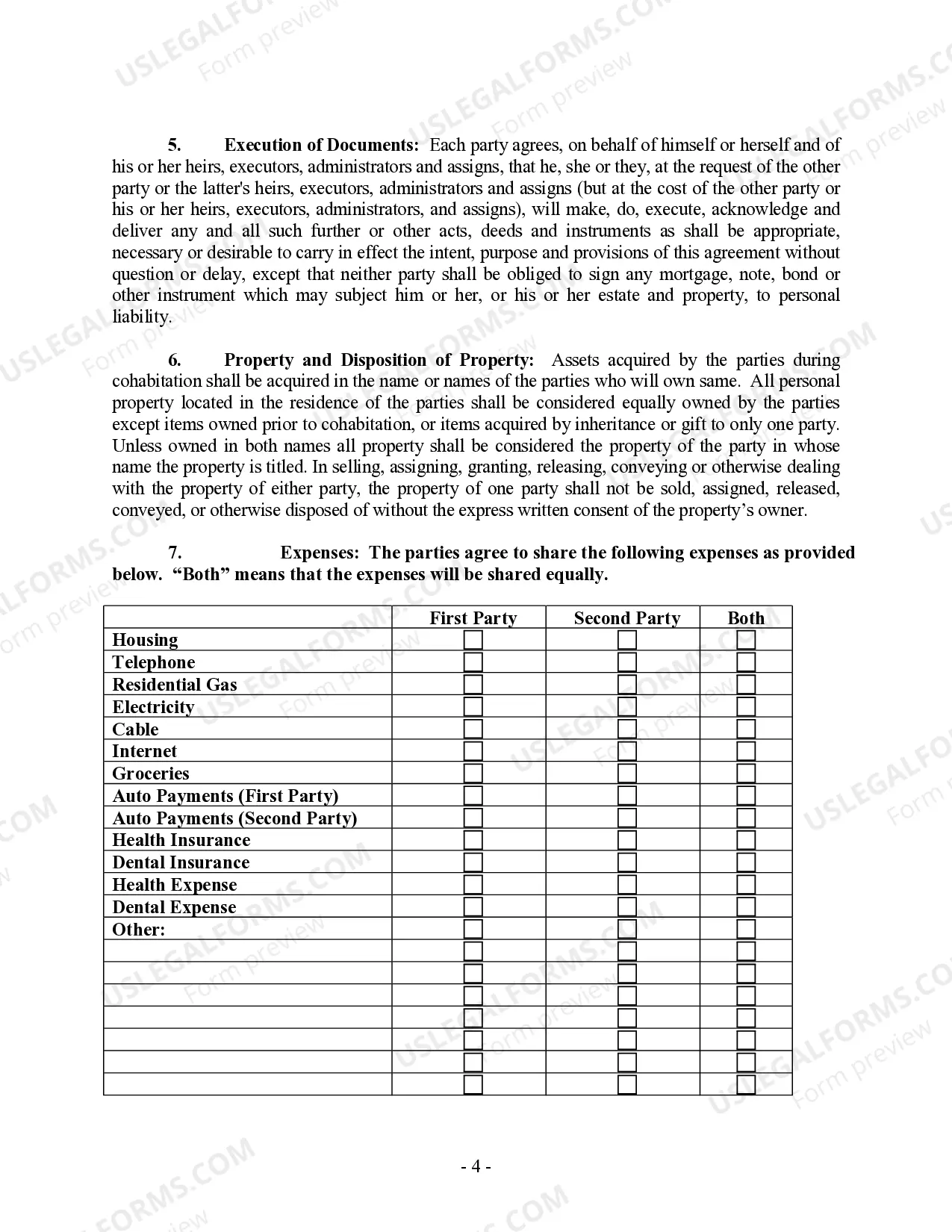
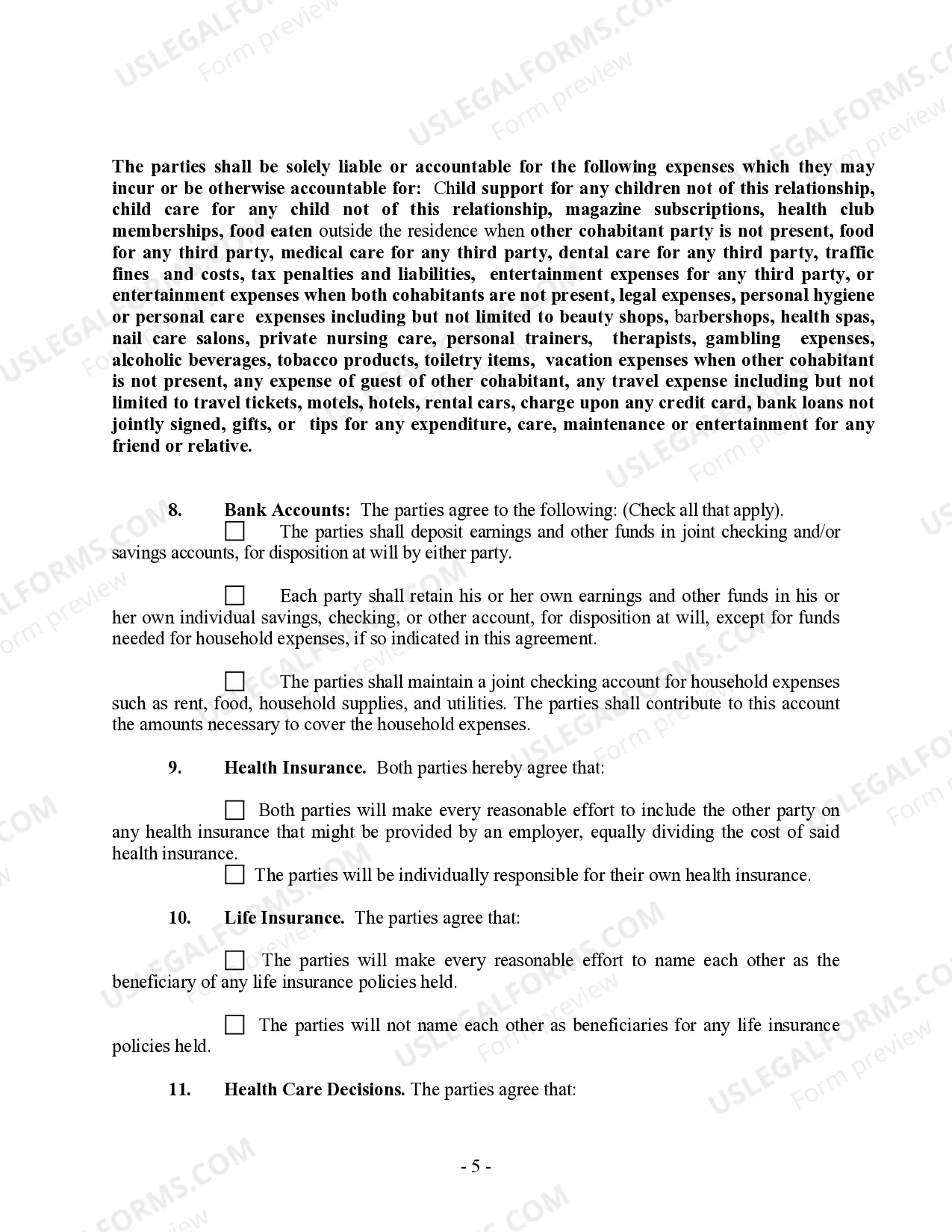
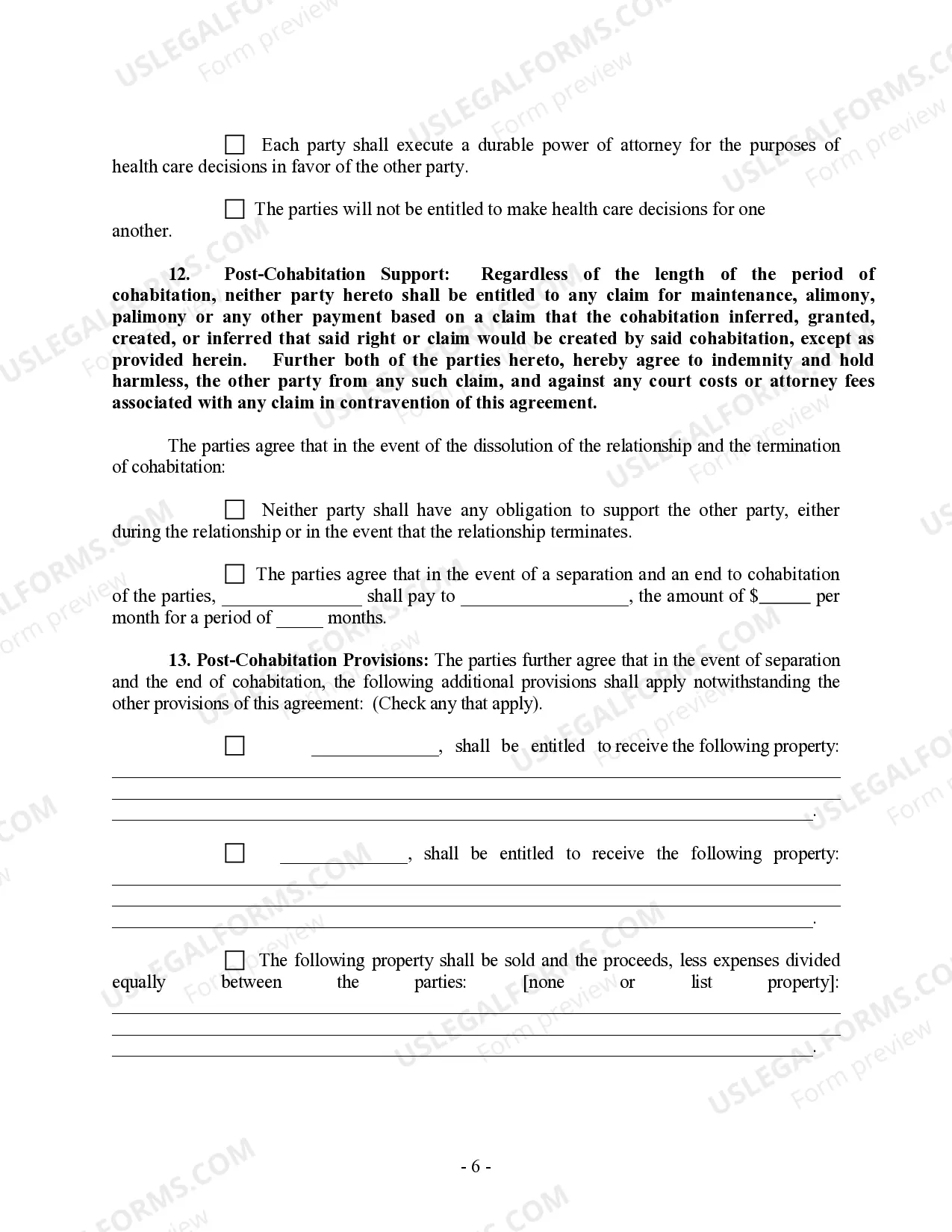
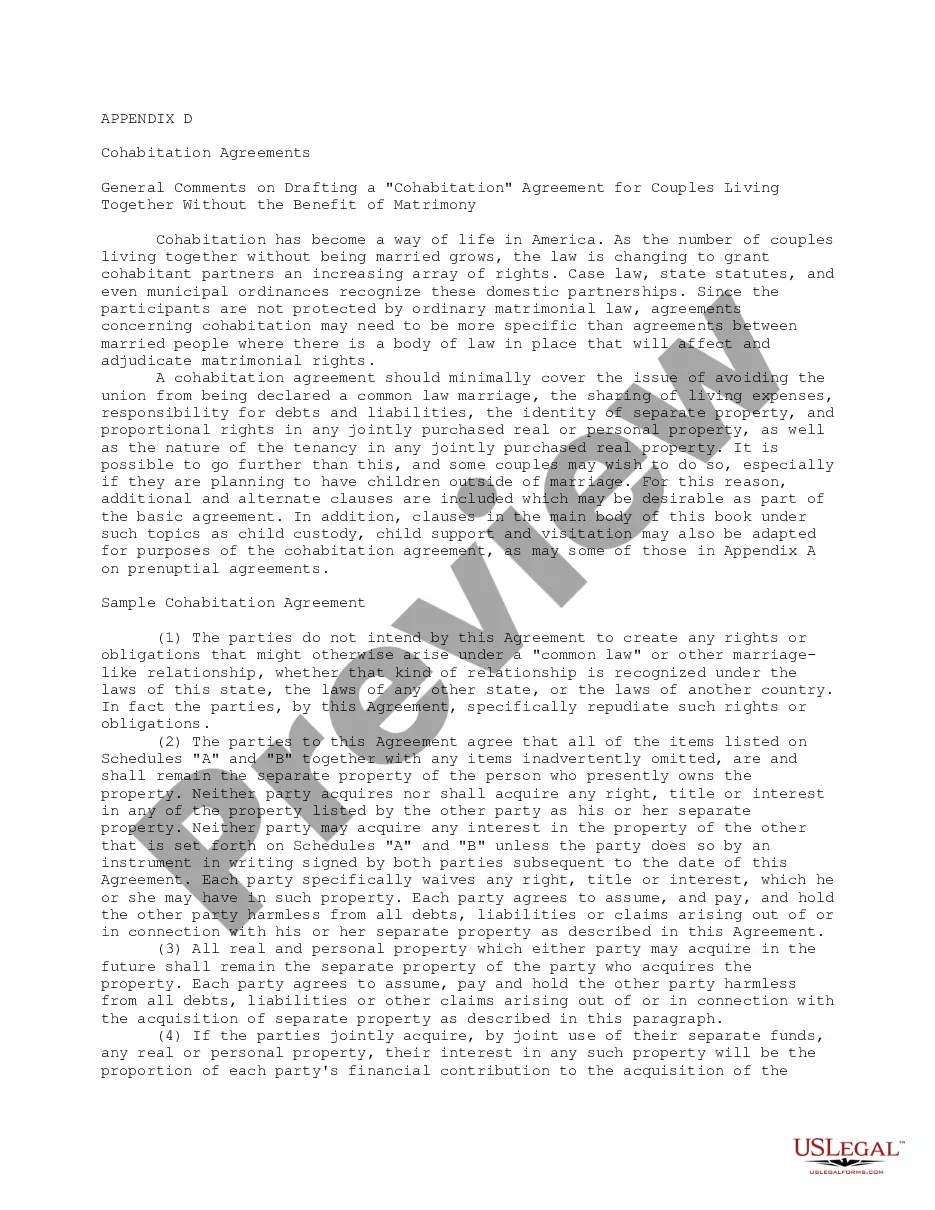
The Non-Marital Cohabitation Living Together Agreement is a legal document designed to outline the expectations and responsibilities of individuals living together in a non-marital relationship. It serves to clarify aspects such as financial obligations, property ownership, and procedures for property division in case the relationship ends. This agreement differs from marriage contracts by not creating any marital rights or duties, making it an essential tool for couples who wish to establish clear guidelines for their cohabitation arrangement.
Key components of this form
- Identification of the parties involved.
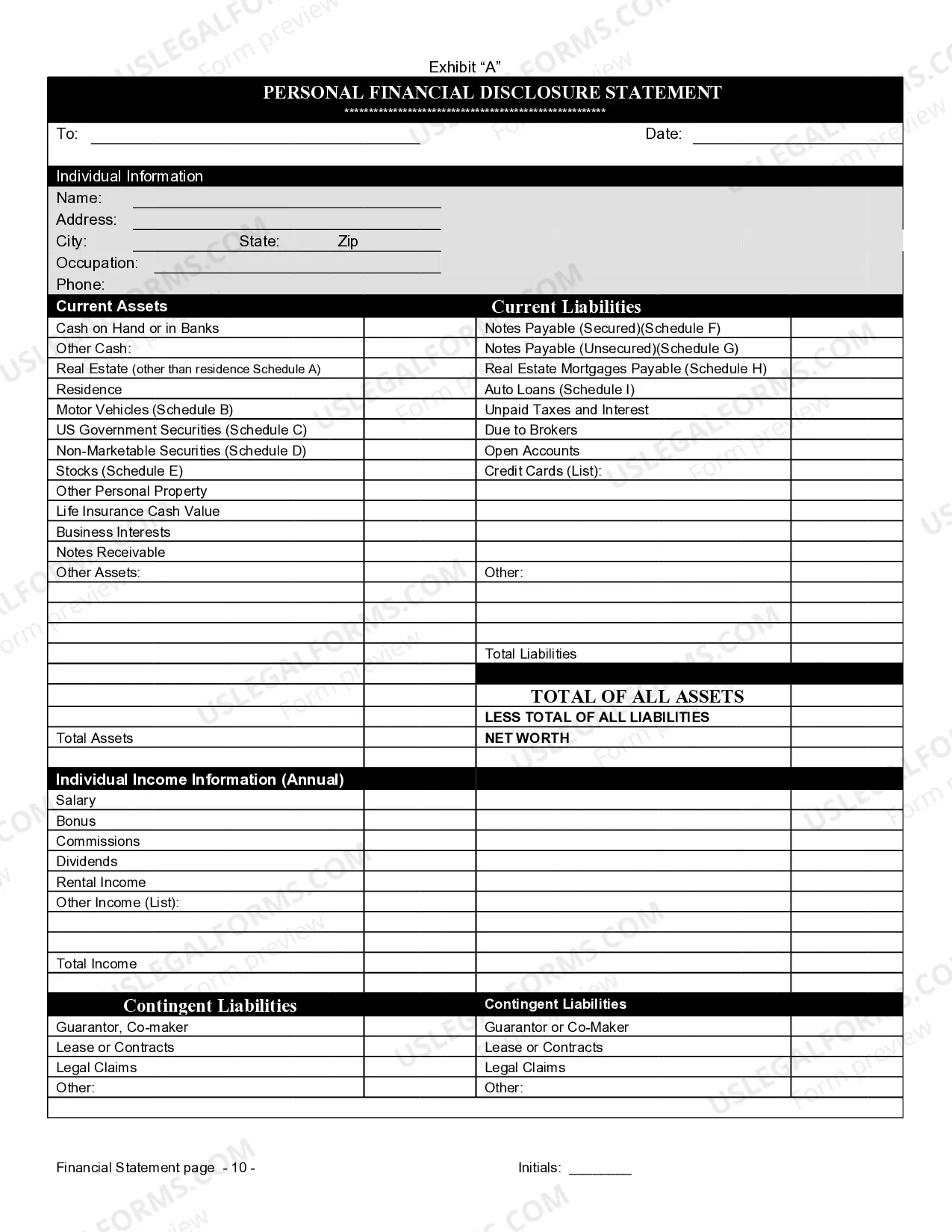
- Disclosure of financial assets and liabilities.
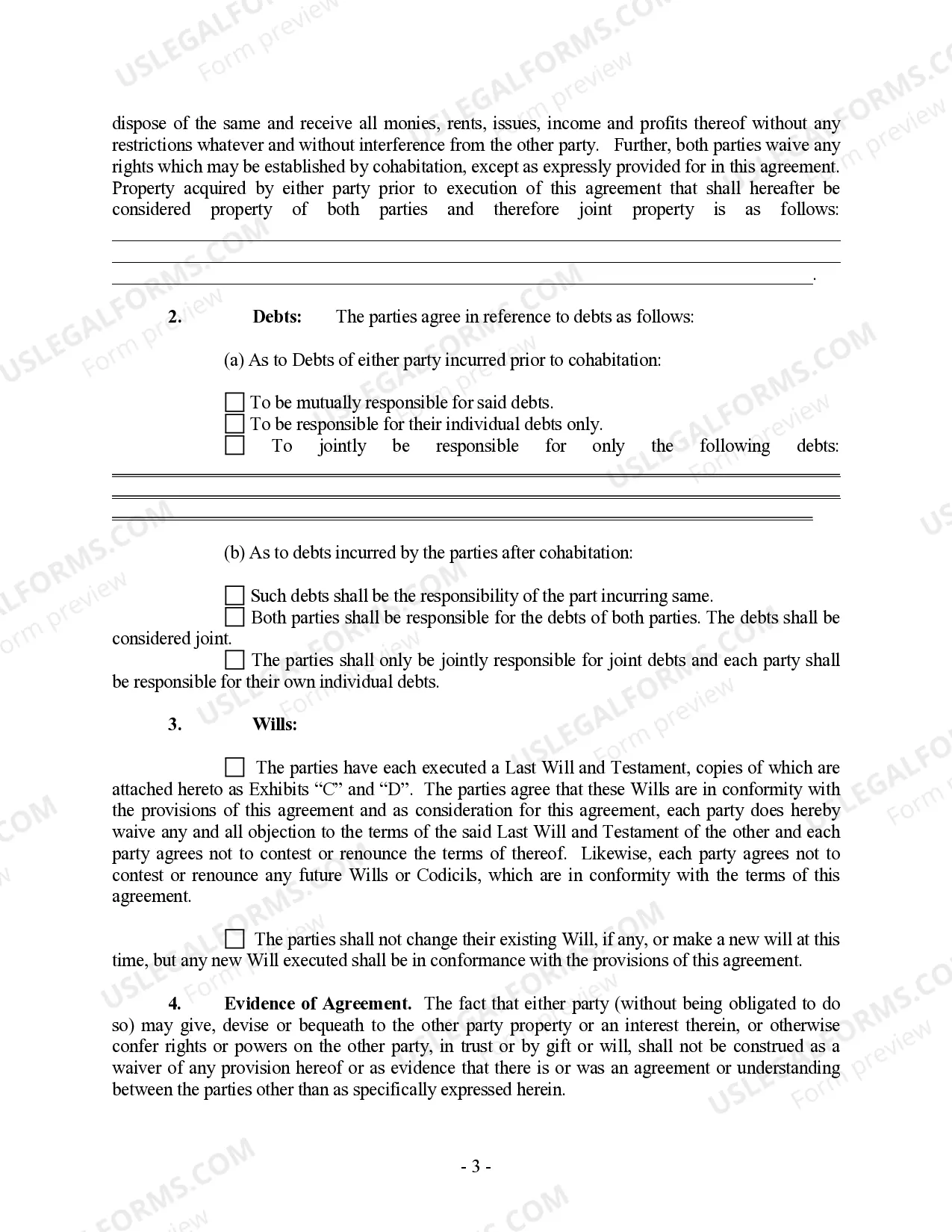
- Terms regarding property ownership and division.
- Responsibilities for debts incurred before and during cohabitation.
- Provisions for health care decisions and life insurance beneficiaries.
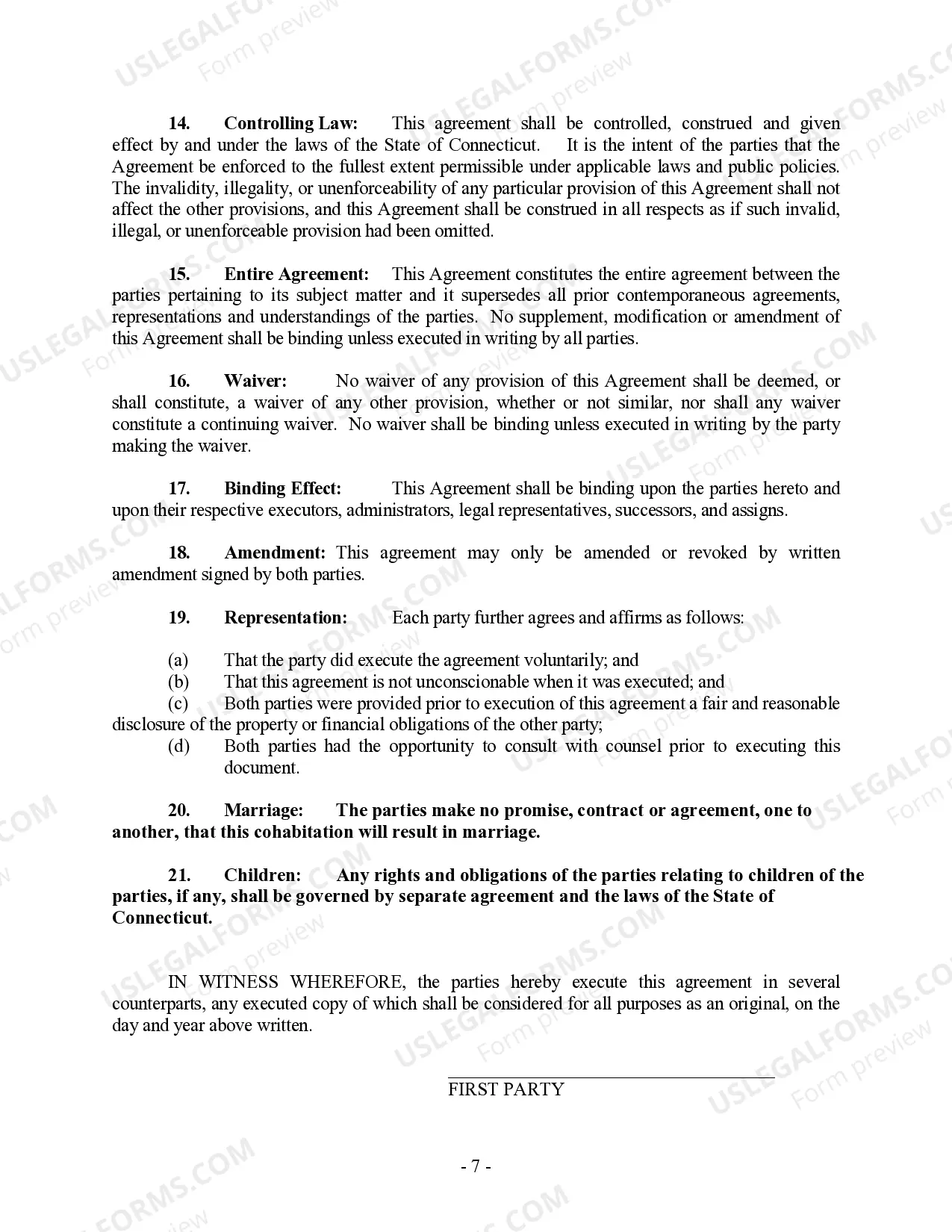
- Guidelines for future amendments and legal jurisdiction.



When to use this form
This form is useful for couples who choose to live together but do not intend to marry. It is particularly important for those who want to protect their individual assets and outline shared responsibilities. Additionally, it is beneficial when entering into a long-term cohabitation arrangement where financial and property matters need to be clearly defined to avoid disputes.
Who needs this form
- Cohabitating couples seeking to establish clear financial and property terms.
- Individuals with significant separate assets wanting to protect their property.
- Couples considering a long-term partnership without marriage.
- Those who want legal clarity regarding their rights and responsibilities.
Instructions for completing this form
- Identify and enter the full names and addresses of both parties.
- Complete the financial disclosure sections, including assets and liabilities.
- Specify the terms for shared expenses and debts incurred during the relationship.
- Review and agree on property ownership and division terms.
- Each party should sign and date the agreement in the presence of a notary public, if required.
Notarization requirements for this form
To make this form legally binding, it must be notarized. Our online notarization service, powered by Notarize, lets you verify and sign documents remotely through an encrypted video session.
Get your form ready online
Our built-in tools help you complete, sign, share, and store your documents in one place.
Make edits, fill in missing information, and update formatting in US Legal Forms—just like you would in MS Word.
Download a copy, print it, send it by email, or mail it via USPS—whatever works best for your next step.
Sign and collect signatures with our SignNow integration. Send to multiple recipients, set reminders, and more. Go Premium to unlock E-Sign.
If this form requires notarization, complete it online through a secure video call—no need to meet a notary in person or wait for an appointment.
We protect your documents and personal data by following strict security and privacy standards.

Make edits, fill in missing information, and update formatting in US Legal Forms—just like you would in MS Word.

Download a copy, print it, send it by email, or mail it via USPS—whatever works best for your next step.

Sign and collect signatures with our SignNow integration. Send to multiple recipients, set reminders, and more. Go Premium to unlock E-Sign.

If this form requires notarization, complete it online through a secure video call—no need to meet a notary in person or wait for an appointment.

We protect your documents and personal data by following strict security and privacy standards.
Common mistakes
- Failing to fully disclose all assets and debts can lead to legal issues.
- Not understanding the terms may result in disputes later.
- Neglecting to have the agreement notarized when required can invalidate it.
- Not revising the agreement as circumstances change, such as the acquisition of new property.
Benefits of completing this form online
- Access to customizable templates that simplify the completion process.
- Convenience of filling out and saving your agreement electronically.
- Ability to print or download the completed agreement for easy sharing or notarization.
- Guidance provided throughout the document ensures clarity and compliance with legal standards.
Legal use & context
- This agreement can help protect individual assets and provides legal clarity in case of disputes.
- It is not a marriage contract, therefore, the rights outlined here do not provide for typical divorce proceedings.
- Keeping this document updated is crucial to reflect any changes in the cohabitation arrangement or financial situations.
Looking for another form?
Form popularity
FAQ
This is a Connecticut legal document for couples who live together in a non-marital relationship. It outlines financial obligations, property ownership, and how property would be divided if the relationship ends. It also covers health care decisions and life insurance beneficiaries. Use it when partners want clear guidelines without creating marital rights.
Cohabitation is the legal term for two people living together in a relationship without marriage. The Connecticut Non-Marital Cohabitation Living Together Agreement is a standard contract designed to spell out each partner's financial obligations, how property is owned and divided, and who makes health care or life insurance decisions if needed.
Voiding a cohabitation agreement is not detailed in the form’s blocks, but in general such an agreement could be challenged if it was signed under duress, lacks proper execution, or violates applicable CT law or public policy. To maintain validity, parties should follow CT jurisdiction guidelines when amending or ending the agreement.
This situation is commonly called cohabitation. The Connecticut Non-Marital Cohabitation Living Together Agreement is intended for couples in long-term cohabitation who do not plan to marry, to spell out each party's rights and responsibilities, including finances, property, debt, and health-care or life-insurance decisions.
This form does not categorize cohabitation into four types. It is a single, standard Connecticut template for non-marital living arrangements. Its key components focus on identifying the parties, disclosing assets and liabilities, property ownership and division, debts, health care decisions, life insurance beneficiaries, amendments, and reminder of legal jurisdiction.
It does not create marital rights or duties. The Connecticut Non-Marital Cohabitation Living Together Agreement is designed for couples who live together but are not married, outlining financial obligations, property ownership and division, and health care decisions. It also provides guidelines for amendments and designates the governing CT jurisdiction.