Connecticut Bylaws for Corporation
What this document covers
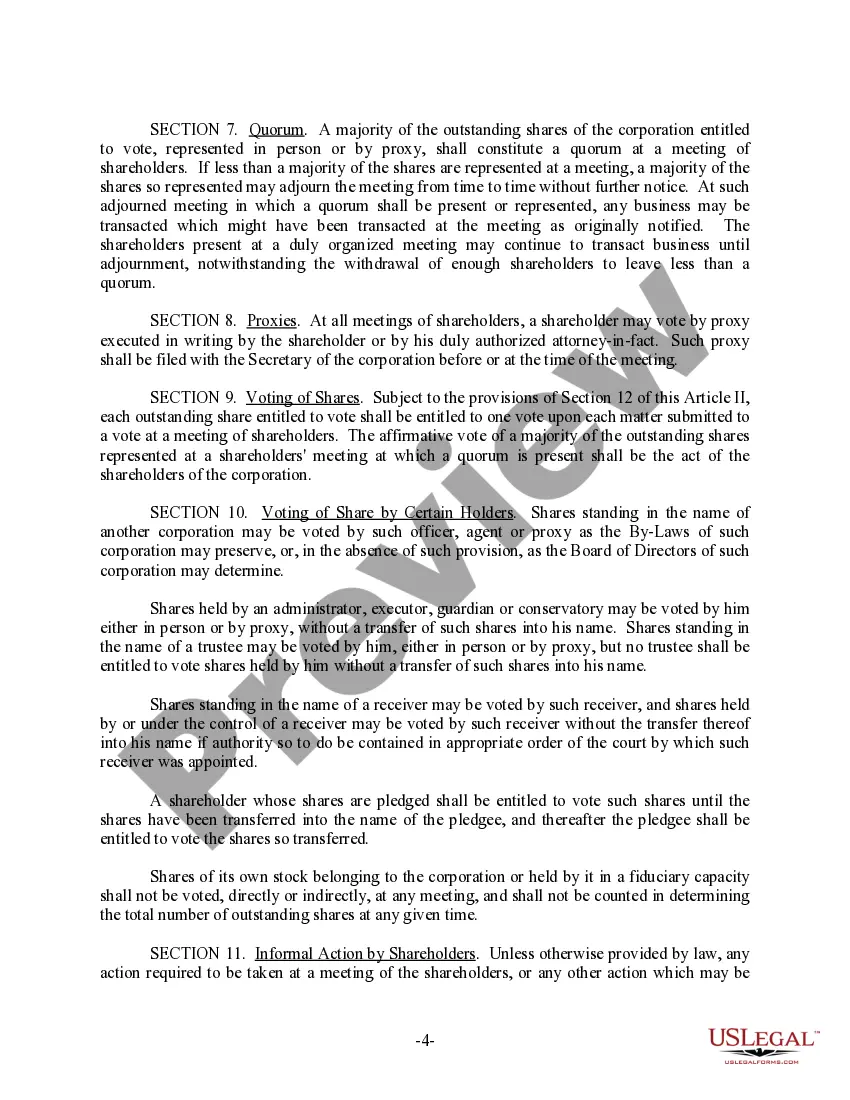
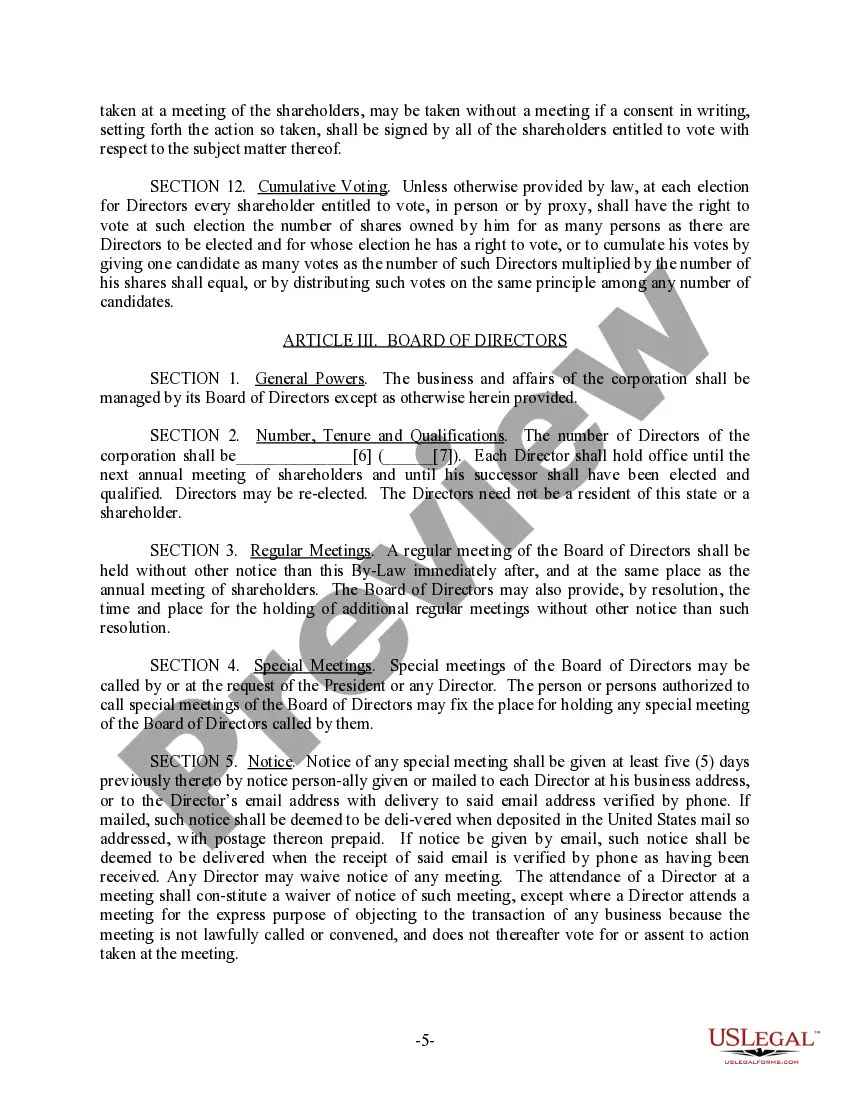
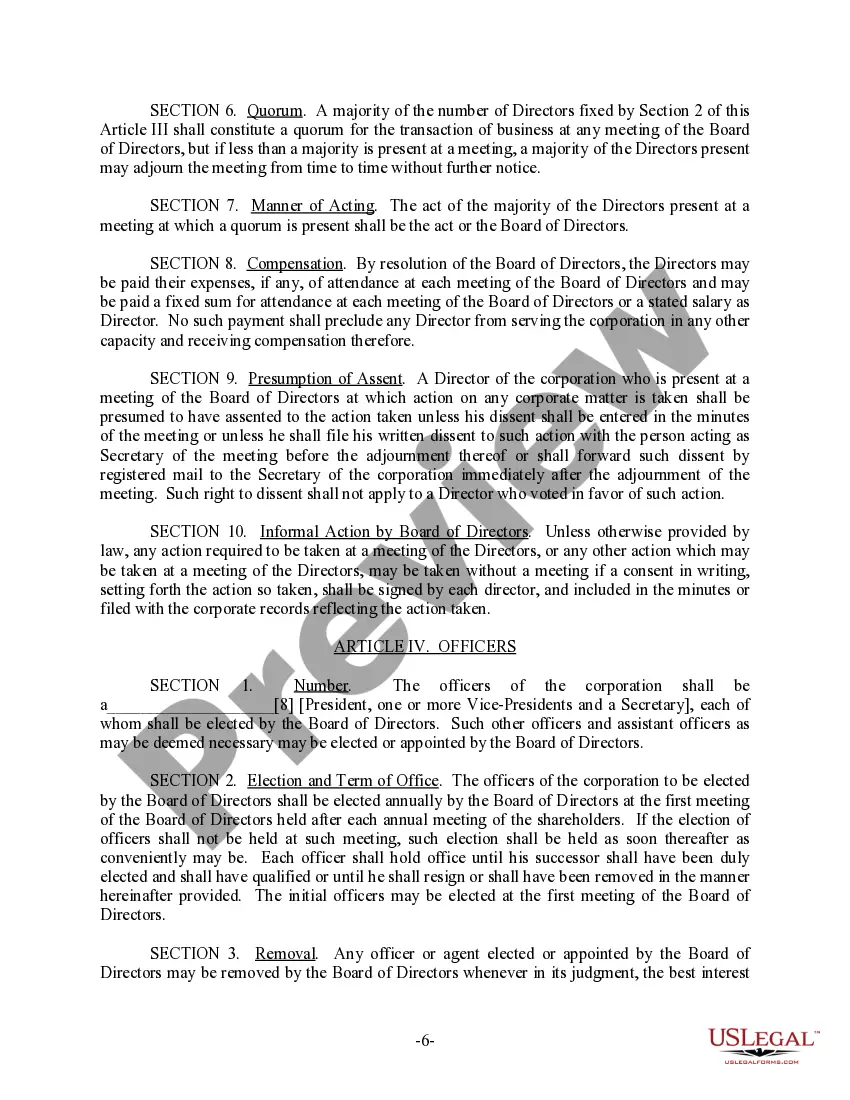
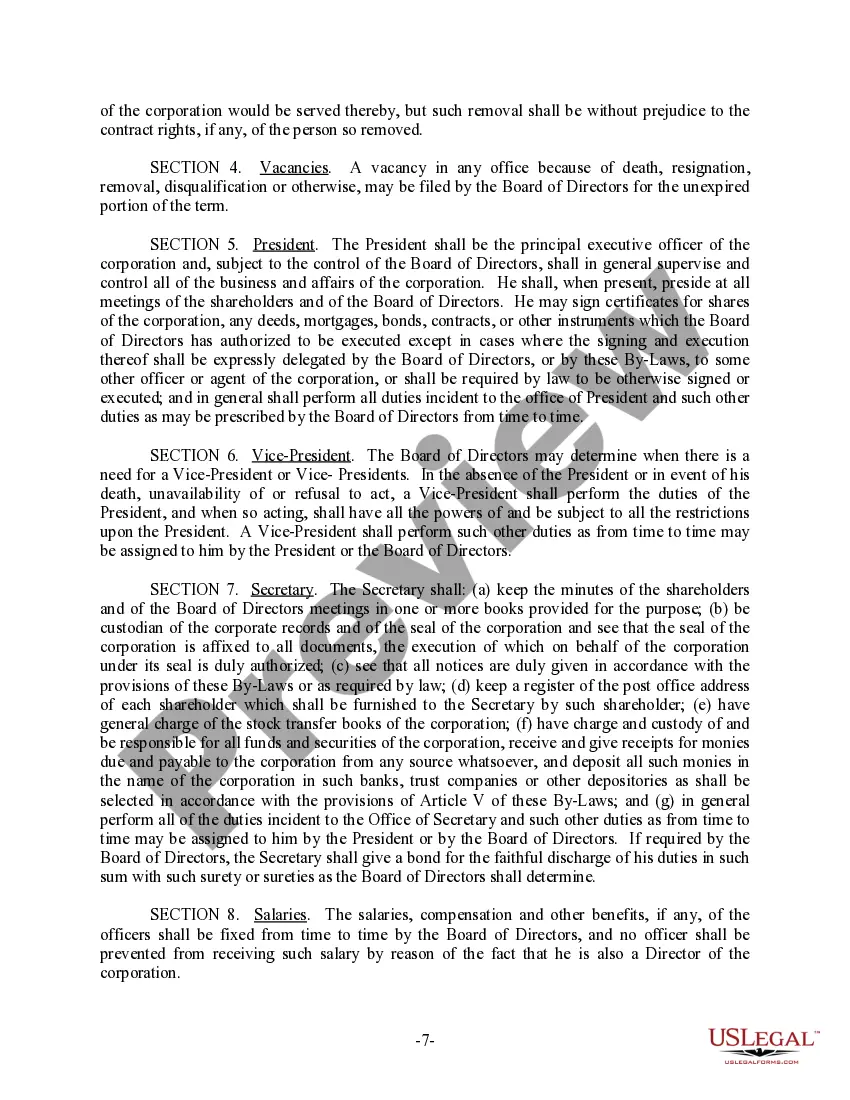
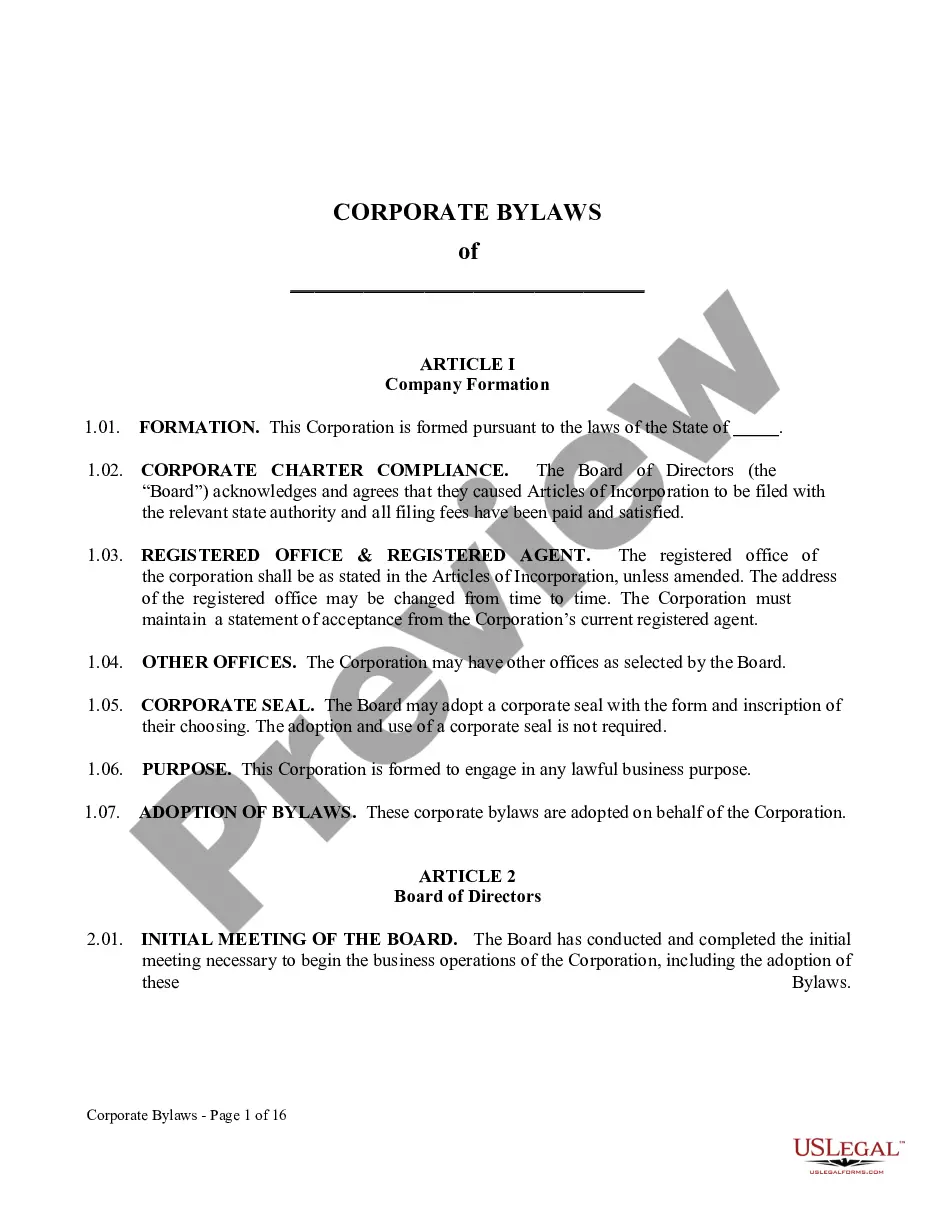
The Connecticut Bylaws for Corporation is a legal document that outlines the operational rules and governance structure for a business corporation in Connecticut. This form specifies protocols for shareholder meetings, roles of officers and directors, voting rights, and management of corporate records. Unlike similar documents, Connecticut bylaws are specifically tailored to comply with state laws and provide clear guidance on the internal operations of a corporation.
Main sections of this form
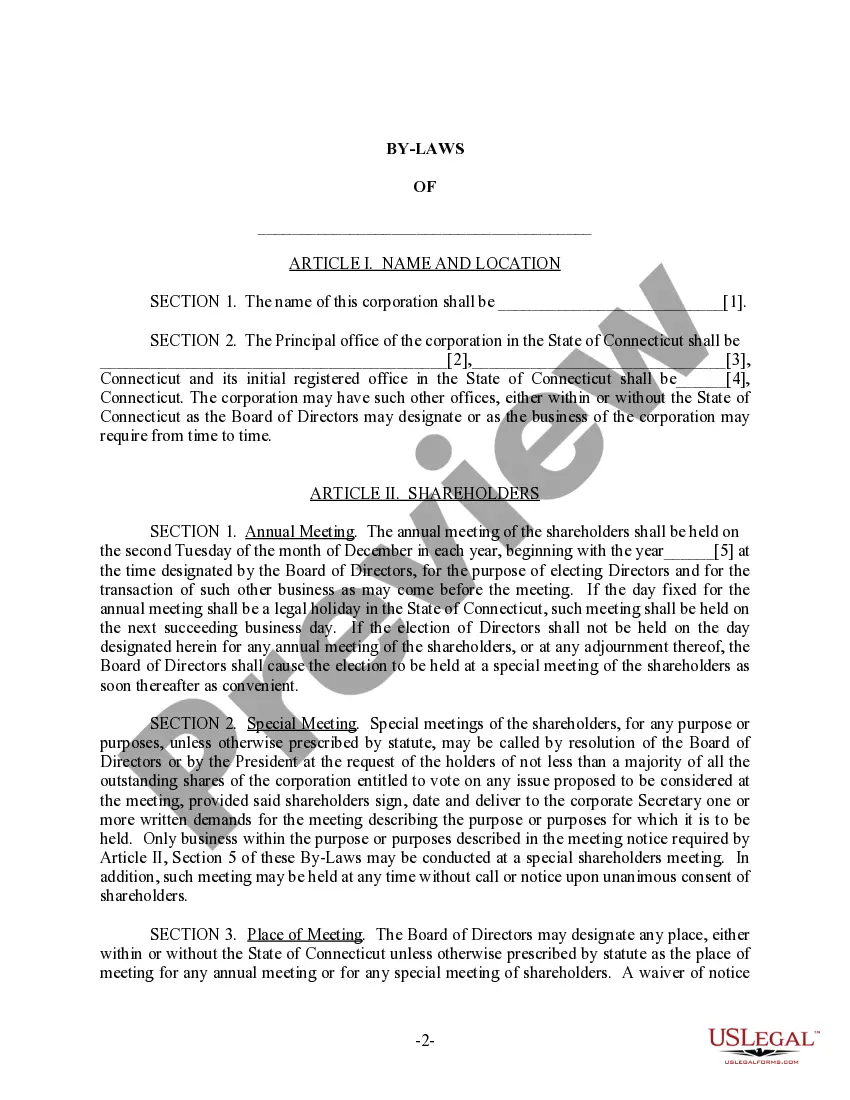
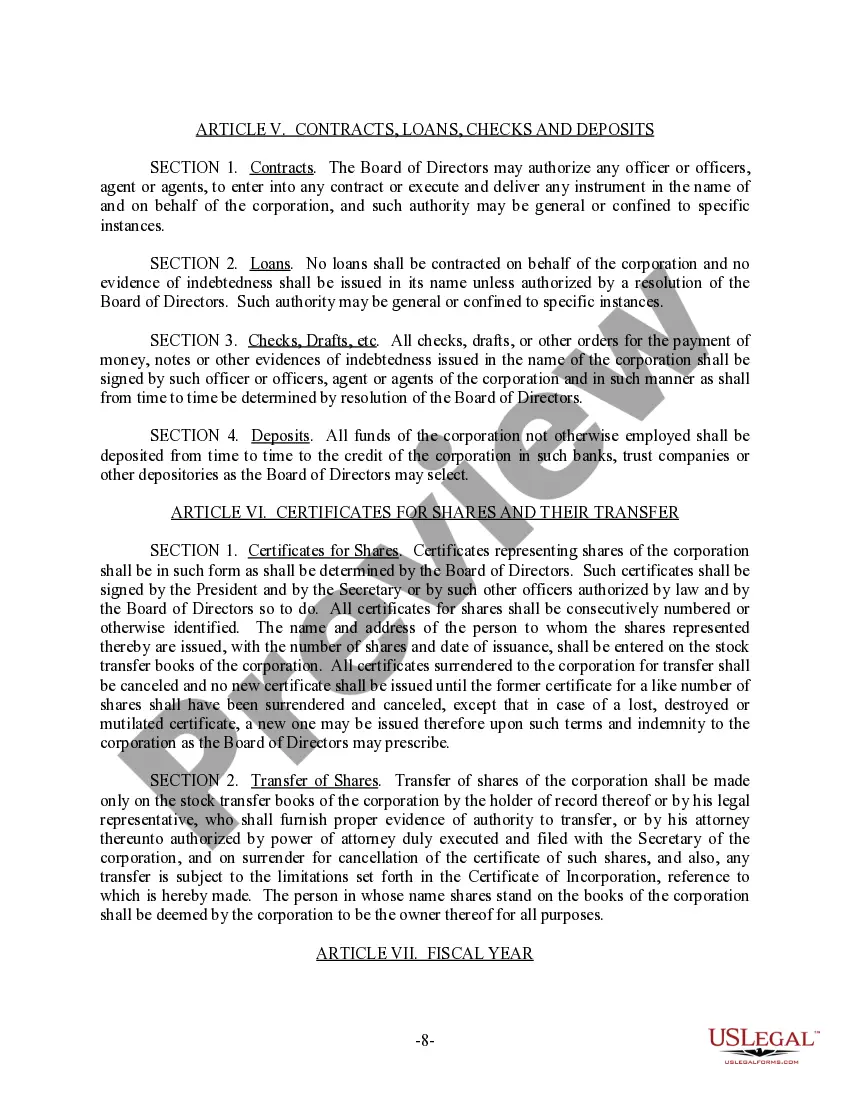
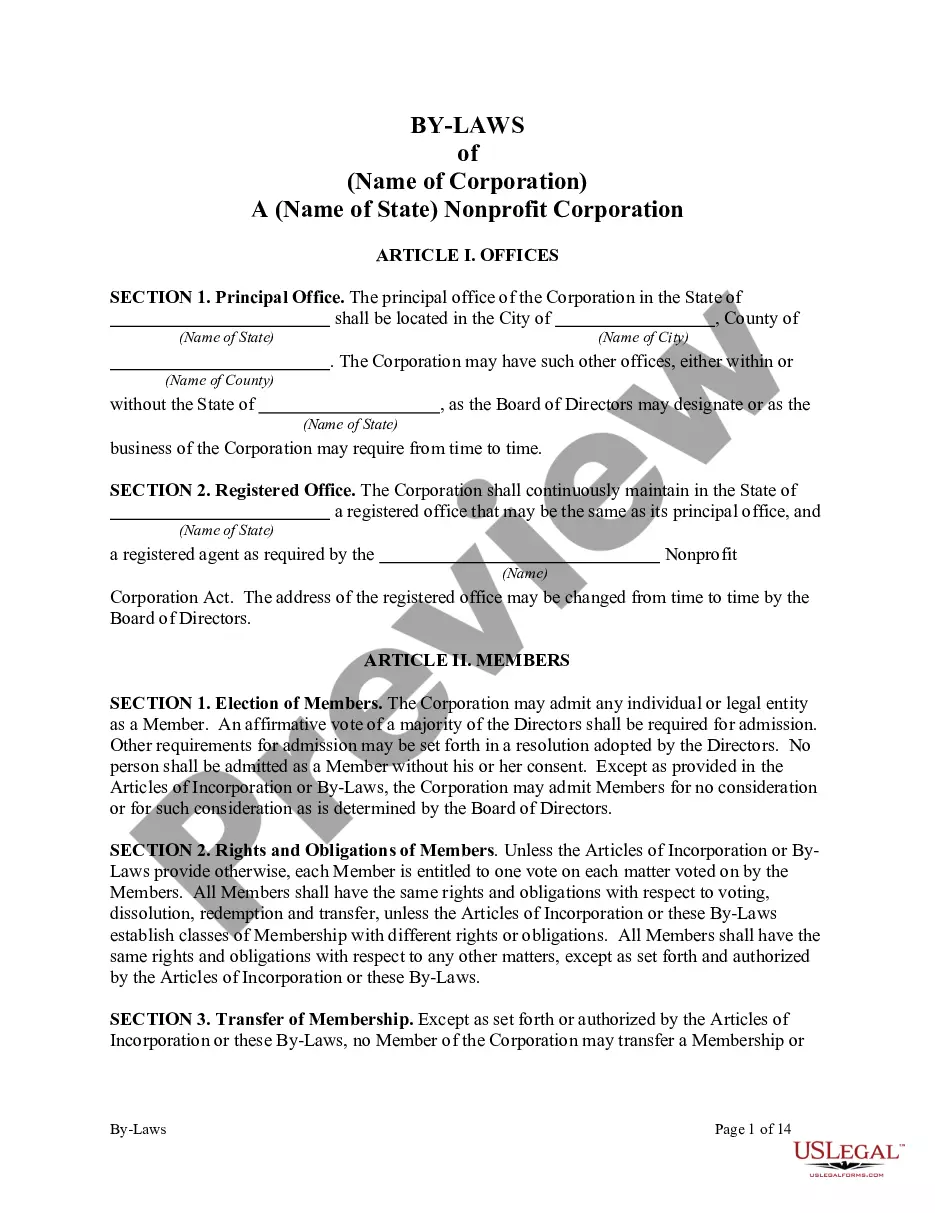
- Article I: Name and Location - Establishes the corporation's name and its principal office address.
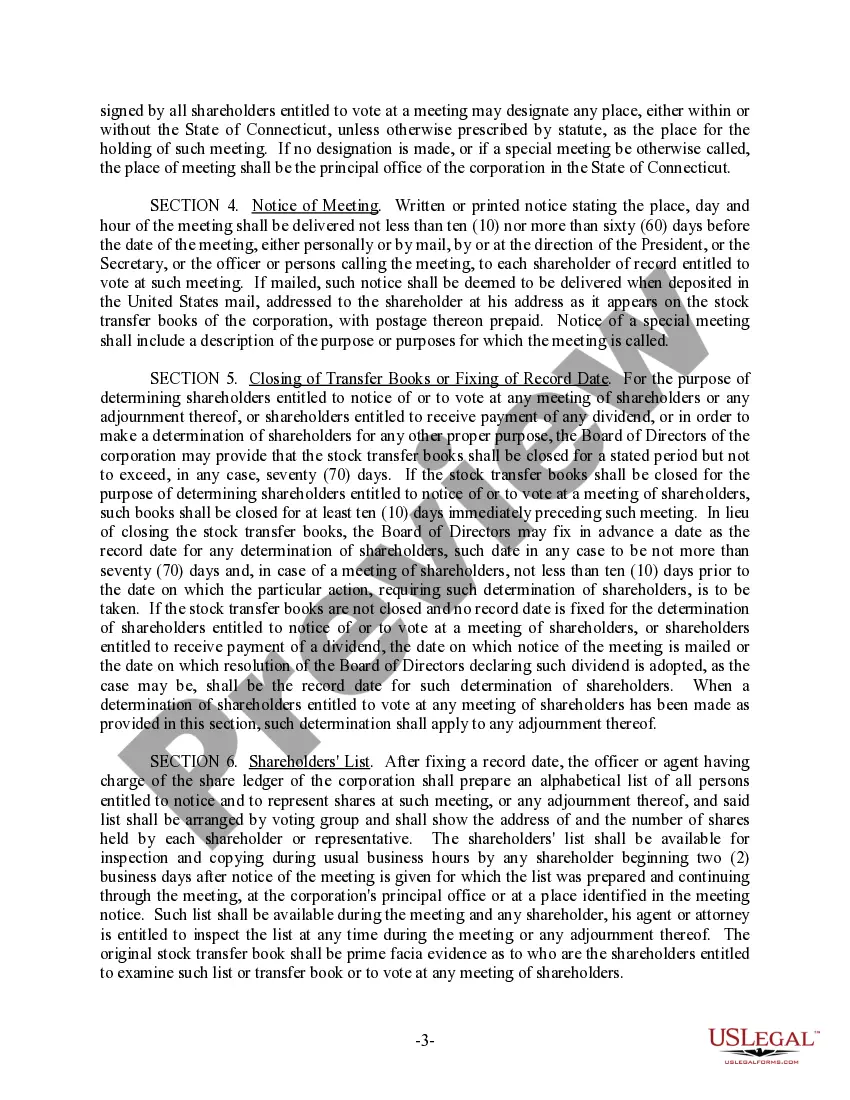
- Article II: Shareholders - Details the procedures for annual and special meetings of shareholders, including notice requirements.
- Article III: Board of Directors - Defines the powers, number, and qualifications of directors, as well as the process for their election.
- Article IV: Officers - Identifies necessary officer roles (e.g., President, Secretary) and outlines their election and duties.
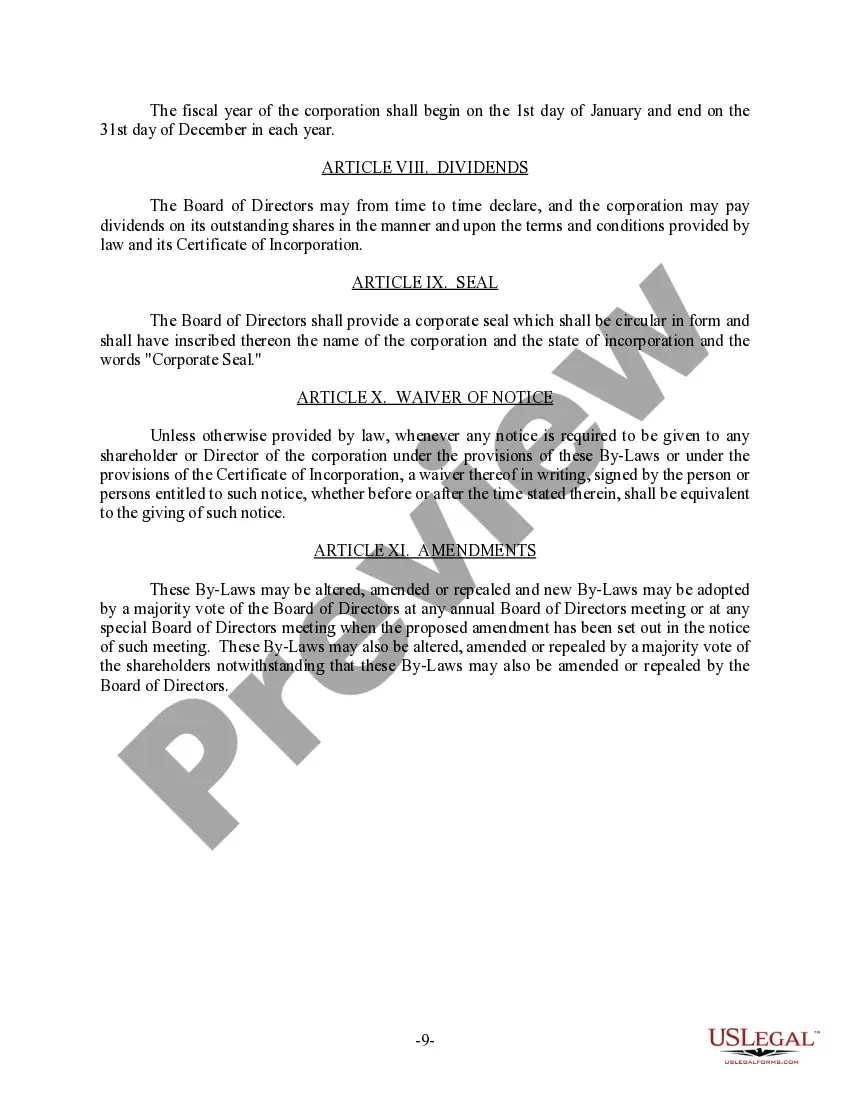
- Article XI: Amendments - Provides the process for making changes to the bylaws.

Common use cases
This form should be used when establishing the internal governance structure of a new corporation in Connecticut. It is also suitable for existing corporations that need to codify or update their bylaws to ensure compliance with state requirements or to reflect changes in operational procedures.
Intended users of this form
- New business owners looking to incorporate in Connecticut.
- Existing corporations needing to update their bylaws.
- Corporate officers and directors responsible for governance and compliance.
- Shareholders interested in understanding their rights and responsibilities.
How to prepare this document
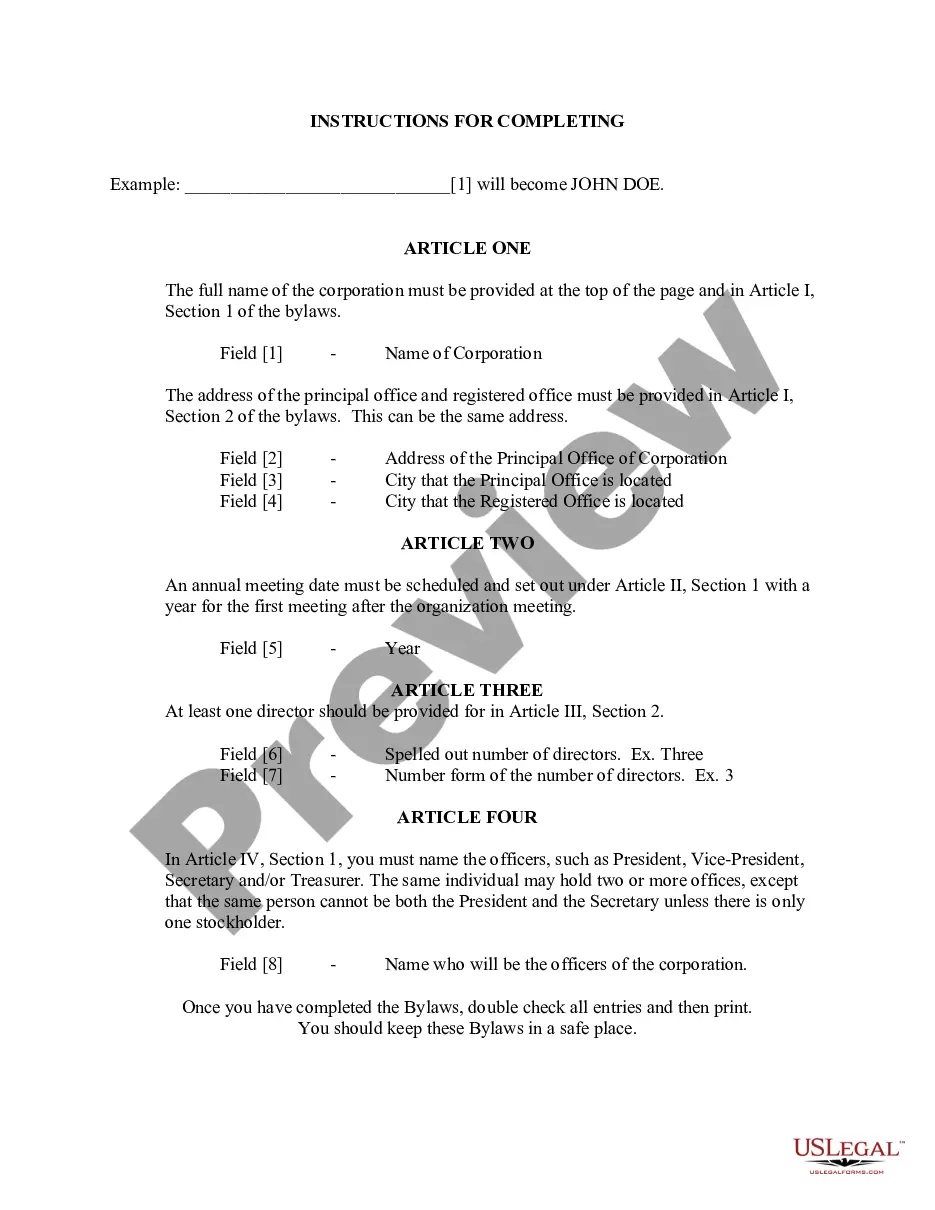
- Identify the corporation's name and provide the address of both the principal and registered offices.
- Determine the year for the first annual meeting following incorporation and specify it.
- Define the number of directors and list their names in the appropriate sections.
- Name the corporate officers and ensure compliance with the roles outlined in the bylaws.
- Review all completed sections for accuracy and print the document to keep it in a safe place.
Does this document require notarization?
This form does not typically require notarization to be legally valid. However, some jurisdictions or document types may still require it. US Legal Forms provides secure online notarization powered by Notarize, available 24/7 for added convenience.
Get your form ready online
Our built-in tools help you complete, sign, share, and store your documents in one place.
Make edits, fill in missing information, and update formatting in US Legal Forms—just like you would in MS Word.
Download a copy, print it, send it by email, or mail it via USPS—whatever works best for your next step.
Sign and collect signatures with our SignNow integration. Send to multiple recipients, set reminders, and more. Go Premium to unlock E-Sign.
If this form requires notarization, complete it online through a secure video call—no need to meet a notary in person or wait for an appointment.
We protect your documents and personal data by following strict security and privacy standards.

Make edits, fill in missing information, and update formatting in US Legal Forms—just like you would in MS Word.

Download a copy, print it, send it by email, or mail it via USPS—whatever works best for your next step.

Sign and collect signatures with our SignNow integration. Send to multiple recipients, set reminders, and more. Go Premium to unlock E-Sign.

If this form requires notarization, complete it online through a secure video call—no need to meet a notary in person or wait for an appointment.

We protect your documents and personal data by following strict security and privacy standards.
Common mistakes to avoid
- Failing to accurately name the corporation or provide its correct address.
- Not scheduling the annual meeting in accordance with the specified dates.
- Neglecting to list all required officers or incorrectly assuming one person can hold multiple positions.
- Leaving out necessary procedural details regarding shareholder meetings.
Why use this form online
- Convenience of immediate download and access from anywhere.
- Editability allows for customization specific to your business needs.
- Reliable templates drafted by licensed attorneys to ensure compliance with legal standards.
- Access to updates and revisions as laws change over time.
Looking for another form?
Form popularity
FAQ
Formatting bylaws typically requires a clear and structured approach. Begin with a title page, followed by sections such as purpose, governance, and amendments. To assist in this process, US Legal Forms provides user-friendly guidelines and samples for Connecticut Bylaws for Corporation, ensuring that your document is well-organized and professional.
You can find corporation bylaws through various channels, including legal websites, library resources, and state government offices. Additionally, US Legal Forms offers easily accessible templates specifically designed for Connecticut Bylaws for Corporation. This can save you time and help you ensure compliance with local regulations.
Writing bylaws for a corporation involves several key steps. First, you should outline the purpose of your corporation, specify how meetings will be conducted, and detail the roles of directors and officers. Utilizing a resource like US Legal Forms can simplify this process by providing templates tailored to Connecticut Bylaws for Corporation, ensuring you cover all necessary elements.
The bylaws of a corporate board outline the internal rules that govern the management and operations of a corporation. These documents establish procedures for meetings, voting, and the roles of officers and directors. In essence, Connecticut Bylaws for Corporation serve as a roadmap for running your business effectively while ensuring compliance with state laws.
Creating a bylaw involves several key steps. First, determine the specific needs and goals of your corporation, and outline the rules that will guide its operations. Draft the document clearly, including sections on governance, meetings, and financial practices. Utilizing services like US Legal Forms can simplify this process, offering you templates and guidance to ensure your Connecticut bylaws for corporation are comprehensive and compliant.
Bylaws are generally considered internal documents, which means they are not filed with the state and are not officially publicly available. However, if your corporation faces a legal dispute, the bylaws may be requested for review by involved parties. Therefore, while they remain private, it is critical to keep them transparent among your executive team. Using a platform like US Legal Forms can help you draft your Connecticut bylaws for corporation properly, maintaining privacy while ensuring clarity.
While New York does not require bylaws to be filed with the state, it is highly advisable to adopt them for any corporation. Bylaws serve as an internal governing document that guides corporate actions and provides a clear protocol for decision-making. It is vital to have well-documented bylaws to avoid disputes among officers or shareholders. If you need help, you can use US Legal Forms to access resources tailored to create bylaws effectively.
To set up corporate bylaws, start by gathering input from the corporation's founders or board of directors. Create a document that outlines the rules and procedures for the corporation's operations, including the roles of officers, voting processes, and meeting guidelines. Resources like US Legal Forms can provide templates and examples specific to Connecticut bylaws for corporation, ensuring that your bylaws meet local regulations. This structured approach will make it easier to manage your corporation smoothly.
The articles of incorporation establish your corporation's existence and outline basic information such as its name, address, and purpose. In contrast, Connecticut bylaws for corporation detail the operational procedures and rules that govern the corporation’s internal management. They organize how meetings are held, how directors are elected, and how financial records are maintained. Understanding this distinction can help you structure your corporation effectively.
Bylaws are essential documents that set the rules for how a corporation operates. They can include provisions such as how directors are elected and how meetings are conducted. Examples of bylaws might include stipulations about decision-making processes or conflict resolution. To learn more and find specific examples aligned with Connecticut bylaws for corporations, visiting USLegalForms can provide valuable insights and templates.