Colorado Beneficiary Deed - Individual to Three Individuals
About this form
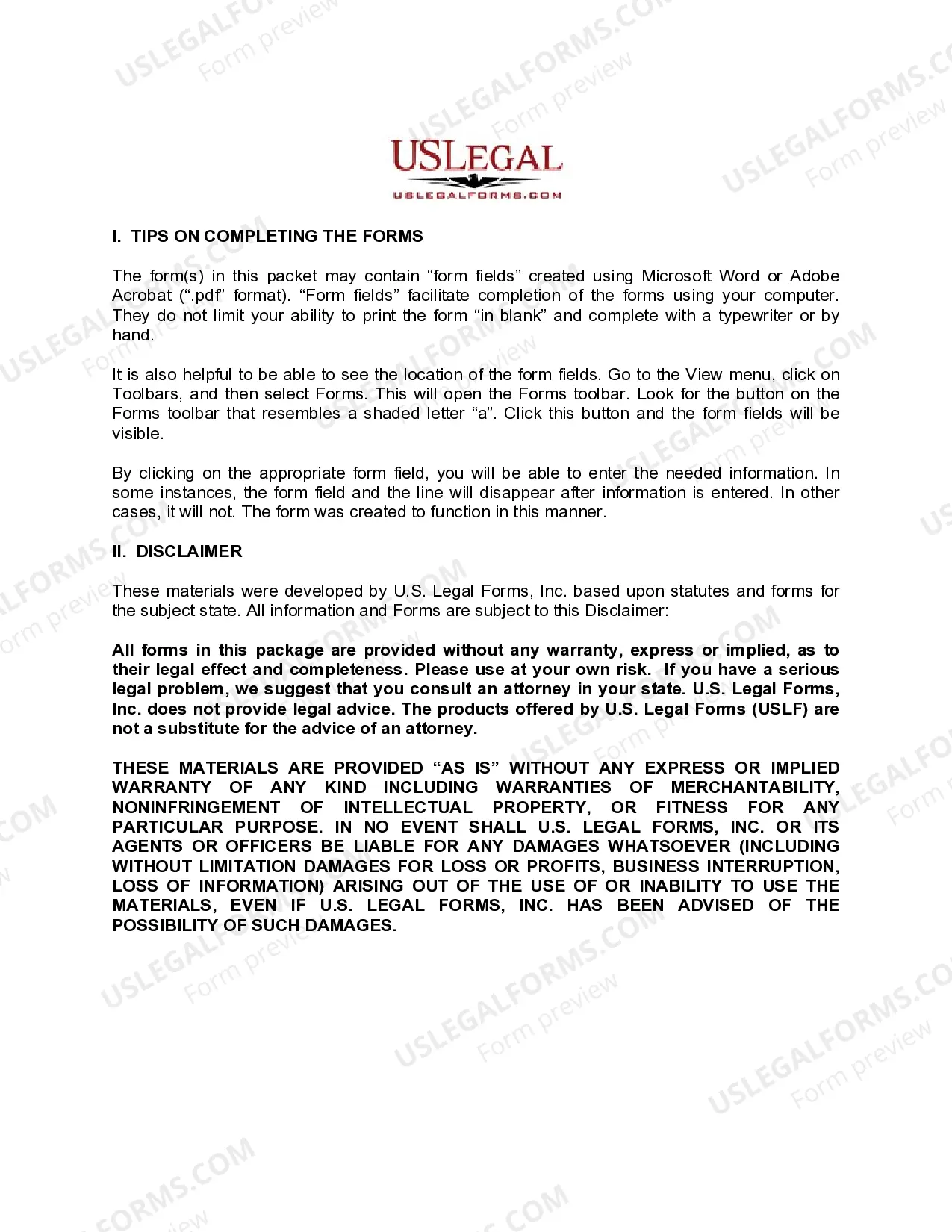
The Beneficiary Deed - Individual to Three Individuals is a legal document that allows an individual (the Grantor) to transfer property rights to three beneficiaries upon their death. This deed enables the Grantees to hold the property as joint tenants with the right of survivorship, ensuring that the property will be directly transferred to the surviving Grantees without going through probate. This form is different from traditional deeds, as it allows for a straightforward transfer of property that can avoid some complications associated with inheritance issues.
What’s included in this form
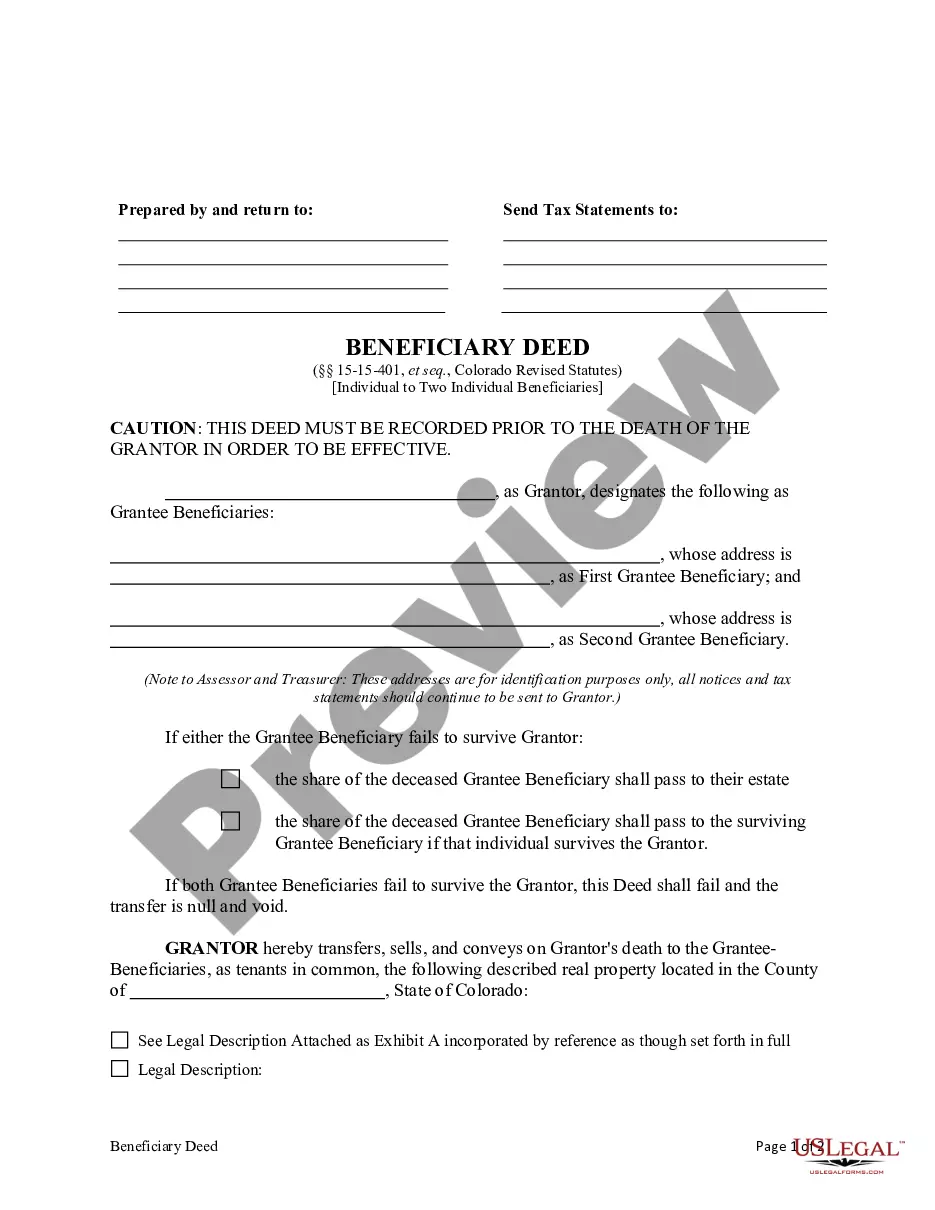
- Identification of the Grantor and Grantee Beneficiaries.
- Legal description of the property being transferred.
- Specification of joint tenancy with rights of survivorship.
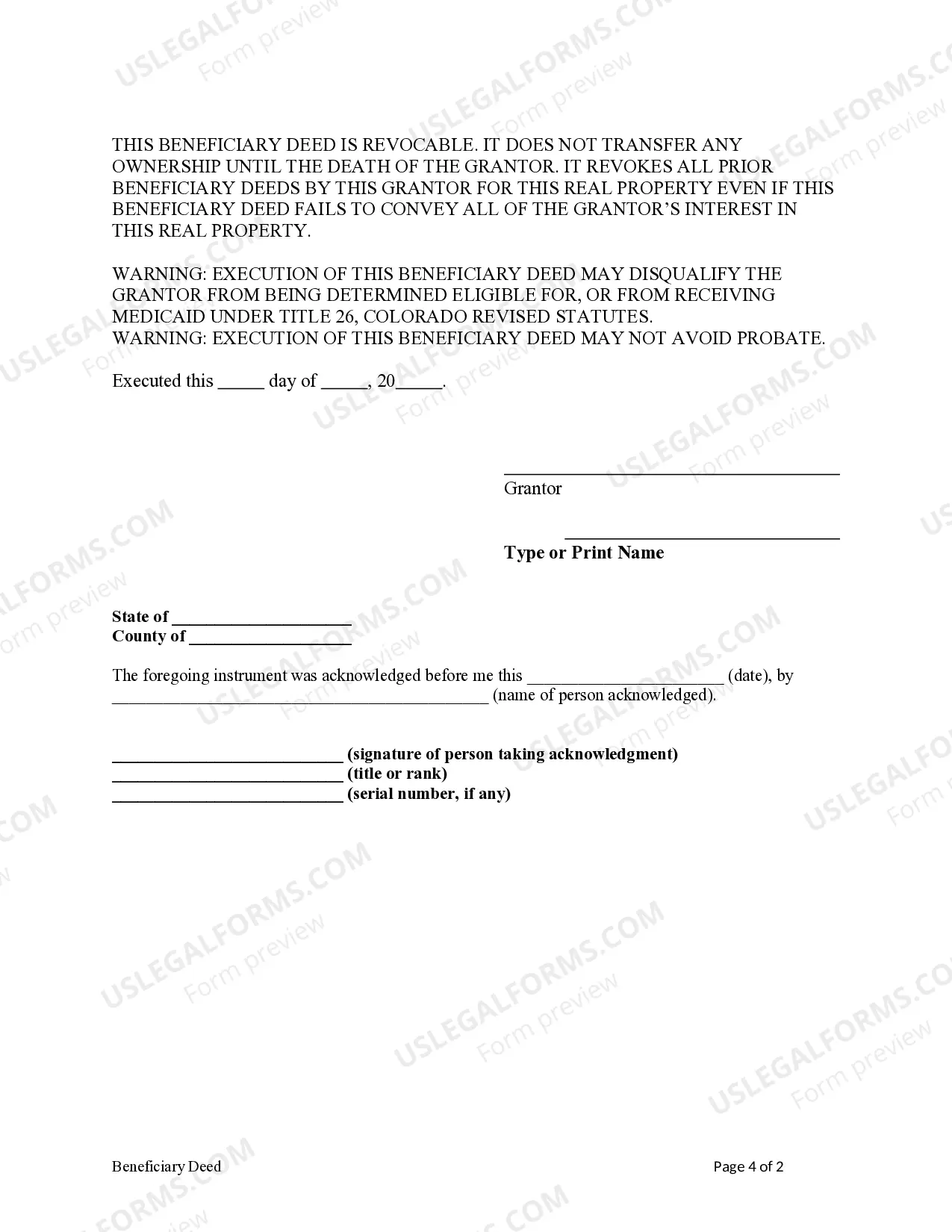
- Signature lines for the Grantor and any required witnesses.
- State-specific acknowledgment and compliance clauses.



When to use this form
This form is ideal for individuals who wish to ensure that their property is transferred to multiple beneficiaries upon their death, thereby avoiding the lengthy probate process. It is particularly suitable for families or groups of individuals who want to inherit the property jointly. Use this form when you want to simplify the inheritance process and provide for the surviving beneficiaries to take full ownership of the property without delay.
Who can use this document
- Individuals looking to transfer property directly to multiple beneficiaries.
- Homeowners who want to ensure their property is managed and owned by family or friends after their passing.
- Anyone wishing to avoid probate complications associated with property transfer.
Instructions for completing this form
- Identify the Grantor (the individual transferring the property) and list the three Grantee Beneficiaries' names.
- Provide a detailed legal description of the property being transferred.
- Specify the nature of joint tenancy and the rights of survivorship.
- Have the Grantor sign the deed in the presence of any required witnesses.
- Complete any state-specific acknowledgment as required at the end of the form.
Notarization guidance
This form does not typically require notarization unless specified by local law. It is important to check your state's regulations to ensure compliance with any specific requirements related to property transfers.
Get your form ready online
Our built-in tools help you complete, sign, share, and store your documents in one place.
Make edits, fill in missing information, and update formatting in US Legal Forms—just like you would in MS Word.
Download a copy, print it, send it by email, or mail it via USPS—whatever works best for your next step.
Sign and collect signatures with our SignNow integration. Send to multiple recipients, set reminders, and more. Go Premium to unlock E-Sign.
If this form requires notarization, complete it online through a secure video call—no need to meet a notary in person or wait for an appointment.
We protect your documents and personal data by following strict security and privacy standards.

Make edits, fill in missing information, and update formatting in US Legal Forms—just like you would in MS Word.

Download a copy, print it, send it by email, or mail it via USPS—whatever works best for your next step.

Sign and collect signatures with our SignNow integration. Send to multiple recipients, set reminders, and more. Go Premium to unlock E-Sign.

If this form requires notarization, complete it online through a secure video call—no need to meet a notary in person or wait for an appointment.

We protect your documents and personal data by following strict security and privacy standards.
Mistakes to watch out for
- Not specifying the correct legal description of the property.
- Failing to include all Grantee Beneficiaries' names.
- Not having witnesses present at the signing.
- Overlooking state-specific requirements or acknowledgments.
Advantages of online completion
- Convenient access to legal forms from any device.
- Editable templates that allow for easy customization.
- Guidance and support to ensure correct completion of forms.
- Cost-effective compared to hiring an attorney for simple property transfers.
Quick recap
- A Beneficiary Deed allows property to transfer to three beneficiaries without the need for probate.
- It is essential to accurately complete the form to avoid potential legal disputes.
- Consulting with an attorney can be beneficial, especially for specific legal concerns.
Looking for another form?


Form popularity
FAQ
The best way to add someone to a deed is to execute a new deed that names both parties, making it clear who owns the property. You can use a Colorado Beneficiary Deed - Individual to Three Individuals if you plan for the property to transfer to the additional person or persons after your death. It’s advisable to consult with a legal professional to ensure all steps are followed correctly and avoid potential issues down the line.
No, an individual cannot add their name to a deed without the permission of the current property owner. This is critical for maintaining clear title and avoiding potential disputes. In cases where a Colorado Beneficiary Deed - Individual to Three Individuals is involved, ensuring proper consent from all parties is essential to formalize any changes related to property ownership without complications.
In Colorado, a beneficiary deed allows an individual to transfer property to up to three individuals upon their death without going through probate. To be valid, the Colorado Beneficiary Deed - Individual to Three Individuals must be signed by the grantor and recorded with the county clerk and recorder's office where the property is located. Additionally, it’s important for the deed to specify the names of the beneficiaries clearly and ensure they are eligible to receive the property.
To file a Colorado Beneficiary Deed - Individual to Three Individuals, start by preparing the deed according to legal requirements. Once completed, you must sign the document and have it notarized. Then, file it with the county clerk and recorder's office in the area where the property is located. Using platforms like USLegalForms can help you navigate this process easily and efficiently.
Yes, you can add a third person to your deed, but it requires specific actions to update your Colorado Beneficiary Deed - Individual to Three Individuals. You will need to prepare and file an amended deed with the appropriate county clerk and recorder's office. It's advisable to consult with a legal expert to ensure that this process is completed correctly.
You can list multiple individuals on a real estate deed in Colorado. The exact number may vary based on the type of deed, but generally, you can include several names. However, when using a Colorado Beneficiary Deed - Individual to Three Individuals, it is recommended to limit it to three for clarity and ease of processing.
Typically, you can name up to three individuals as beneficiaries on your Colorado Beneficiary Deed - Individual to Three Individuals. This flexibility allows you to include multiple heirs or co-beneficiaries, which can simplify the transfer process. It's essential to communicate with all parties involved to ensure everyone understands their rights and responsibilities.
In Colorado, you can designate up to three individuals on your beneficiary deed. This arrangement helps ensure that all designated parties can benefit from the property upon your passing. However, it is crucial to consider the dynamics among these individuals to prevent potential disputes or complications.
A Colorado Beneficiary Deed - Individual to Three Individuals may have some disadvantages. One issue is that it might not provide creditor protection for the property. Beneficiary deeds also do not allow for control over the property once it is transferred, which can become an issue if the beneficiaries do not agree on how to manage the property.
Yes, you can add someone to your deed without refinancing your mortgage. This process involves submitting a new ownership deed while preserving the current mortgage terms. A Colorado Beneficiary Deed - Individual to Three Individuals allows for this addition efficiently, ensuring your mortgage situation remains intact.