California Application for Sublease
Overview of this form
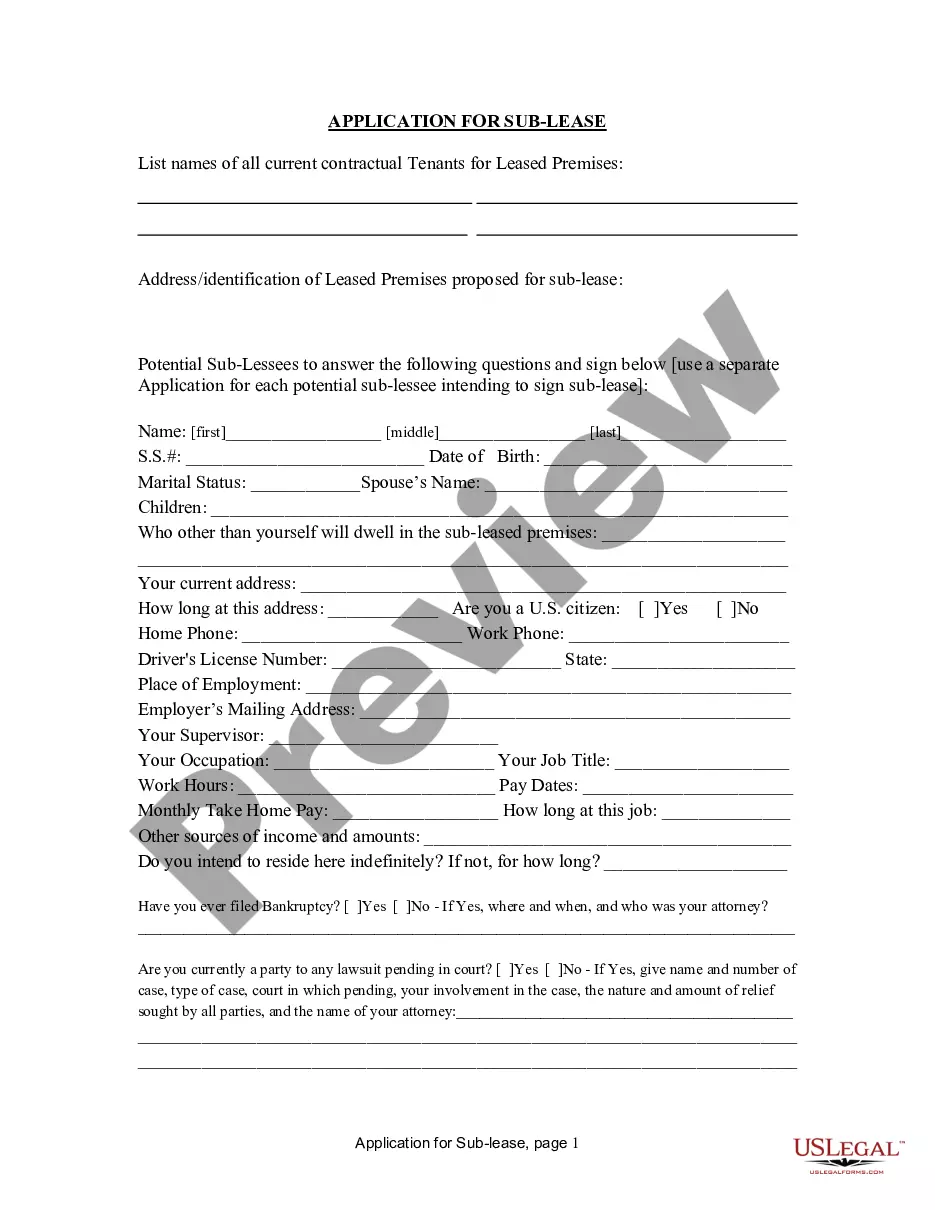
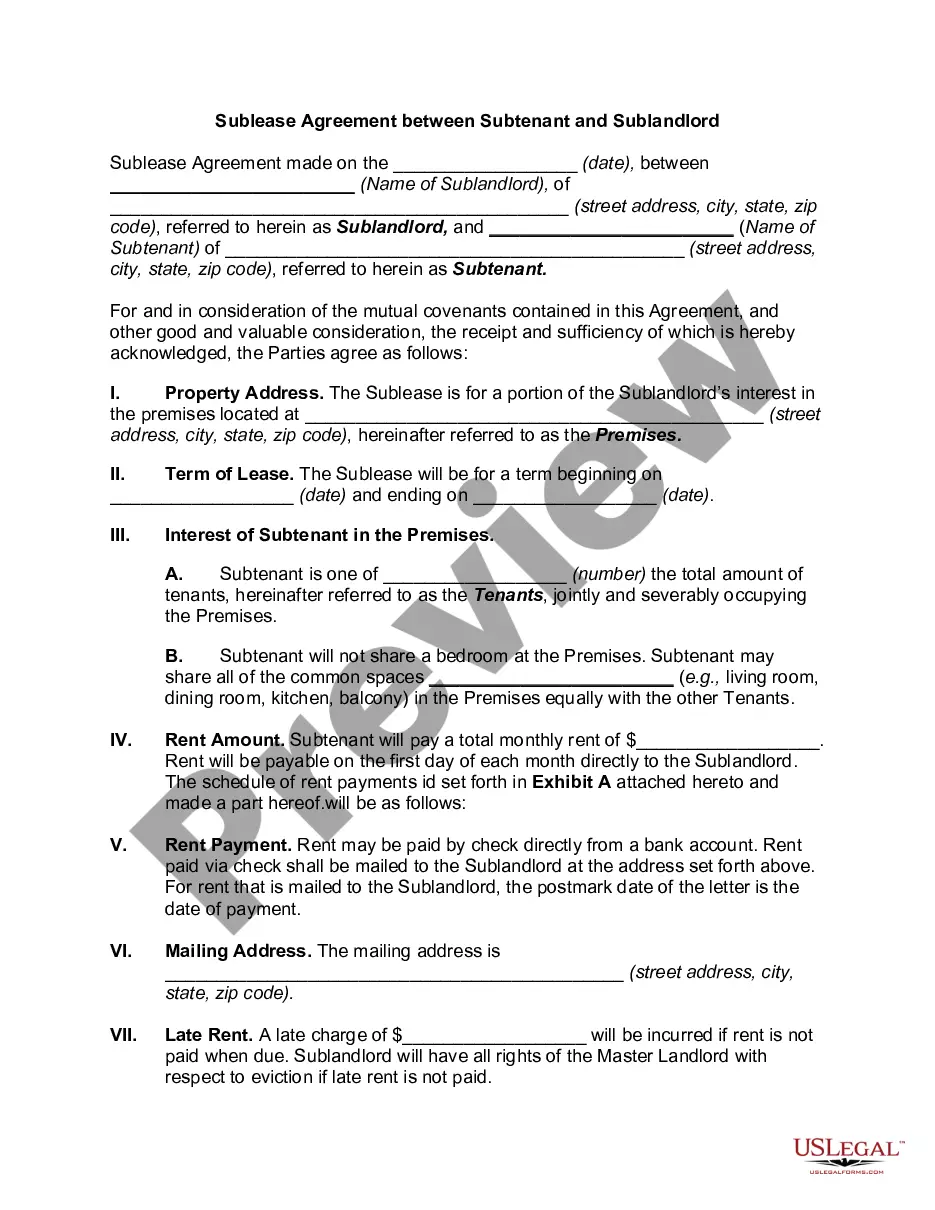
The Application for Sublease is a legal document submitted by a potential sub-tenant to the landlord, requesting permission to sublease a rental property. This form helps landlords evaluate the suitability of the applicant based on various factors. Unlike a standard rental application, this application specifically focuses on the requirements required for subleasing, highlighting the applicant's responsibility for rent and compliance with the existing lease agreement.
Key parts of this document
- Personal information of the applicant, including marital status and dependents.
- Current address and employment details, including job title and monthly income.
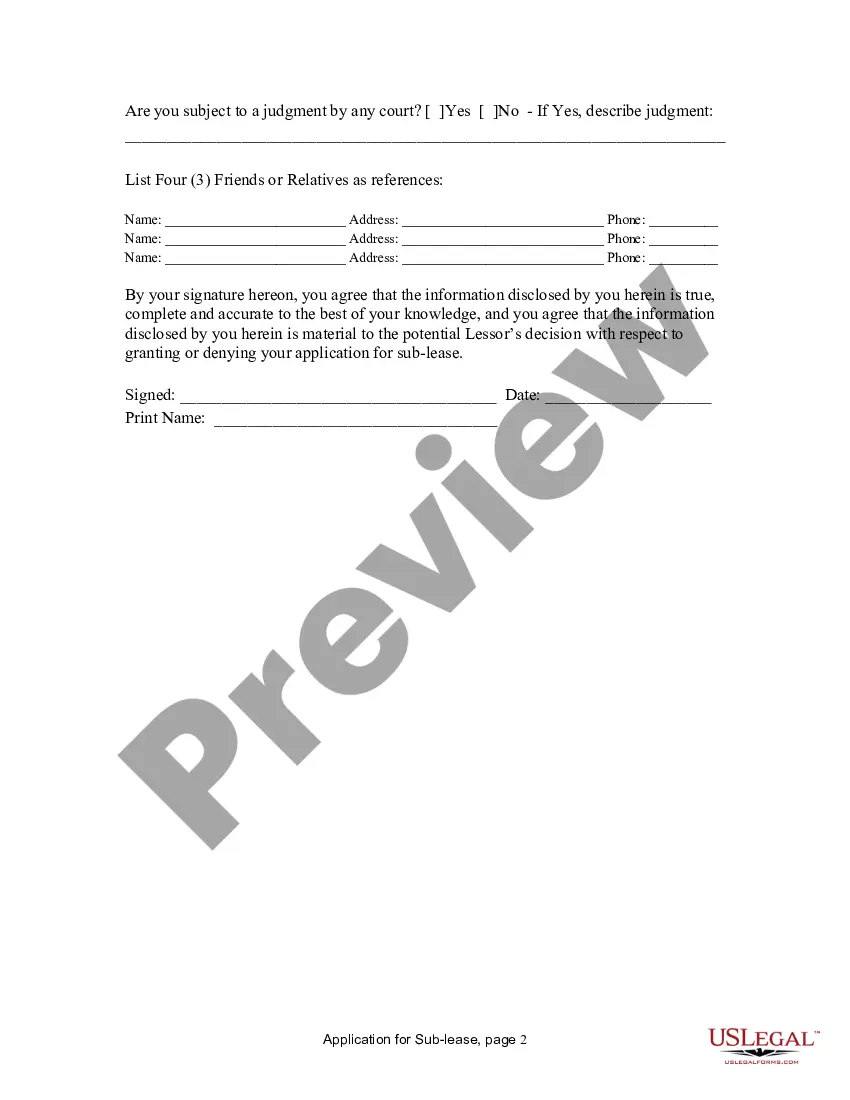
- Creditworthiness questions including bankruptcy history and pending lawsuits.
- References from friends or relatives to support the application.
- Applicant's agreement to provide truthful information for the landlord's decision.
When to use this document
This form should be used when a current tenant seeks to sublet a rental property. It is crucial in situations where the original lease allows subleasing only with landlord approval. Using this application can facilitate transparency and establish trust between the sub-tenant and landlord and ensure that all required information is submitted for consideration.
Who this form is for
- Current tenants who wish to sublet their rental unit.
- Potential sub-tenants who need to provide their information to the landlord.
- Landlords who require a formal application process for subleasing approvals.
Steps to complete this form
- Fill out your personal details, including marital status and dependents.
- Provide information about your current address and employment, including job title and length of employment.
- Disclose any financial issues, such as bankruptcy or pending lawsuits, as required.
- List references, including their addresses and contact information.
- Sign and date the application to verify that all information is accurate.
Does this form need to be notarized?
This form does not typically require notarization unless specified by local law. Always check local regulations to confirm requirements.
Get your form ready online
Our built-in tools help you complete, sign, share, and store your documents in one place.
Make edits, fill in missing information, and update formatting in US Legal Forms—just like you would in MS Word.
Download a copy, print it, send it by email, or mail it via USPS—whatever works best for your next step.
Sign and collect signatures with our SignNow integration. Send to multiple recipients, set reminders, and more. Go Premium to unlock E-Sign.
If this form requires notarization, complete it online through a secure video call—no need to meet a notary in person or wait for an appointment.
We protect your documents and personal data by following strict security and privacy standards.

Make edits, fill in missing information, and update formatting in US Legal Forms—just like you would in MS Word.

Download a copy, print it, send it by email, or mail it via USPS—whatever works best for your next step.

Sign and collect signatures with our SignNow integration. Send to multiple recipients, set reminders, and more. Go Premium to unlock E-Sign.

If this form requires notarization, complete it online through a secure video call—no need to meet a notary in person or wait for an appointment.

We protect your documents and personal data by following strict security and privacy standards.
Mistakes to watch out for
- Not providing complete or accurate information, which could lead to denial.
- Failing to include references, which are often required.
- Missing the signature, which is essential for validation.
Benefits of using this form online
- Convenience of filling out the application from anywhere at any time.
- Editable format allows for easy updates and corrections.
- Reliable templates drafted by licensed attorneys help ensure legal compliance.
Legal use & context
When properly completed, the Application for Sublease can serve as a legally binding request that outlines the necessary information regarding the sub-tenant. It is advisable to review your lease terms to ensure compliance with local laws governing subleases.
Key takeaways
- The Application for Sublease is essential for tenants wishing to sublet their rental space.
- Ensure all information provided is accurate and complete for the landlord's review.
- Understand your original lease to comply with any subleasing restrictions.
Looking for another form?
Form popularity
FAQ
To fill out a residential lease inventory and condition form, start by carefully inspecting the property and noting its current state. Document any existing damages or issues, and provide a detailed description in the form. This practice not only helps in maintaining transparency but also protects both the landlord and tenant, especially when dealing with a California Application for Sublease.
A lease agreement in California must include details such as the names of the landlords and tenants, rental property description, rent amount, and payment terms. It’s advisable to include specific clauses that outline the rules for tenants and any penalties for violations. Resources like US Legal Forms can help you create a compliant California Application for Sublease easily.
No, a rental agreement does not need to be notarized in California to be valid. However, having it notarized can add an extra layer of formality and may help in proving the authenticity of the signatures. When dealing with a California Application for Sublease, ensure you keep a written record of the agreement for your protection.
To write a subleasing agreement, start by clearly defining the terms, including rent payment details and the duration of the sublease. Both the original tenant and the sublessee should sign the agreement to make it legally binding. Additionally, ensure to follow any specific rules outlined in the California Application for Sublease to avoid potential disputes.
The terms 'sublease' and 'sublet' are often used interchangeably, but they can have slightly different meanings. A sublease typically refers to a formal agreement where the original tenant leases the property to a new tenant for a specific time period while retaining responsibility for the lease. In contrast, to sublet usually describes the act of re-renting the premises without a formal agreement. Understanding the California Application for Sublease can help clarify these terms and ensure you follow the proper legal procedures.
To start subleasing, begin by reviewing your lease agreement for any stipulations regarding subleasing. Next, fill out a California Application for Sublease to formally request permission from your landlord. Once approved, you can advertise your space, screen potential subtenants, and draft a written sublease agreement to protect both parties. This process ensures that you comply with legal obligations and promotes a positive subleasing experience.
In California, when you want to sublease your rental unit, you must first check your original lease agreement for any subleasing clauses. Generally, you need to obtain written permission from your landlord to proceed with the California Application for Sublease. It’s also essential to ensure that the sublease complies with local laws and does not exceed the original lease’s terms. Following these rules helps maintain a smooth process and protects your rights as a tenant.
Rules for subletting in California often vary by lease agreement and local laws. It’s essential to inform your landlord and seek their consent if necessary. Additionally, the sublease should include specific terms addressing rent and responsibilities. Utilizing a California Application for Sublease helps ensure that you comply with all relevant regulations while protecting both you and your subtenant.
To start subleasing, you first need to check if your lease allows it. Next, reach out to your landlord for approval and find a reliable subtenant. Document the agreement using a California Application for Sublease, which clearly states the terms and protects your interests. Open communication with all parties ensures a smooth subleasing process.
While often used interchangeably, a sublet and a sublease can have subtle differences. A sublet typically refers to a more informal arrangement, while a sublease involves a formal contract that outlines obligations. Clarifying this distinction can prevent misunderstandings. Using a California Application for Sublease can ensure that all terms are legally compliant.