California Letter from Tenant to Landlord about Insufficient Notice of Change in Rental Agreement for other than rent increase
About this form
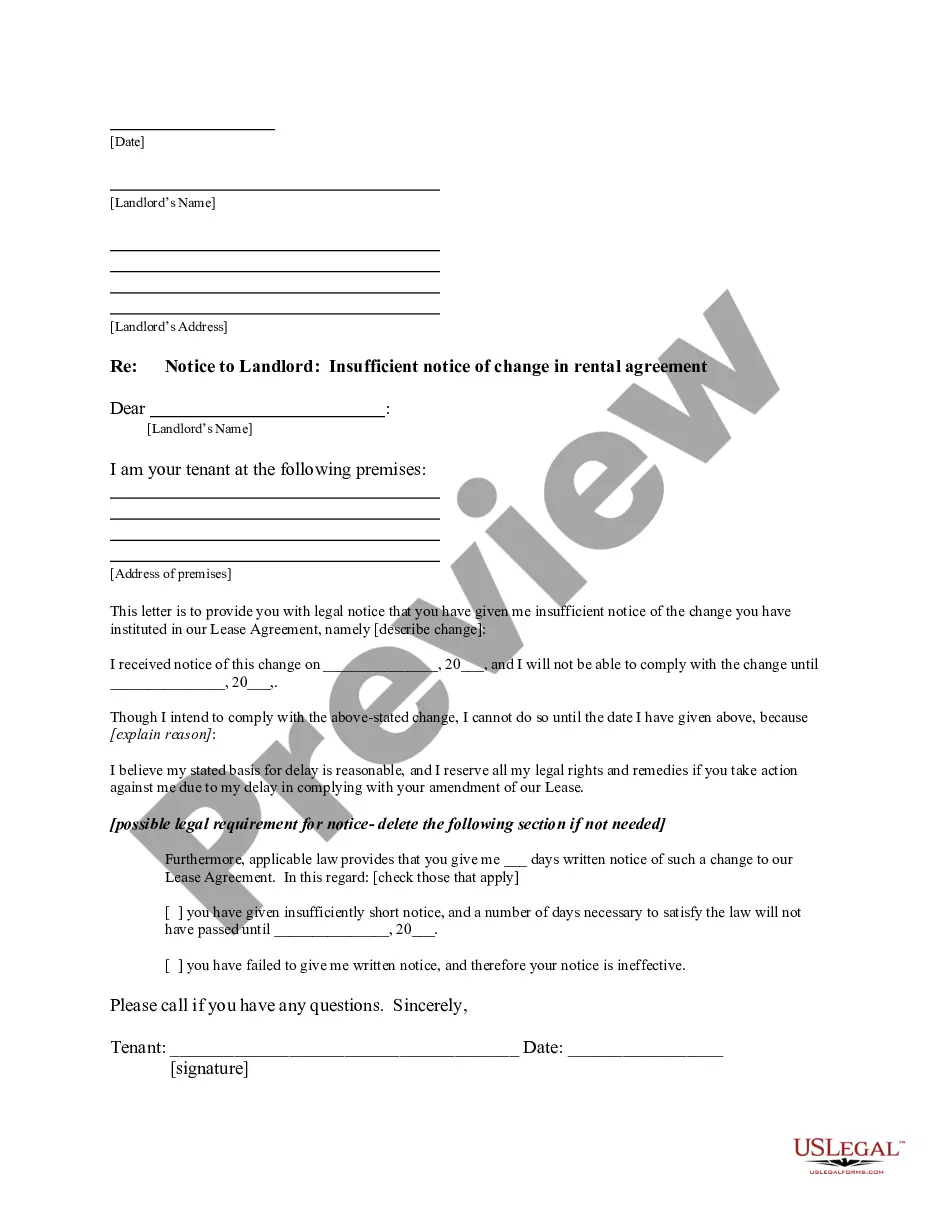
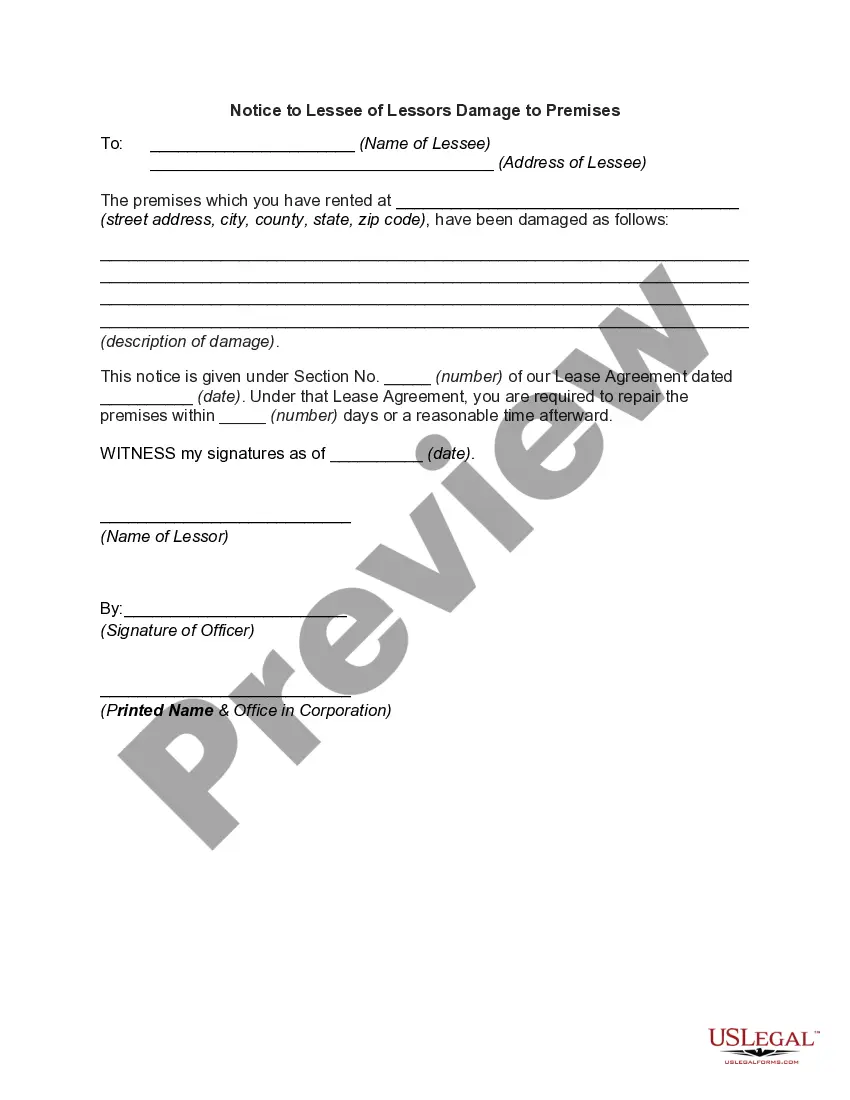
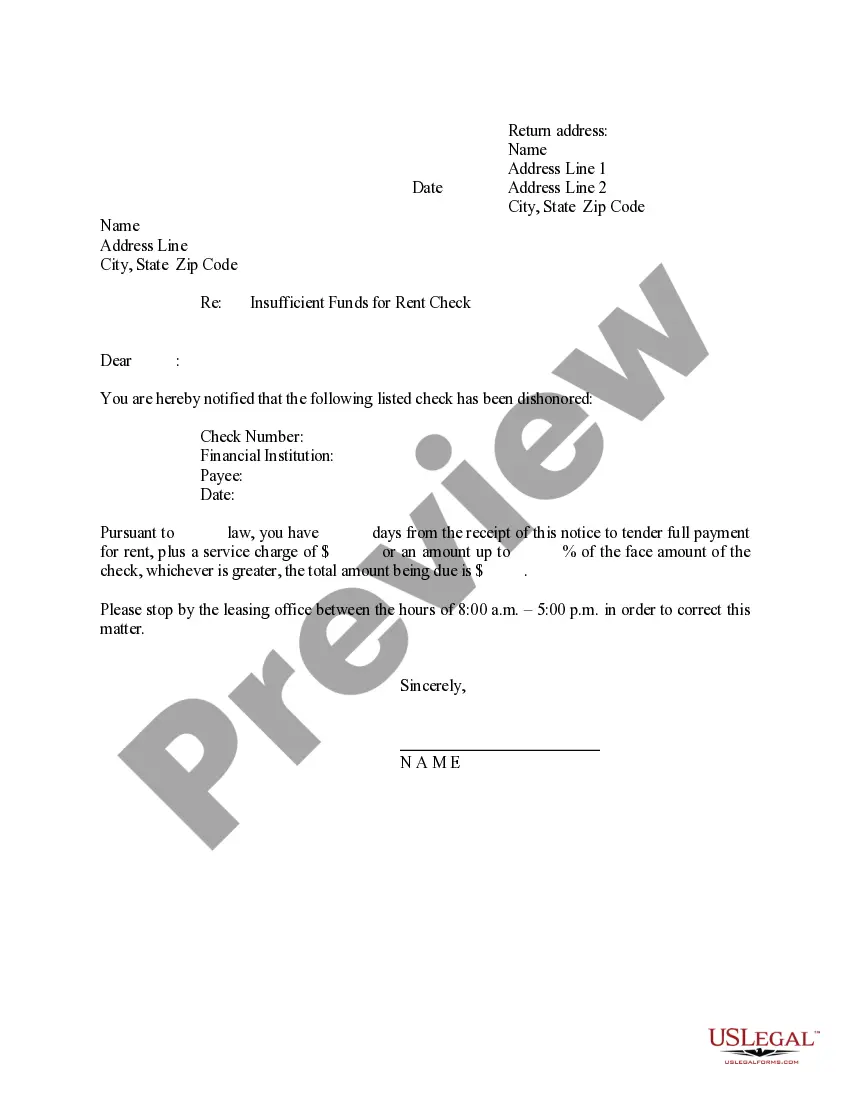
This letter from tenant to landlord addresses situations where a landlord has provided insufficient notice of changes to a rental agreement, other than a rent increase. The form helps tenants formally communicate their intention not to comply with the changes until the required notice period has been fulfilled. It serves as a vital tool for protecting tenants' rights and ensuring compliance with legal notice requirements in rental agreements.
Key components of this form
- Notification of insufficient notice period given by the landlord.
- Specification of the required notice period according to local law.
- Indication of the date on which the proposed changes are effective.
- Section for tenant's name, signature, and date.
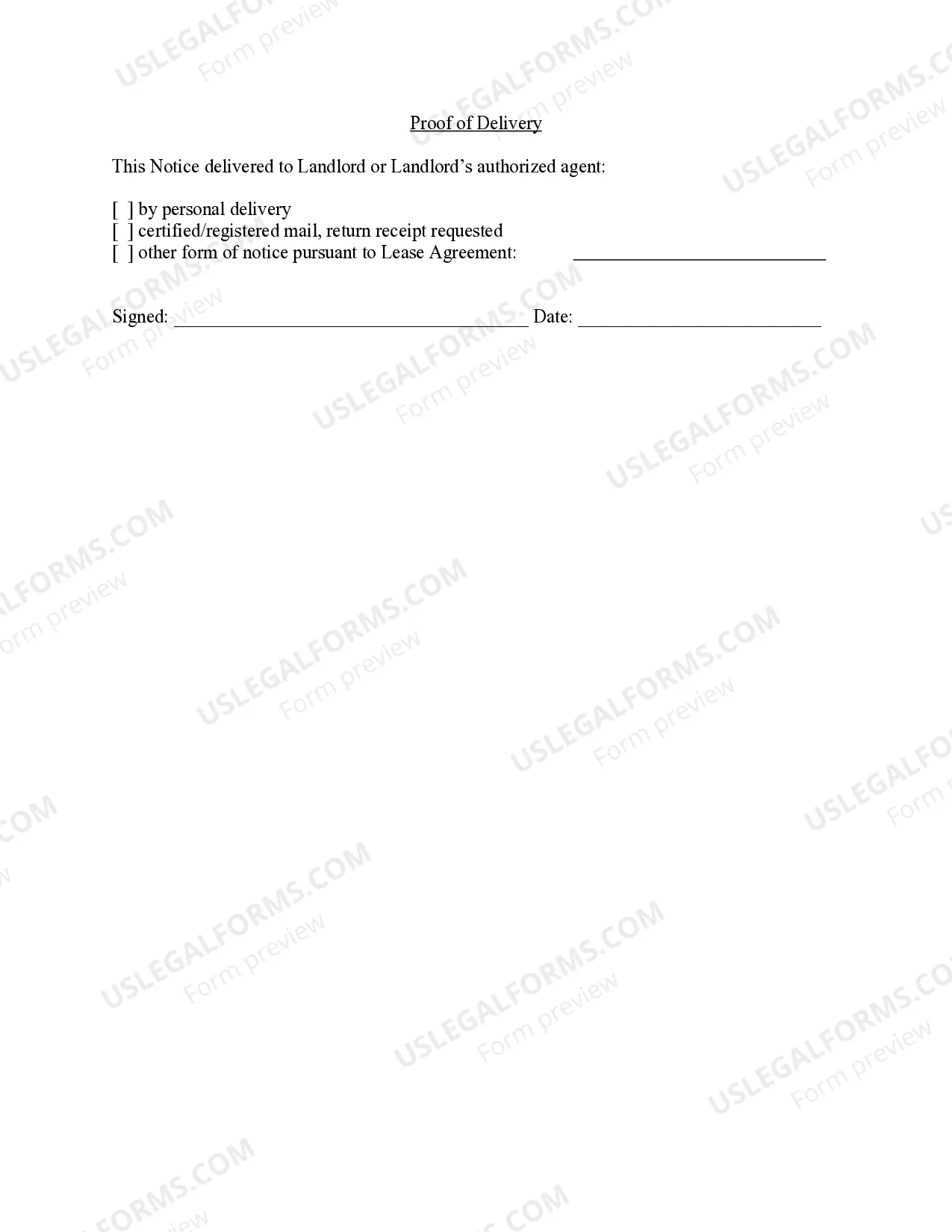
- Proof of delivery options for notifying the landlord.

When to use this document
This form is useful when a landlord attempts to change terms of a lease agreement without providing the legally required notice. Situations may include changes in property conditions, lease terms, or other obligations that the tenant is unwilling to accept until proper notice has been given. Using this letter ensures the tenant's response is documented and legally recognized.
Who should use this form
- Tenants who have received notice of changes to their lease agreement.
- Individuals unsure if their landlord has provided adequate notice regarding lease changes.
- Tenants who wish to formally dispute changes in rental terms while protecting their rights.
How to complete this form
- Identify the parties involved: tenant and landlord.
- Fill in the date the notice is being sent.
- Specify the required notice period based on local laws.
- Clearly state your intention not to comply with the changes until proper notice is given.
- Sign the form and enter the date of signature.
- Choose a proof of delivery method to ensure the landlord receives it.
Does this form need to be notarized?
In most cases, this form does not require notarization. However, some jurisdictions or signing circumstances might. US Legal Forms offers online notarization powered by Notarize, accessible 24/7 for a quick, remote process.
Get your form ready online
Our built-in tools help you complete, sign, share, and store your documents in one place.
Make edits, fill in missing information, and update formatting in US Legal Forms—just like you would in MS Word.
Download a copy, print it, send it by email, or mail it via USPS—whatever works best for your next step.
Sign and collect signatures with our SignNow integration. Send to multiple recipients, set reminders, and more. Go Premium to unlock E-Sign.
If this form requires notarization, complete it online through a secure video call—no need to meet a notary in person or wait for an appointment.
We protect your documents and personal data by following strict security and privacy standards.

Make edits, fill in missing information, and update formatting in US Legal Forms—just like you would in MS Word.

Download a copy, print it, send it by email, or mail it via USPS—whatever works best for your next step.

Sign and collect signatures with our SignNow integration. Send to multiple recipients, set reminders, and more. Go Premium to unlock E-Sign.

If this form requires notarization, complete it online through a secure video call—no need to meet a notary in person or wait for an appointment.

We protect your documents and personal data by following strict security and privacy standards.
Common mistakes
- Failing to specify the required notice period.
- Not signing and dating the letter.
- Using improper methods of delivery for notifying the landlord.
- Not keeping a copy of the notice for personal records.
Why complete this form online
- Easy to fill out and customize to fit your specific situation.
- Accessible for download 24/7, providing convenience.
- Prepared by licensed attorneys to ensure legal compliance.
- Digital storage options for easy access and retrieval.
Looking for another form?
Form popularity
FAQ
Landlords in California are required to provide at least 30 days' notice for a rent increase of 10% or less, and at least 90 days for any increase exceeding that threshold. Proper notice is crucial to maintain a transparent relationship with tenants. If the notification seems insufficient, tenants can respond using a California Letter from Tenant to Landlord about Insufficient Notice of Change in Rental Agreement for other than rent increase to address the issue formally. Understanding these requirements helps protect your rights as a tenant.
Negotiating a rent increase in California involves clear communication between the tenant and the landlord. Start by gathering comparable rental rates in the area and present them during discussions. Utilizing a formal document like the California Letter from Tenant to Landlord about Insufficient Notice of Change in Rental Agreement for other than rent increase can solidify your position. A respectful approach often leads to fruitful negotiations, making both parties feel valued.
Generally, a tenant should not change or improve a rental property without obtaining the landlord's permission first. Making alterations could violate the lease agreement and may result in unnecessary disputes. If a tenant feels that a modification is necessary, they can communicate effectively using a California Letter from Tenant to Landlord about Insufficient Notice of Change in Rental Agreement for other than rent increase. This establishes a clear record of the request and maintains a positive landlord-tenant relationship.
In California, the amount you can legally raise rent is capped under state law, typically at 5% plus the local rate of inflation or a total of 10%, whichever is lower. However, local ordinances may impose stricter limits, so it’s important to review local laws. When drafting your notice, referencing the California Letter from Tenant to Landlord about Insufficient Notice of Change in Rental Agreement for other than rent increase can provide useful context for tenants to understand the legality of their situation. Always consult a legal expert to confirm the exact limits applicable to your area.
The best letter for a rent increase clearly outlines the changes in a straightforward manner. It should specify the effective date of the increase and reference the California Letter from Tenant to Landlord about Insufficient Notice of Change in Rental Agreement for other than rent increase, if applicable. This helps ensure that tenants are aware of their rights and the requirements for valid notice. Using a reputable platform like US Legal Forms can guide you in drafting an effective letter.
To write a letter stating you are not renewing your lease, start with a clear statement of your intent to not continue the rental agreement. Include your name, the address of the property, and the date of your lease's termination. Using a California Letter from Tenant to Landlord about Insufficient Notice of Change in Rental Agreement for other than rent increase can also serve as a model to ensure your letter is professionally drafted. This ensures that your communication is clear and legally recognized.
In California, landlords are prohibited from taking retaliatory actions against tenants, such as raising rent or evicting them for exercising their legal rights. Additionally, landlords cannot change terms without proper notification or discriminate based on protected characteristics. If you find your landlord is acting outside these bounds, a California Letter from Tenant to Landlord about Insufficient Notice of Change in Rental Agreement for other than rent increase can help you address the situation appropriately.
In California, a landlord cannot legally change the terms of a lease without providing proper notice to the tenant. The law requires landlords to follow specific guidelines for notifying renters about any changes, especially if they are not related to rent increases. If you believe that your landlord has not followed these requirements, consider using a California Letter from Tenant to Landlord about Insufficient Notice of Change in Rental Agreement for other than rent increase to assert your rights.
To change the terms of a California residential tenancy, you must communicate your intentions clearly and formally with your landlord. Provide a written notice that outlines the changes you seek to make. If you receive an insufficient notice regarding changes in the rental agreement, you can use a California Letter from Tenant to Landlord about Insufficient Notice of Change in Rental Agreement for other than rent increase to state your case and seek resolution.
An amendment to a lease agreement in California refers to a formal change made to the original rental contract. This change can alter terms related to responsibilities, fees, or conditions of the lease. A California Letter from Tenant to Landlord about Insufficient Notice of Change in Rental Agreement for other than rent increase can be crucial if you feel that any proposed changes are not compliant with legal requirements. Always ensure any amendments are documented in writing to maintain clarity.