California Letter from Tenant to Landlord responding to Notice to Terminate for Noncompliance - Noncompliant condition caused by Landlord's own deliberate or negligent act
About this form
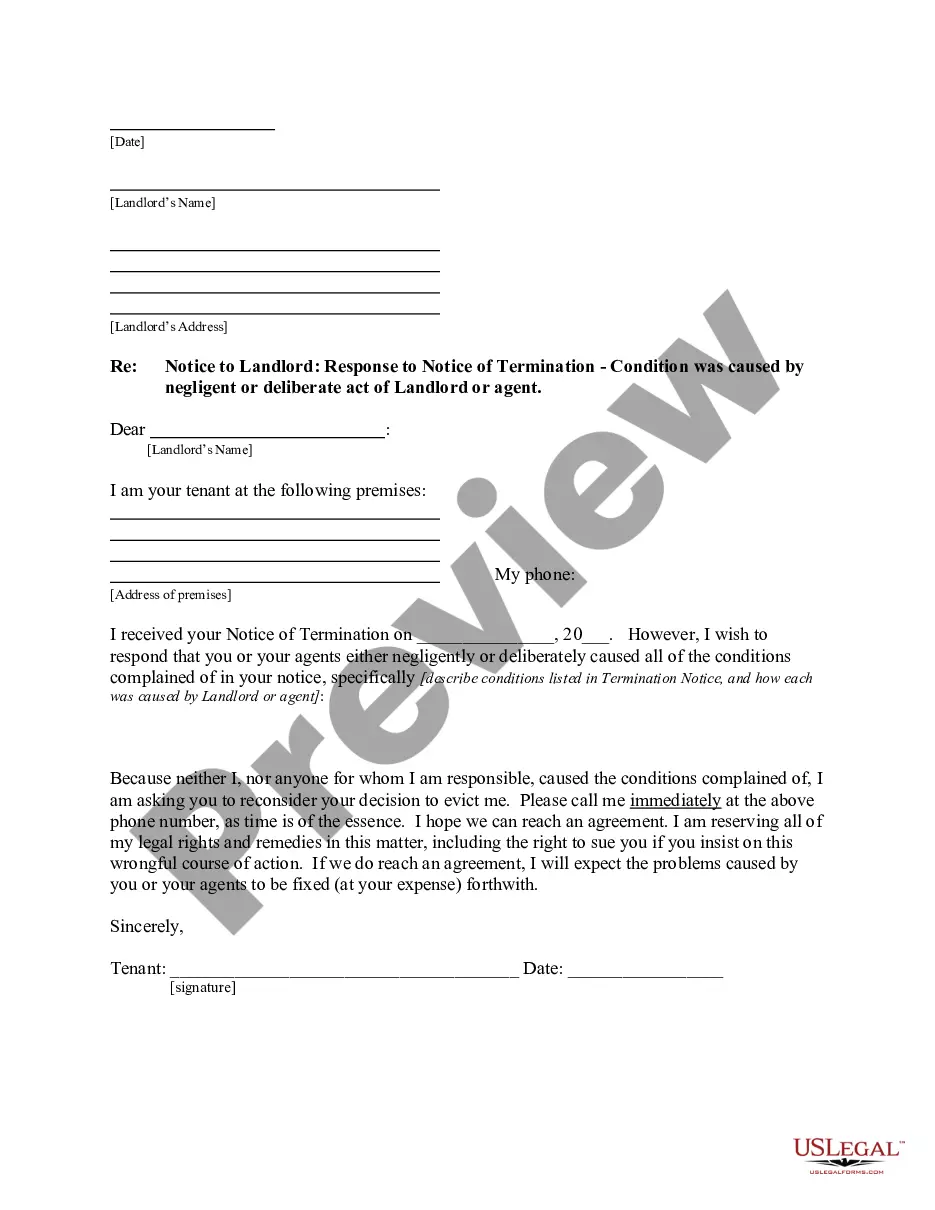
This form is a Letter from Tenant to Landlord responding to a Notice to Terminate for Noncompliance. It specifically addresses situations where the tenant believes that a noncompliant condition leading to eviction is caused by the landlord's actions. Unlike standard eviction responses, this letter not only requests that the landlord refrain from eviction but also demands necessary repairs, asserting the tenant's legal rights.
Key components of this form
- Tenant's statement of dispute regarding the eviction notice.
- Assertion that the cause of the noncompliance is due to the landlord's deliberate or negligent act.
- Request for immediate repairs to the property.
- Reservation of legal rights, including the possibility of legal action.
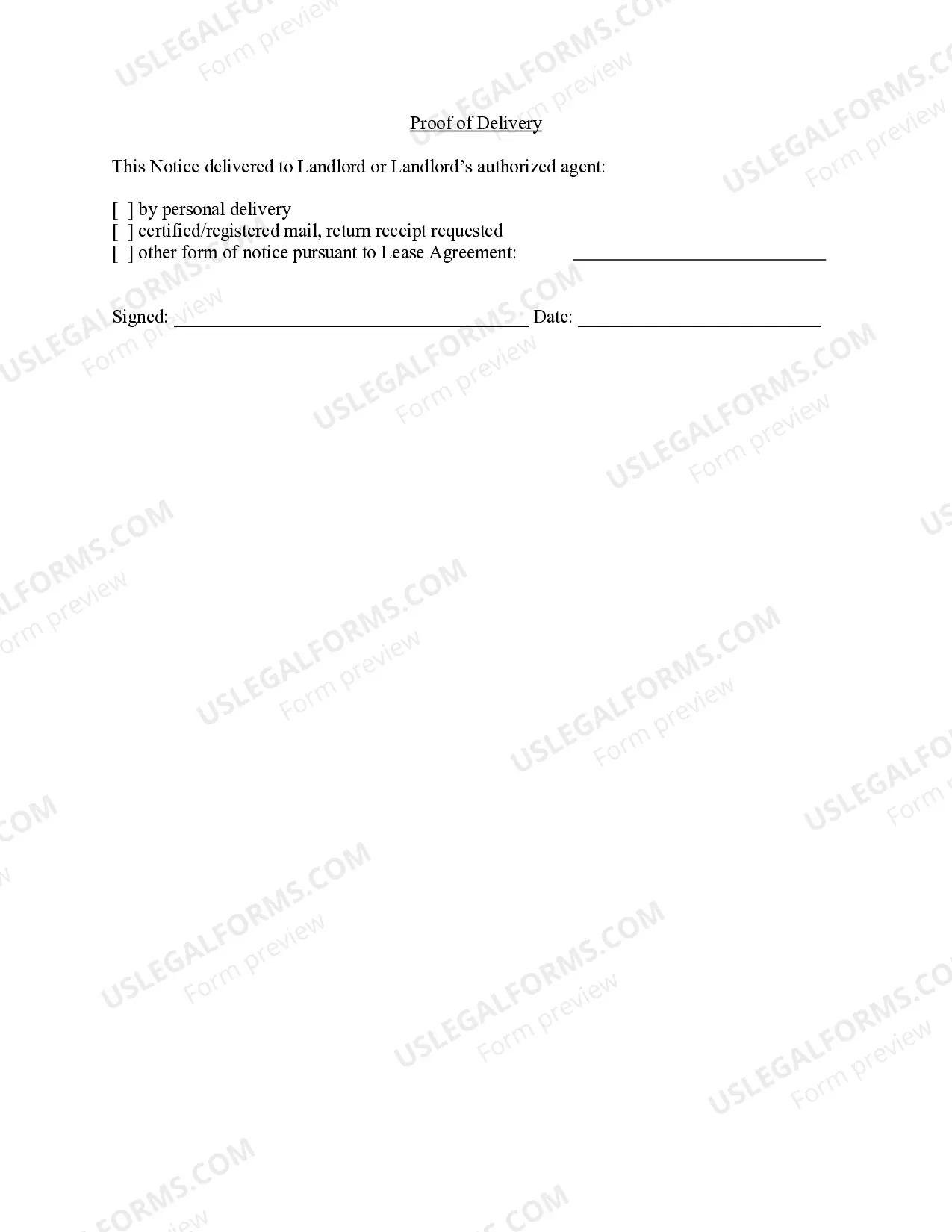
- Signature of the tenant and date of the notice.




When to use this form
You should use this form when you, as a tenant, receive a notice of eviction from your landlord for noncompliance, and you believe that the reasons for the noncompliance were due to the landlord's own actions. This form helps to formally communicate your position to the landlord and can be crucial for protecting your legal rights.
Who should use this form
- Tenants who have received an eviction notice for noncompliance.
- Individuals who believe their noncompliant condition is caused by the landlord's actions.
- Tenants seeking to assert their rights and request repairs from their landlord.
Completing this form step by step
- Identify yourself as the tenant, and clearly state the date of the letter.
- Address the letter to your landlord, specifying the property in question.
- Detail the actions or negligence of the landlord that led to the noncompliance.
- State your request for immediate repairs and assert your request to not be evicted.
- Sign and date the letter before delivering it to your landlord or their authorized agent.
Notarization requirements for this form
This form does not typically require notarization unless specified by local law.
Get your form ready online
Our built-in tools help you complete, sign, share, and store your documents in one place.
Make edits, fill in missing information, and update formatting in US Legal Forms—just like you would in MS Word.
Download a copy, print it, send it by email, or mail it via USPS—whatever works best for your next step.
Sign and collect signatures with our SignNow integration. Send to multiple recipients, set reminders, and more. Go Premium to unlock E-Sign.
If this form requires notarization, complete it online through a secure video call—no need to meet a notary in person or wait for an appointment.
We protect your documents and personal data by following strict security and privacy standards.

Make edits, fill in missing information, and update formatting in US Legal Forms—just like you would in MS Word.

Download a copy, print it, send it by email, or mail it via USPS—whatever works best for your next step.

Sign and collect signatures with our SignNow integration. Send to multiple recipients, set reminders, and more. Go Premium to unlock E-Sign.

If this form requires notarization, complete it online through a secure video call—no need to meet a notary in person or wait for an appointment.

We protect your documents and personal data by following strict security and privacy standards.
Typical mistakes to avoid
- Failing to sign and date the letter.
- Not providing specific details about the landlord's actions causing the noncompliance.
- Neglecting to keep a copy of the delivered notice for your records.
Benefits of using this form online
- Convenience of completing the form from home.
- Editable templates allow for easy customization to fit your situation.
- Secure access and download options ensure reliability and privacy.
Legal use & context
- This form can be used as a formal response to a landlord's eviction notice.
- It serves to document the tenant's position and legal rights.
- The effectiveness of this letter can depend on the specific laws of your state regarding tenant rights and landlord obligations.
What to keep in mind
- This letter counters a landlord's eviction notice based on noncompliant issues they caused.
- It includes a request for repairs and preserves the tenant's legal rights.
- Accuracy in detailing the landlord's actions is crucial for the letter's effectiveness.
Looking for another form?
Form popularity
FAQ
If you are the tenant and intend to move out (and you pay rent once a month), you have to give your landlord 30 days' notice in writing. If you do not, the landlord can charge you for the unpaid rent even after you move out. Unless a new tenant pays the rent, you will have to pay for those 30 days.
Thoroughly clean the property before vacating the premises. Leave the property in as close to move-in state as possible to maximize your chances of recovering your security deposit. Replace any broken fixtures or blinds. Replace missing towel holders, light fixtures and switch covers.
Complying with all state and local health and building codes. Maintaining structural components and a reasonably weather-protected unit. Providing the necessary heat, electric, and hot and cold water facilities. Making any requested repairs promptly.
Under the California Civil Code, landlords of a property must ensure that certain conditions are met which make the living space habitable and safe for potential lessees. These conditions include ensuring proper electric, gas, and plumbing utilities, as well as installing proper locks and security systems.
Fundamental responsibilities of landlords include: providing and maintaining the property in a clean and reasonable standard; giving proper receipts and maintaining records of all transactions pertaining to the tenancy; paying council rates and taxes; maintaining locks to ensure the property's security; and lodging the
Under California Civil Code § 1940.2, a landlord cannot unlawfully force a tenant out of their apartment or home using the following methods: Engaging in forceful, threatening, or menacing conduct;Taking, depriving, or removing the tenant's property from their home without permission.
There is generally no landlord's responsibility for hotel bills. Sometimes landlords schedule things like fumigation or a fast remodel that require the tenants to vacate for a short period of time. In these instances, landlords often cover reasonable hotel costs for good tenants for a few days.
A landlord cannot evict a tenant without an adequately obtained eviction notice and sufficient time. A landlord cannot retaliate against a tenant for a complaint. A landlord cannot forego completing necessary repairs or force a tenant to do their own repairs.A landlord cannot remove a tenant's personal belongings.