California Quitclaim Deed from Individual to LLC
Overview of this form
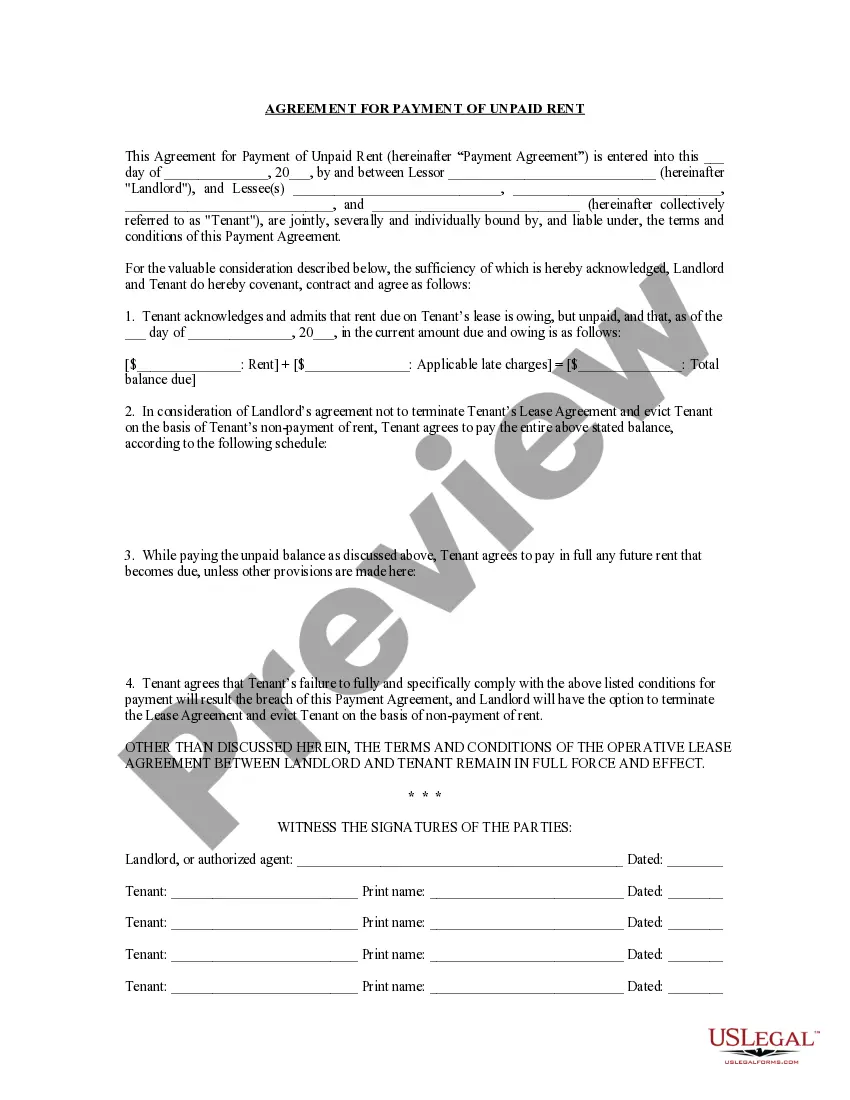
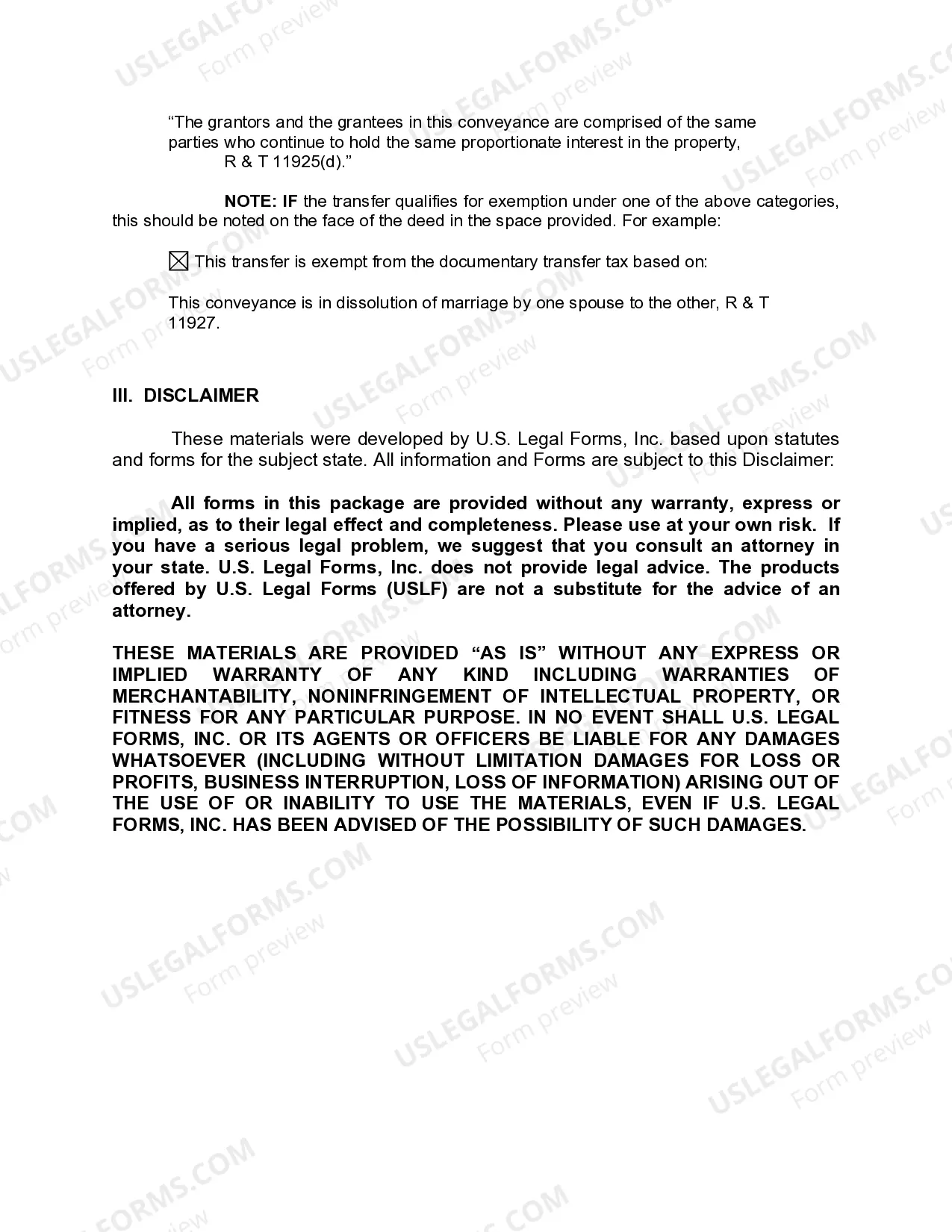
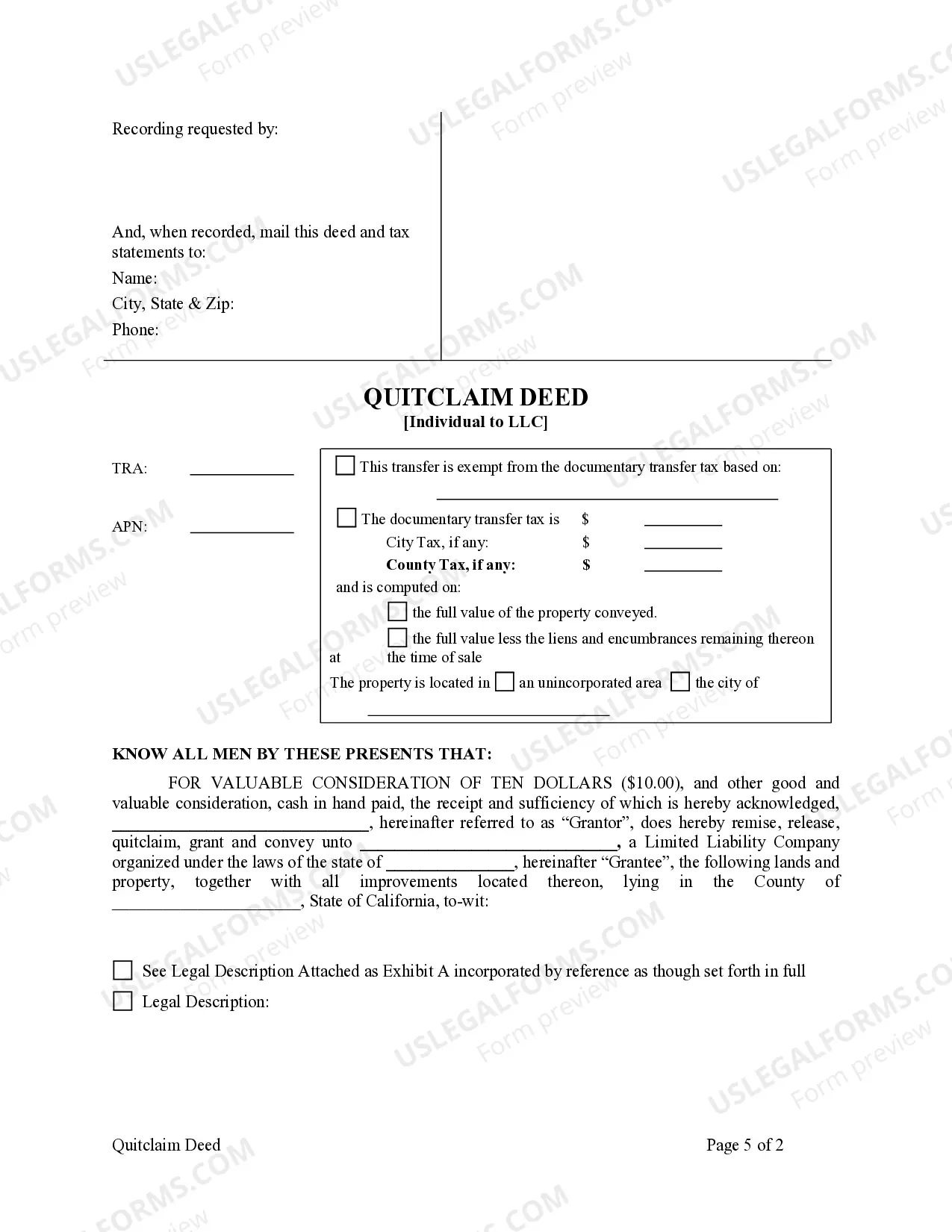
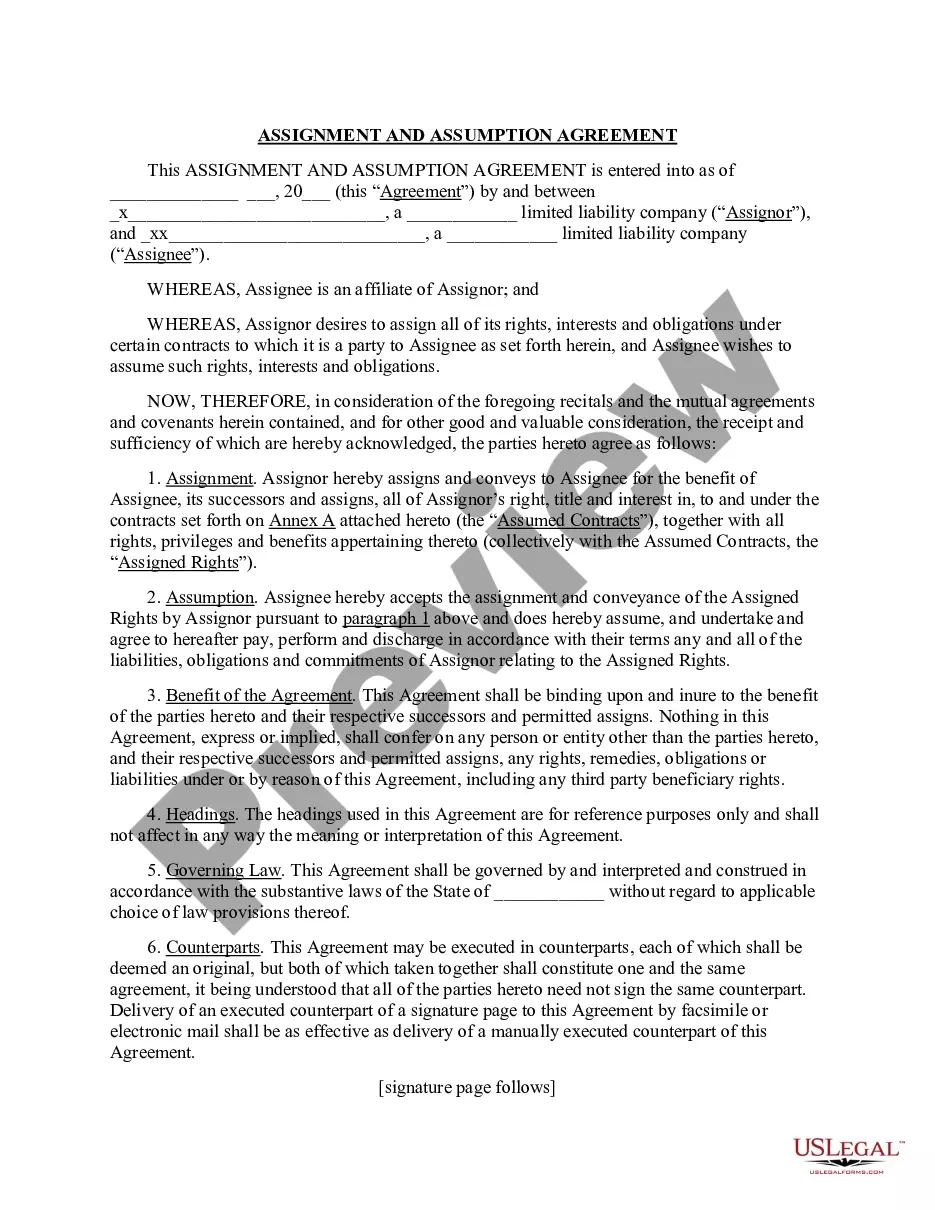
The Quitclaim Deed from Individual to LLC is a legal document used to transfer property ownership from an individual (grantor) to a limited liability company (grantee). Unlike a warranty deed, this form does not guarantee that the property title is clear of claims or encumbrances; it simply conveys whatever interest the grantor has in the property. This form is particularly useful for individuals transferring their ownership rights to a business entity, making it essential for real estate transactions involving an LLC.
What’s included in this form
- Identification of the grantor (individual) and grantee (LLC).
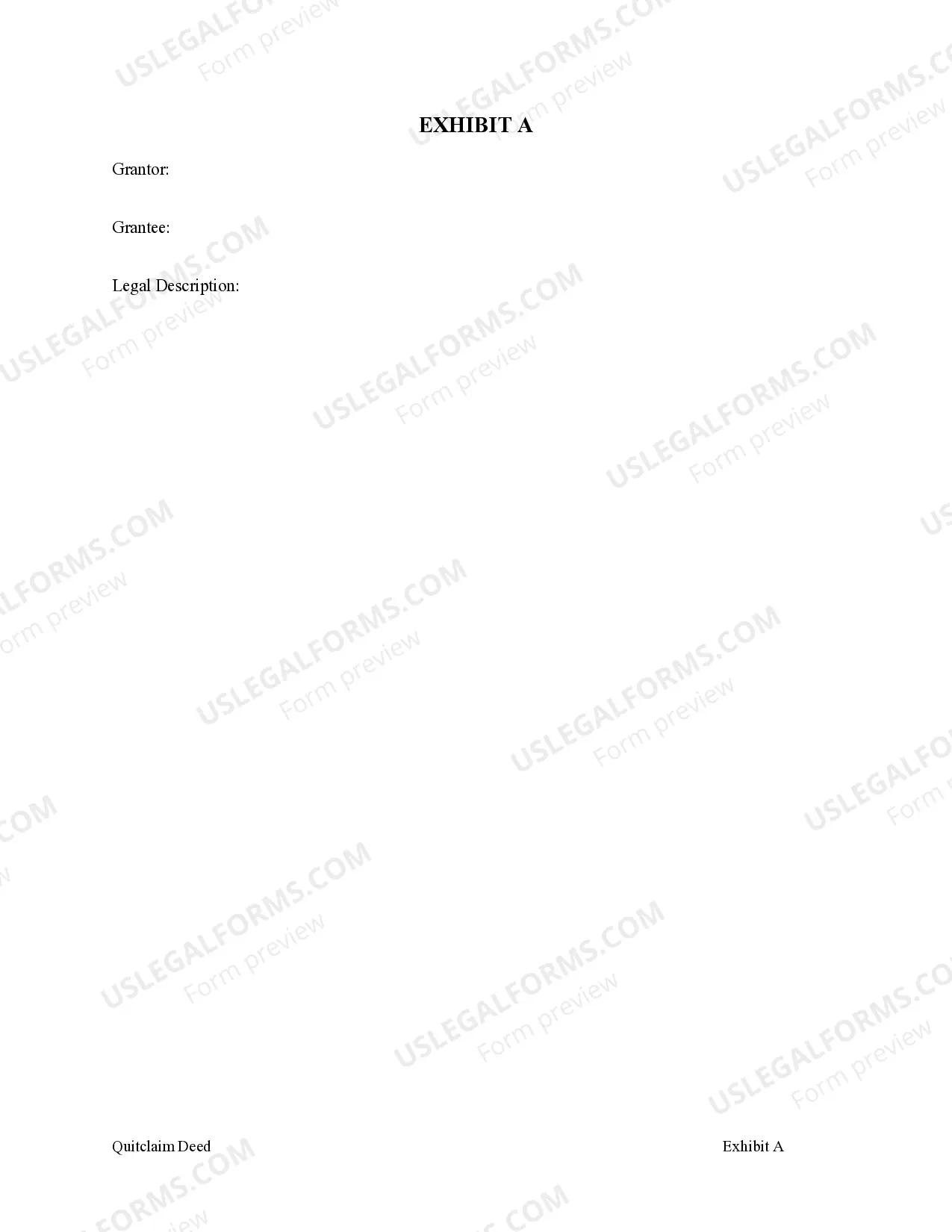
- Description of the property being transferred.
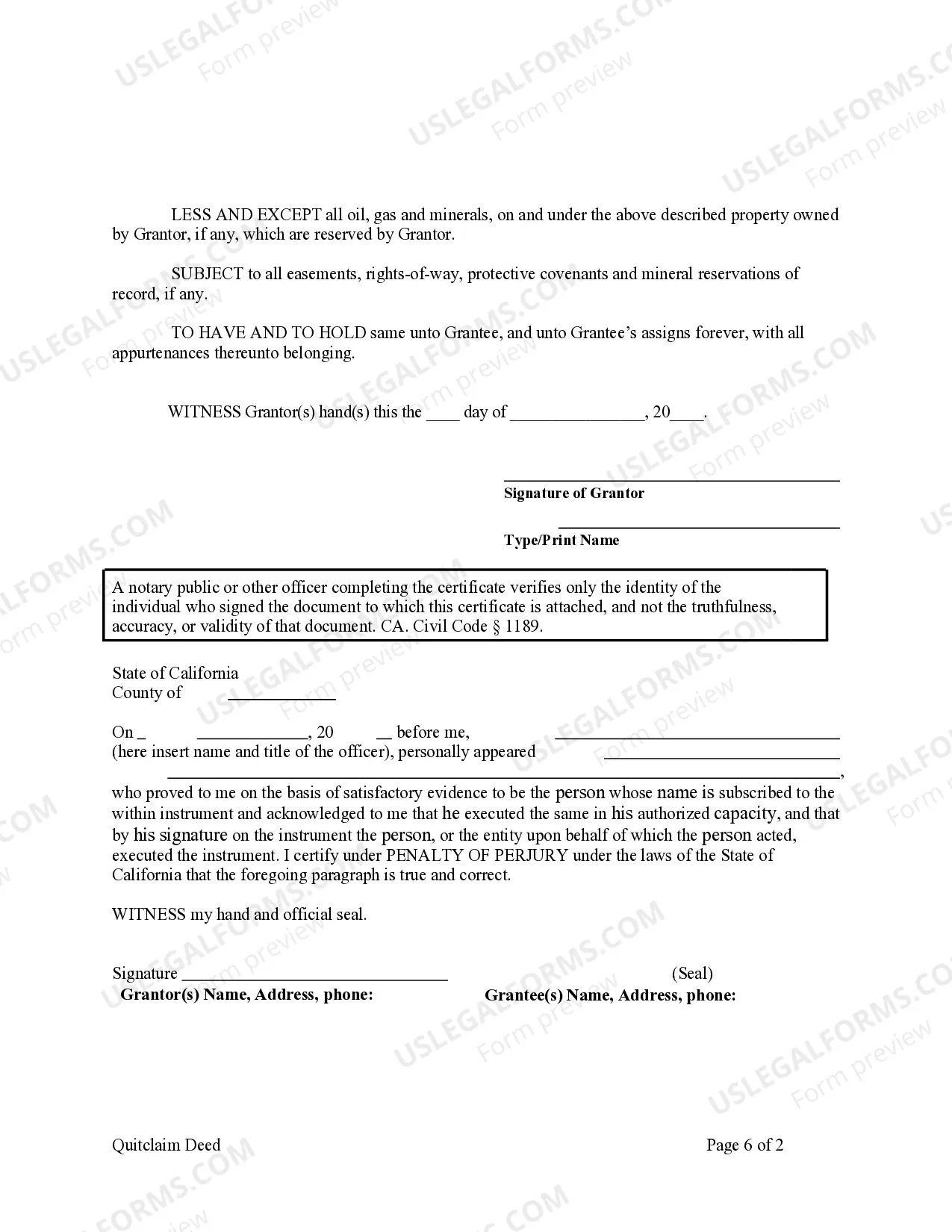
- Reservation of any oil, gas, and minerals by the grantor.
- Signatures of the grantor and witnesses (if applicable).
- Space for recording the deed with local authorities.





When to use this document
This form should be used when an individual wishes to transfer their interest in real estate to a limited liability company, often for reasons such as asset protection, business structure changes, or estate planning. It is commonly utilized in scenarios involving real estate investments, family-owned businesses, or personal property being contributed to an LLC.
Who should use this form
- Individuals transferring real estate to their LLC.
- Business owners seeking to consolidate property under an LLC for liability protection.
- Real estate investors managing properties through an LLC.
How to complete this form
- Identify the grantor (individual) and the grantee (LLC) by providing their full legal names and addresses.
- Clearly describe the property, including its address and legal description.
- Specify any reservations, such as oil, gas, and mineral rights that the grantor retains.
- Have the grantor sign the deed in the presence of a witness, if required.
- File the completed deed with the appropriate local government office to officially record the transfer.
Does this form need to be notarized?
To make this form legally binding, it must be notarized. Our online notarization service, powered by Notarize, lets you verify and sign documents remotely through an encrypted video session.
Get your form ready online
Our built-in tools help you complete, sign, share, and store your documents in one place.
Make edits, fill in missing information, and update formatting in US Legal Forms—just like you would in MS Word.
Download a copy, print it, send it by email, or mail it via USPS—whatever works best for your next step.
Sign and collect signatures with our SignNow integration. Send to multiple recipients, set reminders, and more. Go Premium to unlock E-Sign.
If this form requires notarization, complete it online through a secure video call—no need to meet a notary in person or wait for an appointment.
We protect your documents and personal data by following strict security and privacy standards.
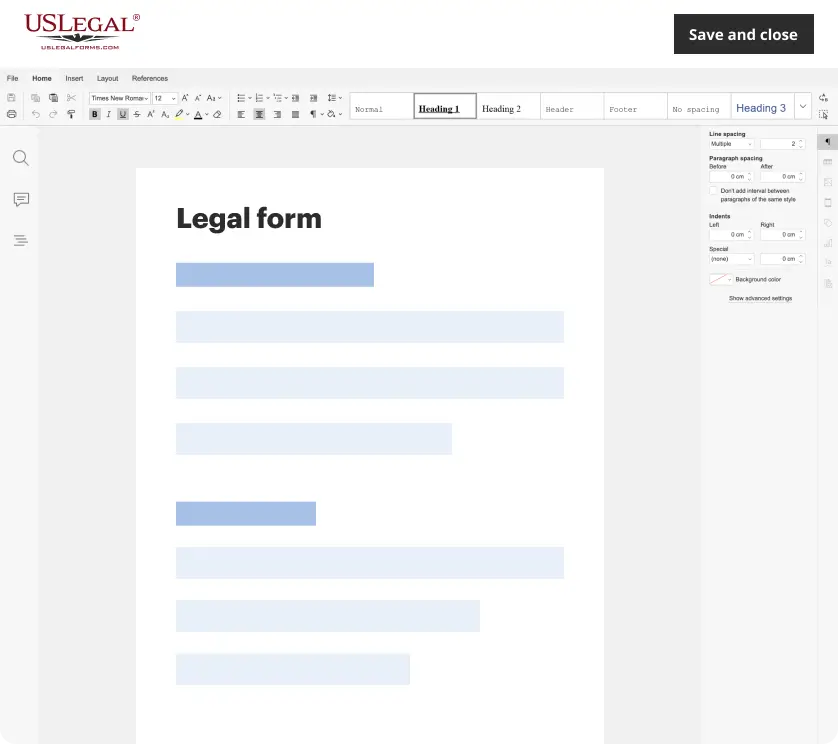
Make edits, fill in missing information, and update formatting in US Legal Forms—just like you would in MS Word.
Download a copy, print it, send it by email, or mail it via USPS—whatever works best for your next step.
Sign and collect signatures with our SignNow integration. Send to multiple recipients, set reminders, and more. Go Premium to unlock E-Sign.
If this form requires notarization, complete it online through a secure video call—no need to meet a notary in person or wait for an appointment.
We protect your documents and personal data by following strict security and privacy standards.
Avoid these common issues
- Failing to provide a complete legal description of the property.
- Not including the reservation of rights, if applicable.
- Neglecting to sign the document in front of a witness, if required by state law.
- Not recording the deed with local authorities, which can result in issues with ownership verification.
Benefits of using this form online
- Convenient access to legal forms anytime and anywhere.
- Editable templates allow customization to meet specific needs.
- Reliable source with templates drafted by licensed attorneys.
Looking for another form?
Form popularity
FAQ
People often place their property in an LLC to limit personal liability and protect their assets. This strategy helps separate personal and business interests, making it easier to manage risks. Additionally, an LLC can enhance credibility with tenants or clients. If you're considering a California Quitclaim Deed from Individual to LLC, it is important to understand these advantages and how they align with your ownership goals.
To submit a quitclaim deed in California, you first need to complete the deed form accurately, ensuring that all necessary information about the property and the parties involved is included. Next, sign the deed in front of a notary, which verifies your identity and willingness to transfer property. Finally, file the completed deed with the county registrar, ensuring you keep a copy for your records. This process will implement your California Quitclaim Deed from Individual to LLC fully.
To transfer ownership of a property to an LLC, you typically start by drafting a California Quitclaim Deed from Individual to LLC. This deed outlines the transfer of property rights from the individual owner to the LLC. After completing the deed, you must sign it in front of a notary, and then record it with the county recorder's office. This process formally updates the public records to show the LLC as the new owner.
In California, anyone can prepare a quitclaim deed from individual to LLC, including property owners themselves. However, it is often advisable to consult a legal professional or use a reliable platform like US Legal Forms to ensure the document meets all legal requirements. Properly preparing a quitclaim deed is crucial, as any errors can lead to complications in the transfer process. Therefore, utilize resources that guide you through the necessary steps effectively.
To transfer assets from personal to business, you can use a California Quitclaim Deed from Individual to LLC, which efficiently formalizes the transfer process. Start by listing all the assets you wish to transfer, and then complete the deed to ensure legal recognition. This separation not only safeguards your assets but also adheres to best business practices for financial management. Consider exploring options through platforms like uslegalforms for assistance in drafting the necessary documents.
Transferring a deed from an individual to an LLC involves creating a California Quitclaim Deed from Individual to LLC. This legal document outlines the transfer and helps to simplify the process. Be sure to include all relevant details, such as the property description, and file it with your local public records. This step is vital for establishing ownership and protecting your assets.
To transfer your property to an LLC in California, you will need to execute a California Quitclaim Deed from Individual to LLC. This document formally records the transfer of ownership. After completing the deed, file it with the county recorder's office to ensure that the change is publicly recognized. By doing this, you effectively place your property under the LLC's protection.
The best way to transfer property title between family members is often through a California Quitclaim Deed from Individual to LLC, especially if the property is being moved into an LLC. This method simplifies the process and minimizes potential tax consequences. Furthermore, it ensures that the transfer of ownership is officially documented and recognized. Always consider consulting an attorney or a legal service, like uslegalforms, to navigate the nuances involved.
An LLC can avoid property tax reassessment in California by carefully structuring the transfer of property. Utilizing a California Quitclaim Deed from Individual to LLC may help maintain the existing tax basis, as long as the ownership structure remains compliant with state regulations. It is crucial to consult with a tax professional to ensure that you meet all requirements and avoid unintended tax implications.
Transferring your rental property to an LLC in California can offer you various benefits, including liability protection and potential tax advantages. Using a California Quitclaim Deed from Individual to LLC simplifies this transfer process. It effectively shields your personal assets from any legal actions related to the rental property. Ultimately, this move can enhance your financial security.