California Grant Deed from Husband and Wife to Trust
What this document covers
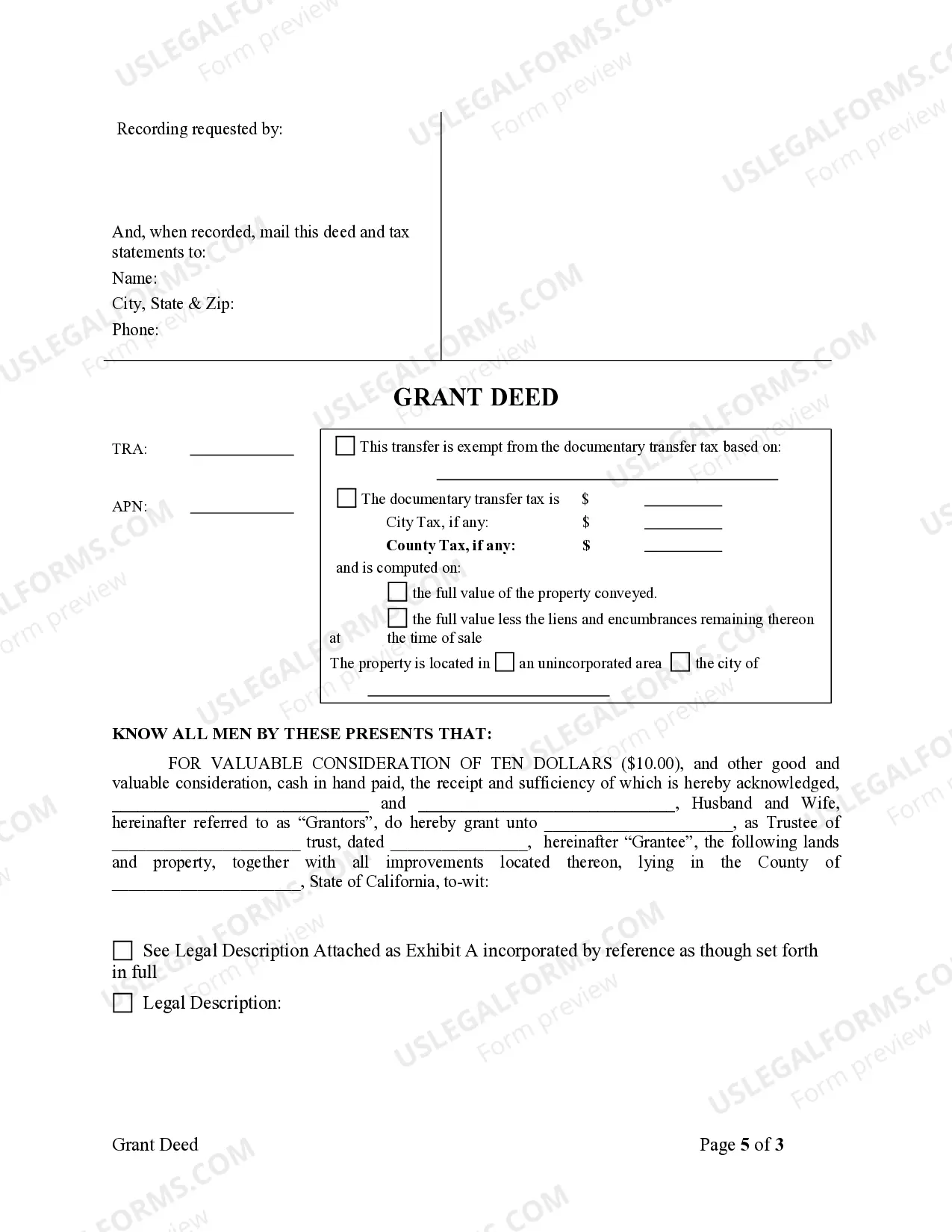
The Grant Deed from Husband and Wife to Trust is a legal document that facilitates the transfer of property from a married couple (the grantors) to a trust (the grantee). This form serves as a Warranty Deed, ensuring that the grantors legally convey and guarantee the property's title, while reserving oil, gas, and mineral rights if applicable. It is designed to meet compliance with state statutory laws, making it an essential tool for couples looking to manage their assets through a trust.
What’s included in this form
- Names and details of the grantors (husband and wife).
- Name and description of the grantee (the trust).
- Specific description of the property being transferred.
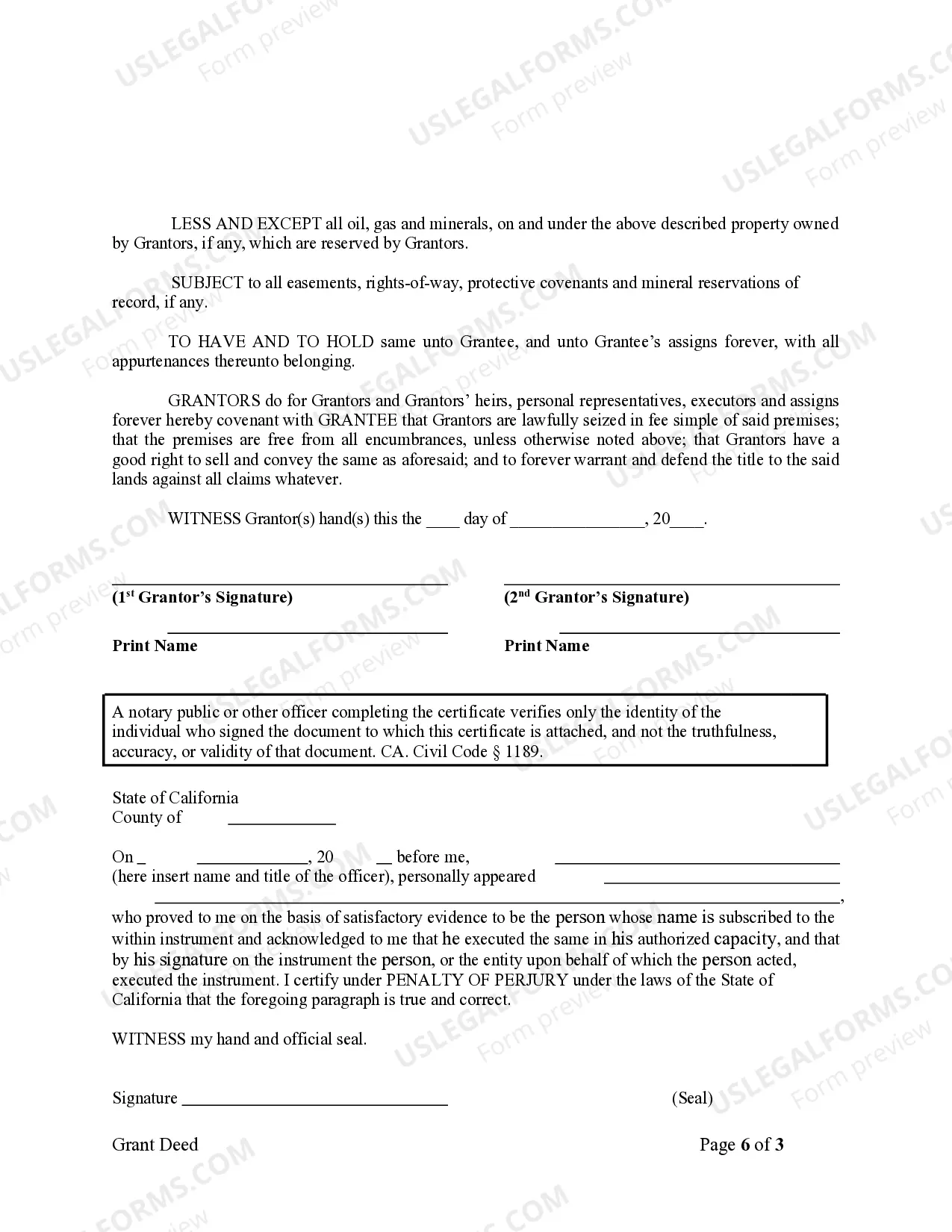
- Statement regarding the reservation of oil, gas, and mineral rights.
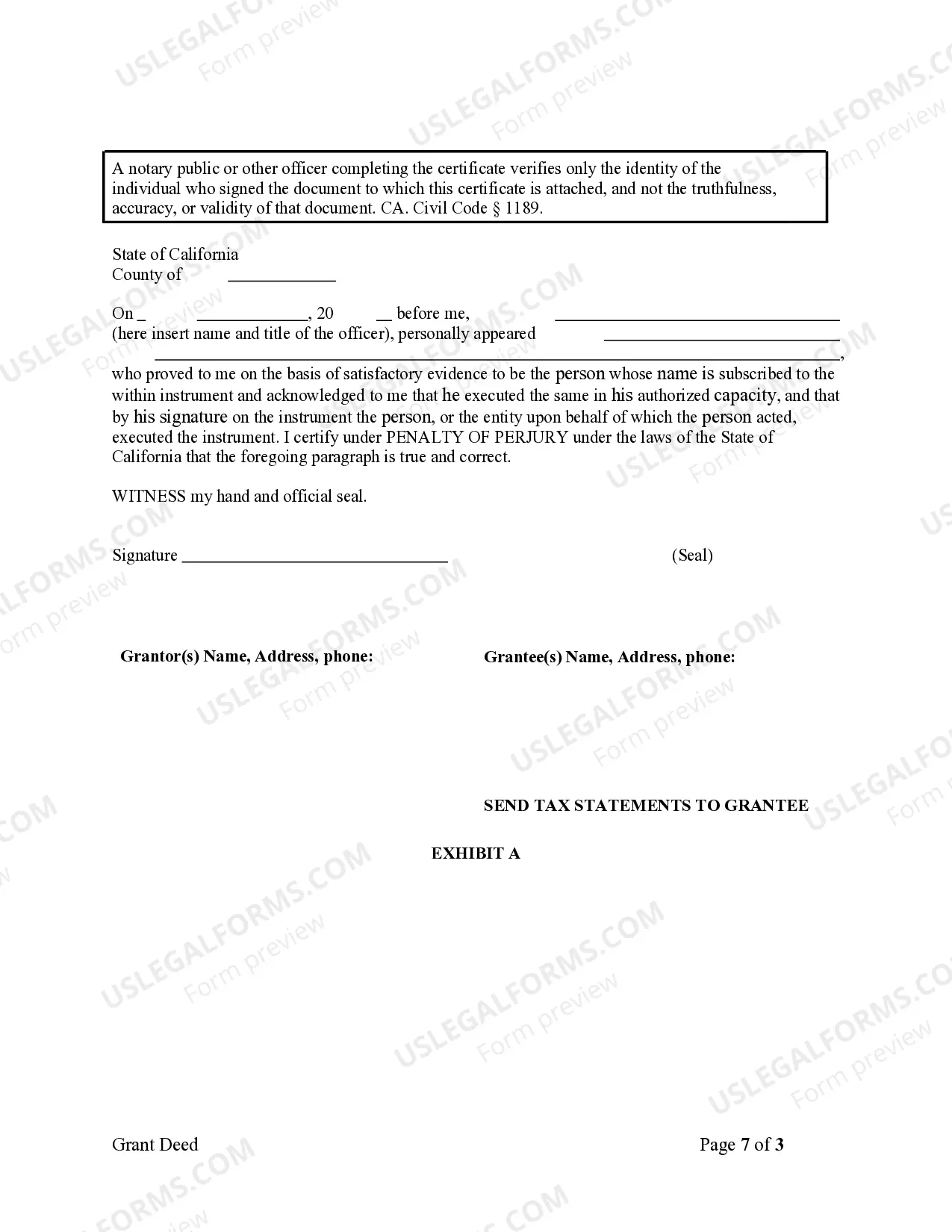
- Signature section for grantors and any required witnesses or notaries.



Situations where this form applies
This form is used when a married couple decides to transfer ownership of their property into a trust for estate planning purposes, asset protection, or tax benefits. It is also suitable in circumstances where the spouses wish to ensure that their property is managed according to the terms set out in the trust document, providing clarity in property management and succession.
Who can use this document
This form is suitable for:
- Married couples looking to transfer property into a trust.
- Couples interested in estate planning to manage their assets.
- Individuals wanting to protect their property from probate.
Completing this form step by step
- Identify the grantors by providing their full names and addresses.
- Specify the grantee by including the name of the trust and any relevant details.
- Provide a complete legal description of the property being transferred.
- Indicate any reservations on rights for oil, gas, and minerals, if applicable.
- Sign the deed in the presence of a notary public if required.
Notarization guidance
This form typically requires notarization to be legally valid. Notarization ensures that the identities of the grantors are verified and that the document is properly executed. US Legal Forms offers integrated online notarization, providing a secure and convenient way to complete this step without the need for travel.
Get your form ready online
Our built-in tools help you complete, sign, share, and store your documents in one place.
Make edits, fill in missing information, and update formatting in US Legal Forms—just like you would in MS Word.
Download a copy, print it, send it by email, or mail it via USPS—whatever works best for your next step.
Sign and collect signatures with our SignNow integration. Send to multiple recipients, set reminders, and more. Go Premium to unlock E-Sign.
If this form requires notarization, complete it online through a secure video call—no need to meet a notary in person or wait for an appointment.
We protect your documents and personal data by following strict security and privacy standards.

Make edits, fill in missing information, and update formatting in US Legal Forms—just like you would in MS Word.

Download a copy, print it, send it by email, or mail it via USPS—whatever works best for your next step.

Sign and collect signatures with our SignNow integration. Send to multiple recipients, set reminders, and more. Go Premium to unlock E-Sign.

If this form requires notarization, complete it online through a secure video call—no need to meet a notary in person or wait for an appointment.

We protect your documents and personal data by following strict security and privacy standards.
Common mistakes
- Failing to properly identify the property being transferred.
- Not including a legal description of the trust.
- Omitting required signatures or notarization.
Benefits of completing this form online
- Convenient access to legal forms that can be downloaded at any time.
- Editability allows for customization according to your specific details.
- Forms are drafted by licensed attorneys to ensure legal compliance.
Looking for another form?
Form popularity
FAQ
To add your spouse to your deed of trust, first, you will need to prepare a new California Grant Deed from Husband and Wife to Trust. Fill in the required information, including both your names and the details of the property. After completing the deed, sign it, have it notarized, and file it with the county recorder’s office. This step ensures that your spouse is legally recognized on the deed as a co-owner.
To fill out a trust transfer deed in California, start by obtaining the correct form for a California Grant Deed from Husband and Wife to Trust. Enter the names of the grantors, which are you and your spouse, followed by the name of the trust receiving the property. Additionally, include a legal description of the property and ensure you sign the deed properly before notarization. Using platforms like USLegalForms can simplify this process by providing templates and guidance.
California uses a deed of trust as a form of security for loans, particularly for real estate transactions. In this arrangement, the borrower conveys the property to a third party, the trustee, who holds it on behalf of the lender. This method simplifies the foreclosure process and protects both the lender and borrower. It's essential to understand this aspect when considering how your California Grant Deed from Husband and Wife to Trust might interact with any existing debts.
The two main types of deeds commonly used to transfer property in California are the grant deed and the warranty deed. The California Grant Deed from Husband and Wife to Trust acts as one of the most reliable methods for this purpose. It offers specific protections and conveys ownership clearly. When selecting a deed, consider your needs and ensure you select one that best suits your objectives.
To transfer a deed to a trust in California, begin by preparing a California Grant Deed from Husband and Wife to Trust. Next, fill out the deed with accurate details about the property and the trust. After signing the deed, file it with the county recorder's office. This process allows for a smooth transfer and ensures that the trust is the legal owner of the property.
The best type of deed often depends on your specific circumstances. For those transferring property from spouses to a trust, a California Grant Deed from Husband and Wife to Trust is a great option. This type of deed provides security and maintains the integrity of the property title. It also helps ensure that the property is used according to your wishes within the trust.
Transferring a deed to trust in California involves a few key steps. First, prepare a California Grant Deed from Husband and Wife to Trust, which serves as the legal document for the transfer. Next, sign the deed in front of a notary public and ensure you include all required information. Finally, file the deed with the county recorder’s office to officially complete the transfer. Utilizing USLegalForms can help streamline this process with clear templates and guidance.
To place your property in a trust, start by drafting a trust document that outlines the terms and conditions. Then, execute a California Grant Deed from Husband and Wife to Trust to formally transfer the property title into the trust. Make sure to record this deed with the county recorder's office to ensure it reflects your intent. For detailed assistance, consider using a platform like USLegalForms to simplify the trust creation process.
While a trust can provide benefits, there are drawbacks to consider. First, transferring your property using a California Grant Deed from Husband and Wife to Trust can incur costs, including legal fees and taxes. Additionally, once in a trust, you may lose certain control over your assets and face complex management responsibilities. Lastly, updating your trust in the future can be cumbersome, requiring extra attention and potential legal intervention.