California Contract for Sale and Purchase of Real Estate with No Broker for Residential Home Sale Agreement
What is this form?
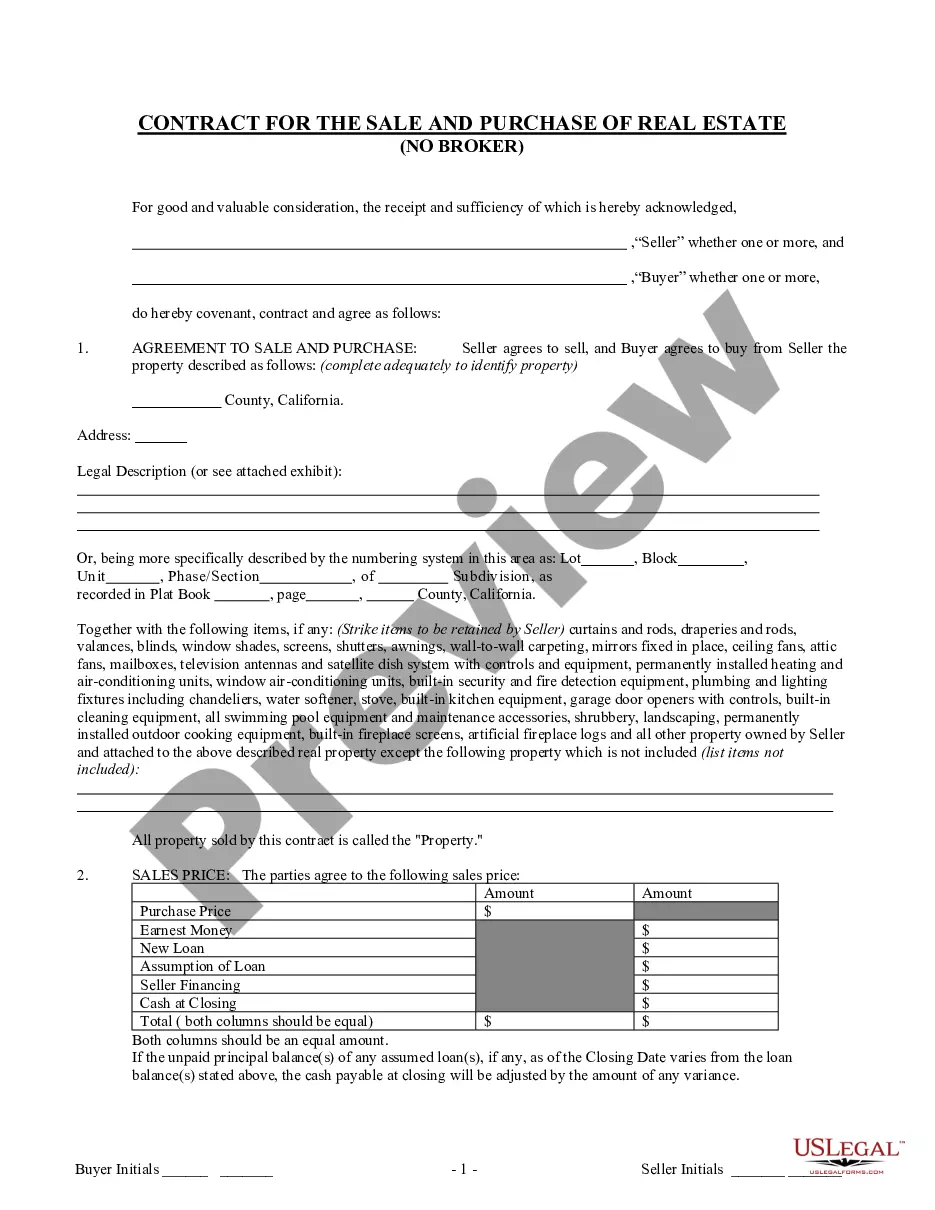
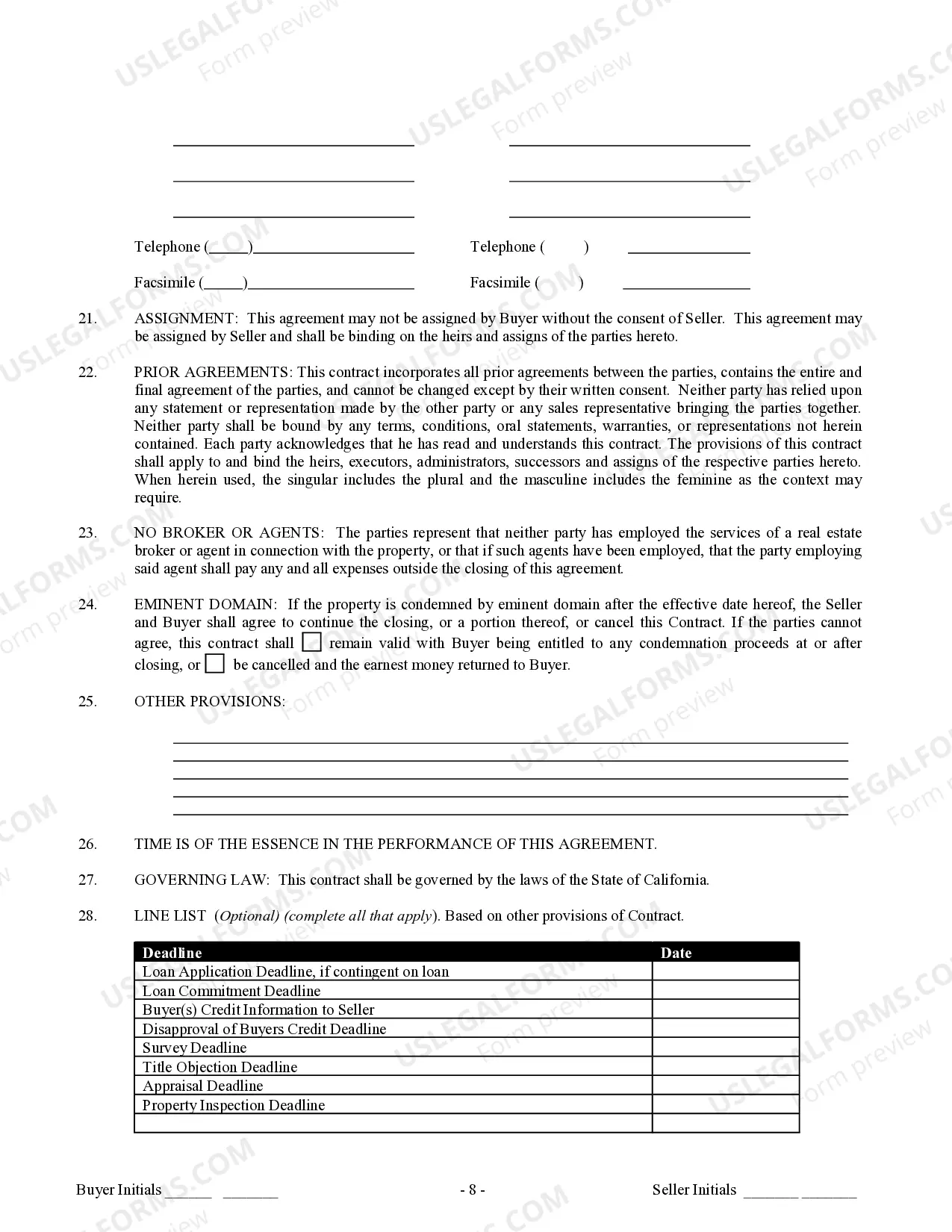
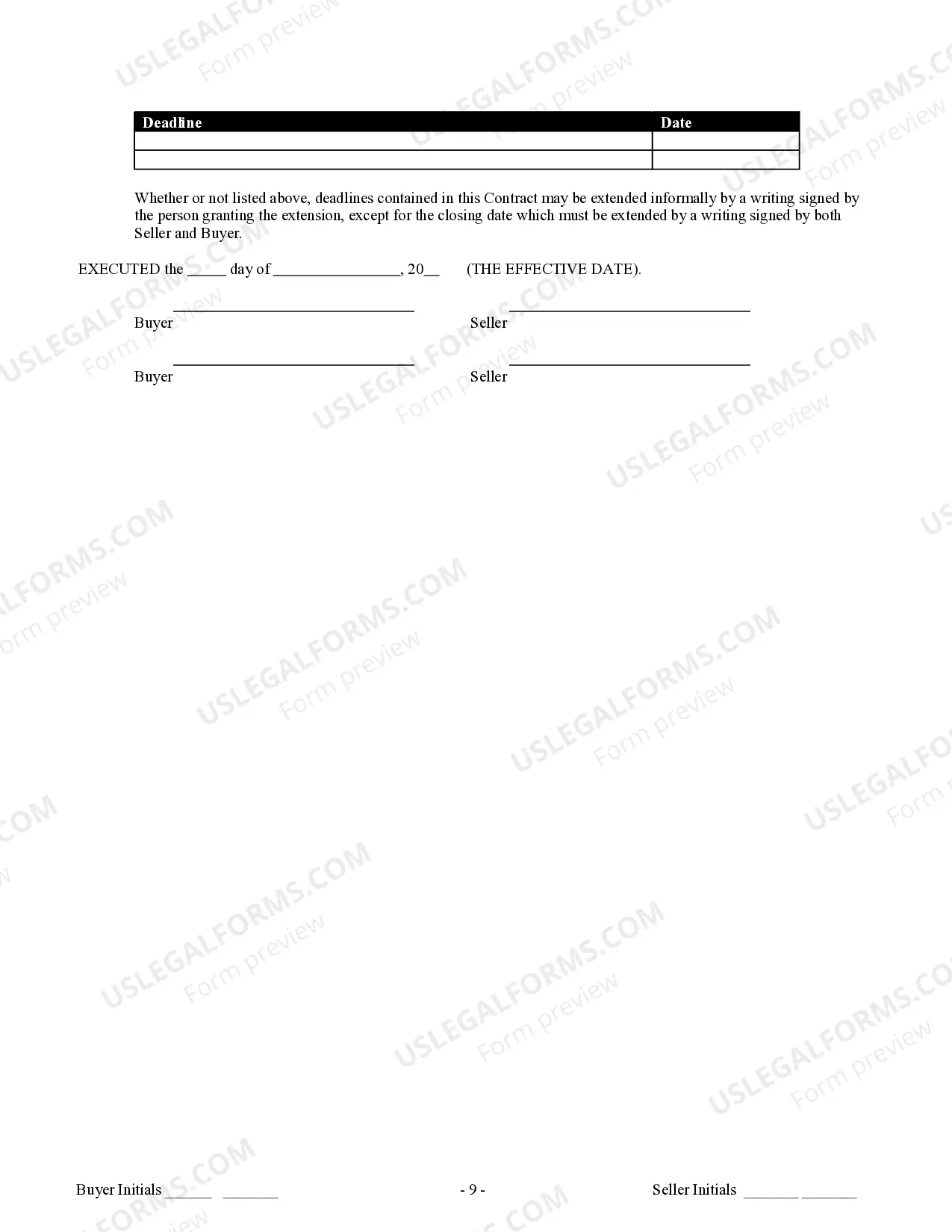
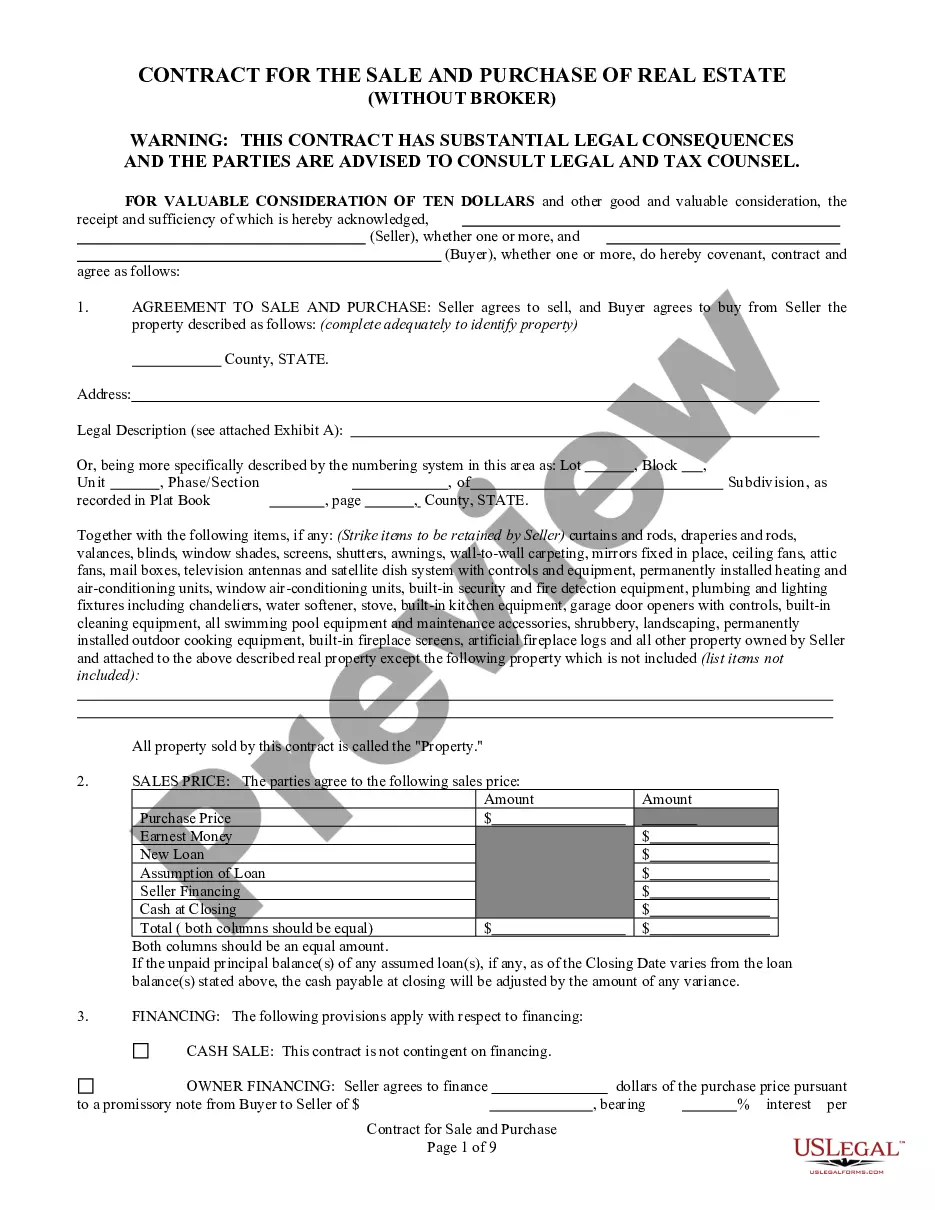
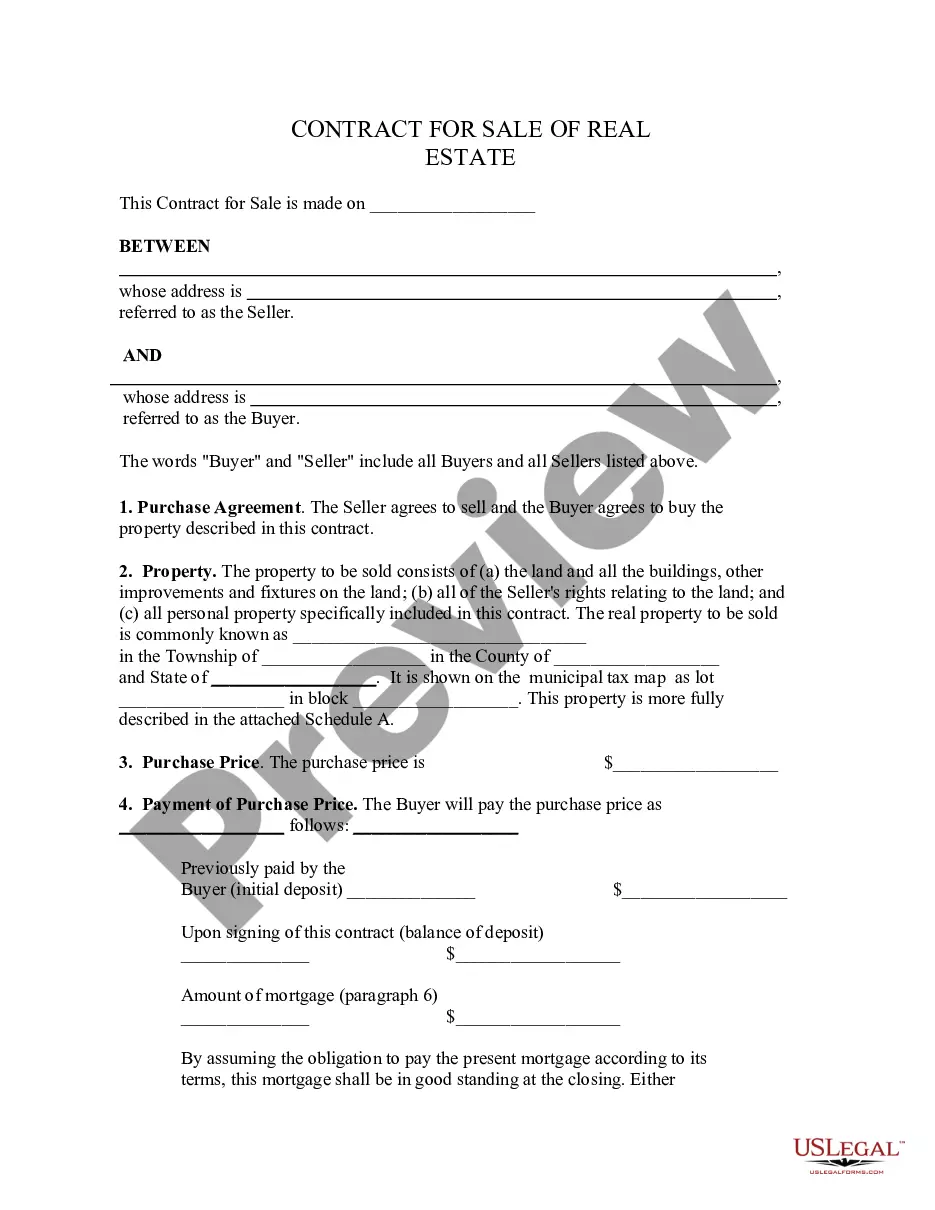
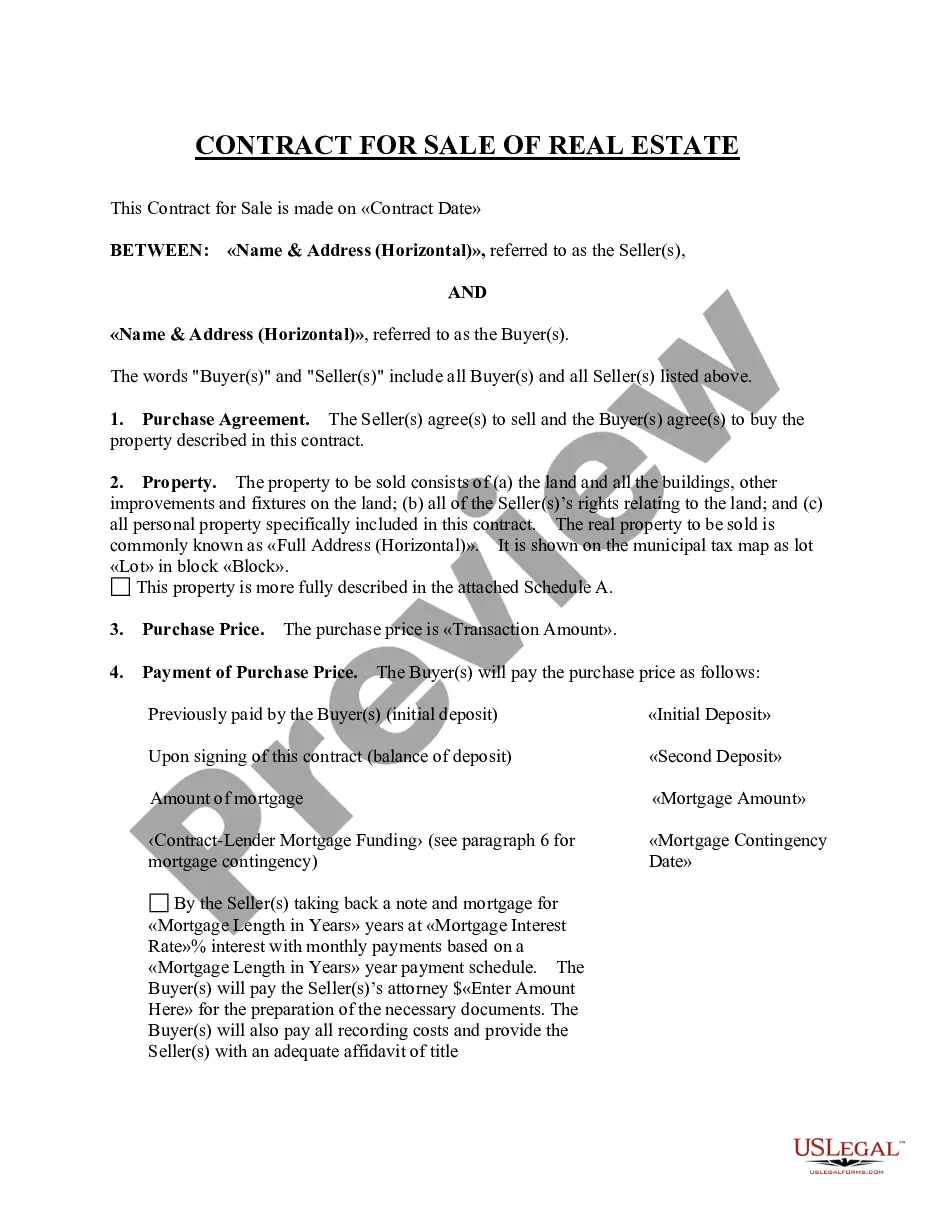
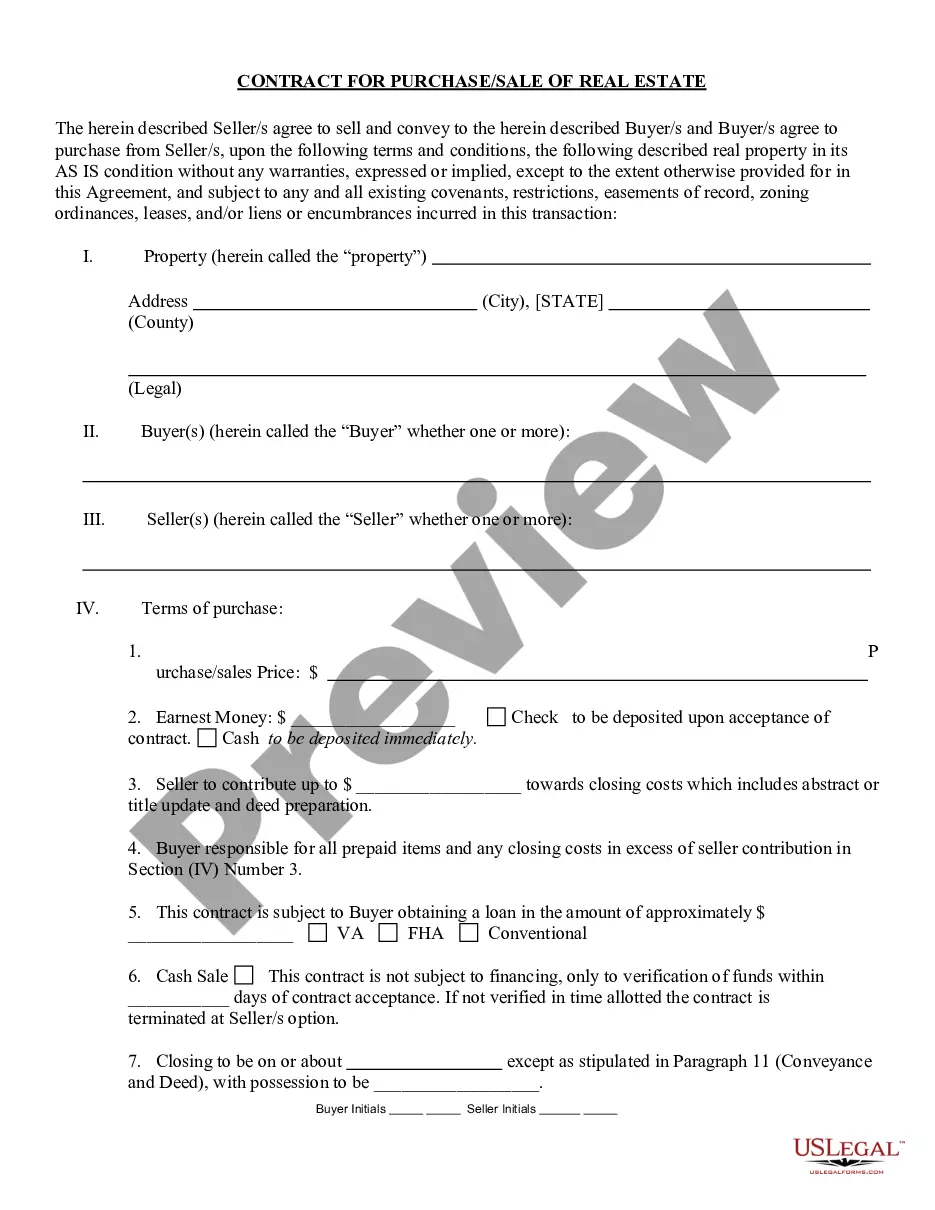
This form is a Contract for the Sale and Purchase of Real Estate with No Broker specifically designed for residential home transactions in California. This legally binding document lays out the terms and conditions under which a property is sold directly between the buyer and the seller, without the involvement of a real estate broker. It includes essential provisions that protect both parties in the sale process.
Key parts of this document
- Identification of the parties involved in the transaction
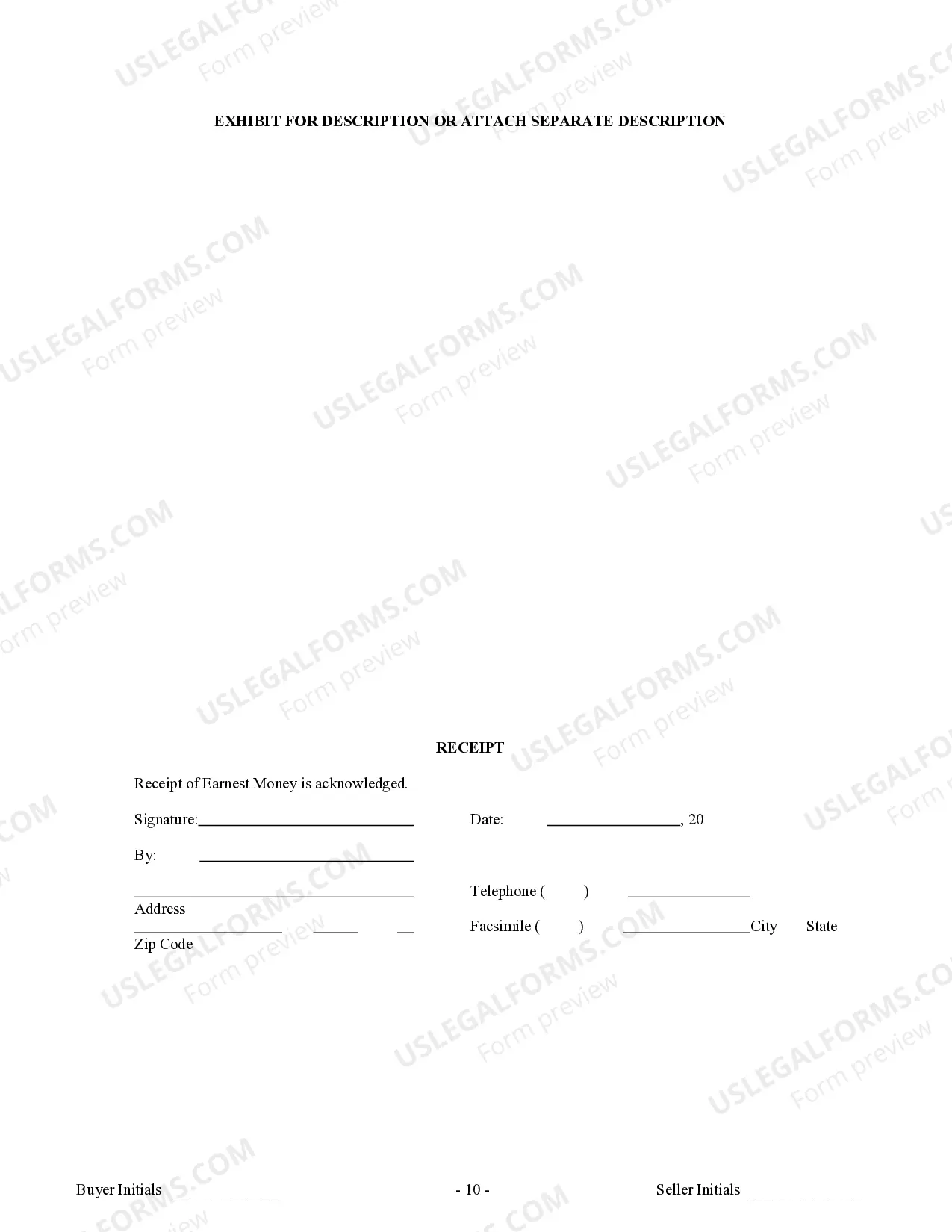
- Detailed description of the property being sold
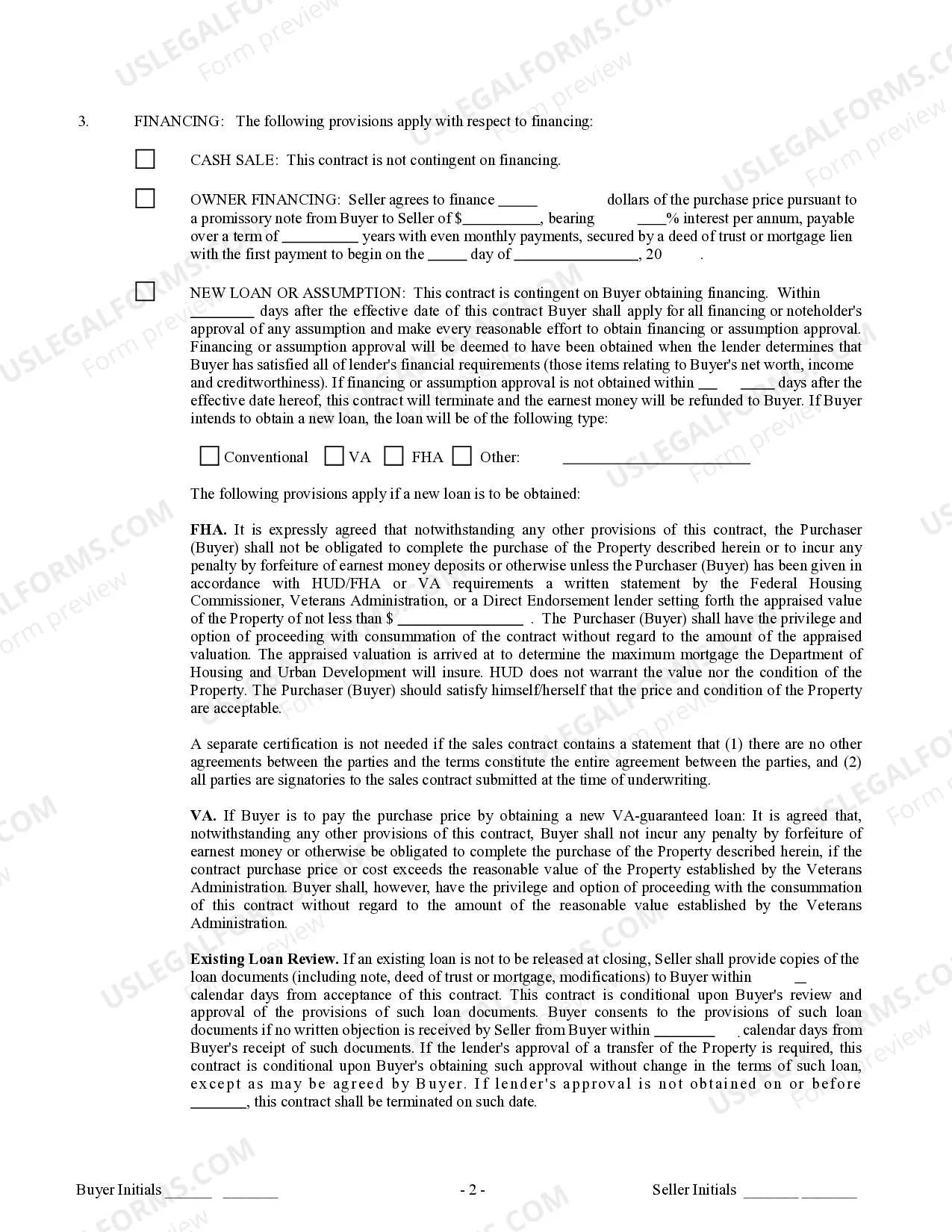
- Financing terms, including cash sales and loan assumptions
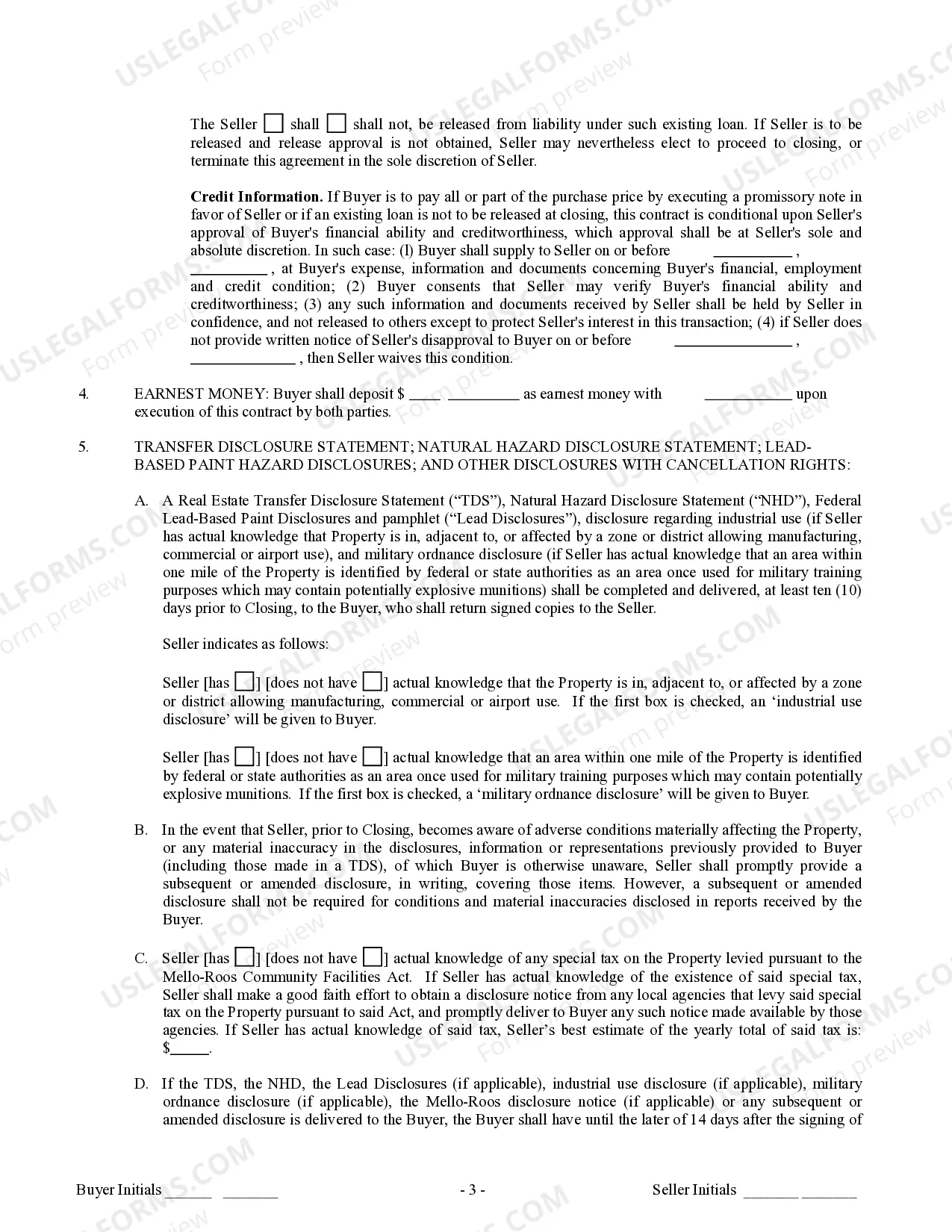
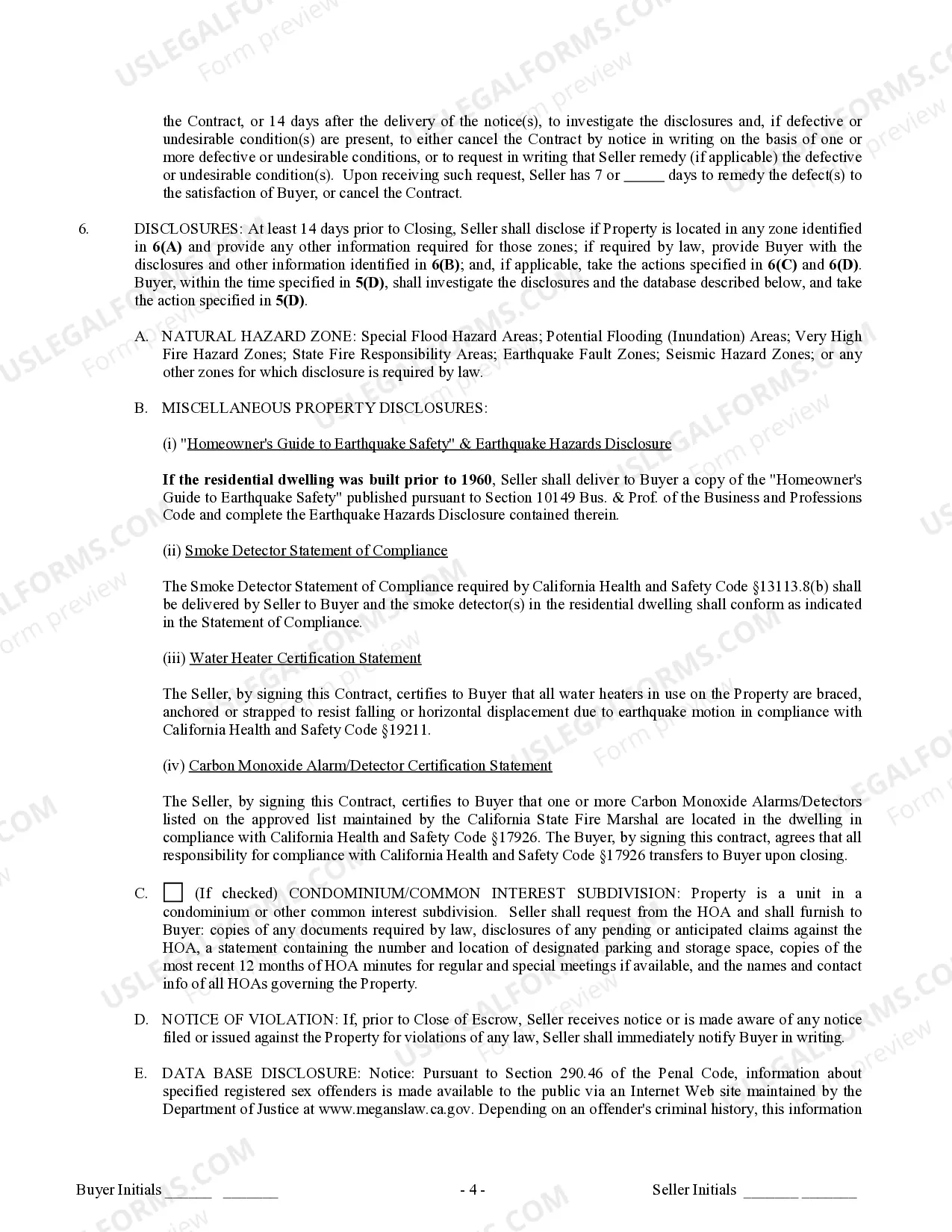
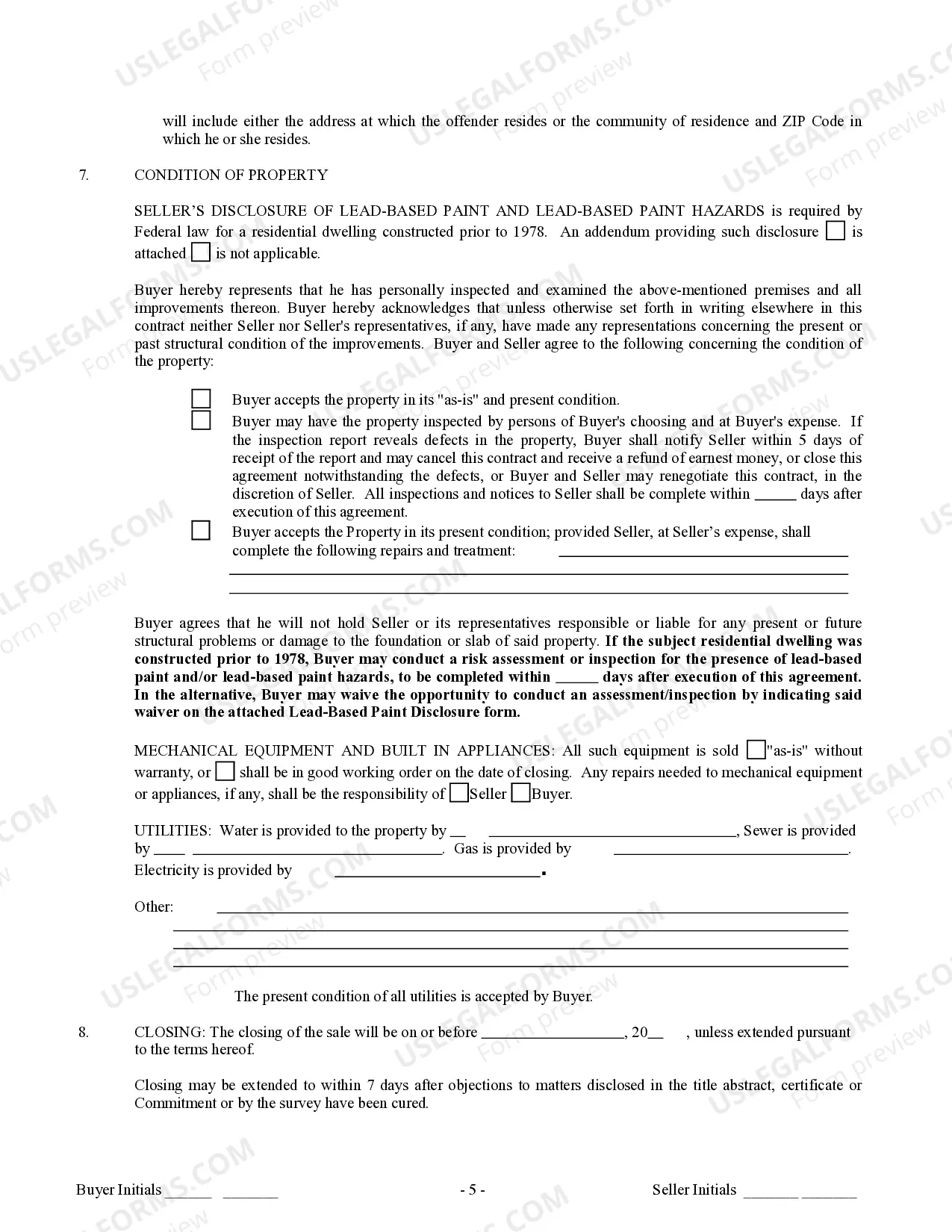
- Disclosure requirements related to property condition, including lead-based paint and natural hazards
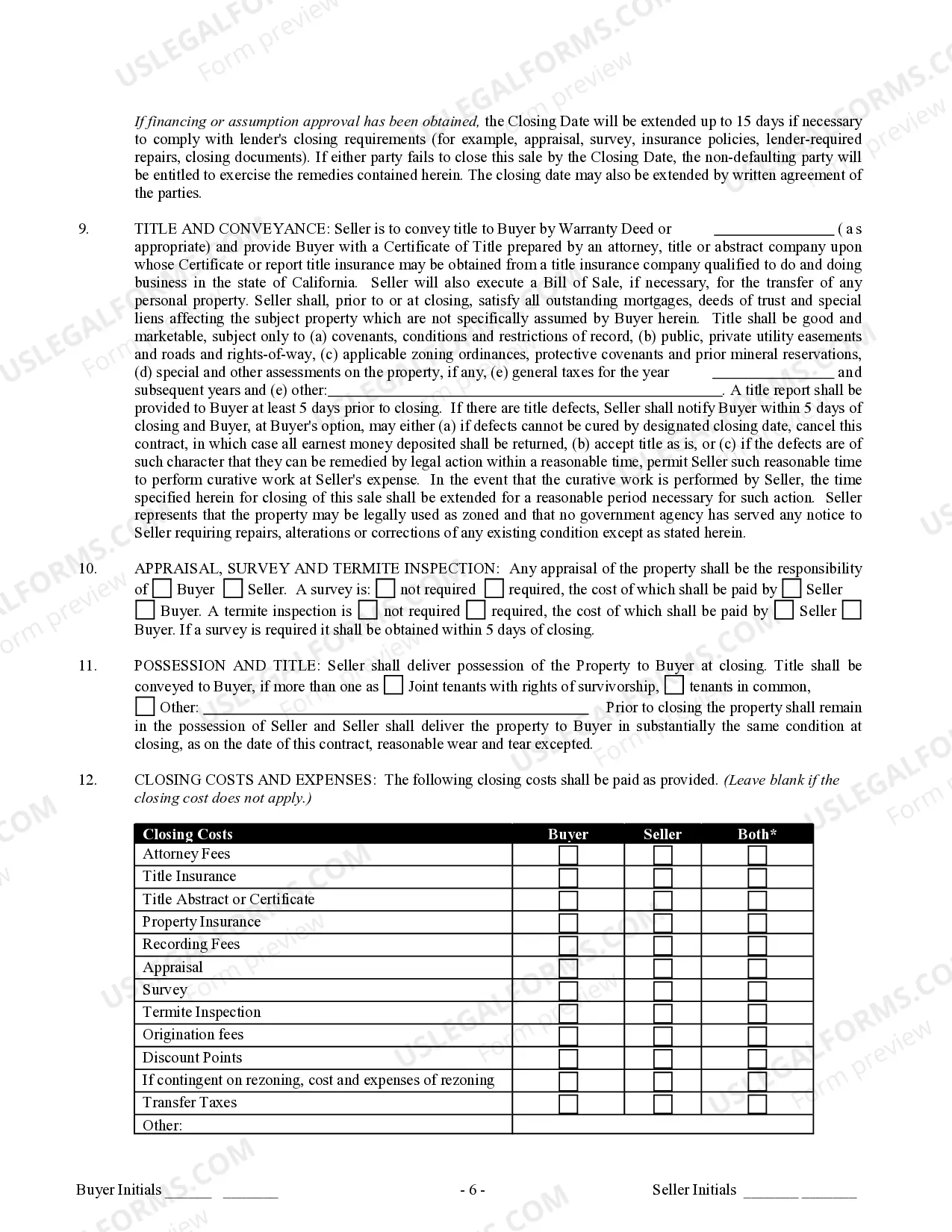
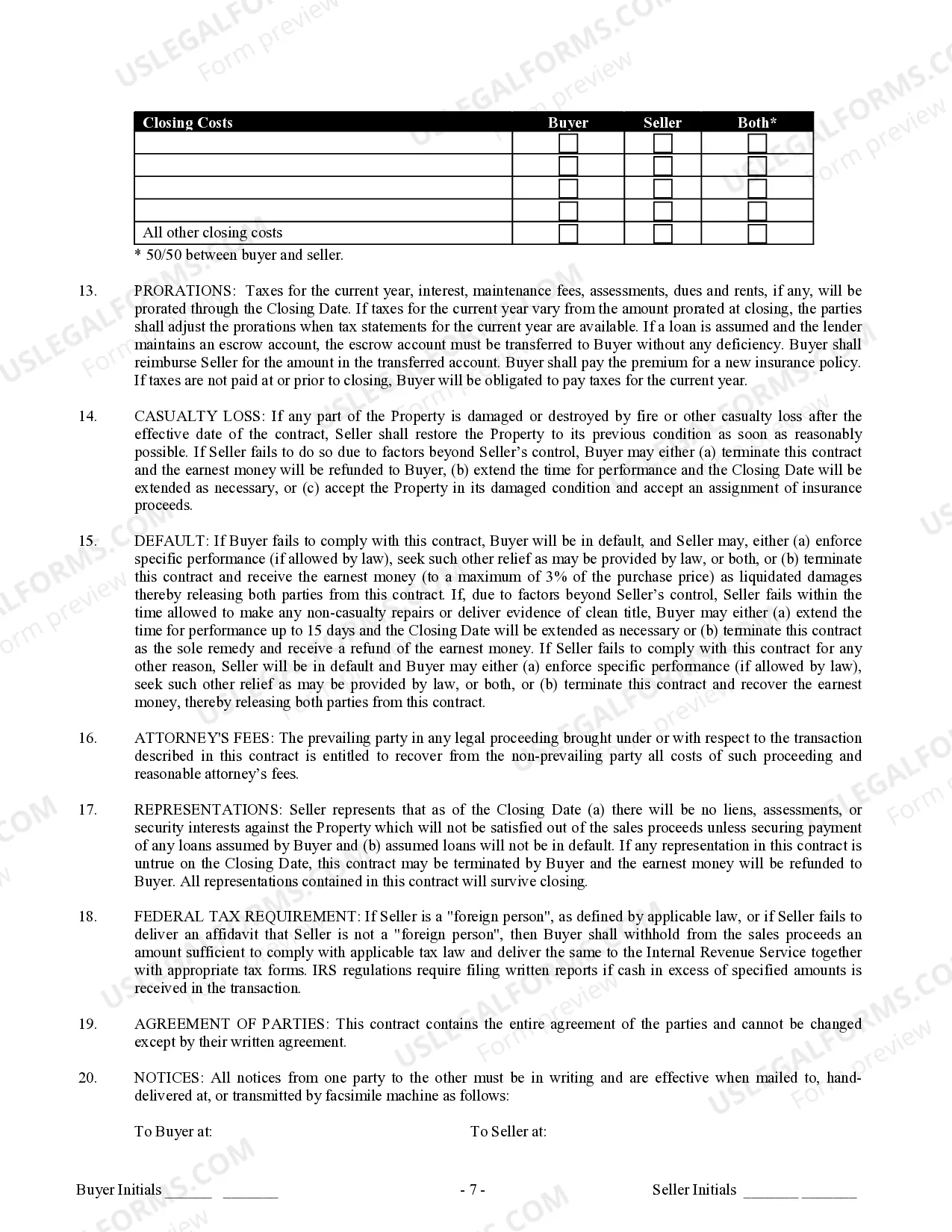
- Provisions regarding closing costs and obligations of both parties
- Conditions for default and remedies available

When to use this form
This form should be used when a residential property is being sold without the assistance of a broker in California. It is suitable for cash transactions or situations where a buyer assumes an existing loan. Utilize this contract when both buyer and seller agree on the sale terms and are prepared to formalize the agreement legally.
Who should use this form
- Homeowners: Individuals looking to sell their residential property without employing a real estate agent.
- Buyers: Prospective homeowners who are purchasing property directly from the seller.
- Investors: Real estate investors acquiring residential properties without broker involvement.
How to prepare this document
- Identify the parties by entering the full names and addresses of the seller and buyer.
- Provide a complete description of the property, including any fixtures included in the sale.
- Specify the financing terms, including whether it is a cash sale or involves loan assumptions.
- Complete all required disclosures regarding property conditions and hazards.
- Sign and date the contract where indicated, ensuring both parties receive a copy of the signed document.
Does this form need to be notarized?
To make this form legally binding, it must be notarized. Our online notarization service, powered by Notarize, lets you verify and sign documents remotely through an encrypted video session.
Get your form ready online
Our built-in tools help you complete, sign, share, and store your documents in one place.
Make edits, fill in missing information, and update formatting in US Legal Forms—just like you would in MS Word.
Download a copy, print it, send it by email, or mail it via USPS—whatever works best for your next step.
Sign and collect signatures with our SignNow integration. Send to multiple recipients, set reminders, and more. Go Premium to unlock E-Sign.
If this form requires notarization, complete it online through a secure video call—no need to meet a notary in person or wait for an appointment.
We protect your documents and personal data by following strict security and privacy standards.
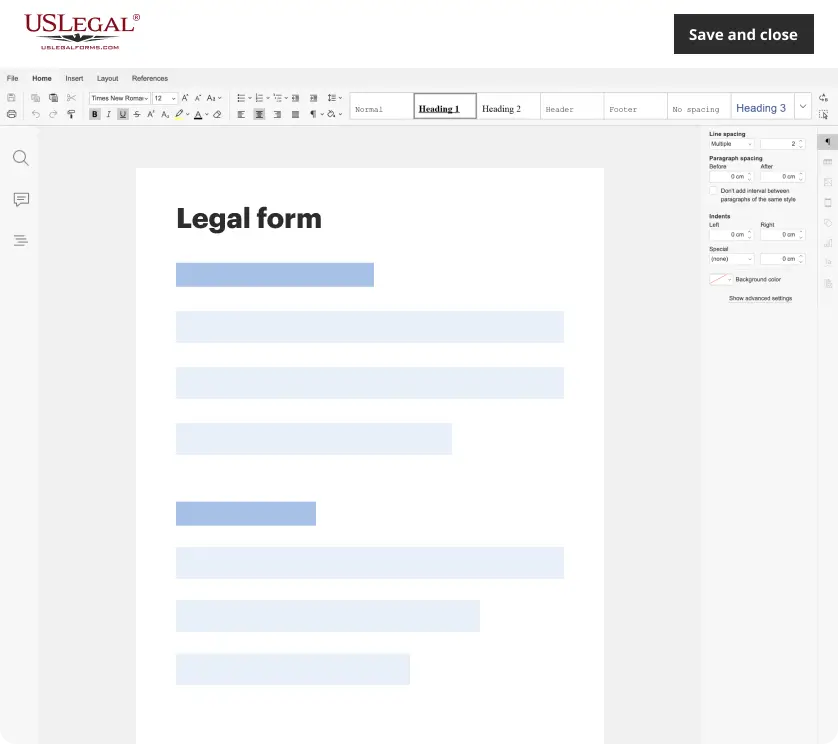
Make edits, fill in missing information, and update formatting in US Legal Forms—just like you would in MS Word.
Download a copy, print it, send it by email, or mail it via USPS—whatever works best for your next step.
Sign and collect signatures with our SignNow integration. Send to multiple recipients, set reminders, and more. Go Premium to unlock E-Sign.
If this form requires notarization, complete it online through a secure video call—no need to meet a notary in person or wait for an appointment.
We protect your documents and personal data by following strict security and privacy standards.
Common mistakes to avoid
- Failing to accurately describe the property and its included fixtures.
- Neglecting to provide required disclosures about property conditions and natural hazards.
- Not addressing financing options clearly, which may lead to disputes later on.
Benefits of using this form online
- Immediate access to expertly drafted legal templates.
- Convenient download and editing capabilities, allowing for quick customization.
- Reliable documents created in compliance with current laws and regulations.
Looking for another form?
Form popularity
FAQ
In some cases, a buyer may try to back out of the contract for reasons clearly not allowed.In California, non-refundable deposits offered as earnest money are typically not valid, but the contract typically describes the seller's retention of the deposit as liquidated damages to enforce this policy.
Does a Real Estate Purchase Agreement have to be notarized in order to be valid? No, this document does not have to be signed by a notary public since it does not get filed with the County Recorder's Office.
A real estate deal can take a turn for the worst if the contract is not carefully written to include all the legal stipulations for both the buyer and seller.You can write your own real estate purchase agreement without paying any money as long as you include certain specifics about your home.
Many states, like California, grant consumers a statutory "cooling off" period, typically three to five days, during which a consumer can cancel a contract for any reason by sending the seller a written cancellation notice.
Can you back out of an accepted offer? The short answer: yes. When you sign a purchase agreement for real estate, you're legally bound to the contract terms, and you'll give the seller an upfront deposit called earnest money.
The identity of the buyer and seller. A description of the property being purchased. The purchase price. The terms as to how and when payment is to be made. The terms as to how, when, and where the goods will be delivered to the purchaser.
Who Prepares The Real Estate Purchase Agreement? Typically, the buyer's agent writes up the purchase agreement. However, unless they are legally licensed to practice law, real estate agents generally can't create their own legal contracts.
Step 1: Apply For A Mortgage. Step 2: Research The Neighborhood. Step 3: Find A Property. Step 4: Ask For A Seller's Disclosure. Step 5: Make An Offer. Step 6: Hire A Lawyer And Home Inspector. Step 7: Negotiate. Step 8: Finalize Home Financing And Closing.
The purchase agreement only serves as a written record of a contractual relationship between the seller and the buyer and does not actually transfer the title or ownership of the property from the seller to the buyer.