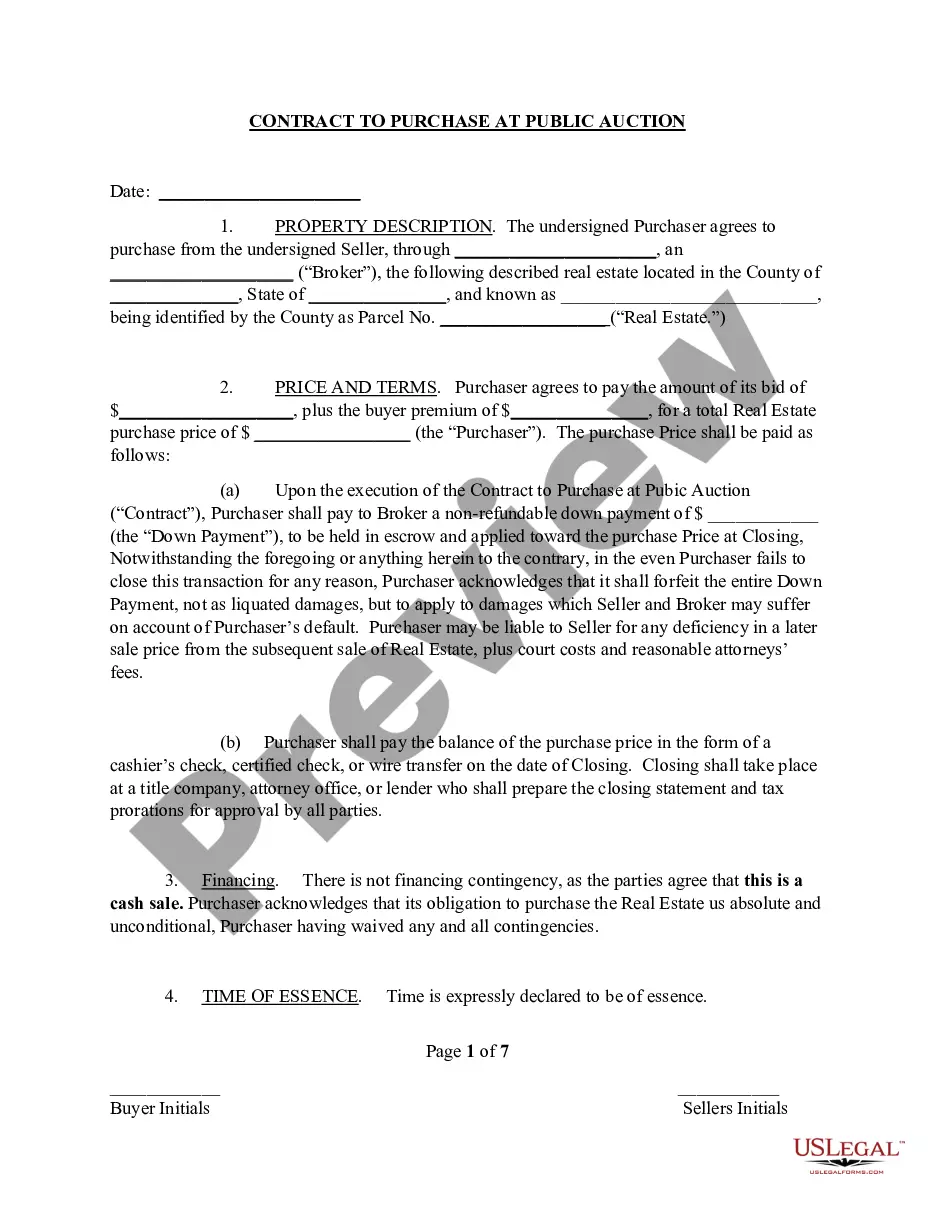
Arizona Agreed Written Termination of Lease by Landlord and Tenant
What this document covers
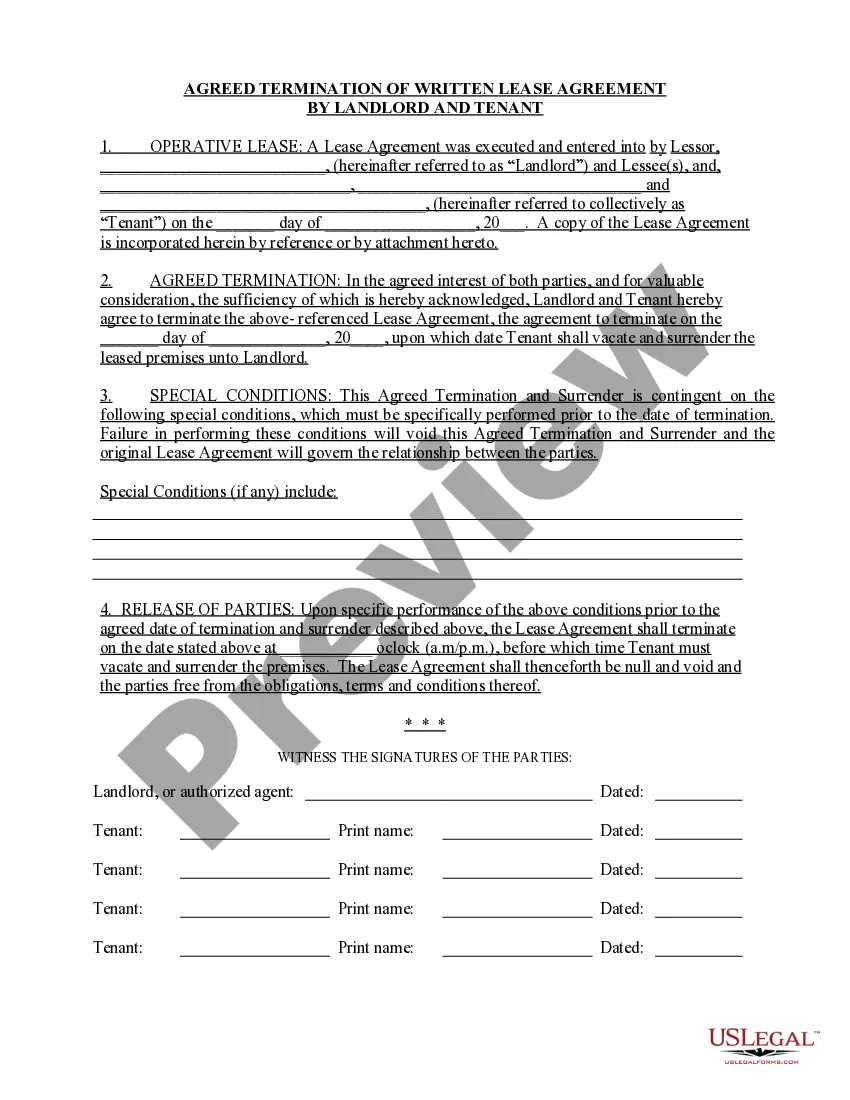
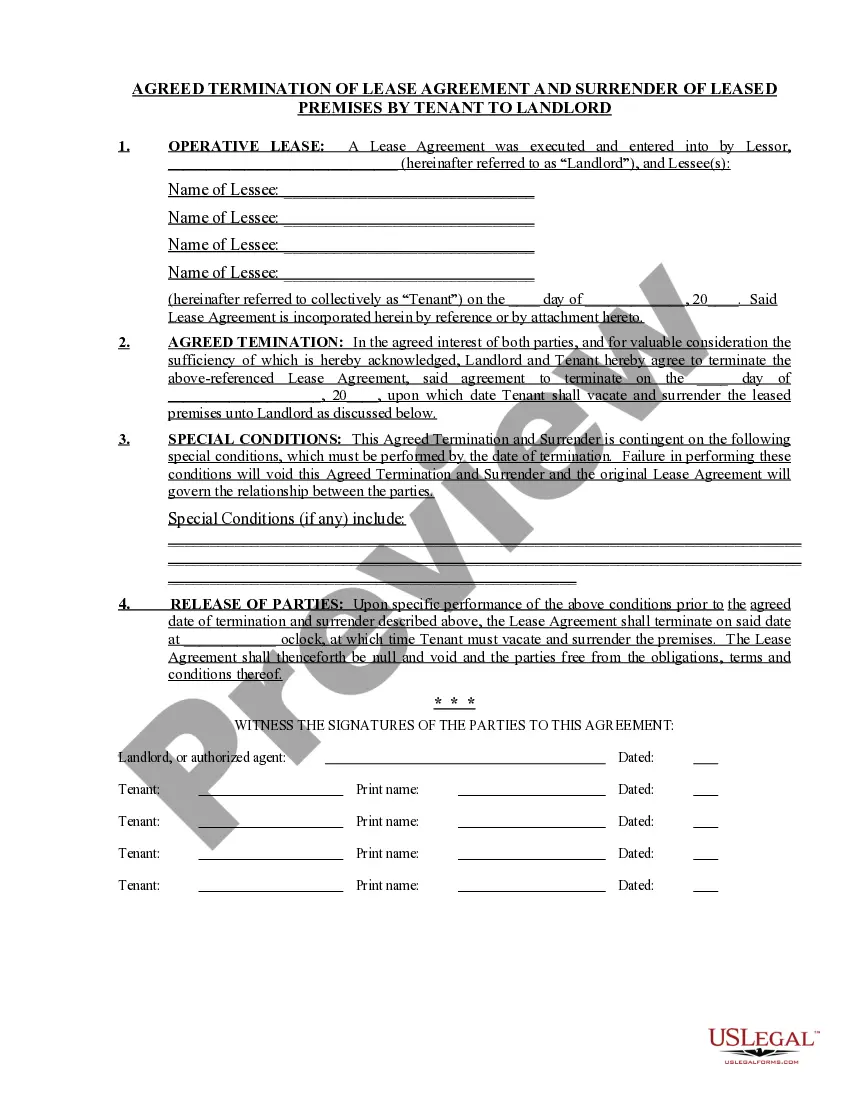
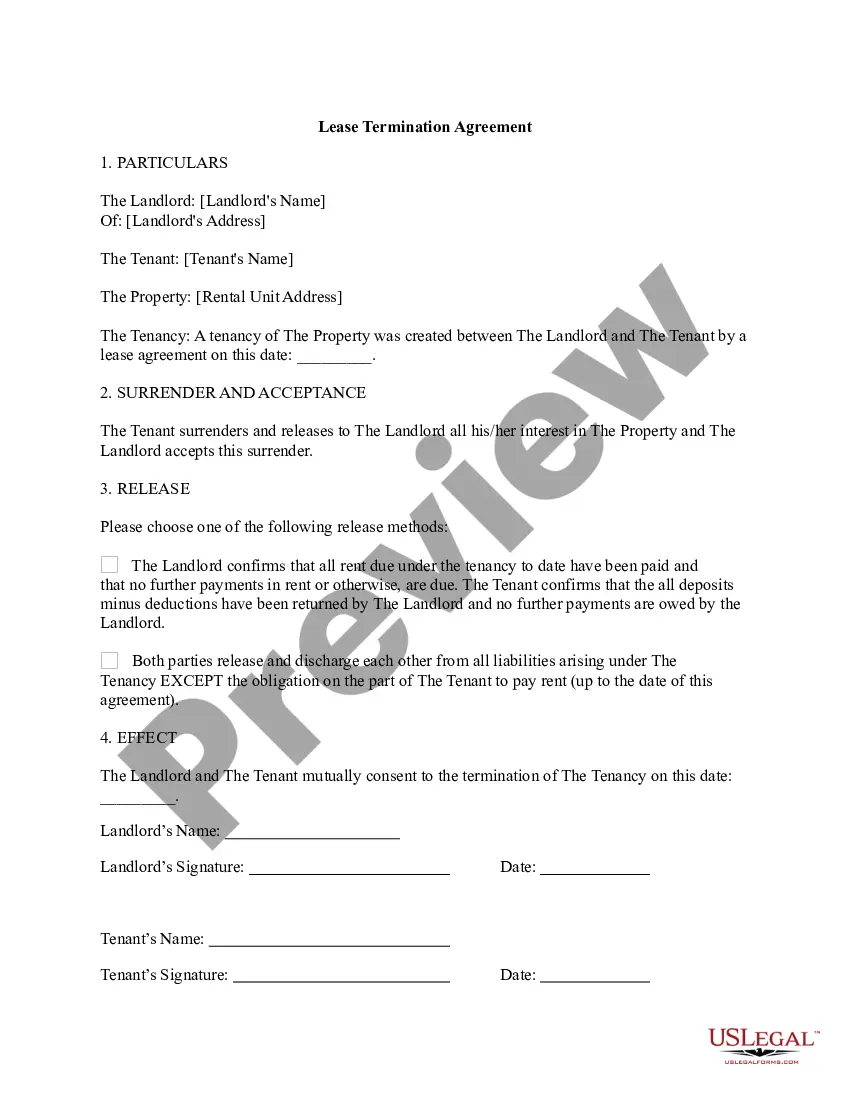
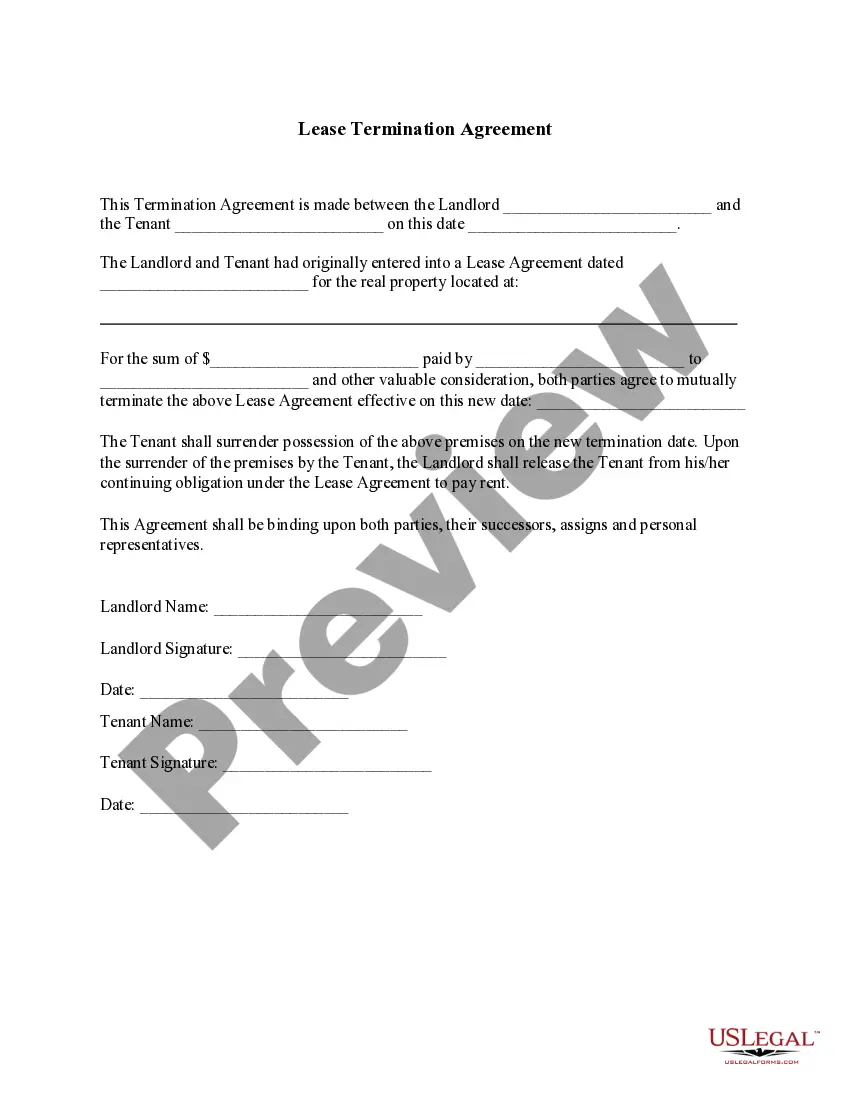
The Agreed Written Termination of Lease by Landlord and Tenant is a legal document that enables both parties to mutually agree on ending a lease. Unlike standard lease termination notices, this form solidifies the agreement between the landlord and tenant, ensuring that both parties are released from future obligations once the premises are surrendered. This form allows for the inclusion of special conditions to tailor the agreement to the unique circumstances surrounding the lease termination.
Key parts of this document
- Identification of the landlord and tenant parties involved in the lease.
- Reference to the original lease agreement being terminated.
- Agreed termination date of the lease, where the tenant must vacate the premises.
- Option to include special conditions that must be fulfilled before termination.
- Release clause absolving both parties of future obligations once conditions are met.
- Signatures of both landlord and tenant to validate the agreement.
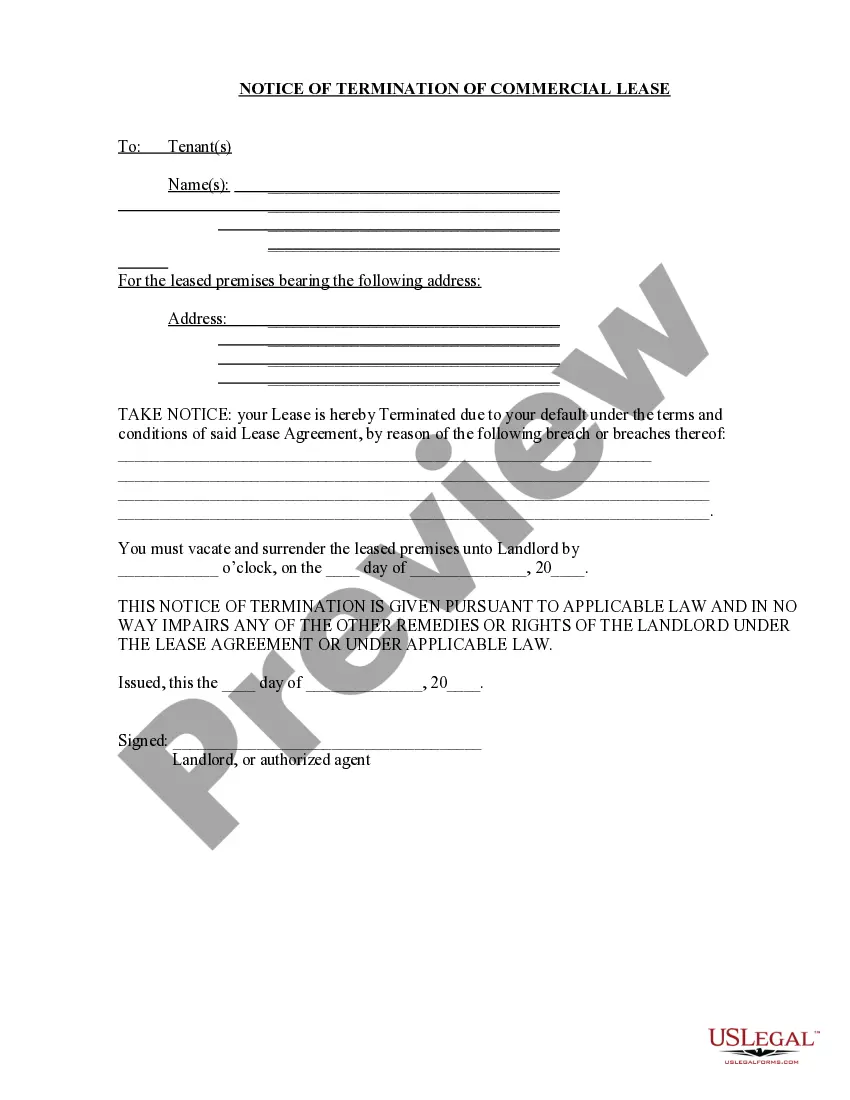

Situations where this form applies
This form is essential when both a landlord and tenant decide to end a lease agreement amicably. Use this form in situations such as when the tenant needs to move out early, when both parties agree to terminate due to unforeseen circumstances, or when the lease term is concluded, and both agree not to extend. It helps clarify expectations and responsibilities, minimizing potential disputes.
Who needs this form
- Landlords wanting to terminate a lease agreement with a tenant.
- Tenants looking to securely conclude their rental agreement.
- Real estate agents acting on behalf of landlords or tenants.
- Property managers facilitating lease terminations.
Instructions for completing this form
- Identify the landlord and tenant names and contact information.
- Refer to the original lease agreement by including its date and pertinent details.
- Specify the agreed termination date and ensure both parties acknowledge it.
- List any special conditions that must be met before the lease is terminated.
- Collect signatures from all parties to validate the agreement and date it appropriately.
Does this document require notarization?
This form does not typically require notarization unless specified by local law. Always check local requirements to ensure compliance. US Legal Forms provides assistance with guidelines tailored to your jurisdiction if needed.
Get your form ready online
Our built-in tools help you complete, sign, share, and store your documents in one place.
Make edits, fill in missing information, and update formatting in US Legal Forms—just like you would in MS Word.
Download a copy, print it, send it by email, or mail it via USPS—whatever works best for your next step.
Sign and collect signatures with our SignNow integration. Send to multiple recipients, set reminders, and more. Go Premium to unlock E-Sign.
If this form requires notarization, complete it online through a secure video call—no need to meet a notary in person or wait for an appointment.
We protect your documents and personal data by following strict security and privacy standards.

Make edits, fill in missing information, and update formatting in US Legal Forms—just like you would in MS Word.

Download a copy, print it, send it by email, or mail it via USPS—whatever works best for your next step.

Sign and collect signatures with our SignNow integration. Send to multiple recipients, set reminders, and more. Go Premium to unlock E-Sign.

If this form requires notarization, complete it online through a secure video call—no need to meet a notary in person or wait for an appointment.

We protect your documents and personal data by following strict security and privacy standards.
Common mistakes
- Failing to include all partiesâ names, which could invalidate the agreement.
- Not explicitly stating the termination date can lead to confusion.
- Overlooking the special conditions or not ensuring they are clearly defined.
- Not signing and dating the form by all parties involved.
Advantages of online completion
- Easy access to downloadable templates specific to your needs.
- Convenient completion without needing to schedule appointments with attorneys.
- Ability to edit and customize the form based on specific conditions.
- Immediate download ensures quick processing of lease terminations.
Legal use & context
- This form serves to provide a clear mutual agreement between the landlord and tenant.
- A properly completed and signed form protects both parties from future disputes regarding the lease.
- This termination document is legally enforceable once conditions are met and signatures are provided.
Looking for another form?



Form popularity
FAQ
In Arizona, landlords are required to provide tenants with written notice before terminating a lease. Typically, this notice period can range from five days for non-payment of rent to 30 days for month-to-month leases. By using the Arizona Agreed Written Termination of Lease by Landlord and Tenant, landlords can clearly communicate the expected move-out date and ensure all parties are aware of the timeline. This approach helps to maintain clarity and legal protection for both parties.
In Arizona, the process for lease termination depends on the specific type of lease and the reasons for termination. Both landlords and tenants can utilize the Arizona Agreed Written Termination of Lease by Landlord and Tenant to formalize their decision to end the lease agreement. The lease must comply with state laws, including proper notice and documentation. It’s important to review local regulations to ensure compliance.
Section 33-1324-a of the Arizona Residential Landlord and Tenant Act outlines the necessary notice requirements for terminating a rental agreement. It clarifies the timelines and specific conditions under which a landlord or tenant may terminate a lease. Familiarizing yourself with this section can aid in understanding the Arizona Agreed Written Termination of Lease by Landlord and Tenant.
To terminate a lease in Arizona, start by reviewing your lease terms for specific conditions. Then, draft a clear notice following the guidelines. If you prefer, you can use platforms like uslegalforms for streamlined templates that comply with the Arizona Agreed Written Termination of Lease by Landlord and Tenant, ensuring accuracy.
The most common way for a lease to terminate is by reaching the end of its term. However, tenants and landlords can mutually agree to terminate the lease early. Utilizing the Arizona Agreed Written Termination of Lease by Landlord and Tenant helps both parties document their agreement correctly.
In Arizona, tenants typically must provide a 60-day notice for month-to-month leases. However, this requirement varies based on lease terms. If your lease specifies a shorter notice, then that becomes applicable, but adhering to the Arizona Agreed Written Termination of Lease by Landlord and Tenant is best for clarity.
Commonly accepted excuses for breaking a lease include a job relocation, significant health issues, or unsafe living conditions. Choosing a legitimate reason strengthens your position when negotiating with your landlord. Always aim for an Arizona Agreed Written Termination of Lease by Landlord and Tenant to formalize the end of your rental agreement.
A 30 day termination notice in Arizona informs the landlord or tenant of the intent to end a lease with 30 days' notice. This notice is required under certain lease conditions and allows both parties to prepare for the lease conclusion. It's an essential part of the Arizona Agreed Written Termination of Lease by Landlord and Tenant, ensuring smooth communication and compliance.
Writing a letter of lease termination requires clarity and precision. Begin with your name, the tenant's name, the property address, and the date of the letter. State your intention to terminate the lease, refer to the Arizona Agreed Written Termination of Lease by Landlord and Tenant, and mention the effective date of termination. Finally, sign the letter to formalize the request.
In Arizona, the ability to back out of a lease depends on the terms agreed upon in the lease itself. There is no standard grace period once you have signed a lease, so it's best to review your contract. If both parties agree, you can create an Arizona Agreed Written Termination of Lease by Landlord and Tenant, allowing for a mutual exit plan, thus ensuring a smooth process.