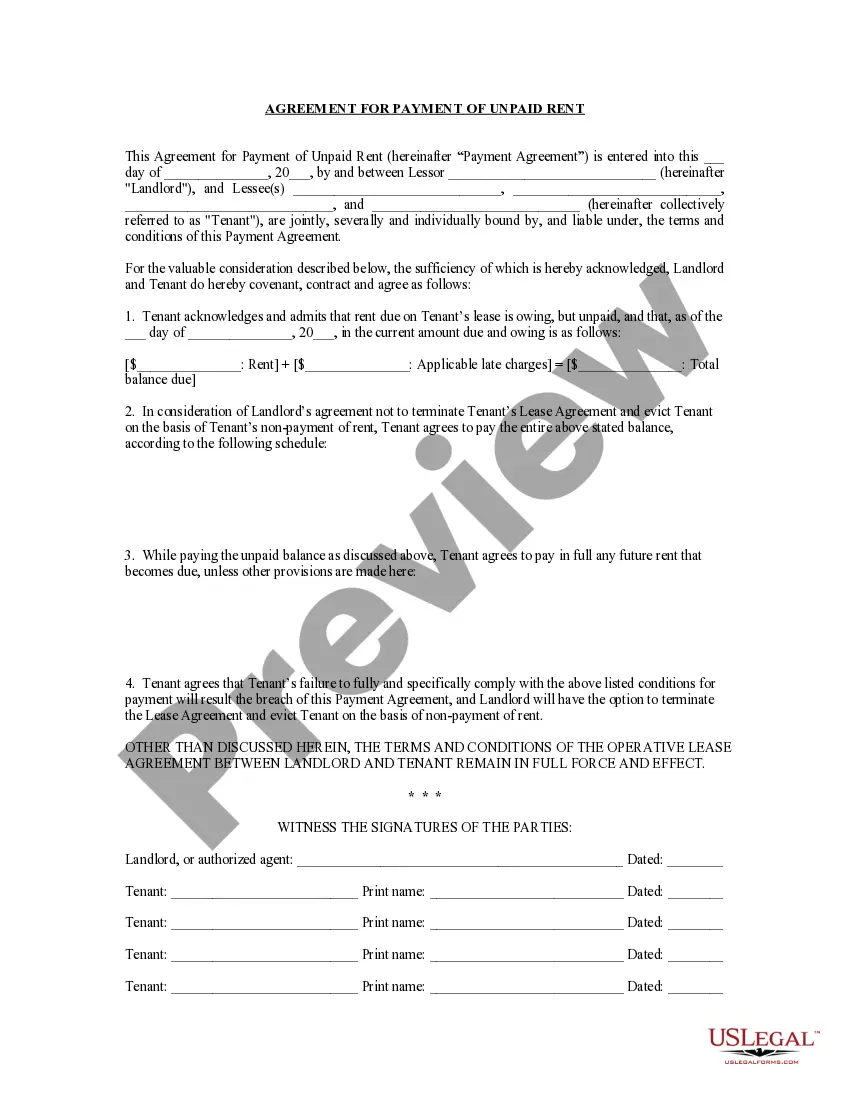
Arkansas Agreement for Payment of Unpaid Rent
What this document covers
The Agreement for Payment of Unpaid Rent is a legal document between a landlord and tenant. It outlines the terms under which a tenant can repay overdue rent, helping to avoid eviction. Unlike regular rent payment agreements, this form specifically addresses arrears and provides a structured payment plan that aligns with state laws to protect both parties' interests.
Main sections of this form
- Identification of the landlord (Lessor) and tenant (Lessee) with their respective names.
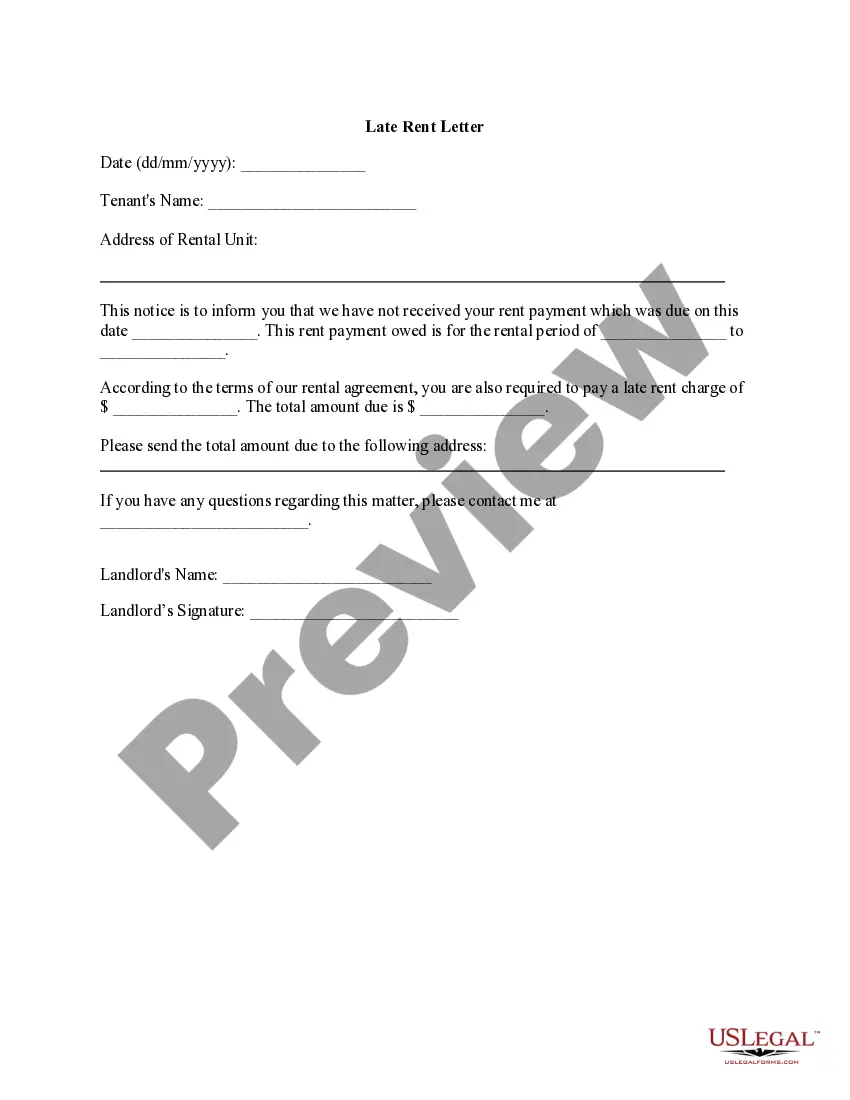
- Statements regarding past due rent, including the total amount and any applicable late charges.
- Commitment from the tenant acknowledging the unpaid rent and agreeing to a payment plan.
- Retaining the original lease agreement's terms while modifying payment obligations.
- Signatures of all parties involved, with dates for validation and acknowledgment.
When this form is needed
This form should be used when a tenant is behind on rent and wishes to establish a formal agreement with their landlord to pay the overdue amount. It is suitable for situations where both parties want to avoid eviction, providing a clear timeline and plan for payment. If a tenant is facing financial difficulties but is committed to making payments to settle their debts, this agreement is an effective solution.
Who needs this form
- Landlords who need to formalize a repayment plan for past due rent.
- Tenants who are unable to pay rent on time but want to avoid eviction.
- Property managers needing to handle overdue rent payments legally.
- Any parties involved in a lease agreement who wish to clarify payment arrangements.
How to complete this form
- Identify the date the agreement is entered into.
- Fill in the names of the landlord and the tenants involved.
- Specify the amount of overdue rent and any applicable late fees.
- Clearly outline the payment terms and conditions agreed upon by both parties.
- Ensure all parties sign and date the agreement, confirming their commitment.
Notarization requirements for this form
In most cases, this form does not require notarization. However, some jurisdictions or signing circumstances might. US Legal Forms offers online notarization powered by Notarize, accessible 24/7 for a quick, remote process.
Get your form ready online
Our built-in tools help you complete, sign, share, and store your documents in one place.
Make edits, fill in missing information, and update formatting in US Legal Forms—just like you would in MS Word.
Download a copy, print it, send it by email, or mail it via USPS—whatever works best for your next step.
Sign and collect signatures with our SignNow integration. Send to multiple recipients, set reminders, and more. Go Premium to unlock E-Sign.
If this form requires notarization, complete it online through a secure video call—no need to meet a notary in person or wait for an appointment.
We protect your documents and personal data by following strict security and privacy standards.

Make edits, fill in missing information, and update formatting in US Legal Forms—just like you would in MS Word.

Download a copy, print it, send it by email, or mail it via USPS—whatever works best for your next step.

Sign and collect signatures with our SignNow integration. Send to multiple recipients, set reminders, and more. Go Premium to unlock E-Sign.

If this form requires notarization, complete it online through a secure video call—no need to meet a notary in person or wait for an appointment.

We protect your documents and personal data by following strict security and privacy standards.
Avoid these common issues
- Failing to include all tenant names, which can create legal complications.
- Not specifying the exact amounts of unpaid rent and fees.
- Omitting signatures or dates, which are critical for the agreement's validity.
- Neglecting to keep a copy of the signed agreement for future reference.
Benefits of completing this form online
- Convenience of downloading and filling out the form at any time.
- Ability to customize the agreement according to specific terms and needs.
- Access to forms prepared by licensed attorneys, ensuring legal compliance.
- Time-saving compared to traditional methods of obtaining legal documents.
Looking for another form?
Form popularity
FAQ
While there is no specific limit on how long you can be late with rent in Arkansas, actions can be initiated after just five days of non-payment. After that point, your landlord may start the eviction process. To protect yourself and maintain a positive relationship with your landlord, consider establishing a formal agreement, like the Arkansas Agreement for Payment of Unpaid Rent, which outlines your repayment terms clearly.
In Arkansas, landlords can begin eviction proceedings if a tenant is more than five days late on rent. While it depends on the terms of your lease, being proactive about your payment can prevent such measures. Utilizing an Arkansas Agreement for Payment of Unpaid Rent can establish a clear payment plan and help you avoid potential eviction. It’s always better to keep communication open with your landlord.
Recently, Arkansas has implemented new laws aimed at protecting renters' rights. This includes regulations that enhance transparency in lease agreements and increase landlord responsibilities. Familiarizing yourself with these changes can help you navigate your rental situation more effectively. Tools like the Arkansas Agreement for Payment of Unpaid Rent can assist you in aligning with these new legal standards.
Yes, you can sue for unpaid rent even if you do not have a formal lease. The law recognizes verbal agreements and implied contracts, particularly in rental situations. An Arkansas Agreement for Payment of Unpaid Rent can be beneficial in documenting your agreement and providing legitimate proof if a dispute arises. Using legal resources can strengthen your position in such cases.
In Arkansas, there is generally no mandated grace period for rent payments. However, landlords may offer a grace period as part of the lease agreement. It is essential to understand the terms of your lease to determine if a grace period is available. Using an Arkansas Agreement for Payment of Unpaid Rent can help clarify these terms and ensure you are protected.
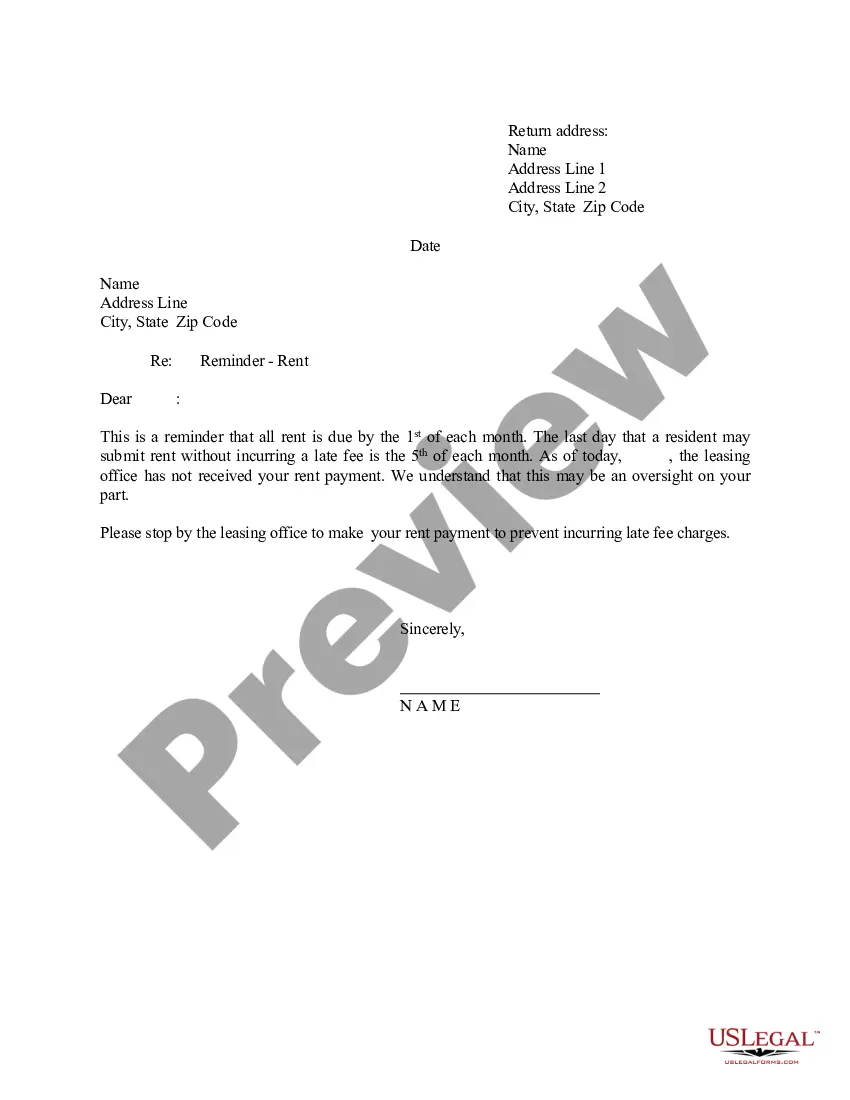
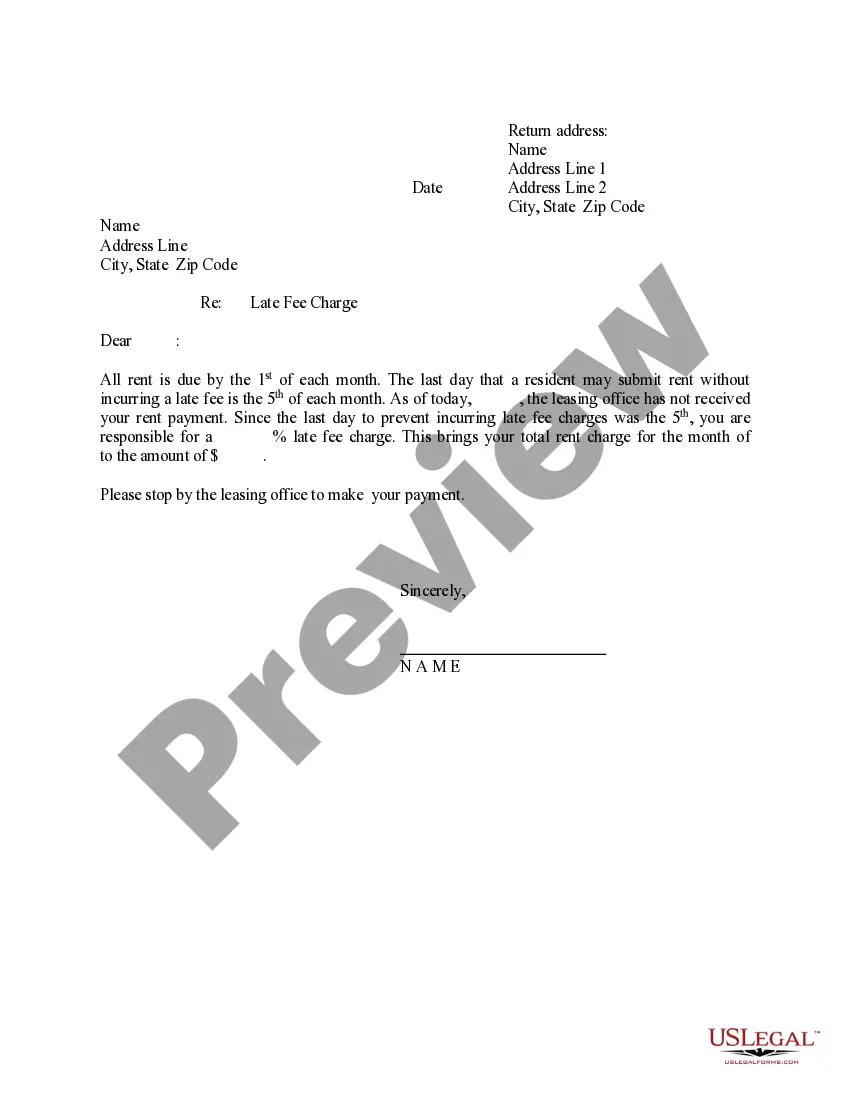
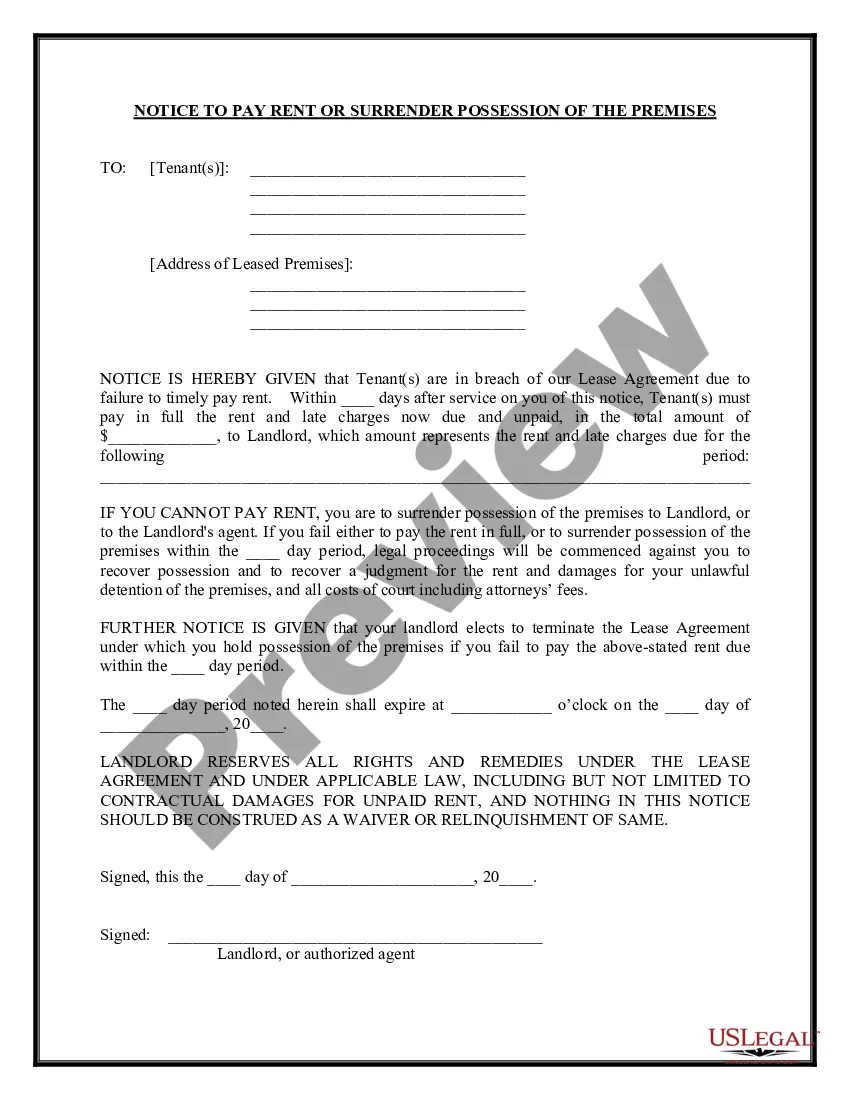
When writing a demand letter for non-payment, it's essential to include all relevant details such as the date of service, the amount owed, and any supporting agreements, like the Arkansas Agreement for Payment of Unpaid Rent. Clearly specify the action you expect the recipient to take, such as making the payment by a certain date. Also, detail the possible legal actions that may follow if the payment is not made. This clarity can motivate prompt compliance.
Begin your demand letter for unpaid rent by clearly stating who you are, the property address, and the amount due. Mention the Arkansas Agreement for Payment of Unpaid Rent as part of your reference to support your claim. Include specific details about previous communications regarding the payment, and provide a deadline for resolving the matter. This structure helps ensure your letter is clear and effective.
To write a strong demand payment letter, start with a clear subject line and a formal greeting. State the outstanding amount, reference the Arkansas Agreement for Payment of Unpaid Rent, and outline the consequences of not paying. Be direct but professional in your tone, and include a deadline for payment to encourage prompt action. This approach not only conveys urgency but also maintains professionalism.
A rent demand letter is a formal request for payment of overdue rent. An example might include a statement that specifies the amount owed, the due date, and any penalties for late payment. Including a reminder about the Arkansas Agreement for Payment of Unpaid Rent can strengthen your case. This letter serves as documentation and should be delivered through a method that provides proof of receipt.
While you can create a rental agreement without a lawyer, consulting one for the Arkansas Agreement for Payment of Unpaid Rent can provide peace of mind. A lawyer can help ensure that the agreement complies with state laws and protects your rights. This step can be crucial, especially if you are unsure about the legal requirements in Arkansas. Overall, having professional guidance can prevent potential disputes in the future.