Arkansas Letter from Landlord to Tenant as Notice of Abandoned Personal Property
What this document covers
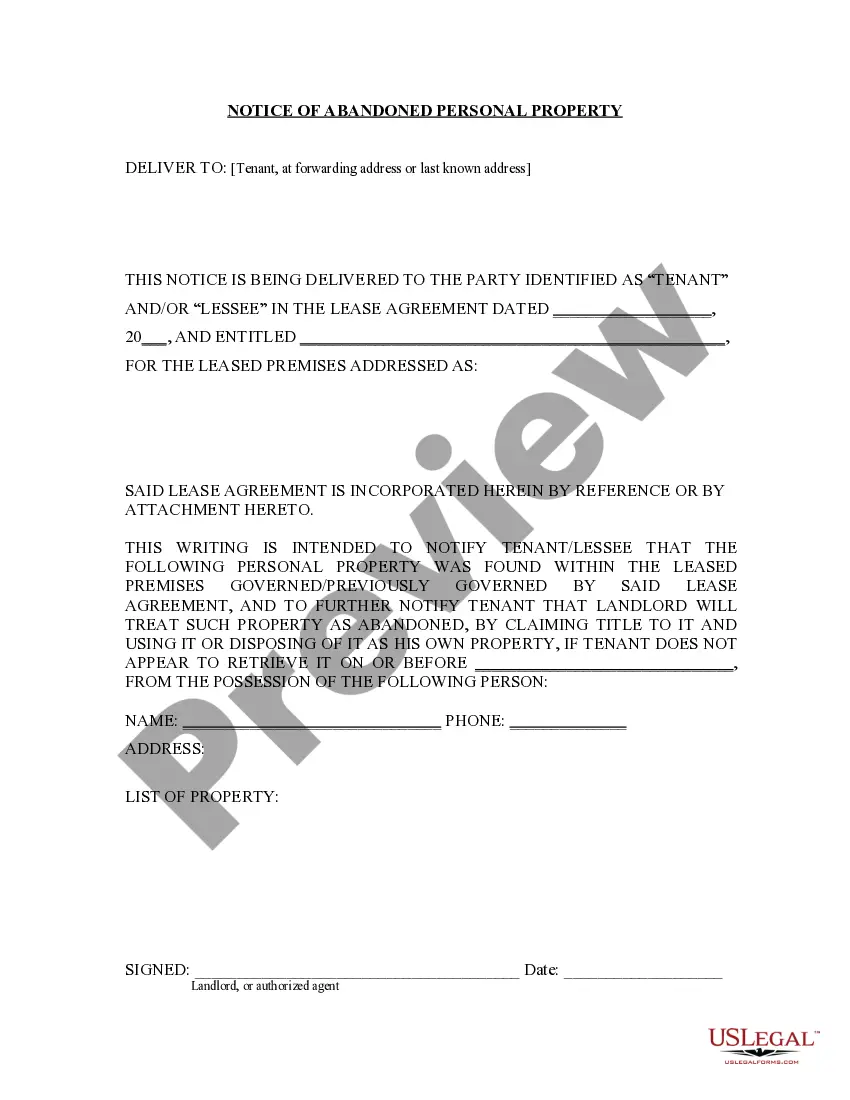
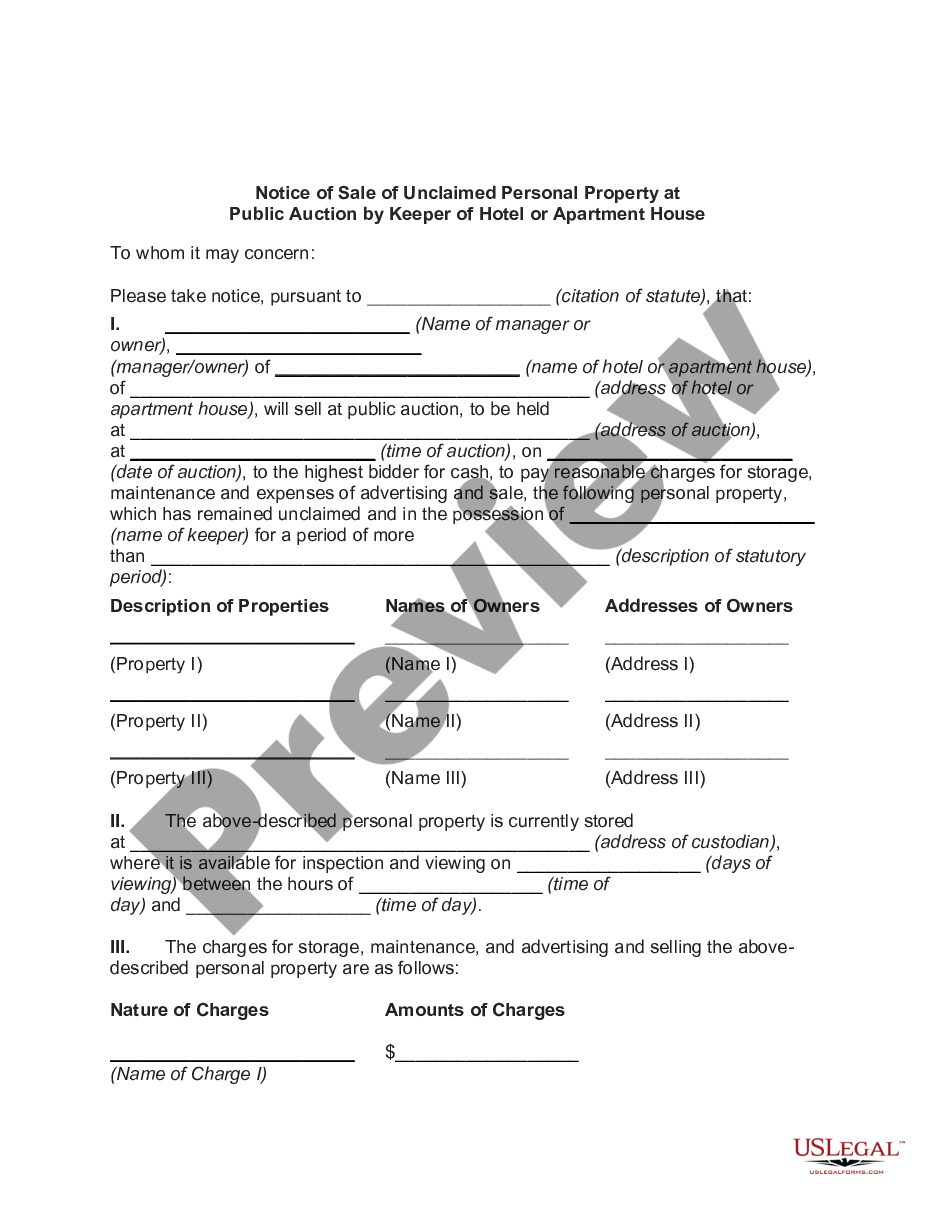
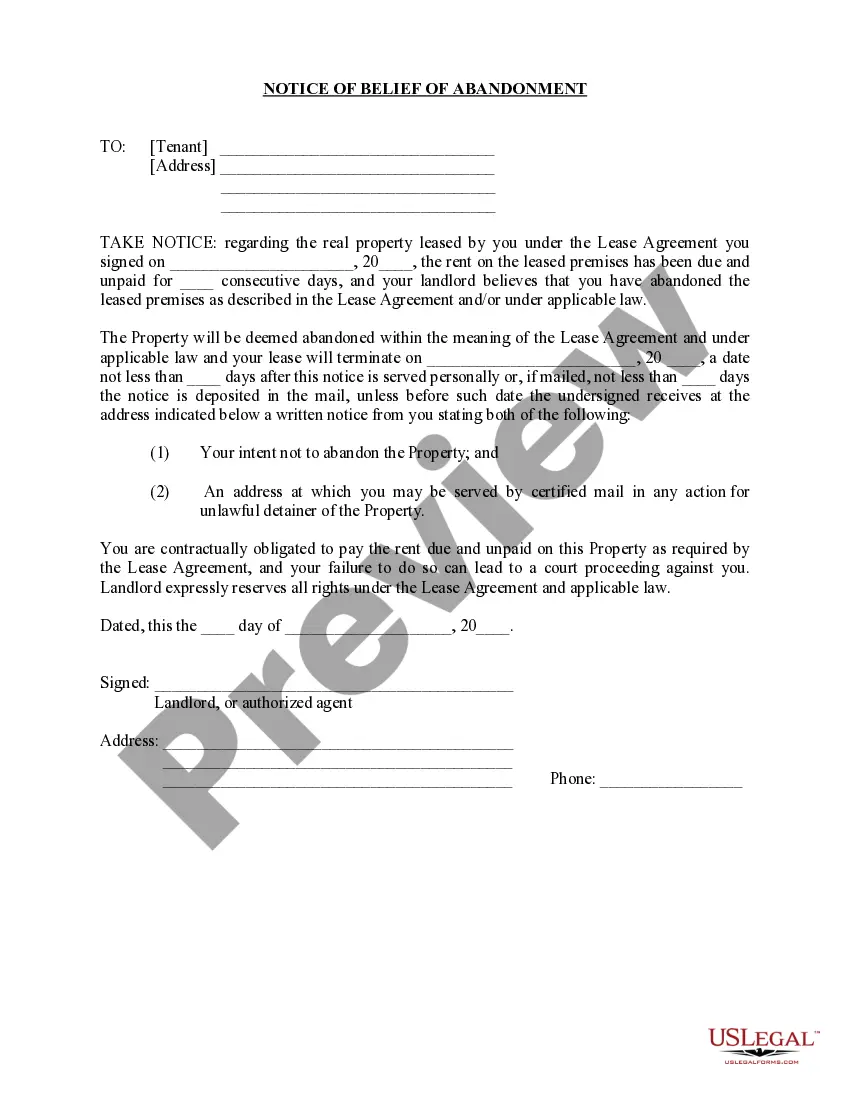
This Letter from Landlord to Tenant as Notice of Abandoned Personal Property is an official notification that allows landlords to inform tenants about personal items left behind in a rental property. The purpose of this form is to specify the items considered abandoned and to set a timeline for the tenant to retrieve them before the landlord claims ownership. This form is crucial for complying with state laws regarding abandoned property, ensuring that landlords follow proper procedures in handling these situations.
Form components explained
- Notification date: Indicates when the notice is sent.
- Description of property: Details the items considered abandoned.
- Deadline: Specifies the date by which the tenant must retrieve the items.
- Landlord's intention: States that the landlord may claim ownership if items are not retrieved.
- Identification of premises: Mentions the specific property where the items were found.

When to use this document
Who should use this form
- Landlords managing rental properties.
- Property managers acting on behalf of landlords.
- Tenants who have recently vacated a rental unit and left items behind.
How to prepare this document
- Identify the parties: Enter the names of the landlord and tenant.
- Describe the abandoned property: List the items found in the rental premises.
- Specify the notification date: Fill in the date when the notice is issued.
- Set the deadline: Indicate the date by which the tenant must retrieve their items.
- Sign the document: Ensure the landlord signs the notice for it to be valid.
Does this document require notarization?
This form does not typically require notarization to be legally valid. However, some jurisdictions or document types may still require it. US Legal Forms provides secure online notarization powered by Notarize, available 24/7 for added convenience.
Get your form ready online
Our built-in tools help you complete, sign, share, and store your documents in one place.
Make edits, fill in missing information, and update formatting in US Legal Forms—just like you would in MS Word.
Download a copy, print it, send it by email, or mail it via USPS—whatever works best for your next step.
Sign and collect signatures with our SignNow integration. Send to multiple recipients, set reminders, and more. Go Premium to unlock E-Sign.
If this form requires notarization, complete it online through a secure video call—no need to meet a notary in person or wait for an appointment.
We protect your documents and personal data by following strict security and privacy standards.

Make edits, fill in missing information, and update formatting in US Legal Forms—just like you would in MS Word.

Download a copy, print it, send it by email, or mail it via USPS—whatever works best for your next step.

Sign and collect signatures with our SignNow integration. Send to multiple recipients, set reminders, and more. Go Premium to unlock E-Sign.

If this form requires notarization, complete it online through a secure video call—no need to meet a notary in person or wait for an appointment.

We protect your documents and personal data by following strict security and privacy standards.
Common mistakes to avoid
- Not specifying a clear deadline for item retrieval.
- Failing to provide a detailed description of the abandoned property.
- Neglecting to sign the notice, which may render it ineffective.
- Ignoring state-specific laws regarding abandoned property.
Benefits of using this form online
- Convenience of immediate access to customizable templates.
- Editable form allows landlords to tailor the notice to their specific needs.
- Reliability of professionally drafted content adhering to state laws.
Legal use & context
- This notice serves as a legal record of the landlord's attempt to contact the tenant regarding abandoned items.
- Proper use of this form can protect landlords from liability related to lost or discarded property.
- Understanding this process helps tenants maintain their rights and manage their possessions effectively.
Main things to remember
- This form is vital for landlords to inform tenants about abandoned personal property.
- Timely notification and clear communication are crucial for both parties.
- Understanding state-specific laws is important for compliance and legal protection.
Looking for another form?
Form popularity
FAQ
When a tenant abandons a property, the landlord should follow state laws regarding abandoned property. This includes documenting the situation and creating a formal notification, like the Arkansas Letter from Landlord to Tenant as Notice of Abandoned Personal Property. Take the necessary steps to safeguard both your interests and the tenant's belongings.
In Arkansas, property is typically considered abandoned after the tenant has left the premises without notifying the landlord for a specific duration, often around thirty days. This period can vary, so it's important to check local laws. Sending an Arkansas Letter from Landlord to Tenant as Notice of Abandoned Personal Property during this time helps clarify the situation and protect your rights.
To write a letter for abandoned property, begin by clearly identifying the tenant and the address of the rental property. Include a detailed description of the abandoned items, and state the actions required from the tenant. Utilizing a template like the Arkansas Letter from Landlord to Tenant as Notice of Abandoned Personal Property can streamline this process, ensuring you include all necessary information.
An example of a notice of abandonment can be found in the Arkansas Letter from Landlord to Tenant as Notice of Abandoned Personal Property. This letter should include details about the property, the date it was left behind, and any specific actions the tenant must take. It is essential that the wording is clear to avoid misunderstandings.
The law regarding abandoned property in Nevada is different from Arkansas, focusing on the timeline and responsibility of landlords. In Nevada, landlords must assume certain responsibilities and follow legal guidelines for dealing with abandoned property. Although this is not directly related to Arkansas, comparing laws can help landlords understand their obligations when using an Arkansas Letter from Landlord to Tenant as Notice of Abandoned Personal Property.
If a tenant abandons a property, the landlord must first verify the abandonment and then notify the tenant of the situation. Using the Arkansas Letter from Landlord to Tenant as Notice of Abandoned Personal Property is a recommended approach. This letter serves as a formal notification, outlining the steps the tenant needs to take regarding their belongings.
Abandonment proceedings in Arkansas occur when a tenant leaves personal property behind, signaling their intent to vacate. The landlord must follow a legal process that includes notifying the tenant via the Arkansas Letter from Landlord to Tenant as Notice of Abandoned Personal Property. This letter is crucial for establishing a record of communication and ensuring that the landlord complies with state laws.
The abandoned property law in Arkansas outlines the procedures landlords must follow when dealing with a tenant's personal belongings left behind after they vacate. This law protects both the landlord's and tenant's rights. To properly notify a tenant, you can use the Arkansas Letter from Landlord to Tenant as Notice of Abandoned Personal Property. This notice must clearly describe the abandoned items and inform the tenant of their rights.
An example of abandonment in a legal case could involve a tenant who vacates a rental unit without notice and leaves behind significant personal belongings. In this scenario, the landlord may consider those items abandoned if the tenant does not communicate intent to return or collect them. This situation often leads landlords to issue an Arkansas Letter from Landlord to Tenant as Notice of Abandoned Personal Property to formalize the abandonment and outline next steps.
In Arkansas, property is considered abandoned when a tenant leaves personal belongings behind with no intention of returning. This can include furniture, clothes, or any items that are not claimed after a specific period. Knowing the rules surrounding abandoned property can help landlords manage their responsibilities effectively. Utilizing the Arkansas Letter from Landlord to Tenant as Notice of Abandoned Personal Property ensures you follow legal guidelines during this process.