Arkansas Letter from Landlord to Tenant as Notice to Tenant of Tenant's Disturbance of Neighbors' Peaceful Enjoyment to Remedy or Lease Terminates
What is this form?
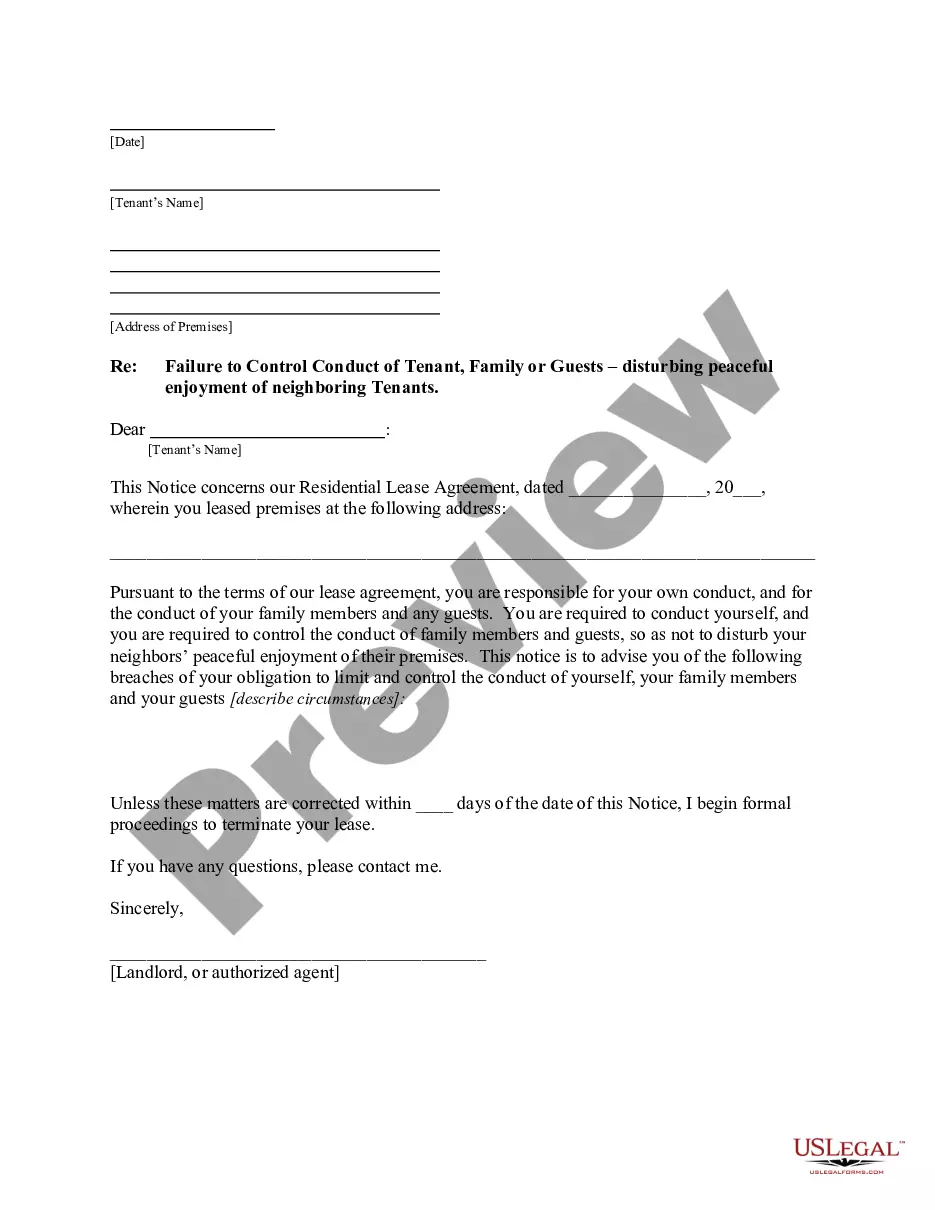
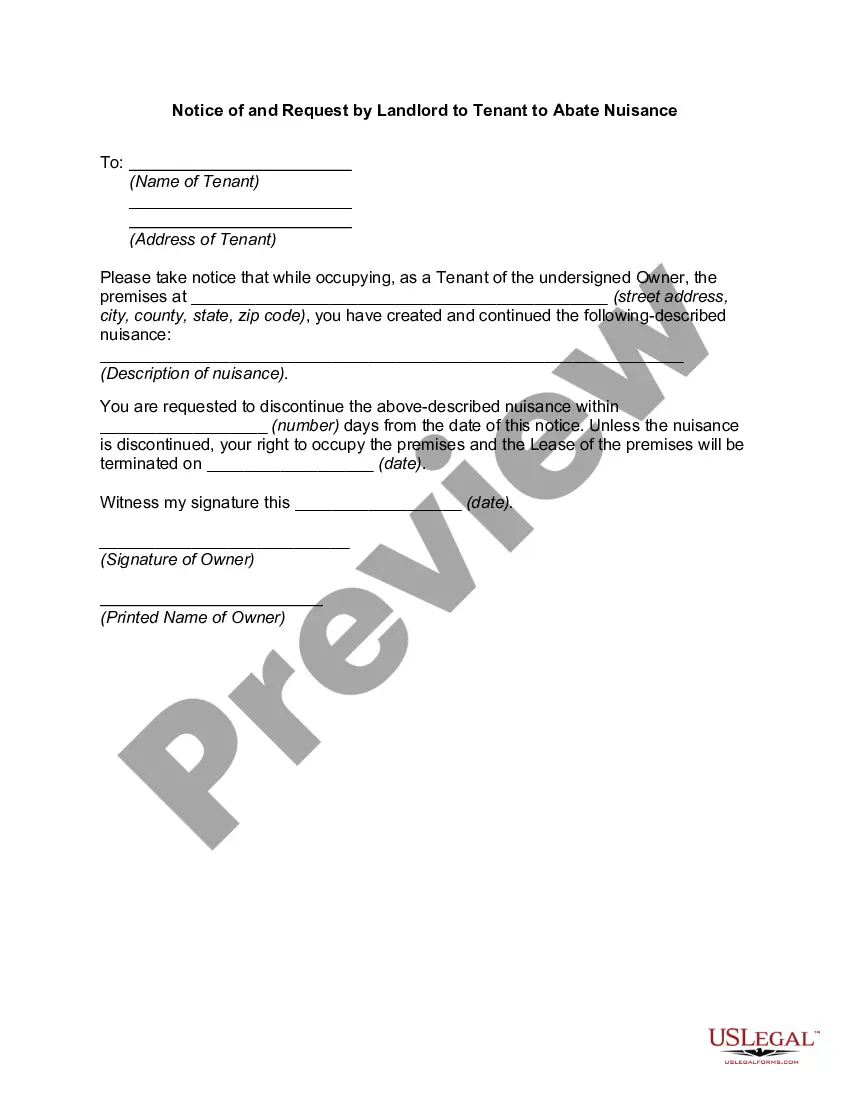
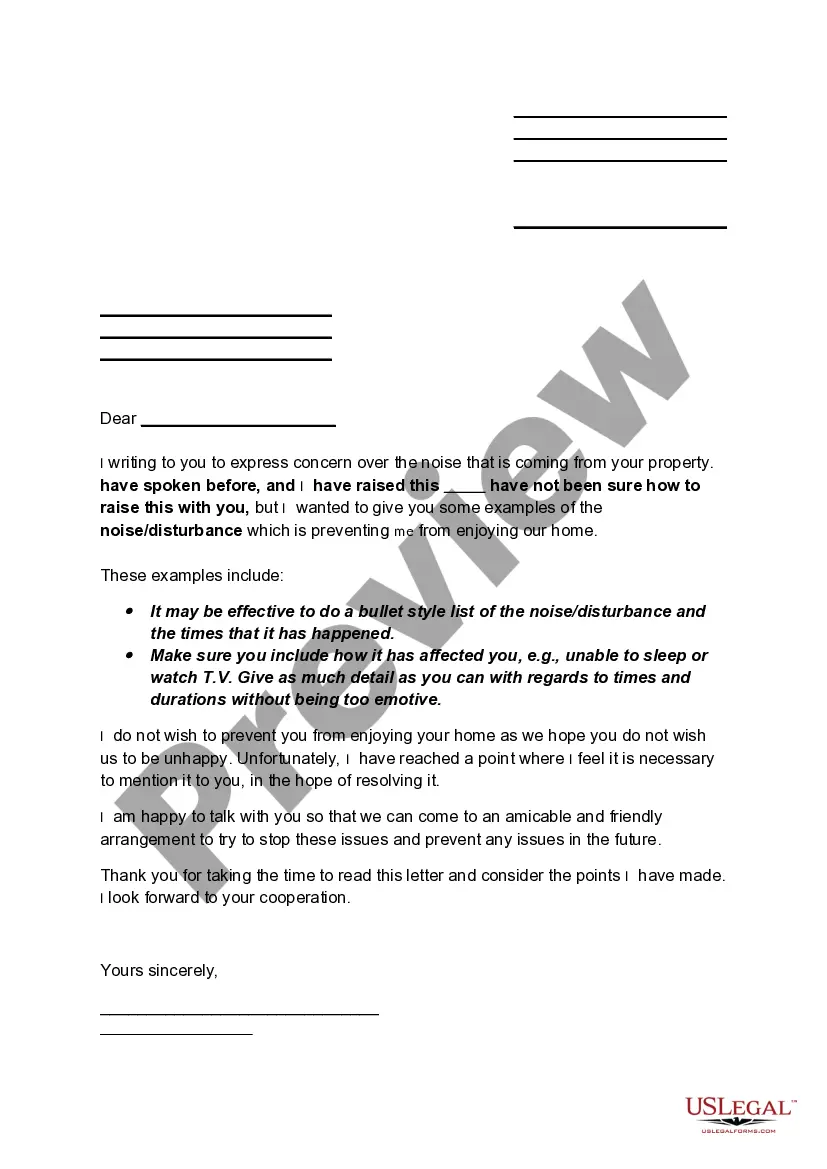
This form is a Letter from Landlord to Tenant as Notice to Tenant of Tenant's Disturbance of Neighbors' Peaceful Enjoyment to Remedy or Lease Terminates. It serves as an official notification to the tenant regarding their violation of the implied covenant of quiet enjoyment, particularly when their actions disturb the peace of the neighbors. This form is essential for landlords to communicate grievances formally and outline the steps required to remedy the situation to avoid lease termination.
Key components of this form
- Identification of the landlord and tenant involved.
- Specific details about the disturbances affecting neighbors.
- Consequences of continued disturbances, including potential lease termination.
- Instructions on how the tenant can mitigate the issues.
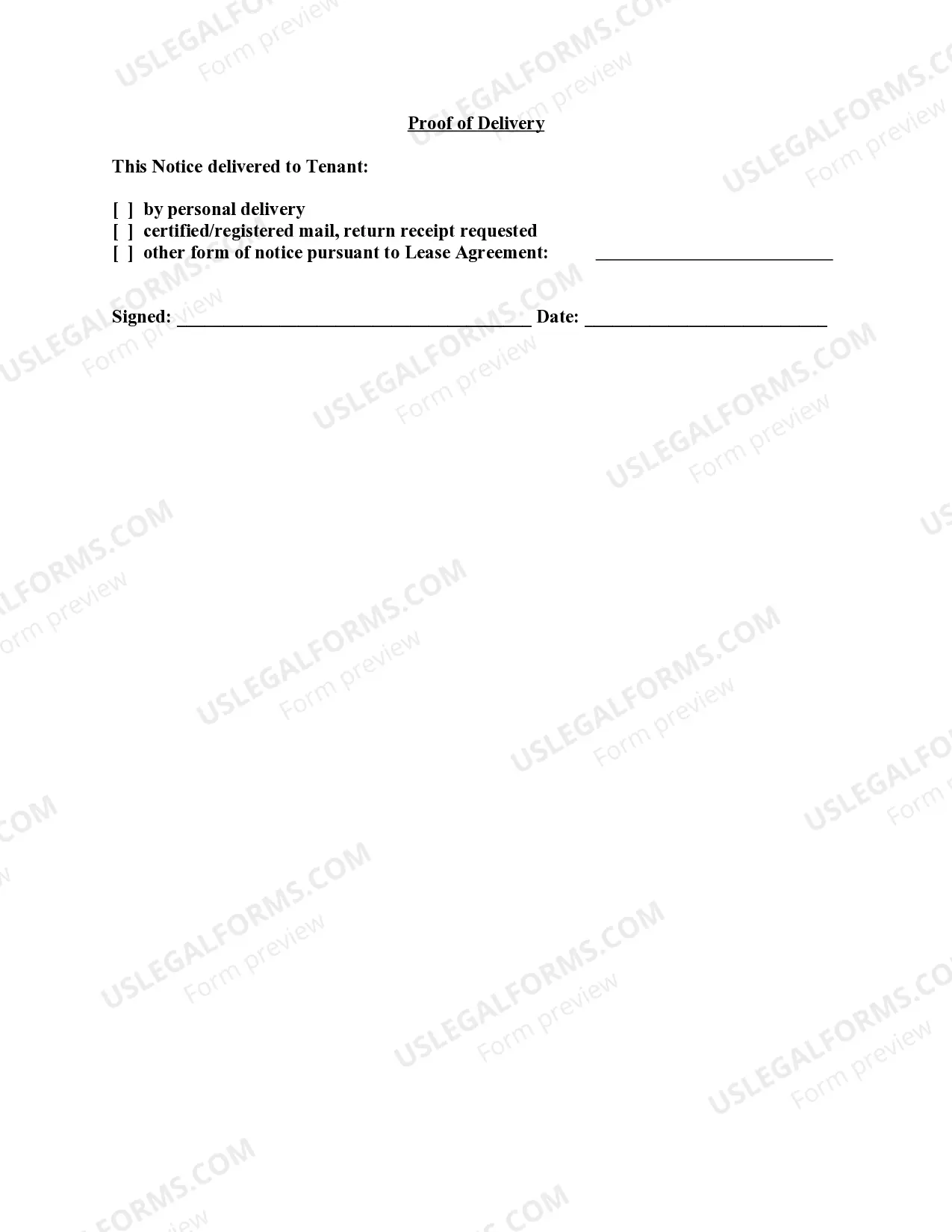
- Proof of delivery methods for notifying the tenant.


When this form is needed
This form should be used when a landlord needs to formally notify a tenant about their disruptive behavior that is affecting the quiet enjoyment of neighbors. It is applicable in situations such as excessive noise, unauthorized gatherings, or any conduct that violates the lease terms regarding neighborly peace.
Who can use this document
- Landlords who manage rental properties and need to address tenant disturbances.
- Property managers acting on behalf of the landlord.
- Tenants who have received complaints from neighbors and need to understand their obligations.
How to complete this form
- Identify the landlord and tenant by entering their names and contact information.
- Clearly describe the specific disturbances caused by the tenant or their guests.
- State the potential consequences of failure to remedy the disturbance, including lease termination.
- Provide guidance on steps the tenant must take to correct the issue.
- Choose the method of delivery to ensure proof of receipt by the tenant.
Is notarization required?
Notarization is not commonly needed for this form. However, certain documents or local rules may make it necessary. Our notarization service, powered by Notarize, allows you to finalize it securely online anytime, day or night.
Get your form ready online
Our built-in tools help you complete, sign, share, and store your documents in one place.
Make edits, fill in missing information, and update formatting in US Legal Forms—just like you would in MS Word.
Download a copy, print it, send it by email, or mail it via USPS—whatever works best for your next step.
Sign and collect signatures with our SignNow integration. Send to multiple recipients, set reminders, and more. Go Premium to unlock E-Sign.
If this form requires notarization, complete it online through a secure video call—no need to meet a notary in person or wait for an appointment.
We protect your documents and personal data by following strict security and privacy standards.

Make edits, fill in missing information, and update formatting in US Legal Forms—just like you would in MS Word.

Download a copy, print it, send it by email, or mail it via USPS—whatever works best for your next step.

Sign and collect signatures with our SignNow integration. Send to multiple recipients, set reminders, and more. Go Premium to unlock E-Sign.

If this form requires notarization, complete it online through a secure video call—no need to meet a notary in person or wait for an appointment.

We protect your documents and personal data by following strict security and privacy standards.
Common mistakes to avoid
- Failing to specify the nature of the disturbances in detail.
- Not including a deadline for the tenant to remedy the situation.
- Using informal language that may not convey the seriousness of the notice.
Why complete this form online
- Convenient access to ready-to-use legal forms that can be downloaded at any time.
- The ability to customize the form to meet specific needs or circumstances.
- Reliability, as the forms are drafted by licensed attorneys to ensure legal compliance.
Legal use & context
- The letter serves as a formal warning regarding lease violations.
- It is a legal prerequisite in many jurisdictions before proceeding with eviction processes.
- Failure to provide this notice properly may affect the enforceability of lease termination actions.
Summary of main points
- This form is essential for formalizing complaints regarding tenant disturbances.
- Compliance with local laws is critical; ensure you understand state-specific regulations.
- Proper completion and delivery of this notice can prevent future disputes and lease violations.
Looking for another form?
Form popularity
FAQ
Unconditional quit notices are used to order the tenant to leave the premises without the chance to remedy the situation. This is used for a serious breach of the lease agreement or chronic late rent payment.
Injury at Rental Property: You could have a case for a lawsuit against your landlord if you are injured at the rental property due to a landlord's neglect. Filing an Illegal Eviction: You can countersue your landlord if you feel your landlord is trying to evict you illegally.
If you think your landlord is violating the Fair Housing Act, you can get that landlord in trouble by filing a complaint at HUD.gov. Your remedy for breach of quiet enjoyment is to terminate the lease and move or sue in small claims court.
Your landlord discriminates against you. Your landlord takes your security deposit illegally. Your rental unit is inhabitable. The property owner interferes with your right to quiet enjoyment. Your landlord fails to make the necessary repairs.
Notice to Vacate The amount of time the tenant has to move out or fix a certain problem before an eviction suit is filed. This must be at least 3 days unless the lease specifically states otherwise.
Every tenant has a right to enjoy peaceful possession of the property without any disturbance or encumbrance from anyone including the owner. At no point of time under your tenancy can your landlord ask you to evict or leave the premises without assigning a valid reason.
Review Your Lease Before You Sign. Research Local Laws. Keep Records. Pay Your Rent. Maintain Respectful Communication. Seek an Agreeable Solution. Request Repairs in Writing. What Do You Think?
An eviction notice must state a reason why you are being evicted, otherwise it is invalid.For tenants who lived in the property for more than 12 months, the landlord must provide at least 60 days prior notice to vacate, under California Civil Code 1946.
Your landlord should make a diligent effort to repair the problem within a reasonable time after receipt of the notice. The law presumes seven days to be a reasonable time, but the landlord can rebut this presumption.