Arkansas Drainage Contract for Contractor
What is this form?
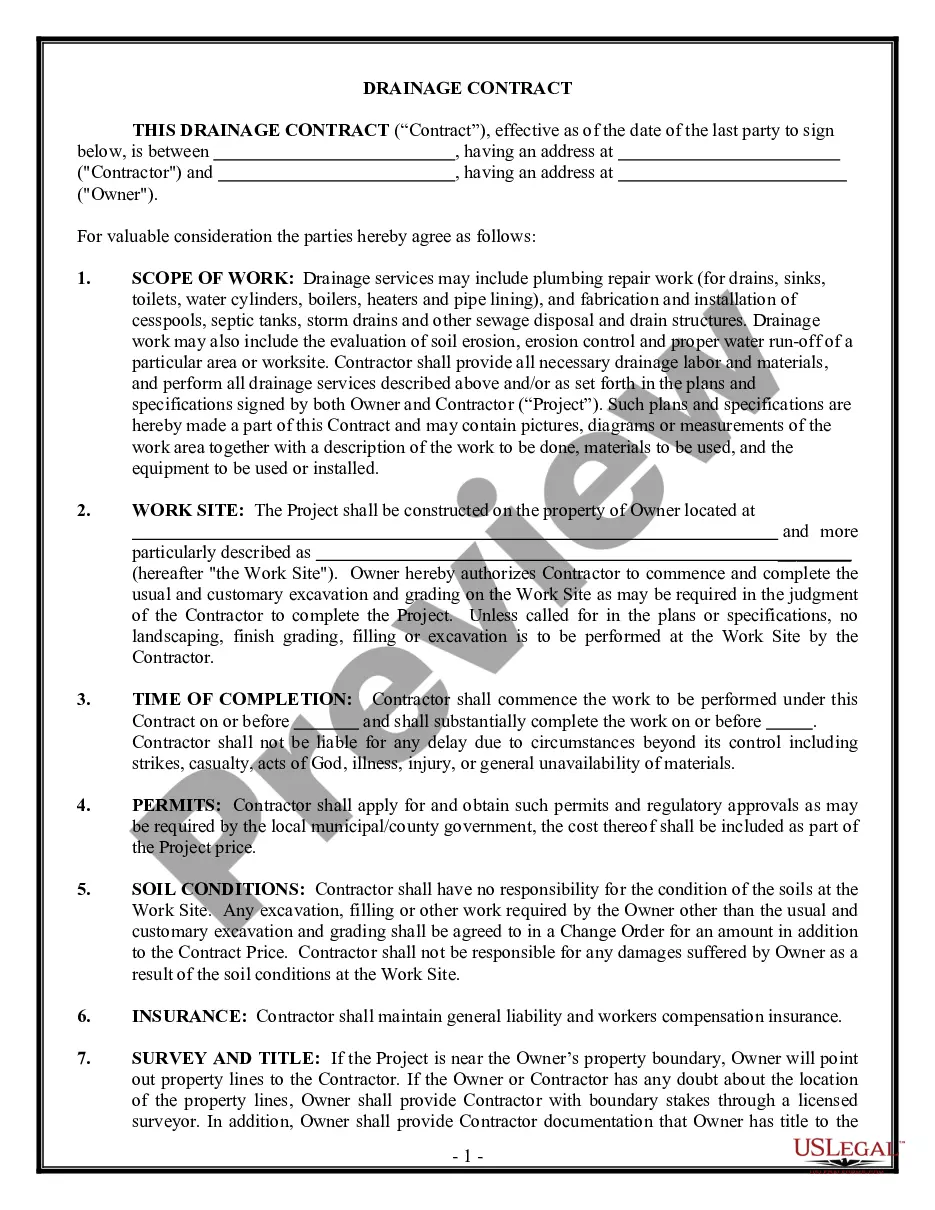
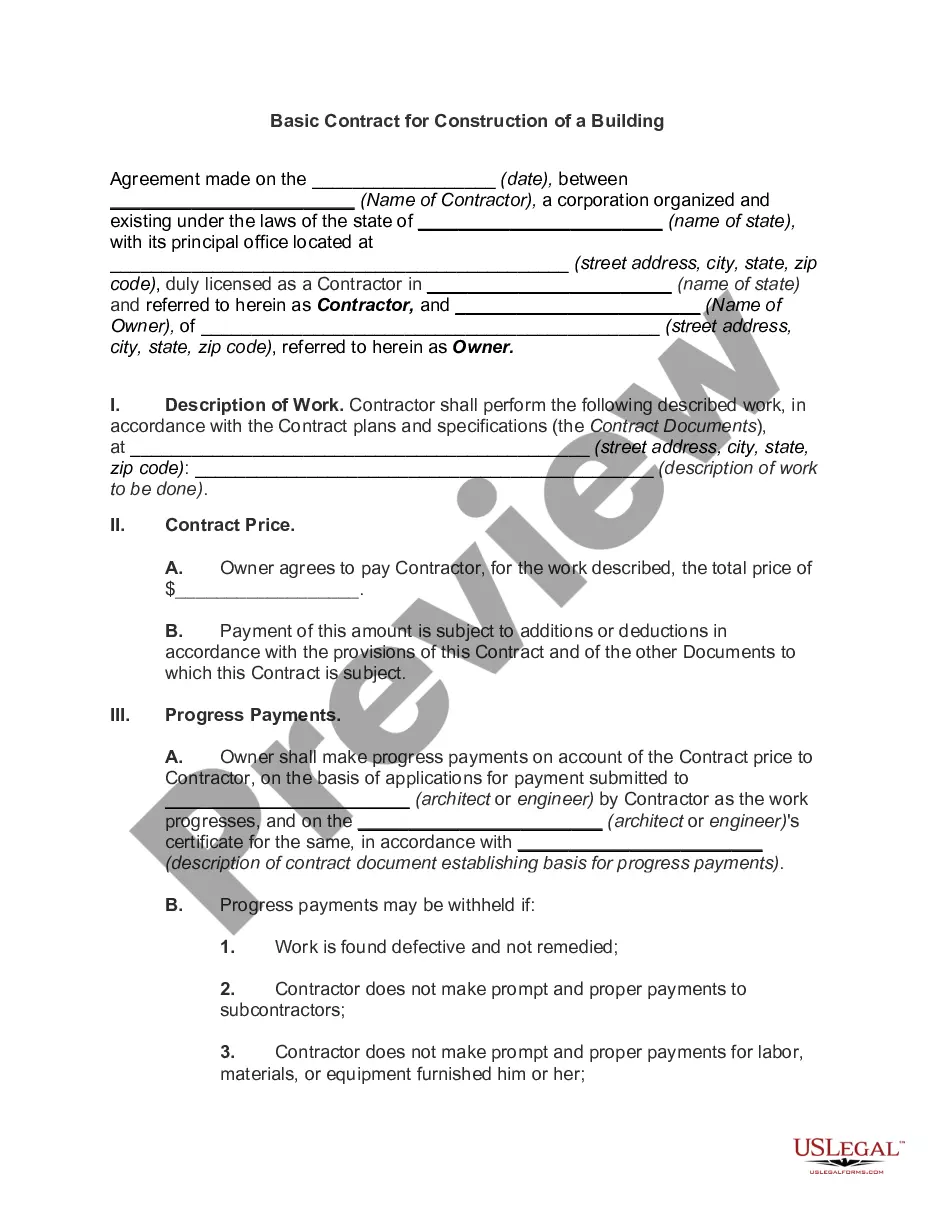
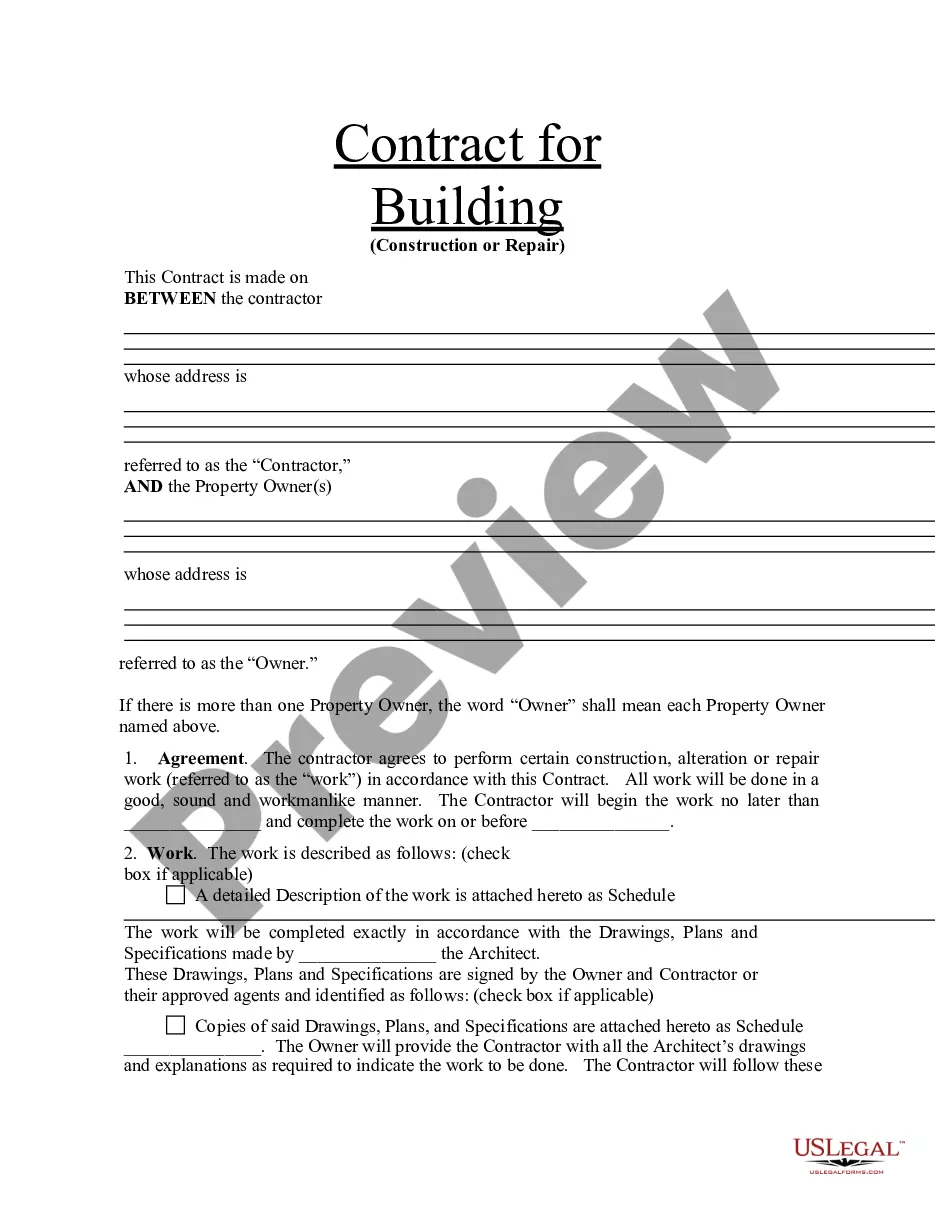
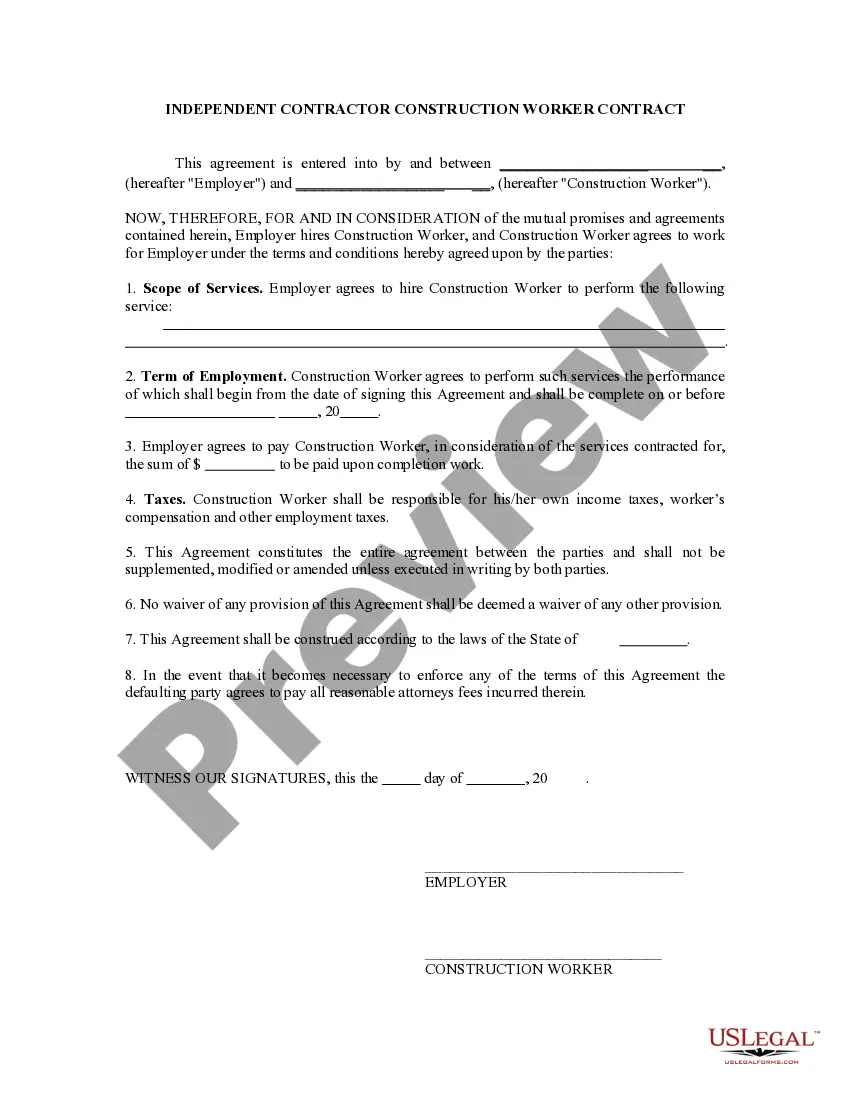
The Drainage Contract for Contractor is a legal document designed to establish clear terms between a drainage contractor and a property owner. This form facilitates a structured agreement regarding project scope, payment arrangements, and responsibilities. Unlike general contracts, this form specifically addresses drainage-related work and is tailored to comply with the laws of Arkansas.
What’s included in this form
- Work site details, including the location of the project.
- Permit requirements and responsibilities for obtaining necessary approvals.
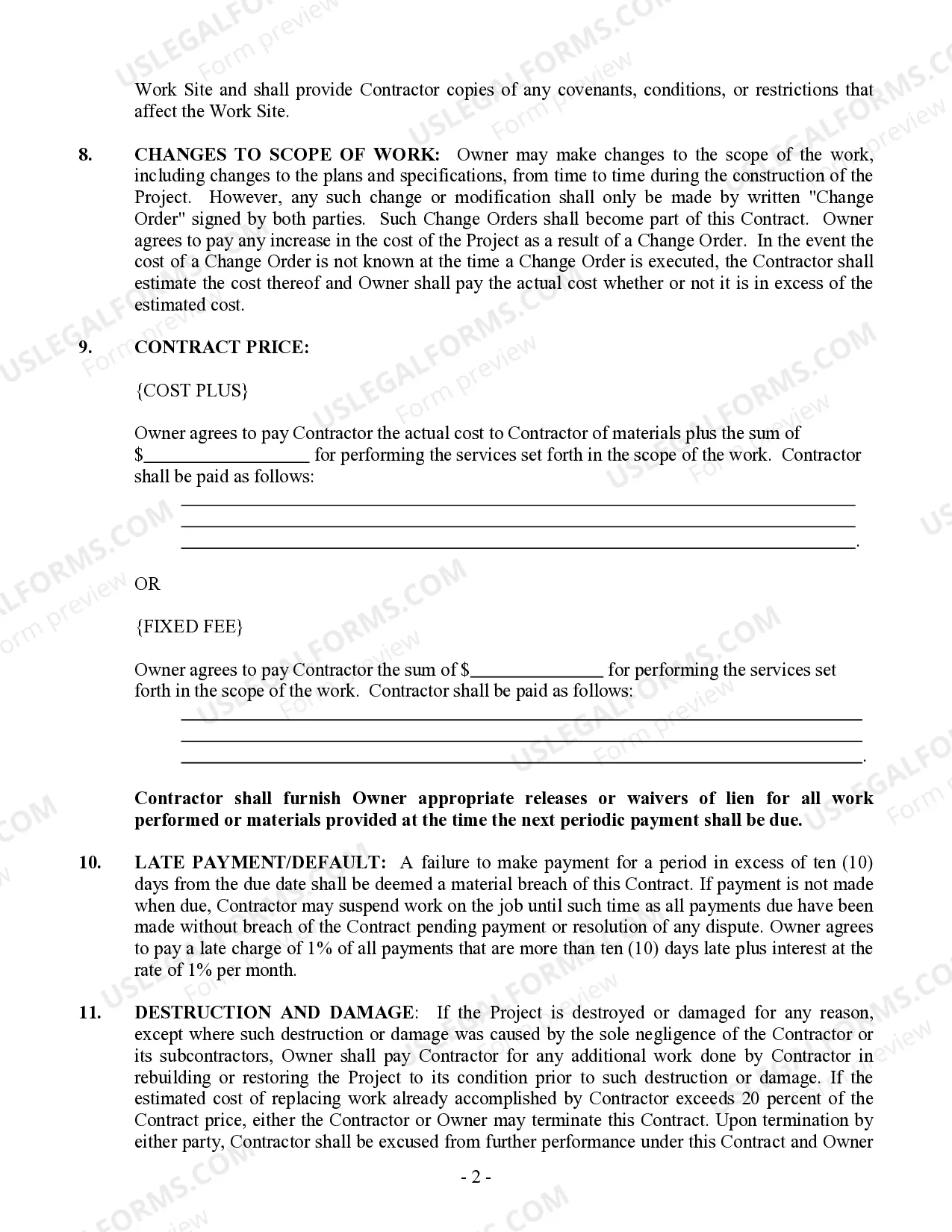
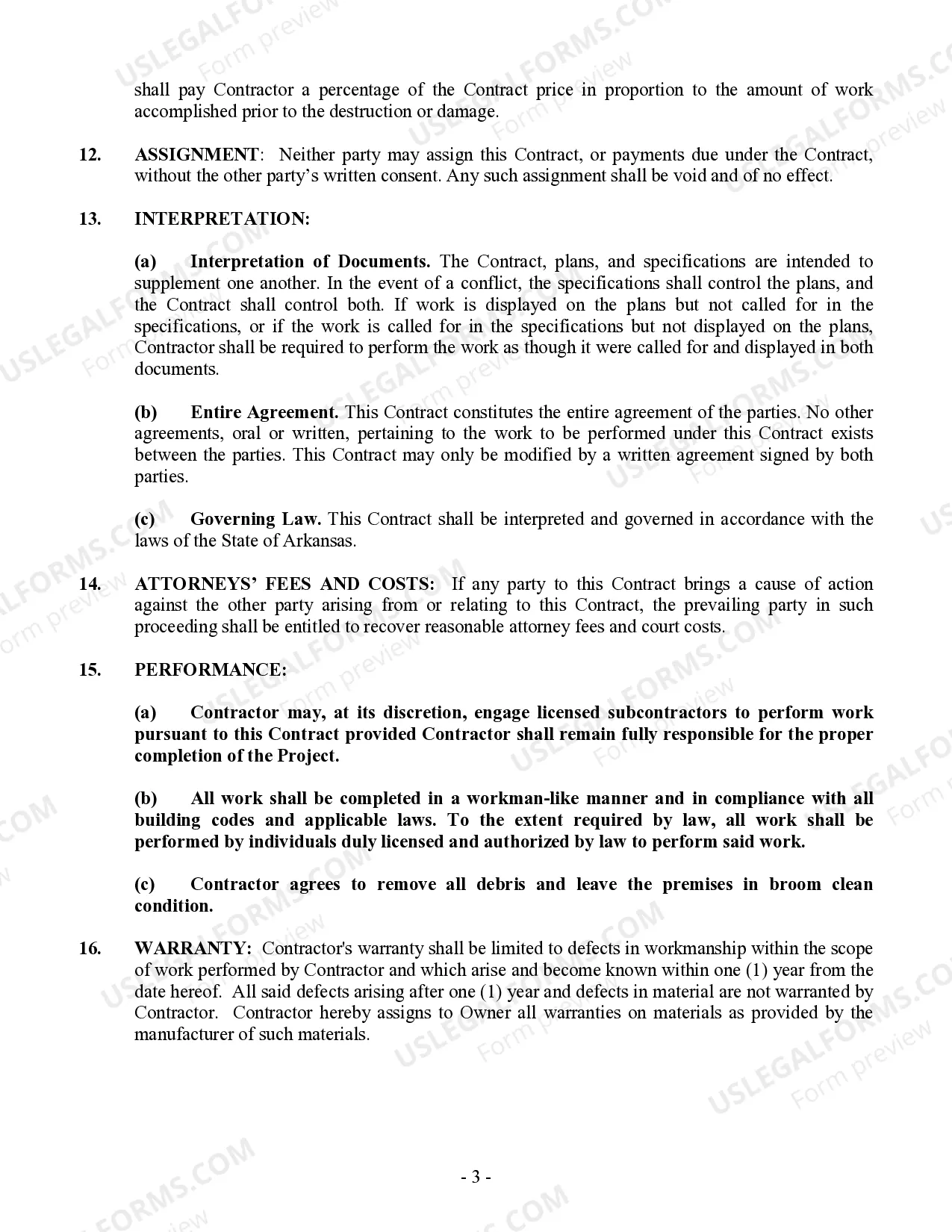
- Soil condition disclaimers and additional work provisions through change orders.
- Insurance and liability coverage necessary for the contractor.
- Clarifications on changes to the project scope and cost adjustments.
- Termination clauses related to project damage and contractor performance.
Common use cases
This form should be used when a property owner hires a drainage contractor for projects involving the installation, repair, or maintenance of drainage systems. It is particularly important in situations where payment terms are variable, where specific soil conditions may impact the project, or when local permits are required.
Who should use this form
- Property owners looking to engage drainage contractors for specific projects.
- Drainage contractors requiring a formal agreement for project execution.
- Individuals or businesses involved in drainage system installations or maintenance.
Completing this form step by step
- Identify the parties involved: enter the names and contact information of the contractor and the property owner.
- Specify the work site: accurately provide the address and details regarding the location of the drainage project.
- Detail the project scope: outline specific tasks and responsibilities related to the drainage work to be performed.
- Enter financial terms: indicate whether the payment will be based on a cost-plus arrangement or a fixed fee agreement.
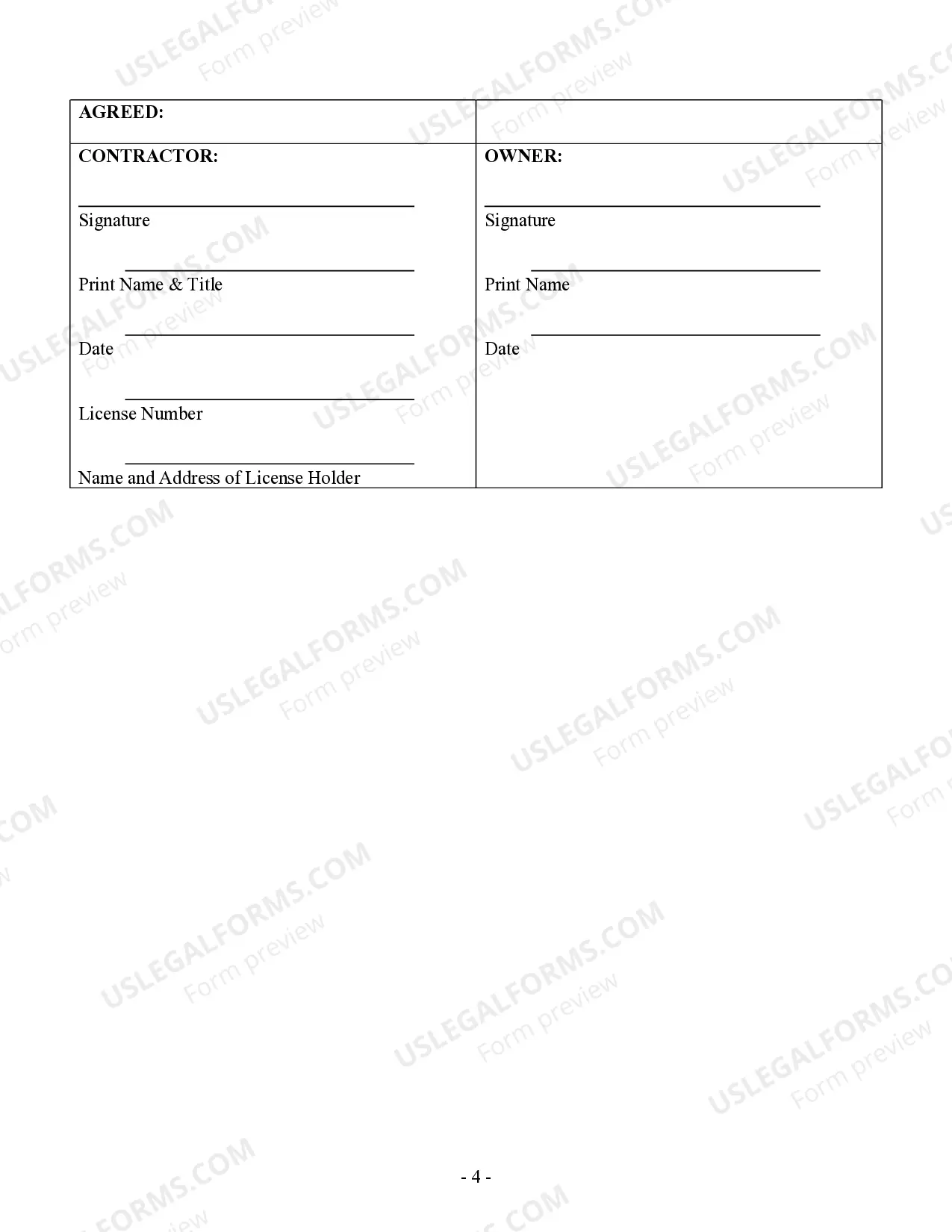
- Sign and date the contract: both parties must sign to validate the agreement and acknowledge the terms.
Notarization guidance
Notarization is not commonly needed for this form. However, certain documents or local rules may make it necessary. Our notarization service, powered by Notarize, allows you to finalize it securely online anytime, day or night.
Get your form ready online
Our built-in tools help you complete, sign, share, and store your documents in one place.
Make edits, fill in missing information, and update formatting in US Legal Forms—just like you would in MS Word.
Download a copy, print it, send it by email, or mail it via USPS—whatever works best for your next step.
Sign and collect signatures with our SignNow integration. Send to multiple recipients, set reminders, and more. Go Premium to unlock E-Sign.
If this form requires notarization, complete it online through a secure video call—no need to meet a notary in person or wait for an appointment.
We protect your documents and personal data by following strict security and privacy standards.

Make edits, fill in missing information, and update formatting in US Legal Forms—just like you would in MS Word.

Download a copy, print it, send it by email, or mail it via USPS—whatever works best for your next step.

Sign and collect signatures with our SignNow integration. Send to multiple recipients, set reminders, and more. Go Premium to unlock E-Sign.

If this form requires notarization, complete it online through a secure video call—no need to meet a notary in person or wait for an appointment.

We protect your documents and personal data by following strict security and privacy standards.
Typical mistakes to avoid
- Failing to clearly define the work scope, leading to misunderstandings later.
- Not obtaining necessary permits before starting the work, which can result in fines.
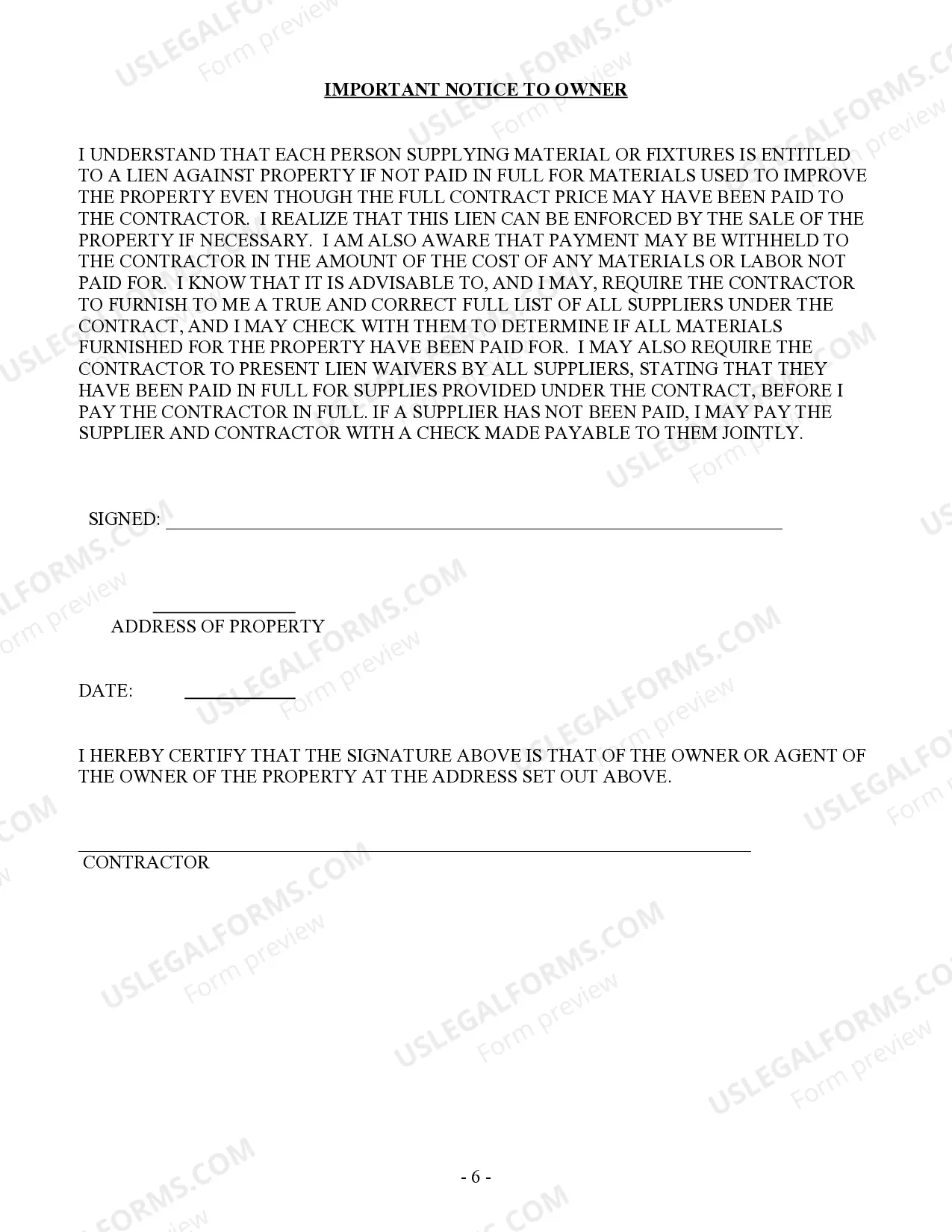
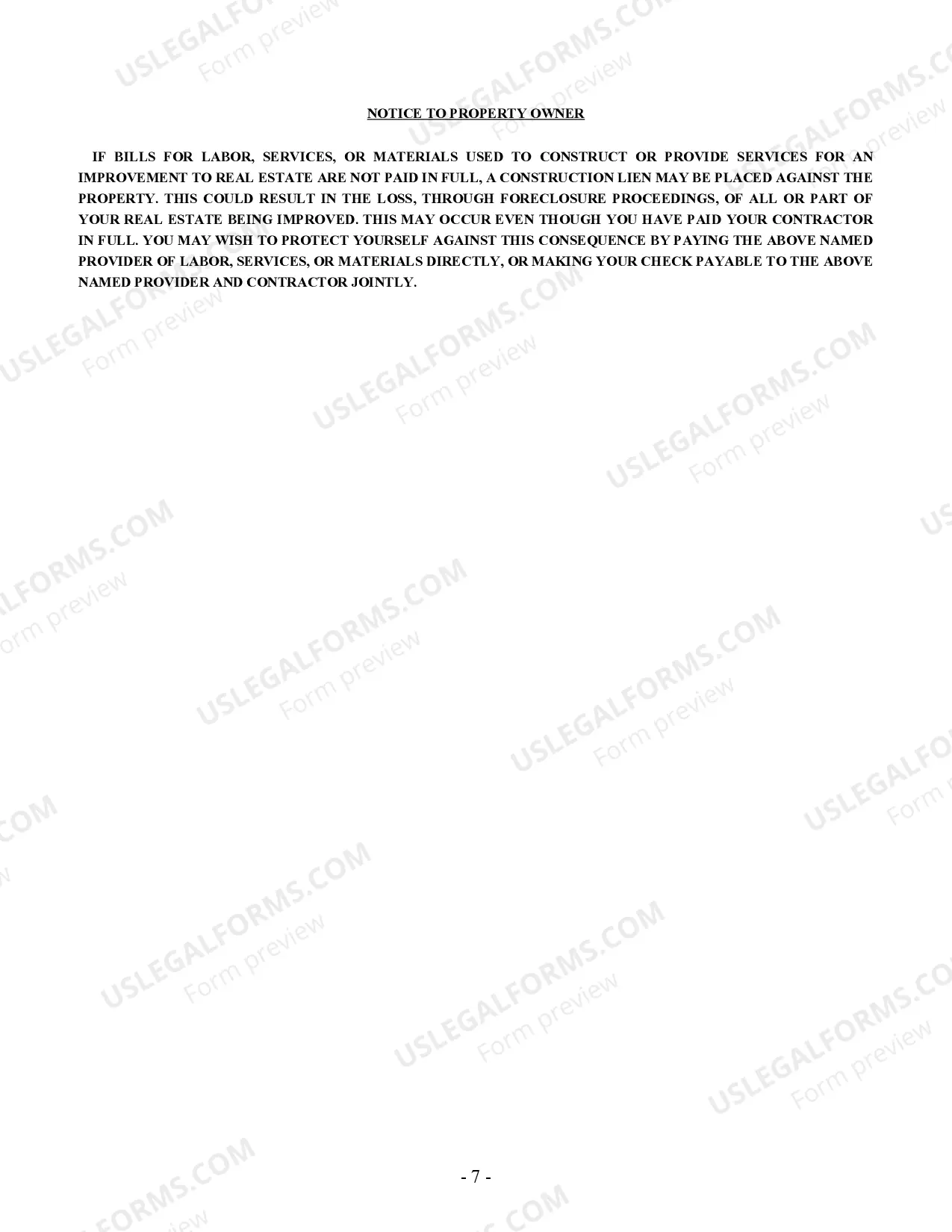
- Overlooking the importance of insurance coverage, which may expose the owner to liability.
- Neglecting to document change orders in writing, which can lead to disputes over payment.
Why use this form online
- Convenient access: download and fill out the form at your convenience, anytime and anywhere.
- Editability: easily customize the form to fit specific project needs without starting from scratch.
- Reliable legal foundation: use forms drafted by licensed attorneys, increasing enforceability and compliance.
Key takeaways
- The Drainage Contract for Contractor is essential for formalizing agreements between property owners and drainage contractors.
- It outlines crucial project details, payment terms, and responsibilities to minimize disputes.
- Use this form to ensure compliance with Arkansas laws and establish legal protections for both parties.
Looking for another form?
Form popularity
FAQ
To get licensed and bonded in Arkansas, you will need to complete an application, provide necessary documentation, and pass an examination. This process verifies your qualifications to manage projects safely and legally. For those interested in an Arkansas Drainage Contract for Contractor, understanding these steps is essential. Utilize uslegalforms to find templates and resources that simplify this complex process.
Without a contractor's license, you can perform specific minor tasks, such as simple home repairs or maintenance jobs, as long as you stay within legal limits. However, larger projects, including an Arkansas Drainage Contract for Contractor, generally require a licensed professional. It's wise to familiarize yourself with your state’s regulations to avoid fines or legal issues. Consider using services like uslegalforms to guide you through the process.
Yes, contractors must be licensed in Arkansas, especially for projects over a certain dollar amount. This licensing helps maintain quality and safety standards across the industry. If you plan to undertake an Arkansas Drainage Contract for Contractor, obtaining the necessary license is a crucial step. Make sure to follow the guidelines set by the Arkansas Contractors Licensing Board.
Some states, like Wyoming, do not require a contractor's license for certain types of work. This means that contractors in these states can operate without formal licensing, making it essential to understand local regulations. If you're considering an Arkansas Drainage Contract for Contractor, be aware that Arkansas does have specific licensing requirements. Always check local laws to ensure you comply.
When writing a construction contract agreement, detail the specific work to be done, materials required, and the timeline for completion. Clearly lay out payment terms to avoid misunderstandings. Consider using an Arkansas Drainage Contract for Contractor as a foundation, as it covers necessary legalities and protects both parties’ interests.
Writing a simple contract agreement involves outlining essential components like parties involved, the nature of the work, payment details, and compatibility with local regulations. Be precise and make sure there are no ambiguities. An Arkansas Drainage Contract for Contractor helps streamline this task by providing structured sections that guide you through the writing process.
To fill out a contractor agreement, start with the basic details such as the names of the parties involved, the project description, and the payment terms. It's crucial to specify the scope of work and set clear deadlines. Utilizing an Arkansas Drainage Contract for Contractor template can simplify this process, ensuring that key elements are included and reducing the chance of errors.
California is often regarded as one of the hardest states to obtain a contractor's license due to its complex regulations and required examinations. Contractors must navigate extensive application processes and demonstrate significant experience. If you plan to work on projects like the Arkansas Drainage Contract for Contractor, understanding the licensing landscape across states can help you prepare effectively.
The contractor's license that is often considered the easiest to obtain is the residential builder's license in Arkansas. This is due in part to its less stringent requirements compared to more specialized licenses. This can benefit contractors looking to engage in projects like the Arkansas Drainage Contract for Contractor without extensive prior experience.
The C7 and C10 licenses are designations that categorize different types of contractor work. A C7 license typically permits contractors to engage in water and sewer construction, while a C10 license is for electrical contractors. For those working on drainage projects, including Arkansas Drainage Contract for Contractor, understanding these distinctions helps in selecting the right license for your field.