Alabama Letter from Tenant to Landlord containing Notice to Cease Unjustified Nonacceptance of Rent
What this document covers
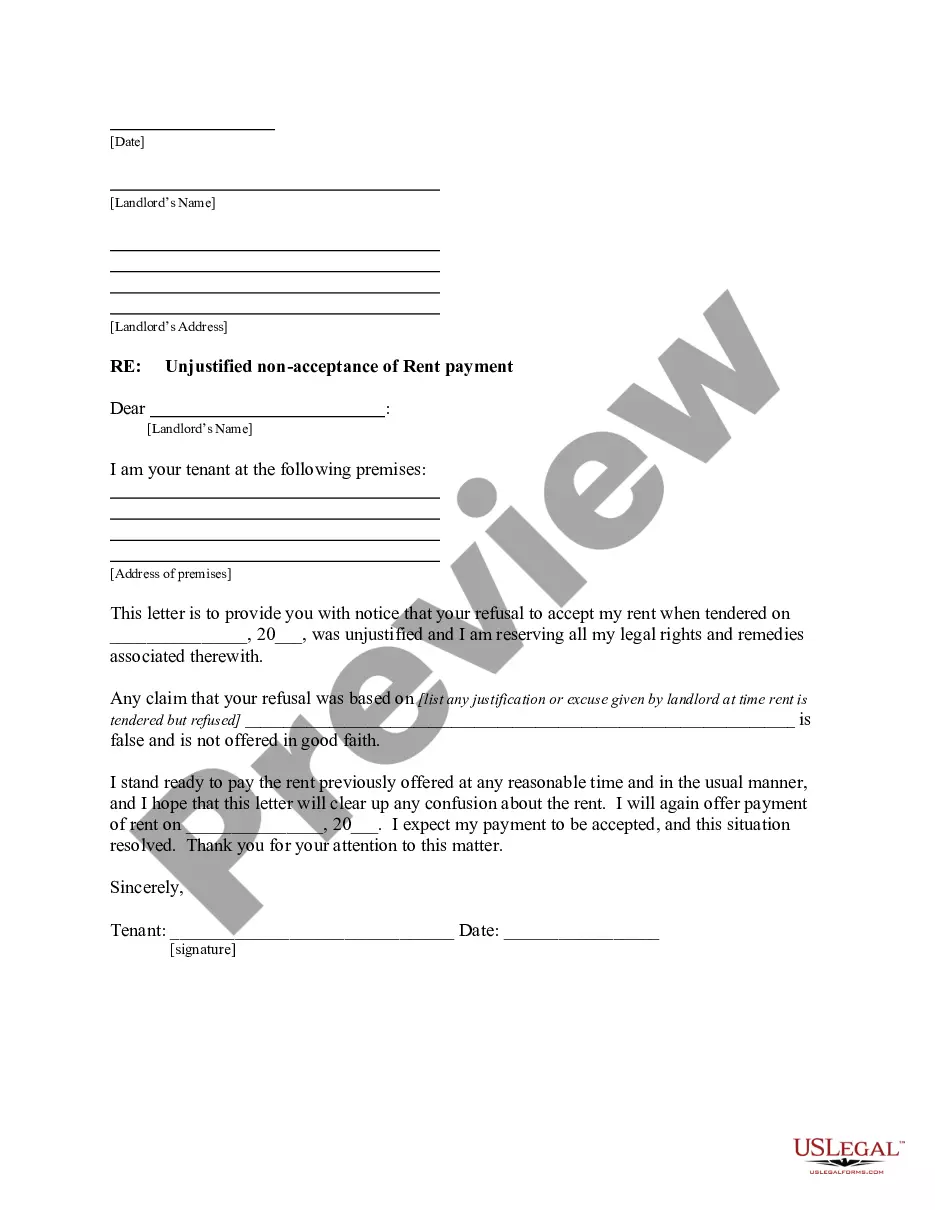
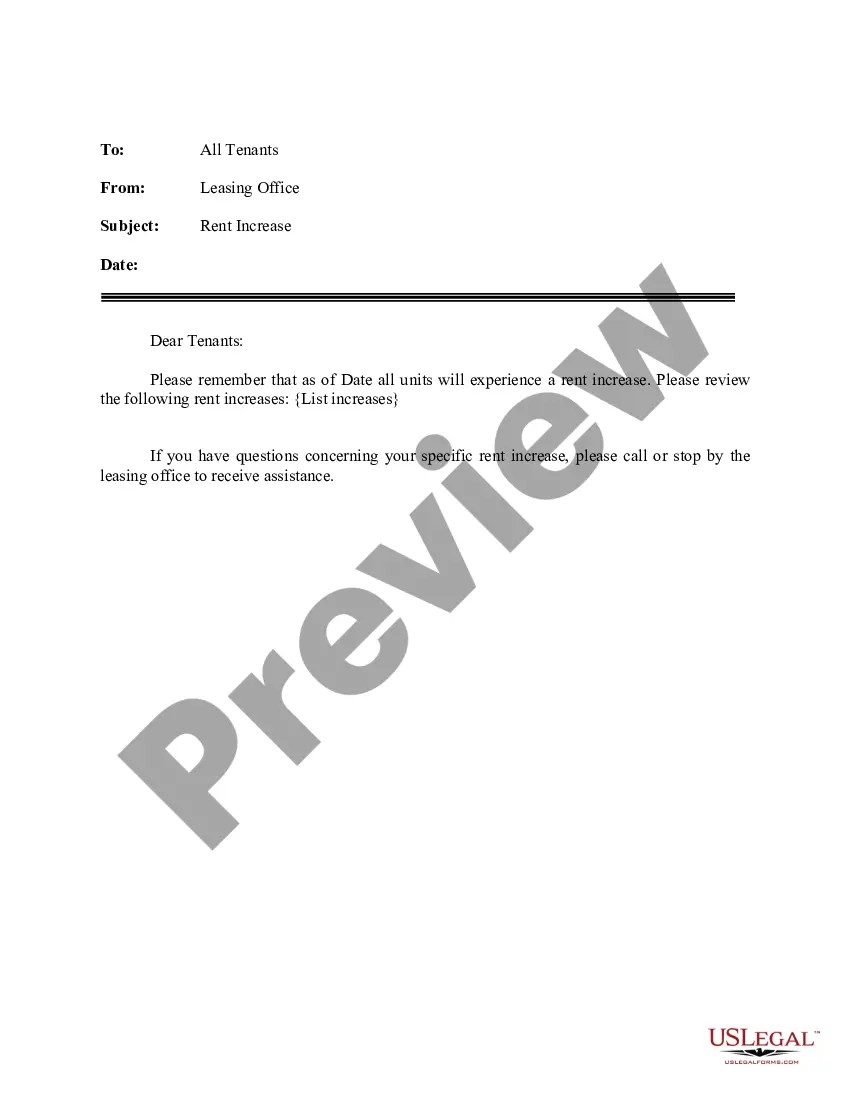
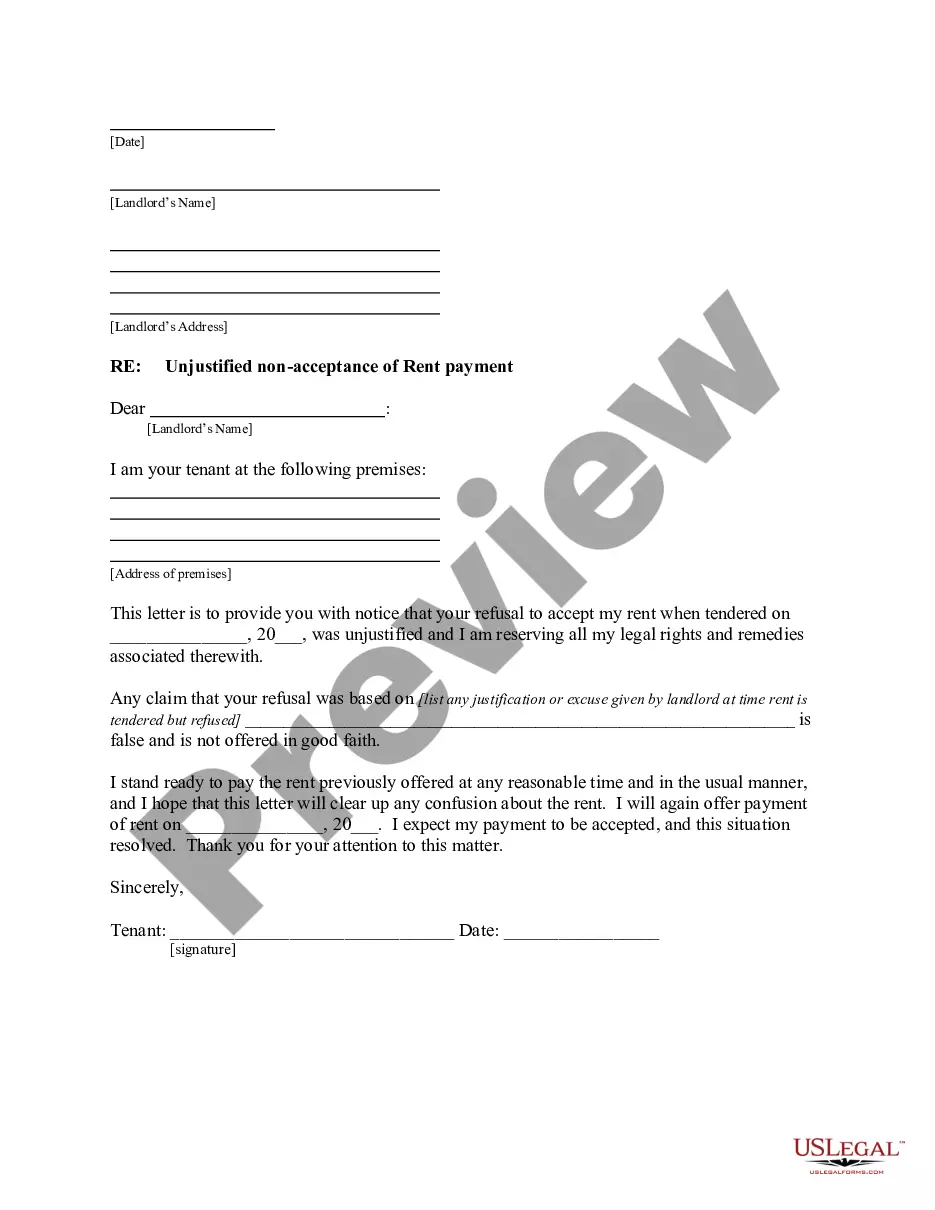
This Letter from Tenant to Landlord containing Notice to Cease Unjustified Nonacceptance of Rent is a formal communication where a tenant notifies the landlord of their refusal to accept rent payments. It asserts that the landlord's refusal is unjustified and serves as a record of the tenantâs intent to pay rent and protect their legal rights. This document differs from general refusal or complaint letters by specifically addressing the acceptance of rent and the legal implications of nonacceptance.
Main sections of this form
- Identification of the parties involved: tenant and landlord.
- Statement addressing the landlord's unjustified refusal to accept rent.
- Declaration of the tenant's readiness to pay rent and request for resolution.
- Date when the rent payment will be offered again.
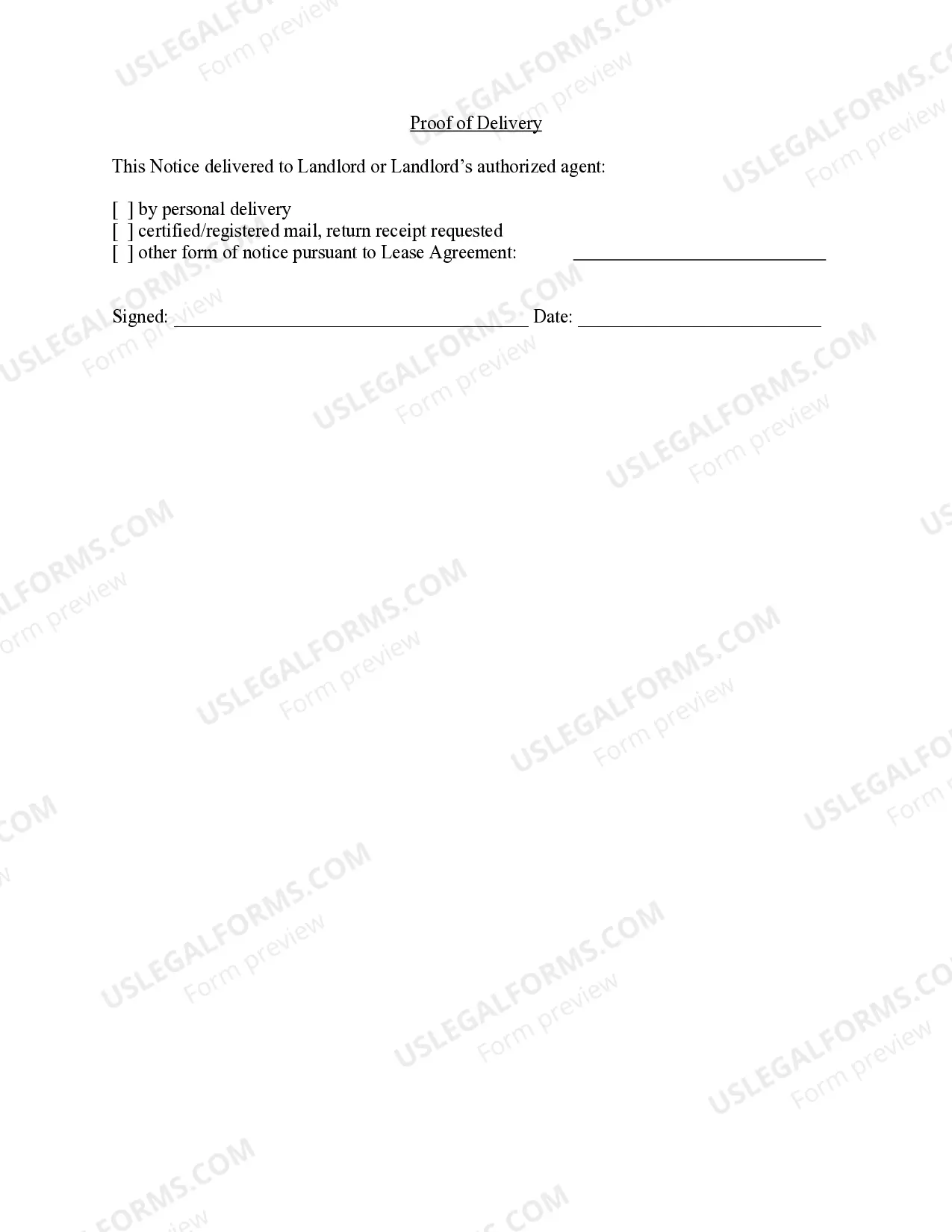
- Proof of delivery section to confirm receipt of the notice.


When to use this document
This form is used when a landlord refuses to accept a rent payment and the tenant believes that refusal is unjustified. It is particularly useful if the tenant wishes to formally record their position and intentions regarding the rental payment. Using this letter helps establish a timeline and safeguards the tenant's legal rights in case further action is needed, such as pursuing legal remedies.
Who needs this form
- Existing tenants facing nonacceptance of rent by their landlord.
- Tenants who have attempted to pay rent but have been denied without a valid reason.
- Individuals concerned about protecting their rights in tenancy agreements.
How to complete this form
- Identify the tenant and landlord by entering their names and addresses.
- Clearly state your claim regarding the unjustified refusal of rent.
- Enter the date you intend to offer the rent payment again.
- Sign and date the letter to finalize your notice.
- Deliver the letter personally or through a trackable method to ensure proof of delivery.
Does this document require notarization?
This form does not typically require notarization unless specified by local law. It is recommended to keep a copy for your records and ensure proper delivery.
Get your form ready online
Our built-in tools help you complete, sign, share, and store your documents in one place.
Make edits, fill in missing information, and update formatting in US Legal Forms—just like you would in MS Word.
Download a copy, print it, send it by email, or mail it via USPS—whatever works best for your next step.
Sign and collect signatures with our SignNow integration. Send to multiple recipients, set reminders, and more. Go Premium to unlock E-Sign.
If this form requires notarization, complete it online through a secure video call—no need to meet a notary in person or wait for an appointment.
We protect your documents and personal data by following strict security and privacy standards.

Make edits, fill in missing information, and update formatting in US Legal Forms—just like you would in MS Word.

Download a copy, print it, send it by email, or mail it via USPS—whatever works best for your next step.

Sign and collect signatures with our SignNow integration. Send to multiple recipients, set reminders, and more. Go Premium to unlock E-Sign.

If this form requires notarization, complete it online through a secure video call—no need to meet a notary in person or wait for an appointment.

We protect your documents and personal data by following strict security and privacy standards.
Avoid these common issues
- Failing to address the letter to the correct landlord or their designated agent.
- Not providing a specific date for the next rent payment offer.
- Omitting proof of delivery, which is crucial for legal documentation.
Benefits of using this form online
- Conveniently downloadable and editable to fit specific tenant situations.
- Secured document storage eliminates the risk of losing important paperwork.
- Access to legally vetted templates ensures reliability and compliance with laws.
The Letter from Tenant to Landlord containing Notice to Cease Unjustified Nonacceptance of Rent is a legally recognized form of communication that helps establish a clear record of the tenant's willingness to fulfill their rental obligations. It can be used as evidence in potential legal disputes but should be completed accurately to maintain its effectiveness.
Key takeaways
- Utilize this notice to formally contest unjustified landlord actions regarding rent payments.
- Ensure to document delivery of the notice to protect tenant rights.
- This form can help clarify misunderstandings between tenants and landlords amicably.
Looking for another form?
Form popularity
FAQ
1 month's notice if your tenancy runs from month to month. 4 weeks' notice if your tenancy runs from week to week. If you live with your landlord. You don't have to give a set amount of notice (unless your tenancy agreement says otherwise).
Tenants in the state of Alabama have the right to freedom from discrimination in housing-related activities. However, unlike most states, there is no statewide fair housing law that specifically protects tenants in Alabama. Instead, Alabama tenants must rely on protection under the Federal Fair Housing Act.
Your landlord only needs to give 'reasonable notice' to quit. Usually this means the length of the rental payment period so if you pay rent monthly, you'll get one month's notice.
The notice required to end a month-to-month tenancy in California is typically 30 days for both the tenant and landlord.Unlike many states, tenants in California can give notice in the middle of a month and move out in the middle of the following month.
A landlord cannot evict a tenant without an adequately obtained eviction notice and sufficient time. A landlord cannot retaliate against a tenant for a complaint. A landlord cannot forego completing necessary repairs or force a tenant to do their own repairs.A landlord cannot remove a tenant's personal belongings.
The Alabama Landlord Notice to Vacate does not evict the tenant or terminate the Alabama Lease Agreement.In most states, a 30 Day Notice to Vacate is sufficient if the tenant does not have a lease.
The process of evicting a tenant in Alabama can take about one month to several months depending on whether the eviction is for nonpayment of rent or another type of eviction, whether there's a continuance, and/or whether an appeal is filed (read more).
When the tenancy is month-to-month, the tenant must give the landlord 15 days' notice before the end of any monthly period. (In Miami, the tenant must give the landlord 30 days' notice before the end of the monthly period).
Although renters must abide by the Homeowners' Association rules, they still have rights under the law. The property owner must also follow their home state's Landlord-Tenant Laws that include the Fair Housing Act and Fair Credit Reporting Act.