Alaska Living Wills and Health Care Package
Overview of this form package
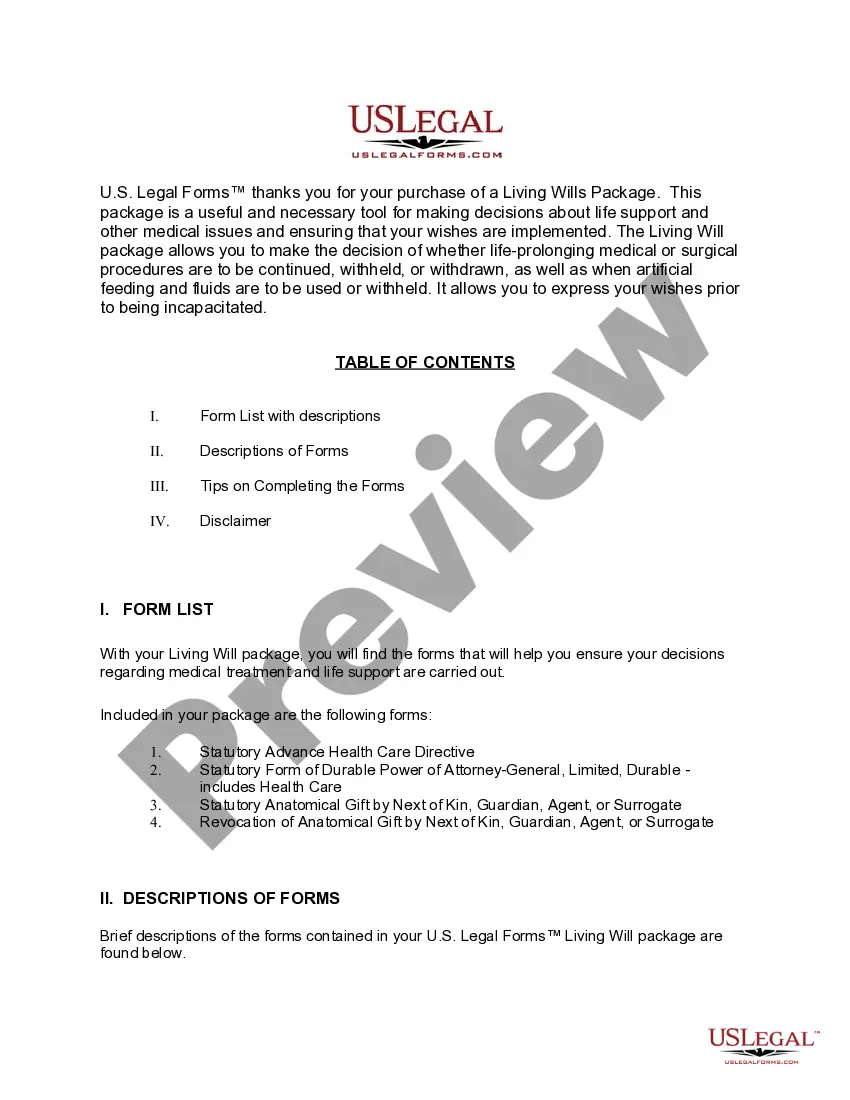
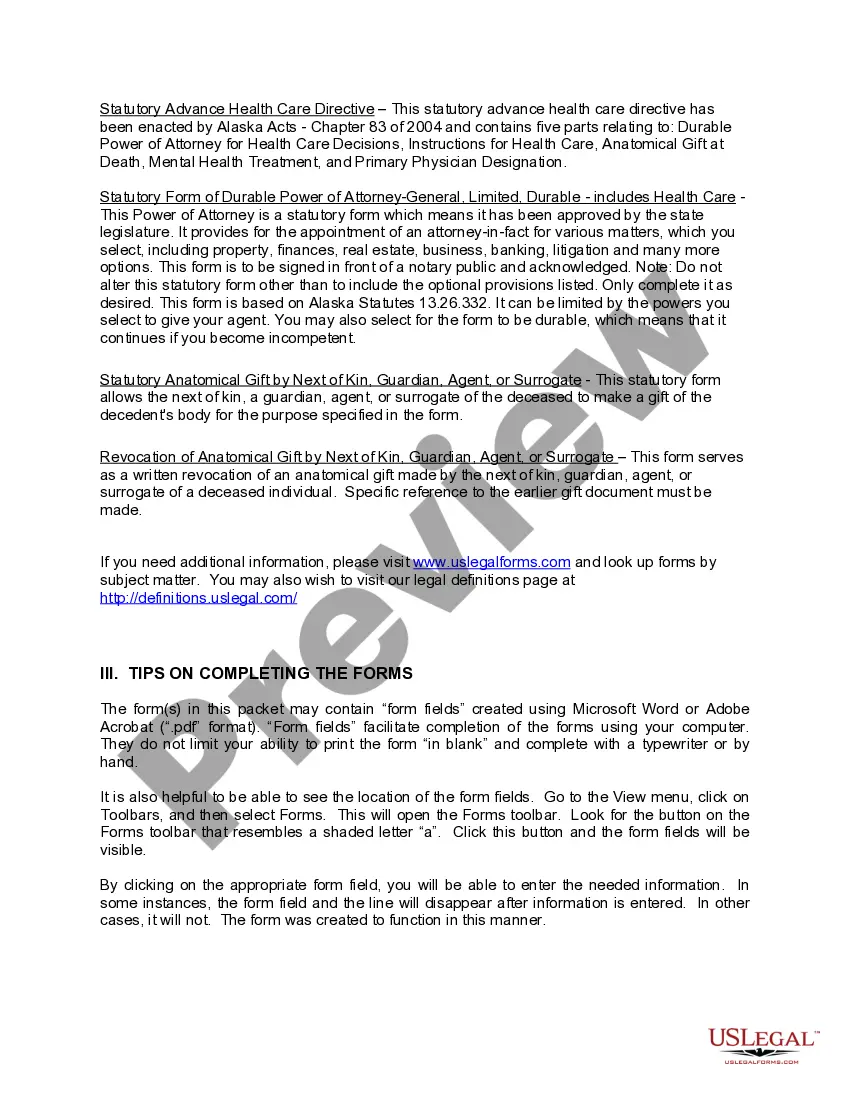
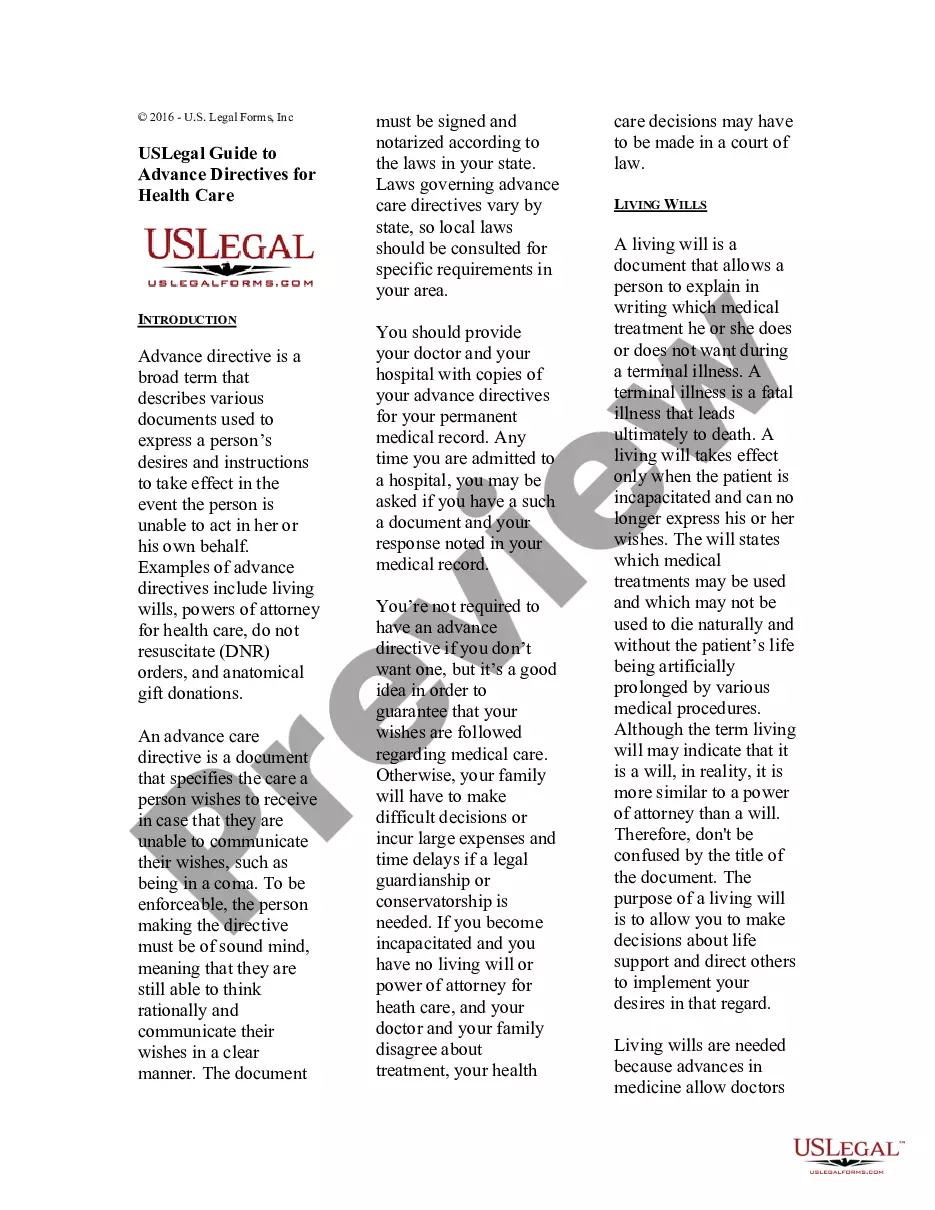
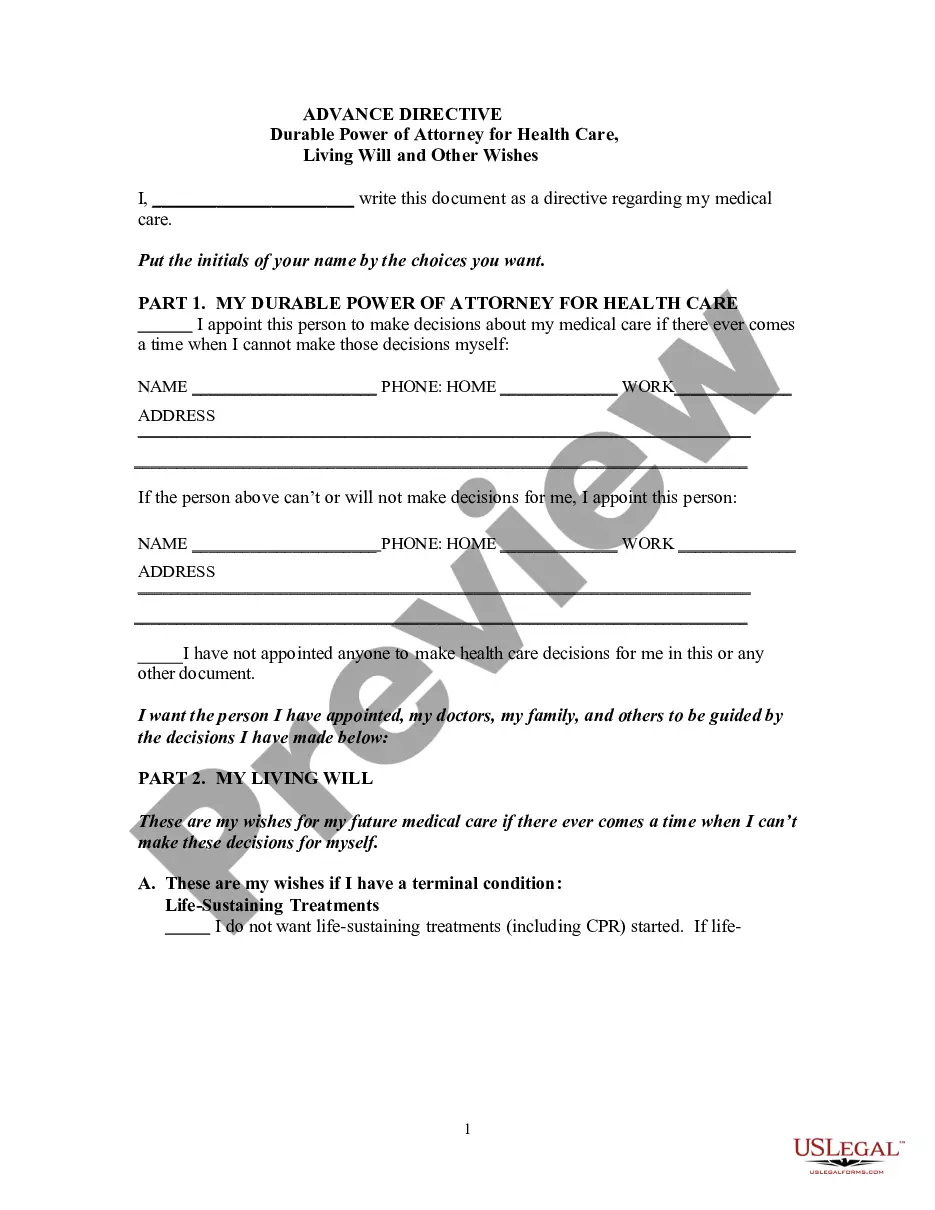
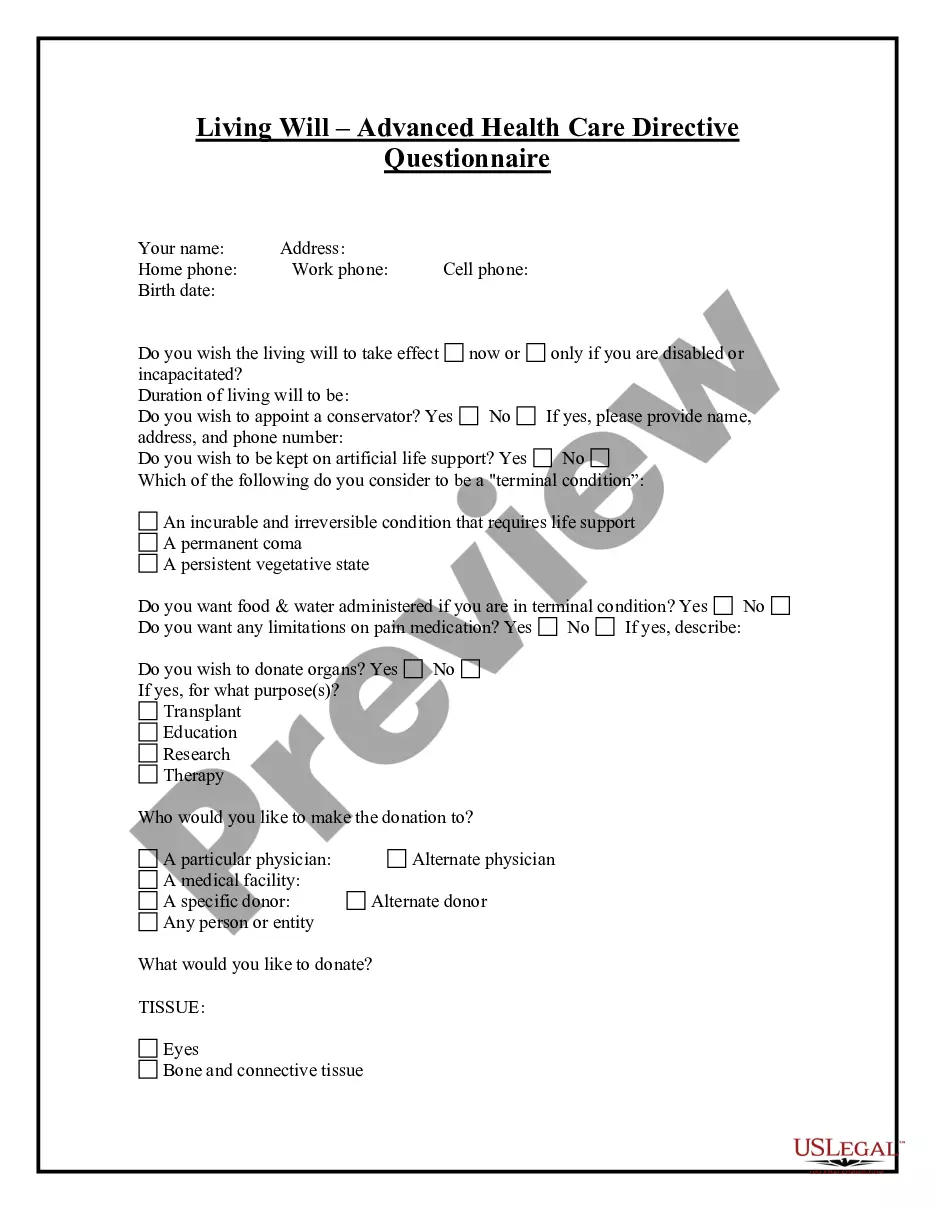
The Alaska Living Wills and Health Care Package is a comprehensive collection of legal forms designed to help individuals make informed decisions about their medical treatment preferences in the event of a terminal illness. This package stands out by providing essential statutory forms that allow you to specify the care you wish to receive and guide others in carrying out your health care wishes. It includes key documents such as the Statutory Advance Health Care Directive and Statutory Durable Power of Attorney for health care matters, ensuring your directives are both clear and legally binding.
Forms included in this package


When this form package is needed
This form package is useful in several scenarios, including:
- When you want to outline your health care preferences in advance, especially if facing a serious illness.
- If you wish to appoint someone to make medical decisions on your behalf if you are unable to do so.
- When you seek to make anatomical gifts or revoke previous gifts after death.
Who should use this form package
- Individuals planning for their future medical care.
- Those seeking to assign a Durable Power of Attorney for health care decisions.
- Family members or guardians handling wishes regarding anatomical gifts.
- Anyone wanting to ensure their health care preferences are respected.
How to prepare this document
- Review the forms included in the package carefully.
- Identify the parties involved, including yourself and any appointed agents.
- Complete the Statutory Advance Health Care Directive by stating your treatment preferences.
- Fill in the Durable Power of Attorney for health care, designating your chosen representative.
- Sign the forms in the presence of a notary or witnesses as required.
Do documents in this package require notarization?
Yes, forms in this package must be notarized to be legally valid. This includes signing the Statutory Durable Power of Attorney and the Advance Health Care Directive before a notary public. U.S. Legal Forms offers integrated online notarization for added convenience, available 24/7 through secure video calls, ensuring you can complete the process without needing to travel.
Get your form ready online
Our built-in tools help you complete, sign, share, and store your documents in one place.
Make edits, fill in missing information, and update formatting in US Legal Forms—just like you would in MS Word.
Download a copy, print it, send it by email, or mail it via USPS—whatever works best for your next step.
Sign and collect signatures with our SignNow integration. Send to multiple recipients, set reminders, and more. Go Premium to unlock E-Sign.
If this form requires notarization, complete it online through a secure video call—no need to meet a notary in person or wait for an appointment.
We protect your documents and personal data by following strict security and privacy standards.

Make edits, fill in missing information, and update formatting in US Legal Forms—just like you would in MS Word.

Download a copy, print it, send it by email, or mail it via USPS—whatever works best for your next step.

Sign and collect signatures with our SignNow integration. Send to multiple recipients, set reminders, and more. Go Premium to unlock E-Sign.

If this form requires notarization, complete it online through a secure video call—no need to meet a notary in person or wait for an appointment.

We protect your documents and personal data by following strict security and privacy standards.
Common mistakes to avoid
- Failing to sign the documents in the presence of a notary when required.
- Not updating the forms after significant life changes, such as marriage or divorce.
- Leaving sections blank or unclear, which may lead to misinterpretation.
Why use this package online
- Convenience of downloading and completing the forms from home at your own pace.
- Editability allows you to easily revise your preferences as needed.
- Access to lawyer-drafted forms, ensuring reliability and legal compliance.
Looking for another form?

Form popularity
FAQ
A living will becomes effective when your primary physician decides that you can no longer make your own healthcare decisions. If you are ill or injured and cannot express your healthcare wishes, and your doctor certifies this fact in writing, your living will takes effect.
You do not need a lawyer to make a living will, although you can get one from a lawyer if you prefer to. Every state has its own requirements for making a living will, so if you make one on your own, make sure you find a form that meets your state's requirements.
Advance directives are oral and written instructions about future medical care should your parent become unable to make decisions (for example, unconscious or too ill to communicate).A living will is one type of advance directive. It takes effect when the patient is terminally ill.
An advance health care directive or AHCD (otherwise known as a living will, personal directive, or medical directive) is a document that instructs others about your medical care should you be unable to make decisions on your own.
Living will. A living will is a written, legal document that spells out medical treatments you would and would not want to be used to keep you alive, as well as your preferences for other medical decisions, such as pain management or organ donation. In determining your wishes, think about your values.
A living will is a legal document that contains a person's medical care and treatment instructions. The purpose of a living will is to allow a person to express health care decisions while he or she is mentally able to do so.
What is an advanced health care directive? What are the components? How are they used? When do they become effective? What happens if I don't have one? Can I change my mind? If I have a living will, does that mean I won't get treatment? Where do I get these forms?
A 2004 survey by , which provides online legal information, found that 36 percent of Americans have a living will. Even when people have filled out living wills, doctors often ignore them. Good deaths are fewer than bad deaths, says Rev. Dr.
Even though they are not required to follow your wishes, most will do so.In an emergency, a physician's choices could override your living will for another reason; if proper care dictates you to be treated in a certain way or there is an ethical obligation, that could override your wishes.