Plan of complete liquidation and dissolution
Overview of this form
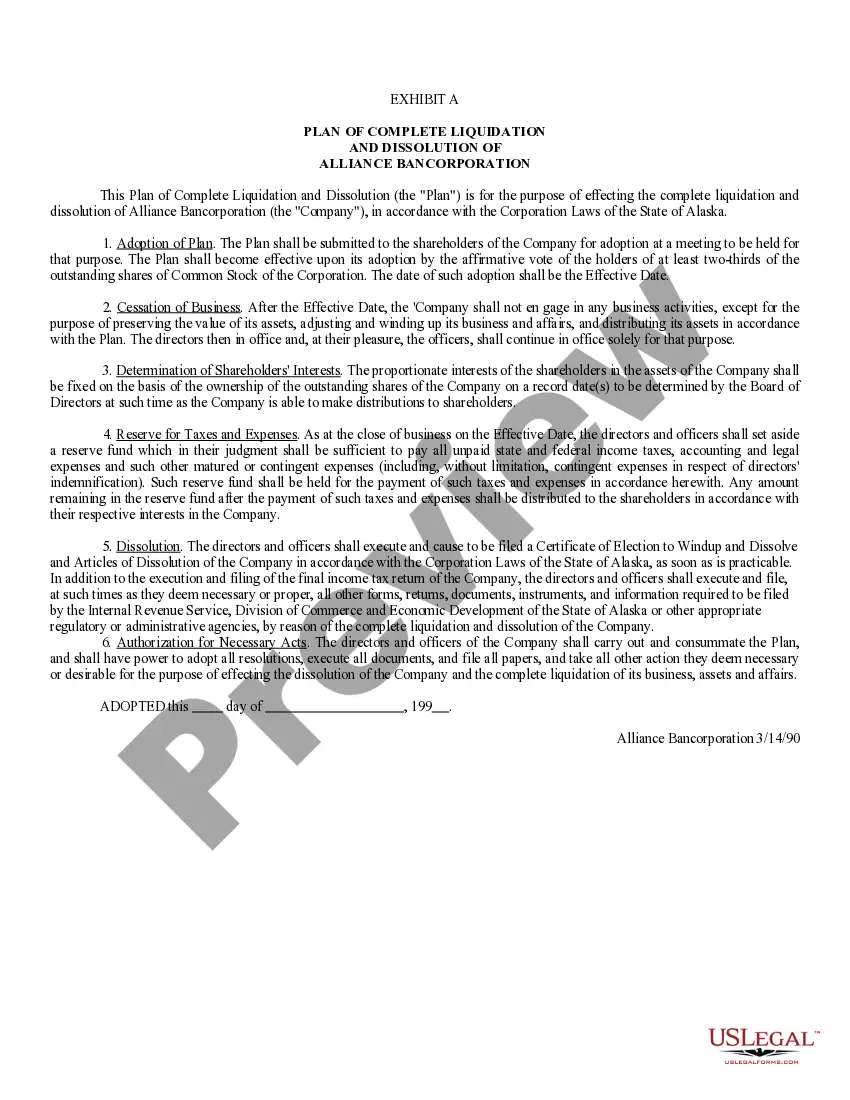
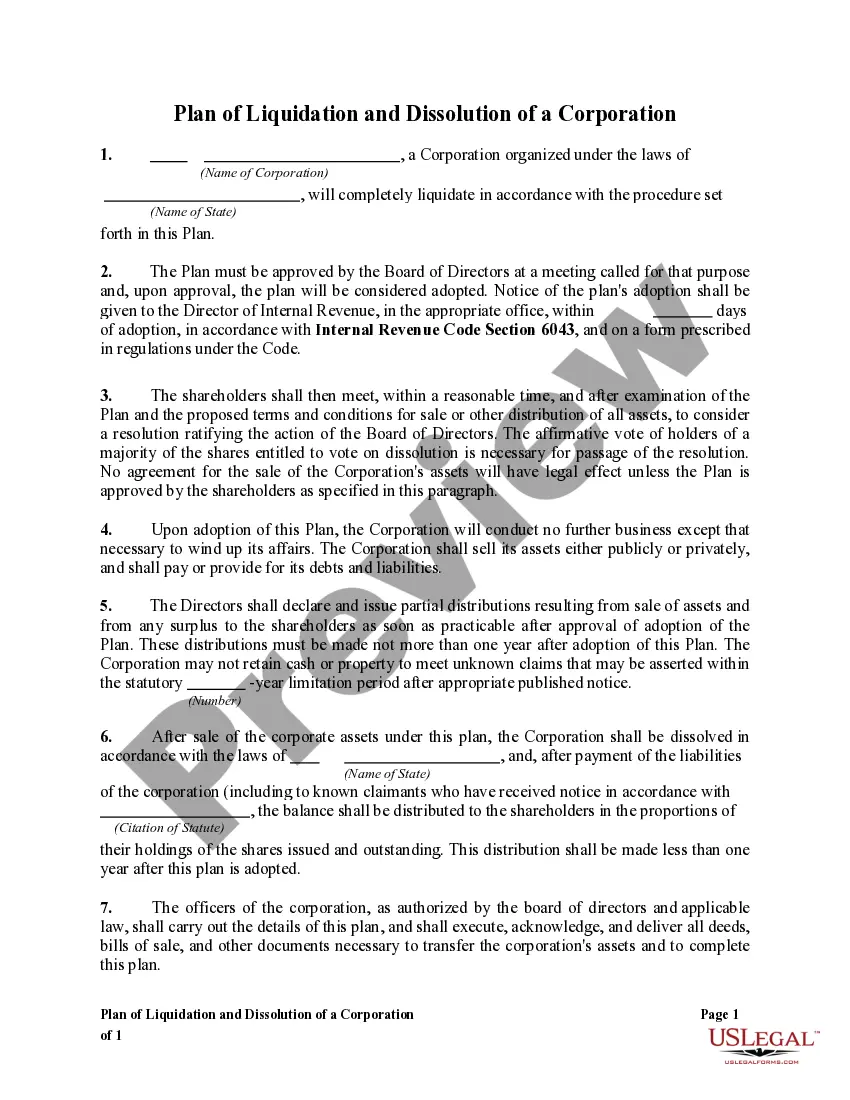
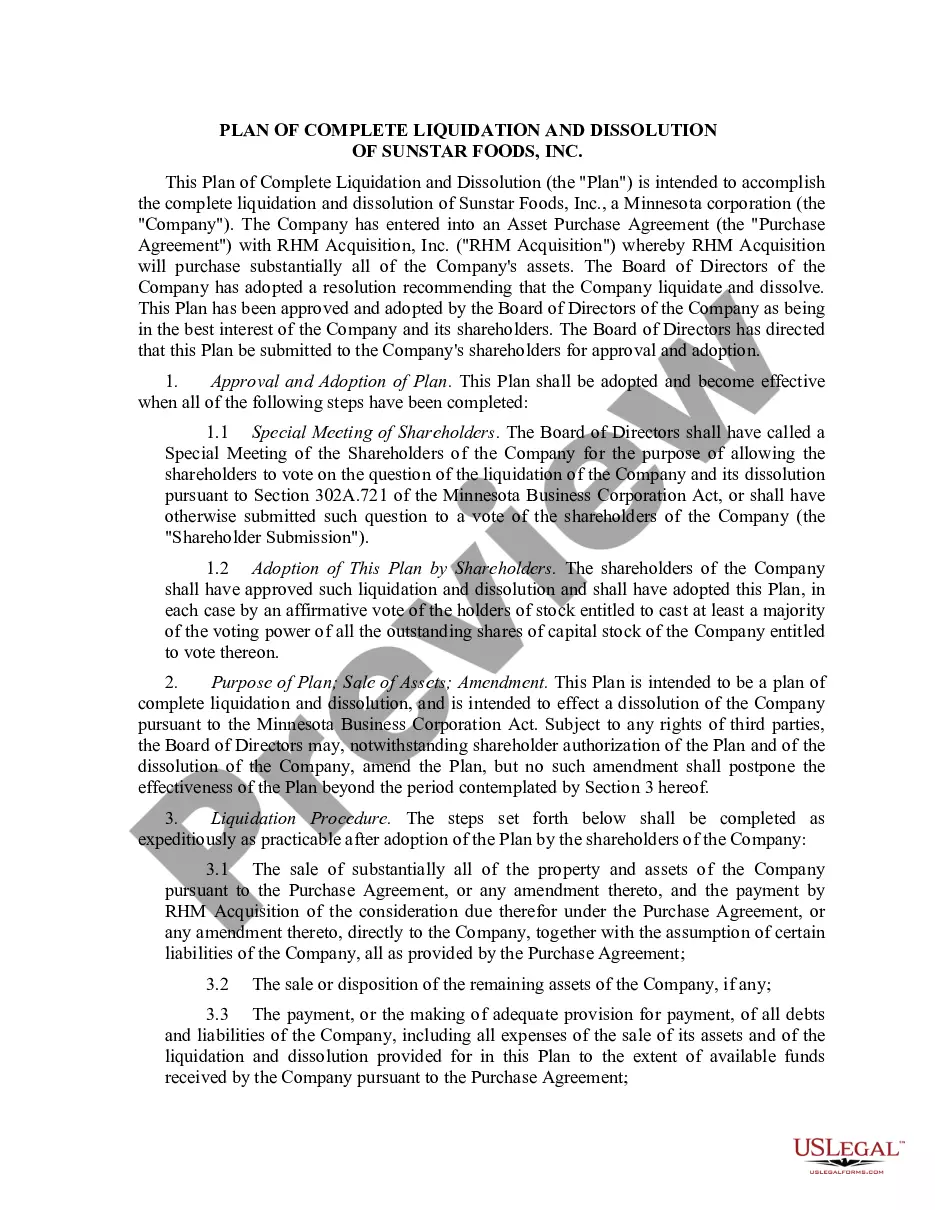
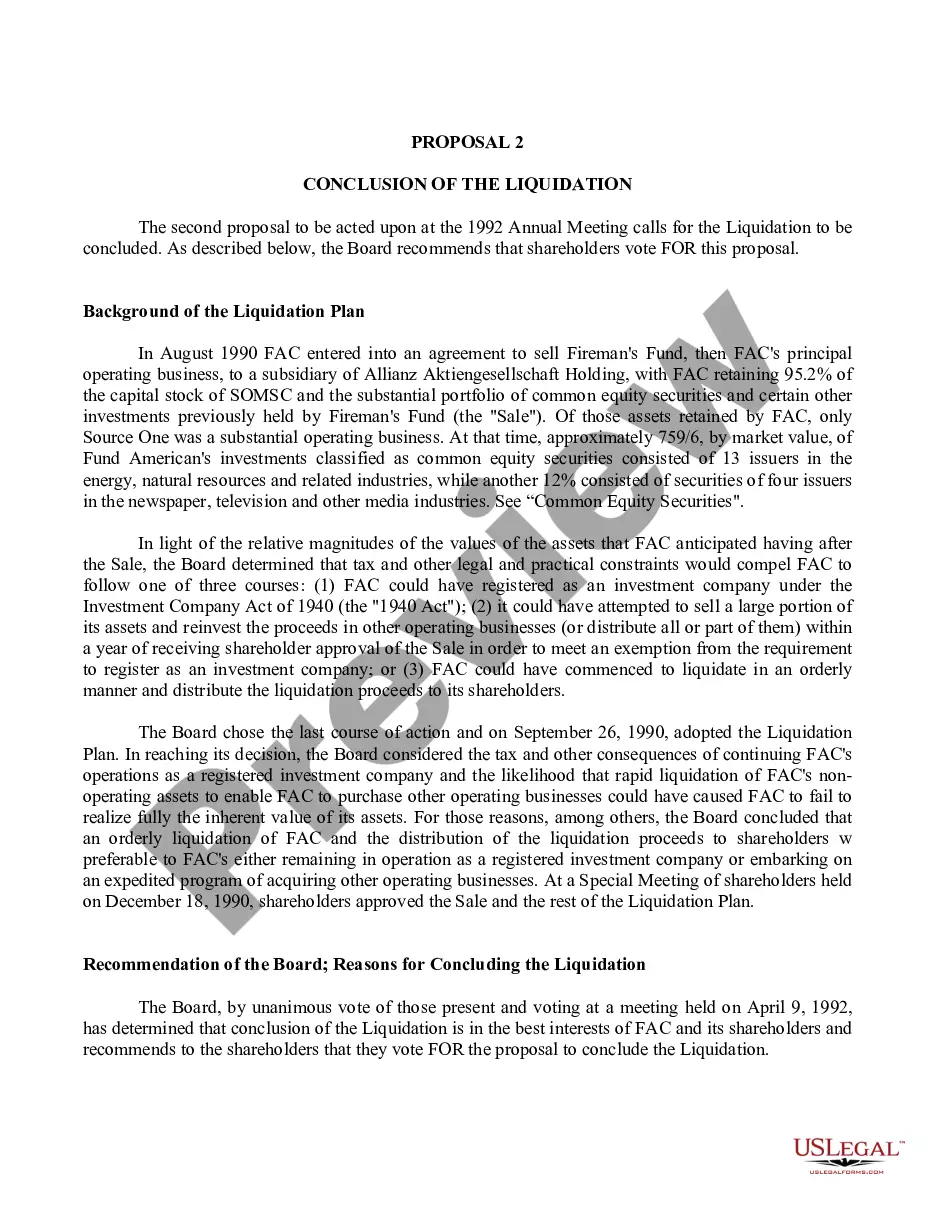
The Plan of Complete Liquidation and Dissolution is a legal document used by corporations to formalize their decision to completely dissolve the business and distribute its assets. This form outlines the necessary steps and procedures for winding up the company, ensuring compliance with relevant state laws. Unlike other corporate forms that may merely change business structure or ownership, this form serves a definitive and final purpose in terminating corporate existence.
Key components of this form
- Adoption of Plan: Details the process for shareholders to vote on the dissolution.
- Cessation of Business: Specifies that the company will halt operations after dissolution.
- Determination of Shareholders' Interests: Outlines how asset distribution is to occur among shareholders.
- Reserve for Taxes and Expenses: Defines the need for setting aside funds to cover outstanding liabilities.
- Dissolution: Covers the filing of necessary legal documents to officially dissolve the corporation.
- Authorization for Necessary Acts: Grants powers to directors and officers to execute the plan.
When to use this form
This form should be utilized when a corporation decides it no longer wishes to continue its business operations and would like to dissolve completely. Situations might include financial difficulties, merger decisions, or changes in business direction that lead to closure. It is important to have a formal plan in place to protect shareholder interests and ensure a smooth transition as assets are liquidated.
Who needs this form
- Corporate directors and officers responsible for making dissolution decisions.
- Shareholders looking to understand the implications of a complete liquidation.
- Business owners planning to wind up their operations permanently.
- Legal representatives guiding corporations through the dissolution process.
How to complete this form
- Gather necessary information about the corporation, including shareholder details.
- Draft a resolution for the shareholders to adopt during the meeting.
- Ensure that the effective date of the plan is clearly marked.
- Determine the method of valuing assets for shareholder distribution.
- Finalize legal documents required for state filing after adoption.
Notarization guidance
This form does not typically require notarization unless specified by local law. However, consulting with a legal professional is recommended to ensure compliance with any specific requirements in your jurisdiction.
Mistakes to watch out for
- Failing to properly notify all shareholders about the meeting for plan adoption.
- Neglecting to set aside adequate reserves for taxes and liabilities.
- Not following state-specific filing requirements after adopting the dissolution plan.
- Overlooking the proper valuation of assets for distribution to shareholders.
Benefits of using this form online
- Convenience of drafting and accessing the form instantly from anywhere.
- Editability allows you to customize the document to fit your corporation's specific circumstances.
- Reliability of using templates drafted by licensed attorneys for legal compliance.
Legal use & context
- Establishes a clear legal framework for winding up a corporation's affairs.
- Ensures compliance with corporate laws and regulations governing dissolution.
- Protects the rights of shareholders and accounts for tax obligations during the liquidation process.
Key takeaways
- The Plan of Complete Liquidation and Dissolution is crucial for formal business dissolution.
- All shareholders must adopt the plan for it to be effective.
- Proper asset distribution and tax obligations must be addressed before filing for dissolution.
Form popularity
FAQ
Plan of Complete Liquidation and Dissolution is a legal document corporations use to formalize winding up and completely dissolving the business and distributing assets. It outlines steps for asset distribution, cessation of operations, and the filings needed to dissolve the corporation. It should be used when a corporation decides to stop doing business and terminate its existence.
Shareholders vote to adopt the plan as described under Adoption of Plan. The plan details the process for shareholder approval of the dissolution. Once adopted, the corporation proceeds with cessation of business, determines how shareholders’ interests will be satisfied, and moves forward with the dissolution filing and final wind-up steps.
The Plan of Complete Liquidation and Dissolution specifies cessation of business as the step when the company will halt operations after winding up. This ensures all ongoing activities end in an orderly liquidation, with assets distributed and liabilities addressed before formal dissolution filings are completed.
The Reserve for Taxes and Expenses defines funds set aside to cover outstanding liabilities as part of the wind-up. By earmarking money for taxes, fees, and other expenses, the plan helps ensure creditors are paid and the asset distribution to shareholders occurs in an orderly, compliant dissolution.
Dissolution covers the filing of necessary legal documents to officially dissolve the corporation. After the plan is enacted, the appropriate dissolution filings are prepared and submitted to the relevant authorities to terminate the company's legal existence.
This plan is designed for a complete wind-up, going beyond a simple dissolution. It explicitly includes asset distribution to shareholders, a reserve for taxes and expenses, and explicit authorization for directors and officers to act, covering all steps from adoption to dissolution.