Child Care Agreement
Overview of this form
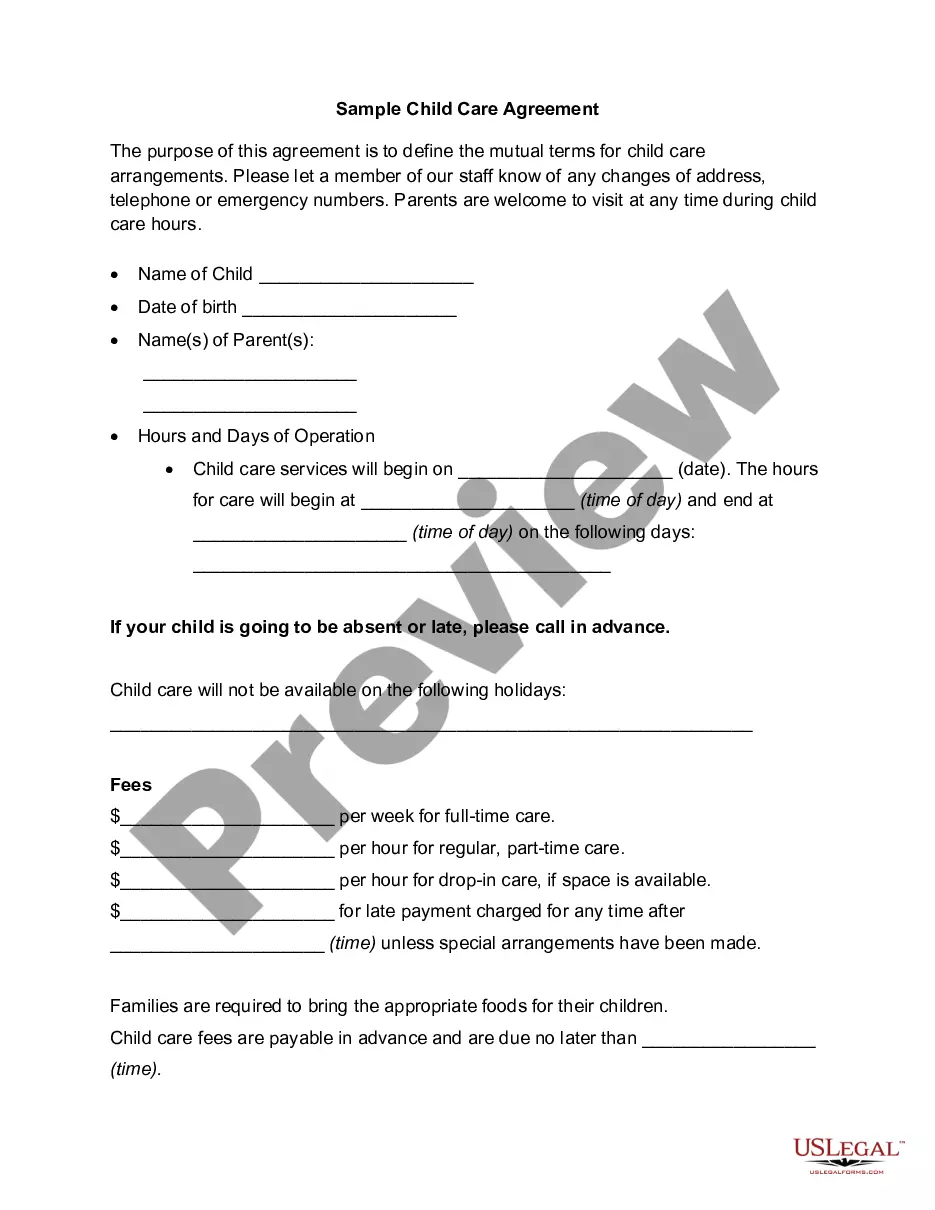
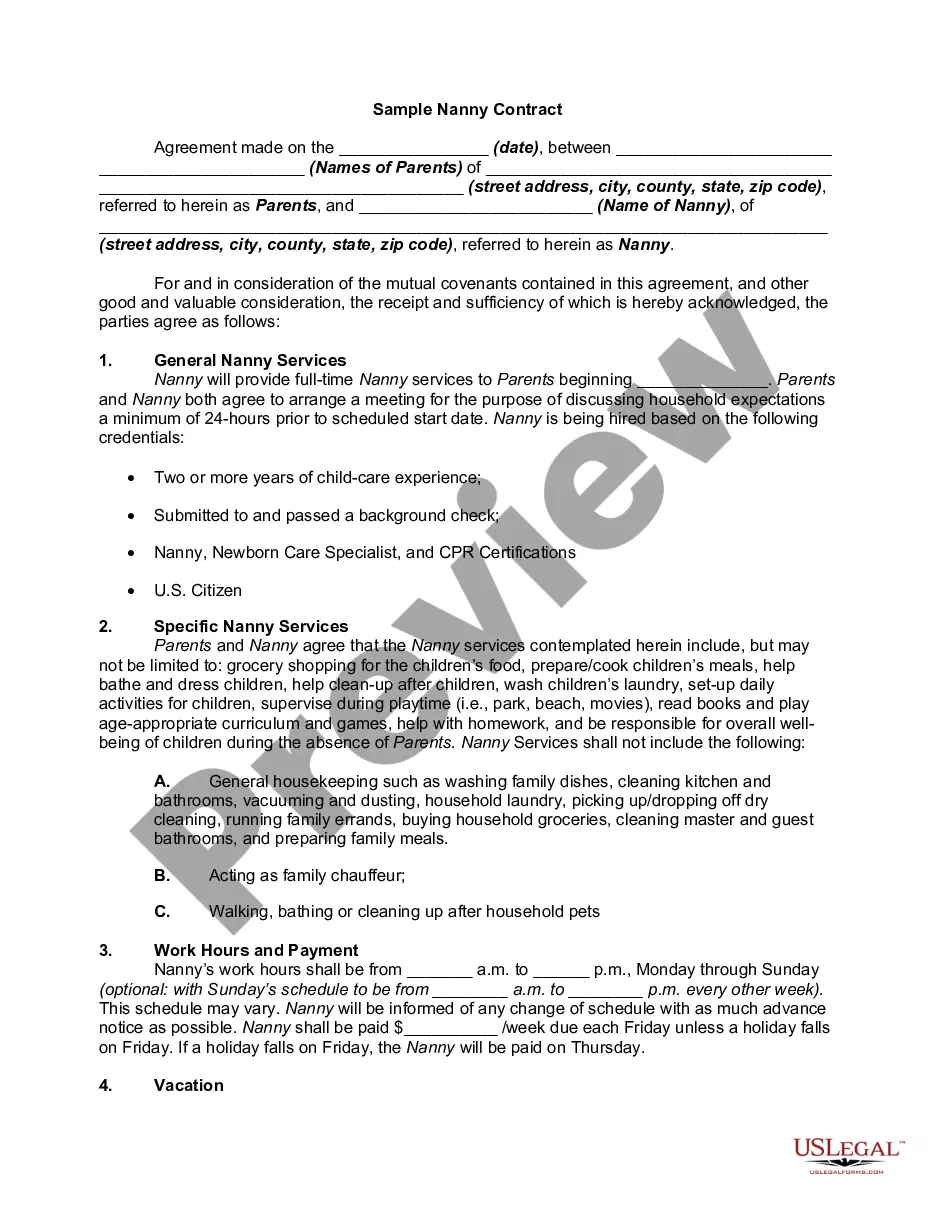
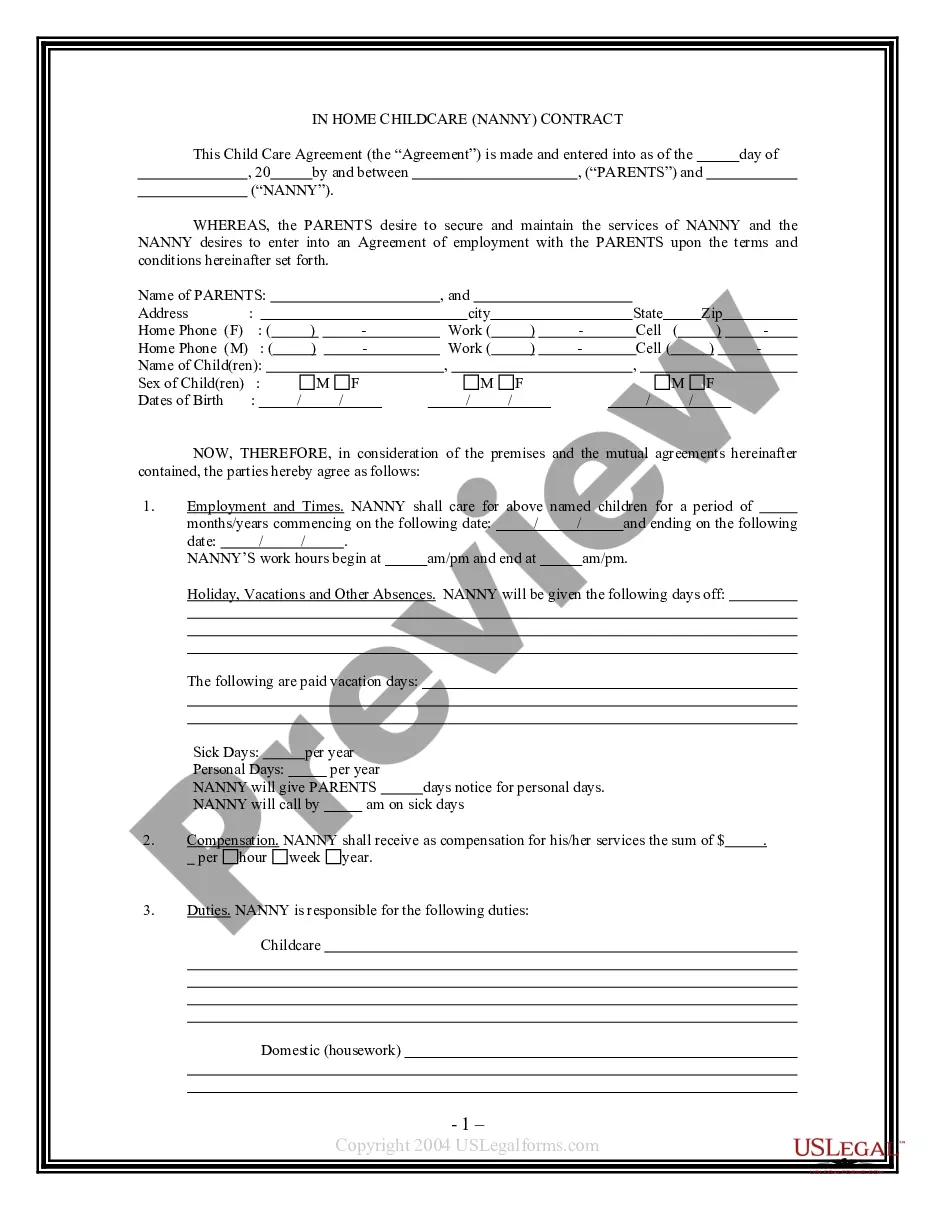
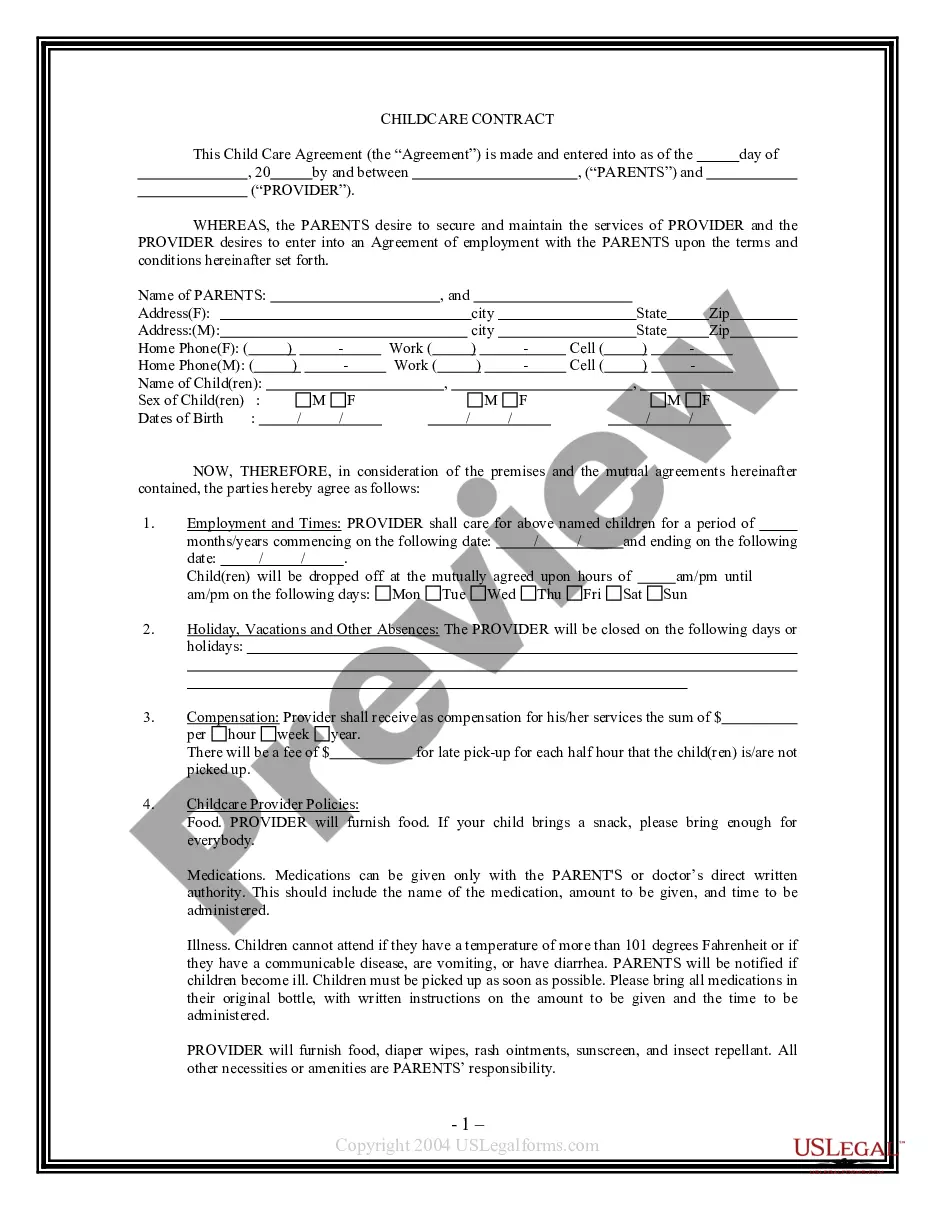
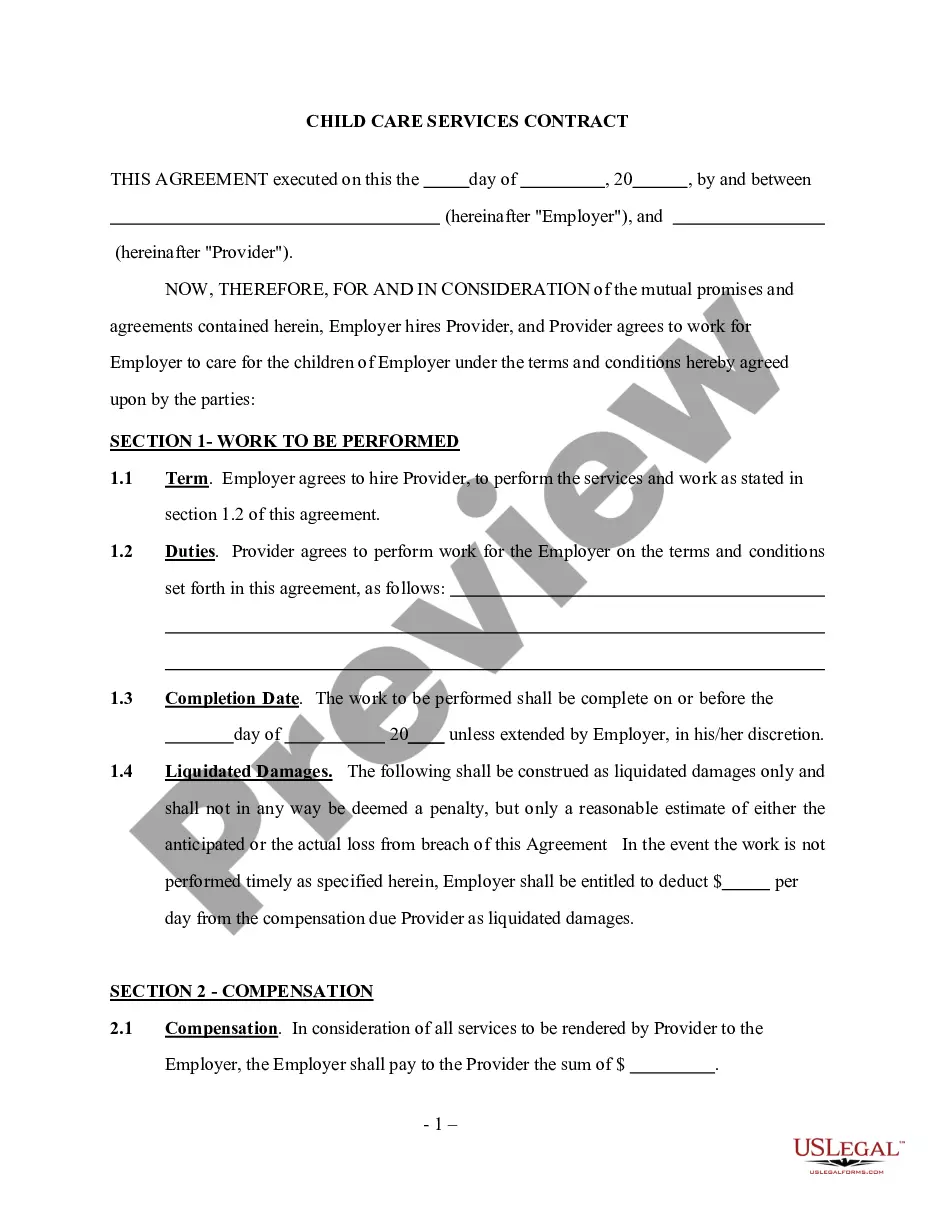
The Child Care Agreement is a legal document that establishes the terms and conditions for child care services between parents and a caregiver. This form helps clarify expectations, responsibilities, and fees, thereby reducing the likelihood of misunderstandings in child care arrangements. Unlike informal agreements, a Child Care Agreement offers a structured approach to setting up child care, ensuring both parties are on the same page.
Main sections of this form
- Identification of parties: Includes names of the child, parents, and child care provider.
- Operational details: Specifies the days and hours when care will be provided.
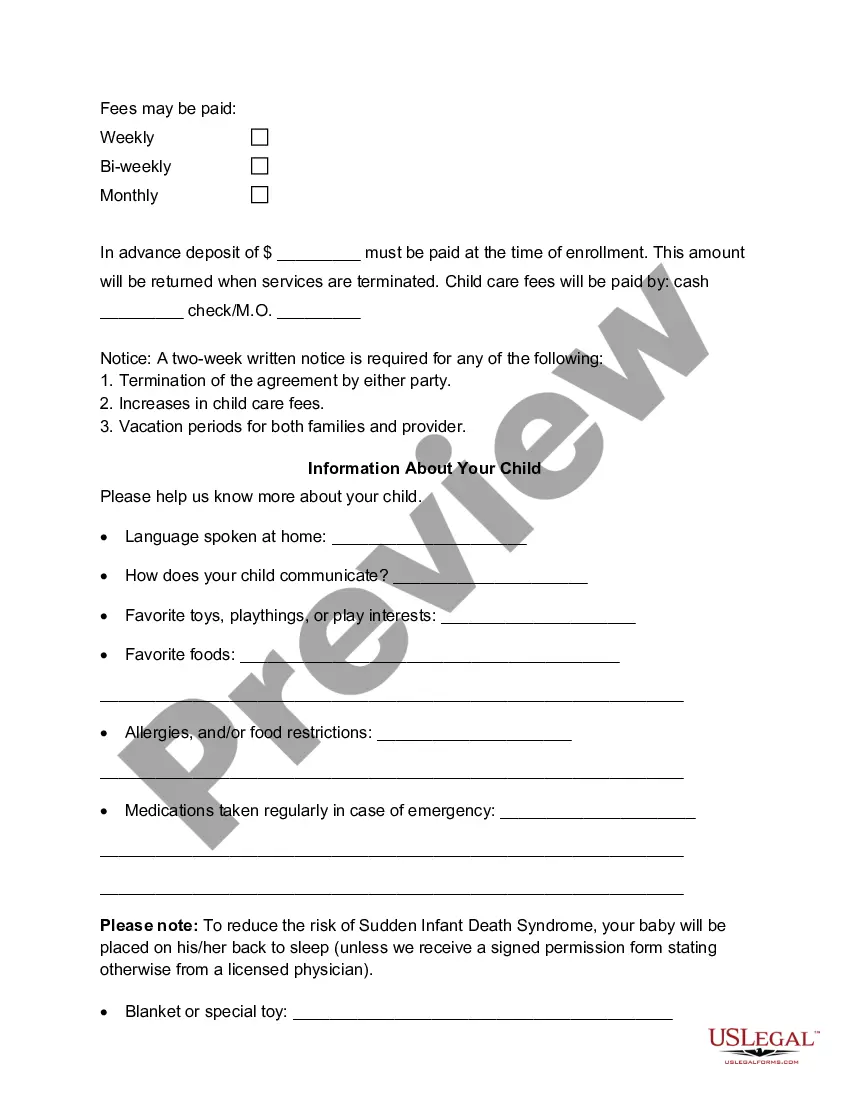
- Fee structure: Outlines payment terms for both regular and occasional care, including penalties for late payments.
- Notice requirements: Details conditions requiring written notice for changes or terminations.
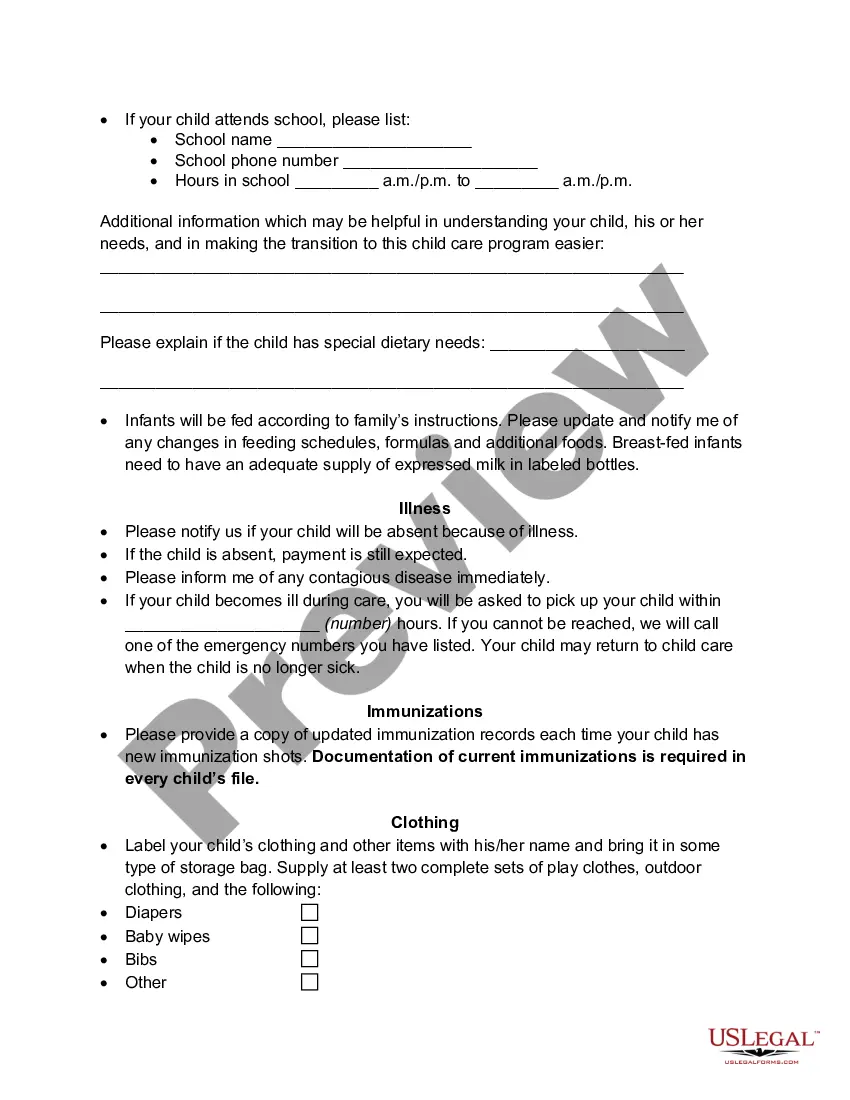
- Information about the child: Gathers important details, such as dietary restrictions and preferences.
- Illness and immunization policies: Provides guidelines for health-related absences and documentation requirements.


Common use cases
This Child Care Agreement should be used when parents seek to formalize their arrangement with a caregiver to ensure clarity in expectations regarding child care services. It is especially useful when establishing new child care relationships or when circumstances, such as fees or operational hours, change. It can also be beneficial during transitions in care or when merging care arrangements for multiple children.
Who can use this document
- Parents or guardians securing child care services for their children.
- Child care providers looking for a structured agreement to clarify responsibilities and expectations.
- Individuals entering into a new child care arrangement for the first time.
Instructions for completing this form
- Identify the parties: Fill in the names of the child and the parents, as well as the caregiver's information.
- Specify operational details: Enter the start date, daily hours, and days of the week for care.
- Detail the fee structure: Clearly outline the payment amounts and when they are due.
- Provide child information: Complete the section with details about the child's needs, health, and preferences.
- Include illness and immunization policies: Agree on the processes for dealing with absences due to illness.
- Sign and date the agreement: Ensure that all parties sign and date the form to finalize the agreement.
Notarization guidance
This form does not typically require notarization to be legally valid. However, some jurisdictions or document types may still require it. US Legal Forms provides secure online notarization powered by Notarize, available 24/7 for added convenience.
Mistakes to watch out for
- Failing to specify hours and days of operation, leading to potential misunderstandings.
- Not discussing or documenting fees and payment schedules, which can result in unexpected costs.
- Leaving out important child-specific information that may affect care.
- Neglecting to read or understand notice requirements for contract termination or changes.
Why use this form online
- Convenience: Easily download and customize the form from any device.
- Editability: Quick adjustments can be made to reflect specific needs or changes in care arrangements.
- Reliability: The form is crafted by licensed attorneys, ensuring it meets legal standards.
Key takeaways
- A Child Care Agreement is essential for establishing clear terms between parents and caregivers.
- Using this form minimizes misunderstandings and ensures all parties know their responsibilities.
- It can be adapted to suit various situations and changes in child care needs.



Form popularity
FAQ
Director Education and Experience. Educated & Highly Trained Classroom Staff. Licensing & Accreditation. Comprehensive Sign-in/Safety Policies. Age-appropriate Activities. Positive Teacher-Child Interactions. Daily Routines & Full Walls. Dedicated Reading Area.
As a child care professional, you have ethical responsibilities toward 4 groups of people. Our responsibility is to provide care and education in settings that are safe, healthy, nurturing, and responsive for each child. We support children's development and learning while respecting individual differences.
The Name of Your Business (Your First & Last Name if you don't have a business name) Your Name & The Name of Your Clients. The Name of the Child. The Business Address. The Business Phone Number. Website and/or Email (if applicable) Hours of Business.
Names and ages of children, parents/guardians and caregiver, as well as contact info for parents/guardians and caregiver. Effective start date and end date (if applicable) Compensation information: The babysitter's commitments: Emergency procedures: Termination procedures:
Your duty of care is your legal duty to take reasonable care to avoid others being harmed. First, you must take steps to identify risks: any reasonably likely harmful effects of your actions and inactions. (The law calls this reasonable foreseeability).
Supervise and monitor the safety of children. Prepare and organize mealtimes and snacks for children. Help children keep good hygiene. Change the diapers of infants and toddlers. Organize activities or implement a curriculum that allows children to learn about the world and explore their interests.
The role of an early childhood educator is to support the implementation of an approved learning framework, and support children's wellbeing, learning and development. Depending on the setting, educators may work under direct supervision or on their own within a team.
Names and ages of child(ren) that will be enrolled in child care. Parent/guardian contact information. Payment information, including: Payment rate and schedule. Termination procedures, including: Provider's right to end arrangement for any reason with a specified period of notice.