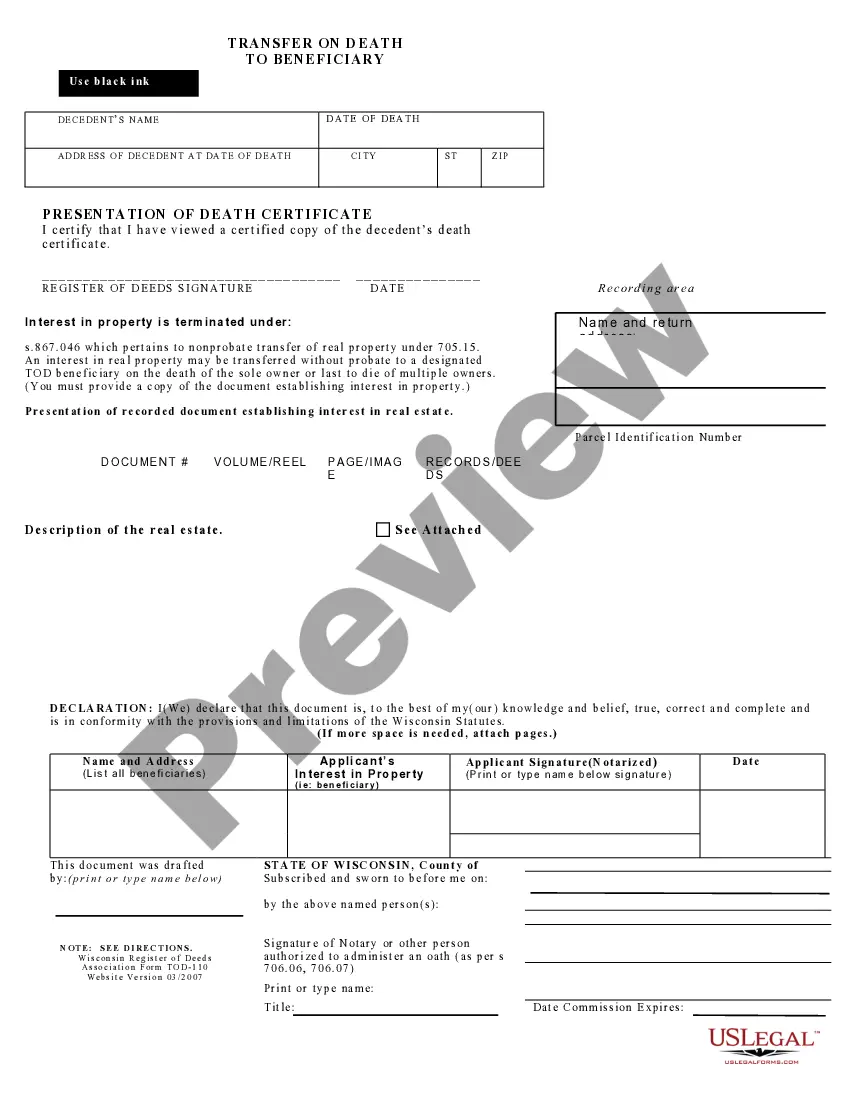
Wisconsin Tod Form With Two Points
Description

Get your form ready online
Our built-in tools help you complete, sign, share, and store your documents in one place.
Make edits, fill in missing information, and update formatting in US Legal Forms—just like you would in MS Word.
Download a copy, print it, send it by email, or mail it via USPS—whatever works best for your next step.
Sign and collect signatures with our SignNow integration. Send to multiple recipients, set reminders, and more. Go Premium to unlock E-Sign.
If this form requires notarization, complete it online through a secure video call—no need to meet a notary in person or wait for an appointment.
We protect your documents and personal data by following strict security and privacy standards.

Make edits, fill in missing information, and update formatting in US Legal Forms—just like you would in MS Word.

Download a copy, print it, send it by email, or mail it via USPS—whatever works best for your next step.

Sign and collect signatures with our SignNow integration. Send to multiple recipients, set reminders, and more. Go Premium to unlock E-Sign.

If this form requires notarization, complete it online through a secure video call—no need to meet a notary in person or wait for an appointment.

We protect your documents and personal data by following strict security and privacy standards.
Looking for another form?









How to fill out Wisconsin Transfer On Death Or TOD To Beneficiary - Official Form Used To Record Beneficiary's Interest Following Death Of Grantor?
Acquiring legal documents that adhere to federal and local regulations is a necessity, and the internet provides numerous choices.
However, what’s the benefit of spending time searching for the appropriate Wisconsin Tod Form With Two Points example online if the US Legal Forms digital library already has such documents compiled in one location.
US Legal Forms is the largest online legal repository with more than 85,000 fillable documents created by lawyers for any professional and personal circumstance.
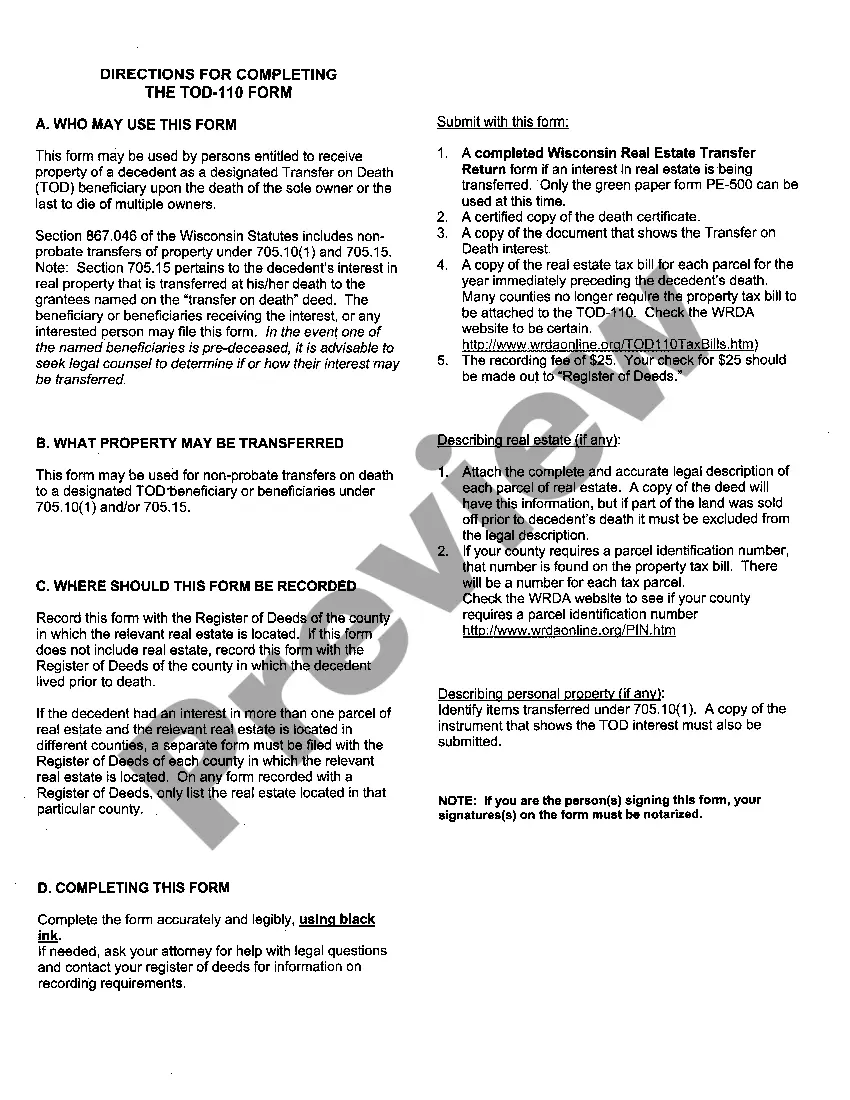
Review the template using the Preview feature or through the text outline to ensure it satisfies your requirements.
- They are simple to navigate with all files organized by state and intended use.
- Our experts stay updated with legal modifications, ensuring that your documentation is current and compliant when obtaining a Wisconsin Tod Form With Two Points from our site.
- Acquiring a Wisconsin Tod Form With Two Points is straightforward and swift for both existing and new users.
- If you already possess an account with an active subscription, Log In and save the document sample you need in the appropriate format.
- If you are new to our site, follow the instructions below.
Form popularity
FAQ
And while the process may vary slightly from state to state, there are some general, basic steps to follow. Get Your State-Specific Deed Form. Look up the requirements for the state the property is in. ... Decide on Your Beneficiary. ... Include a Description of the Property. ... Sign the New Deed. ... Record the Deed.
A TOD beneficiary is designated on a deed that must be recorded and is exempt from filing a transfer return. State the exemption from return and fee on the face of the document: "Exempt from transfer return and fee per state law (sec. 77.25(10m), Wis. Stats.)."
TOD account holders can name multiple beneficiaries and divide assets any way they like. If your TOD investment account is set up to be split evenly between your children, each will receive an even part when you die.
A Wisconsin TOD deed must include: The name of the property owner or owners whose interest a TOD deed will transfer; The TOD beneficiary's name; and. A statement that the transfer only becomes effective upon the owner's death.
The deed could get complicated, and its validity contested if it is not recorded correctly or if the legal criteria are not met. If there is no provision for a contingent beneficiary, the transfer on the death deed is rendered ineffective if the named beneficiary passes away before the property owner.