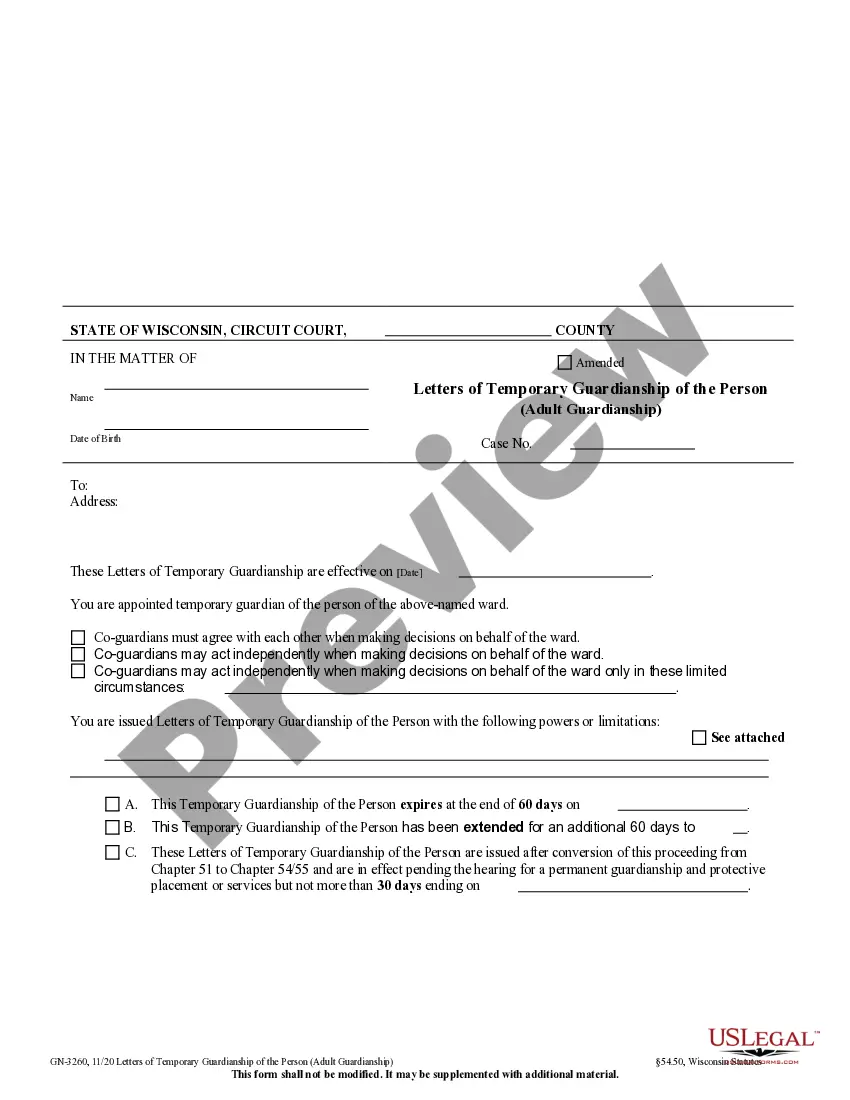
Temporary Guardianship In Wisconsin
Description
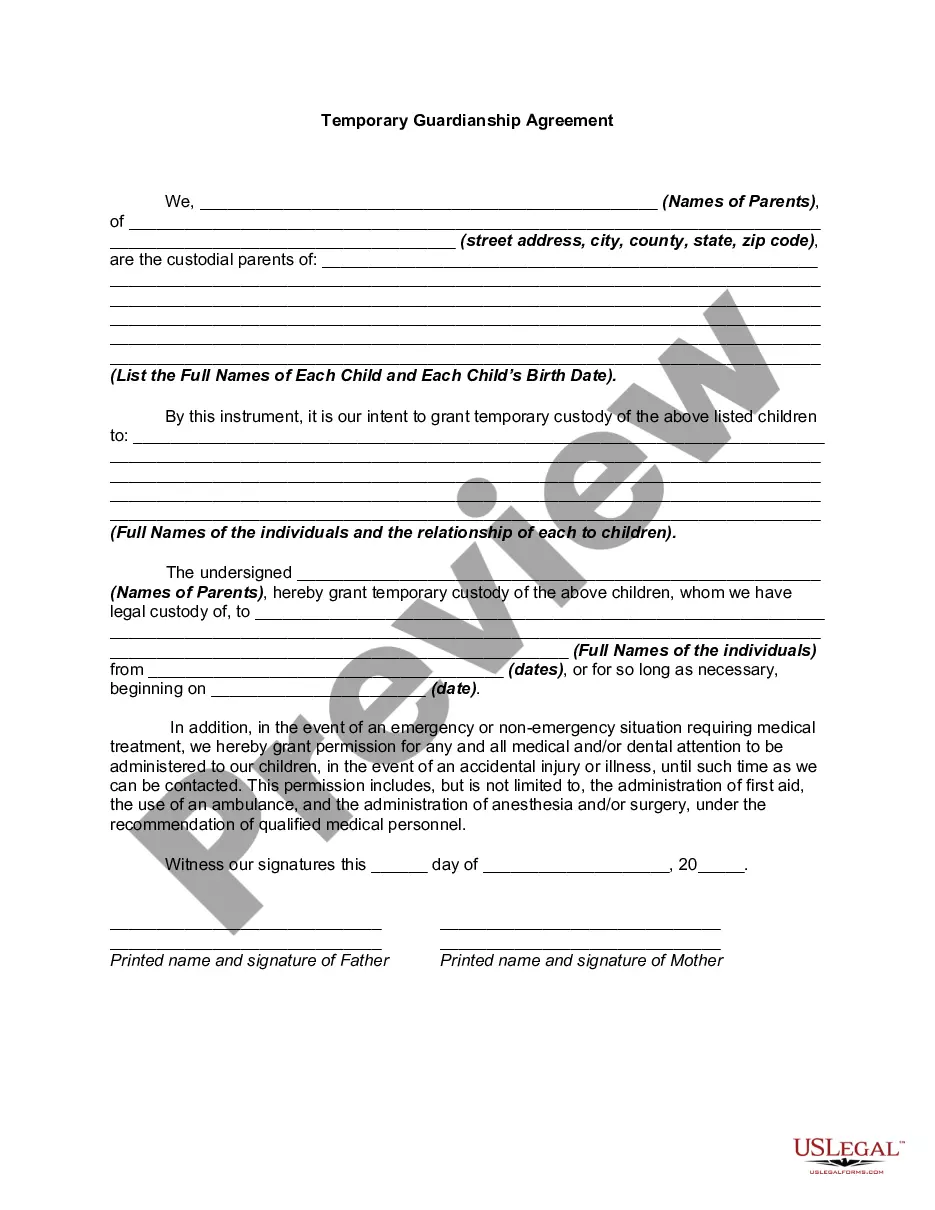
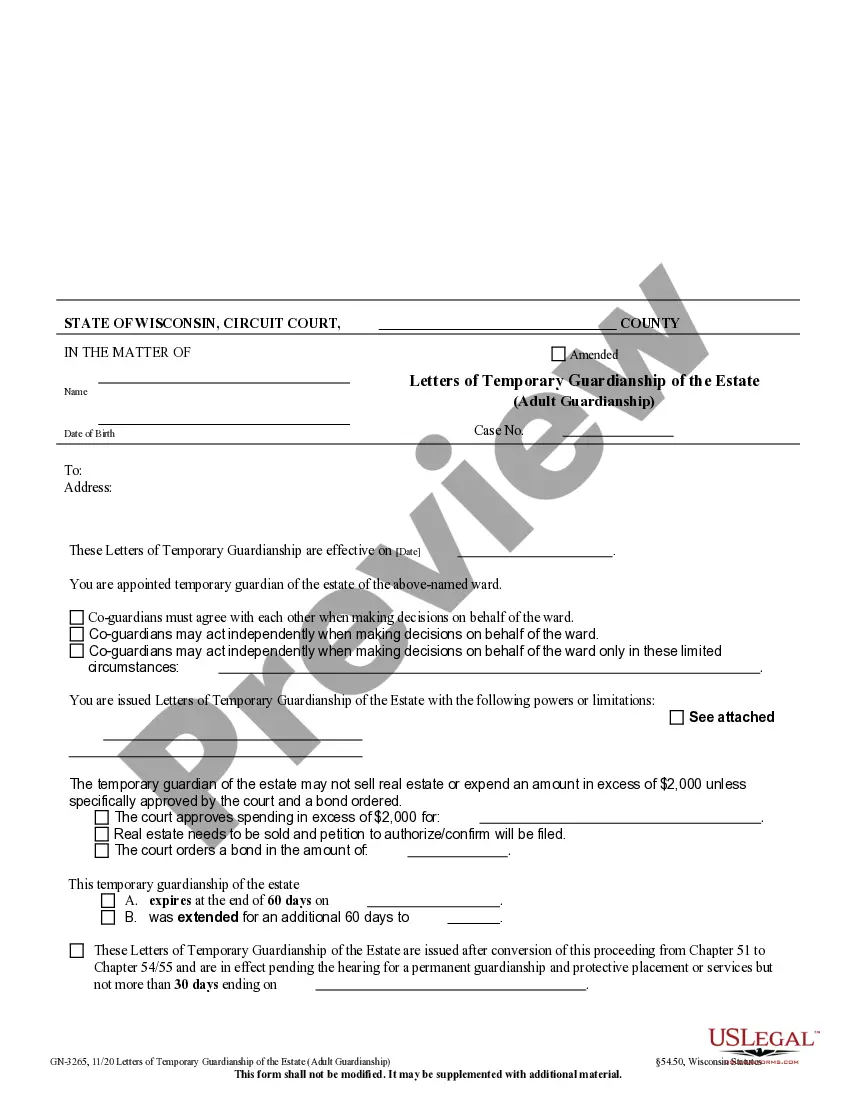
Get your form ready online
Our built-in tools help you complete, sign, share, and store your documents in one place.
Make edits, fill in missing information, and update formatting in US Legal Forms—just like you would in MS Word.
Download a copy, print it, send it by email, or mail it via USPS—whatever works best for your next step.
Sign and collect signatures with our SignNow integration. Send to multiple recipients, set reminders, and more. Go Premium to unlock E-Sign.
If this form requires notarization, complete it online through a secure video call—no need to meet a notary in person or wait for an appointment.
We protect your documents and personal data by following strict security and privacy standards.

Make edits, fill in missing information, and update formatting in US Legal Forms—just like you would in MS Word.

Download a copy, print it, send it by email, or mail it via USPS—whatever works best for your next step.

Sign and collect signatures with our SignNow integration. Send to multiple recipients, set reminders, and more. Go Premium to unlock E-Sign.

If this form requires notarization, complete it online through a secure video call—no need to meet a notary in person or wait for an appointment.

We protect your documents and personal data by following strict security and privacy standards.
Looking for another form?








Form popularity
FAQ
Temporary guardianship in Wisconsin allows an individual to care for a minor or an incapacitated adult for a limited period. This arrangement is often necessary during emergencies or when the legal guardian is unable to fulfill their responsibilities. The court typically grants this status following a proper petition and consideration of the best interests of the individual involved. It's crucial to grasp the implications of temporary guardianship in Wisconsin to ensure the well-being of your loved ones.
In Wisconsin, the individual seeking temporary guardianship typically bears the costs associated with the process. These expenses may include court fees, attorney costs, and any necessary assessments. However, some individuals may qualify for state assistance or legal aid, particularly if they demonstrate financial need. Understanding these costs helps you plan effectively for temporary guardianship in Wisconsin.
Guardianship in Wisconsin refers to a legal arrangement where a guardian is appointed to care for a minor or an incapacitated individual. This arrangement can include temporary guardianship, which is typically short-term and allows the guardian to make decisions on behalf of the individual. Understanding the nuances of this legal definition can help families make informed choices. For assistance with legal documents, uslegalforms offers valuable resources to guide you through the process.
A guardian under temporary guardianship in Wisconsin can make important decisions regarding the child's education, healthcare, and daily living. This role includes providing emotional support and ensuring the child's needs are met. However, the specific powers may vary based on the court's decision and the child's situation. It's crucial to understand these responsibilities fully.
Custody typically refers to the legal relationship concerning a child's living arrangements and decision-making. In contrast, temporary guardianship in Wisconsin grants a guardian specific authority over a child's care and welfare. While custody often remains with the parents, guardianship can be a temporary solution during challenging times. If you face these circumstances, exploring your options with uslegalforms can help simplify the process.
In Wisconsin, temporary guardianship does not completely override parental rights. However, it can limit a parent's authority while the guardianship is in effect. The court considers the best interests of the child when making these decisions. If you're navigating these issues, consulting a legal expert can provide clarity and support.
Temporary guardianship in Wisconsin and custodianship serve different roles. A guardian is appointed to make decisions for a child or individual when parents cannot, while a custodian is responsible for providing physical care. Both roles focus on the well-being of the minor, but guardianship often includes broader responsibilities. Understanding these differences is essential when considering legal arrangements.
To begin the guardianship process in Wisconsin, you must file a petition in the appropriate court. This petition typically includes evidence demonstrating why guardianship is needed, especially focusing on the best interests of the individual requiring support. Additionally, you can seek assistance from platforms like US Legal Forms to navigate the paperwork and ensure you comply with all legal requirements. Taking these initial steps can make the process smoother and more efficient.
Temporary guardianship in Wisconsin typically lasts for a specified period, often until a court hearing can determine a more permanent solution. Generally, this arrangement can be granted for up to 60 days, but extensions may occur if necessary. During this time, the temporary guardian has legal responsibilities for the ward. It’s essential to understand these time limits to plan accordingly.
Temporary guardianship in Wisconsin generally lasts for up to one year. However, the duration can be adjusted based on the individual's needs and circumstances. If renewed, the court will reassess the situation to ensure that the temporary guardianship is still necessary for the welfare of the individual involved.