Wisconsin Law For Lunch Breaks
Description

Get your form ready online
Our built-in tools help you complete, sign, share, and store your documents in one place.
Make edits, fill in missing information, and update formatting in US Legal Forms—just like you would in MS Word.
Download a copy, print it, send it by email, or mail it via USPS—whatever works best for your next step.
Sign and collect signatures with our SignNow integration. Send to multiple recipients, set reminders, and more. Go Premium to unlock E-Sign.
If this form requires notarization, complete it online through a secure video call—no need to meet a notary in person or wait for an appointment.
We protect your documents and personal data by following strict security and privacy standards.

Make edits, fill in missing information, and update formatting in US Legal Forms—just like you would in MS Word.

Download a copy, print it, send it by email, or mail it via USPS—whatever works best for your next step.

Sign and collect signatures with our SignNow integration. Send to multiple recipients, set reminders, and more. Go Premium to unlock E-Sign.

If this form requires notarization, complete it online through a secure video call—no need to meet a notary in person or wait for an appointment.

We protect your documents and personal data by following strict security and privacy standards.
Looking for another form?









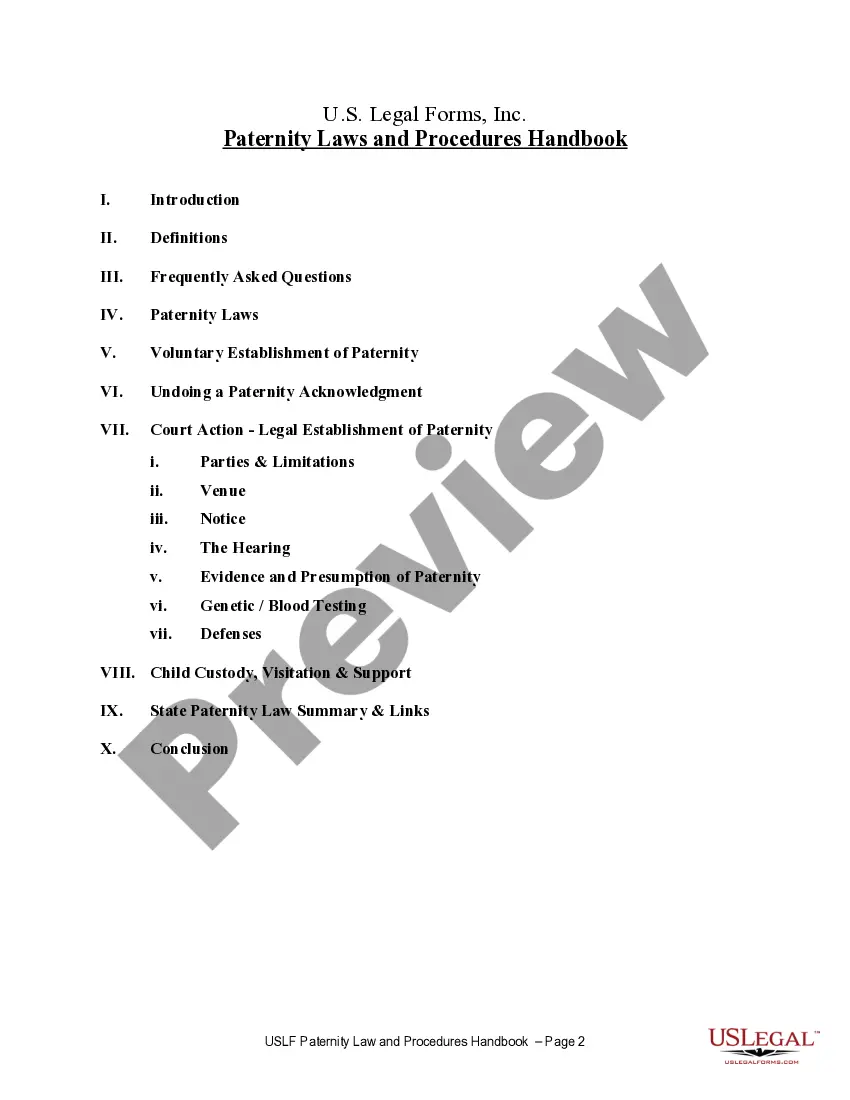
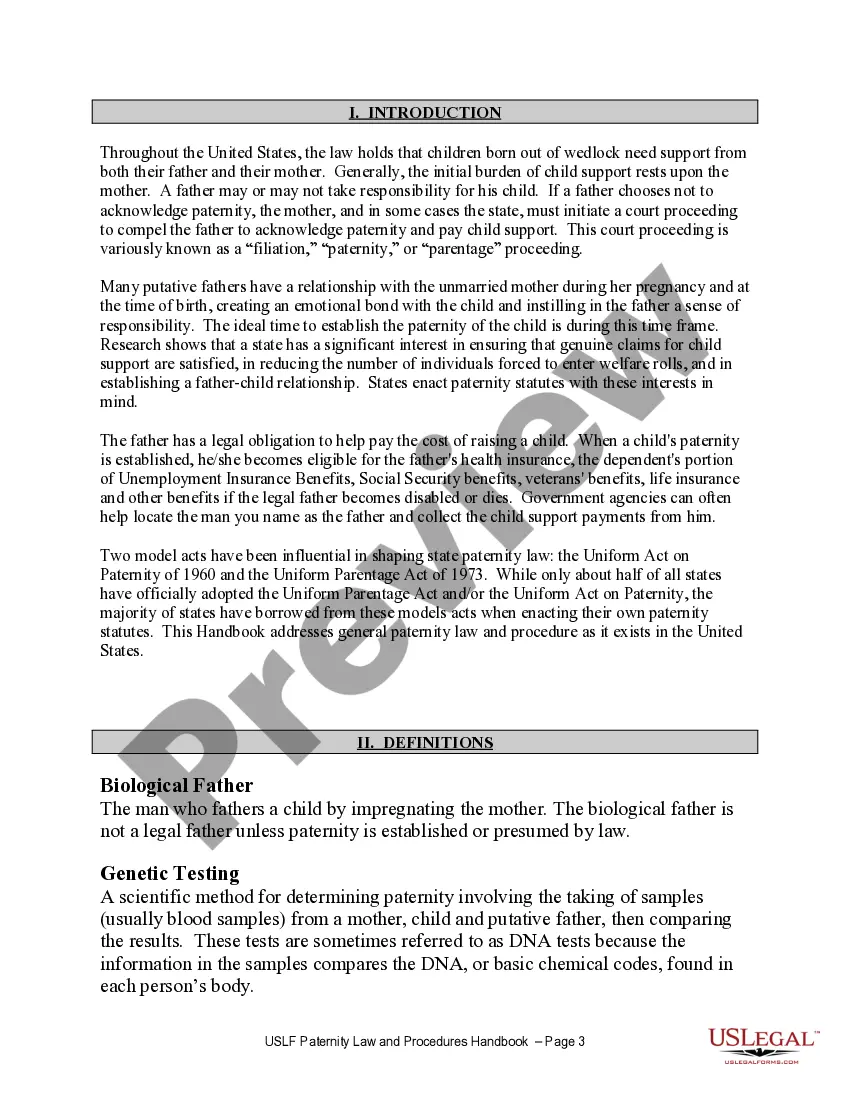
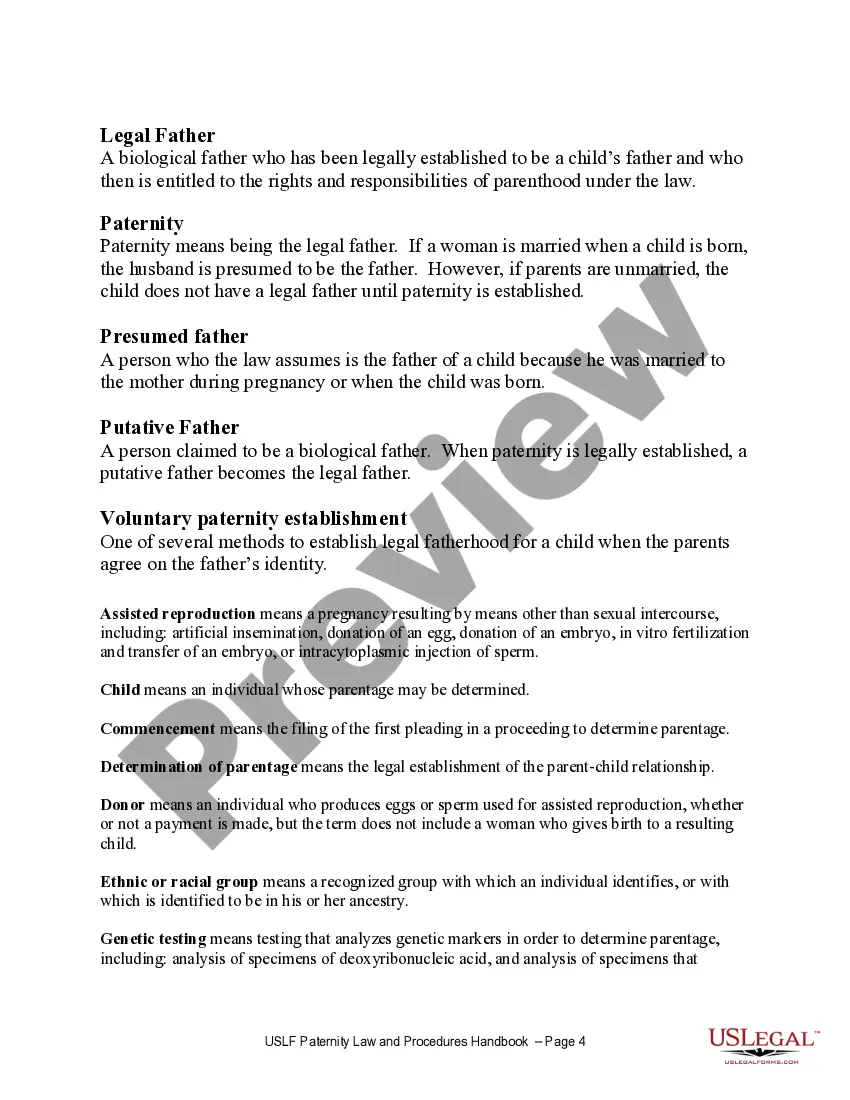
How to fill out Wisconsin Paternity Law And Procedure Handbook?
Managing legal documents and processes can be an arduous addition to your entire day.
Wisconsin Law For Lunch Breaks and similar forms typically necessitate you to search for them and comprehend how to fill them out efficiently.
Consequently, whether you are addressing financial, legal, or personal affairs, having a thorough and accessible online directory of forms readily available will greatly benefit you.
US Legal Forms is the leading online platform for legal templates, providing over 85,000 state-specific forms and a range of resources that will assist you in completing your documents swiftly.
Is it your first time using US Legal Forms? Sign up and establish your account in a few moments to gain access to the form directory and Wisconsin Law For Lunch Breaks. Then, follow these steps to finalize your form: Make sure you select the correct form using the Preview feature and reviewing the form details. Click Buy Now when ready, and choose the subscription plan that fits your needs. Select Download and then complete, sign, and print the form. US Legal Forms has twenty-five years of experience assisting clients with their legal documents. Obtain the form you need today and streamline any process without breaking a sweat.
- Explore the directory of suitable documents available to you with just one click.
- US Legal Forms provides state- and county-specific forms accessible at any time for download.
- Protect your document management processes using a top-tier service that enables you to create any form within a few minutes without any additional or hidden fees.
- Simply Log In to your account, find Wisconsin Law For Lunch Breaks, and download it immediately from the My documents section.
- You can also retrieve previously stored forms.
Form popularity
FAQ
While providing a 2-week notice is customary and often appreciated, Wisconsin law does not mandate it for all employment situations. Some employers may have policies that require notice, while others might not enforce such a rule. Checking your company’s policies ensures clarity around resignation processes and expectations.
For an 8-hour shift, Wisconsin law recommends that employees receive at least a 30-minute meal break. However, employers may set specific policies regarding breaks, so it’s wise to confirm your company's rules. Understanding your rights under Wisconsin law for lunch breaks helps ensure you take the necessary time to recharge during your workday.
An LLC can protect assets from personal lawsuit creditors. When a judgment is entered against a member individually, that individual member's personal creditor generally cannot seize any assets of the LLC. Creditors of an individual member usually only have some rights to distributions from the LLC should any occur.
Wyoming's charging order protection laws are effective for members to protect their LLC assets and ownership from creditors. However, that protection does not extend outside of Wyoming. Members living out of state will have to deal with different laws protecting their LLC assets from garnishment by creditors.
Wyoming is one of the most tax-friendly states for Anonymous LLCs, with no corporate income tax and annual fees as low as $50. These LLCs are also sought after due to the strict privacy laws that surround them.
A Wyoming LLC costs $100 to file with the Secretary of State, plus any registered agent and handling charges. We charge $199 which includes the Secretary's fee. Wyoming requires an annual report for LLCs to be filed on the first day of the month in which the company is formed.
A Wyoming LLC is anonymous if you want it to be. Wyoming does not require members or managers be listed, only the registered agent and person who files the paperwork. Every WY LLC we file is private. Creating an anonymous LLC in Wyoming is as simple as finding a registered agent willing to act as the organizer.
New Mexico This is the only state that does not require disclosure of the ownership of an anonymous LLC to the state, which means your business can expect the strongest privacy and confidentiality. Delaware, Nevada and Wyoming do require identification of owners to the state.
Wyoming LLC Fees Our Wyoming LLC formation service costs $199 the the first year. This includes everything you need to take to the bank except an EIN. In future years, the annual report is $50 and our agent service is $59.
Along with the possible benefits of registering an anonymous LLC come some drawbacks: Anonymity is not guaranteed 100%. The state, bank, IRS, clients, partners, and vendors may be privy to the LLC owner's private information. The privacy protections given to owners of anonymous LLCs vary from state to state.