Wisconsin Transfer Death Deed With Spouse
Description


Get your form ready online
Our built-in tools help you complete, sign, share, and store your documents in one place.
Make edits, fill in missing information, and update formatting in US Legal Forms—just like you would in MS Word.
Download a copy, print it, send it by email, or mail it via USPS—whatever works best for your next step.
Sign and collect signatures with our SignNow integration. Send to multiple recipients, set reminders, and more. Go Premium to unlock E-Sign.
If this form requires notarization, complete it online through a secure video call—no need to meet a notary in person or wait for an appointment.
We protect your documents and personal data by following strict security and privacy standards.

Make edits, fill in missing information, and update formatting in US Legal Forms—just like you would in MS Word.

Download a copy, print it, send it by email, or mail it via USPS—whatever works best for your next step.

Sign and collect signatures with our SignNow integration. Send to multiple recipients, set reminders, and more. Go Premium to unlock E-Sign.

If this form requires notarization, complete it online through a secure video call—no need to meet a notary in person or wait for an appointment.

We protect your documents and personal data by following strict security and privacy standards.
Looking for another form?








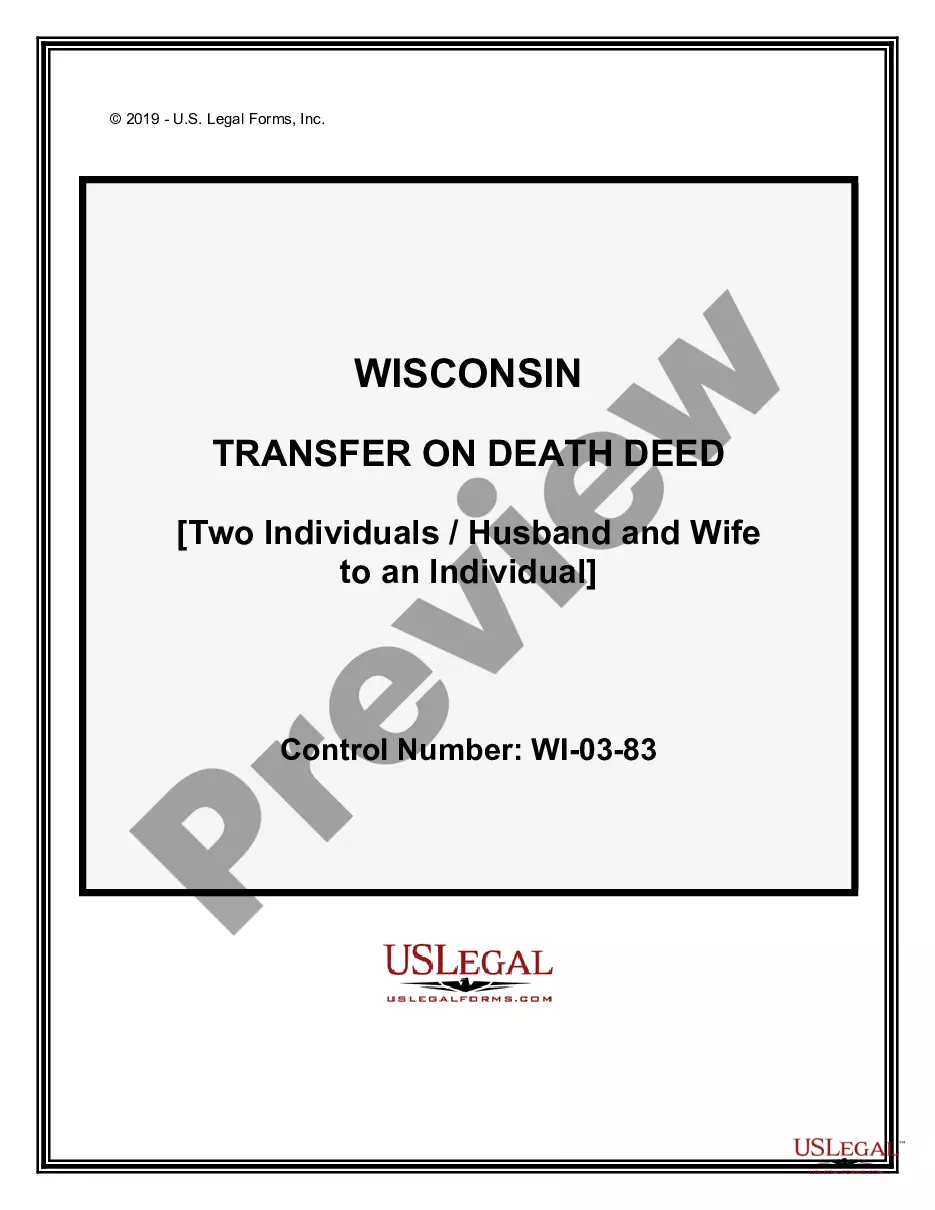
How to fill out Wisconsin Transfer On Death Deed Or TOD - Beneficiary Deed From Two Individuals To An Individual?
Legal administration can be overwhelming, even for experienced professionals.
When you are looking for a Wisconsin Transfer Death Deed With Spouse and lack the time to search for the right and current version, the tasks may be burdensome.
US Legal Forms addresses any needs you may have, from personal to business documents, all in one location.
Utilize advanced tools to complete and manage your Wisconsin Transfer Death Deed With Spouse.
Here are the steps to follow after finding the form you require: Verify it is the correct form by previewing it and reading its description. Ensure that the template is recognized in your state or county. Click Buy Now when you are ready. Choose a monthly subscription plan. Select the format you need, and Download, complete, sign, print, and send your document. Take advantage of the US Legal Forms online library, supported by 25 years of experience and reliability. Transform your daily document management into a seamless and user-friendly process today.
- Access a valuable resource library of articles, guides, and materials pertinent to your situation and requirements.
- Save time and effort searching for the documents you need, using US Legal Forms’ advanced search and Review tool to find and download your Wisconsin Transfer Death Deed With Spouse.
- If you hold a subscription, Log In to your US Legal Forms account, look for the form, and download it.
- Check the My documents tab to see the documents you have previously downloaded and manage your folders as desired.
- If this is your first experience with US Legal Forms, create a free account and gain unlimited access to all the benefits of the library.
- A comprehensive online form library can be transformative for anyone who wants to handle these matters effectively.
- US Legal Forms is a frontrunner in digital legal forms, with over 85,000 state-specific legal documents accessible at any time.
- With US Legal Forms, you can access state- or county-specific legal and organizational documents.
Form popularity
FAQ
In Wisconsin, a spouse does not automatically inherit everything unless the deceased had no will or other estate planning documents. The law provides that a surviving spouse typically receives a significant portion of the deceased spouse's estate. However, for a more streamlined process, a Wisconsin transfer death deed with spouse can help ensure that property transfers directly to the surviving spouse without complications.
A transfer on death deed may have several disadvantages, such as limited control over the property after the deed is executed. The property can be subject to claims from creditors, and any changes in beneficiary designation may require additional legal action. Therefore, when considering a Wisconsin transfer death deed with spouse, it is essential to evaluate all implications carefully.
While a transfer on death deed provides benefits, it also has potential drawbacks. One major concern is that it does not provide asset protection from creditors during the owner's lifetime. Additionally, a Wisconsin transfer death deed with spouse may complicate matters if the beneficiaries face disputes or if the owner’s circumstances change before death.
In Wisconsin, if one owner of a jointly owned property passes away, the surviving spouse typically retains full ownership of the property. This occurs automatically due to the right of survivorship inherent in joint tenancy. Thus, utilizing a Wisconsin transfer death deed with spouse can further ensure a clear and efficient transfer of ownership.
Yes, Wisconsin permits a transfer on death deed, allowing property owners to designate beneficiaries who will inherit the property upon their death. This legal tool simplifies the transfer process, avoiding probate. When using a Wisconsin transfer death deed with spouse, both parties can benefit from this streamlined approach.
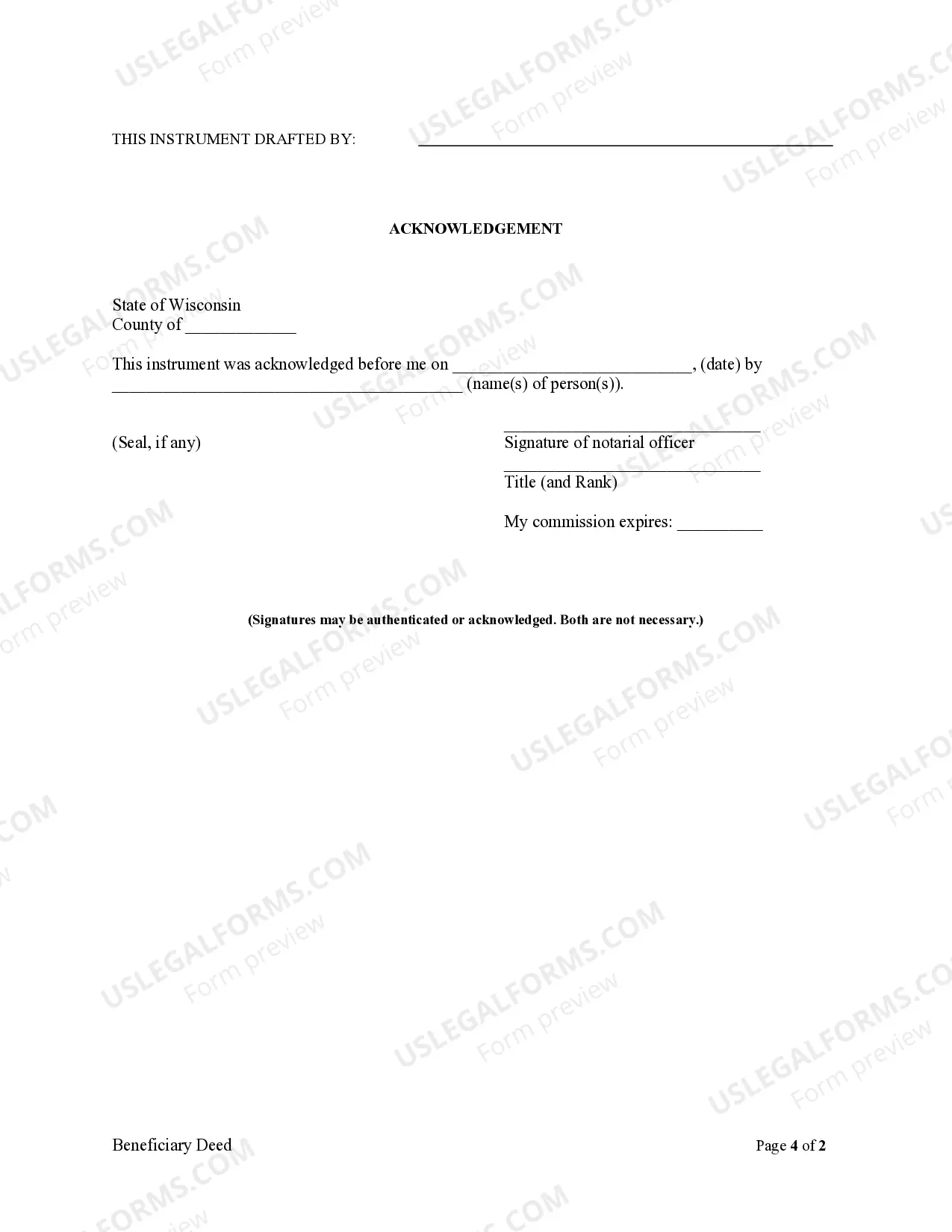
You must sign the TOD designation and get your signature notarized, and then record (file) the designation with the county register of deeds before your death. Otherwise, it won't be valid. You can make a Wisconsin designation of transfer on death beneficiary with WillMaker.
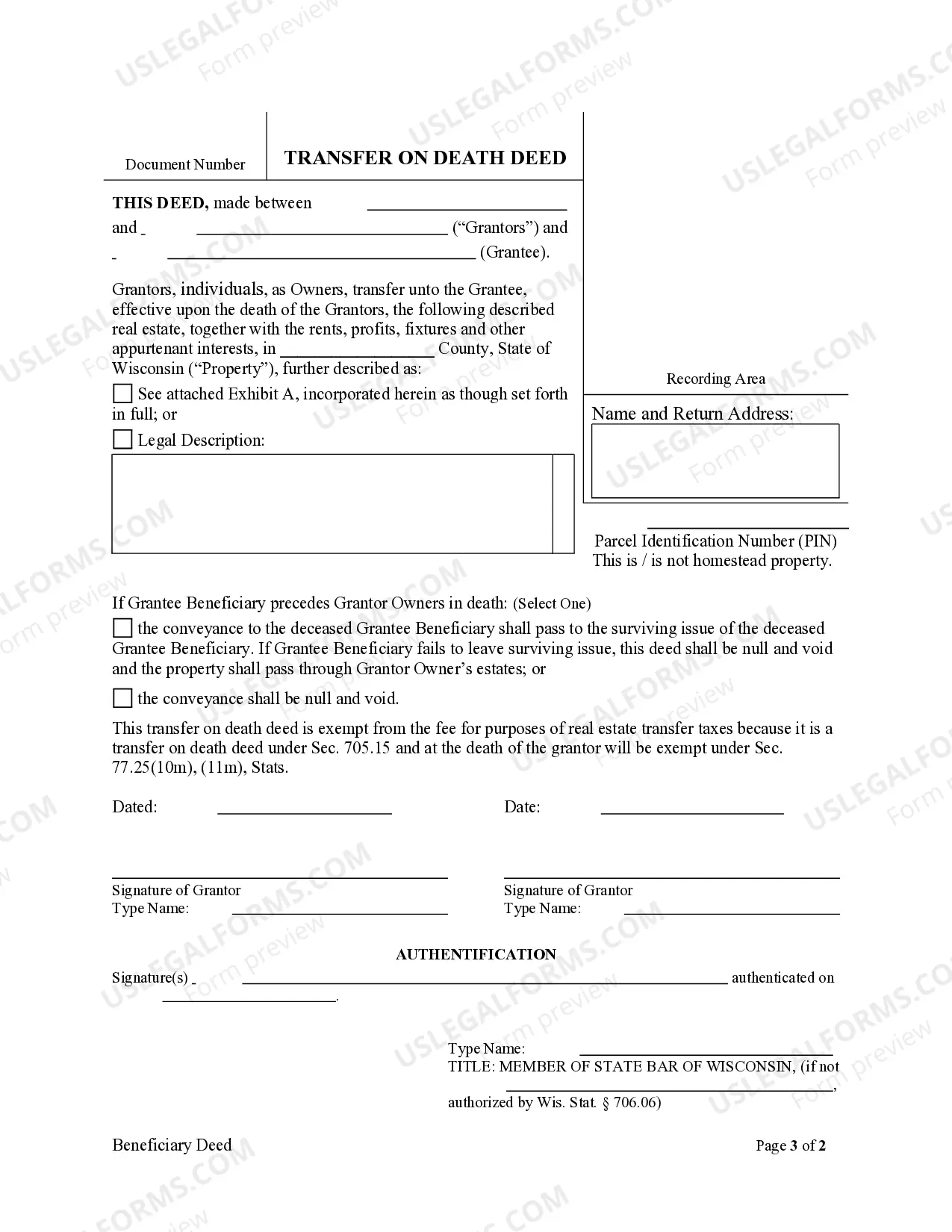
A Wisconsin TOD deed must include: The name of the property owner or owners whose interest a TOD deed will transfer; The TOD beneficiary's name; and. A statement that the transfer only becomes effective upon the owner's death.
You must sign the TOD designation and get your signature notarized, and then record (file) the designation with the county register of deeds before your death. Otherwise, it won't be valid. You can make a Wisconsin designation of transfer on death beneficiary with WillMaker.
Transfer-on-Death deeds also do not allow for naming a contingent beneficiary on the deed like a trust document that owns the property does. Secondly, if the intended beneficiary is a minor, the minor would not be able to manage or transfer the property until they reach the age of 18.
A transfer on death (TOD) bank account is a popular estate planning tool designed to avoid probate court by naming a beneficiary. However, it doesn't avoid taxes.