Written Property Landlord For Lease
Description

Get your form ready online
Our built-in tools help you complete, sign, share, and store your documents in one place.
Make edits, fill in missing information, and update formatting in US Legal Forms—just like you would in MS Word.
Download a copy, print it, send it by email, or mail it via USPS—whatever works best for your next step.
Sign and collect signatures with our SignNow integration. Send to multiple recipients, set reminders, and more. Go Premium to unlock E-Sign.
If this form requires notarization, complete it online through a secure video call—no need to meet a notary in person or wait for an appointment.
We protect your documents and personal data by following strict security and privacy standards.

Make edits, fill in missing information, and update formatting in US Legal Forms—just like you would in MS Word.

Download a copy, print it, send it by email, or mail it via USPS—whatever works best for your next step.

Sign and collect signatures with our SignNow integration. Send to multiple recipients, set reminders, and more. Go Premium to unlock E-Sign.

If this form requires notarization, complete it online through a secure video call—no need to meet a notary in person or wait for an appointment.

We protect your documents and personal data by following strict security and privacy standards.
Looking for another form?


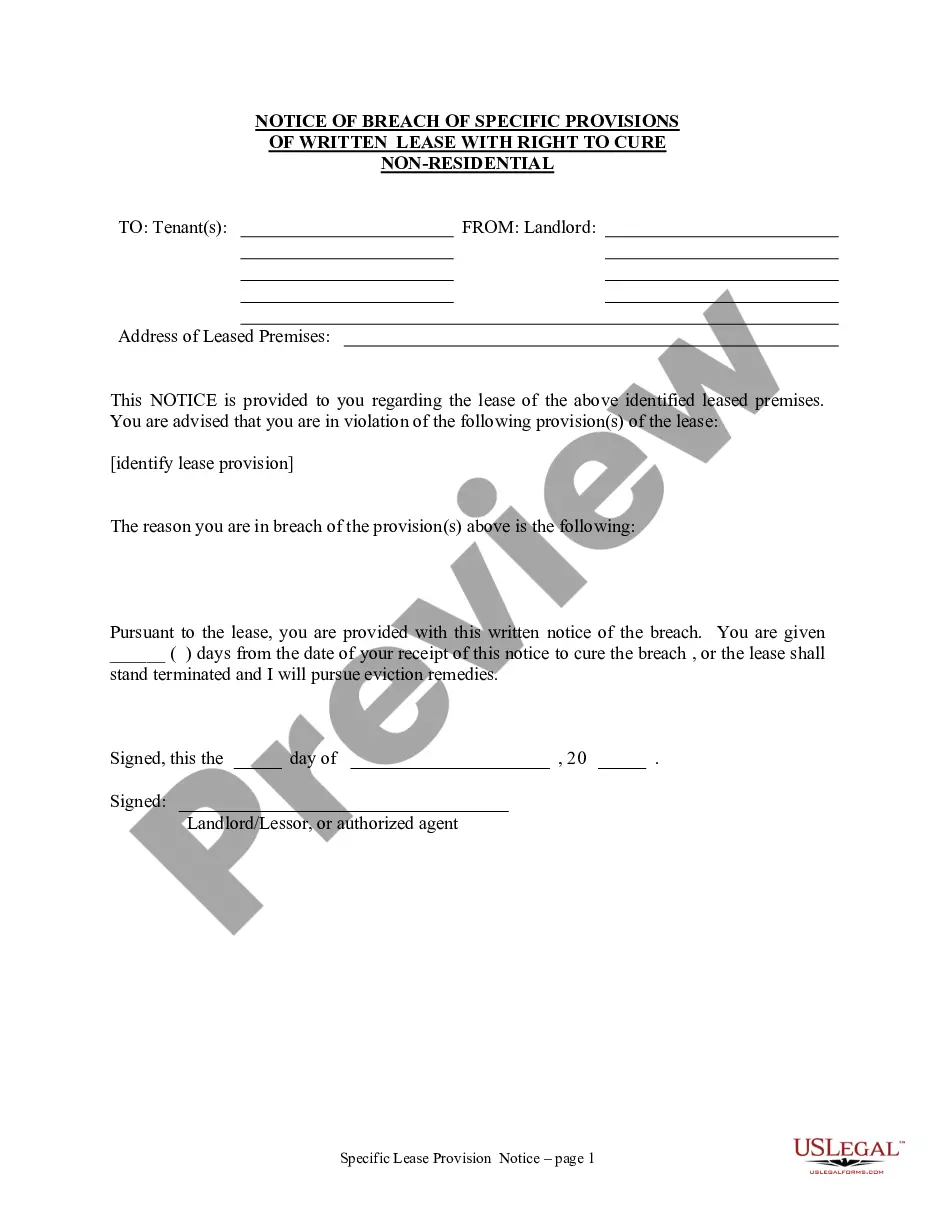
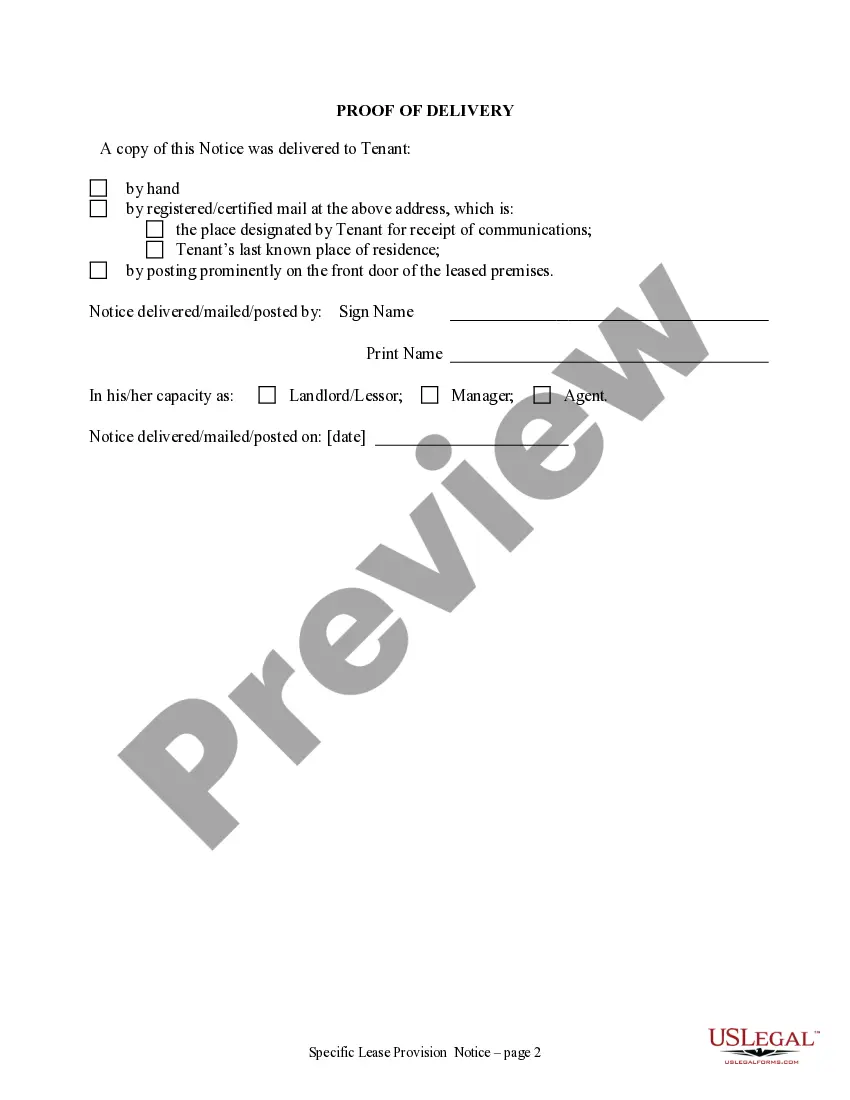
How to fill out Washington Notice Of Breach Of Written Lease For Violating Specific Provisions Of Lease With Right To Cure For Nonresidential Property From Landlord To Tenant?
- Visit the US Legal Forms website and log in to your account. Ensure your subscription is active; if not, consider renewing it.
- Browse through the extensive library and preview your desired lease form. Verify it matches your local jurisdiction and requirements.
- Use the search functionality for additional templates if necessary. Confirm that it aligns with your needs before moving forward.
- Select the 'Buy Now' option and choose a suitable subscription plan. You'll need to create an account to access the full library.
- Complete your purchase using a credit card or PayPal. This will grant you access to premium resources.
- Download your written property landlord for lease and store it on your device for easy access and completion anytime via 'My Forms' in your account.
By following these straightforward steps, you can easily create a legally sound lease document. US Legal Forms not only provides over 85,000 fillable templates but also connects you with experts for additional assistance.
Start your lease preparation today and experience the convenience of US Legal Forms. Visit us now to get started!
Form popularity
FAQ
Filling a lease agreement requires you to input the tenant's name, the property address, and the rental amount. It's important to outline the lease duration, payment methods, and rules regarding the property. Utilizing a written property landlord for lease from platforms like USLegalForms simplifies this process and ensures all legal aspects are effectively addressed.
To fill out a landlord application, you should provide personal identification and detailed information about your rental history. Landlords will look for your employment status, income, and any references that can vouch for your reliability. Using a well-structured written property landlord for lease can guide you on what information is essential to include.
Most landlords typically prefer that tenants earn three times the monthly rent. This ratio ensures that tenants can comfortably manage their financial obligations. By establishing this requirement in your written property landlord for lease, you create transparency and set clear expectations from the beginning.
Writing a handwritten lease agreement involves clearly stating the terms and conditions of the lease, including dates, rent amount, and maintenance responsibilities. Make sure to include both parties' names and signatures for validity. For an easy process, use templates from USLegalForms for a written property landlord for lease, ensuring all essential details are covered.
Filling out a landlord application starts with gathering necessary personal documents, such as ID and income proof. Be sure to provide accurate contact information and complete details concerning your rental history. Consider using resources like USLegalForms to help create a written property landlord for lease that outlines what information you need from applicants.
Red flags on a rental application include inconsistent employment history, low credit scores, and criminal background issues. Additionally, if an applicant fails to provide references or has excessive previous evictions, it raises concern. Be cautious; using a written property landlord for lease can help you clarify all requirements upfront.
Yes, you can write up your own lease agreement if you understand the necessary components and legal requirements. A written property landlord for lease should include critical terms such as rent, security deposit, and responsibilities. Using a reliable template, like those offered by uslegalforms, can streamline the process and ensure you cover all essential points.
The best type of lease for a landlord often depends on individual circumstances and goals. For example, a fixed-term lease provides stability with set rental income, while a month-to-month lease offers flexibility. A well-crafted written property landlord for lease can align with your needs, ensuring clarity and compliance.
You don’t necessarily need a lawyer to write up a lease, but consulting one can be beneficial, especially for complex arrangements. A written property landlord for lease designed with your needs in mind can provide a solid foundation. Platforms like uslegalforms can assist you in drafting a lease that meets legal standards.
Yes, a handwritten lease agreement can be legally binding in most cases, provided it meets the same requirements as typed agreements. Both parties must sign the document, and terms should adhere to local laws. A written property landlord for lease ensures clarity and can help avoid misunderstandings.