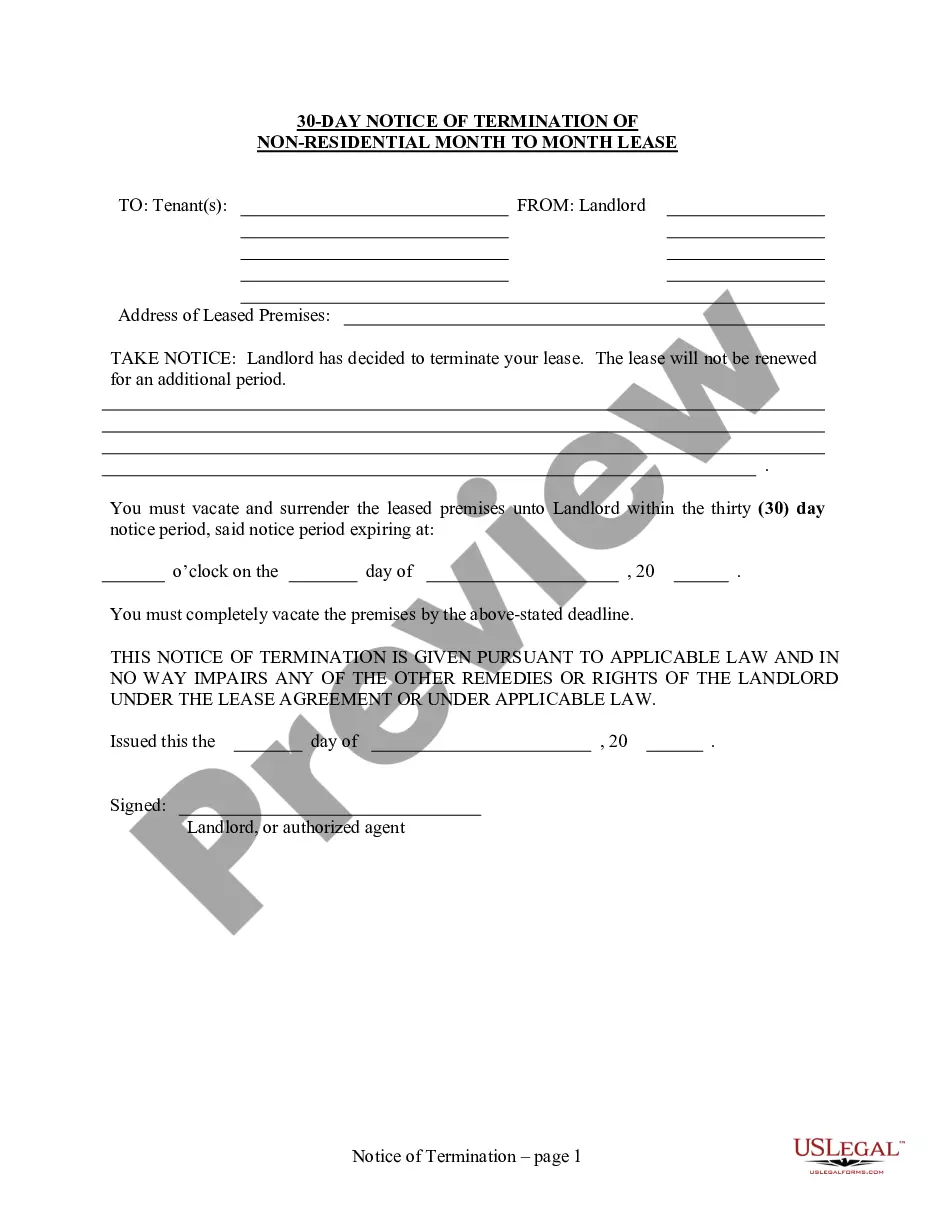
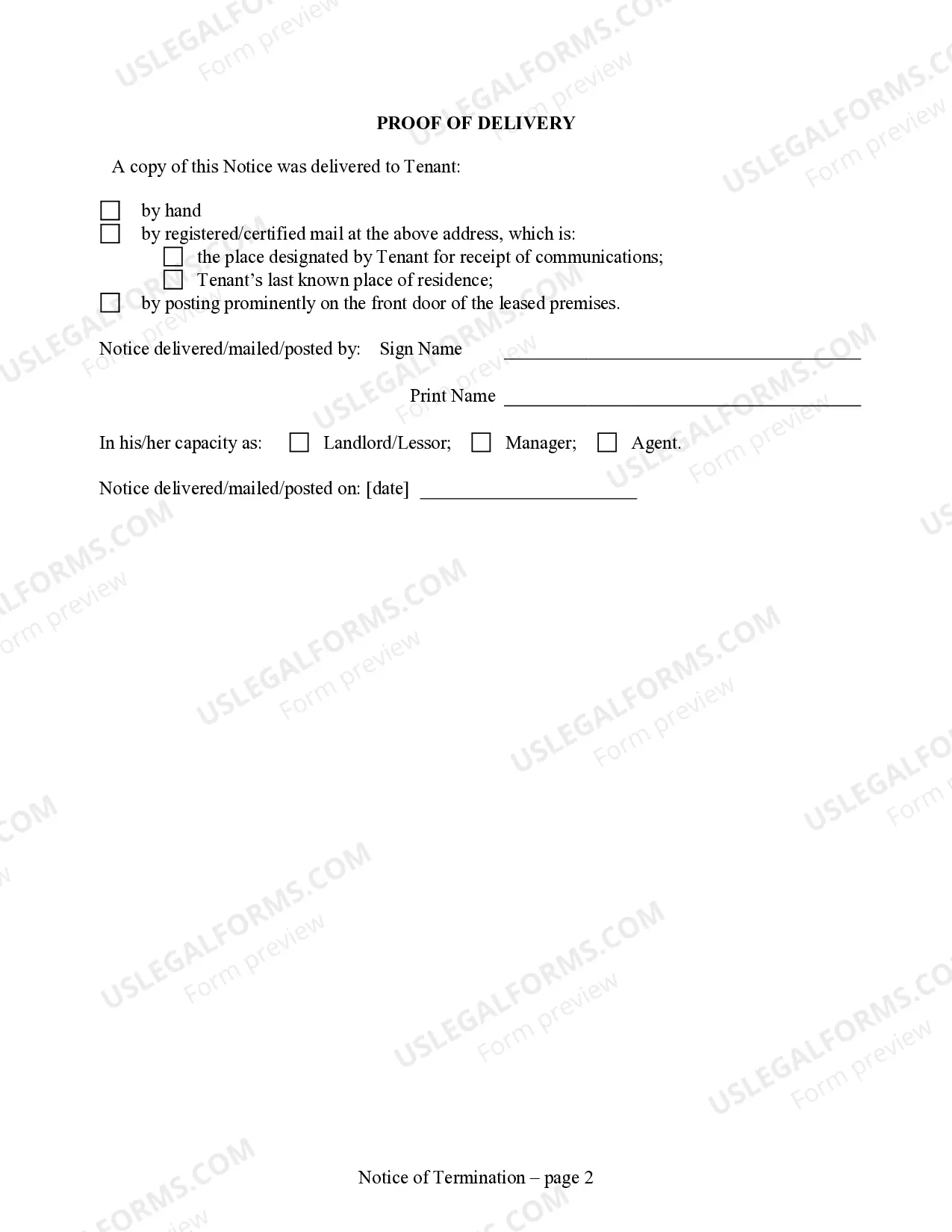
Notice Terminate Tenancy With No Notice
Description

Get your form ready online
Our built-in tools help you complete, sign, share, and store your documents in one place.
Make edits, fill in missing information, and update formatting in US Legal Forms—just like you would in MS Word.
Download a copy, print it, send it by email, or mail it via USPS—whatever works best for your next step.
Sign and collect signatures with our SignNow integration. Send to multiple recipients, set reminders, and more. Go Premium to unlock E-Sign.
If this form requires notarization, complete it online through a secure video call—no need to meet a notary in person or wait for an appointment.
We protect your documents and personal data by following strict security and privacy standards.

Make edits, fill in missing information, and update formatting in US Legal Forms—just like you would in MS Word.

Download a copy, print it, send it by email, or mail it via USPS—whatever works best for your next step.

Sign and collect signatures with our SignNow integration. Send to multiple recipients, set reminders, and more. Go Premium to unlock E-Sign.

If this form requires notarization, complete it online through a secure video call—no need to meet a notary in person or wait for an appointment.

We protect your documents and personal data by following strict security and privacy standards.
Looking for another form?




How to fill out Washington 30 Day Notice To Terminate Month To Month Tenancy - Nonresidential From Landlord To Tenant?
- If you're a returning user, simply log in to your account and download the required form by clicking on the Download button. Ensure your subscription is current; if not, renew it promptly.
- For first-time users, start by evaluating the Preview mode and description of the form to verify you have selected one that aligns with your needs and adheres to local jurisdiction requirements.
- Should you find discrepancies, utilize the Search tab to locate the correct template and confirm it suits your requirements before proceeding.
- Next, click the Buy Now button, choose your preferred subscription plan, and create an account for access to the full library.
- Complete your transaction by entering your payment details or using a PayPal account to finalize your purchase.
- Finally, download the completed form to your device and access it anytime via the My Forms section of your profile.
With US Legal Forms, individuals and attorneys can navigate legal documentation with ease. Our extensive library, boasting over 85,000 fillable forms, ensures that you have access to the resources necessary for your specific legal needs.
Don't wait—start your journey with US Legal Forms today and ensure your legal documentation is handled accurately and efficiently.
Form popularity
FAQ
In North Carolina, landlords cannot evict tenants without a court order. Even if you notice terminate tenancy with no notice, the landlord must follow legal procedures for eviction. This includes filing an action in court and obtaining a judgment. Understanding these legal processes can empower you and help you navigate your rights and responsibilities as a tenant.
Writing a notice letter for moving out is straightforward. Start with your address, date, and the landlord's information. Clearly state your intention to terminate the tenancy, and mention the date you will vacate the premises, especially if you plan to notice terminate tenancy with no notice. A well-structured letter helps maintain a positive relationship and ensures the process goes smoothly.
If you leave belongings in your apartment when you move out, you may risk losing them permanently. Landlords often consider abandoned property as a legal reason to dispose of your items. Additionally, leaving stuff can complicate the process of terminating your tenancy, especially if you intend to do so with no notice. It's always best to remove all personal items to avoid misunderstandings.
Writing a notice to end a tenancy involves including key details such as date, tenant information, and reason for termination. Be concise and clear in your message, and ensure your notice complies with state laws. Using resources from US Legal Forms can help you create a legally sound notice, making the process easier for both you and your tenant.
To respond to a termination notice from a tenant, first review the notice carefully to ensure it complies with existing laws. Then, consider providing written acknowledgment of the notice and outlining next steps. It’s essential to communicate clearly and offer solutions that may benefit both parties, ensuring a smoother transition for the tenant.
When you receive a termination notice, respond promptly by reviewing the terms stated within it. You may wish to negotiate with your landlord, clarify any misunderstandings, or gather evidence if you plan to contest it. If you need assistance, consider using platforms like US Legal Forms to access guidance on writing a formal response or document required for your situation.
A notice of termination of tenancy is not the same as eviction; rather, it is a formal warning indicating that your tenancy will end. Eviction is a legal process that follows a notice and involves court proceedings to remove you from the property. Understanding this difference is crucial, as a notice is your opportunity to respond or prepare to leave.
In California, landlords generally cannot kick you out without proper notice, even in cases of violation of lease terms. A notice to terminate tenancy with no notice is typically illegal unless you are violating certain laws or terms that allow for immediate eviction. Always verify the specific terms of your lease and consult with a legal professional if you feel you are being unlawfully evicted.
Yes, you can contest a notice of termination if you believe it was issued unlawfully. This may involve providing evidence or documentation that supports your case. Engaging with a legal expert can help you understand your rights and navigate the process effectively. It's vital to act promptly to protect your tenancy.
If you fail to provide a 30-day notice to move out, you may face penalties depending on your lease agreement. Landlords often can withhold your security deposit to cover their losses. Additionally, if you choose to leave without notice, you may become liable for rent until the end of the notice period. It's crucial to be aware of your lease terms to avoid further complications.