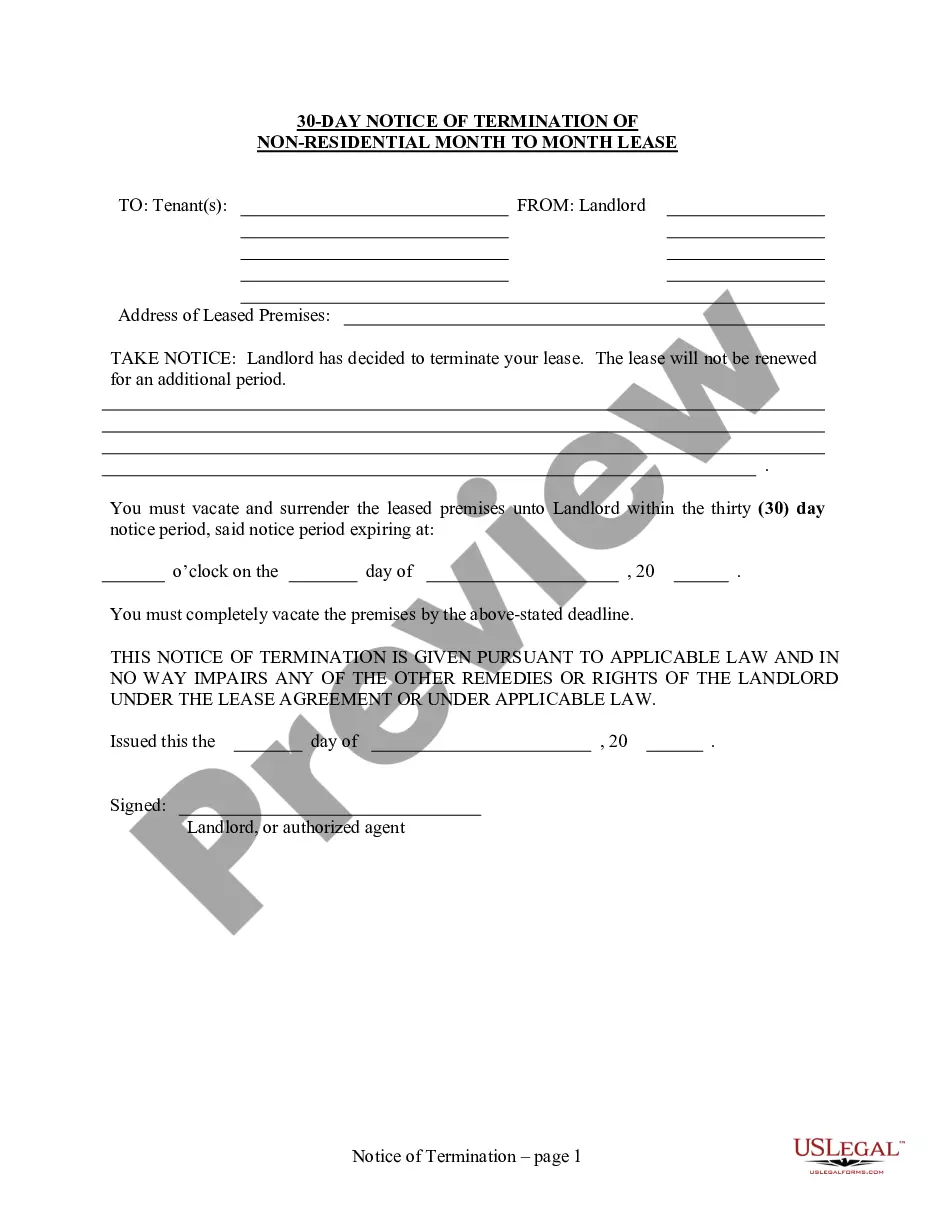
Notice Terminate Tenancy With Land Registry
Description

Get your form ready online
Our built-in tools help you complete, sign, share, and store your documents in one place.
Make edits, fill in missing information, and update formatting in US Legal Forms—just like you would in MS Word.
Download a copy, print it, send it by email, or mail it via USPS—whatever works best for your next step.
Sign and collect signatures with our SignNow integration. Send to multiple recipients, set reminders, and more. Go Premium to unlock E-Sign.
If this form requires notarization, complete it online through a secure video call—no need to meet a notary in person or wait for an appointment.
We protect your documents and personal data by following strict security and privacy standards.

Make edits, fill in missing information, and update formatting in US Legal Forms—just like you would in MS Word.

Download a copy, print it, send it by email, or mail it via USPS—whatever works best for your next step.

Sign and collect signatures with our SignNow integration. Send to multiple recipients, set reminders, and more. Go Premium to unlock E-Sign.

If this form requires notarization, complete it online through a secure video call—no need to meet a notary in person or wait for an appointment.

We protect your documents and personal data by following strict security and privacy standards.
Looking for another form?








How to fill out Washington 30 Day Notice To Terminate Month To Month Tenancy - Nonresidential From Landlord To Tenant?
- If you're an existing user, log in to your account and download the relevant template by clicking the 'Download' button. Ensure that your subscription remains active to avoid any interruptions.
- For new users, start by browsing our extensive library that houses over 85,000 fillable legal forms. Check the preview mode and descriptions to confirm that the selected form meets your requirements and complies with local regulations.
- If the form you selected doesn’t fit your needs, utilize the Search feature at the top of the page to locate an alternative template that may be more suitable.
- Select the 'Buy Now' option for your chosen document and pick a subscription plan that fits your needs. You will need to create an account to access our robust collection.
- Complete your purchase by entering your payment details through credit card or PayPal, ensuring that you're able to access premium features.
- Once your transaction is completed, download the form directly to your device. You can also revisit your documents anytime in the My Forms section of your account.
Concluding the process of terminating a tenancy doesn’t have to be challenging. By using US Legal Forms, you ensure not only access to a vast array of documents but also the support of legal experts when needed.
Start your journey now by visiting US Legal Forms and grab the right template for your tenancy termination!
Form popularity
FAQ
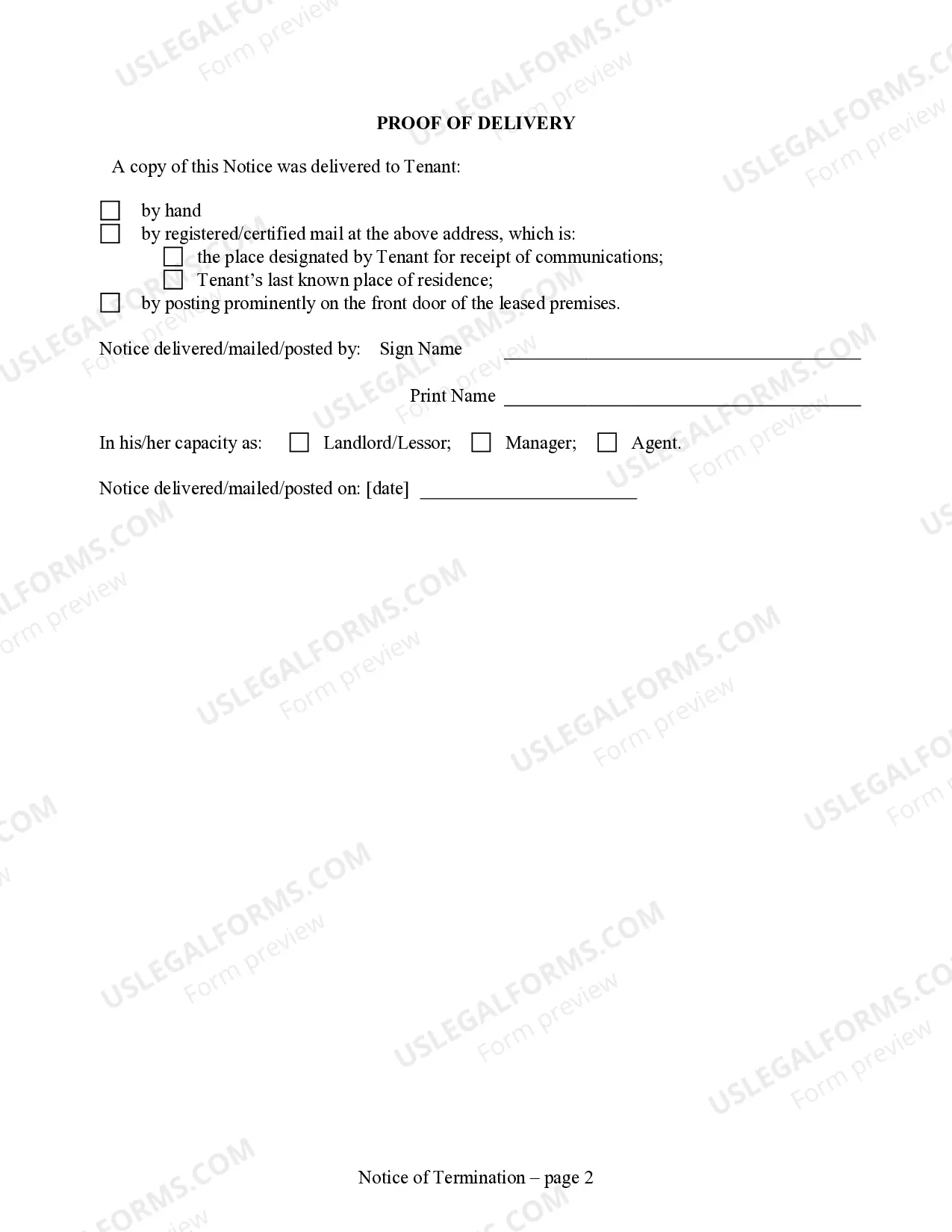
A notice to vacate in Texas must include specific information, such as the tenant’s name, property address, and the date by which they must vacate. It should clearly state the reasons for the termination, if applicable, following the terms of the lease agreement. Following these guidelines reduces the potential for disputes. Utilize resources from USLegalForms to ensure your notice is compliant and effective.
The main difference between an eviction and a notice to vacate lies in the process. A notice to vacate is a formal request from the landlord for the tenant to leave the property. In contrast, eviction is a legal proceeding that occurs when a tenant fails to comply with that notice. Understanding this distinction can help landlords navigate tenancy issues more effectively.
In Texas, an email can be considered a written notice to vacate, but it is best to confirm this through the lease agreement. Generally, written notices should be delivered in a manner that ensures receipt. Ensure the email includes all necessary details regarding the termination to maintain clarity. You might find checklists on USLegalForms that can help you cover all bases.
When responding to a termination notice from your tenant, review the notice thoroughly to understand their reasons for leaving. It’s best to confirm receipt of their notice in writing and mention any next steps. Additionally, address any final property inspections and the return of security deposits. Resources like USLegalForms offer guidance on proper communication methods.
In Texas, the rules for a notice to vacate typically require landlords to provide at least three days’ notice unless otherwise specified in the lease. It’s essential to deliver the notice in writing and to include relevant information such as the due date for vacating. Compliance with these rules helps prevent disputes. Consider checking USLegalForms for templates that align with Texas laws.
An example of a notice of termination of lease includes a brief statement outlining the intention to end the lease, along with the reasons for termination. It typically includes the tenant's name, property address, and the specific termination date. Ensure this document is clear and delivered according to legal requirements. This is another area where USLegalForms can provide useful templates.
To write an end of tenancy letter, start by clearly stating your intention to terminate the tenancy. Include important details such as the property address, the date you plan to leave, and any necessary instructions for returning keys. Remember to provide sufficient notice, as required by Texas law. Using services like USLegalForms can simplify this process.
In Texas, a notice to vacate does not require notarization. The law allows landlords to provide written notice directly to tenants. This notice must clearly state the intent to terminate the tenancy. Make sure to follow procedures outlined in the rental agreement to avoid misunderstandings.
Writing a termination letter to a tenant involves including key details such as the tenant's name, rental property address, and the date of the notice. Clearly state the reason for termination and the date by which the tenant must vacate the premises. It is critical to adhere to local laws regarding notice periods to prevent any disputes. Consider using a template for a Notice terminate tenancy with land registry to ensure your letter includes all mandatory information and complies with legal requirements.
Termination of tenancy in Washington state involves officially ending a rental agreement between a landlord and tenant. This process typically requires serving a written notice to the tenant, clearly stating the reason for termination. It is essential to follow state laws regarding notice periods, which can vary depending on the circumstances. Utilizing a Notice terminate tenancy with land registry can streamline this process and ensure proper documentation.