Trust And Wills For Dummies
Description
Get your form ready online
Our built-in tools help you complete, sign, share, and store your documents in one place.
Make edits, fill in missing information, and update formatting in US Legal Forms—just like you would in MS Word.
Download a copy, print it, send it by email, or mail it via USPS—whatever works best for your next step.
Sign and collect signatures with our SignNow integration. Send to multiple recipients, set reminders, and more. Go Premium to unlock E-Sign.
If this form requires notarization, complete it online through a secure video call—no need to meet a notary in person or wait for an appointment.
We protect your documents and personal data by following strict security and privacy standards.

Make edits, fill in missing information, and update formatting in US Legal Forms—just like you would in MS Word.

Download a copy, print it, send it by email, or mail it via USPS—whatever works best for your next step.

Sign and collect signatures with our SignNow integration. Send to multiple recipients, set reminders, and more. Go Premium to unlock E-Sign.

If this form requires notarization, complete it online through a secure video call—no need to meet a notary in person or wait for an appointment.

We protect your documents and personal data by following strict security and privacy standards.
Looking for another form?





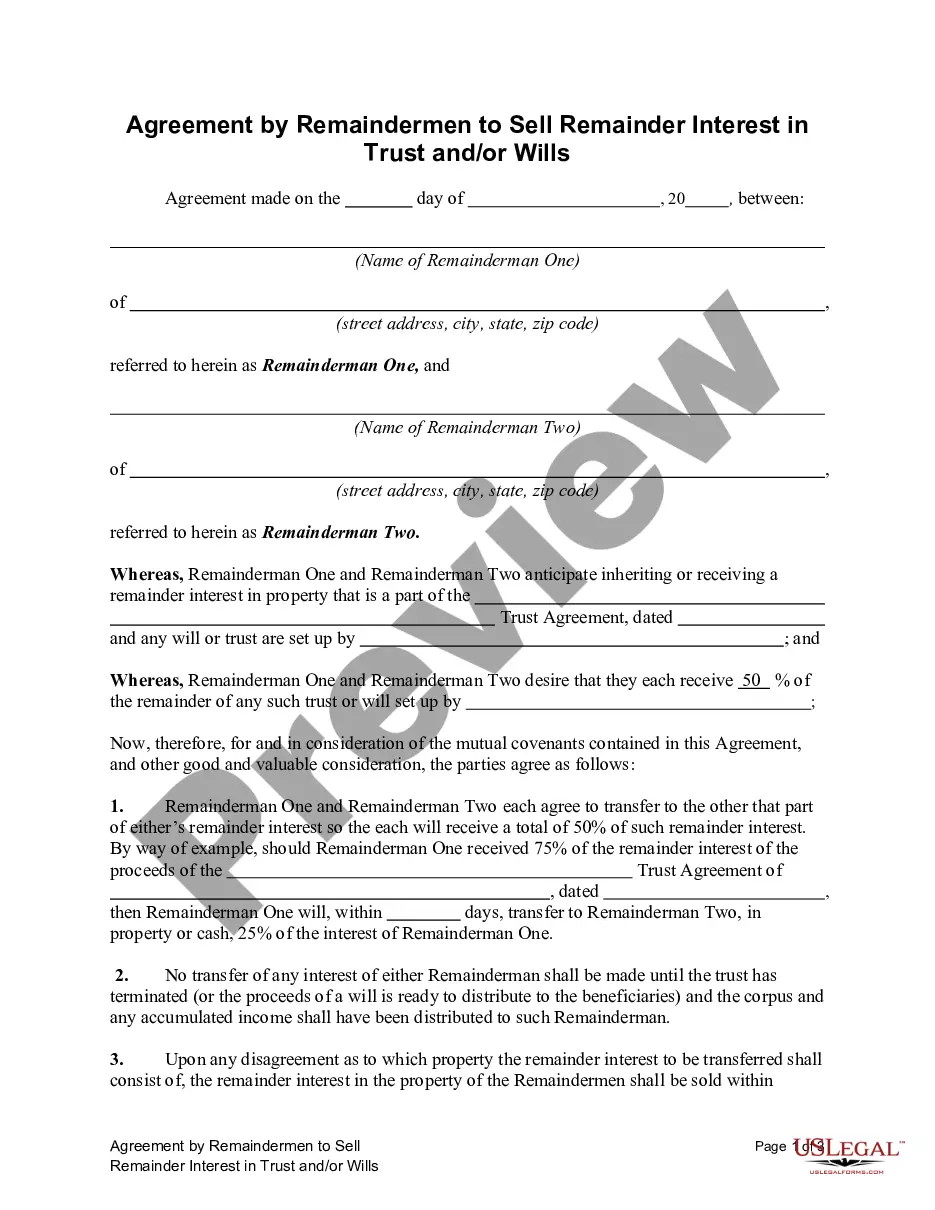
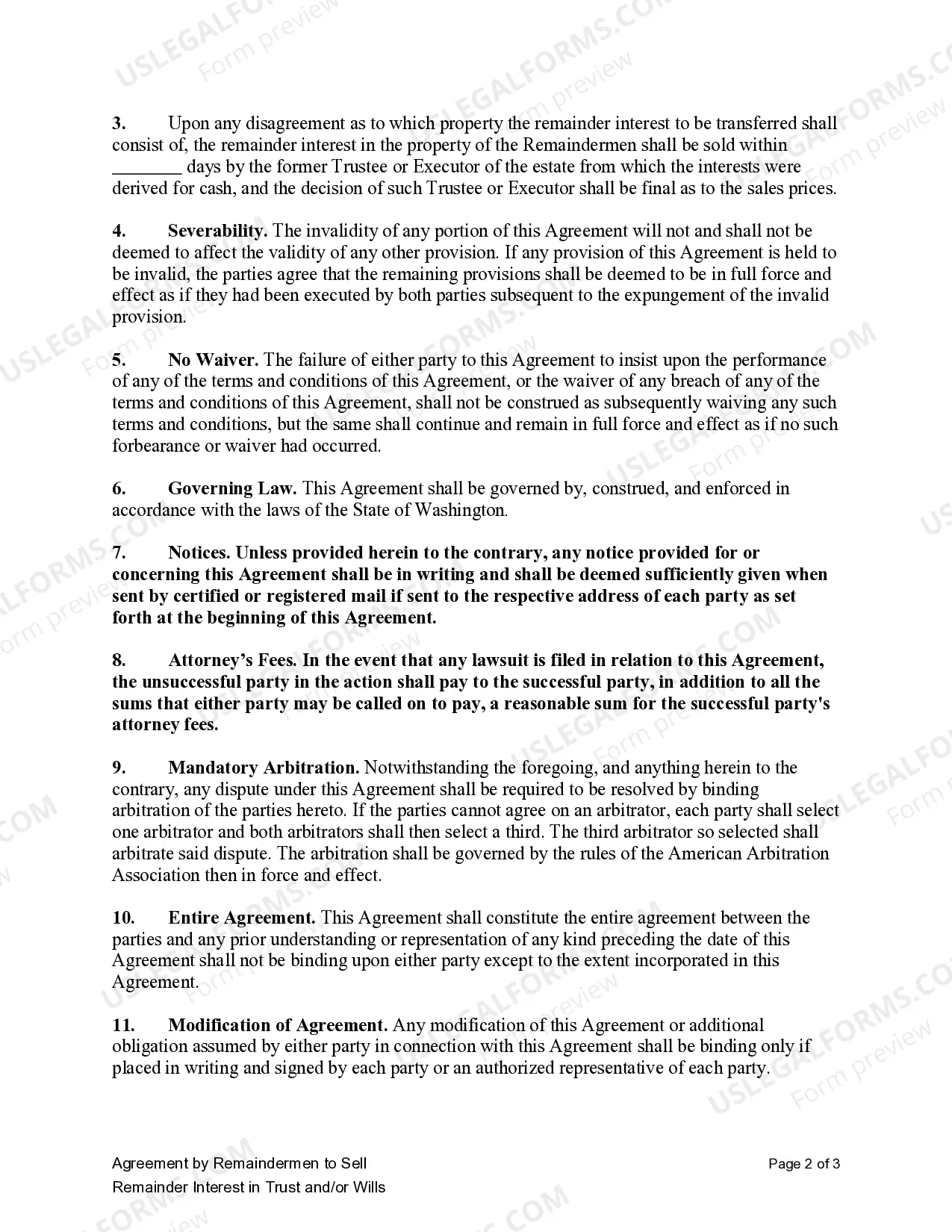
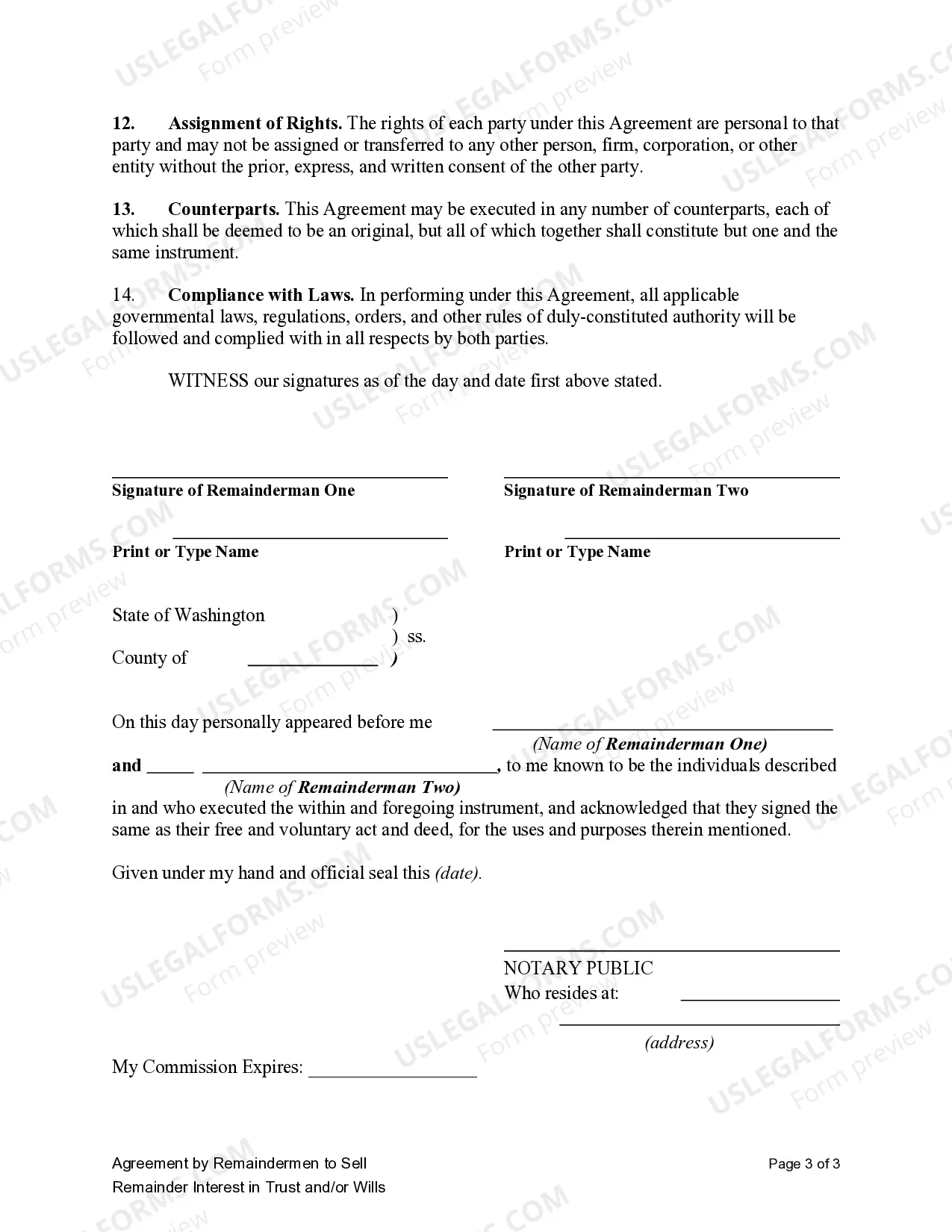
How to fill out Washington Agreement By Remainderman To Sell Remainder Interest In Trust And/or Wills?
- Visit the US Legal Forms website and select the appropriate trust or will template.
- Review the preview and description of the document to ensure it meets your specific requirements and complies with your local jurisdiction.
- If the form isn’t suitable, utilize the search function to find an alternative that fits your needs better.
- Make a purchase by clicking the 'Buy Now' button and opting for a subscription plan that works for you.
- Complete your payment using your credit card or PayPal, and ensure your subscription is activated.
- Download your completed form and save it on your device; you can also access it anytime through the 'My Forms' section.
Using US Legal Forms is straightforward, helping you to quickly obtain the legal documents you need. With their robust collection that exceeds competing services in scope and affordability, you gain access to expert assistance to ensure your forms are completed correctly.
Start planning for your future today with US Legal Forms and make your estate planning process seamless!
Form popularity
FAQ
You should generally avoid including assets that have beneficiary designations, like life insurance policies and retirement accounts, directly in your will. Additionally, personal preferences for items can be better communicated through a separate document or memorandum. Keeping your will focused and straightforward is vital for effective estate management, especially when considering trust and wills for dummies.
Common mistakes with wills include not naming an executor, forgetting to include all assets, and omitting children or spouses. Many people also fail to account for digital assets, which can lead to complications later. To avoid these pitfalls, utilizing resources on trust and wills for dummies can provide the clarity you need for effective estate planning.
Several factors can make a will appear suspicious, such as a lack of witnesses or inconsistencies with previous versions. If the testator shows signs of undue influence or mental incapacity at the time of signing, this can also raise red flags. Being aware of these signs can help you create a secure and legitimate will that avoids potential challenges, essential for anyone learning about trust and wills for dummies.
In Minnesota, a will does not need to be notarized to be valid, but having it notarized can provide additional legal protections. A self-proving will, which includes notarized signatures, simplifies the probate process. It allows the court to accept the will without further evidence. When navigating wills, consider that trust and wills for dummies can guide you through these requirements.
One of the biggest mistakes in a will is failing to be clear about your intentions. If your wishes are vague or ambiguous, it may lead to disputes among your heirs. Additionally, not updating your will after major life events can create confusion. Understanding common pitfalls is crucial when learning about trust and wills for dummies.
One disadvantage of a simple trust is its requirement to distribute all income to beneficiaries annually, which may not always align with the grantor's wishes or long-term goals. Additionally, it lacks flexibility and may not offer the same protective features as other types of trusts. By understanding these limitations, individuals exploring trust and wills for dummies can weigh their options carefully.
The main purpose of a simple trust is to provide a means for managing income and redistributing it to beneficiaries promptly. This structure can help protect assets and ensure that they are used for their intended purposes, promoting efficient financial management. For anyone interested in trust and wills for dummies, recognizing the role of a simple trust can aid in making informed decisions in estate planning.
A simple trust will refers to a straightforward type of trust that primarily distributes income to beneficiaries. Unlike more complicated trusts, a simple trust does not allow for accumulation of income and mandates that all income must be distributed annually. This concept is a vital part of trust and wills for dummies, simplifying the path for those new to estate planning.
A trust is a broader category that includes various types of legal arrangements for managing assets. An estate trust is specifically created within the framework of an estate plan and typically takes effect upon a person's death. Those studying trust and wills for dummies can benefit from understanding how these different types of trusts can be utilized in crafting an effective estate strategy.
No, a trust and an estate are not the same thing. An estate refers to all the assets and liabilities a person leaves behind after their death. A trust, on the other hand, is a legal entity designed to manage and protect assets during a person's lifetime and after their death. For those exploring trust and wills for dummies, it's important to recognize how these concepts work together in estate planning.