Remainderman Trust For The Dead
Description
Get your form ready online
Our built-in tools help you complete, sign, share, and store your documents in one place.
Make edits, fill in missing information, and update formatting in US Legal Forms—just like you would in MS Word.
Download a copy, print it, send it by email, or mail it via USPS—whatever works best for your next step.
Sign and collect signatures with our SignNow integration. Send to multiple recipients, set reminders, and more. Go Premium to unlock E-Sign.
If this form requires notarization, complete it online through a secure video call—no need to meet a notary in person or wait for an appointment.
We protect your documents and personal data by following strict security and privacy standards.

Make edits, fill in missing information, and update formatting in US Legal Forms—just like you would in MS Word.

Download a copy, print it, send it by email, or mail it via USPS—whatever works best for your next step.

Sign and collect signatures with our SignNow integration. Send to multiple recipients, set reminders, and more. Go Premium to unlock E-Sign.

If this form requires notarization, complete it online through a secure video call—no need to meet a notary in person or wait for an appointment.

We protect your documents and personal data by following strict security and privacy standards.
Looking for another form?










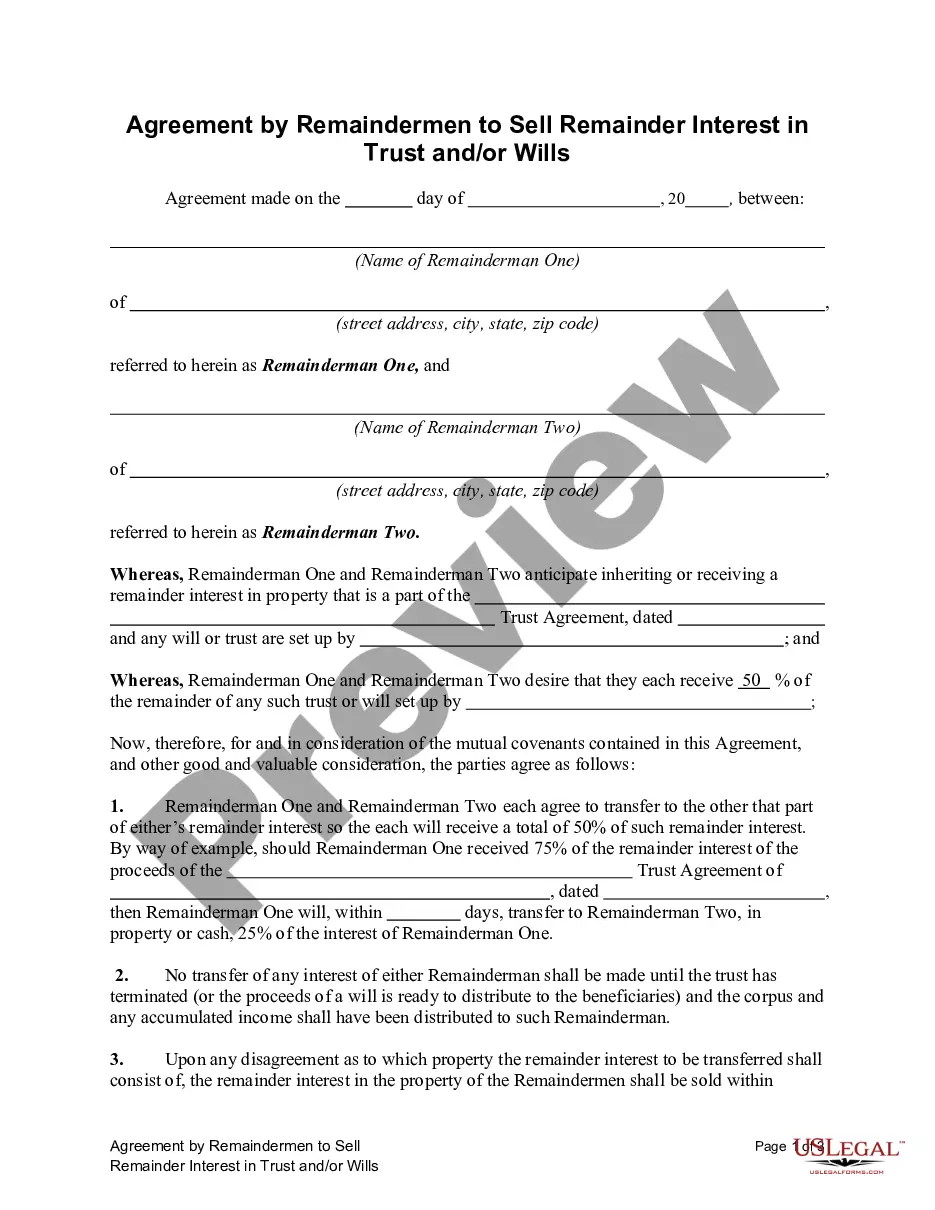
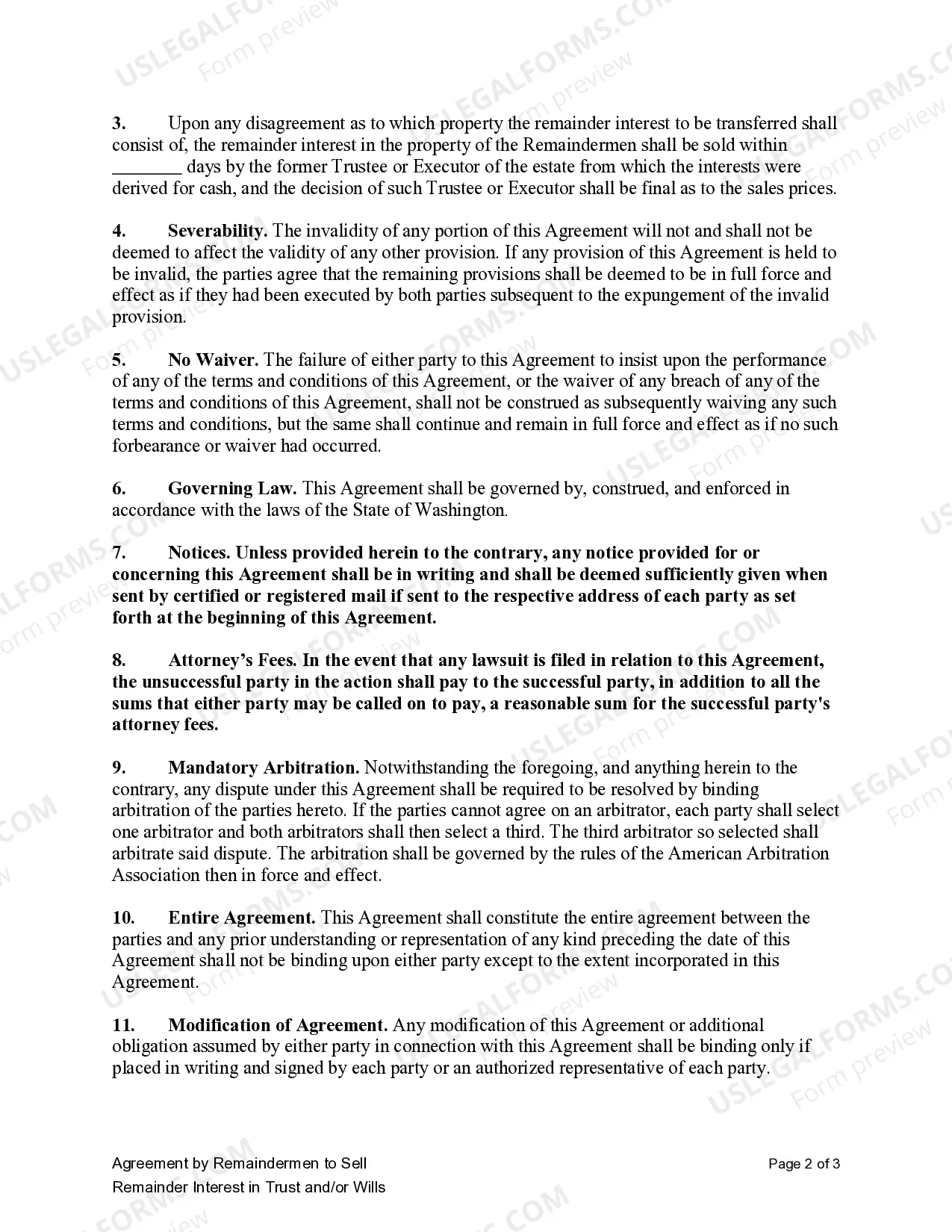
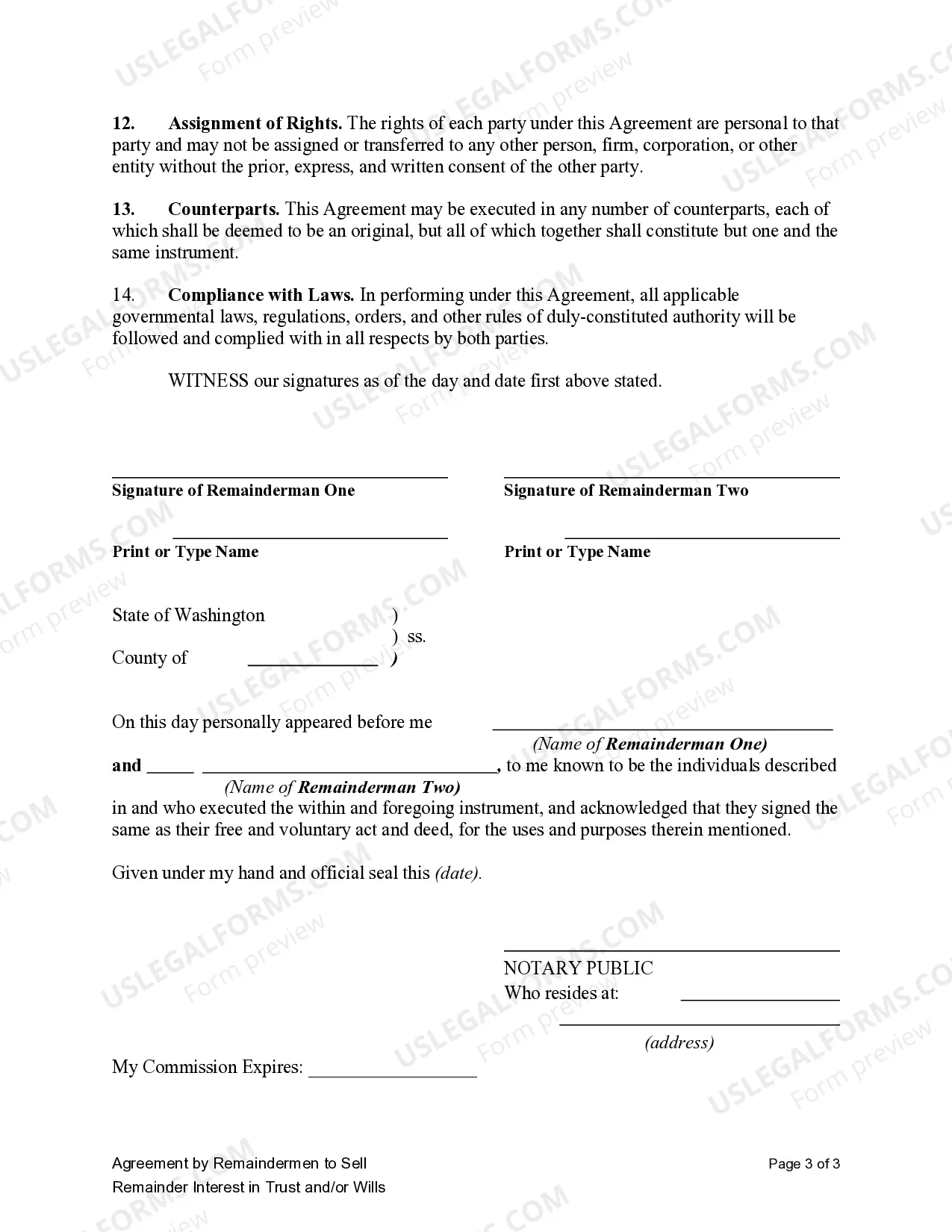
How to fill out Washington Agreement By Remainderman To Sell Remainder Interest In Trust And/or Wills?
- Log in to your account if you're a returning user and download the desired trust template by clicking on the Download button. Ensure your subscription remains active; renew it if necessary.
- If you're new to our service, start by utilizing the Preview mode to review and verify that you've selected a form that meets your specific needs and compliance with local laws.
- Should you need another document, utilize the Search tab to find additional templates that fit your requirements.
- Purchase the template by clicking on the Buy Now button and select your preferred subscription plan. Remember, you need to register an account for access.
- Complete your purchase by entering your credit card details or choosing your PayPal account for payment.
- Download the form to your device, allowing you to fill it out at your convenience and access it later in the My Forms menu. You can revisit this section anytime for your documents.
In conclusion, US Legal Forms equips users with a robust collection of legal forms, including those needed for establishing a remainderman trust for the dead. By following these steps, you can easily find, purchase, and download the necessary templates to ensure your legal documents are ready when you need them.
Don't miss out on the benefits—start using US Legal Forms today to simplify your estate planning!
Form popularity
FAQ
When a remainderman dies while holding an interest in a life estate, their share of the property typically passes to their heirs. This situation underscores the importance of having a clear plan in place regarding the remainderman trust for the dead. The specific distribution of assets may depend on state laws and the trust's terms. In such instances, USLegalForms can assist you in understanding the legal ramifications and ensuring proper management of the estate.
A remainderman can secure a mortgage, but this situation can be complex. Since their ownership interest in the property is not fully realized until the life estate ends, lenders might hesitate to grant a mortgage. Understanding the implications of a remainderman trust for the dead, and consulting with real estate professionals can provide clarity. Utilizing platforms such as USLegalForms can guide you in navigating these intricacies effectively.
If a remainderman dies, their interest in the property typically transfers to their heirs. This means that the trust for the deceased person may pass to a new beneficiary. It's essential to review the terms of the remainderman trust for the dead, as these terms dictate the next steps. Engaging with estate planning resources, like USLegalForms, can help ensure that these transitions are handled smoothly.
Yes, a remainderman is a type of beneficiary within the structure of a Remainderman trust for the dead. While remaindermen do not receive benefits during the life of the trust, they hold a future interest in the trust assets that becomes effective after the primary beneficiary's rights end. Understanding these distinctions can enhance your estate planning efforts.
A beneficiary of a trust is anyone who receives benefits from a trust during its term, which may include both income and principal distributions. In a Remainderman trust for the dead, the primary beneficiary typically receives the benefits during their lifetime, while the remainderman waits to inherit the trust assets after the primary beneficiary's passing. Clearly specifying beneficiaries helps avoid misunderstandings and disputes.
Another name for a remainderman is a remainder beneficiary. In a Remainderman trust for the dead, this title indicates that the individual will gain access to the trust assets once the interests of the primary beneficiary have concluded. This terminology is essential for understanding trust relationships and rights.
No, a remainderman is not the same as a general beneficiary. In a Remainderman trust for the dead, a beneficiary typically benefits from the trust during their lifetime, while a remainderman only receives benefits after the primary beneficiary's interest is fulfilled. This distinction is vital for effective estate planning.
A remainderman in a Remainderman trust for the dead could be a child who inherits a property after the parent's death. For instance, if a parent places their house in a trust for the benefit of a spouse during their lifetime, the child becomes the remainderman, receiving the property once both parents have passed. This arrangement protects the property and ensures a smooth transition of ownership.
In the context of a Remainderman trust for the dead, a beneficiary receives benefits during the life of the trust, while a remainder beneficiary, also known as a remainderman, gains rights to the trust assets after the initial beneficiary's interest ends. Understanding this distinction can help in estate planning and managing expectations for all parties involved. Using the right legal documentation ensures that these roles are clearly defined.
When the remainderman dies, the property interests held by them are transferred to their designated heirs as per the estate plan. In a Remainderman trust for the dead, clarity in these transitions is vital to avoid disputes. The property does not revert to the life tenant; rather, it passes directly according to the remainderman's estate plan. This automatic transfer helps maintain the integrity of ownership and prevents legal complexities.