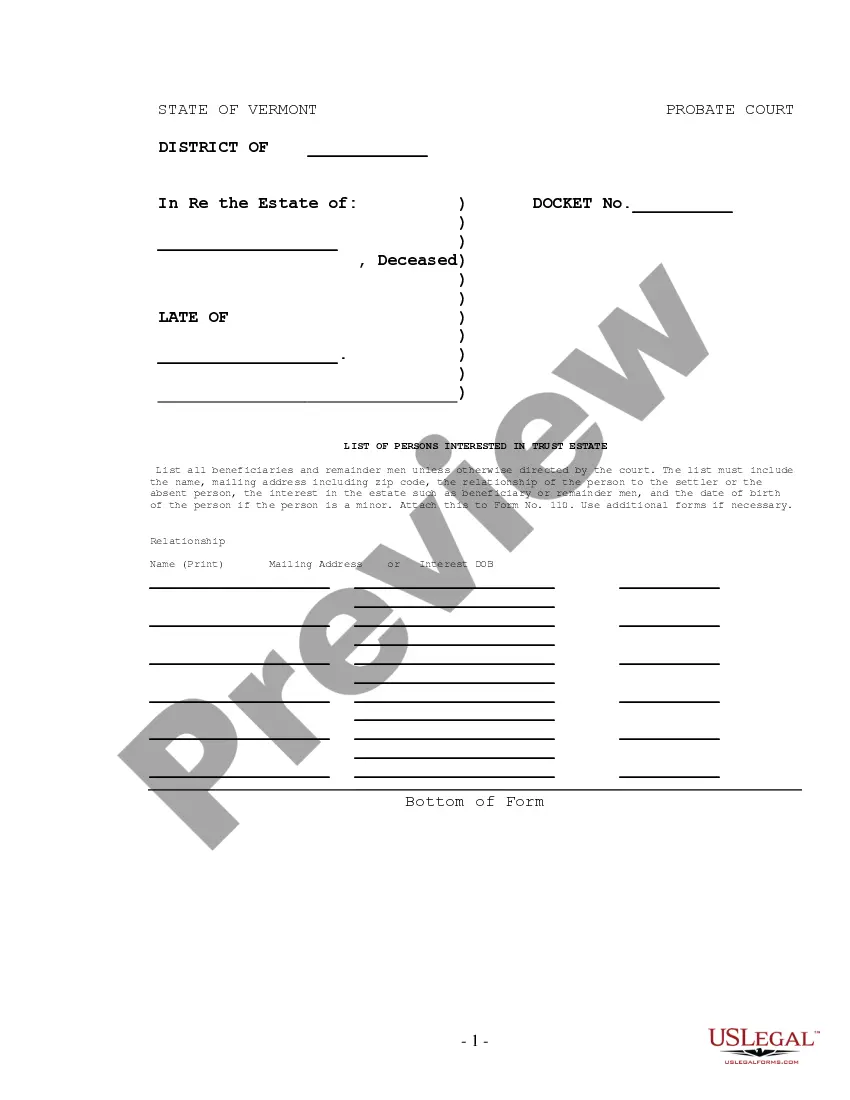
Vermont Trust Estate Withholding Tax
Description
Get your form ready online
Our built-in tools help you complete, sign, share, and store your documents in one place.
Make edits, fill in missing information, and update formatting in US Legal Forms—just like you would in MS Word.
Download a copy, print it, send it by email, or mail it via USPS—whatever works best for your next step.
Sign and collect signatures with our SignNow integration. Send to multiple recipients, set reminders, and more. Go Premium to unlock E-Sign.
If this form requires notarization, complete it online through a secure video call—no need to meet a notary in person or wait for an appointment.
We protect your documents and personal data by following strict security and privacy standards.

Make edits, fill in missing information, and update formatting in US Legal Forms—just like you would in MS Word.

Download a copy, print it, send it by email, or mail it via USPS—whatever works best for your next step.

Sign and collect signatures with our SignNow integration. Send to multiple recipients, set reminders, and more. Go Premium to unlock E-Sign.

If this form requires notarization, complete it online through a secure video call—no need to meet a notary in person or wait for an appointment.

We protect your documents and personal data by following strict security and privacy standards.
Looking for another form?

Form popularity
FAQ
The best trust to avoid estate tax often depends on your individual financial situation and goals. Common options include irrevocable trusts and family trusts, which can effectively minimize liabilities related to the Vermont trust estate withholding tax. Each trust type offers unique benefits and constraints, so it’s vital to consult with an estate planning professional to find the best fit. U.S. Legal Forms provides resources to help you understand and create these trusts effectively.
To avoid Vermont estate tax, you can utilize various strategies such as creating a revocable or irrevocable trust. Each type of trust has different implications that can affect the Vermont trust estate withholding tax. By distributing assets before death, you can also lower the taxable amount. Using a reputable platform like U.S. Legal Forms can guide you through the process of setting up proper estate planning to optimize tax savings.
The Vermont estate tax exemption allows certain estates to avoid tax liabilities. As of recent updates, the exemption threshold is set at a specific dollar amount, which changes based on state legislation. Understanding how the Vermont trust estate withholding tax applies to these exemptions is key for beneficiaries. It's advisable to keep track of changes in the law to maximize your estate’s benefits.
You can legally avoid estate tax by strategically planning your estate. Understanding the Vermont trust estate withholding tax can help you determine the best path forward. Establishing trusts or gifting assets during your lifetime are two common methods. Consulting with an estate planning expert can provide tailored advice specific to your situation.
The real estate withholding tax in Vermont applies when real property is sold or transferred, and it helps ensure that proper taxes are collected. This tax can impact those dealing in real estate, especially trusts. For those navigating complexities in real estate transactions, understanding the Vermont trust estate withholding tax is essential for compliance and planning.
The estate tax exemption in Vermont is subject to change, and for 2025, it is projected to remain at $4.25 million. Staying informed about these changes is vital for effective estate planning. As you prepare for future obligations, consider the implications of the Vermont trust estate withholding tax on your overall tax strategy.
Vermont does not currently impose an inheritance tax. However, it is essential to keep in mind that estate tax may still apply for larger estates. Understanding the distinction between inheritance tax and estate tax can help in effective estate planning, especially concerning the Vermont trust estate withholding tax.
Trusts are not inherently exempt from estate tax; rather, their tax obligations depend on the specific structure and terms of the trust. Many trusts do pass their assets through to beneficiaries, impacting the estate tax liability. It's wise to consult with a legal or tax professional to assess how the Vermont trust estate withholding tax may affect your trust.
Certain assets are excluded from estate tax calculations in Vermont, including life insurance proceeds and assets left to a surviving spouse. Understanding what is excluded can help individuals effectively plan their estates. This knowledge also ties back to the Vermont trust estate withholding tax, as it can reduce the overall tax burden.
The estate tax exclusion in Vermont refers to the threshold below which estates do not incur estate tax. As of now, this exclusion is set at $4.25 million. For those planning their estates, awareness of this exclusion is crucial as it intersects with the Vermont trust estate withholding tax requirements.