Vermont Failure Reasonable For Supervisors
Description


Get your form ready online
Our built-in tools help you complete, sign, share, and store your documents in one place.
Make edits, fill in missing information, and update formatting in US Legal Forms—just like you would in MS Word.
Download a copy, print it, send it by email, or mail it via USPS—whatever works best for your next step.
Sign and collect signatures with our SignNow integration. Send to multiple recipients, set reminders, and more. Go Premium to unlock E-Sign.
If this form requires notarization, complete it online through a secure video call—no need to meet a notary in person or wait for an appointment.
We protect your documents and personal data by following strict security and privacy standards.

Make edits, fill in missing information, and update formatting in US Legal Forms—just like you would in MS Word.

Download a copy, print it, send it by email, or mail it via USPS—whatever works best for your next step.

Sign and collect signatures with our SignNow integration. Send to multiple recipients, set reminders, and more. Go Premium to unlock E-Sign.

If this form requires notarization, complete it online through a secure video call—no need to meet a notary in person or wait for an appointment.

We protect your documents and personal data by following strict security and privacy standards.
Looking for another form?
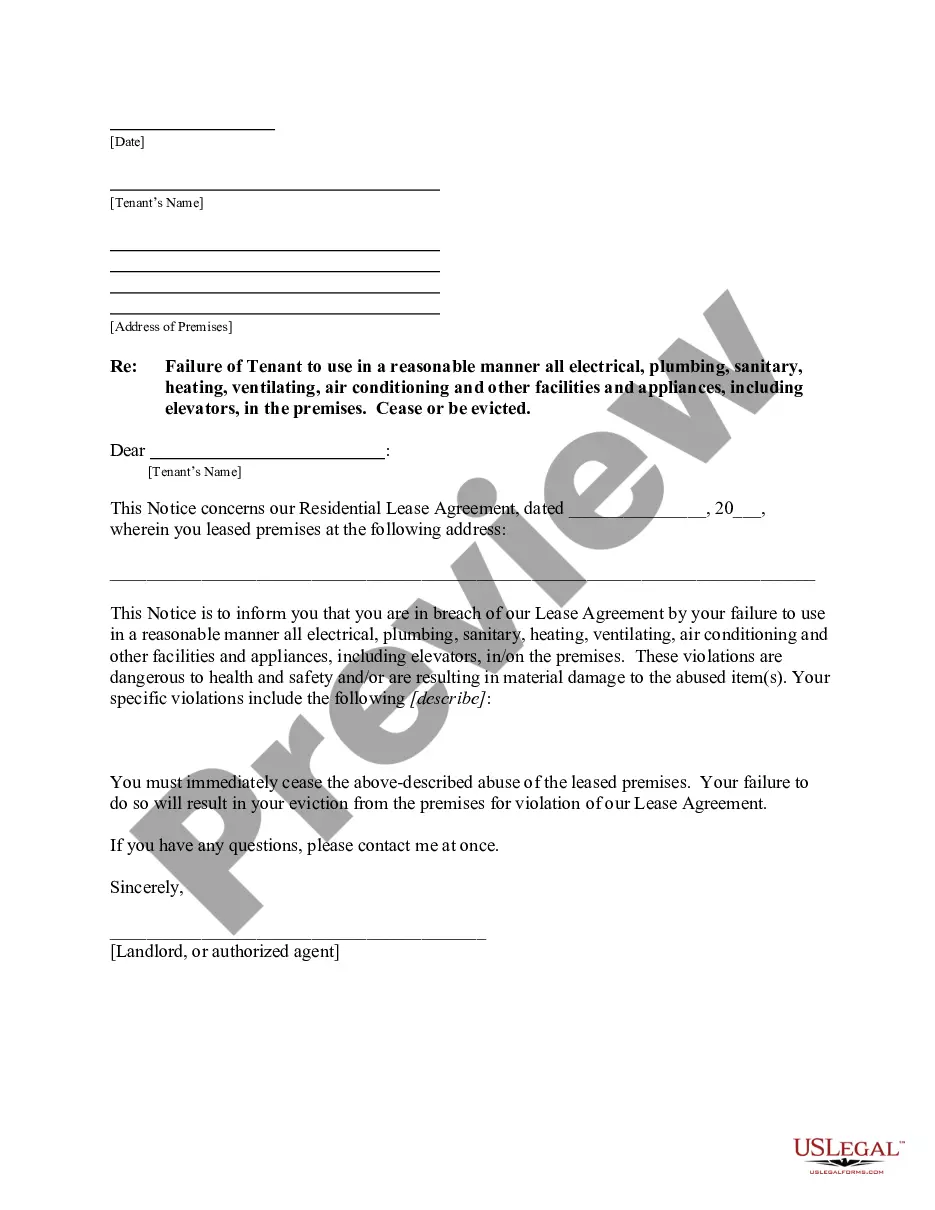
How to fill out Vermont Letter From Landlord To Tenant For Failure To Use Electrical, Plumbing, Sanitary, Heating, Ventilating, Air Conditioning And Other Facilities In A Reasonable Manner?
- If you’re an existing user, log into your account and click the Download button next to your desired form. Ensure that your subscription is up-to-date; renew if necessary.
- For first-time users, start by reviewing the form descriptions and preview modes to select the appropriate document that adheres to your local regulations.
- If you need extra templates, utilize the Search tab for quick results and refine your choices until you find the perfect match.
- Proceed to purchase your selected document by clicking 'Buy Now' and choosing a suitable subscription plan, which requires account registration.
- Enter your payment information, either by credit card or via PayPal, to complete the purchase.
- Lastly, download your chosen template and save it for immediate use. You can access it anytime under the 'My Forms' section in your profile.
US Legal Forms makes it easy to access and complete essential legal documents. With over 85,000 customizable templates, you can ensure precision in your legal filings without the usual stress.
Ready to simplify your legal documentation? Start leveraging US Legal Forms today for your legal needs!
Form popularity
FAQ
Supervisor retaliation occurs when a supervisor takes adverse actions against an employee for participating in legally protected activities, like filing complaints or reporting discrimination. This behavior undermines workplace fairness and can lead to serious legal issues. Familiarizing yourself with Vermont failure reasonable for supervisors can help you navigate these situations more effectively.
Yes, a supervisor can be held legally responsible for discrimination against an employee. If the supervisor's actions created an unfair work environment or violated the employee's rights, legal action can be taken. The concept of Vermont failure reasonable for supervisors is vital in understanding these legal implications.
Retaliation behavior refers to any negative action taken by an employer against an employee who reported misconduct or engaged in a protected activity. This could include threats, unwarranted disciplinary actions, or creating a hostile work environment. Recognizing this behavior helps define Vermont failure reasonable for supervisors.
Three examples of retaliation include an employee being demoted, facing harassment after filing a complaint, or receiving unfair performance evaluations. These actions often aim to punish the employee for standing up for their rights. Understanding these examples is crucial in the context of Vermont failure reasonable for supervisors.
Evidence of retaliation can include email correspondence, performance reviews that suddenly change, or a decrease in job responsibilities. Keep any documentation that shows a timeline or connection between your complaint and the actions taken against you. This evidence is vital when addressing Vermont failure reasonable for supervisors.
To prove your boss is retaliating against you, gather clear evidence of any negative action taken after you reported a concern or exercised your rights. Document incidents and communication, keeping track of dates and details. This provides a strong case when discussing Vermont failure reasonable for supervisors.
In legal terms, LSA often refers to Legal Services Administration, which provides support and resources for those needing legal aid. For supervisors, understanding the implications of LSA can enhance their ability to navigate court-related matters effectively. This knowledge can help prevent Vermont failure reasonable for supervisors when dealing with legal resources and clients in court.
In Vermont, lewd and lascivious behavior can lead to significant penalties, including fines and potential jail time. Legal definitions and consequences vary depending on the specifics of the case. Understanding these implications is essential for supervisors to avoid a Vermont failure reasonable for supervisors in addressing inappropriate conduct in the workplace.
Yes, in Vermont, employees can sue their employers under certain circumstances, particularly for wrongful termination or discrimination. Supervisors should be aware of labor laws and employee rights to mitigate potential legal risks. Being informed can help prevent Vermont failure reasonable for supervisors from overlooking critical employee protections.
The Fair Housing and Public Accommodations Act promotes equal access to housing and public services in Vermont. This law prohibits discrimination based on several factors, including race, nationality, and disability. For supervisors, understanding this legislation is critical to avoid Vermont failure reasonable for supervisors when making housing and accommodation decisions.