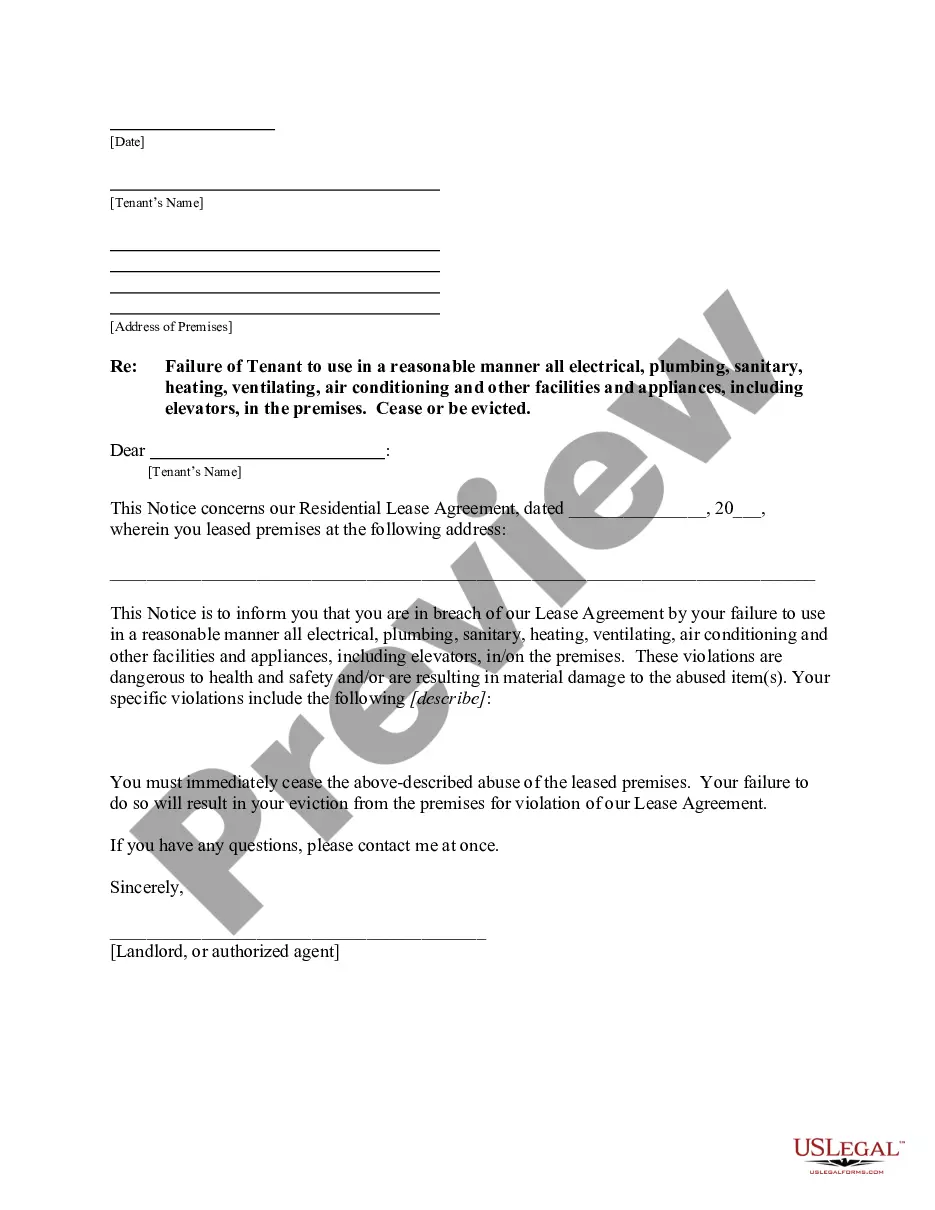
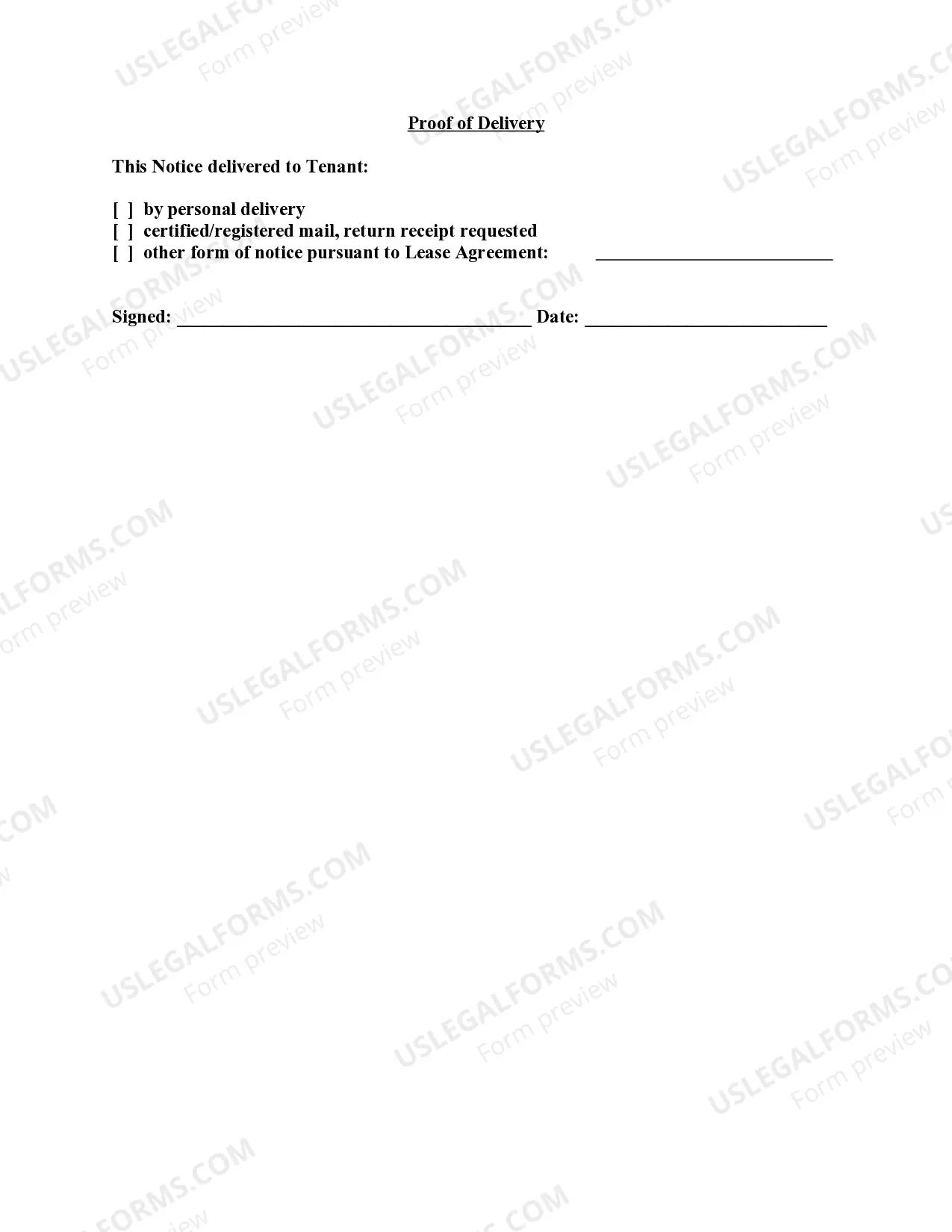
Tenant Failure Facilities For The Customer
Description


Get your form ready online
Our built-in tools help you complete, sign, share, and store your documents in one place.
Make edits, fill in missing information, and update formatting in US Legal Forms—just like you would in MS Word.
Download a copy, print it, send it by email, or mail it via USPS—whatever works best for your next step.
Sign and collect signatures with our SignNow integration. Send to multiple recipients, set reminders, and more. Go Premium to unlock E-Sign.
If this form requires notarization, complete it online through a secure video call—no need to meet a notary in person or wait for an appointment.
We protect your documents and personal data by following strict security and privacy standards.

Make edits, fill in missing information, and update formatting in US Legal Forms—just like you would in MS Word.

Download a copy, print it, send it by email, or mail it via USPS—whatever works best for your next step.

Sign and collect signatures with our SignNow integration. Send to multiple recipients, set reminders, and more. Go Premium to unlock E-Sign.

If this form requires notarization, complete it online through a secure video call—no need to meet a notary in person or wait for an appointment.

We protect your documents and personal data by following strict security and privacy standards.
Looking for another form?



How to fill out Vermont Letter From Landlord To Tenant For Failure To Use Electrical, Plumbing, Sanitary, Heating, Ventilating, Air Conditioning And Other Facilities In A Reasonable Manner?
- Log in to your US Legal Forms account if you're a returning user; ensure your subscription is valid. If necessary, renew it based on your chosen payment plan.
- For first-time users, start by examining the form previews and descriptions available. Make sure the selected template aligns with your legal jurisdiction.
- If the needed form isn't suitable, utilize the Search feature to find other templates that may work better for your requirements.
- After identifying the correct document, click 'Buy Now' and select your preferred subscription plan. Remember to create an account to unlock full access.
- Complete your purchase by filling in your payment details using either a credit card or your PayPal account.
- Once the transaction is successful, download your form to your device. You can also find it later in the 'My Forms' section of your profile for future use.
By leveraging the extensive collection of over 85,000 forms on US Legal Forms, you ensure you receive documents that are both comprehensive and easy to fill. Plus, access to premium legal experts means you can complete your forms accurately and confidently.
Get started today by visiting US Legal Forms and take the first step toward seamless legal documentation!
Form popularity
FAQ
In New York, landlords must address essential repairs that affect a tenant’s health and safety. This includes fixing issues like heating, plumbing, and structural integrity. Utilizing tenant failure facilities for the customer provides a clear framework for understanding your rights and responsibilities, ensuring that both landlords and tenants are aware of their obligations.
Resolving conflicts between tenants starts with understanding each party’s perspective. Encourage open dialogue where both tenants can express their concerns without interruption. Implementing tenant failure facilities for the customer can assist in mediating discussions and documenting agreements, ensuring a fair resolution that respects everyone involved.
When communicating with a landlord, avoid making accusations or demands without presenting supporting evidence. Phrasing your concerns calmly can lead to more productive discussions. It's wise to use tenant failure facilities for the customer to structure your communications professionally, ensuring that your message is clear and respectful.
Resolving tenant issues requires clear communication and a proactive approach. First, identify the core problem by talking with the tenant to understand their perspective. Then, use tenant failure facilities for the customer to manage agreements and track resolutions efficiently. This method fosters a cooperative environment and helps prevent future disputes.
Addressing tenant complaints promptly is essential for maintaining a positive relationship. Listen carefully to their concerns and document the issues. Utilize tenant failure facilities for the customer to streamline communication and resolution processes. This approach not only resolves issues effectively but also builds trust between landlords and tenants.
In Texas, uninhabitable living conditions may include severe plumbing issues, lack of heating or cooling, water leakage, or pest infestations. Such conditions make it difficult for tenants to live safely and comfortably. Tenant failure facilities for the customer can guide tenants in recognizing these issues and understanding their rights. Reporting uninhabitable conditions or seeking legal advice can help tenants find suitable resolutions.
One of the most common disputes between landlords and tenants involves issues related to rent payments. Often, tenants face challenges in meeting their rent obligations, which may lead to misunderstandings and conflicts. Tenant failure facilities for the customer can help address these issues by providing guidance on resolving payment disputes amicably. Clear communication and legally binding agreements can prevent these disagreements.
Assess the tenant's behavior to determine if it qualifies for eviction under local laws. Communicate your concerns clearly, providing them with an opportunity to address the issues. If no improvement occurs, initiate the legal eviction process according to your state's guidelines. Engaging with tenant failure facilities for the customer can help ensure you follow the necessary steps efficiently.
Document your attempts to communicate with the landlord regarding any issues you face. Use multiple methods of communication to ensure your concerns are heard. If the landlord remains unresponsive, consider seeking local tenant rights organizations for advice on how to escalate your concerns. Tenant failure facilities for the customer can also provide useful resources in navigating this situation.
Identify the specific behaviors or issues that categorize your tenant as 'bad.' Begin with direct communication, outlining your concerns clearly and giving them a chance to improve. If the situation doesn't change, proceed with the legal eviction process, adhering to your state's laws. Using tenant failure facilities for the customer can guide you through each step effectively.