Irrevocable Trust Agreement For Lease
Description
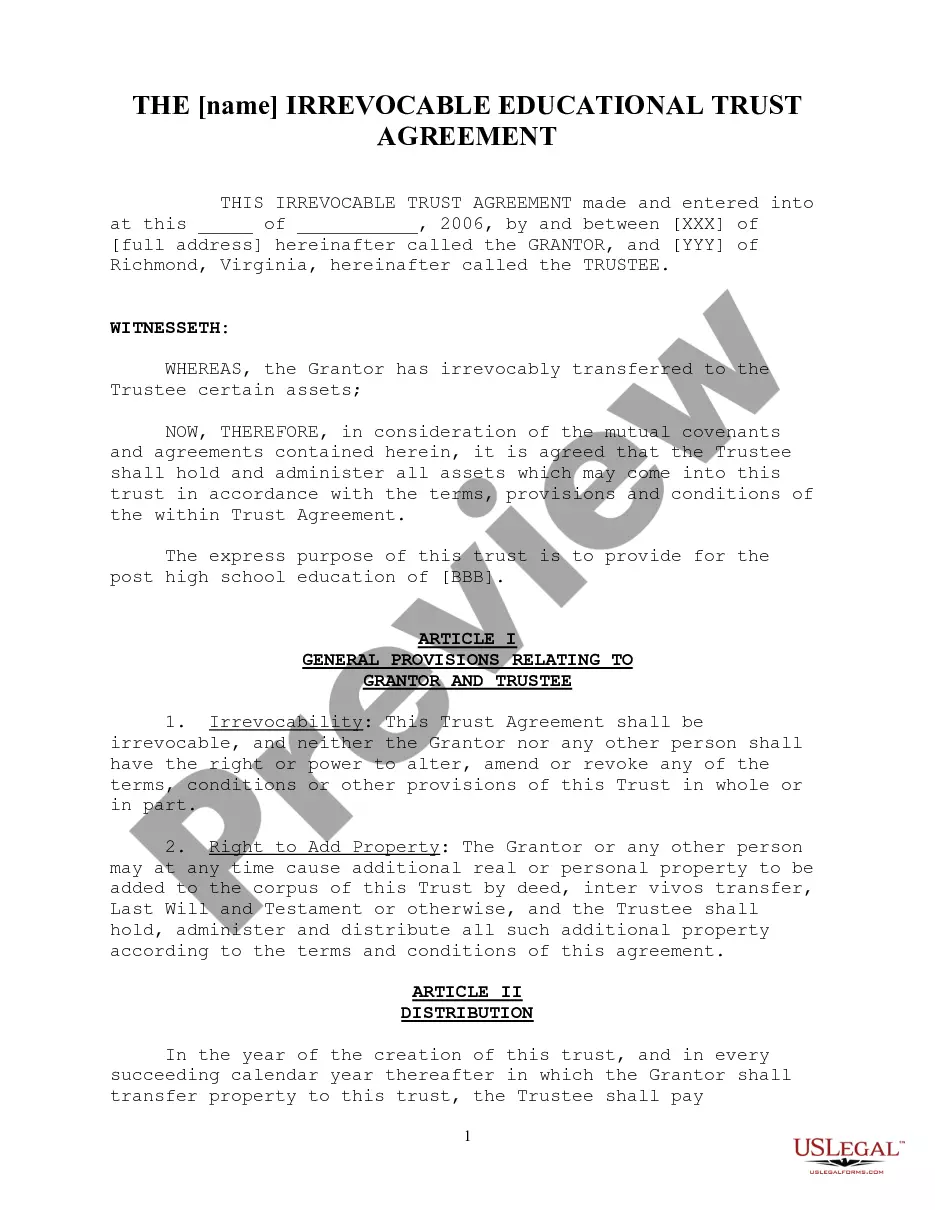
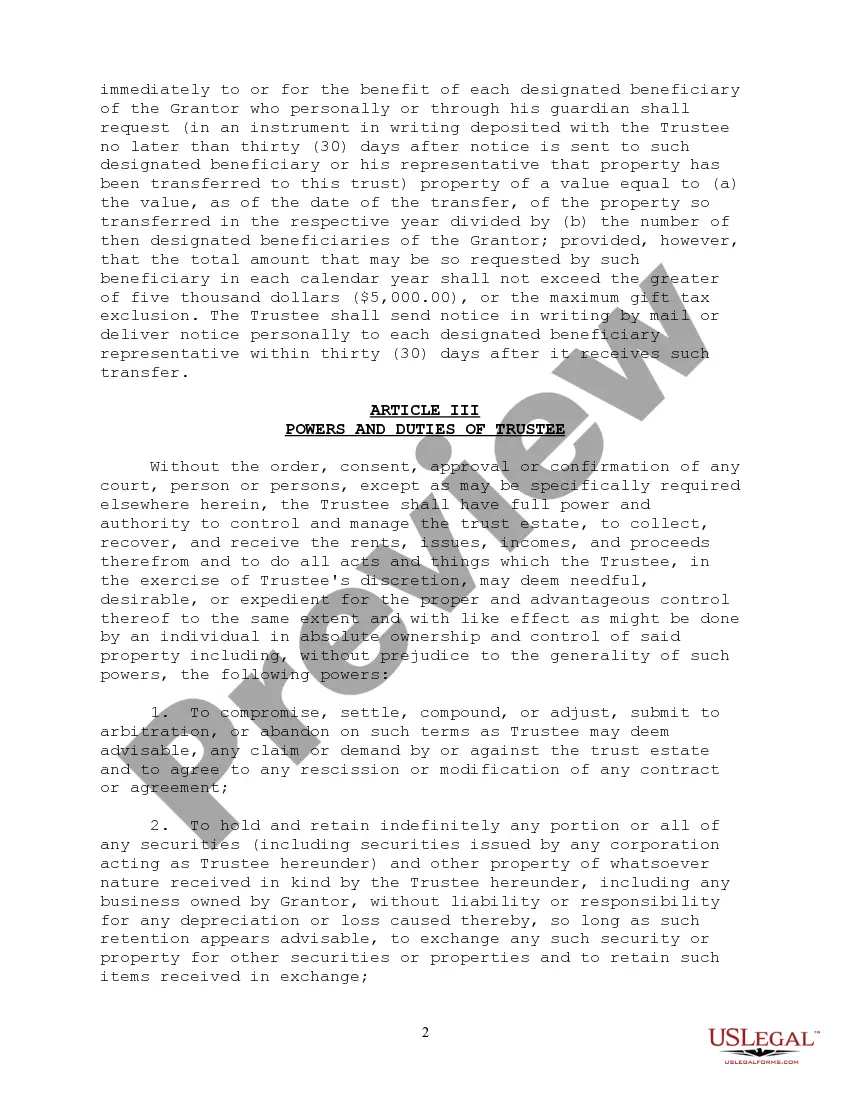
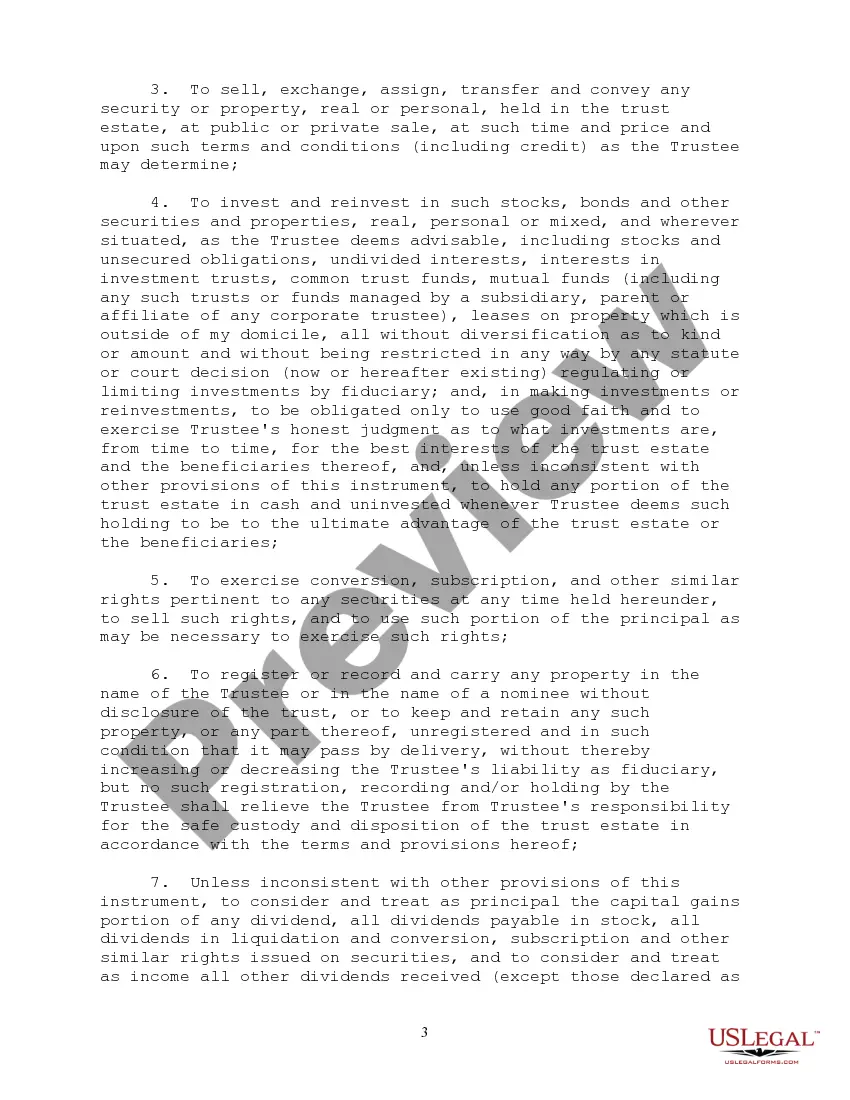
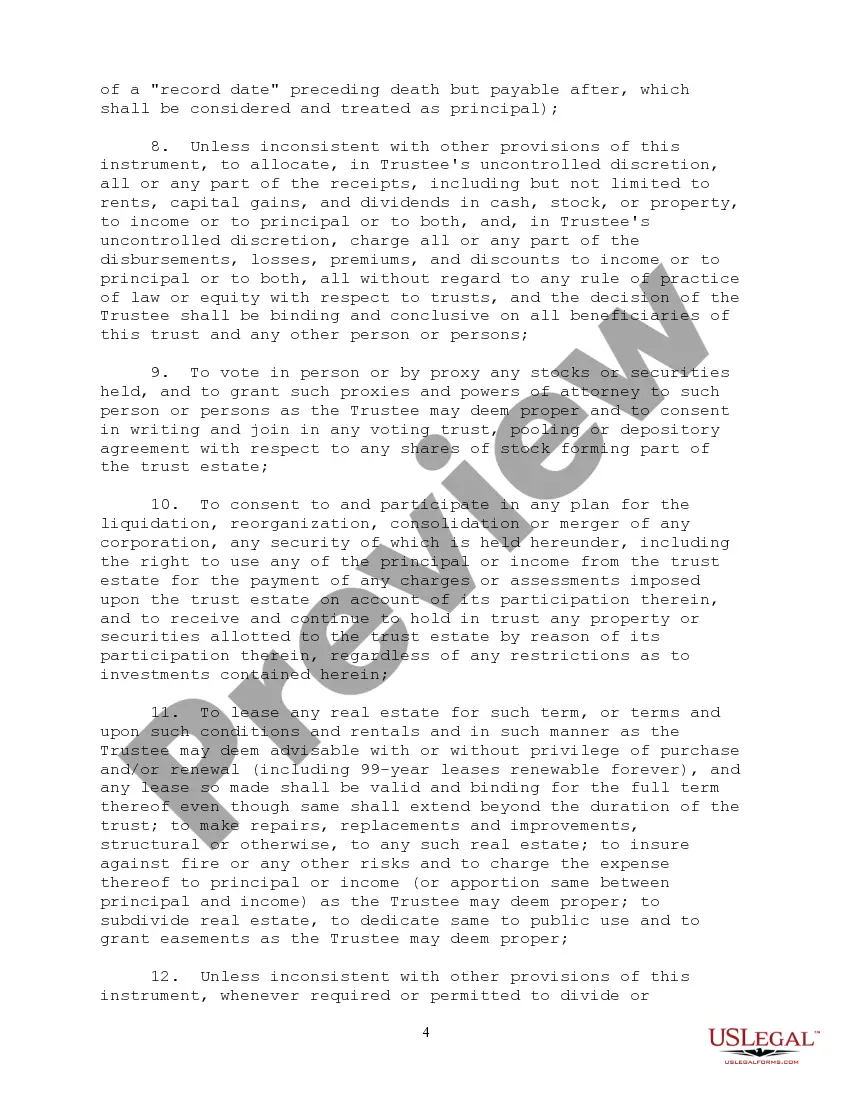
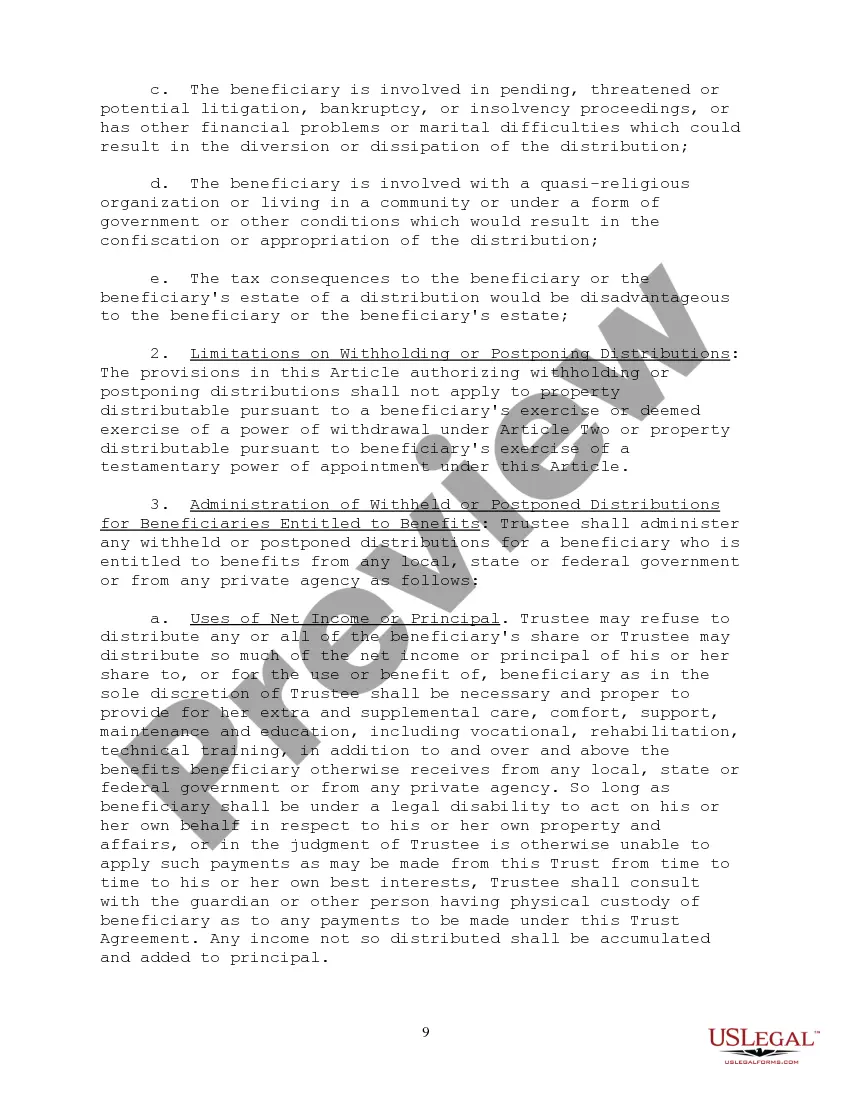
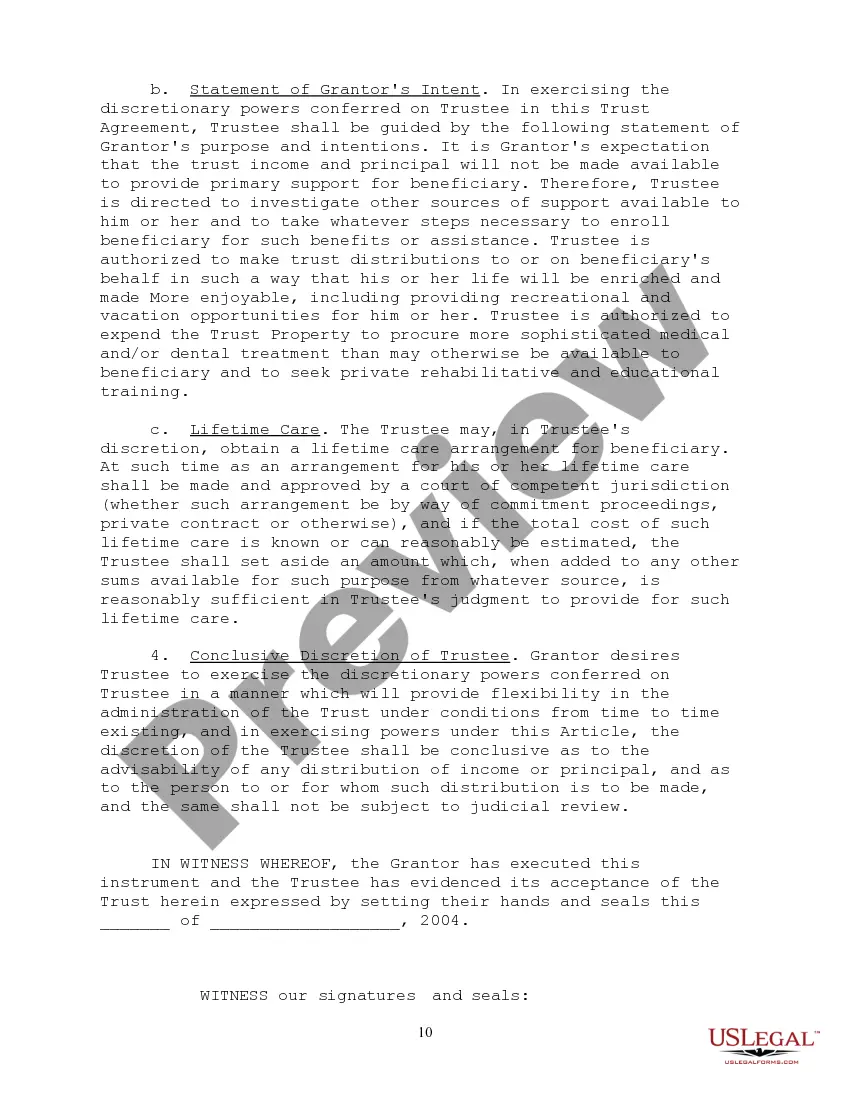

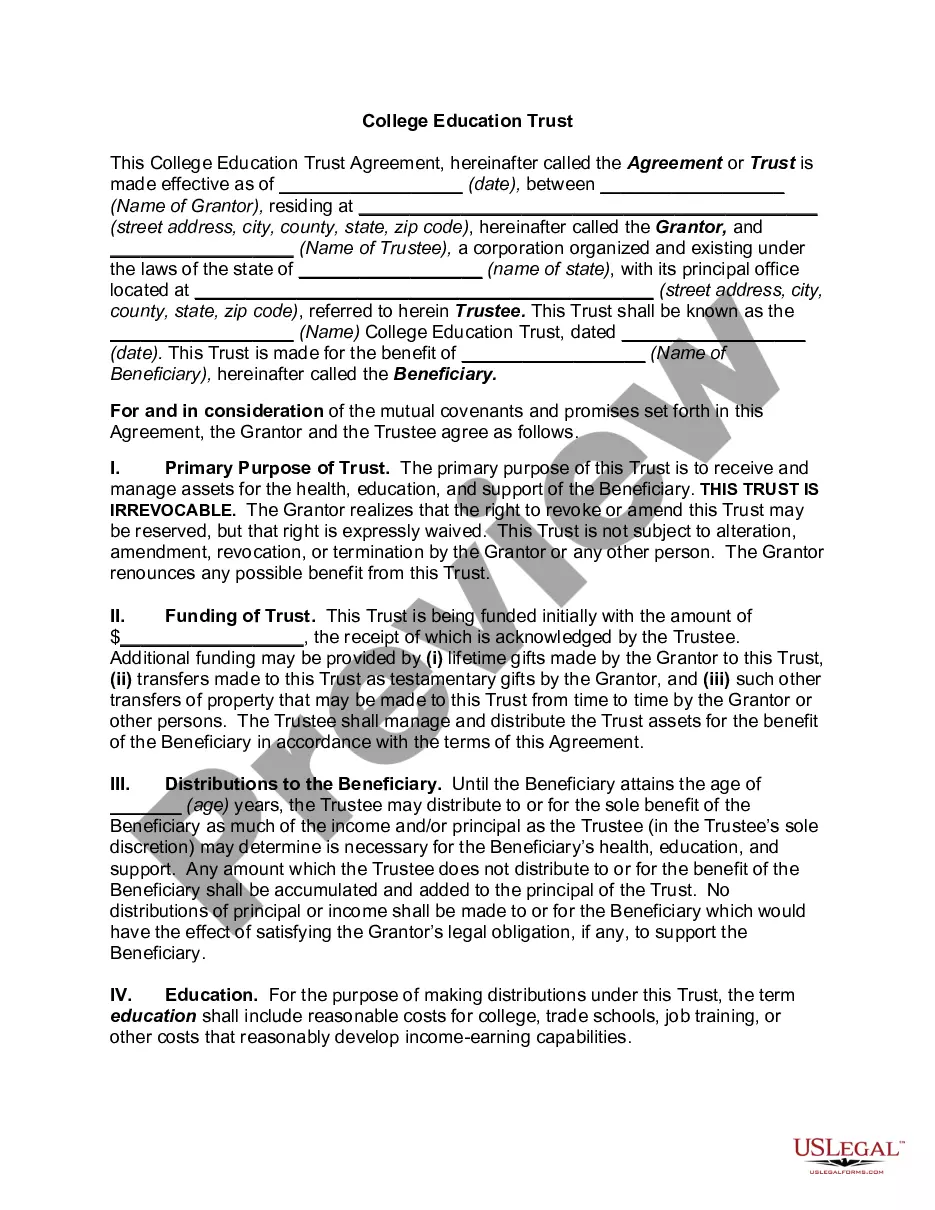

Get your form ready online
Our built-in tools help you complete, sign, share, and store your documents in one place.
Make edits, fill in missing information, and update formatting in US Legal Forms—just like you would in MS Word.
Download a copy, print it, send it by email, or mail it via USPS—whatever works best for your next step.
Sign and collect signatures with our SignNow integration. Send to multiple recipients, set reminders, and more. Go Premium to unlock E-Sign.
If this form requires notarization, complete it online through a secure video call—no need to meet a notary in person or wait for an appointment.
We protect your documents and personal data by following strict security and privacy standards.

Make edits, fill in missing information, and update formatting in US Legal Forms—just like you would in MS Word.

Download a copy, print it, send it by email, or mail it via USPS—whatever works best for your next step.

Sign and collect signatures with our SignNow integration. Send to multiple recipients, set reminders, and more. Go Premium to unlock E-Sign.

If this form requires notarization, complete it online through a secure video call—no need to meet a notary in person or wait for an appointment.

We protect your documents and personal data by following strict security and privacy standards.
Looking for another form?









How to fill out Virginia Irrevocable Educational Trust Agreement?
- Log into your US Legal Forms account if you're a returning user, ensuring your subscription is active.
- In Preview mode, review the form description for the irrevocable trust agreement for lease to confirm it's suitable for your needs.
- If necessary, utilize the Search feature to find an alternative template that meets your local requirements.
- Select the form and click 'Buy Now' to choose your preferred subscription plan, which includes a library of resources.
- Complete the purchase by entering your payment details using a credit card or your PayPal account.
- Download the form to your device, and access it anytime through the 'My Forms' section of your account.
Following these steps will ensure you have all the necessary documentation at your fingertips. US Legal Forms not only simplifies your legal documentation process but also gives you the advantage of a robust collection of forms and expert guidance.
Take the first step towards managing your legal needs efficiently—visit US Legal Forms today!
Form popularity
FAQ
Yes, you can place a rental property in an irrevocable trust. An irrevocable trust agreement for lease allows you to transfer ownership of your property while retaining certain benefits. This arrangement can help you manage your assets effectively and protect them from creditors. Using a service like US Legal Forms simplifies the process, ensuring that your irrevocable trust agreement is structured correctly.
One of the biggest mistakes parents make when setting up a trust fund is not clearly communicating their intentions and terms to beneficiaries. This lack of communication can lead to misunderstandings later on. Furthermore, neglecting to review and update the trust can lead to issues if family dynamics or laws change over time.
While a trust can provide many benefits, a significant downside is the loss of control. When assets are transferred via an irrevocable trust agreement for lease, the grantor cannot reclaim those assets. Additionally, setting up a trust may involve legal fees and the need for ongoing management.
It's often wise for parents to consider putting their assets into a trust, especially an irrevocable trust agreement for lease. This can help protect their assets from creditors, ensure a smooth transfer after passing, and potentially reduce taxes. However, it's crucial for them to evaluate their current and future financial needs before deciding.
The primary downfall of having an irrevocable trust, including an irrevocable trust agreement for lease, is that it is typically permanent. This means that once you set it up, you cannot easily change the terms or retrieve the assets. This rigidity can be a barrier if circumstances shift unexpectedly.
One of the disadvantages of establishing a family trust, including an irrevocable trust agreement for lease, is the loss of direct control over the assets placed in the trust. Once assets are transferred, you cannot alter the agreement or reclaim the assets. This can lead to complications if family situations or financial needs change.
Filling out an irrevocable trust agreement for lease requires clarity and precision. Begin by clearly defining the grantor, trustee, and beneficiaries. Next, list the assets being transferred into the trust, and finally, ensure all legal terms are correctly documented to meet state regulations.
When creating an irrevocable trust agreement for lease, it is essential to avoid placing personal property that you might wish to retain control over. Additionally, any assets that may need to be liquidated or sold in the future should be kept out. Lastly, avoid putting assets that might be subject to changing financial needs or that require hands-on management.
You generally do not file an irrevocable trust agreement for lease with your local court. Instead, the trust document should be maintained by the trustee and can be provided to beneficiaries upon request. However, certain actions related to the trust, such as property transfers, may need to be recorded in the appropriate government offices.
The IRS recently established new guidelines emphasizing transparency for irrevocable trust agreements for lease. This includes stricter reporting requirements for income distributions and a focus on ensuring tax compliance. It's vital to stay informed about these changes, as they can impact the management and reporting of trust assets.