Virginia Utility Easement Law Without Permit
Description
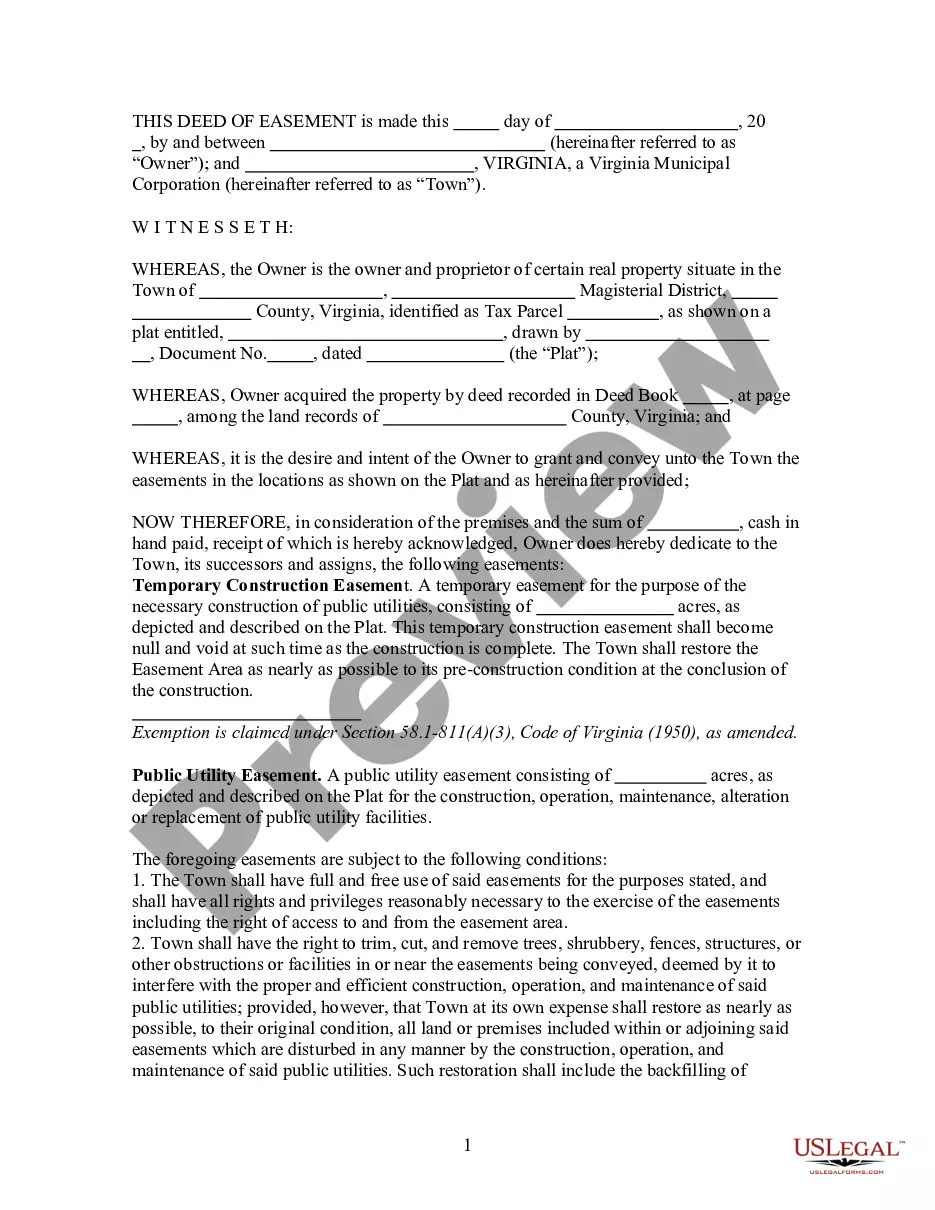
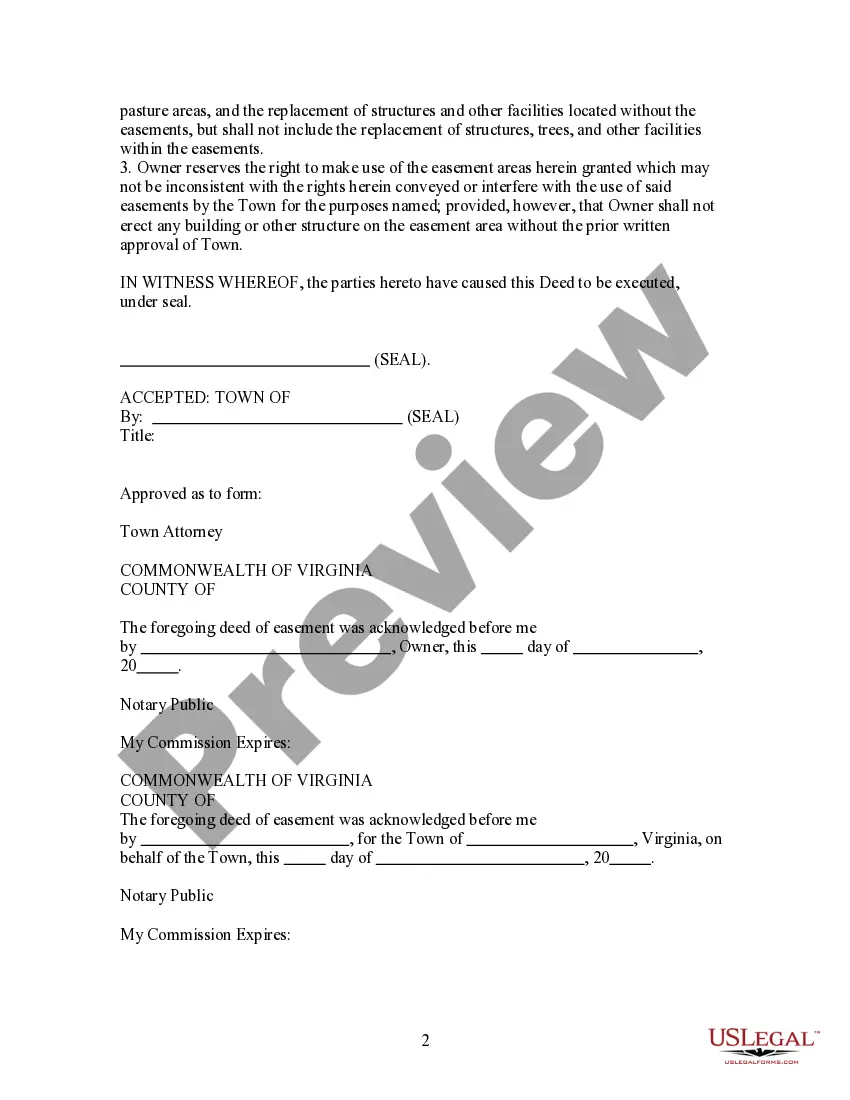
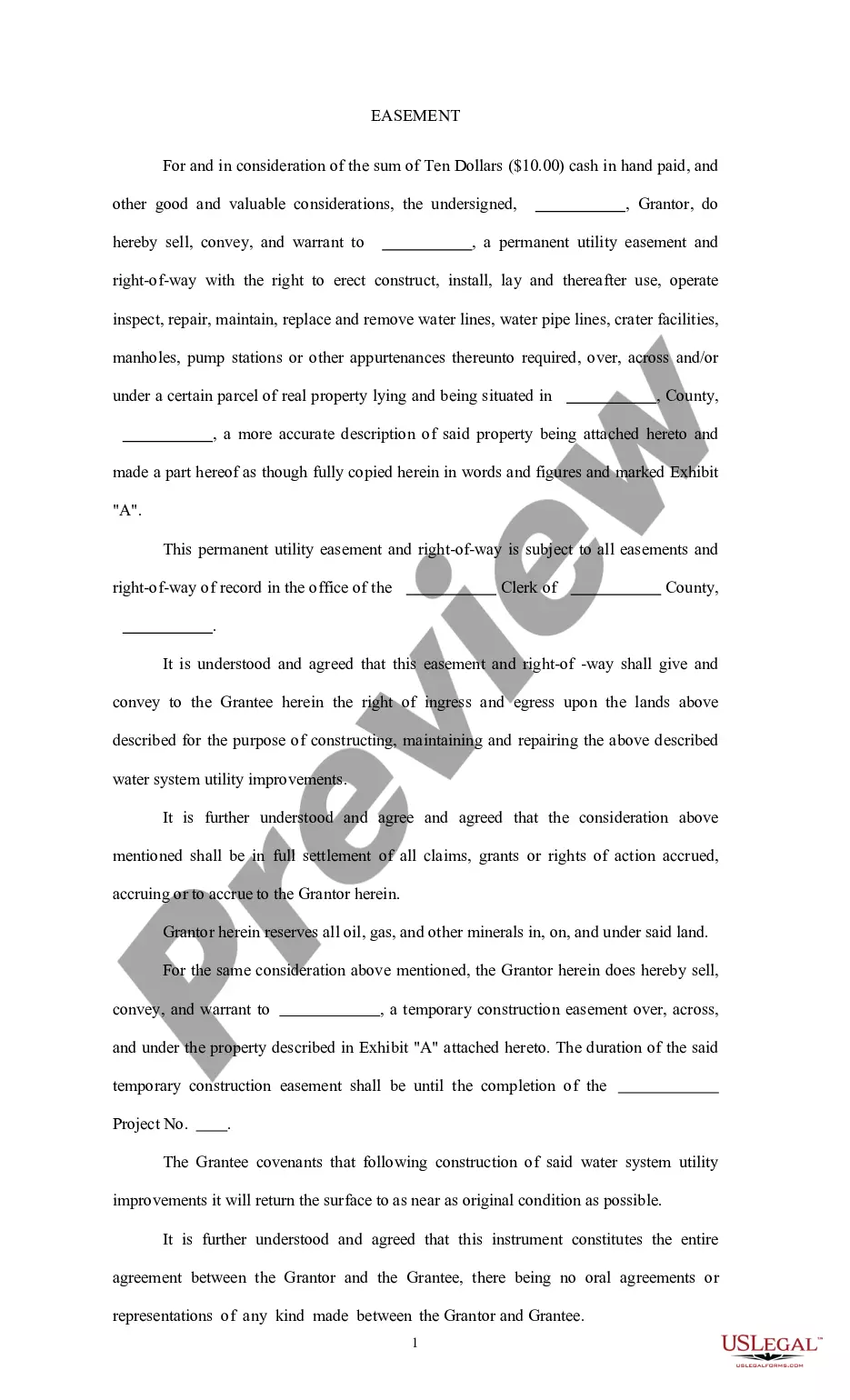
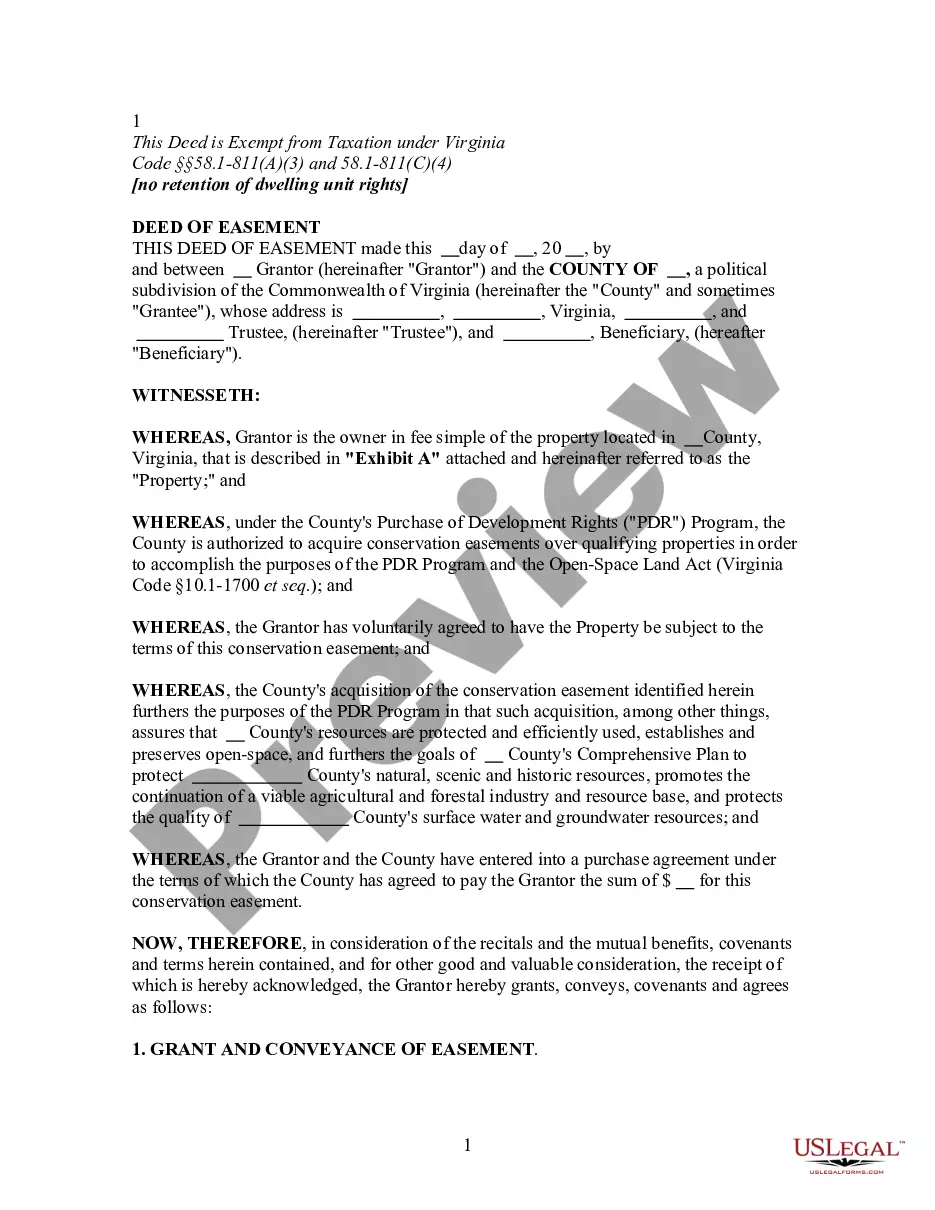
Get your form ready online
Our built-in tools help you complete, sign, share, and store your documents in one place.
Make edits, fill in missing information, and update formatting in US Legal Forms—just like you would in MS Word.
Download a copy, print it, send it by email, or mail it via USPS—whatever works best for your next step.
Sign and collect signatures with our SignNow integration. Send to multiple recipients, set reminders, and more. Go Premium to unlock E-Sign.
If this form requires notarization, complete it online through a secure video call—no need to meet a notary in person or wait for an appointment.
We protect your documents and personal data by following strict security and privacy standards.

Make edits, fill in missing information, and update formatting in US Legal Forms—just like you would in MS Word.

Download a copy, print it, send it by email, or mail it via USPS—whatever works best for your next step.

Sign and collect signatures with our SignNow integration. Send to multiple recipients, set reminders, and more. Go Premium to unlock E-Sign.

If this form requires notarization, complete it online through a secure video call—no need to meet a notary in person or wait for an appointment.

We protect your documents and personal data by following strict security and privacy standards.
Looking for another form?







How to fill out Virginia Temporary Public Utility Easement?
Creating legal documents from the beginning can occasionally be overwhelming.
Certain situations may require extensive research and significant monetary investment.
If you’re looking for a simpler and more cost-effective method of generating Virginia Utility Easement Law Without Permit or any other documentation without the hassle, US Legal Forms is always available for you.
Our online collection of over 85,000 current legal templates covers nearly every aspect of your financial, legal, and personal affairs. With just a few clicks, you can immediately access state- and county-specific forms meticulously prepared for you by our legal experts.
Examine the document preview and descriptions to confirm that you have located the document you are looking for.
- Utilize our website whenever you require a dependable and trustworthy service that allows you to conveniently find and download the Virginia Utility Easement Law Without Permit.
- If you’re familiar with our services and have set up an account earlier, just Log In to your account, find the template, and download it immediately or re-download it at any later time in the My documents section.
- Not yet a member? No worries. It takes minimal time to register and browse the library.
- Before proceeding to download Virginia Utility Easement Law Without Permit, consider these suggestions.
Form popularity
FAQ
Sometimes homeowners want to understand if they can remove an easement from their property or can a property owner block an easement. If the intent is to prevent or obstruct the use of the easement, the answer is probably no. In Virginia, a specific statute addresses this last point.
An easement once granted may be ended by merger. Under the merger doctrine, an easement will terminate when the dominant and servient estates become vested in one person. To satisfy this, there must be a complete unity of the dominant and servient estates, meaning that one person or entity owns the entire plot of land.
Under common law, the owner of a property that gets its access by way of the easement has a duty to maintain the easement, but need only maintain the easement to the degree that the owner deems necessary for access to their own property.
Unless otherwise provided for in the terms of an easement, the owner of a dominant estate shall not use an easement in a way that is not reasonably consistent with the uses contemplated by the grant of the easement, and the owner of the servient estate shall not engage in an activity or cause to be present any objects ...
An easement is an interest in property that conveys the use, but not the ownership, of a portion of an owner's property. They are typically used for a specific portion of the property for many varied purposes.