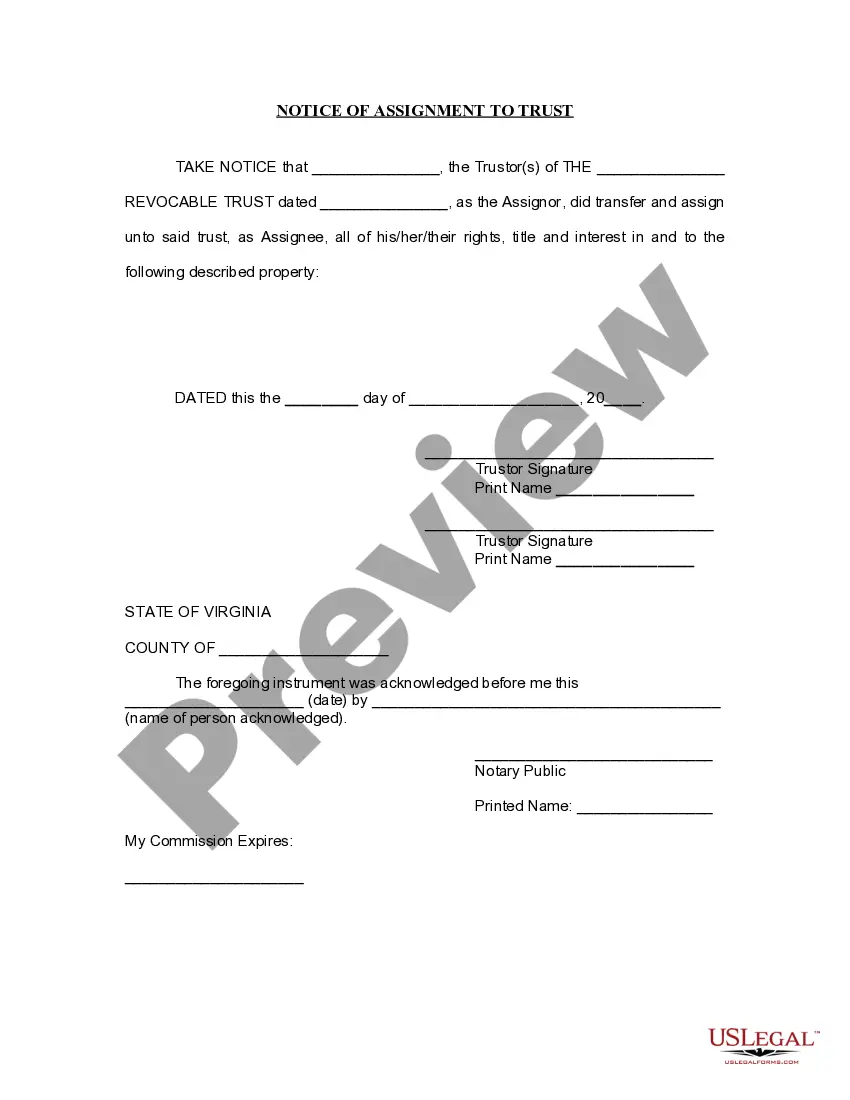
Virginia Living Trust For House
Description
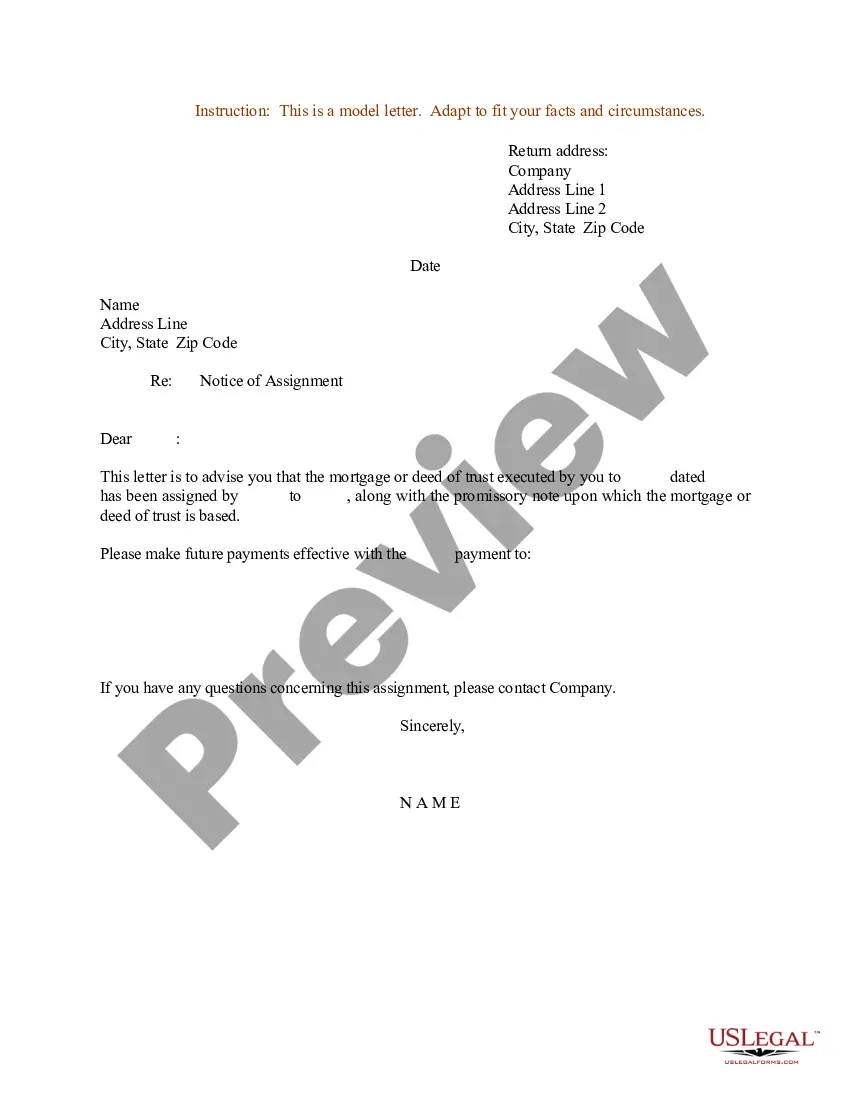
Get your form ready online
Our built-in tools help you complete, sign, share, and store your documents in one place.
Make edits, fill in missing information, and update formatting in US Legal Forms—just like you would in MS Word.
Download a copy, print it, send it by email, or mail it via USPS—whatever works best for your next step.
Sign and collect signatures with our SignNow integration. Send to multiple recipients, set reminders, and more. Go Premium to unlock E-Sign.
If this form requires notarization, complete it online through a secure video call—no need to meet a notary in person or wait for an appointment.
We protect your documents and personal data by following strict security and privacy standards.

Make edits, fill in missing information, and update formatting in US Legal Forms—just like you would in MS Word.

Download a copy, print it, send it by email, or mail it via USPS—whatever works best for your next step.

Sign and collect signatures with our SignNow integration. Send to multiple recipients, set reminders, and more. Go Premium to unlock E-Sign.

If this form requires notarization, complete it online through a secure video call—no need to meet a notary in person or wait for an appointment.

We protect your documents and personal data by following strict security and privacy standards.
Looking for another form?








How to fill out Virginia Notice Of Assignment To Living Trust?
It’s clear that you cannot become a legal expert instantly, nor can you understand how to swiftly create a Virginia Living Trust For House without possessing a specialized skill set.
Creating legal documents is a lengthy endeavor that necessitates specific education and expertise. So why not entrust the creation of the Virginia Living Trust For House to the experts.
With US Legal Forms, one of the most extensive legal document repositories, you can discover anything from court filings to templates for internal corporate communication. We understand how vital compliance and adherence to federal and state regulations are. That’s why, on our platform, all templates are localized and current.
Click Buy now. Once the payment is finalized, you can download the Virginia Living Trust For House, fill it out, print it, and send or mail it to the necessary individuals or entities.
You can re-access your forms from the My documents tab at any time. If you’re a returning customer, you can simply Log In, and find and download the template from the same tab.
- Begin with our website and find the form you require in just minutes.
- Locate the form you need using the search bar at the top of the page.
- Preview it (if this option is available) and review the accompanying description to determine if Virginia Living Trust For House is what you seek.
- Restart your search if you need a different form.
- Create a free account and choose a subscription plan to acquire the template.
Form popularity
FAQ
To make a living trust in Virginia, you: Choose whether to make an individual or shared trust. Decide what property to include in the trust. Choose a successor trustee. Decide who will be the trust's beneficiaries?that is, who will get the trust property. Create the trust document.
List your assets and decide which you'll include in the trust. ... Gather the paperwork. ... Decide whether you will be the sole grantor. ... Choose beneficiaries. ... Choose a successor trustee. ... Choose someone to manage property for minor children. ... Prepare the trust document. ... Sign and Notarize.
The key disadvantages of placing a house in a trust include the following: Extra paperwork: Moving property in a trust requires the house owner to transfer the asset's legal title. This involves preparing and signing an additional deed, and some people may consider this cumbersome.
Steps for Putting a House Into a Trust 1. Choose a trustee: This should be someone you trust to manage the trust, such as a family member or solicitor. 2. Create the trust deed: This is a legal document setting out the terms of the trust, such as who the beneficiaries are and what they will receive.
To transfer real property into your Trust, a new deed reflecting the name of the Trust must be executed, notarized and recorded with the County Recorder in the County where the property is located. Care must be taken that the exact legal description in the existing deed appears on the new deed.