Utah Eviction Rules
Description
Get your form ready online
Our built-in tools help you complete, sign, share, and store your documents in one place.
Make edits, fill in missing information, and update formatting in US Legal Forms—just like you would in MS Word.
Download a copy, print it, send it by email, or mail it via USPS—whatever works best for your next step.
Sign and collect signatures with our SignNow integration. Send to multiple recipients, set reminders, and more. Go Premium to unlock E-Sign.
If this form requires notarization, complete it online through a secure video call—no need to meet a notary in person or wait for an appointment.
We protect your documents and personal data by following strict security and privacy standards.

Make edits, fill in missing information, and update formatting in US Legal Forms—just like you would in MS Word.

Download a copy, print it, send it by email, or mail it via USPS—whatever works best for your next step.

Sign and collect signatures with our SignNow integration. Send to multiple recipients, set reminders, and more. Go Premium to unlock E-Sign.

If this form requires notarization, complete it online through a secure video call—no need to meet a notary in person or wait for an appointment.

We protect your documents and personal data by following strict security and privacy standards.
Looking for another form?
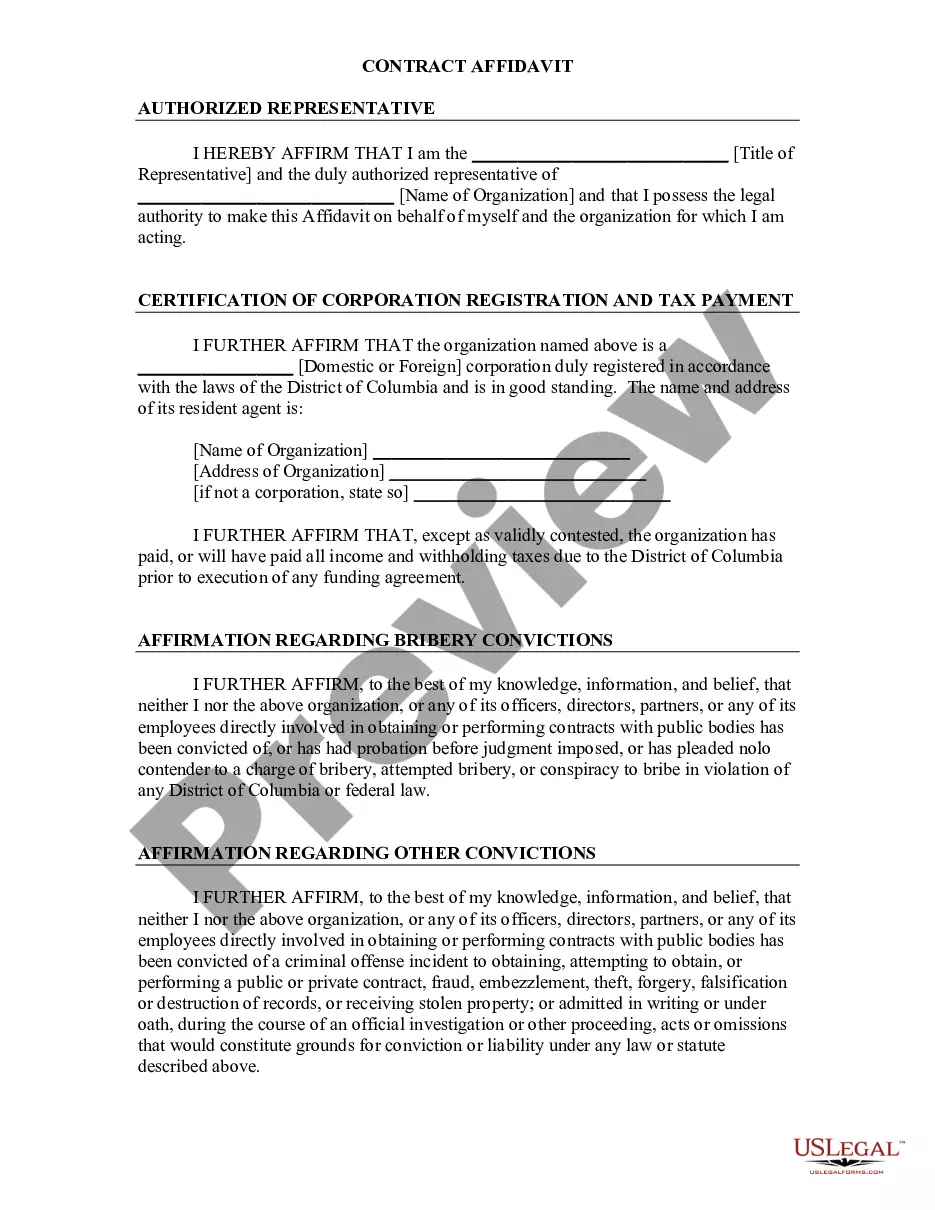






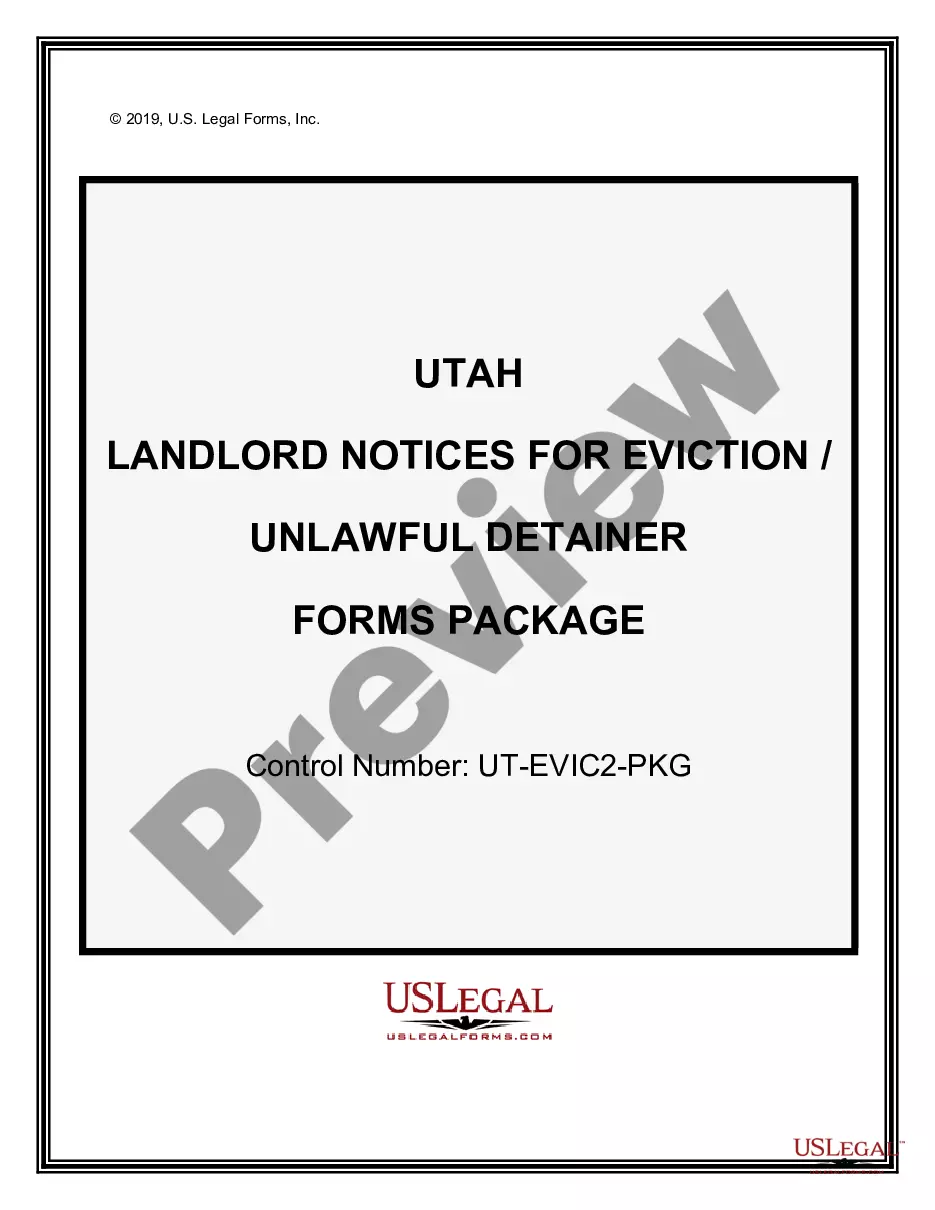
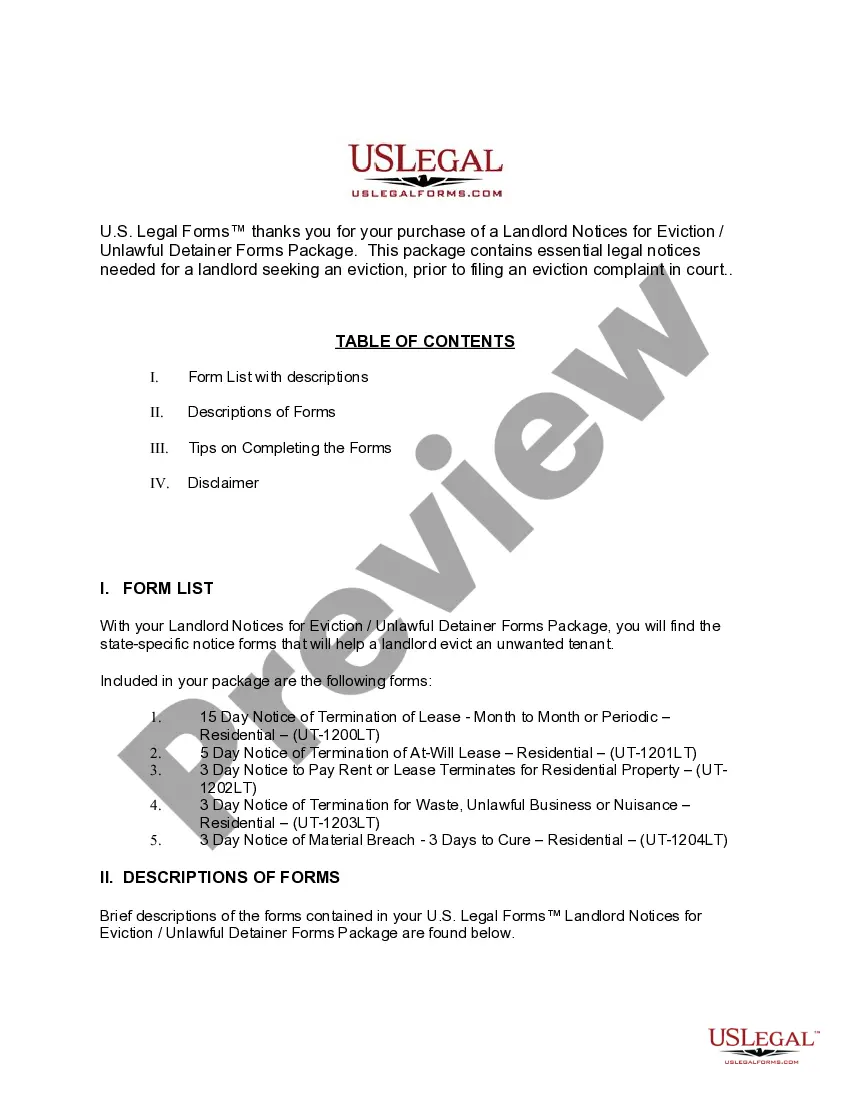
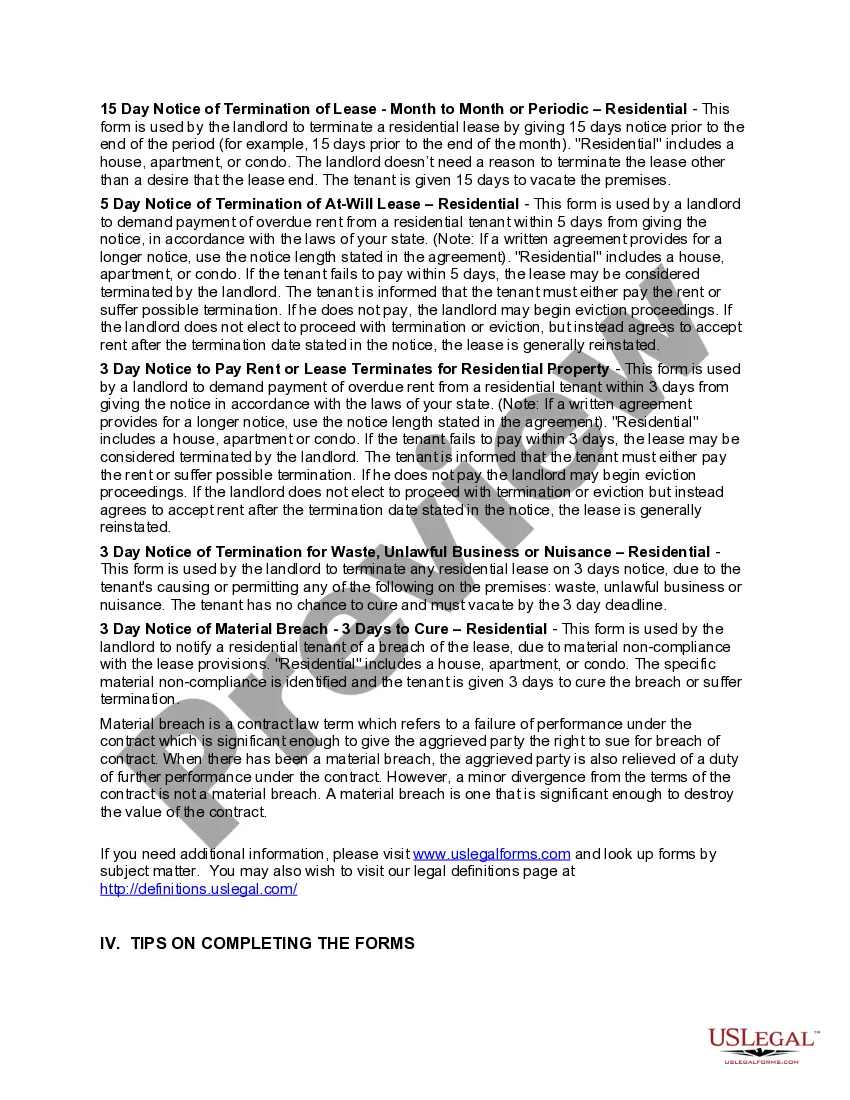
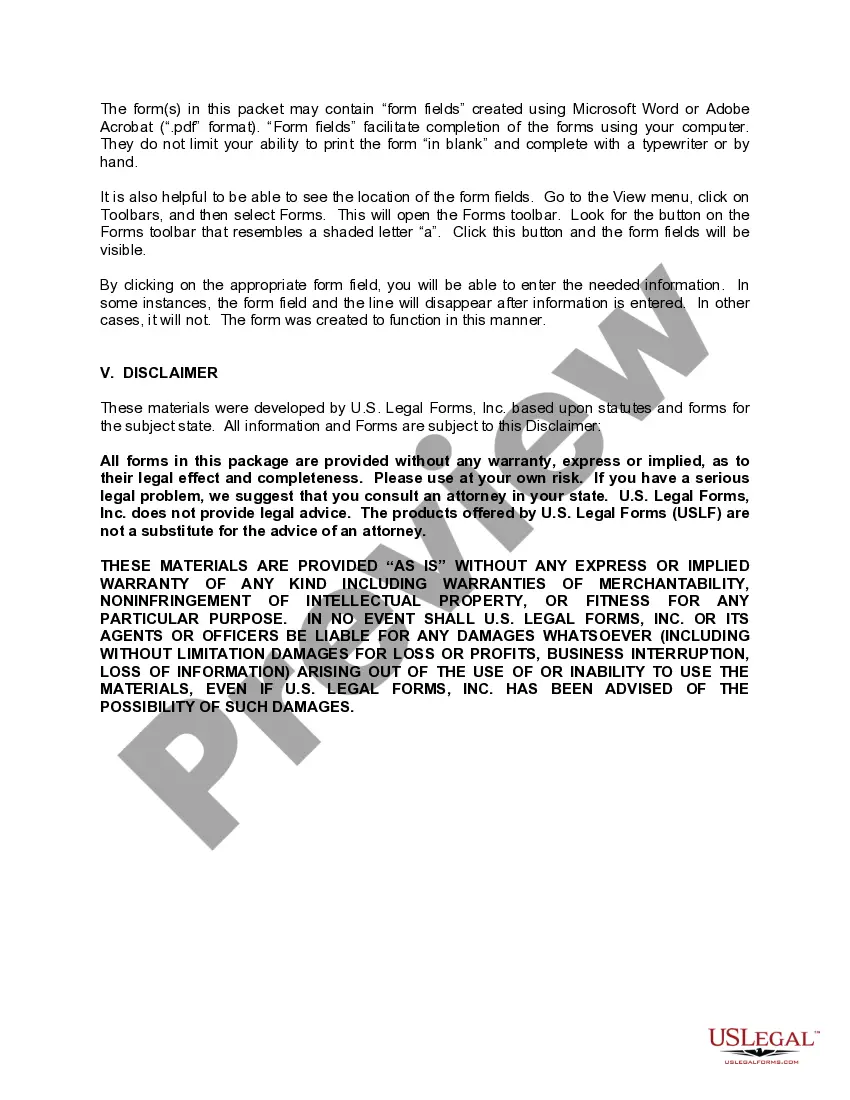
How to fill out Utah Landlord Notices For Eviction / Unlawful Detainer Forms Package?
Regardless of whether it's for professional reasons or personal matters, everyone inevitably encounters legal issues at some stage of their life.
Completing legal documents requires meticulous care, beginning with selecting the right form template. For example, if you choose an incorrect version of the Utah Eviction Regulations, it will be rejected upon submission. Thus, it is essential to secure a trustworthy source of legal documents like US Legal Forms.
With an extensive US Legal Forms catalog available, you no longer need to waste time searching for the appropriate template online. Utilize the library’s straightforward navigation to find the correct template for any circumstance.
- Locate the template you require by using the search bar or browsing through the catalog.
- Review the details of the form to confirm it aligns with your circumstances, state, and area.
- Select the form's preview to view it.
- If it is not the appropriate form, return to the search option to find the Utah Eviction Regulations template you need.
- Download the document if it fulfills your requirements.
- If you already possess a US Legal Forms account, simply click Log in to access previously saved templates in My documents.
- If you do not yet have an account, you may download the form by clicking Buy now.
- Choose the correct pricing option.
- Fill out the profile registration form.
- Select your payment method: use a credit card or PayPal account.
- Choose the document format you wish and download the Utah Eviction Regulations.
- After it is saved, you can complete the form using editing software or print it out and finish it by hand.
Form popularity
FAQ
Utah eviction rules require landlords to follow a legal process, starting with providing proper notice to tenants. Depending on the reason for eviction, the notice period can vary, typically ranging from three to thirty days. Landlords must file a complaint in court if tenants do not vacate within the specified time. Familiarizing yourself with these rules is crucial, and resources like US Legal Forms can help you navigate the process effectively.
An example of a filled out eviction notice includes the landlord's name, tenant's name, property address, and the specific reason for eviction, such as non-payment of rent. It should also specify the required notice period according to Utah eviction rules. This example serves as a guide, but remember to customize it according to your situation and ensure compliance with local laws. For detailed templates, you can visit US Legal Forms.
To properly fill out an eviction notice, begin by including the date and the tenant's name. Clearly state the reason for the eviction, referencing the specific Utah eviction rules that apply. Next, provide the deadline for the tenant to vacate the property, ensuring it complies with state regulations. Lastly, sign the notice and deliver it to the tenant according to the legal methods outlined in Utah eviction rules.
While some landlords may hope for a quick eviction, the speed largely depends on compliance with legal procedures. Following proper Utah eviction rules is essential, as rushing can lead to mistakes and delays. On average, if everything goes smoothly, an eviction can be completed in around 30 to 60 days. To navigate this process efficiently, consider utilizing platforms like US Legal Forms for guidance and resources.
The timeline for evicting a tenant in Utah can vary based on several factors, including court schedules and the tenant's response. Generally, the entire process may take anywhere from a few weeks to a couple of months. Landlords should prepare for potential delays and ensure they follow Utah eviction rules closely. Being informed can expedite the process and minimize complications.
The eviction process in Utah begins with a notice from the landlord, followed by a court filing if the tenant does not comply. After filing, the court will schedule a hearing where both parties can present their case. If the court rules for the landlord, they can proceed with an eviction order. Understanding these steps can help both landlords and tenants navigate the process more smoothly.
Yes, in most cases, Utah requires landlords to provide a 30-day notice to vacate. This notice is essential for month-to-month leases and informs the tenant that they must move out within that time frame. However, different situations may apply, such as lease violations, which can alter the notice period. Familiarizing yourself with these Utah eviction rules is crucial for both landlords and tenants.
In Utah, immediate eviction is not typical unless there are extreme circumstances, such as illegal activities on the property. Generally, tenants must receive a proper notice before any eviction proceedings can start. These Utah eviction rules ensure that tenants have the opportunity to resolve their issues. Always check the specifics of your situation to understand your rights and options.
The eviction process in Utah consists of three main stages: notice, court proceedings, and enforcement. First, the landlord must provide a written notice to the tenant, informing them of the lease violation or the need to vacate. Next, if the tenant does not comply, the landlord must file an eviction lawsuit in court. Finally, if the court rules in favor of the landlord, the eviction can be enforced by law enforcement.