Vehicle Seller
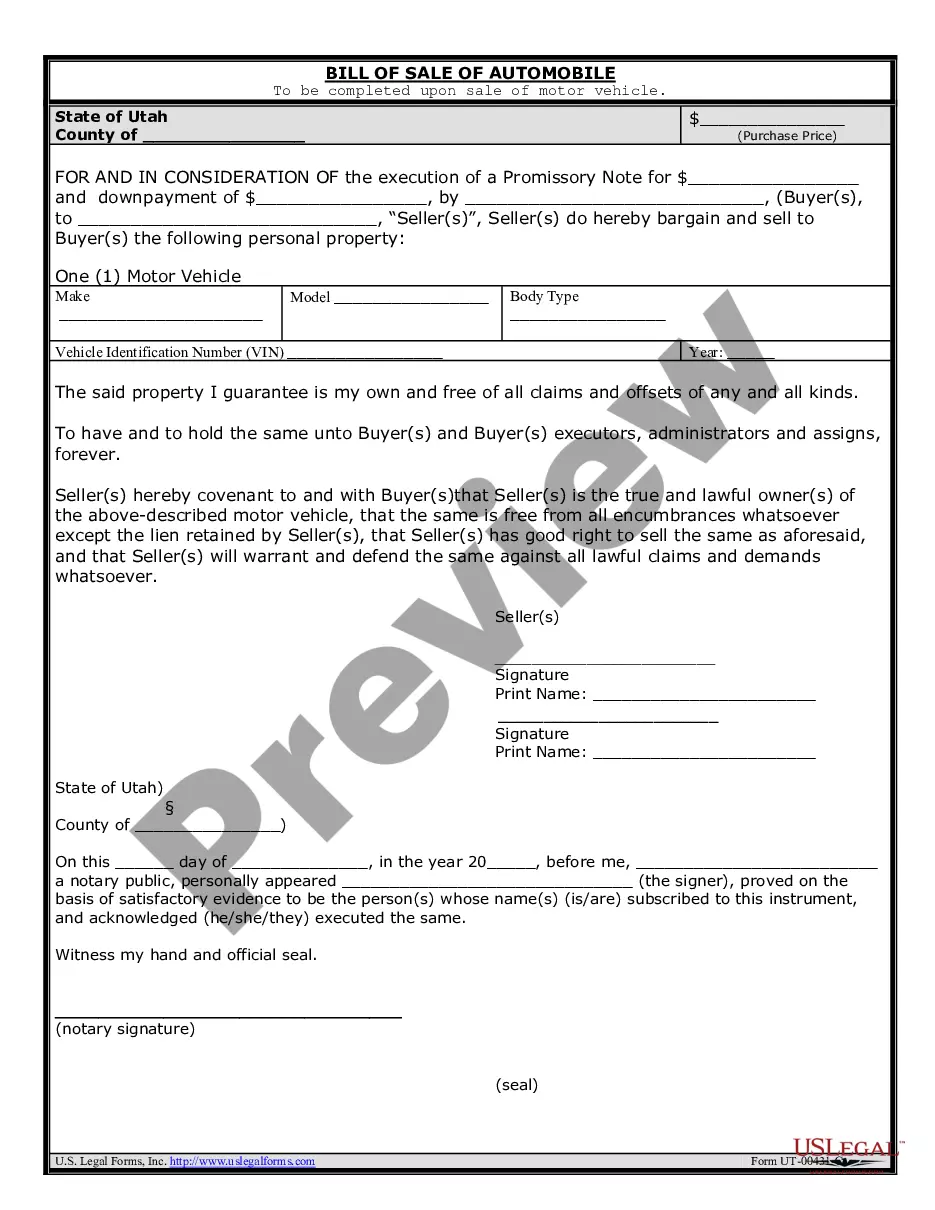
Description
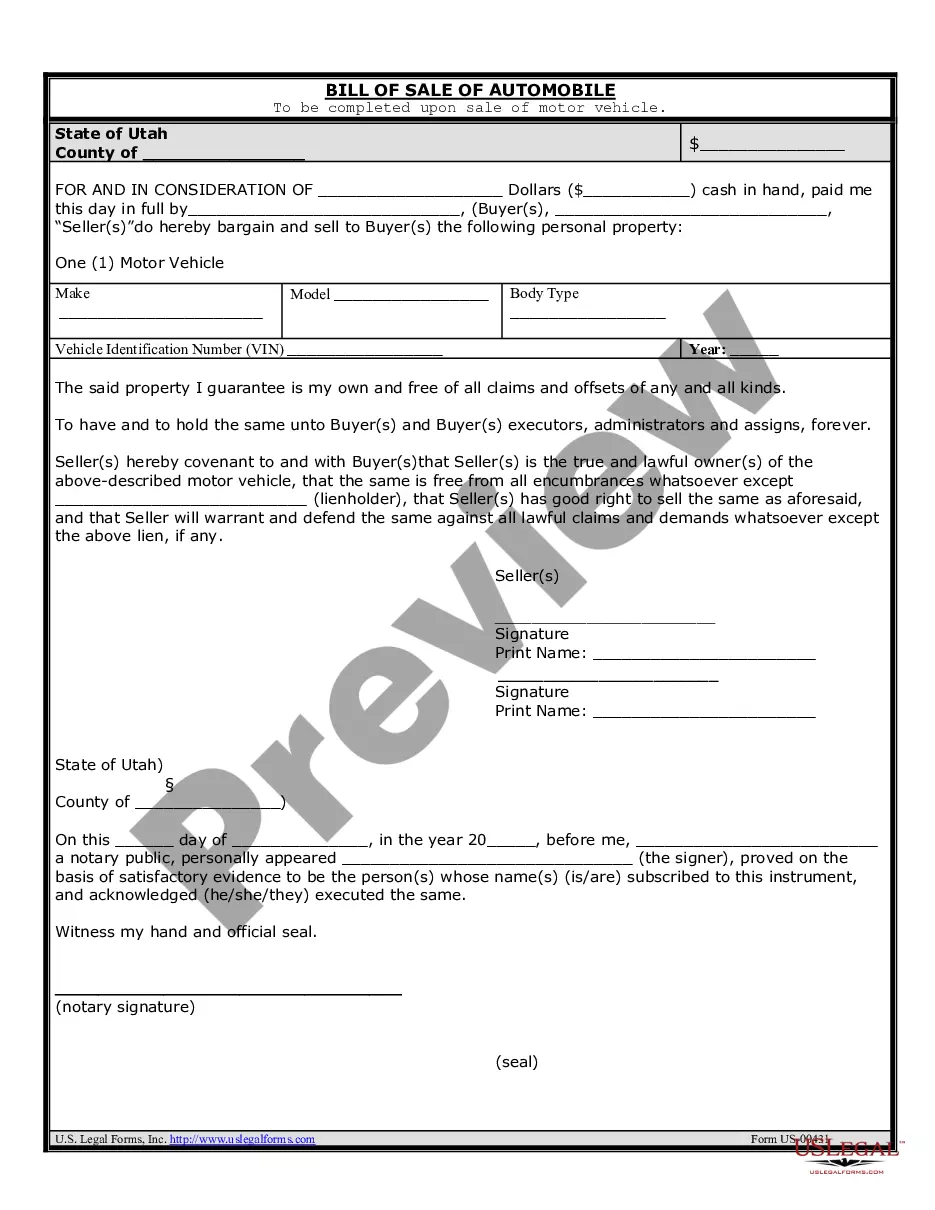
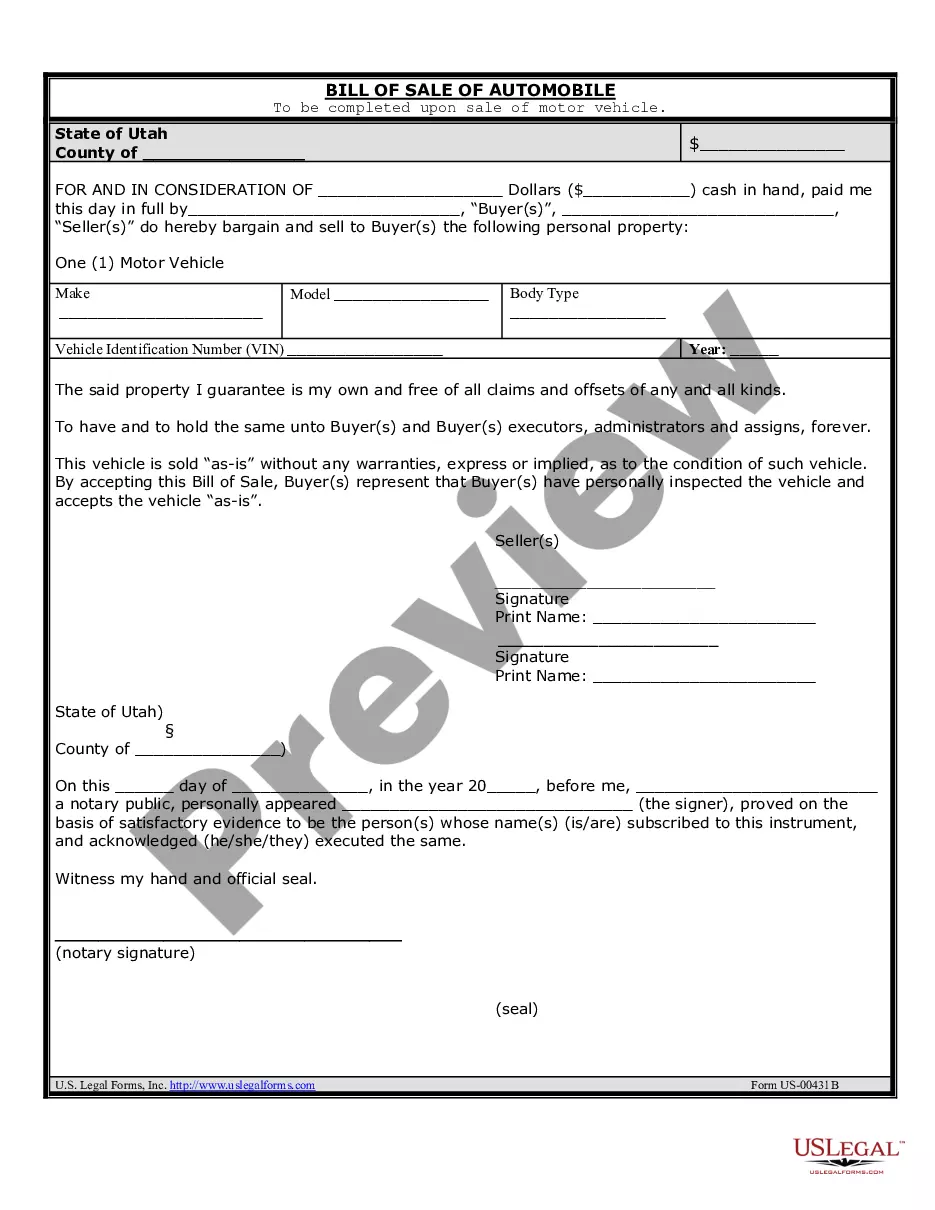
Get your form ready online
Our built-in tools help you complete, sign, share, and store your documents in one place.
Make edits, fill in missing information, and update formatting in US Legal Forms—just like you would in MS Word.
Download a copy, print it, send it by email, or mail it via USPS—whatever works best for your next step.
Sign and collect signatures with our SignNow integration. Send to multiple recipients, set reminders, and more. Go Premium to unlock E-Sign.
If this form requires notarization, complete it online through a secure video call—no need to meet a notary in person or wait for an appointment.
We protect your documents and personal data by following strict security and privacy standards.

Make edits, fill in missing information, and update formatting in US Legal Forms—just like you would in MS Word.

Download a copy, print it, send it by email, or mail it via USPS—whatever works best for your next step.

Sign and collect signatures with our SignNow integration. Send to multiple recipients, set reminders, and more. Go Premium to unlock E-Sign.

If this form requires notarization, complete it online through a secure video call—no need to meet a notary in person or wait for an appointment.

We protect your documents and personal data by following strict security and privacy standards.
Looking for another form?





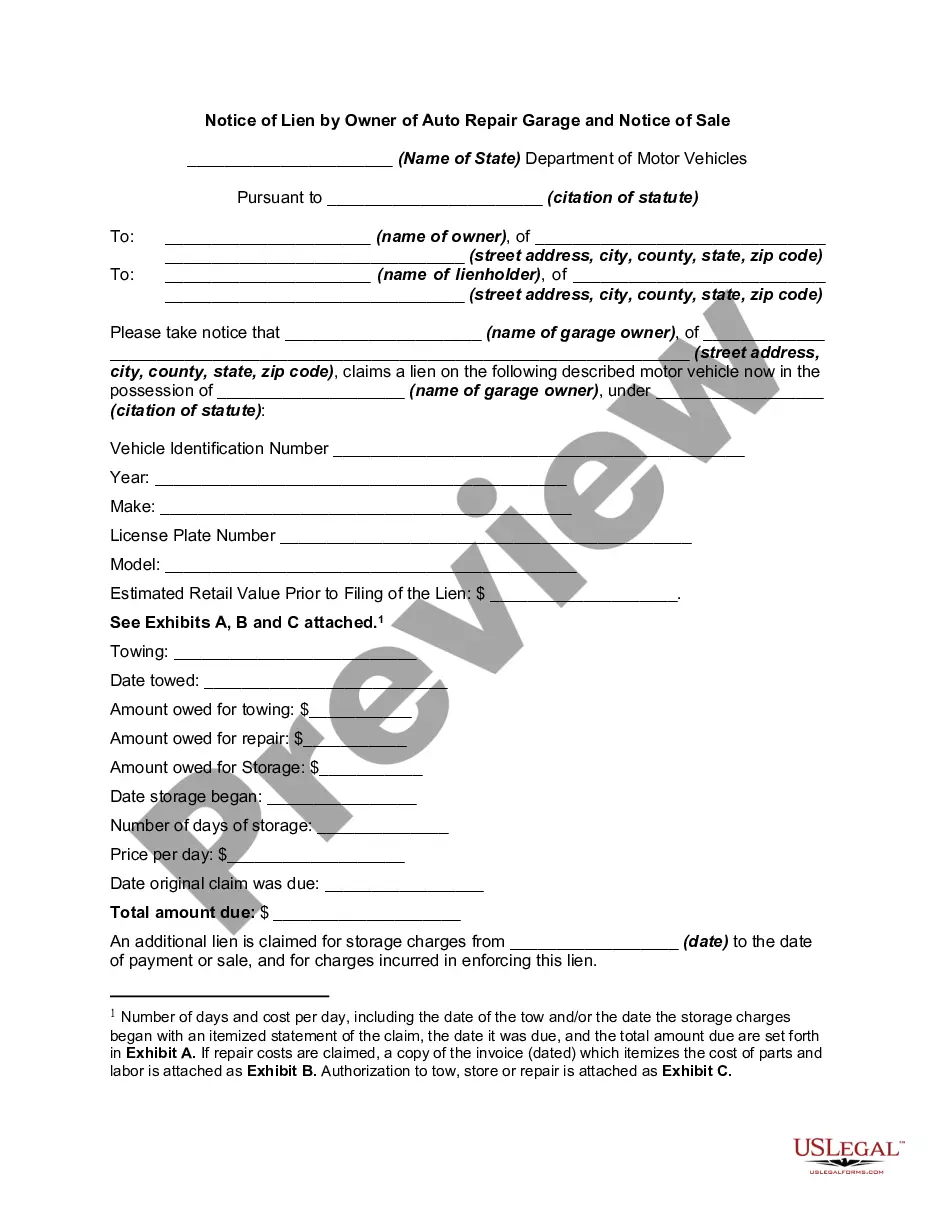




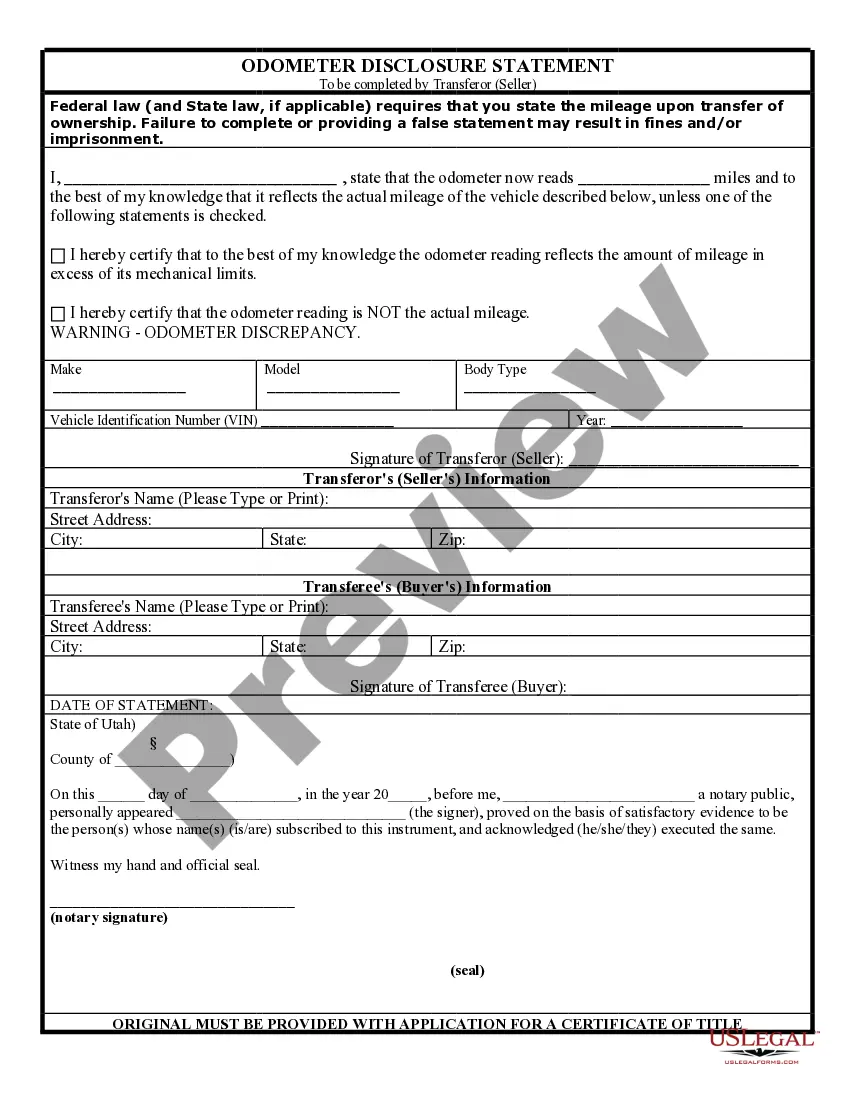
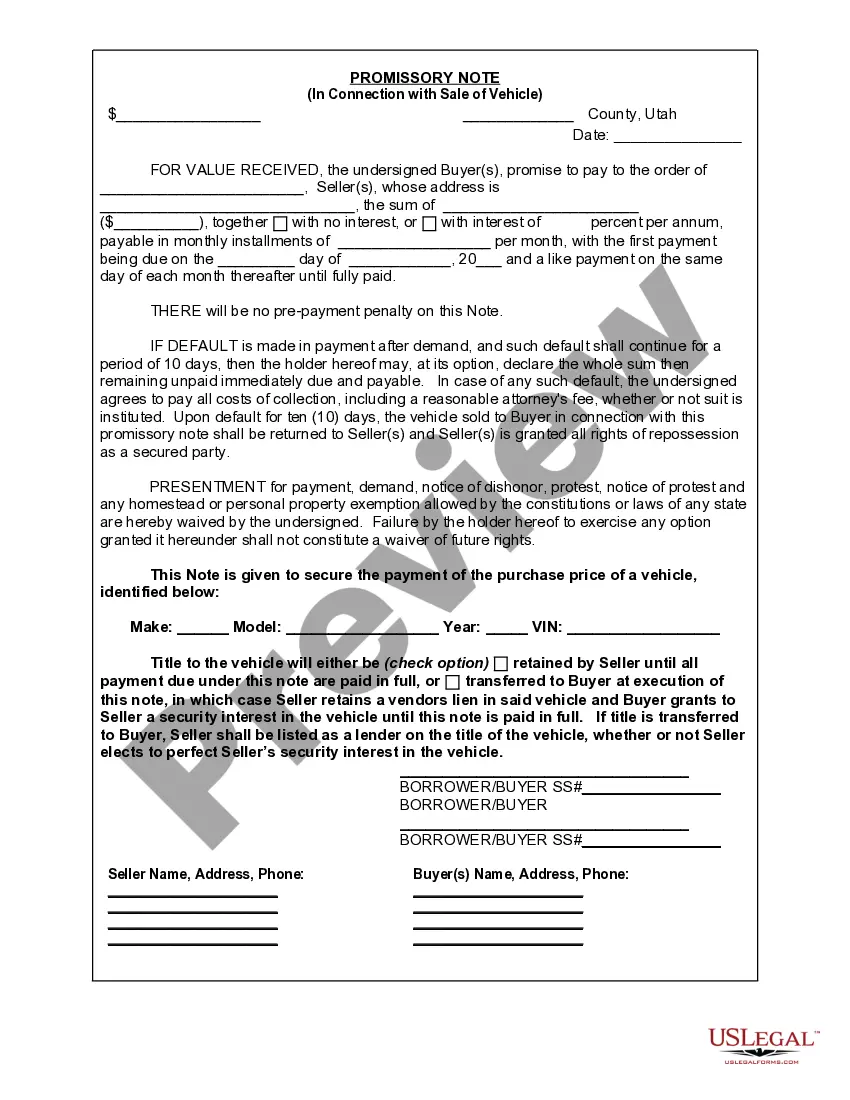
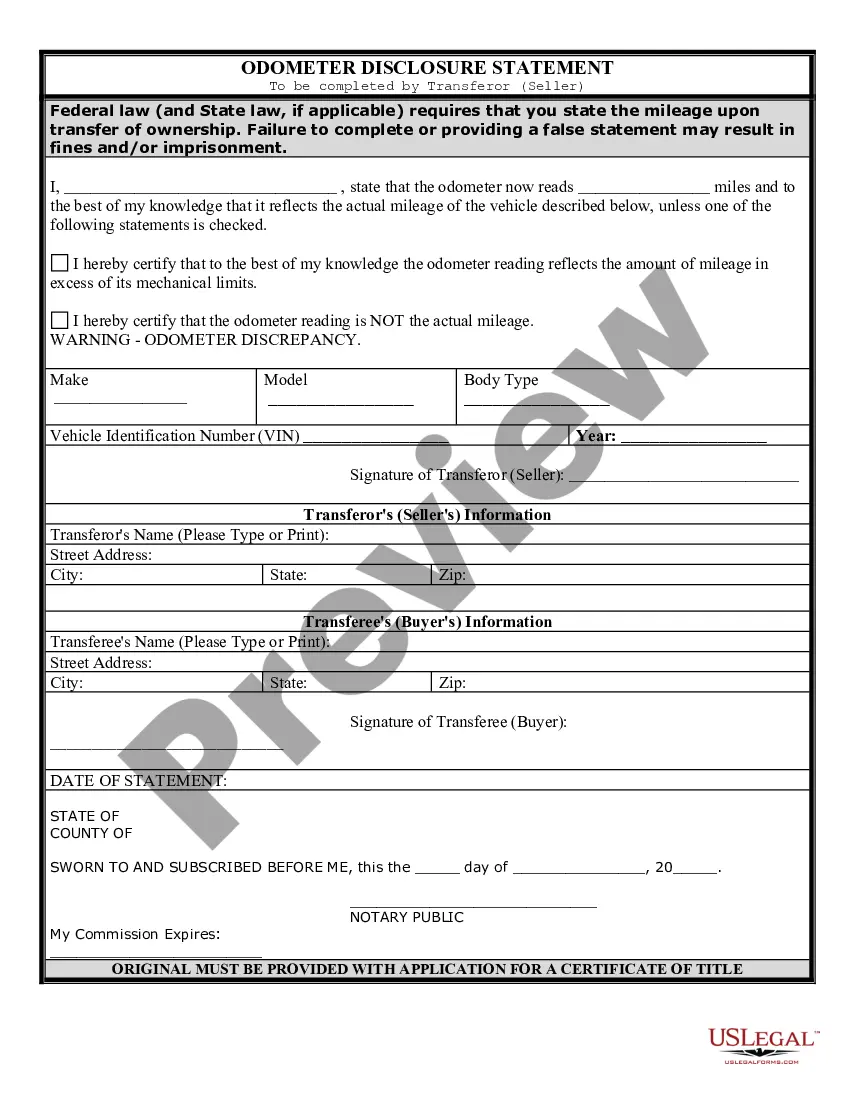
How to fill out Utah Bill Of Sale For Automobile Or Vehicle Including Odometer Statement And Promissory Note?
- Begin by visiting the US Legal Forms website and log into your existing account if you have one, ensuring your subscription is current.
- If you’re new, browse the extensive online library and check the preview mode to ensure you select the right form that suits your vehicle selling needs.
- If you don’t find the necessary document, utilize the search functionality to locate the correct template that aligns with your local jurisdiction.
- Once you've identified the form you require, click on the Buy Now button and select an appropriate subscription plan.
- Proceed to checkout by entering your payment details, either through credit card or PayPal.
- After purchase, download your form and save it on your device for easy access, also viewable in the My Forms section of your profile.
Using US Legal Forms enables you to streamline the legal documentation process, ensuring that your documents are accurate, compliant, and ready for use.
Start today by exploring the robust collection of legal forms available which can empower you as a vehicle seller!
Form popularity
FAQ
While a bill of sale is not strictly required in Virginia, it is highly recommended. This document protects you as a vehicle seller by providing proof of the transaction. It helps clarify the terms and conditions agreed upon. Using US Legal Forms can simplify the process of creating a bill of sale that meets your needs.
Yes, a handwritten bill of sale is legal in Virginia, provided it includes necessary information like the vehicle's make, model, and VIN. However, clarity and completeness are crucial. As a vehicle seller, consider using a formal template from US Legal Forms for better organization and legal protection. This can prevent disputes down the line.
To transfer car ownership in Virginia, you must complete and sign the title of the vehicle. As a vehicle seller, you should also provide a bill of sale. This document helps in confirming the transaction and passing ownership to the buyer. US Legal Forms offers resources to guide you through this process efficiently.
Yes, as a vehicle seller in Virginia, having a bill of sale is advisable. It serves as proof of the transaction and can protect both the buyer and the seller. You can easily create a legally compliant bill of sale using US Legal Forms. This ensures all transactions meet Virginia requirements.
A bill of sale does not typically need to be notarized to be valid. However, certain states may have specific requirements. As a vehicle seller, you can check local laws to ensure compliance. Using US Legal Forms can provide you with state-specific templates for a bill of sale.
After selling a car, filling out the title properly is important for ensuring a smooth transfer of ownership. The vehicle seller must complete sections that include their signature, the buyer's name, and the sale date. It’s also a good idea to retain a copy of the completed title for your own records to avoid any future issues.
To transfer ownership of a car in Washington state, the vehicle seller must complete the title transfer section on the back of the title. This includes signing it over to the new owner and filling in the required buyer information. Both parties should then submit the title along with a completed Bill of Sale to the Washington Department of Licensing, paying any fees due.
To transfer a car title in Texas, you'll need to gather several important documents. First, the original title must be completed and signed by both the vehicle seller and buyer. Additionally, you'll need a valid form of identification, like a driver’s license, and to submit a completed Application for Texas Title and/or Registration (Form 130-U) along with applicable fees at your local county tax office.
Yes, as a vehicle seller in NJ, you should cancel your registration when selling your car. This protects you from any liability after the sale and helps prevent issues related to the vehicle. It is a good practice to notify the NJ DMV about the sale, ensuring that all records are updated appropriately.
When selling a car privately near New Jersey, a vehicle seller needs to collect several key documents. You must have the vehicle's title, a bill of sale, and a completed odometer statement. Additionally, it is advisable to include any receipts or maintenance records to further uphold transparency in your transaction.