Agreement Deed Trust For Educational Purpose
Description
Get your form ready online
Our built-in tools help you complete, sign, share, and store your documents in one place.
Make edits, fill in missing information, and update formatting in US Legal Forms—just like you would in MS Word.
Download a copy, print it, send it by email, or mail it via USPS—whatever works best for your next step.
Sign and collect signatures with our SignNow integration. Send to multiple recipients, set reminders, and more. Go Premium to unlock E-Sign.
If this form requires notarization, complete it online through a secure video call—no need to meet a notary in person or wait for an appointment.
We protect your documents and personal data by following strict security and privacy standards.

Make edits, fill in missing information, and update formatting in US Legal Forms—just like you would in MS Word.

Download a copy, print it, send it by email, or mail it via USPS—whatever works best for your next step.

Sign and collect signatures with our SignNow integration. Send to multiple recipients, set reminders, and more. Go Premium to unlock E-Sign.

If this form requires notarization, complete it online through a secure video call—no need to meet a notary in person or wait for an appointment.

We protect your documents and personal data by following strict security and privacy standards.
Looking for another form?








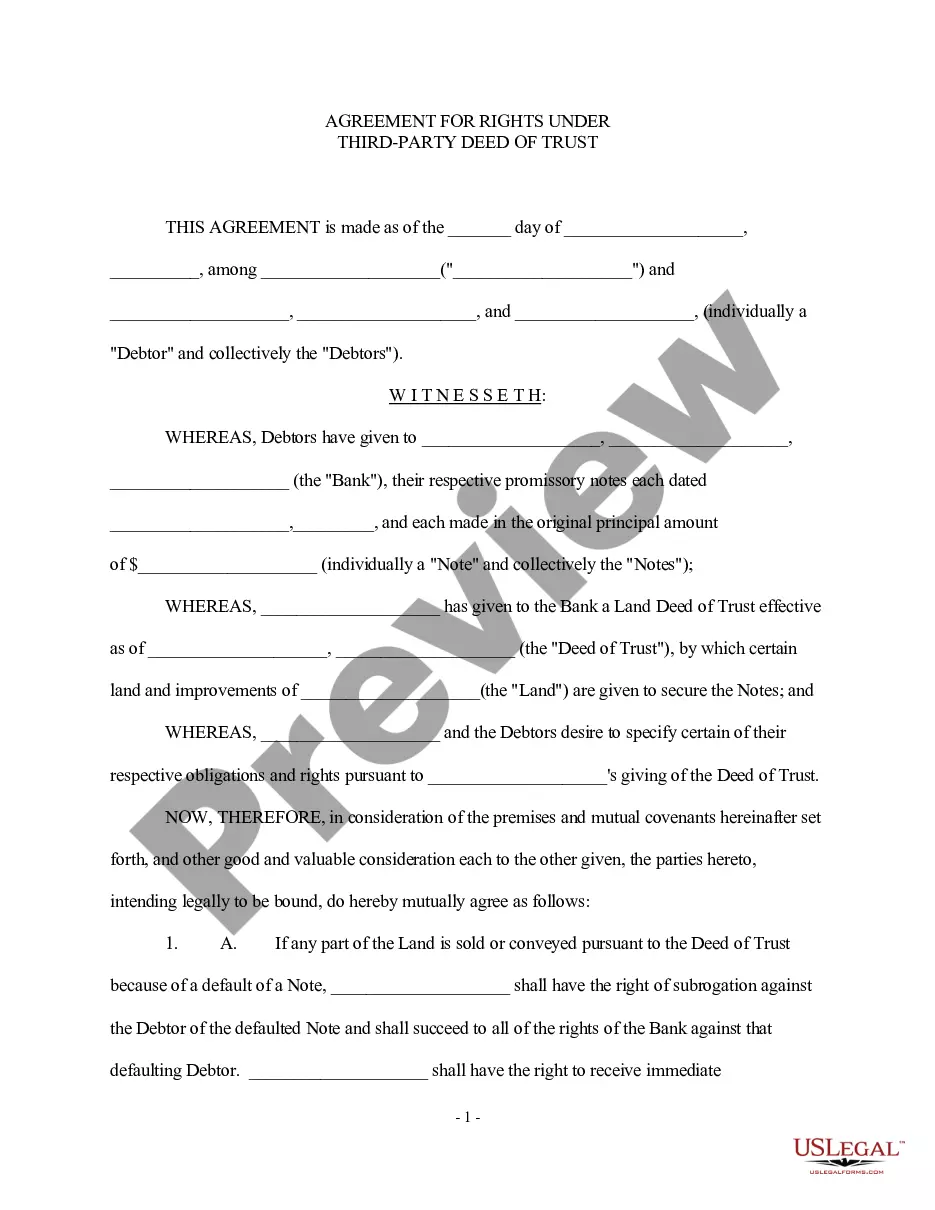
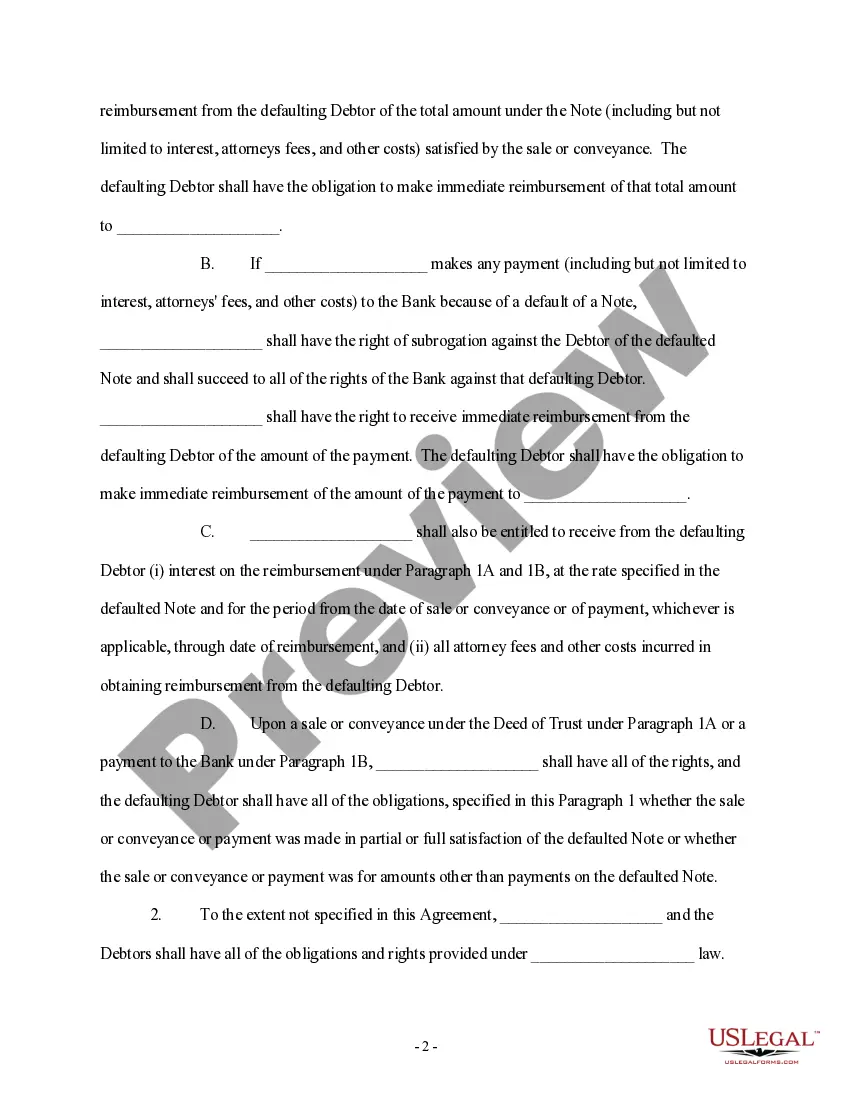
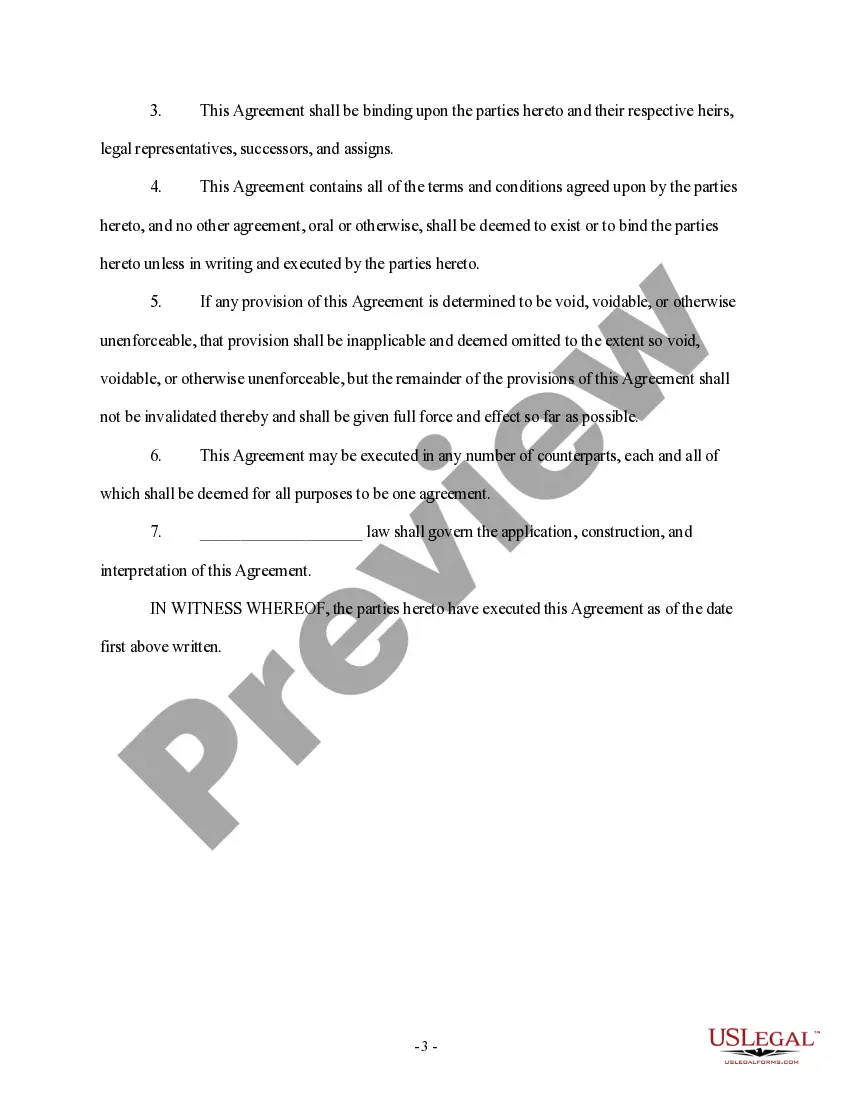
How to fill out Agreement For Rights Under Third Party Deed Of Trust?
Whether for corporate objectives or personal issues, everyone must confront legal circumstances at some stage in their lives.
Filling out legal documents requires meticulous focus, starting from choosing the correct form template.
With an extensive US Legal Forms catalog available, you don’t need to waste time searching for the suitable template across the internet. Utilize the library’s user-friendly navigation to find the right template for any occasion.
- For instance, if you select an incorrect version of an Agreement Deed Trust For Educational Purpose, it will be declined upon submission.
- Thus, it is vital to obtain a trustworthy source of legal documents like US Legal Forms.
- If you need to acquire an Agreement Deed Trust For Educational Purpose template, follow these straightforward steps.
- Locate the template you require by using the search bar or catalog navigation.
- Review the form’s details to ensure it aligns with your situation, state, and locality.
- Click on the form’s preview to inspect it.
- If it is not the correct document, return to the search feature to find the Agreement Deed Trust For Educational Purpose template you need.
- Download the template if it meets your specifications.
- If you already possess a US Legal Forms account, simply click Log in to access previously saved templates in My documents.
- If you do not have an account yet, you can download the form by clicking Buy now.
- Choose the appropriate pricing option.
- Complete the account registration form.
- Select your payment method: either a credit card or PayPal account.
- Choose the file format you desire and download the Agreement Deed Trust For Educational Purpose.
- Once saved, you can fill out the form using editing software or print it and complete it by hand.
Form popularity
FAQ
An educational trust is a trust where the money and/or property contained within go towards supporting someone's education, or to establish or finance schools.
A deed of trust is a type of secured real-estate transaction that some states use instead of mortgages. See State Property Statutes. A deed of trust involves three parties: a lender, a borrower, and a trustee. The lender gives the borrower money. In exchange, the borrower gives the lender one or more promissory notes.
The most common example of when a declaration of trust is used is the situation where an adult son or daughter borrows money for a deposit on a first house from his or her parents. The parents may have a mortgage already, and the terms of that mortgage prevent them from borrowing under another.
What Is A Deed Of Trust? A deed of trust is an agreement between a home buyer and a lender at the closing of a property. The agreement states that the home buyer will repay the home loan and the mortgage lender will hold the property's legal title until the loan is paid in full.
This Deed of Trust (the ?Trust Deed?) sets out the terms and conditions upon which: [Settlor Name] (the ?Settlor?), of [Settlor Address], settles that property set out in Schedule A (the ?Property?) upon [Trustee Name] (the ?Trustee?), being a Company duly registered under the laws of [state] with registered number [ ...