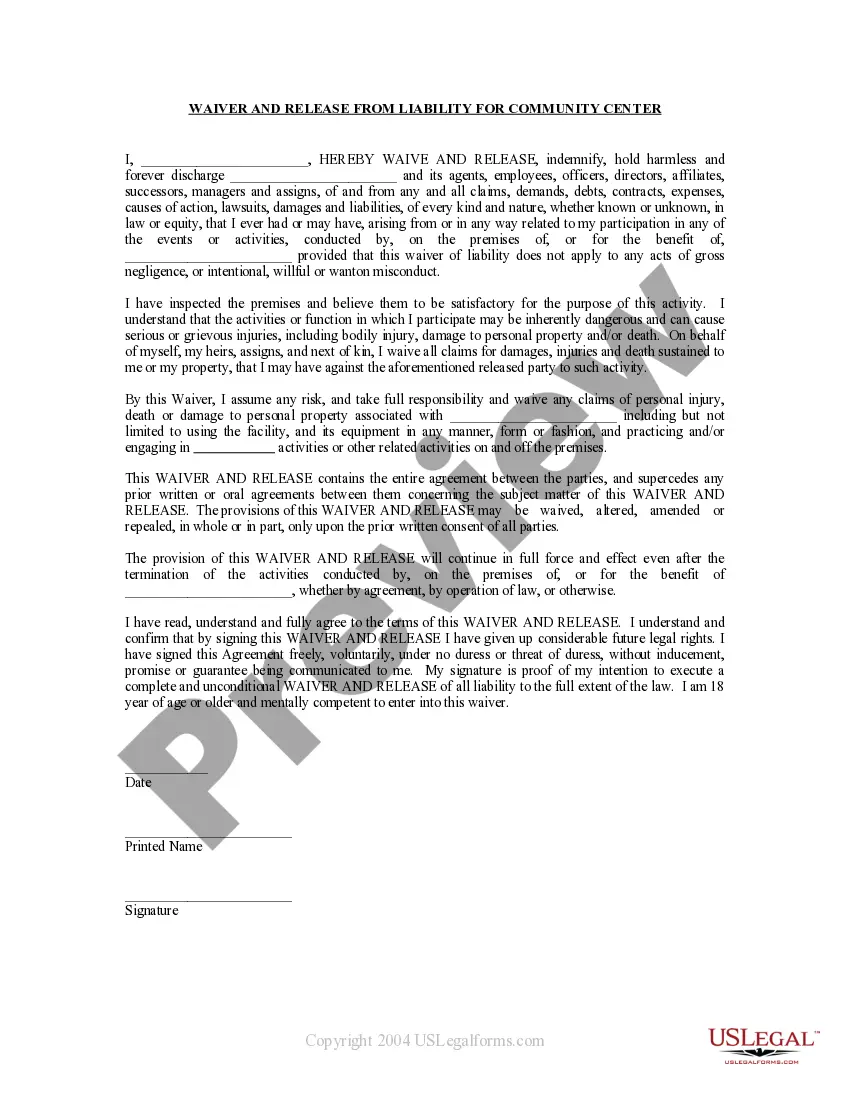
Waiver Release Liability Document Format
Description
Get your form ready online
Our built-in tools help you complete, sign, share, and store your documents in one place.
Make edits, fill in missing information, and update formatting in US Legal Forms—just like you would in MS Word.
Download a copy, print it, send it by email, or mail it via USPS—whatever works best for your next step.
Sign and collect signatures with our SignNow integration. Send to multiple recipients, set reminders, and more. Go Premium to unlock E-Sign.
If this form requires notarization, complete it online through a secure video call—no need to meet a notary in person or wait for an appointment.
We protect your documents and personal data by following strict security and privacy standards.

Make edits, fill in missing information, and update formatting in US Legal Forms—just like you would in MS Word.

Download a copy, print it, send it by email, or mail it via USPS—whatever works best for your next step.

Sign and collect signatures with our SignNow integration. Send to multiple recipients, set reminders, and more. Go Premium to unlock E-Sign.

If this form requires notarization, complete it online through a secure video call—no need to meet a notary in person or wait for an appointment.

We protect your documents and personal data by following strict security and privacy standards.
Looking for another form?






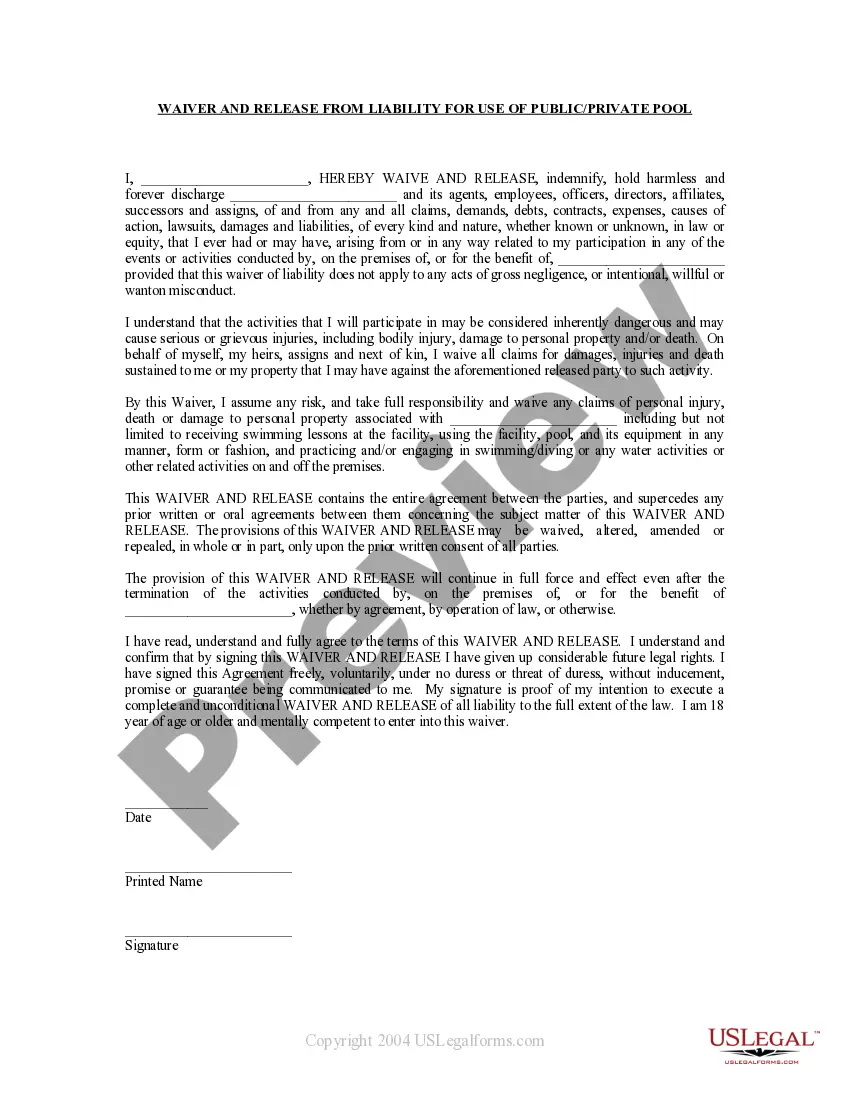
How to fill out Waiver And Release From Liability For Adult For Community Center?
It's well known that you cannot transform into a legal expert in a flash, nor can you learn to swiftly draft a Waiver Release Liability Document Format without having a specific background.
Crafting legal documents is a lengthy process that necessitates specialized education and expertise. So why not entrust the creation of the Waiver Release Liability Document Format to the experts.
With US Legal Forms, one of the largest collections of legal documents, you can locate everything from court filings to templates for internal business communication.
If you need a different template, restart your search.
Create a free account and select a subscription plan to purchase the template. Click Buy now. After completing the payment, you can download the Waiver Release Liability Document Format, fill it out, print it, and send or mail it to the intended recipients or organizations.
- We recognize how crucial it is to comply with federal and state regulations.
- That’s why, on our platform, all documents are tailored to specific locations and are current.
- Here’s how you can begin using our platform and obtain the document you need in just a few minutes.
- Find the form you need using the search bar at the top of the page.
- Preview it (if this option is available) and review the accompanying description to determine if the Waiver Release Liability Document Format is what you require.
Form popularity
FAQ
How Do You Write a Release Form? The first step in writing is identifying all parties involved, including the releaser and the release. Specify the activity or event in detail, such as a photo shoot, a video production, or a performance. Clearly specify what is being released, whether liability, claims, or damages.
It doesn't matter whether you have read the waiver When you sign an agreement, you are bound by it whether or not you have read it. With a waiver of liability, it doesn't matter if you didn't read it or didn't know its contents. So long as you sign the waiver, you can be bound by it if the waiver is valid.
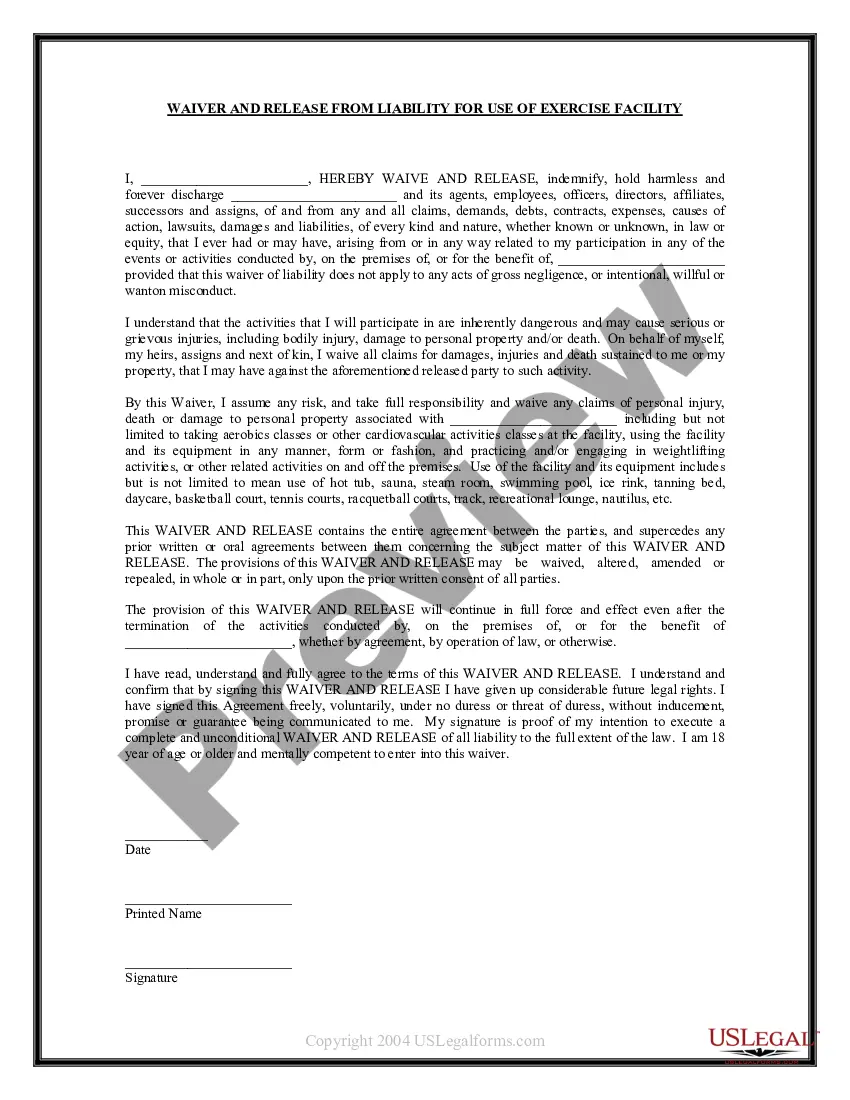
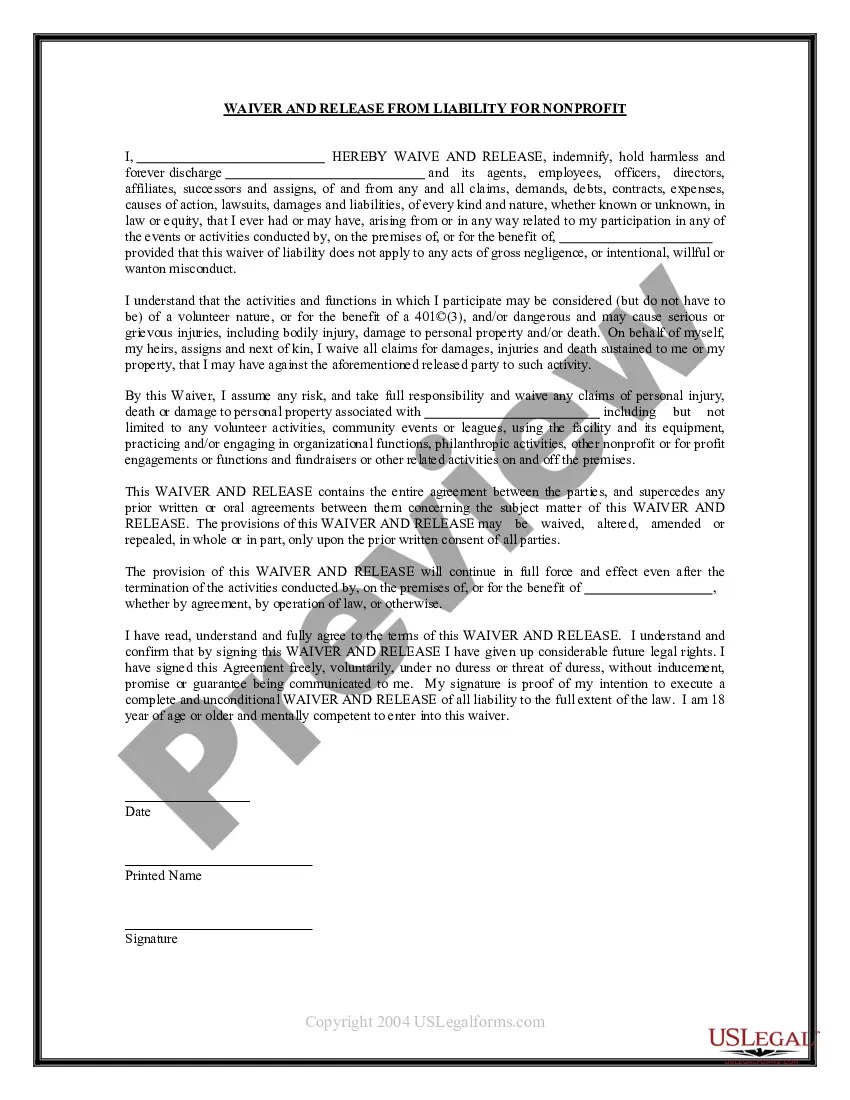
A release of liability, also known as a liability waiver or a hold harmless agreement, is a contract in which one party agrees not to hold another party liable for damages or injury.
RELEASE OF LIABILITY, WAIVER OF CLAIMS AND ASSUMPTION OF RISKS AGREEMENT SIGN-IN FORM (hereinafter referred to as the ?Release Agreement?). By signing this document you will waive certain legal rights, including the right to sue or claims compensation following an accident.
Examples of waivers include the waiving of parental rights, waiving liability, tangible goods waivers, and waivers for grounds of inadmissibility. Waivers are common when finalizing lawsuits, as one party does not want the other pursuing them after a settlement is transferred.