Company Liable For Employee Actions
Description
Get your form ready online
Our built-in tools help you complete, sign, share, and store your documents in one place.
Make edits, fill in missing information, and update formatting in US Legal Forms—just like you would in MS Word.
Download a copy, print it, send it by email, or mail it via USPS—whatever works best for your next step.
Sign and collect signatures with our SignNow integration. Send to multiple recipients, set reminders, and more. Go Premium to unlock E-Sign.
If this form requires notarization, complete it online through a secure video call—no need to meet a notary in person or wait for an appointment.
We protect your documents and personal data by following strict security and privacy standards.

Make edits, fill in missing information, and update formatting in US Legal Forms—just like you would in MS Word.

Download a copy, print it, send it by email, or mail it via USPS—whatever works best for your next step.

Sign and collect signatures with our SignNow integration. Send to multiple recipients, set reminders, and more. Go Premium to unlock E-Sign.

If this form requires notarization, complete it online through a secure video call—no need to meet a notary in person or wait for an appointment.

We protect your documents and personal data by following strict security and privacy standards.
Looking for another form?






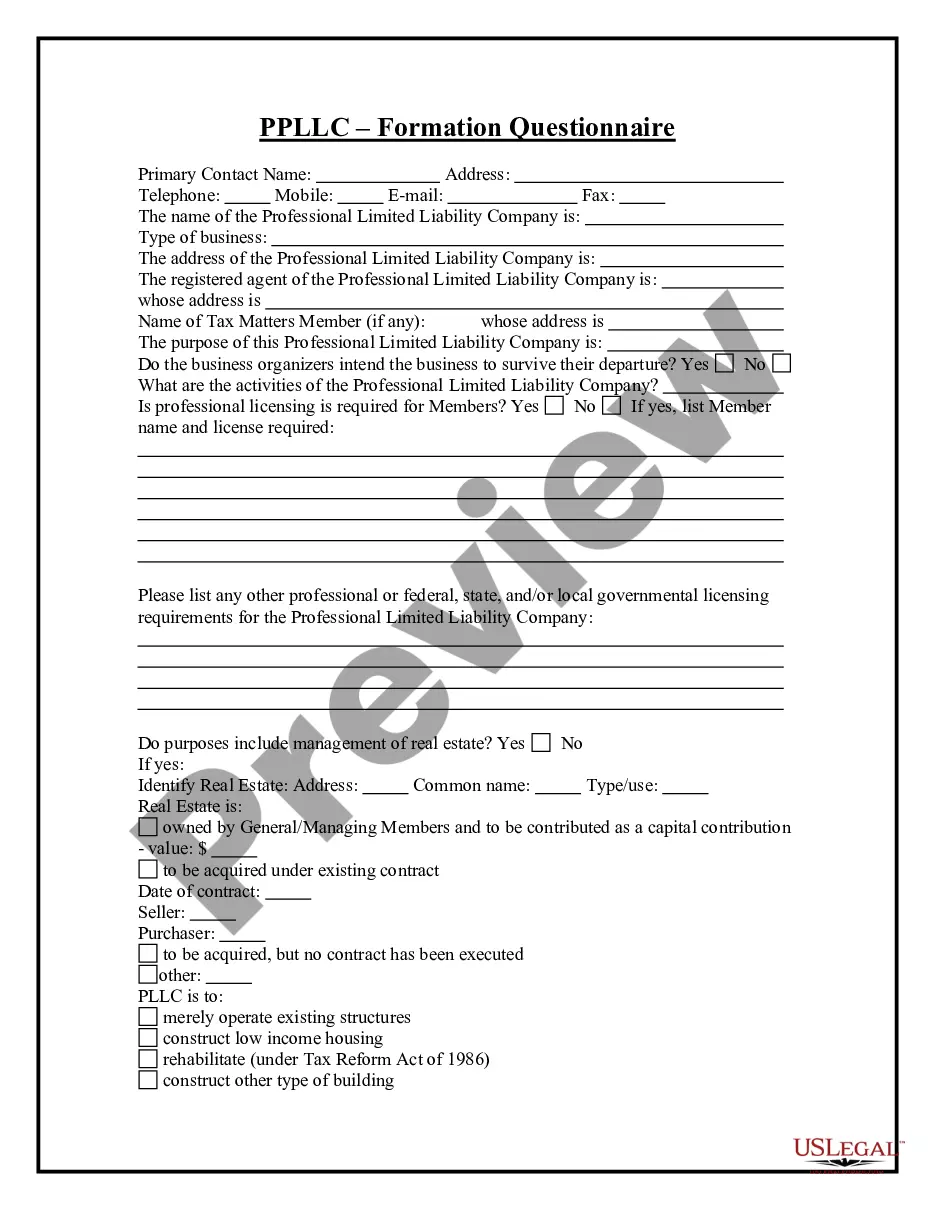
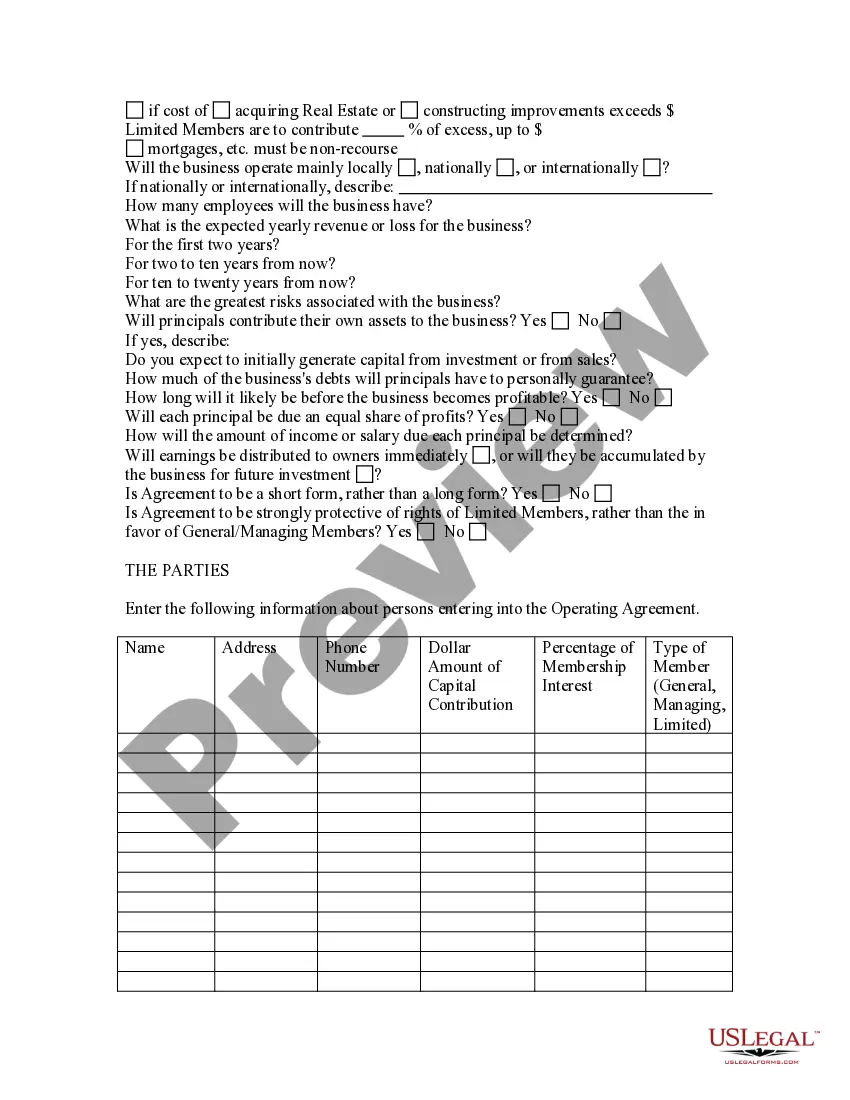
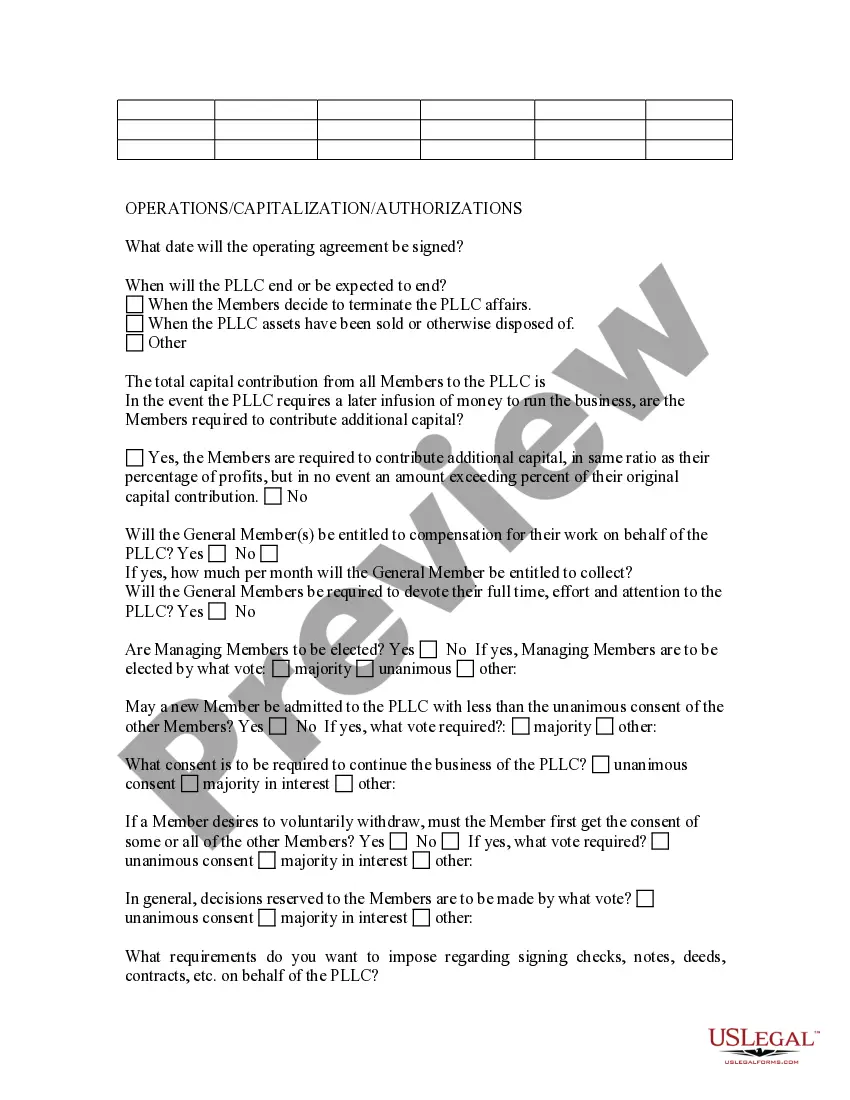
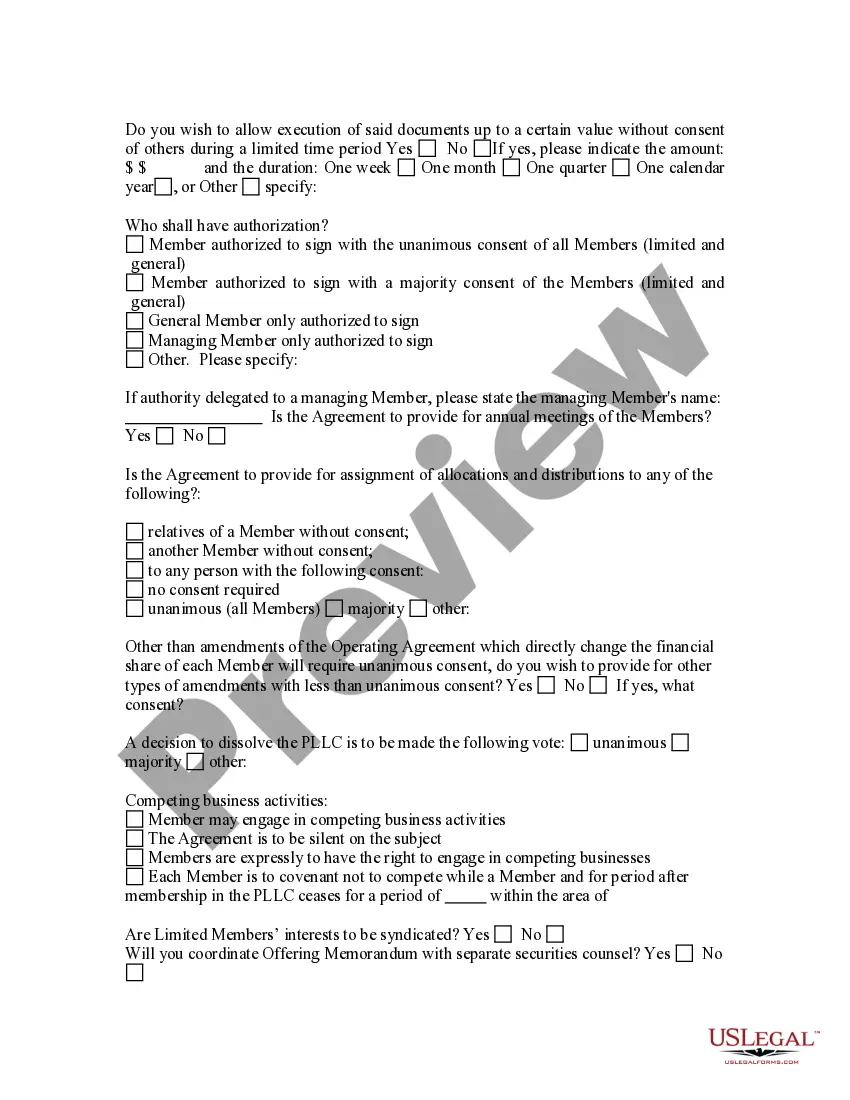
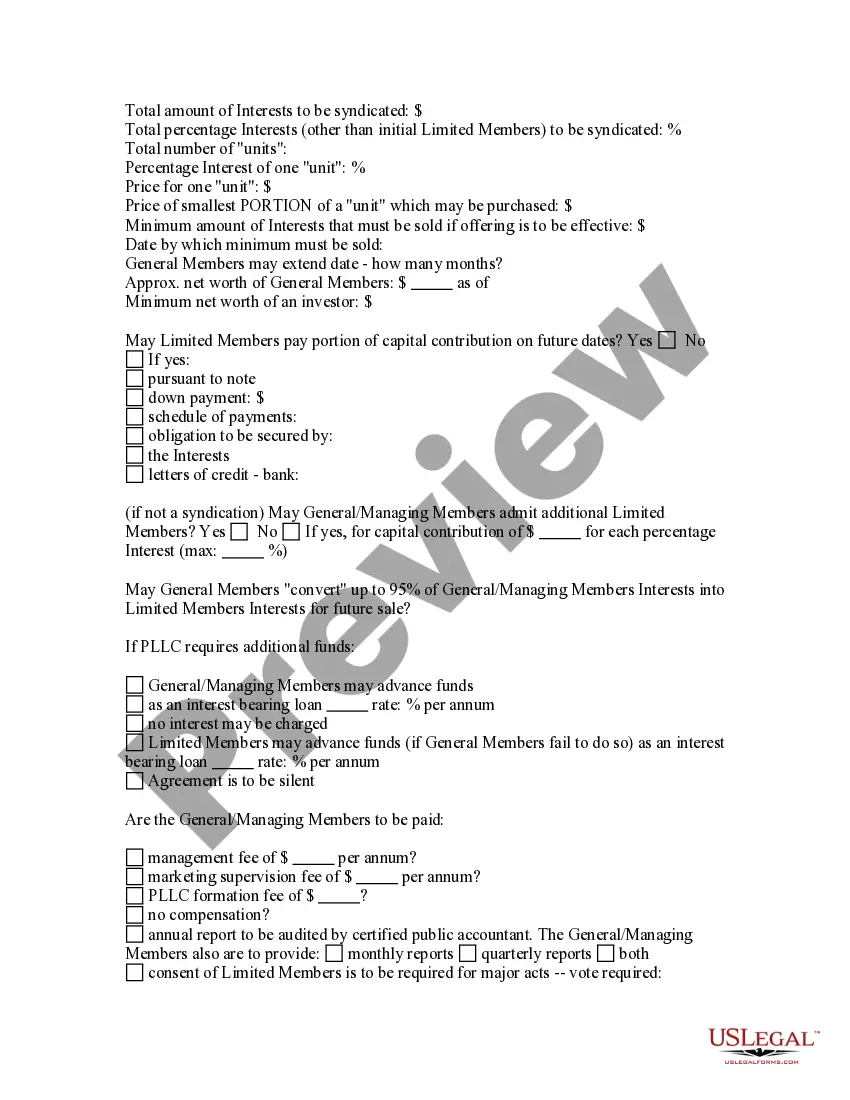
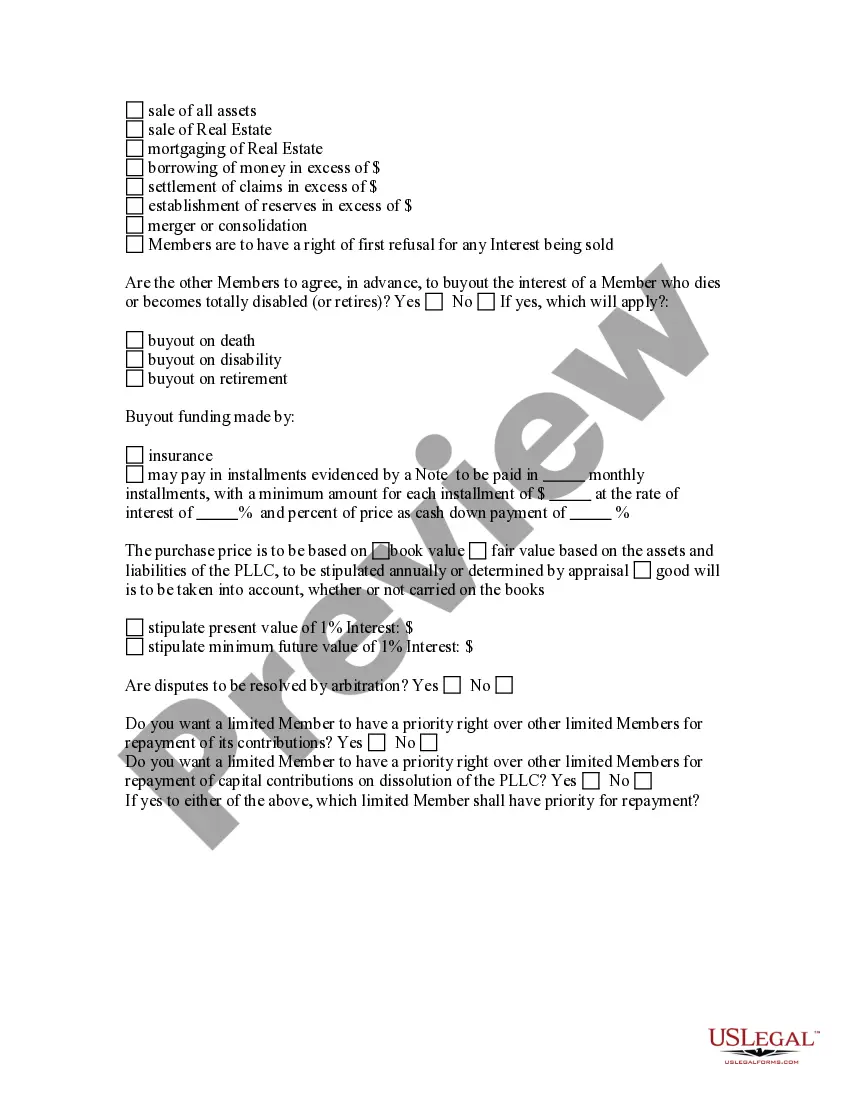
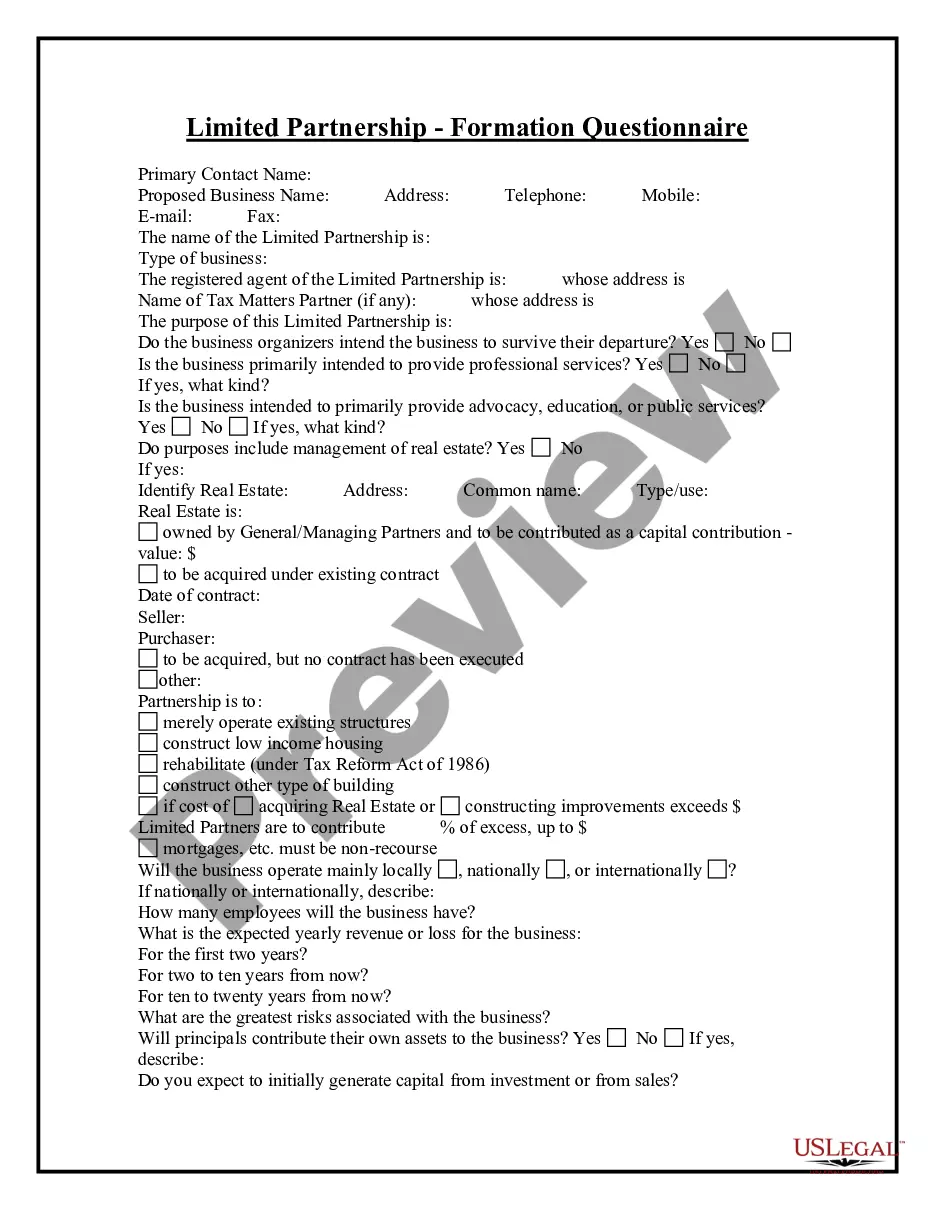
How to fill out Professional Limited Liability Company - PLLC - Formation Questionnaire?
Regardless of whether it is for corporate objectives or private issues, everyone must confront legal matters at some stage in their lives.
Completing legal paperwork requires meticulous focus, starting with selecting the correct form template.
With an extensive US Legal Forms catalog available, you do not need to waste time searching for the proper template online. Utilize the library’s straightforward navigation to find the suitable document for any situation.
- Acquire the template you require by using the search box or catalog browsing.
- Examine the form’s details to verify it aligns with your circumstances, state, and locality.
- Select the form’s preview to inspect it.
- If it is not the appropriate document, return to the search tool to find the Company Liable For Employee Actions template you need.
- Obtain the document if it fulfills your criteria.
- If you already possess a US Legal Forms account, click Log in to access forms you have stored in My documents.
- In case you don’t have an account yet, you can acquire the form by clicking Buy now.
- Select the suitable pricing option.
- Fill out the account registration form.
- Choose your payment method: utilize a credit card or PayPal account.
- Select the file format you desire and download the Company Liable For Employee Actions.
- Once downloaded, you can complete the form using editing software or print it and finish it manually.
Form popularity
FAQ
Yes, an employer can be liable for an employee's intentional torts if those acts occur within the scope of employment. This can include actions such as fraud or assault that are closely tied to the employee’s job functions. Understanding these dynamics is critical for employers seeking to navigate liability issues. Utilizing resources like USLegalForms can aid in comprehensively addressing the factors that make a company liable for employee actions.
Typically, employers are not liable for the actions of customers since those actions fall outside the employer-employee relationship. However, if an employee fails to protect others from a customer's harmful behavior, liability may arise. Employers should establish clear safety protocols and training to handle interactions appropriately. This helps in avoiding circumstances where a company could be viewed as liable for employee actions related to customer interactions.
Yes, an employer can be liable for an employee's actions if those actions are performed within the scope of employment. This liability extends to acts that are directly related to the employee's job responsibilities. Understanding this principle is essential for companies to minimize potential legal risks. Engaging in proactive measures can help businesses manage the complexities of being a company liable for employee actions.
Generally, an employer can be held liable if an employee commits an assault that is connected to their job duties. For example, if the assault occurs during a work-related event or while the employee is representing the company, the employer may face liability. This highlights the importance of setting clear behavioral expectations and providing a safe working environment. Remember, factors like the nature of the activity and its relation to employment can affect whether a company is liable for employee actions.
Employers may be liable for an employee's actions in situations involving negligence, harassment, or wrongful acts committed during work-related tasks. If an employee injures someone while performing their job, the employer could face liability. Therefore, employers should implement clear workplace policies and training to mitigate risks. Ignoring this can lead to a scenario where a company is liable for employee actions, potentially affecting the company significantly.
An employer may be liable for an employee's tort when the employee commits the act during work hours or while performing job-related tasks. If the conduct occurs within the scope of employment, the employer is more likely to be held responsible. It's essential to recognize that even seemingly minor acts can lead to significant liability for a company. Therefore, keeping informed about the risks associated with being a company liable for employee actions is vital.
Employers can be held liable under the doctrine of vicarious liability, which establishes that companies are responsible for the actions of their employees performed in the course of employment. This principle applies regardless of whether the employer authorized the specific act, provided it relates to the employee's work duties. Understanding this legal framework helps employers mitigate risks connected to being a company liable for employee actions. Consulting resources like USLegalForms can provide clarity on these issues.
A company may be liable for an employee's actions even if the employee is outside their authorized role when those actions are closely related to their job duties. For instance, if an employee acts within the context of their employment, such as using work resources, the company may bear responsibility. Courts often evaluate whether the acts were foreseeable or within the scope of the employee's duties. Thus, it's crucial for businesses to understand the implications surrounding being a company liable for employee actions.
Yes, employees can be held personally liable for their actions under certain circumstances. When an employee acts outside the scope of their employment or engages in wrongful conduct, liability may shift from the company to the individual. It's important to understand how the concept of a company liable for employee actions works, as this can impact both the employee and the organization. For those looking for guidance on navigating this complex issue, US Legal Forms offers resources that clarify employee responsibilities and company liabilities.
Yes, employers can be liable for the actions of supervisors and other employees under certain circumstances. If a supervisor engages in wrongful conduct while performing job responsibilities, the company can be found liable for those actions. Additionally, when employees harm others during the course of their employment, the company may also face liability. Companies should proactively manage these risks by implementing comprehensive policies and using solutions like US Legal Forms to address potential liabilities.